Jalapeño — health benefits and uses
Color, fiber, and everyday plate-building angle
The Short Answer
Jalapeños are medium-heat chili peppers that provide over 100% of the Daily Value for Vitamin C per cup. They contain capsaicin, a compound that creates a heating sensation and may modestly support metabolism and heart health.

Jalapeño · Photograph
Jalapeños (Capsicum annuum) are mild-to-medium heat chili peppers originally cultivated in Mexico and now one of the most widely used peppers in the world. They bring bold flavor, bright color, and a modest but interesting nutrient profile to the plate — and they are as at home in a weeknight grain bowl as they are in a slow-cooked pot of black beans.
Key Nutrients
% Daily Value based on 2,000 cal diet
Key active compounds
- Capsaicin — The primary pungent compound in jalapeños. Binds to TRPV1 receptors (heat-sensitive nerve receptors in your mouth, gut, and skin), creating the burning sensation. In human studies using chili peppers or purified capsaicin, it has been linked to modest increases in calorie burning, slight appetite reduction, and some cardiovascular effects.
- Dihydrocapsaicin and related capsaicinoids — Close chemical relatives of capsaicin that contribute to overall pungency and share similar biological activity in experimental models.
- Carotenoids (beta-carotene, lutein, zeaxanthin) — Pigment compounds that act as antioxidants. Green jalapeños contain moderate amounts; they increase substantially as the pepper ripens and turns red.
- Capsanthin — A red carotenoid found in ripe, red-stage jalapeños; acts as an antioxidant in lab models.
- Flavonoids (quercetin, luteolin) — Polyphenols (plant compounds with antioxidant and cell-signaling properties) found across many vegetables. Dietary flavonoid intake is associated with lower chronic disease risk in observational research.
- Phenolic acids (ferulic acid, sinapic acid) — Small polyphenolic molecules found in plant cell walls; may influence gut microbial activity and antioxidant capacity based mainly on preclinical (lab and animal) evidence.
Prep and pairing ideas
Jalapeños are flavor amplifiers. Their job in a dish is to make other healthy, low-excitement foods — beans, lentils, brown rice, plain tofu, roasted vegetables — taste like something you actually want to eat on a Tuesday.
Three practical pairings:
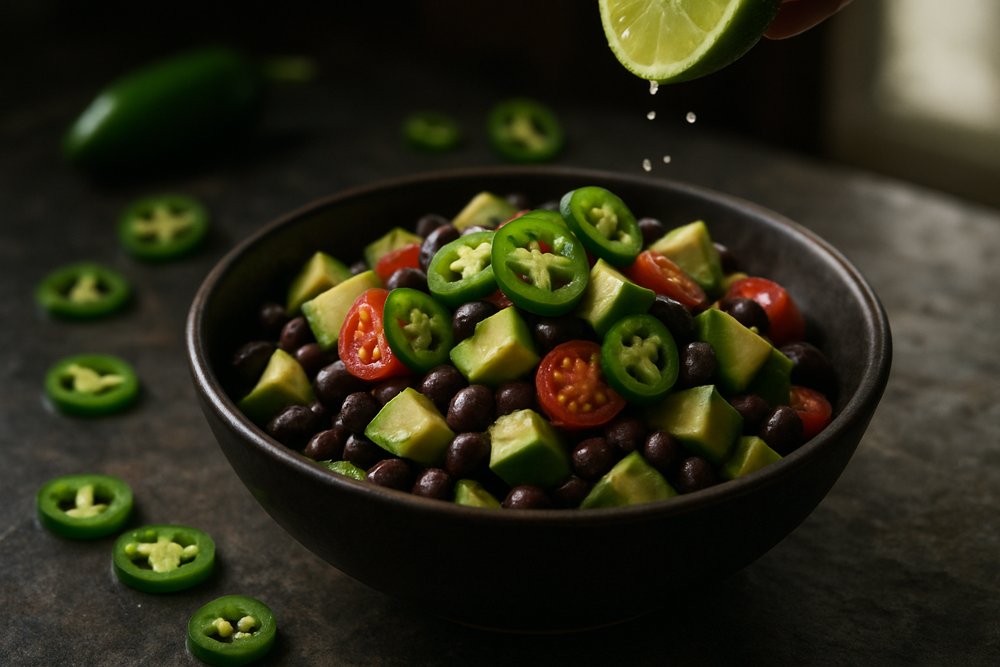
- Jalapeño + black beans + lime — A classic pairing for a reason. The fat and protein in beans help buffer capsaicin's intensity, while lime's acidity brightens both. Works in tacos, burritos, grain bowls, and soups.
- Jalapeño + avocado + tomato — The healthy fats in avocado help carry and smooth out fat-soluble capsaicin compounds. Together in a guacamole or salsa, the result is a rich, rounded heat rather than a sharp burn.
- Jalapeño + roasted corn + cilantro — The natural sweetness of roasted corn balances jalapeño's heat. A great base for grain salads, rice dishes, or a simple side. Add a drizzle of olive oil to help absorb fat-soluble carotenoids from both the corn and the pepper.
Quick CTA: Want to build these pairings into your weekly routine? Plantopedia's Meal Planner can map jalapeños across your meals in ways that match your heat tolerance and dietary pattern.
How Jalapeño Compares
| Compared with | What's different |
|---|---|
| Jalapeño vs. Serrano pepper | Significantly hotter, reaching 10,000–23,000 Scoville units versus the jalapeño's 2,500–8,000. |
| Jalapeño vs. Chipotle pepper | A smoked, dried jalapeño with a deep earthy flavor used primarily in sauces and stews. |
| Jalapeño vs. Bell pepper | Contains no capsaicin and lacks the heat, though both are high in Vitamin C. |
Health Benefits
Things to Know
Wear gloves when cutting jalapeños: , or wash hands thoroughly and immediately with soap before touching your face or eyes. Capsaicin transfers easily to skin and can cause significant burning.
GERD / acid reflux: Jalapeños frequently worsen heartburn. Start with very small amounts or remove them if symptoms increase.
IBS, IBD, peptic ulcers: Spicy peppers commonly aggravate symptoms during flares. Listen to your body and reduce or eliminate during active symptoms.
Hemorrhoids or anal fissures: Hot pepper intake can cause rectal burning.
Pregnancy: Culinary amounts are generally safe, but many pregnant people experience worsened heartburn; reduce if that is you.
Nursing: Spicy foods can occasionally make infants fussier or gassier. If you notice a pattern, try timing your jalapeño intake to shortly after a nursing session rather than just before.
Infants and young children: Their oral and GI tissues are more sensitive to capsaicin; avoid or use minimally.
Nightshade sensitivity or allergy: Rare, but if you have a known allergy to peppers or other nightshades, avoid jalapeños.
Medications: At normal food amounts, jalapeños have no well-documented drug interactions. High-dose capsaicin supplements (not the same as eating food) have been discussed in the context of blood thinners and blood pressure medications; if you are considering capsaicin capsules, check with your healthcare provider first.
Prep Ideas
- — Jalapeño + black beans + lime — A classic pairing for a reason. The fat and protein in beans help buffer capsaicin's intensity, while lime's acidity brightens both. Works in tacos, burritos, grain bowls, and soups.
- — Jalapeño + avocado + tomato — The healthy fats in avocado help carry and smooth out fat-soluble capsaicin compounds. Together in a guacamole or salsa, the result is a rich, rounded heat rather than a sharp burn.
- — Jalapeño + roasted corn + cilantro — The natural sweetness of roasted corn balances jalapeño's heat. A great base for grain salads, rice dishes, or a simple side. Add a drizzle of olive oil to help absorb fat-soluble carotenoids from both the corn and the pepper.
Shop This Ingredient
Stock your pantry with quality jalapeño.
Buy on AmazonAs an Amazon Associate, Plantopedia earns from qualifying purchases. This costs you nothing extra and helps us keep the encyclopedia free.
Frequently Asked Questions
Heart and circulation Most human data here come from studies of chili pepper consumption broadly or purified capsaicin — not jalapeños in isolation. Large observational studies (studies that follow many people over time without controlling what they eat) from multiple countries have found that people who eat chili peppers regularly tend to have lower rates of cardiovascular mortality compared with rare consumers, even after accounting for other diet and lifestyle factors. Small randomized trials (where researchers do control for variables) using red pepper or capsaicin have shown modest short-term improvements in energy expenditure, lipid profiles (the balance of fats in your blood), and blood pressure in some groups — but sample sizes are small and results are inconsistent. The honest takeaway: jalapeños are not a treatment for heart disease. They are a flavorful vegetable that, when used to make plant-forward meals more enjoyable, can be part of an overall heart-supportive eating pattern. Digestive health and microbiome This is where individual variation matters most. Capsaicin stimulates gastric (stomach) secretions and can affect how quickly your stomach empties. For most healthy people, culinary amounts are fine. But: People with GERD (gastroesophageal reflux disease, or chronic acid reflux) often find that spicy peppers worsen heartburn and should proceed with caution. Those with IBS (irritable bowel syndrome) or IBD (inflammatory bowel disease) flares frequently report more cramping, urgency, or discomfort after spicy meals. People with peptic ulcers or hemorrhoids may experience increased symptoms. For generally healthy guts, jalapeños in typical cooking amounts are unlikely to cause harm and may even improve meal satisfaction, which can indirectly support healthy eating habits and gut microbiome diversity over time. Blood sugar and metabolism Several small human trials using red chili pepper or capsaicin have found modest improvements in postprandial glucose (blood sugar after a meal) and insulin responses, particularly in people with overweight or metabolic risk. Results across studies are mixed, and no strong trials have focused specifically on jalapeños and glycemic (blood sugar) control. What is clearer: jalapeños are extremely low in carbohydrates and calories, making them unlikely to raise blood sugar on their own. They can also replace higher-calorie, higher-sugar condiments (like sweet chili sauces) without sacrificing flavor. Inflammation and recovery Most anti-inflammatory evidence for capsaicin is preclinical — meaning it comes from cell cultures or animal models, not controlled human trials. Topical capsaicin creams (used on the skin for pain) have stronger evidence behind them, but that does not directly translate to eating jalapeños. Some human dietary studies have measured CRP (C-reactive protein, a blood marker of inflammation) after chili pepper intake and shown modest reductions, but the evidence is inconsistent. Jalapeños contribute carotenoids, flavonoids, and capsaicin that have antioxidant potential in lab models, and they fit naturally into a colorful, phytochemical-rich vegetable pattern that is broadly associated with lower-inflammation lifestyles. If spicy foods consistently trigger flare-ups of your own inflammatory conditions — skin, joints, or gut — trust your body over the research averages. Appetite and thermogenesis (calorie burning) This is the area with the most consistent human data. Controlled trials have found that adding red pepper or capsaicin to meals can slightly increase thermogenesis (calorie burning, literally "heat generation" in the body) and modestly reduce how much people eat at subsequent meals. Jalapeños are milder than some red chili varieties, but the principle holds when used regularly in cooking. The effect is small — not a weight-loss solution on its own — but jalapeños genuinely help make lower-calorie, higher-fiber foods like beans and vegetables more satisfying and enjoyable, which is where their real value lies.
Fresh and raw Slice, mince, or dice into salsas, salads, grain bowls, and tacos. Removing the seeds and white inner ribs (called the pith) is the single most effective technique for reducing heat while keeping flavor. The pith holds most of the capsaicin-rich tissue; seeds have less heat than commonly believed, but removing them along with the pith helps. Roasted or grilled Charring over a flame or under a broiler softens the texture, mellows the heat slightly, and adds a smoky depth of flavor. Peel the charred skin after cooling for a smoother texture — excellent in soups, spreads, and bean-based dips. Cooked into dishes Adding jalapeño early in cooking (sautéing with onions and garlic, for example) disperses capsaicin throughout the dish for more uniform, background warmth. Adding it near the end of cooking keeps a sharper, more immediate heat. Either works; choose based on your heat preference. Dried form: chipotle Chipotle peppers are smoke-dried jalapeños. They deliver concentrated, smoky heat in small amounts and work well in chili, marinades, grain dishes, and rubs. A little goes a long way. Pickled Quick-pickling in a vinegar brine tames the raw sharpness and adds bright acidity — great on tacos, sandwiches, and grain bowls. See the buying guide section below for tips on commercial vs. home-pickled options.
There is no official recommended daily intake for jalapeños. Here is a practical framework: Starting out: Begin with ¼ to ½ a small jalapeño per meal, seeds and pith removed. Gauge your comfort after 2 to 3 days before increasing. Regular use: Most people comfortably use 1 to 2 jalapeños per dish serving 2 to 4 people, which works out to roughly ¼ to 1 whole pepper per person per
Quick Answers
Common questions, answered in a line.
Jalapeños derive their heat from capsaicin, a pungent compound that binds to TRPV1 heat-sensitive nerve receptors in the mouth, gut, and skin. Other related capsaicinoids like dihydrocapsaicin also contribute to the pepper's overall spiciness and biological activity.
Red jalapeños contain significantly higher levels of antioxidants like carotenoids and capsanthin compared to green ones. While green jalapeños have moderate amount of these pigments, they increase substantially as the pepper ripens and turns red.
You should wear gloves when cutting jalapeños or wash your hands immediately with soap to prevent capsaicin from transferring to your eyes or face. Capsaicin oils stay on the skin easily and can cause a significant, painful burning sensation upon contact with sensitive areas.
Jalapeños can worsen symptoms for people with GERD, acid reflux, IBS, IBD, or peptic ulcers. The spicy compounds frequently aggravate heartburn and can lead to gastrointestinal distress or rectal burning during active flares of these conditions.
Pairing jalapeños with healthy fats, such as avocado or olive oil, helps smooth out the intensity of capsaicin and aids in the absorption of fat-soluble nutrients. Ingredients like black beans provide protein and fiber that also help buffer the pepper's sharp heat.
Spicy foods like jalapeños can occasionally lead to increased fussiness or gas in infants if consumed shortly before nursing. If you notice this pattern, it is recommended to time your jalapeño intake for shortly after a nursing session instead of right before one.
Jalapeños contain flavonoids like quercetin and luteolin, which are plant polyphenols associated with a lower risk of chronic disease. They also provide phenolic acids like ferulic and sinapic acid, which may support antioxidant capacity and gut microbial activity.
For Readers in the USA
Local context — sourcing, seasonality, and regional notes.
In the U.S., jalapeños are primarily grown in New Mexico, Texas, and California, with peak harvest occurring from late summer through early fall. While domestic outdoor seasons center on August and September, greenhouse production and imports from Mexico ensure they are available in stores nationwide year-round.
You can find fresh jalapeños at nearly every major U.S. grocery chain like Kroger, Publix, and Safeway, as well as in bulk at warehouse clubs like Costco. For specialty varieties or organic options, farmers markets and retailers like Whole Foods Market are reliable sources, especially during the summer months.
The USDA Organic seal ensures jalapeños were grown without synthetic fertilizers or prohibited pesticides, which is a common choice for consumers concerned about chemical residues. Additionally, the FDA provides guidance on safe handling to prevent foodborne illness, as raw peppers can occasionally be linked to Salmonella outbreaks.
AI Clinical Review
- Reframes jalapeños as more than “heat,” noting meaningful vitamin C and phytonutrients, with carotenoids increasing as peppers ripen from green to red.
- Accurately explains capsaicin’s action on TRPV1 receptors and fairly characterizes human data showing small, consistent effects on thermogenesis (calorie burning) and appetite.
- Appropriately distinguishes observational findings from small randomized trials and avoids positioning jalapeños as a treatment for disease.
- Offers practical, evidence-aligned strategies to manage heat (e.g., removing pith/seeds, timing of cooking) that can help people enjoy more plant-forward meals.
- Cardiovascular benefits are largely from observational cohorts and may reflect overall diet/lifestyle patterns; randomized trials are small and mixed.
- Post-meal glucose/insulin and lipid effects vary across studies and often use chili varieties or purified capsaicin rather than jalapeños specifically; dose and pepper-to-pepper variability add uncertainty.
- Anti-inflammatory and microbiome claims are based mostly on preclinical work; benefits of topical capsaicin do not directly translate to dietary intake.
- Appetite and energy-expenditure effects are modest and may wane with habituation; they support, but do not drive, weight management.
- Reasonable culinary use: starting with about 1/4–1/2 small pepper per meal and adjusting to comfort is sensible; many people tolerate roughly 1/4–1 whole pepper per person when cooked into a dish.
- Who should be cautious: people with GERD, IBS/IBD (especially during flares), peptic ulcers, or hemorrhoids; those who are pregnant (heartburn) or nursing (infant sensitivity); young children; and anyone with known nightshade allergy—check with a clinician if unsure.
- Form and handling matter: red (ripe) peppers have more carotenoids; chipotle (smoke‑dried jalapeño) concentrates heat; pickled versions add sodium; removing pith/seeds reduces heat. Wear gloves or wash hands well to avoid eye/skin irritation.
- Supplements ≠ food: high‑dose capsaicin capsules can aggravate GI symptoms and may interact with some medications; at typical food amounts, drug interactions are unlikely, but consult your clinician if you use blood thinners or blood pressure medicines.
Frame as food education, not disease treatment.
References
- PubMed — Antioxidant activity of fresh and processed Jalapeño and Serrano peppers (pubmed.ncbi.nlm.nih.gov)
- PMC, National Library of Medicine — Antibacterial activity of jalapeño pepper (Capsicum annuum var. annuum) extract fractions against select foodborne pathogens (pmc.ncbi.nlm.nih.gov)
- PMC, National Library of Medicine — Spicy Food and Chili Peppers and Multiple Health Outcomes: Umbrella Review (pmc.ncbi.nlm.nih.gov)
- University of Rochester Medical Center — Content - Health Encyclopedia - URochester Medicine (urmc.rochester.edu)
- ScienceDirect — S0308814612001525 (sciencedirect.com)
- PubMed — Chili pepper intake and all-cause and disease-specific mortality (pubmed.ncbi.nlm.nih.gov)
- PubMed — The effect of red pepper/capsaicin on blood pressure and heart rate: A systematic review and meta-analysis of clinical trials (pubmed.ncbi.nlm.nih.gov)
- PMC, National Library of Medicine — Antioxidant, Anti-Obesity, Nutritional and Other Beneficial Effects of Different Chili Pepper: A Review (pmc.ncbi.nlm.nih.gov)
- PLOS — The Association of Hot Red Chili Pepper Consumption and Mortality: A Large Population-Based Cohort Study | PLOS One (journals.plos.org)
Know Your Numbers
Eating healthy is a start. Now get to know your biomarkers.
Food changes bloodwork — inflammation, lipids, blood sugar and nutrient status all respond to what you eat. 59 markers from $59.
- Results in 7–10 days at 2,000+ Quest sites
- Licensed provider reviews every result
- One flat price, no membership, HSA/FSA eligible
Educational information only, not medical advice. Panels are ordered and reviewed through our licensed partner; Plantopedia may earn a commission.