Spinach is a nutrient-dense leafy green known for its high Vitamin K and iron content. Learn how its unique combination of nitrates and anti
Leafy-green micronutrient angle; easy ways to add volume without complexity
The Short Answer
Spinach is a nutrient-dense leafy green providing 161% of the Daily Value for Vitamin K and 34% for Vitamin C in just one raw cup (30g). It is a primary source of lutein for eye health and nitrates for cardiovascular support.
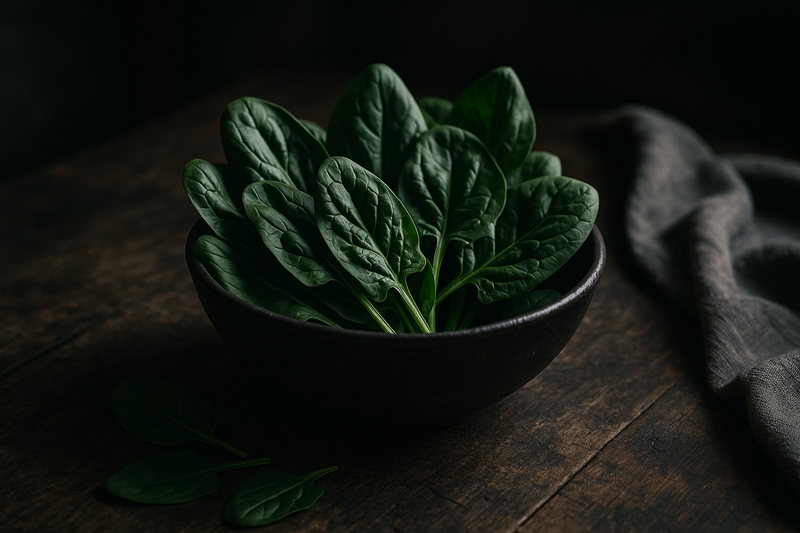
Spinach · Photograph
Why Spinach Health Benefits Deserve Attention In a modern diet often lacking in micronutrients, spinach provides a high-efficiency solution for cellular health.
Key Nutrients
% Daily Value based on 2,000 cal diet
Key Takeaways
- 1. Provides over 100% of the daily value for Vitamin K in just one raw cup, essential for bone health and proper blood clotting.
- 2. An exceptional source of lutein and zeaxanthin, carotenoids that concentrate in the eyes to filter blue light and prevent oxidative damage.
- 3. Naturally high in dietary nitrates, which assist in relaxing blood vessels and supporting healthy blood flow and pressure.
- 4. Features alpha-lipoic acid and thylakoids that are being studied for their potential to improve insulin sensitivity and satiety.
- 5. Contains plant-based (non-heme) iron that becomes more bioavailable when consumed with Vitamin C-rich foods.
Why Spinach Health Benefits Deserve Attention
In a modern diet often lacking in micronutrients, spinach provides a high-efficiency solution for cellular health. Its sky-high Vitamin K levels are vital for skeletal integrity, while its B-vitamin profile, particularly folate, supports DNA synthesis and cell division. For those concerned about age-related eye health, the high concentration of lutein provides a specific defense for the macula. Furthermore, its versatility—retaining many nutrients whether fresh, frozen, or lightly cooked—makes it one of the most accessible "superfoods" for consistent daily consumption.
Key Active Compounds
- Lutein & Zeaxanthin: Carotenoids that act as an internal "sunscreen" for the eyes, protecting against blue light.
- Dietary Nitrates: Compounds that promote vasodilation and support efficient oxygen delivery to tissues.
- Kaempferol & Quercetin: Flavonoids with potent anti-inflammatory properties that help modulate the immune response.
- Alpha-Lipoic Acid: An antioxidant studied for its ability to lower glucose levels and increase insulin sensitivity.
- Chlorophyll: The pigment responsible for photosynthesis, which may offer additional antioxidant and detoxifying support.
Conclusion
Spinach is an undisputed nutritional powerhouse that provides targeted support for the eyes, heart, and metabolism. Its unique blend of nitrates, carotenoids, and essential vitamins provides a level of cellular protection that is hard to match in other vegetables. By alternating between raw and cooked forms and pairing them with smart ingredients like citrus and healthy fats, you can maximize the bioavailability of its nutrients for total body wellness. Ready to build meals around spinach's heart-healthy benefits? Try our meal planner to create balanced dishes that maximize iron absorption with complementary healthy vitamins.
How much of spinach's iron do you actually absorb?
2 cups of raw spinach = 1.6 mg of non-heme iron, of which about 0.16 mg is absorbed (10%).
That absorbed iron covers about 0.9% of the 18 mg Daily Value. Adding 100 mg of vitamin C — half a bell pepper or one orange — roughly triples uptake.
Iron per cup from USDA FoodData Central (30 g raw spinach). Absorption model: ~10% baseline for non-heme iron, up to a 3× boost from vitamin C at the same meal, ~50% reduction from tea or coffee polyphenols (Hallberg & Hulthén, Am J Clin Nutr 2000). 18 mg is the FDA Daily Value.
Is spinach high in oxalates?
Yes — raw spinach carries roughly 600–750 mg of oxalate per 100 g, among the highest of any common vegetable, and that oxalate binds both the iron and the calcium in the leaf so little of either is absorbed. Boiling and draining cuts soluble oxalate by around half, and pairing spinach with a vitamin C source lifts iron uptake several-fold; people with a history of calcium-oxalate kidney stones should keep raw spinach occasional rather than daily.
How Spinach Compares
| Compared with | What's different |
|---|---|
| Spinach vs. Kale | Softer, thinner leaves with a milder flavor that wilts much faster than kale. |
| Spinach vs. Arugula | Significantly higher in Vitamin K and folate, whereas arugula is more peppery and cruciferous. |
| Spinach vs. Romaine Lettuce | Lacks the earthy flavor of spinach and contains much lower levels of iron and Vitamin A. |
Health Benefits
Things to Know
Kidney Disease & Potassium: Because spinach is exceptionally high in potassium, individuals with reduced kidney function should consult their doctor regarding safe portion sizes.
Oxalates & Kidney Stones: Spinach contains oxalates, which can bind with calcium to form stones in susceptible individuals. Pairing spinach with calcium-rich foods can help mitigate this risk.
Warfarin & Vitamin K: High, inconsistent Vitamin K intake can interfere with blood-thinning medications. Maintain a steady, predictable daily intake rather than making sudden changes.
Iron Absorption: To maximize the non-heme iron in spinach, always pair it with a source of Vitamin C to help bypass the inhibitory effects of oxalates and phytates.
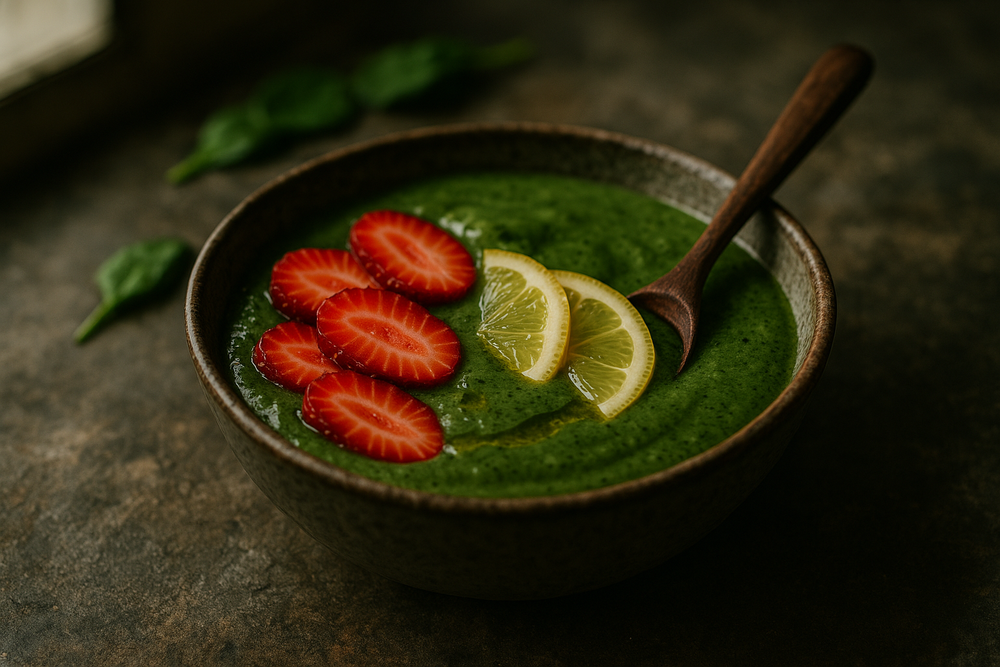
The Absorption Power-Pair: Serve spinach with a squeeze of lemon or sliced strawberries. The Vitamin C in the fruit significantly boosts the absorption of the plant-based iron in the leaves.
The Fat-Soluble Boost: Sauté spinach in olive oil or serve it with avocado. Healthy fats are required for your body to absorb the Vitamin K, Vitamin A, and lutein found in spinach.
The Mineral Balancer: Pair spinach with a source of calcium (like a sprinkle of cheese or a yogurt dressing). This helps prevent oxalate absorption, reducing the risk of kidney stone formation.
Standard Serving: 1–2 cups of raw spinach (or 1/2 cup cooked) is a manageable daily target that provides a significant percentage of essential micronutrients.
Gradual Introduction: If you are increasing your leafy green intake, start with 1 cup to allow your digestive system to adapt to the fiber and mineral content.
Storage Tip: Keep fresh spinach in a dry, airtight container in the crisper drawer. Excess moisture leads to rapid wilting and nutrient loss.
Common Uses
- —Integrated into daily meals specifically to increase intake of eye-protective pigments like zeaxanthin.
- —Used in heart-healthy diets to provide magnesium, potassium, and nitrates for blood pressure management.
- —A staple for vegetarians and vegans looking to boost iron levels through whole-food sources.
- —Added to smoothies and salads as a low-calorie way to increase dietary fiber and nutrient intake.
Active Compounds
Carotenoids that act as an internal "sunscreen" for the eyes, protecting against blue light.
Compounds that promote vasodilation and support efficient oxygen delivery to tissues.
Flavonoids with potent anti-inflammatory properties that help modulate the immune response.
An antioxidant studied for its ability to lower glucose levels and increase insulin sensitivity.
The pigment responsible for photosynthesis, which may offer additional antioxidant and detoxifying support.
Best Forms
Ideal for preserving heat-sensitive nutrients like Vitamin C and Folate. It provides a crisp texture for salads and smoothies.
Lightly steaming or sautéing reduces the volume of the leaves, allowing you to consume a much higher concentration of nutrients. Cooking also increases the bioavailability of fat-soluble Vitamins A and K.
Often frozen immediately after harvest, this form retains a high percentage of its nutrient profile and is a cost-effective way to ensure a consistent supply for cooked dishes.
Prep Ideas
- — The Absorption Power-Pair: Serve spinach with a squeeze of lemon or sliced strawberries. The Vitamin C in the fruit significantly boosts the absorption of the plant-based iron in the leaves.
- — The Fat-Soluble Boost: Sauté spinach in olive oil or serve it with avocado. Healthy fats are required for your body to absorb the Vitamin K, Vitamin A, and lutein found in spinach.
- — The Mineral Balancer: Pair spinach with a source of calcium (like a sprinkle of cheese or a yogurt dressing). This helps prevent oxalate absorption, reducing the risk of kidney stone formation.
Glossary
Shop This Ingredient
Stock your pantry with quality spinach.
Buy on AmazonAs an Amazon Associate, Plantopedia earns from qualifying purchases. This costs you nothing extra and helps us keep the encyclopedia free.
Frequently Asked Questions
Spinach provides powerful antioxidants like lutein for eye health, nitrates that may support heart health, and anti-inflammatory compounds. It's packed with vitamin K for bone health, iron for blood health, and potassium for blood pressure support. These nutrients work together to protect cells from oxidative stress and maintain systemic wellness.
Most people can safely enjoy 1-2 cups of raw spinach or an equivalent cooked serving as part of their daily vegetable intake. Start with smaller amounts if you're new to eating leafy greens regularly. This portion provides a significant dose of essential minerals and vitamins without overwhelming your digestive system with oxalates.
Both have benefits. Raw spinach retains more vitamin C and folate, while cooked spinach increases absorption of fat-soluble vitamins A, E, and K, plus reduces volume, so you can eat more. Lightly steaming is often the best compromise, as it softens the fiber for better digestion while preserving a high nutrient profile.
People with kidney disease should be cautious due to spinach's high potassium content, which can be harmful with reduced kidney function. Always consult your healthcare provider before adding spinach to your diet if you have kidney concerns. Additionally, the high oxalate levels in spinach may be a concern for those prone to stones.
Yes, spinach is one of the best sources of lutein and zeaxanthin, carotenoids that concentrate in the eye's macula. Research suggests these compounds may help protect against age-related eye conditions by filtering blue light and providing antioxidant defense. However, they do not cure existing problems or replace professional medical care.
Quick Answers
Common questions, answered in a line.
Spinach contains dietary nitrates that promote vasodilation and support efficient oxygen delivery to tissues. These compounds, along with magnesium and potassium, make it a staple for blood pressure management and heart-healthy diets.
You can increase iron absorption from spinach by pairing it with Vitamin C sources like citrus or strawberries. This combination helps bypass the inhibitory effects of oxalates and phytates naturally found in the leaves.
Spinach contains alpha-lipoic acid, an antioxidant that has been studied for its ability to lower glucose levels and increase insulin sensitivity. This makes it a valuable vegetable for targeted metabolic and blood sugar support.
To absorb fat-soluble nutrients like Vitamin K, Vitamin A, and lutein, you should serve spinach with healthy fats such as olive oil or avocado. Without a fat source, your body cannot fully utilize these specific micronutrients.
If you are taking blood-thinning medications like Warfarin, you should maintain a steady and predictable daily intake of spinach rather than making sudden changes. This is because the high Vitamin K content in spinach can interfere with the medication's effectiveness.
Spinach supports bone health primarily through its exceptionally high levels of Vitamin K, which is vital for skeletal integrity. It also provides a high-efficiency solution for overall cellular health and DNA synthesis.
Eating spinach with calcium-rich foods like cheese or yogurt can help reduce the risk of kidney stones by preventing oxalate absorption. The oxalates in spinach otherwise bind with calcium in the body to form stones in susceptible individuals.
For Readers in the USA
Local context — sourcing, seasonality, and regional notes.
California and Arizona produce over 90% of the fresh-market spinach in the U.S., ensuring it remains available in grocery stores year-round. While it is a cool-weather crop harvested in spring and fall in most regions, trade between these two states maintains a constant supply.
You can find fresh spinach at major U.S. retailers like Walmart, Kroger, and Costco, as well as specialty grocers like Whole Foods and local farmers markets. Most stores offer both conventional and USDA Organic options in pre-washed bags or clamshells for convenience.
The FDA monitors spinach for food safety, and the USDA Organic seal ensures the crop was grown without synthetic pesticides or fertilizers. Due to its status on the "Dirty Dozen" list, many U.S. consumers prioritize buying organic varieties to minimize pesticide exposure.
AI Clinical Review
- Spinach is legitimately nutrient‑dense and an outstanding source of vitamin K, folate, and carotenoids (lutein/zeaxanthin) that support eye and overall health.
- The piece accurately highlights that both raw and cooked forms have benefits; cooking shrinks volume and boosts bioavailability of fat‑soluble nutrients, while raw preserves heat‑sensitive ones.
- Pairings are practical: vitamin C–rich foods can enhance absorption of spinach’s non‑heme iron, and adding healthy fats helps absorb carotenoids.
- Nitrate content in leafy greens like spinach can support vascular function and may modestly help blood pressure as part of an overall healthy pattern.
- Most heart, blood sugar, and anti‑inflammatory claims come from observational studies, lab models, or animal data; they’re suggestive but not proof that spinach alone prevents disease.
- Findings around alpha‑lipoic acid and thylakoid extracts don’t translate directly to typical spinach portions; human trials using whole‑food doses are limited.
- Lab comparisons of “antioxidant capacity” (e.g., versus green tea or vitamin E) don’t predict real‑world health effects; clinical outcomes matter more than in‑vitro scores.
- Exact micronutrient amounts vary by variety, season, and preparation; expect vitamin C to be present but modest per 1 cup raw, with higher totals achievable when cooked (due to greater edible volume).
- Medications: Very high vitamin K can interfere with warfarin; don’t avoid spinach outright, but keep intake consistent and coordinate with your clinician.
- Kidney considerations: Spinach is high in potassium—people with chronic kidney disease should ask about appropriate portions. Its high oxalate content can raise calcium‑oxalate stone risk; pairing with calcium‑containing foods at meals and moderating portions may help.
- Minerals: Iron is non‑heme and less bioavailable; pair with vitamin C sources. Spinach’s calcium is poorly absorbed due to oxalates—don’t rely on it as a primary calcium source.
- Food safety and portions: Rinse fresh leaves well and refrigerate promptly. For most adults, 1–2 cups raw (or about 1/2 cup cooked) fits comfortably within daily vegetable goals unless otherwise advised.
Frame as food education, not disease treatment.
References
- USDA FoodData Central - Spinach nutrition data (fdc.nal.usda.gov)
- American Heart Association - Leafy green powerhouses, including spinach (heart.org)
- Medical News Today - Comprehensive spinach health review (medicalnewstoday.com)
- PubMed - Spinach extract composition and safety research (pubmed.ncbi.nlm.nih.gov)
- National Center for Complementary and Integrative Health - Plant-based nutrition guidance (nccih.nih.gov)
- Mayo Clinic - Nutrition and food safety information (mayoclinic.org)
- PMC Research - Bioactive compounds in leafy greens (pmc.ncbi.nlm.nih.gov)
- News Medical - Health benefits of spinach review (news-medical.net)
Know Your Numbers
Eating healthy is a start. Now get to know your biomarkers.
Food changes bloodwork — inflammation, lipids, blood sugar and nutrient status all respond to what you eat. 59 markers from $59.
- Results in 7–10 days at 2,000+ Quest sites
- Licensed provider reviews every result
- One flat price, no membership, HSA/FSA eligible
Educational information only, not medical advice. Panels are ordered and reviewed through our licensed partner; Plantopedia may earn a commission.
Filed Under
Health Goals This Supports
Related Ingredients
Best Breakfast Foods for Brain Fog
Breakfasts built around protein, fiber, and slow-digesting carbohydrates, rather than sugar and refined starch alone, are the most consistent way to support steady blood sugar and mental clarity through the morning. No single breakfast food is a proven cognitive enhancer, but research links...
Best Breakfast Foods for Mental Clarity
Mental clarity in the morning comes from meal shape, not a hero ingredient. Here is the pattern, eight breakfasts that follow it, and an honest read of the evidence.
Best Foods for a Healthy Gut Lining
The gut lining, a single layer of cells covered in mucus and sealed by tight junctions, is best supported by a dietary pattern rich in diverse fiber, polyphenols, and some fermented foods, not any one ingredient. Fermentable fibers from legumes, oats, and vegetables feed bacteria that produce...
Best Foods for Blood Vessel Health
Nitrate-rich greens, cocoa flavanols, olive oil, nuts, berries and legumes have the most direct human evidence for vascular function. Most of that evidence is biomarker evidence, and this article says so.
Best Foods for Long-Term Cognitive Health
Observational studies consistently link a Mediterranean or MIND-style pattern to slower cognitive decline, while randomized trials have been far more modest. Here is what each food contributes, and why the pattern and your vascular health matter more than any single item.
Best Low-Bloat Plant-Based Foods
If bloating is a recurring problem, the most consistent evidence points to lowering your total intake of rapidly fermentable carbohydrates (FODMAPs) rather than adding one "de-bloating" food. Whole plant foods like ripe kiwi, oats, well-pressed firm tofu, cooked spinach, less-ripe banana, chia...
Best Plant-Based Foods for Brain Health
The plant foods that show up most consistently in cognitive aging research, the criteria used to select them, and an honest account of what randomized trials have and have not demonstrated.
Best Plant-Based Foods for Heart Health
Legumes, oats and barley, nuts, extra virgin olive oil, soy foods and vegetables carry the most credible human evidence for cardiovascular health. Here is what each one does, at what dose, and where the limits are.
Best Plant-Based Foods for Steady Energy
A practical, evidence-checked look at the plant foods most likely to support steady energy through the day, why the overall eating pattern matters more than any single item, and when persistent fatigue needs a clinician rather than a grocery list.
Blood Sugar Balance for Beginners
Blood sugar balance means keeping your blood glucose from swinging too high or crashing too low after meals, largely by pairing carbohydrates with fiber, protein, and fat, moving your body regularly, and favoring whole foods over refined ones. For most people without diabetes, this is about...
Foods That Support Focus and Clear Thinking
No single food clears brain fog, but a specific cluster of foods has real research behind attention, processing speed, and steady mental energy: plant sources of omega-3 fats like walnuts and chia seeds, flavonoid-rich blueberries, leafy greens like spinach, whole grains such as oats, extra...
Foods That Support Focus and Mental Clarity
An evidence check on the foods people reach for when they need to concentrate, including where the effect is real, where it is small, and where the marketing has run ahead of the research.
Foods That Support Insulin Sensitivity
A cluster of foods, legumes, intact whole grains, nuts, fatty fish, vinegar, and fiber-rich vegetables and berries, are consistently linked in research to better insulin sensitivity, mainly by slowing glucose absorption, improving fasting insulin and HOMA-IR markers, and supporting a healthier...
High-Potassium Foods for Blood Pressure Support
Whole foods dense in potassium, think white beans, potatoes eaten with the skin, leafy greens like spinach and swiss chard, avocado, and dried apricots, can play a modest, supporting role in blood pressure management. Potassium helps the body excrete sodium and eases tension in blood vessel...
How Food Affects Brain Health
A beginner-friendly explanation of the actual routes by which food reaches the brain, the handful of principles that matter, and a starter plate you can build this week.
How Plant-Based Foods Support the Heart
A practical introduction to plant-centered eating for cardiovascular health: the mechanisms that matter, what the cohort and trial evidence shows, a starter plate, and the myths worth dropping.
Iron-Rich Plant Foods for Low Energy
Low iron intake or low iron stores can contribute to fatigue, and a small group of plant foods, mainly legumes, pumpkin seeds, tofu, and dark leafy greens, are meaningfully rich in iron. But iron is only one of several causes of low energy, plant (non-heme) iron is absorbed less efficiently than...
Magnesium-Rich Plant Foods for Sleep
The plant foods that deliver the most magnesium per realistic serving, plus a sober read of what magnesium trials actually show for sleep.
Plant-Based Foods That May Help Fatigue
If fatigue is related to what you're eating, the most likely culprits in a plant-based pattern are too little iron, too little vitamin B12, or simply too few calories and protein for your needs. Fixing those gaps through food, and through fortified sources for B12 specifically, is linked to...
Potassium and Blood Pressure Support
Potassium is a mineral that helps the kidneys excrete excess sodium and helps blood vessel walls relax, and diets higher in potassium are associated with modestly lower blood pressure, especially in people with hypertension who eat a typical high-sodium diet. Whole plant foods like banana,...
What to Eat When You Feel Bloated
When bloating hits, eat a smaller, slower meal built around well-cooked, low-gas vegetables (carrots, zucchini, spinach), a portion of lean protein, and a modest amount of rice or oats, and skip carbonated drinks, sugar alcohols, and raw cruciferous vegetables for a few hours. Peppermint tea or...
What to Eat When You Have Brain Fog
Brain fog (trouble concentrating, mental fatigue, forgetfulness, and a sense of thinking through mud) is not a diagnosis on its own, and no single food fixes it. The dietary pattern most consistently linked to better day-to-day mental clarity emphasizes steady blood sugar, adequate hydration,...
What to Eat When Your Body Feels Inflamed
If your joints ache, your energy sags, or you simply feel puffy and "inflamed" without a clear diagnosis, no single food will fix that. The dietary pattern with the strongest evidence behind it centers on vegetables, fruit, legumes, whole grains, nuts, seeds, and olive oil, eaten regularly, with...