Best Foods for a Healthy Gut Lining
The gut lining, a single layer of cells covered in mucus and sealed by tight junctions, is best supported by a dietary pattern rich in diverse fiber, polyphenols, and some fermented foods, not any one ingredient. Fermentable fibers from legumes, oats, and vegetables feed bacteria that produce...
Direct answer
The gut lining, a single layer of cells covered in mucus and sealed by tight junctions, is best supported by a dietary pattern rich in diverse fiber, polyphenols, and some fermented foods, not any one ingredient. Fermentable fibers from legumes, oats, and vegetables feed bacteria that produce butyrate, a short-chain fatty acid the gut lining uses directly as fuel. Polyphenol-rich foods like berries and extra-virgin olive oil have trial evidence for lowering markers of intestinal permeability in some populations. Fermented foods like kimchi increased microbial diversity and lowered inflammatory markers in a controlled human trial. None of this treats a diagnosed digestive disease.
Key takeaways
- The gut lining depends on the mucus layer, tight junctions between cells, and a healthy microbial community; diet influences all three, mostly indirectly, through fermentation byproducts.
- Fiber that reaches the colon undigested is fermented into short-chain fatty acids, particularly butyrate, the primary fuel source for the cells lining the colon.
- A controlled Stanford trial found a fermented-food diet (live-culture ferments, kimchi, sauerkraut, kombucha) increased microbial diversity and lowered 19 inflammatory markers over 10 weeks, while a high-fiber diet alone did not show the same inflammatory changes in that same short window.
- Polyphenol-rich foods reduced a blood marker of intestinal permeability (zonulin) in older adults with elevated baseline permeability in a randomized trial.
- "Leaky gut" is a real, measurable phenomenon in specific diagnosed diseases, but unexplained "leaky gut" in otherwise healthy people isn't a standardized diagnosis, and no food reverses a condition that hasn't been medically defined in an individual.
How these foods were chosen
Foods here were selected for at least one of three kinds of evidence: they're a well-documented source of fermentable fiber shown to produce short-chain fatty acids in human studies; they're rich in polyphenols shown in controlled trials to influence gut barrier markers like zonulin or tight-junction protein expression; or they belong to a food category, fermented foods, directly tested in a randomized human trial with barrier-relevant outcomes such as microbial diversity and inflammatory markers. Foods relying only on cell-culture or animal-model evidence, or on marketing claims alone, were left out. Where the evidence is mechanistic or comes from animal studies rather than human trials, that's noted, because a mechanism observed in a dish or a mouse doesn't guarantee the same effect in a person.
The food list: why each earns its place
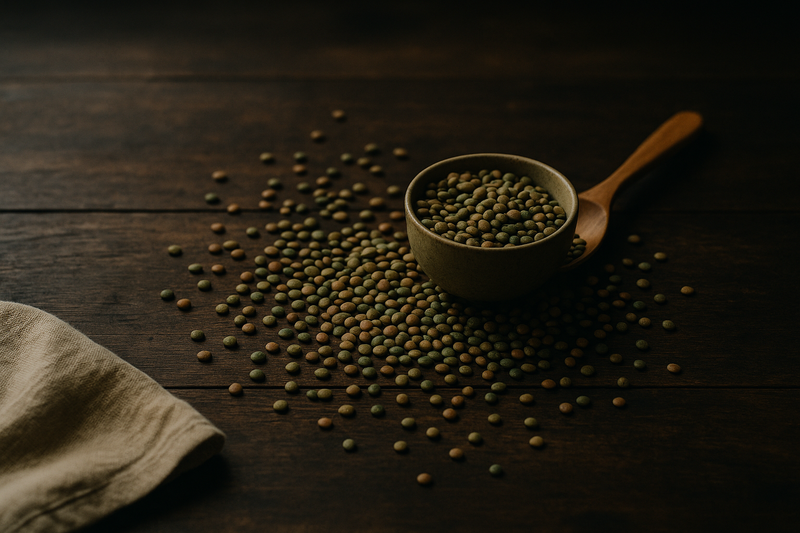
- Lentils and other legumes: a concentrated source of fermentable fiber and resistant starch that colonic bacteria convert into butyrate, the fatty acid gut lining cells preferentially use as fuel.
- Oats: beta-glucan, a soluble fiber with consistent evidence for feeding beneficial bacteria and supporting stool regularity, which indirectly supports a healthier colonic environment.
- Blueberry: among the polyphenol-rich foods used in a randomized trial, alongside pomegranate juice, green tea, and dark chocolate, that lowered blood zonulin, a marker of intestinal permeability, in older adults with elevated baseline levels.
- Garlic: a source of fructans, a prebiotic fiber that selectively feeds Bifidobacteria, associated with a more favorable colonic environment in human studies.
- Kimchi: a fermented vegetable used in the Stanford fermented-food trial that raised microbial diversity and lowered inflammatory markers over 10 weeks.
- Flaxseeds, ground: fiber plus plant omega-3 (ALA); ground rather than whole so the fiber and fats are actually absorbed.
- Extra-virgin-olive-oil: a polyphenol-rich fat with evidence for lower markers of intestinal inflammation compared with more refined oils, and the primary fat in Mediterranean-pattern diets linked to lower systemic inflammation.
- Spinach and other leafy greens: fiber and polyphenols in a low-calorie package that's easy to add to most meals.
How to actually use them
Aim for variety over any single "best" food: research on gut microbial diversity, including the large citizen-science American Gut Project, associates eating a wider range of plant foods across a week, not a large amount of any one food, with a more diverse and resilient microbial community. A practical target is a broad mix of different plant foods (vegetables, fruits, whole grains, legumes, nuts, seeds, herbs) across a typical week, built up gradually if your current diet is low in fiber, since a sudden jump commonly causes gas and bloating. Add one serving of a fermented food most days (a forkful of kimchi or sauerkraut, not a whole jar), use extra-virgin olive oil as your primary added fat, and build at least one legume-based meal into most weeks. None of this needs to be exact to matter; consistency over months is what the evidence supports, not a single "gut-healing" meal.
Why the overall pattern matters more than any single food
The Stanford trial is a useful illustration: participants assigned to a high-fiber diet (legumes, seeds, whole grains, nuts, vegetables, fruit) for 10 weeks did not show the same drop in inflammatory markers that the fermented-food group did, and their microbial diversity didn't change much either, even though fiber is broadly beneficial over the long run. That doesn't mean fiber doesn't matter; it means a single dietary lever, tested for 10 weeks, doesn't reliably move every gut-health marker on its own. Reviews of intestinal permeability research also caution that much of the mechanistic story, how fiber and polyphenols affect tight junctions and the mucus layer, is built on cell and animal studies, with human confirmation still limited and marker-based rather than tied to hard clinical outcomes. The practical takeaway matches what shows up across nutrition science generally: a consistent, diverse, minimally processed dietary pattern, sustained over months to years, is what's associated with better gut and metabolic health, not any single ingredient added to an otherwise unchanged diet.
Who should adapt or be cautious
People with inflammatory bowel disease (Crohn's disease or ulcerative colitis) in an active flare are often advised to temporarily reduce high-fiber, raw, and fermented foods, since these can worsen symptoms during active inflammation; that guidance should come from a gastroenterologist, not a general diet plan. People with IBS or known FODMAP sensitivity may find garlic, legumes, and some fermented foods worsen bloating and should introduce them slowly or work with a dietitian. People with small intestinal bacterial overgrowth are often advised to limit fermentable fiber until that condition is treated. Anyone on warfarin or another vitamin K-sensitive blood thinner should keep leafy green intake consistent rather than sharply increasing it, since large swings in vitamin K intake can affect anticoagulant dosing. People who are immunosuppressed are sometimes advised to avoid raw, unpasteurized fermented foods; check with your care team before adding them.
When to seek care
Supporting the gut lining through diet is not a substitute for evaluating symptoms that could signal a digestive disease. See a clinician if you have blood in your stool, unintentional weight loss, persistent abdominal pain, a fever alongside digestive symptoms, or new digestive symptoms that start after age 50, since these can point to conditions that need medical evaluation rather than dietary changes alone. If you have inflammatory bowel disease and notice increasing pain, more frequent or bloody diarrhea, fever, or weight loss, that can signal a flare and warrants prompt contact with your gastroenterologist rather than adjusting your diet on your own. Anyone with celiac disease who continues to have symptoms despite a gluten-free diet should also be evaluated, since ongoing gut lining damage in that condition needs medical management, not just dietary changes.
Bottom line
No food repairs or "heals" the gut lining on its own, but a dietary pattern built around diverse fermentable fiber, polyphenol-rich produce, and modest, regular servings of fermented foods is associated with better markers of gut barrier function and lower inflammation in controlled human research. Build the pattern gradually, favor variety over volume, and get individualized guidance if you have a diagnosed digestive condition.
Frequently asked questions
Is "leaky gut" a real medical condition?
Increased intestinal permeability is a real, measurable phenomenon and is well documented in specific diseases like celiac disease and inflammatory bowel disease. "Leaky gut syndrome" as a stand-alone diagnosis in otherwise healthy people, marketed as the root cause of unrelated symptoms, isn't a recognized diagnosis, and much of the supporting research is still at the mechanistic or animal-model stage.
Do I need to eat fermented foods every day?
The trial showing benefit used gradually increasing servings, up to about six per day by the end of the study; most people see reasonable exposure from one to two servings most days. There's no established minimum, and more isn't automatically better, especially for those prone to bloating.
Can supplements replace whole foods for gut lining support?
Isolated fiber or polyphenol supplements haven't consistently matched the effects seen with whole foods in trials, likely because whole foods deliver fiber, polyphenols, and other compounds together. A food-first approach is better supported for most people than relying on a supplement alone.
Will these foods help with a diagnosed condition like IBD or celiac disease?
No individual food or general "gut healthy" eating pattern is a treatment for a diagnosed digestive disease. People with these conditions need care from a gastroenterologist and, often, a dietitian familiar with their specific diagnosis, since general advice can even be counterproductive during flares.
How quickly could I expect to notice a difference?
The clearest human trial evidence, the fermented-food study, showed measurable changes in inflammatory markers and diversity over 10 weeks of consistent daily intake, not days. Think in terms of months of a sustained pattern, not a short fix.
Sources and evidence
- Effect of a polyphenol-rich diet on intestinal permeability, MaPLE randomized trial protocol, PMC
- Fermented-food diet increases microbiome diversity and lowers inflammation, Stanford Medicine
- Gut microbiome-mediated health effects of fiber and polyphenol-rich dietary interventions, Frontiers in Nutrition
- Alterations in intestinal permeability: the role of "leaky gut," PMC
- Leaky gut: mechanisms, measurement and clinical implications in humans, PubMed
- Food sources of dietary fiber, Dietary Guidelines for Americans
- USDA FoodData Central
Know Your Numbers
Eating healthy is a start. Now get to know your biomarkers.
Food changes bloodwork — inflammation, lipids, blood sugar and nutrient status all respond to what you eat. 59 markers from $59.
- Results in 7–10 days at 2,000+ Quest sites
- Licensed provider reviews every result
- One flat price, no membership, HSA/FSA eligible
Educational information only, not medical advice. Panels are ordered and reviewed through our licensed partner; Plantopedia may earn a commission.