Beyond its culinary fame, garlic is a powerhouse of organosulfur compounds. We explore the clinical evidence for heart health, immune suppor
Flavor-first apothecary angle; use food amounts rather than supplement claims
The Short Answer
Garlic contains the bioactive compound allicin, which is released when cloves are crushed to support cardiovascular health and immune function. One clove provides roughly 5% of the Daily Value for Vitamin B6.
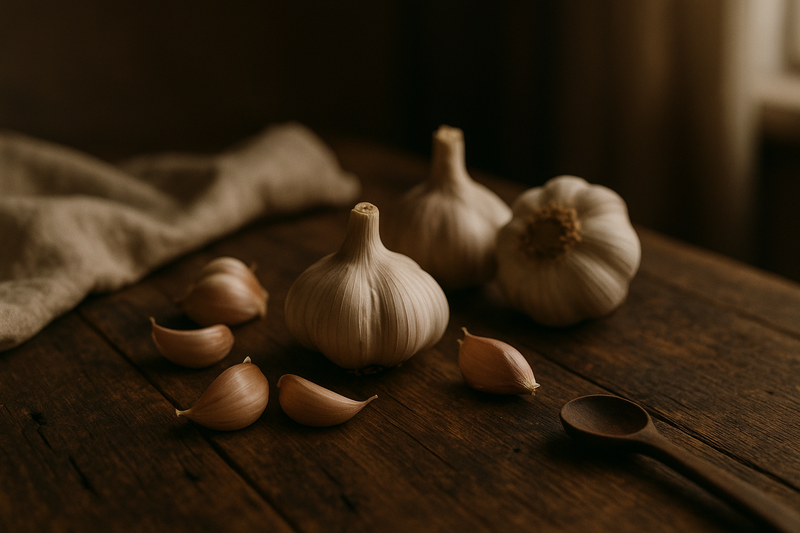
Garlic · Photograph
In our processed-food world, garlic stands out as a nutrient-dense whole food with documented health benefits. Its relevance today centers on its unique chemistry. When fresh garlic is crushed or chopped, the resulting allicin provides the distinctive smell and many of the health properties we seek. Unlike many trending superfoods, garlic's benefits are supported by decades of research examining everything from cardiovascular protection to immune support.
Key Nutrients
% Daily Value based on 2,000 cal diet
Key Takeaways
- 1. Garlic’s primary bioactive, allicin, is created only when the bulb is crushed or chopped.
- 2. Research suggests modest improvements in blood pressure and cholesterol levels when used as a complementary tool.
- 3. Garlic acts as a prebiotic and possesses natural antimicrobial properties.
- 4. Effective food-based doses typically range from 1–3 fresh cloves (3–9g) daily.
- 5. Garlic has natural antiplatelet (blood-thinning) effects; caution is required for those on medication or facing surgery.
- 6. Let crushed garlic sit for 10 minutes before cooking to preserve its bioactive potential.
Why Garlic Health Benefits Matter
In our processed-food world, garlic stands out as a nutrient-dense whole food with documented health benefits. Its relevance today centers on its unique chemistry. When fresh garlic is crushed or chopped, the resulting allicin provides the distinctive smell and many of the health properties we seek. Unlike many trending superfoods, garlic's benefits are supported by decades of research examining everything from cardiovascular protection to immune support.
Key Active Compounds
- Allicin: Primary bioactive formed when garlic tissue is damaged; provides antimicrobial effects.
- S-allylcysteine (SAC): A stable, water-soluble compound found in Aged Garlic Extract.
- Diallyl Sulfides: Formed from allicin breakdown; contributes to cardiovascular protection.
- Ajoene: An organosulfur compound with potent anti-clotting potential.
- Flavonoids: Including quercetin and kaempferol for antioxidant support.
Prep and Pairing Ideas
- Classic Tonic: 1-2 crushed cloves in a teaspoon of honey or mixed into a dressing.
- Synergy: Combine with olive oil to improve the absorption of fat-soluble compounds.
- The Wait Rule: Always wait 10 minutes after crushing before applying heat.
Conclusion
Garlic offers impressive health potential backed by centuries of traditional use and growing scientific research. Its organosulfur compounds may support heart health, immune function, and healthy inflammation responses. While not a miracle cure, garlic represents an accessible, affordable way to support overall wellness.
Whether you choose fresh cloves, powder, or aged extract, start conservatively and listen to your body's response. The key is consistency—regular, moderate garlic consumption as part of a varied, nutrient-dense diet offers the best chance for meaningful health benefits.
How Garlic Compares
| Compared with | What's different |
|---|---|
| Garlic vs. Shallots | Milder, sweeter flavor with higher sugar content and no distinct cloves. |
| Garlic vs. Aged Black Garlic | Contains higher concentrations of S-allylcysteine and lacks the pungent allicin of fresh cloves. |
| Garlic vs. Chives | Milder, onion-like flavor focused on the green stems rather than a pungent bulb. |
Health Benefits
Things to Know
Blood-Thinning: May increase bleeding risk; stop supplements 2 weeks before surgery.
Medication Interactions: Can interact with insulin, blood pressure meds, and anticoagulants.
GI Sensitivity: Raw garlic can cause heartburn, bloating, or reflux.
Pregnancy: Culinary amounts are safe, but avoid therapeutic doses without a doctor.
Common Uses
- —Utilized to support healthy circulation and lipid profiles by inhibiting cholesterol synthesis.
- —Feeding beneficial gut bacteria like Bifidobacteria to maintain a healthy microbiome.
- —Traditionally used to support the body’s defenses against common pathogens.
- —Paired with healthy fats to enhance the absorption of fat-soluble sulfur compounds.
Best Forms
Highest allicin potential. Let it sit for 10-15 minutes after chopping to maximize enzyme activity.
Offers convenience and stable sulfur compounds, though it's lower in allicin than fresh garlic.
Contains stable S-allylcysteine; most studied for long-term cardiovascular benefits.
Concentrated volatile sulfur compounds, though lacking water-soluble components.
Prep Ideas
- — Classic Tonic: 1-2 crushed cloves in a teaspoon of honey or mixed into a dressing.
- — Synergy: Combine with olive oil to improve the absorption of fat-soluble compounds.
- — The Wait Rule: Always wait 10 minutes after crushing before applying heat.
Glossary
Shop This Ingredient
Stock your pantry with quality garlic.
Buy on AmazonAs an Amazon Associate, Plantopedia earns from qualifying purchases. This costs you nothing extra and helps us keep the encyclopedia free.
Frequently Asked Questions
Research suggests that consuming 1 to 3 fresh cloves, roughly 3 to 9 grams, daily provides the most consistent health benefits for adults. It is best to start with a single clove to assess your digestive tolerance. For supplements like aged garlic extract, follow the specific dosage on the label.
Raw garlic contains higher levels of allicin, which is the primary compound responsible for its antimicrobial properties. However, cooked garlic still provides stable organosulfur compounds that support heart health. To get the best of both, let crushed garlic sit for ten minutes before cooking to preserve its bioactive enzyme activity.
Clinical studies indicate that garlic's organosulfur compounds can support healthy blood pressure by encouraging vasodilation and reducing systemic inflammation. While these effects are measurable and significant in meta-analyses, garlic should only be used to complement medical treatments. Always consult your doctor before using garlic to manage a diagnosed hypertensive condition.
Allicin is garlic's primary bioactive compound, created when raw cloves are crushed or chopped. It is responsible for garlic's pungent aroma and offers potent antimicrobial, anti-inflammatory, and antioxidant properties. Because it is unstable, allicin quickly breaks down into other beneficial sulfur molecules that continue to support your body's wellness.
Garlic possesses natural antiplatelet effects that may significantly increase the risk of bleeding when combined with anticoagulant medications like warfarin or aspirin. It is vital to consult your healthcare provider before adding therapeutic garlic doses to your routine if you are on these medications or have an upcoming surgery.
Quick Answers
Common questions, answered in a line.
You should wait 10 minutes after crushing or chopping garlic before applying heat to preserve its health properties. This "Wait Rule" allows for the formation of allicin, the primary bioactive compound responsible for many of garlic's antimicrobial and medicinal effects.
Garlic may support heart health by protecting the cardiovascular system, inhibiting cholesterol synthesis, and promoting healthy circulation. It contains diallyl sulfides and ajoene, organosulfur compounds known for their anti-clotting potential and ability to support lipid profiles.
Consuming garlic with olive oil or other healthy fats can improve the absorption of its fat-soluble sulfur compounds. This synergy helps the body more effectively utilize the protective nutrients found in the vegetable.
Garlic can interact with certain medications, including blood pressure drugs, insulin, and anticoagulants (blood thinners). Because it may increase bleeding risk, it is also recommended to stop taking garlic supplements at least two weeks before a scheduled surgery.
Common side effects of eating raw garlic include gastrointestinal sensitivity, such as heartburn, bloating, or acid reflux. While it is a nutrient-dense whole food, individual responses vary and some people may find it irritates the digestive system.
Garlic acts as a prebiotic by feeding beneficial gut bacteria like Bifidobacteria to help maintain a healthy microbiome. Its unique chemistry and organosulfur compounds support digestive wellness and a healthy inflammation response.
For Readers in the USA
Local context — sourcing, seasonality, and regional notes.
California produces over 90% of the commercial garlic grown in the U.S., with the harvest primarily occurring between June and August. While available year-round due to cold storage, you will find the freshest domestic crops at farmers markets in the late summer and early fall.
The 'California Early' and 'California Late' softneck varieties are the most common types found in major U.S. grocery chains like Kroger, Safeway, and Whole Foods. Hardneck varieties, prized for their complex flavor and edible scapes, are more frequently found at local farmers markets in the Northeast and Midwest.
The USDA Organic seal ensures that garlic was grown without synthetic fertilizers or prohibited pesticides and was not treated with irradiation or sprout inhibitors. Much of the conventional garlic imported to the U.S. is bleached for whiteness, a practice generally avoided by domestic organic growers.
AI Clinical Review
- Clearly explains how allicin forms when garlic is crushed and why letting it sit before heating can increase its levels, while noting that cooked garlic still contains other helpful sulfur compounds.
- Summarizes the best-supported area of benefit: modest cardiovascular support (blood pressure and cholesterol) seen in some randomized controlled trials, especially with aged garlic extract, as an add-on to standard care—not a replacement.
- Accurately notes antimicrobial and potential prebiotic effects, and that raw garlic can bother some people’s stomachs.
- Provides practical guidance on buying and using garlic (fresh vs. powder vs. aged garlic extract) and flags essential medication interactions.
- Microbiome benefits are promising but are based on small, varied human studies; clear clinical outcomes (e.g., fewer infections or GI symptoms) aren't yet firmly established.
- Data on blood sugar and diabetes prevention are mixed; effect sizes appear modest, and the ideal dose/form/timing remains uncertain.
- Anti-inflammatory findings mostly reflect changes in biomarkers (lab measures) rather than consistent improvements in symptoms or disease events.
- Supplement “allicin yield” claims can be unreliable because allicin is unstable; different products and preparation methods produce different compounds and amounts.
- Typical food-range intake studied is about 1–3 cloves per day (roughly 3–9 g). If using supplements, choose standardized aged garlic extract (often standardized to S-allylcysteine) and follow the label or clinician guidance.
- Safety: Garlic can increase the risk of bleeding. People on blood thinners (e.g., warfarin, clopidogrel, aspirin), with bleeding disorders, or scheduled for surgery should consult their clinician; supplements are usually stopped 1–2 weeks pre-op.
- Drug interactions and blood pressure/sugar: Garlic may modestly enhance the effects of antihypertensive or diabetes medications—monitoring may be needed when starting or changing doses.
- Digestive tolerance: Garlic is high in FODMAP fructans and can trigger bloating, gas, or reflux; cooked forms or smaller amounts may be better tolerated. Allergic reactions are uncommon but possible, especially with topical use.
Use culinary framing; avoid treatment claims or supplement-dose guidance.
References
- USDA FoodData Central - Garlic nutrition data (fdc.nal.usda.gov)
- NIH National Center for Complementary and Integrative Health - Garlic safety profile (nccih.nih.gov)
- Frontiers in Nutrition - Nutritional value and bioactive availability of garlic (frontiersin.org)
- Food & Function - Biological properties and therapeutic applications of garlic (pubs.rsc.org)
- PubMed - Garlic and cardiovascular disease meta-analysis (pubmed.ncbi.nlm.nih.gov)
- Healthline - Evidence-based garlic health benefits (healthline.com)
- BBC Good Food - Garlic nutrition and health effects (bbcgoodfood.com)
- Mayo Clinic - Garlic supplement safety and interactions (mayoclinic.org)
Know Your Numbers
Eating healthy is a start. Now get to know your biomarkers.
Food changes bloodwork — inflammation, lipids, blood sugar and nutrient status all respond to what you eat. 59 markers from $59.
- Results in 7–10 days at 2,000+ Quest sites
- Licensed provider reviews every result
- One flat price, no membership, HSA/FSA eligible
Educational information only, not medical advice. Panels are ordered and reviewed through our licensed partner; Plantopedia may earn a commission.
Filed Under
Health Goals This Supports
Related Ingredients
Best Foods for a Healthy Gut Lining
The gut lining, a single layer of cells covered in mucus and sealed by tight junctions, is best supported by a dietary pattern rich in diverse fiber, polyphenols, and some fermented foods, not any one ingredient. Fermentable fibers from legumes, oats, and vegetables feed bacteria that produce...
Best Foods for Blood Vessel Health
Nitrate-rich greens, cocoa flavanols, olive oil, nuts, berries and legumes have the most direct human evidence for vascular function. Most of that evidence is biomarker evidence, and this article says so.
Best Foods for Gut Health
High-fiber plants eaten in variety plus a small daily serving of genuinely fermented food is the combination with the best human evidence behind it. Here is the food list, the dosing, and the cautions.
Best Foods to Feed Good Gut Bacteria
Gut bacteria run on fermentable carbohydrate your own enzymes cannot digest. Here are the foods with the best human evidence behind them, how to introduce them without wrecking your week, and the honest limits of what microbiome research can currently claim.
Fiber, Prebiotics, and the Gut Microbiome
A step-by-step explanation of how dietary fiber becomes short-chain fatty acids in the colon, what randomized trials and large cohorts actually show, and why a good mechanism is not the same as a proven benefit.
Foods That May Worsen Bloating
Bloating has less to do with any single "bad" food and more to do with how much fermentable carbohydrate reaches your gut at once, how sensitive your gut is to stretching, and how quickly gas clears. The foods most consistently linked to bloating are beans and lentils, cruciferous vegetables...
Foods That Support Recovery and Resilience
No food or supplement "boosts" immunity on demand, but a consistent pattern of foods rich in vitamin C, zinc, fiber, and plant compounds gives your immune system the raw materials it needs to function normally and supports recovery from everyday illness and physical stress. The strongest...
Gut Health and Brain Fog: What's the Connection?
Brain fog, the fuzzy thinking, poor focus, and word-finding trouble many people describe, is linked to gut health through what researchers call the gut-brain axis: a two-way communication system between the digestive tract and the brain involving nerves, immune signaling, and molecules made by...
How Fiber Affects Bloating
Fiber can make bloating better or worse, and sometimes both, depending on the type of fiber, the amount, and how quickly you increase it. Fermentable fibers, found in beans, onion, wheat, and many fruits, feed gut bacteria that produce gas as a byproduct, which can stretch the intestine and feel...
How Gut Health Supports Immunity
The intestine holds a large share of the body's immune tissue, and resident microbes help calibrate it. Here is the mechanism in sequence, the human trial evidence, and an honest account of where the science stops.
How the Gut Affects Energy, Mood, and Inflammation
A step-by-step walk through the gut-brain and gut-immune pathways, followed by an honest account of what human trials have shown, what remains mechanism only, and what to do with the difference.
Prebiotic Foods: What They Are and Why They Matter
A precise, non-hyped explanation of what makes a food component prebiotic, the fermentation chain it sets off in the colon, and the difference between a well-mapped mechanism and a proven health outcome.
Prebiotics vs. Probiotics: What's the Difference?
A side-by-side comparison of prebiotics and probiotics, including what each one is, how strong the human evidence is for each, and a practical guide to deciding whether either is worth your money.
What Is the Gut Microbiome?
A beginner's guide to the community of microbes living in your large intestine: what it does, how diet shifts it, and where the science is genuinely uncertain.
What to Do After Getting Gut Microbiome Results
If you've just gotten a gut microbiome test back, don't overhaul your diet based on it yet. These tests have documented reproducibility problems (the same stool sample, split and sent to testing companies, has come back with meaningfully different results), and a 2024 international expert...
What to Eat After Antibiotics
After a course of antibiotics, the most useful dietary shift is eating more fiber, from vegetables, legumes, and whole grains, and adding fermented foods like yogurt or kefir if you tolerate dairy. Research comparing dietary changes with probiotic and microbial-transplant approaches found that a...
Why Beans Cause Gas and How to Make Them Easier to Digest
Beans cause gas mainly because of raffinose-family oligosaccharides, sugars like raffinose and stachyose that your small intestine cannot break down. Humans do not produce the enzyme needed to digest these sugars, so they pass largely intact into the colon, where resident bacteria ferment them....