Blueberry — health benefits and uses
Fiber + phytonutrients; use as a whole-food sweet, snack, or smoothie base
The Short Answer
Blueberries are a nutrient-dense fruit providing 3.6g of fiber and 24% of the DV for Vitamin K per cup, known primarily for their high concentration of heart-healthy anthocyanin antioxidants.

Blueberry · Photograph
Blueberries (Vaccinium species) are among nature's most nutrient-dense fruits, packed with powerful antioxidant compounds called anthocyanins that give them their deep blue color. Research suggests these small berries may support heart health, brain function, and healthy blood sugar levels as part of a balanced diet.
Key Nutrients
% Daily Value based on 2,000 cal diet
Key active compounds
• Anthocyanins - Water-soluble pigments that account for up to 60% of total polyphenols; primarily malvidin, delphinidin, petunidin, cyanidin, and peonidin • Proanthocyanidins - Condensed tannins that contribute to vascular protection • Flavonols - Including quercetin, kaempferol, and myricetin for antioxidant support • Hydroxycinnamic acids - Particularly chlorogenic acid for metabolic benefits • Vitamin C - Water-soluble antioxidant supporting immune function and collagen synthesis • Manganese - Essential mineral cofactor for antioxidant enzymes
Who benefits most from blueberries
Heart-conscious individuals: Those looking to support cardiovascular health through diet may particularly benefit from blueberries' polyphenol content and potassium for healthy circulation. • Natural source of cardio-protective anthocyanins • Low sodium, naturally cholesterol-free
Active adults and athletes: The antioxidants may support recovery while the natural sugars provide quick energy for workouts. • May help reduce exercise-induced oxidative stress • Portable, convenient pre or post-workout snack
Prep and pairing ideas
Simple additions: Stir into oatmeal, yogurt, or cottage cheese for antioxidant boost Smoothie base: Blend with spinach and protein powder for nutrient density Baking substitute: Use in muffins or pancakes instead of chocolate chips Savory applications: Add to salads with nuts and cheese for sweet-tart contrast Preservation: Freeze fresh berries on a tray before storing in bags to prevent clumping
Buying guide
Fresh blueberries: Look for plump, uniform color with slight bloom (natural waxy coating). Avoid wrinkled, soft, or moldy berries. Store unwashed in refrigerator for up to 10 days.
Frozen options: Choose brands without added sugar or preservatives. Wild blueberry varieties often provide higher antioxidant content than cultivated ones.
Organic vs conventional: Both provide health benefits. Blueberries are on the "Dirty Dozen" list, so organic may reduce pesticide exposure if budget allows.
Bottom line
Blueberries earn their superfood reputation through exceptional antioxidant content, particularly anthocyanins that may support heart health, brain function, and healthy inflammation levels. The research is promising for cardiovascular benefits and emerging for cognitive support.
As whole foods go, blueberries are hard to beat—nutritious, delicious, and versatile enough for daily enjoyment. A cup a day provides meaningful amounts of fiber, vitamin C, and protective polyphenols with minimal calories or prep time.
Ready to make blueberries part of your routine? Our meal planner* can help you build balanced meals that include these antioxidant powerhouses along with other nutrient-dense foods.*
How Blueberry Compares
| Compared with | What's different |
|---|---|
| Blueberry vs. Wild Blueberries | Higher in anthocyanins, smaller in size, and typically sold frozen rather than fresh. |
| Blueberry vs. Huckleberries | Tarter flavor and smaller size, with a distinct red interior compared to the blueberry's green flesh. |
| Blueberry vs. Blackberries | Darker, nearly black skin with much higher fiber (nearly 8g per cup) and larger seeds. |
Health Benefits
Things to Know
Start gradually: - Begin with ½ cup servings to assess digestive tolerance
Blood thinning medications - Maintain consistent vitamin K intake; consult your doctor if taking warfarin
Digestive sensitivity - Blueberries contain natural fruit sugars and sorbitol that may trigger symptoms in those with IBS or fructose malabsorption
Pregnancy and nursing - Generally safe as food in normal amounts
Blood sugar monitoring - While helpful for blood sugar balance, diabetics should still account for the 15g natural sugars per cup
Shop This Ingredient
Stock your pantry with quality blueberry.
Buy on AmazonAs an Amazon Associate, Plantopedia earns from qualifying purchases. This costs you nothing extra and helps us keep the encyclopedia free.
Frequently Asked Questions
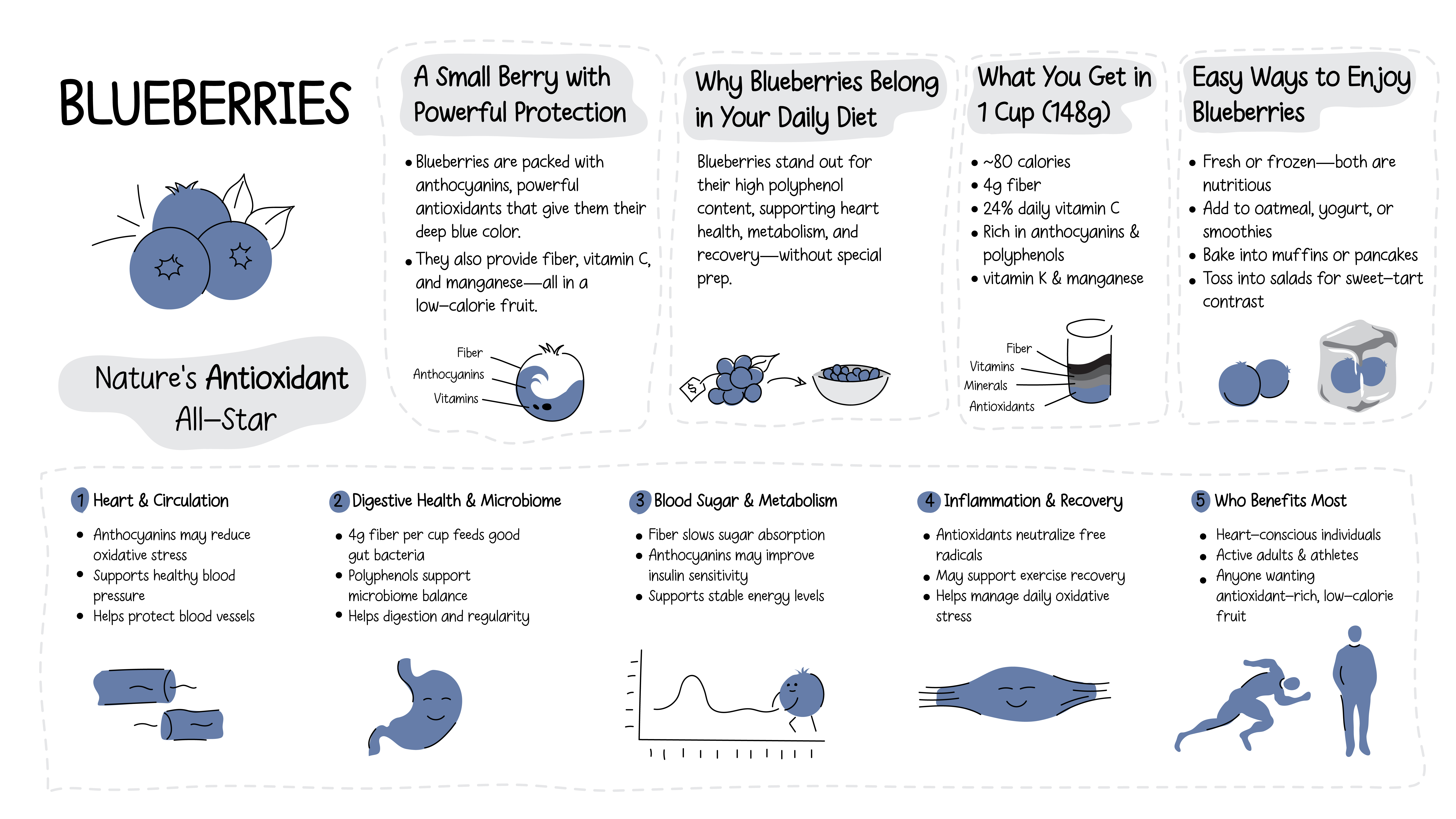
Heart and circulation Polyphenols in blueberries may help prevent cholesterol oxidation, a key step in arterial plaque formation. Several studies suggest regular blueberry consumption supports healthy blood pressure and circulation. The anthocyanins work through anti-inflammatory pathways that benefit the cardiovascular system. Digestive health and microbiome The 4 grams of fiber per cup feeds beneficial gut bacteria, while polyphenols may promote a healthy microbiome balance. Some research indicates blueberries can support digestive comfort and regularity as part of a high-fiber diet. Blood sugar and metabolism Emerging research suggests blueberries may help moderate post-meal blood sugar spikes. The fiber content slows carbohydrate absorption, while anthocyanins may support healthy insulin sensitivity. This combination makes blueberries a smart choice for stable energy. Inflammation and recovery The concentrated antioxidants in blueberries help neutralize free radicals that contribute to chronic inflammation. Regular consumption may support the body's natural recovery processes after exercise or daily stress.
Fresh blueberries offer peak flavor and the highest anthocyanin content when fully ripe. Wild blueberries (Vaccinium angustifolium) typically contain more antioxidants than cultivated highbush varieties. Frozen blueberries retain most of their nutritional value and can be more economical year-round. They work well in smoothies and baked goods where texture is less critical. Dried blueberries are concentrated in sugars and calories—a ¼ cup contains about the same calories as 1 cup fresh. Look for varieties without added sugar when possible. Blueberry powders and extracts provide concentrated anthocyanins but lack the fiber and other nutrients found in whole berries.
Most research uses ½ to 1 cup (74-148g) fresh blueberries daily, providing 200-400mg of beneficial polyphenols. This amount fits well within a balanced diet without excessive sugar intake. Start with ½ cup daily and gradually increase based on your digestive comfort and overall fruit intake. There's no established upper limit, but variety in your diet is always beneficial. Timing doesn't appear critical—enjoy them when convenient, whether as breakfast additions, snacks, or dessert alternatives.
Quick Answers
Common questions, answered in a line.
Blueberries are rich in anthocyanins, vitamin C, manganese, flavonols like quercetin, and proanthocyanidins. These compounds provide powerful antioxidant support, promote heart health, and contribute to healthy immune function and collagen synthesis.
Studies suggest blueberries may support cardiovascular health by providing cardio-protective anthocyanins and potassium for healthy circulation. Being naturally low in sodium and cholesterol-free makes them an ideal choice for heart-conscious individuals.
Blueberries might support brain function and healthy inflammation levels through their high concentration of antioxidants and protective polyphenols. Emerging research specifically points toward promising cognitive support from daily consumption.
When buying fresh blueberries, look for plump berries with a uniform color and a slight "bloom," which is the natural waxy coating on the skin. Avoid any fruit that appears wrinkled, soft, or shows signs of mold.
People with IBS or fructose malabsorption should exercise caution because blueberries contain natural fruit sugars and sorbitol that may trigger digestive symptoms. It is recommended to start with a small half-cup serving to assess your personal tolerance.
Blueberries are a smart choice for athletes because their antioxidants may help reduce exercise-induced oxidative stress while providing natural sugars for quick energy. They serve as a portable and convenient snack for both pre- and post-workout recovery.
To prevent clumping, freeze fresh blueberries on a tray in a single layer before transferring them to storage bags. Unwashed fresh berries should be stored in the refrigerator, where they can last for up to 10 days.
For Readers in the USA
Local context — sourcing, seasonality, and regional notes.
The peak season for fresh U.S.-grown blueberries typically runs from mid-April through late September, following the harvest from Florida up to the Pacific Northwest. While imported berries are available year-round, you will find the most flavorful domestic fruit during these summer months.
Blueberries are grown commercially in 26 states, with Michigan, Oregon, Washington, Georgia, and New Jersey leading the nation in production. Maine is unique for producing the vast majority of "wild" lowbush blueberries, which are smaller and often sold frozen.
In the U.S., you can find fresh blueberries at major retailers like Kroger, Walmart, and Whole Foods, or buy them by the gallon at local "U-Pick" farms. Many American shoppers prefer buying large frozen bags at warehouse clubs like Costco for cost-effective smoothie prep.
The USDA Organic seal ensures blueberries are grown without most synthetic fertilizers or pesticides, which is relevant since they occasionally appear on the "Dirty Dozen" list. Even for non-organic berries, the FDA recommends rinsing them under cold running water just before eating.
AI Clinical Review
- Clear summary that blueberries are rich in anthocyanins (a class of polyphenols that give the blue color) plus fiber, vitamin C, vitamin K, and manganese. • Evidence is strongest for modest cardiovascular support (e.g., small improvements in blood pressure and vascular function) when ~½–1 cup is eaten regularly as part of an overall healthy pattern. • The nutrition snapshot (about 80 kcal and ~4 g fiber per cup) and practical ideas for using fresh or frozen berries are accurate and useful. • Noting that dried and extract forms can be more sugar‑dense or lack fiber is a helpful distinction.
- Brain/cognitive benefits are promising but based on small, short trials; long‑term prevention of memory decline or dementia has not been proven. • Effects on blood sugar and insulin sensitivity appear modest and variable across studies, especially when berries are consumed in sweetened products versus whole fruit. • “Antioxidant” capacity measured in the lab doesn’t always translate to clinical outcomes; benefits likely also involve cell‑signaling and gut‑microbiome effects that need more research. • Blueberries contribute some potassium, but they are not a high‑potassium food; heart benefits are more attributable to polyphenols and overall diet quality.
- Typical research doses are ~½–1 cup fresh blueberries daily (about 75–150 g) or ~11–22 g freeze‑dried powder—amounts that fit most meal plans without displacing other fruits. • If you take warfarin, keep vitamin K intake consistent; blueberries contain vitamin K, so discuss any big diet changes with your clinician. • For diabetes or low‑FODMAP/IBS needs: a cup has ~21 g carbohydrate (~15 g natural sugars); larger portions can trigger GI symptoms in sensitive individuals—start smaller and assess tolerance. • Prefer whole or frozen berries; dried berries and juices/extracts can be high in free sugars and lack fiber. Allergic reactions are uncommon but possible in those sensitive to berries.
Frame as food education, not disease treatment.
References
- USDA FoodData Central - Blueberry nutrition facts (fdc.nal.usda.gov)
- University of Maine Extension - Wild blueberry antioxidant concentrations (extension.umaine.edu)
- PMC Research Review - Recent research on blueberry health benefits (pmc.ncbi.nlm.nih.gov)
- PMC Study - Bioactive compounds and storage stability (pmc.ncbi.nlm.nih.gov)
- Franklin County Extension - Blueberry nutritional boost (franklin.ces.ncsu.edu)
- Healthline Medical Review - Blueberry nutrition and benefits (healthline.com)
- Driscoll's Nutrition Data - Fresh blueberry facts (driscolls.com)
- Mayo Clinic - Antioxidants and disease prevention (mayoclinic.org)
Know Your Numbers
Eating healthy is a start. Now get to know your biomarkers.
Food changes bloodwork — inflammation, lipids, blood sugar and nutrient status all respond to what you eat. 59 markers from $59.
- Results in 7–10 days at 2,000+ Quest sites
- Licensed provider reviews every result
- One flat price, no membership, HSA/FSA eligible
Educational information only, not medical advice. Panels are ordered and reviewed through our licensed partner; Plantopedia may earn a commission.
Filed Under
Health Goals This Supports
Related Ingredients
Anti-Inflammatory Breakfast Ideas
Eight breakfast templates built from whole grains, fruit, legumes and unsaturated fats, with the reasoning behind each, easy substitutions, and honest limits on what a single meal can do.
Best Breakfast Foods for Brain Fog
Breakfasts built around protein, fiber, and slow-digesting carbohydrates, rather than sugar and refined starch alone, are the most consistent way to support steady blood sugar and mental clarity through the morning. No single breakfast food is a proven cognitive enhancer, but research links...
Best Breakfast Foods for Mental Clarity
Mental clarity in the morning comes from meal shape, not a hero ingredient. Here is the pattern, eight breakfasts that follow it, and an honest read of the evidence.
Best Foods for a Healthy Gut Lining
The gut lining, a single layer of cells covered in mucus and sealed by tight junctions, is best supported by a dietary pattern rich in diverse fiber, polyphenols, and some fermented foods, not any one ingredient. Fermentable fibers from legumes, oats, and vegetables feed bacteria that produce...
Best Foods for Focus and Memory
A body-systems look at the foods with the most credible human evidence for attention and memory over time, including the trial that found no benefit and why that result matters.
Best Foods for Gut Health
High-fiber plants eaten in variety plus a small daily serving of genuinely fermented food is the combination with the best human evidence behind it. Here is the food list, the dosing, and the cautions.
Best Foods for Long-Term Cognitive Health
Observational studies consistently link a Mediterranean or MIND-style pattern to slower cognitive decline, while randomized trials have been far more modest. Here is what each food contributes, and why the pattern and your vascular health matter more than any single item.
Best Plant-Based Foods for Brain Health
The plant foods that show up most consistently in cognitive aging research, the criteria used to select them, and an honest account of what randomized trials have and have not demonstrated.
Best Plant-Based Foods for Inflammation
An evidence-weighted look at the plant foods most consistently linked to lower inflammatory markers, and the honest limits of what food can do.
Foods That May Help Joint Stiffness
No single food will fix joint stiffness, and anyone who tells you otherwise is overselling it. But a consistent eating pattern built around vegetables, fruit, whole grains, legumes, nuts, seeds, and olive oil is linked in clinical trials to modest reductions in joint pain and morning stiffness,...
Foods That Support Focus and Mental Clarity
An evidence check on the foods people reach for when they need to concentrate, including where the effect is real, where it is small, and where the marketing has run ahead of the research.
Foods That Support Insulin Sensitivity
A cluster of foods, legumes, intact whole grains, nuts, fatty fish, vinegar, and fiber-rich vegetables and berries, are consistently linked in research to better insulin sensitivity, mainly by slowing glucose absorption, improving fasting insulin and HOMA-IR markers, and supporting a healthier...
Gut Health and Brain Fog: What's the Connection?
Brain fog, the fuzzy thinking, poor focus, and word-finding trouble many people describe, is linked to gut health through what researchers call the gut-brain axis: a two-way communication system between the digestive tract and the brain involving nerves, immune signaling, and molecules made by...
How Fiber and Polyphenols Support Inflammation Balance
A mechanism-first look at how dietary fiber and plant polyphenols interact with the gut, the immune system and inflammatory markers, and an honest account of what human trials can and cannot support.
How Food Affects Brain Health
A beginner-friendly explanation of the actual routes by which food reaches the brain, the handful of principles that matter, and a starter plate you can build this week.
How Gut Health Supports Immunity
The intestine holds a large share of the body's immune tissue, and resident microbes help calibrate it. Here is the mechanism in sequence, the human trial evidence, and an honest account of where the science stops.
How the Gut Affects Energy, Mood, and Inflammation
A step-by-step walk through the gut-brain and gut-immune pathways, followed by an honest account of what human trials have shown, what remains mechanism only, and what to do with the difference.
How to Build a Gut-Friendly Plate
A beginner's guide to assembling meals that feed your gut microbiome, built on fiber, plant variety and a small daily fermented food. Includes a starter plate, a weekly checklist, and an honest account of what the evidence does and does not show.
Polyphenols and Brain Aging
An evidence-first look at whether polyphenol-rich foods slow brain aging, why the vascular pathway is the most credible route, and how cohort findings and randomized trials diverge.
Polyphenols and the Brain: A Simple Guide
A plain-language explanation of what polyphenols are, the step-by-step route by which they might influence the brain, and an honest reading of what human trials have and have not shown.
What Is the Gut Microbiome?
A beginner's guide to the community of microbes living in your large intestine: what it does, how diet shifts it, and where the science is genuinely uncertain.
What to Do After Getting Gut Microbiome Results
If you've just gotten a gut microbiome test back, don't overhaul your diet based on it yet. These tests have documented reproducibility problems (the same stool sample, split and sent to testing companies, has come back with meaningfully different results), and a 2024 international expert...
What to Eat When You Feel Bloated
When bloating hits, eat a smaller, slower meal built around well-cooked, low-gas vegetables (carrots, zucchini, spinach), a portion of lean protein, and a modest amount of rice or oats, and skip carbonated drinks, sugar alcohols, and raw cruciferous vegetables for a few hours. Peppermint tea or...
What to Eat When Your Body Feels Inflamed
If your joints ache, your energy sags, or you simply feel puffy and "inflamed" without a clear diagnosis, no single food will fix that. The dietary pattern with the strongest evidence behind it centers on vegetables, fruit, legumes, whole grains, nuts, seeds, and olive oil, eaten regularly, with...