Best Plant-Based Foods for Brain Health
The plant foods that show up most consistently in cognitive aging research, the criteria used to select them, and an honest account of what randomized trials have and have not demonstrated.
The plant foods with the most consistent links to healthier cognitive aging are leafy greens, berries, nuts, extra-virgin olive oil, legumes, whole grains and green tea. None of them protects your brain on its own. They earn their place because they cluster inside eating patterns, mainly Mediterranean and MIND style, that are associated with slower cognitive decline and with better control of blood pressure, blood lipids and blood sugar, which are themselves established dementia risk factors.
Key takeaways
- The strongest evidence is for whole eating patterns, not for individual foods acting alone.
- Observational studies link leafy greens, berries, nuts, olive oil and legumes to slower cognitive decline, but association is not proof of cause.
- A three-year randomized trial of the MIND diet published in 2023 found no significant cognitive advantage over an active control diet.
- The 2024 Lancet Commission estimates around 45 percent of dementia cases worldwide are potentially preventable through 14 modifiable risk factors, several of which diet influences indirectly.
- Frozen, canned and bulk versions of these foods carry essentially the same nutrition as fresh at a fraction of the cost.
How these foods were chosen
Four criteria, applied in order.
Repeated appearance in prospective human cohorts with cognitive outcomes. Foods that show up once in one study did not make the list. Foods that show up across independent populations did.
Membership in a dietary pattern that has been tested in a randomized trial. Patterns can be assigned and measured. Single foods rarely are.
A plausible route of action, usually vascular. The brain depends on a dense network of small blood vessels. Anything that improves blood pressure, LDL cholesterol or glucose control has a credible path to the brain.
Practical availability in US grocery stores year round. A food nobody can buy is not a recommendation.
Deliberately excluded: isolated supplements, foods with only cell or rodent data, and anything whose case rests on antioxidant capacity measured in a test tube. That measurement does not predict what happens in a person.
The foods, and why each earns its place
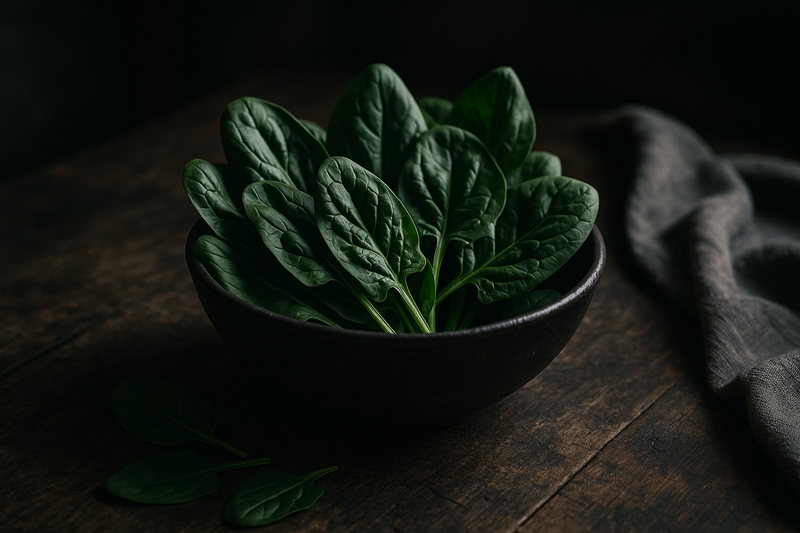
Leafy greens. Green leafy vegetables have the most consistent observational signal of any single food group in this area. In cohort analyses, roughly one serving a day was associated with slower cognitive decline, with constituents such as vitamin K, folate, lutein and the flavonol kaempferol proposed as contributors. Spinach is the most familiar entry point, though chard, arugula, romaine and collards all count. This is association, not a demonstrated cause.
Berries. In a large prospective analysis, women with higher intakes of blueberries and strawberries showed slower rates of cognitive decline, an effect the authors described as roughly equivalent to delaying cognitive aging by up to about 2.5 years. Blueberry is the best-studied, and frozen berries perform identically in the freezer aisle and in the research.
Nuts. Walnuts supply alpha-linolenic acid, the plant omega-3, along with polyphenols. Nuts are a defined component of both the Mediterranean and MIND patterns, and the PREDIMED trial supplemented one intervention arm with 30 g of mixed nuts daily. Their most reliable measured effect is on blood lipids, which matters because high LDL in midlife is now counted among dementia risk factors.
Extra-virgin olive oil. In a PREDIMED substudy of 285 older adults at high vascular risk, the Mediterranean diet enriched with extra-virgin olive oil was associated with better cognitive performance after about 6.5 years compared with a low-fat control. The sample was small and the population was specific, so treat this as supportive rather than definitive. Use extra-virgin olive oil as your default added fat.
Legumes. Lentils, beans and chickpeas move blood sugar slowly, supply fiber and plant protein, and appear in every pattern associated with better cognitive aging. Their contribution is mostly metabolic rather than neurological, which is not a demotion.
Whole grains. Oats, intact wheat, barley and brown rice displace refined starch. The MIND pattern sets whole grains at several servings a day, more than any other component.
Seeds. Ground flaxseed and chia add alpha-linolenic acid and soluble fiber. Note that conversion of plant omega-3 to the long-chain forms found in the brain is limited in humans, so seeds are not equivalent to marine omega-3.
Green tea. Green tea provides catechins and modest caffeine. Human cognitive evidence is preliminary and mostly short term. It is a reasonable low-risk daily drink, not a treatment.
How to actually use them
The MIND pattern, as defined in the research literature, is a weekly rhythm rather than a daily prescription. Translated into plain habits:
- Leafy greens most days, in whatever form you will actually eat them (wilted into soup counts).
- Another vegetable at lunch and dinner.
- Berries at least twice a week. Frozen, stirred into oats or yogurt, is the cheapest reliable route.
- A small handful of nuts most days.
- Beans or lentils several times a week, replacing some refined-grain or meat-centered meals.
- Whole grains several times a day rather than refined.
- Olive oil as the main added fat for cooking and dressing.
Batch-cook one pot of legumes and one pot of grains a week. That single habit does more than any shopping list.
Why the pattern matters more than any single food
In 2023 the New England Journal of Medicine published a three-year randomized trial of the MIND diet in 604 adults aged 65 to 84 who had suboptimal diets and a family history of dementia. Both groups received mild calorie restriction. The MIND group did not show significantly greater cognitive improvement than the control group. Both groups improved, and both lost weight.
That result is worth sitting with. It does not show that food is irrelevant. It shows that against an actively supported comparison diet, over three years, in people who were already cognitively healthy, the MIND-specific components did not add a detectable advantage. Three years is short for a process that unfolds over decades, and the control arm was not a bad diet.
The National Institute on Aging summarizes the field similarly: healthy eating patterns are associated with cognitive benefits, and the evidence is not yet sufficient to recommend a specific diet for preventing Alzheimer's. Meanwhile the 2024 Lancet Commission attributes around 45 percent of dementia risk to 14 modifiable factors including hypertension, diabetes, obesity, physical inactivity, high LDL cholesterol, hearing loss, smoking and social isolation. Diet acts on several of those. That indirect route is probably where most of the real-world benefit lives.
One more pattern-level signal points the other direction. In a cohort of 10,775 Brazilian adults followed for a median of eight years, higher ultra-processed food intake was associated with faster decline in global cognition and executive function. Reducing what crowds these foods out may matter as much as adding them.
Who should adapt or be cautious
- If you take warfarin, do not stop eating leafy greens. Vitamin K interacts with warfarin dosing, and the goal is consistent intake week to week. Tell your prescriber about any planned change.
- Nut, seed and soy allergies are absolute. Substitute seeds for nuts, or olive oil and avocado for both.
- Chronic kidney disease often requires potassium and phosphorus limits that affect greens, legumes and nuts. Individualize with your care team.
- IBS or a sensitive gut: raise legume and whole-grain intake slowly, and consider a dietitian if bloating is persistent.
- Caffeine sensitivity, pregnancy or iron deficiency: tea between meals rather than with them, since tea polyphenols reduce non-heme iron absorption.
- Anyone eating mostly plants needs a reliable vitamin B12 source from fortified foods or a supplement. B12 deficiency causes neurological symptoms and is preventable.
Seek emergency care for sudden confusion, one-sided weakness or numbness, trouble speaking or understanding speech, sudden vision loss, or a sudden severe headache. Those suggest stroke. For gradual memory or thinking changes that interfere with daily tasks, ask for a clinical evaluation rather than adjusting your diet and waiting.
Bottom line
Greens, berries, nuts, olive oil, legumes and whole grains are the plant foods with the best supporting evidence for cognitive aging, and that evidence is largely observational and pattern-level. A rigorous randomized trial of the MIND diet did not beat an active control over three years. Eat these foods because they are also the foods that protect blood vessels and metabolic health, and treat any claim of a brain-protective single food with skepticism.
Frequently asked questions
How many servings of berries do I actually need? The MIND pattern uses at least two servings a week, which is where the observational signal was measured. A serving is about half a cup. There is no evidence that eating far more produces proportionally more benefit.
Can supplements replace these foods? No trial has shown that isolated antioxidant, flavonoid or vitamin supplements protect cognition in well-nourished people, and the National Institute on Aging does not recommend supplements for this purpose. The exception is correcting a documented deficiency, such as vitamin B12, which is a medical issue rather than a brain-boosting strategy.
Does the null MIND trial mean diet does not matter for the brain? It means the MIND diet did not outperform an active comparison diet over three years in already-healthy older adults. It does not overturn decades of observational data or the vascular pathways linking diet to dementia risk. The realistic reading is that diet matters, mostly slowly and mostly indirectly.
Is coffee or green tea better? Neither has strong cognitive-outcome evidence in humans. Both are low risk for most adults. Choose based on caffeine tolerance, sleep quality and preference, and keep total caffeine moderate, especially after midday.
I eat plant-based. What about omega-3s? Walnuts, flaxseed and chia supply alpha-linolenic acid, but human conversion to the long-chain omega-3s concentrated in brain tissue is limited and variable. If you eat no fish, an algae-derived DHA supplement is the usual approach. Discuss it with a clinician rather than assuming seeds cover it.
Sources and evidence
- National Institute on Aging on diet and prevention of Alzheimer's disease
- NEJM randomized trial of the MIND diet for prevention of cognitive decline
- NIA summary of MIND and Mediterranean diets and Alzheimer's brain pathology
- Prospective study of berry and flavonoid intake and cognitive decline
- Neurology study on dietary flavonols and risk of Alzheimer dementia
- PREDIMED-NAVARRA trial on virgin olive oil and long-term cognition
- Lancet Commission on dementia prevention, intervention and care, 2024
- Cohort study of ultra-processed food consumption and cognitive decline
- USDA FoodData Central nutrient database
Know Your Numbers
Eating healthy is a start. Now get to know your biomarkers.
Food changes bloodwork — inflammation, lipids, blood sugar and nutrient status all respond to what you eat. 59 markers from $59.
- Results in 7–10 days at 2,000+ Quest sites
- Licensed provider reviews every result
- One flat price, no membership, HSA/FSA eligible
Educational information only, not medical advice. Panels are ordered and reviewed through our licensed partner; Plantopedia may earn a commission.