Potassium and Blood Pressure Support
Potassium is a mineral that helps the kidneys excrete excess sodium and helps blood vessel walls relax, and diets higher in potassium are associated with modestly lower blood pressure, especially in people with hypertension who eat a typical high-sodium diet. Whole plant foods like banana,...
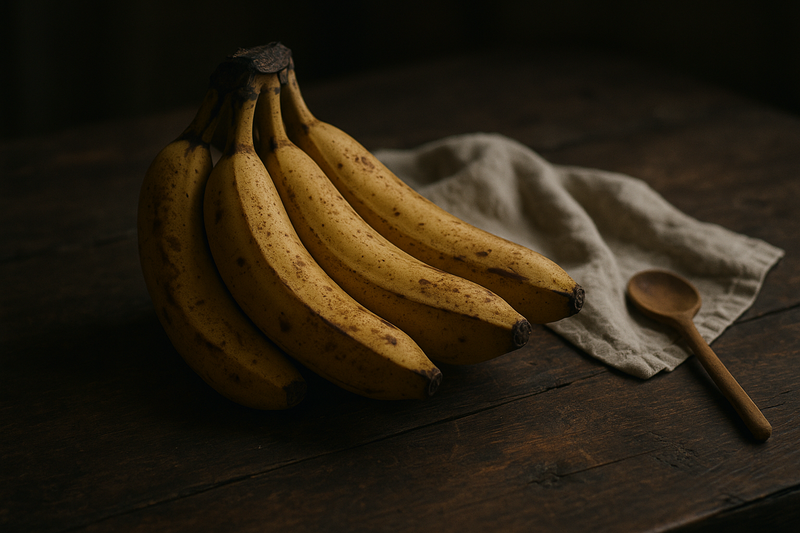
Potassium is a mineral that helps the kidneys excrete excess sodium and helps blood vessel walls relax, and diets higher in potassium are associated with modestly lower blood pressure, especially in people with hypertension who eat a typical high-sodium diet. Whole plant foods like banana, spinach, sweet potato, white beans, avocado, potato, kiwi, and cantaloupe are practical, government-recognized sources. Potassium is not a treatment for diagnosed hypertension and does not replace prescribed blood pressure medication; people with kidney disease or those on certain medications need individualized guidance because too much potassium can be dangerous for them specifically.
Key takeaways
- Potassium helps the kidneys excrete sodium and helps relax blood vessel walls, two mechanisms that plausibly lower blood pressure.
- Randomized trial data show potassium supplementation modestly lowers blood pressure, with a larger effect in people who already have hypertension and who eat a high-sodium diet.
- Most American adults consume well below the 3,500 to 4,700 milligram daily potassium intake recommended by the American Heart Association and federal dietary guidelines.
- The blood pressure relationship is not linear; very high potassium intake, especially from supplements, is not more beneficial and can be harmful in specific groups.
- Potassium-rich food is one part of a larger pattern (like the DASH diet) that also lowers sodium; it is not a substitute for prescribed treatment in diagnosed hypertension.
Plain definition
Potassium is an essential mineral and electrolyte found naturally in many whole plant foods. Inside the body, it works opposite to sodium in several respects: where sodium promotes fluid retention and can raise blood pressure, potassium helps the kidneys move excess sodium (and the water that follows it) out through urine, and it has direct effects on the muscle cells lining blood vessels. "Blood pressure support" here means an association with modestly lower blood pressure readings across populations and in trials, not a treatment that lowers blood pressure to a target or replaces medication for diagnosed hypertension.
Step-by-step mechanism
The proposed pathway runs through a few connected steps. First, higher potassium intake raises potassium concentration in the blood within the normal physiological range, which promotes hyperpolarization (a shift in electrical charge) of the smooth muscle cells that make up blood vessel walls. This encourages those muscle cells to relax rather than contract, which widens (dilates) the vessel and can lower resistance to blood flow. Second, potassium acts on the kidney's handling of sodium: it promotes natriuresis, the excretion of sodium (and accompanying water) in urine. Because retained sodium and fluid volume are a major driver of blood pressure, increasing sodium excretion tends to reduce circulating fluid volume and, with it, blood pressure. Third, potassium may influence the renin-angiotensin-aldosterone system, a hormonal pathway regulating blood pressure and fluid balance, along with effects on vascular compliance that are still being characterized. These mechanisms are complementary: one acts on the vessels directly, the other on the kidneys' handling of fluid and sodium.
What human evidence actually shows
Randomized controlled trials support a real, if modest, blood pressure benefit from potassium. A dose-response meta-analysis in the Journal of the American Heart Association, pooling multiple randomized trials, found that increasing potassium intake lowers blood pressure, with the effect more pronounced in people with hypertension and in those consuming higher sodium. Earlier trial data found that potassium chloride supplementation lowered blood pressure alongside a measurable increase in sodium excretion, directly supporting the natriuresis mechanism described above. A more recent dose-response analysis covering trials from 2000 to 2024 found a U-shaped relationship: benefit rises with intake up to a point, then plateaus, and very high supplemental doses gave no added benefit and, in some treated-hypertension subgroups, were tied to a blood pressure increase rather than a further decrease. This is trial evidence over weeks to a few months; it does not prove any one person's blood pressure will fall by a set amount, or that dietary potassium prevents a heart attack or stroke, since most trials measure blood pressure itself rather than long-term events.
What mechanisms cannot prove
The vascular relaxation and natriuresis pathways are well-documented in physiology research, largely from animal studies, isolated tissue experiments, and short-term human trials measuring intermediate markers like urinary sodium excretion or vessel diameter. A plausible, well-studied mechanism is not proof that eating more potassium-rich food will meaningfully lower any specific person's blood pressure, and it is not proof that it reduces heart attack or stroke risk, since that requires long-term outcome trials rather than mechanism studies. Mechanism data also cannot account for the many other factors driving blood pressure in a real person, including genetics, kidney function, other medications, body weight, alcohol intake, and overall dietary sodium, all of which modify how much benefit a given increase in potassium intake produces.
Practical implications
For most healthy adults with normal kidney function, shifting toward more whole plant foods naturally rich in potassium is a reasonable, low-risk way to work toward the American Heart Association's suggested range of roughly 3,500 to 5,000 milligrams a day, a target most American adults fall well short of. Useful sources include banana (about 420 milligrams per medium fruit), potato and sweet potato (500 to 900 milligrams, more with the skin), spinach (roughly 800 milligrams per cooked cup), white beans (around 600 milligrams per half cup), avocado (close to 500 milligrams per half fruit), and kiwi or cantaloupe as fruit options. This overlaps closely with the DASH diet, which pairs higher potassium with lower sodium and has trial evidence as a complete pattern, not from potassium alone. Food is generally preferred over supplements for healthy adults: it delivers potassium alongside fiber, and it's harder to reach dangerous levels from food than from concentrated supplements or salt substitutes.
Cautions
Potassium is not risk-free, and more is not automatically better. People with chronic kidney disease, whose kidneys cannot excrete potassium efficiently, are at particular risk of hyperkalemia (dangerously high blood potassium), which can cause serious heart rhythm problems. Certain common blood pressure medications, including ACE inhibitors, ARBs, and potassium-sparing diuretics, change potassium handling; anyone taking these should not significantly raise potassium intake, including through potassium-based salt substitutes, without talking to the prescribing clinician first. Potassium supplements in pill form carry a higher risk profile than food sources and should only be used under medical supervision. Trial data also suggests that pushing intake far above typical dietary levels adds no further benefit and, in some groups already treated for hypertension, was linked to a rise rather than a further fall in blood pressure.
When to seek care
Potassium changes are not a substitute for medical care in diagnosed hypertension, and blood pressure medication should never be stopped, reduced, or adjusted based on dietary changes without the prescribing clinician's involvement. Seek prompt medical attention for symptoms of dangerously high or low blood potassium, which can include muscle weakness, irregular or rapid heartbeat, palpitations, tingling or numbness, or unusual fatigue, particularly if you have kidney disease or take medications that affect potassium levels. Anyone with consistently elevated blood pressure readings, or symptoms like severe headache, chest pain, shortness of breath, or vision changes, needs prompt medical evaluation rather than a dietary approach alone.
Bottom line
Potassium has a real, mechanistically coherent, and trial-supported association with modestly lower blood pressure, working through sodium excretion and blood vessel relaxation. Eating more whole plant foods naturally rich in potassium, as part of an overall lower-sodium pattern like DASH, is a reasonable, evidence-backed target for most healthy adults, most of whom currently fall short of recommended intake. It is not a substitute for diagnosed hypertension treatment, it carries real risk for people with kidney disease or certain medications, and more is not simply better once typical dietary levels are exceeded.
Frequently asked questions
How much potassium should I aim for each day?
The American Heart Association suggests roughly 3,500 to 5,000 milligrams a day from food for adults working on blood pressure, while federal dietary guidance sets a general adult target near 4,700 milligrams; most American adults currently consume well below this. These are general population targets, and anyone with kidney disease or on medications affecting potassium should get an individualized target from their clinician.
Can eating more potassium-rich foods replace my blood pressure medication?
No. Diet can meaningfully support blood pressure management, but it does not replace prescribed treatment, and medication should never be stopped or changed without talking to the prescribing clinician first.
Are potassium supplements better than food sources?
For most healthy adults, food is the preferred source because it's harder to reach excessive levels from whole foods than from concentrated supplements, and food delivers potassium alongside fiber and other nutrients. Supplement use should be discussed with a clinician, especially for anyone with reduced kidney function.
Is more potassium always better for blood pressure?
No. Trial data shows a benefit that increases with intake up to a point and then plateaus, and very high intake, especially in people already being treated for hypertension, has been associated with blood pressure increases rather than further decreases in some studies.
Who should be cautious about increasing potassium intake?
People with chronic kidney disease and anyone taking ACE inhibitors, ARBs, or potassium-sparing diuretics should talk to their clinician before significantly increasing potassium intake, including through potassium-based salt substitutes, since these combinations raise the risk of dangerously high blood potassium.
Does the DASH diet work because of potassium alone?
No. DASH combines higher potassium (and other minerals) with substantially lower sodium and emphasizes vegetables, fruit, legumes, and whole grains as a complete pattern; trial evidence supports the whole pattern rather than isolating potassium as the single active ingredient.
Sources and evidence
- Potassium Intake and Blood Pressure: A Dose-Response Meta-Analysis of Randomized Controlled Trials, Journal of the American Heart Association
- Effect of changes in potassium intake on blood pressure: dose-response meta-analysis of RCTs 2000-2024, Clinical Kidney Journal
- American Heart Association, "How Potassium Can Help Control High Blood Pressure"
- American Heart Association, "A Primer on Potassium"
- US Dietary Guidelines for Americans, Food Sources of Potassium
- USDA Agricultural Research Service, "Potassium Intake of the U.S. Population"
- USDA FoodData Central, national nutrient database
Know Your Numbers
Eating healthy is a start. Now get to know your biomarkers.
Food changes bloodwork — inflammation, lipids, blood sugar and nutrient status all respond to what you eat. 59 markers from $59.
- Results in 7–10 days at 2,000+ Quest sites
- Licensed provider reviews every result
- One flat price, no membership, HSA/FSA eligible
Educational information only, not medical advice. Panels are ordered and reviewed through our licensed partner; Plantopedia may earn a commission.