White Beans — health benefits and uses
Protein + fiber leverage; batch-cook, meal-prep, and satiety angle
The Short Answer
White beans are highly nutritious legumes, providing 9.5 grams of protein and 9.5 grams of fiber per cooked cup. They are excellent sources of folate, iron, and resistant starch, which supports gut health and blood sugar management.
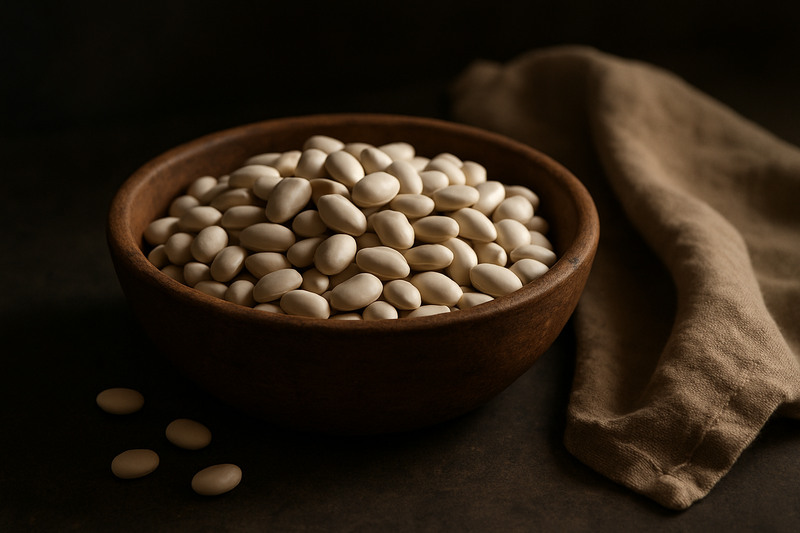
White Beans · Photograph
White beans — the collective name for several closely related varieties including cannellini (Phaseolus vulgaris 'cannellini'), navy beans, great northern beans, and white kidney beans — are among the most nutritionally complete plant foods in a regular kitchen. They are quiet overachievers: mild in flavour, endlessly versatile, and stacked with protein, fibre, and a wide range of vitamins and minerals that support heart, gut, and metabolic health.
Key Nutrients
% Daily Value based on 2,000 cal diet
Key active compounds in white beans
White beans contain several biologically active compounds that go beyond basic macronutrients:
- Polyphenols — A broad class of plant antioxidants (including flavonoids and phenolic acids) concentrated in the seed coat. They help neutralize free radicals (unstable molecules that damage cells), and may support cardiovascular and anti-inflammatory effects.
- Resistant starch — A form of starch that resists digestion in the small intestine and is instead fermented by bacteria in the colon. Acts similarly to fibre: improves glycemic control (how steadily blood sugar rises after eating), increases satiety, and feeds beneficial gut microbes.
- Oligosaccharides (raffinose, stachyose) — Short-chain carbohydrates that act as prebiotics (food for beneficial gut bacteria) but can also produce gas during fermentation. Soaking and rinsing reduce their concentration.
- Phytates (phytic acid) — Naturally present in legumes, these can reduce mineral absorption but also act as antioxidants. Soaking and cooking significantly lower phytate levels, improving how well your body absorbs iron and zinc from the beans.
- Saponins — Bioactive compounds that may help limit cholesterol absorption and have antioxidant effects in laboratory and animal studies; human data are still emerging.
Prep and pairing ideas
White beans are one of the most flexible ingredients in a plant-forward kitchen. Here are three practical pairings that work well nutritionally and in the bowl:
1. White beans + leafy greens (spinach, kale, chard) Iron and folate from the beans pair with the vitamin C in greens to boost non-haem iron absorption. A simple sauté with olive oil and garlic is a complete side dish in under 10 minutes using canned beans.
2. White beans + whole grains (farro, brown rice, barley) Beans and grains together provide a complementary amino acid profile — beans are rich in lysine (scarce in grains), while grains supply methionine (lower in beans). You do not need to eat them at the exact same meal to get this benefit, but grain bowls and soups combining both are satisfying and nutritionally complete.
3. White beans + tomatoes and herbs (Italian-style) Tomatoes supply lycopene and vitamin C; beans supply protein, fibre,
How White Beans Compares
| Compared with | What's different |
|---|---|
| White Beans vs. Cannellini beans | Larger, meatier texture with a nuttier flavor; ideal for salads and Italian dishes. |
| White Beans vs. Navy beans | Smaller with a milder taste; they break down easily, making them better for thickening soups. |
| White Beans vs. Kidney beans | A darker, firmer bean with a more earthy, robust flavor compared to the mild white bean. |
Health Benefits
Things to Know
IBS and low-FODMAP diets: Bean oligosaccharides are high-FODMAP (fermentable oligo-, di-, monosaccharides, and polyols — a group of short-chain carbohydrates that can trigger symptoms in sensitive guts). People with IBS (irritable bowel syndrome) may need to limit or carefully portion white beans. Small servings of well-cooked beans are sometimes tolerated; larger amounts often are not during flares.
Inflammatory bowel disease (IBD): During active flares, high-fibre foods including beans may worsen symptoms. Reintroduce cautiously and with clinical guidance.
Chronic kidney disease (CKD): White beans are relatively high in potassium and phosphorus. People with advanced CKD who must restrict these minerals should discuss portion sizes with their nephrologist or dietitian.
Legume allergy: True allergy to white beans is rare, but anyone with a history of legume allergy (to soy, peanuts, lentils, or other beans) should approach cautiously and ideally under medical guidance.
Young children: Whole white beans pose a choking risk for children under approximately 15 months. Well-mashed or pureed forms are safer for younger children, depending on developmental readiness.
Diabetes medications and insulin: The blood-sugar-lowering effect of a legume-rich diet can add to the effect of medication. Monitor blood glucose carefully if you are increasing bean intake significantly, and discuss adjustments with your healthcare provider to avoid hypoglycaemia (blood sugar falling too low).
Potassium-sparing medications: ACE inhibitors, ARBs, and potassium-sparing diuretics combined with large and sudden increases in high-potassium foods like white beans could raise blood potassium levels (hyperkalaemia) in at-risk individuals. People on these medications should increase bean intake gradually and have their labs monitored.
Oral medications: Very high-fibre meals can slightly reduce or delay absorption of some medications. As a precaution, some clinicians suggest spacing sensitive medications at least 1–2 hours away from very high-fibre meals.

Shop This Ingredient
Stock your pantry with quality white beans.
Buy on AmazonAs an Amazon Associate, Plantopedia earns from qualifying purchases. This costs you nothing extra and helps us keep the encyclopedia free.
Frequently Asked Questions
Heart and circulation White beans offer a combination of nutrients that research links to lower cardiovascular risk: soluble fibre (which helps reduce LDL cholesterol — often called "bad" cholesterol), potassium (which counteracts sodium's effect on blood pressure), plant protein, and essentially zero saturated fat or dietary cholesterol. Harvard Health Publishing highlights white beans as a heart-healthy legume, noting that they align with Mediterranean-style dietary patterns that reduce heart disease risk. A clinical trial of adults with type 2 diabetes on a low–glycemic index diet rich in legumes (including beans like cannellini) found reductions in blood pressure and cardiovascular risk markers compared to a high-wheat-fibre diet. Large observational studies on legume consumption consistently show lower rates of cardiovascular events in people who eat beans regularly. Replacing some red or processed meat in meals with white beans also improves the overall fat profile of the diet. Digestive health and microbiome With around 11 grams of fibre per cooked cup — both soluble and insoluble — white beans support regular bowel movements, stool bulk, and a healthy gut environment. The fermentable fibres and resistant starch feed beneficial gut bacteria (the community of microorganisms living in your colon), which produce short-chain fatty acids (SCFAs). SCFAs nourish the cells lining the colon, support gut barrier integrity, and are associated with reduced risk of colorectal disease in observational research. Long-term studies suggest that regular bean consumers have significantly lower rates of obesity and less abdominal fat than non-consumers — partly reflecting the metabolic effects of a high-fibre diet. Blood sugar and metabolism White beans have a relatively low glycemic index (GI) — a measure of how quickly a food raises blood glucose. Their fibre and resistant starch slow gastric emptying (the rate at which food leaves your stomach) and reduce the glycemic load (the total blood sugar impact) of a meal. Clinical trial evidence from legume-rich, low-GI diet studies shows improvements in HbA1c (a three-month average of blood sugar) and blood pressure in people with type 2 diabetes. For people managing or preventing blood sugar issues, swapping refined carbohydrates for white beans in a meal is one of the most practical dietary upgrades available. Evidence is moderate rather than definitive, but the direction is consistently positive. Inflammation and recovery White beans contain polyphenol antioxidants and saponins that may help reduce oxidative stress (cellular damage caused by free radicals) — a driver of chronic inflammation. Educational summaries of legume research note that beans in general appear to protect cells from inflammatory damage over time. However, direct human trials using white beans as the primary intervention are limited. Current evidence is largely drawn from observational studies of legume-rich dietary patterns rather than white-bean-specific randomized controlled trials. Benefits are real but should be described as supportive, not curative. Hormones, metabolism, and weight White beans provide lysine-rich plant protein — lysine is an essential amino acid (one your body cannot make itself) that is relatively scarce in grains, making beans a useful complement to cereals. The protein and fibre combination drives satiety by stimulating gut hormones like GLP-1 and PYY, which signal fullness to the brain, and by slowing stomach emptying. One long-term study reported that regular bean consumers had a 22% lower risk of obesity and 23% less excess abdominal fat than non-consumers. High-fibre diets can also influence oestrogen metabolism and bile acid excretion, which may indirectly support hormonal balance — but this evidence is extrapolated from broad dietary pattern studies rather than white beans specifically. Describe hormonal benefits as potential and indirect.
Dried and home-cooked The gold standard for a WFPB diet. Dried cannellini, navy, great northern, or white kidney beans cooked from scratch give you maximum control over sodium and texture. They must be soaked and fully cooked before eating (see safety section below). Soak in cold water for 6–8 hours (or use the quick-soak method: bring to a boil for 2 minutes, remove from heat, rest 1 hour). Drain and discard the soaking water. Add fresh water, bring to a boil, then simmer until beans are completely soft — typically 45–90 minutes depending on the variety and age of the beans. Canned white beans Convenient, nutritionally comparable to home-cooked, and already safe to eat straight from the can. The main variable is sodium — many canned beans are packed with salt. Choose low-sodium or no-salt-added varieties where possible, and rinse under running water before use to remove excess sodium and some gas-producing oligosaccharides. Pureed white beans Cooking and then blending white beans maintains their fibre and protein while creating a creamy texture suitable for dips, soups, sauces, and pasta dishes. This format is gentler on digestion for people who find whole beans harder to tolerate. White kidney bean extract supplements These are concentrated alpha-amylase inhibitors (compounds that block the enzyme that breaks down starch) marketed for weight loss and blood sugar management. They are fundamentally different from whole beans — they are not whole foods, have variable quality control, and some trials report GI side effects including gas, bloating, and diarrhoea. Do not treat them as equivalent to eating white beans. If you are considering them, speak to a healthcare provider first.
Quick Answers
Common questions, answered in a line.
White beans contain resistant starch and fibre that improve glycemic control by slowing how steadily blood sugar rises after eating. They also contain polyphenols and saponins that may support cardiovascular health and limit cholesterol absorption.
White beans contain resistant starch and oligosaccharides like raffinose and stachyose, which act as prebiotics to feed beneficial gut microbes. These compounds are fermented by bacteria in the colon, supporting a healthy digestive environment.
You can reduce the gas-producing oligosaccharides in white beans by soaking and rinsing them thoroughly before cooking. This process helps lower the concentration of short-chain carbohydrates that cause fermentation and gas in the gut.
White beans are high-FODMAP foods due to their oligosaccharide content, which can trigger symptoms like gas and bloating in people with IBS. Individuals with sensitive guts may need to limit portions or avoid large amounts during flares.
Pairing white beans with vitamin C-rich foods like leafy greens or tomatoes boosts the absorption of non-haem iron found in the beans. Additionally, combining them with whole grains provides a complementary amino acid profile for a complete protein source.
Soaking and cooking white beans significantly lowers levels of phytates, which are natural compounds that can otherwise reduce the absorption of minerals like iron and zinc. This preparation method ensures your body can better utilize the beans' nutrient content.
People on diabetes medications, potassium-sparing diuretics, or ACE inhibitors should consult a doctor before significantly increasing bean intake. The high fibre and potassium content can affect blood sugar levels and potassium balance, potentially requiring medication adjustments.
For Readers in the USA
Local context — sourcing, seasonality, and regional notes.
In the U.S., white beans are predominantly grown in the Northern Plains and Midwest, particularly in states like North Dakota, Michigan, and Nebraska. Dry beans are typically harvested in late summer through autumn, though they are available year-round in dried and canned forms across all 50 states.
Major U.S. retailers like Walmart, Kroger, and Whole Foods typically stock Navy, Great Northern, and Cannellini beans in the canned goods and bulk dry aisles. You can also find heirloom varieties at local farmers markets or specialty shops, especially during the fall harvest season.
Navy beans, also known as pea beans, earned their name because they have been a staple food for the U.S. Navy since the mid-19th century. They were chosen for their long shelf life and high nutritional value, making them an essential part of the military diet during long sea voyages.
The USDA Organic seal ensures that white beans are grown without synthetic fertilizers or prohibited pesticides and are non-GMO. When buying canned white beans, many U.S. consumers also look for "BPA-free" liners to avoid exposure to industrial chemicals often found in can coatings.
AI Clinical Review
- White beans are legitimately nutrient-dense: about 1 cup cooked provides ~17 g protein, ~11 g fiber, and meaningful amounts of iron, folate, magnesium, potassium, zinc, and copper at modest calories.
- Cardiometabolic benefits are well supported for legumes: soluble fiber helps lower LDL cholesterol, potassium supports blood pressure, and swapping beans for red/processed meat improves overall fat quality; legume-rich, low–glycemic index (GI) patterns can reduce HbA1c and blood pressure in type 2 diabetes.
- Gut health claims are appropriate: resistant starch and fermentable fibers feed the microbiome and increase short‑chain fatty acids (SCFAs), which nourish the colon and support regularity.
- Practical prep guidance is sound: soaking/rinsing reduces gas‑producing oligosaccharides and phytates; low‑sodium canned beans (rinsed) are nutritionally comparable to home‑cooked.
- Antioxidant/anti‑inflammatory benefits from polyphenols and saponins are biologically plausible, but white‑bean‑specific human trials are limited; much evidence is extrapolated from broader legume or dietary‑pattern studies.
- Weight and hormonal effects are suggested by observational research (higher legume intake linked with lower obesity and altered estrogen/bile acid handling), but causality and white‑bean‑specific effects remain uncertain.
- White kidney bean extract (alpha‑amylase inhibitors) is not equivalent to whole beans; trial results are mixed, effects appear modest/short‑term, and GI side effects are common.
- Safety first: never eat raw or undercooked beans due to lectins; bring to a full boil before simmering. Slow cookers alone may be insufficient. For young children, serve well‑mashed to reduce choking risk.
- How much and how to start: most adults do well with 1/2–1 cup cooked per serving; increase gradually to minimize gas. A realistic goal is 1.5–3 cups per week, though some studies use up to ~1 cup daily if tolerated.
- Who should be cautious: people with IBS/low‑FODMAP needs or IBD during flares; those with chronic kidney disease (potassium/phosphorus); individuals on ACE inhibitors/ARBs or potassium‑sparing diuretics; and people using insulin or sulfonylureas (monitor for low blood sugar). High‑fiber meals can delay absorption of certain meds—ask your clinician if spacing doses 1–2 hours is appropriate.
- Form matters: dried/home‑cooked allows sodium control; choose low‑ or no‑salt canned options and rinse. Pureed beans can be gentler on digestion while retaining protein and fiber.
Mention soaking/cooking tolerance tips where relevant; avoid raw legume prep errors.
References
- PubMed — Therapeutic Potential of White Kidney Beans (Phaseolus vulgaris) for Weight Management (pubmed.ncbi.nlm.nih.gov)
- USDA FoodData Central — USDA FoodData Central (fdc.nal.usda.gov)
- PubMed — It's No Has Bean: A Review of the Effects of White Kidney Bean Extract on Body Composition and Metabolic Health (pubmed.ncbi.nlm.nih.gov)
- PubMed — USDA's FoodData Central: what is it and why is it needed today? (pubmed.ncbi.nlm.nih.gov)
- PMC, National Library of Medicine — White kidney bean extract as a nutraceutical: effects on gut microbiota, alpha-amylase inhibition, and user experiences (pmc.ncbi.nlm.nih.gov)
Know Your Numbers
Eating healthy is a start. Now get to know your biomarkers.
Food changes bloodwork — inflammation, lipids, blood sugar and nutrient status all respond to what you eat. 59 markers from $59.
- Results in 7–10 days at 2,000+ Quest sites
- Licensed provider reviews every result
- One flat price, no membership, HSA/FSA eligible
Educational information only, not medical advice. Panels are ordered and reviewed through our licensed partner; Plantopedia may earn a commission.
Filed Under
Health Goals This Supports
Related Ingredients
High-Potassium Foods for Blood Pressure Support
Whole foods dense in potassium, think white beans, potatoes eaten with the skin, leafy greens like spinach and swiss chard, avocado, and dried apricots, can play a modest, supporting role in blood pressure management. Potassium helps the body excrete sodium and eases tension in blood vessel...
Potassium and Blood Pressure Support
Potassium is a mineral that helps the kidneys excrete excess sodium and helps blood vessel walls relax, and diets higher in potassium are associated with modestly lower blood pressure, especially in people with hypertension who eat a typical high-sodium diet. Whole plant foods like banana,...