Discover how the unique matrix of oleic acid, fiber, and phytosterols supports heart health, enhances nutrient absorption, and optimizes the
Fiber + phytonutrients; use as a whole-food sweet, snack, or smoothie base
The Short Answer
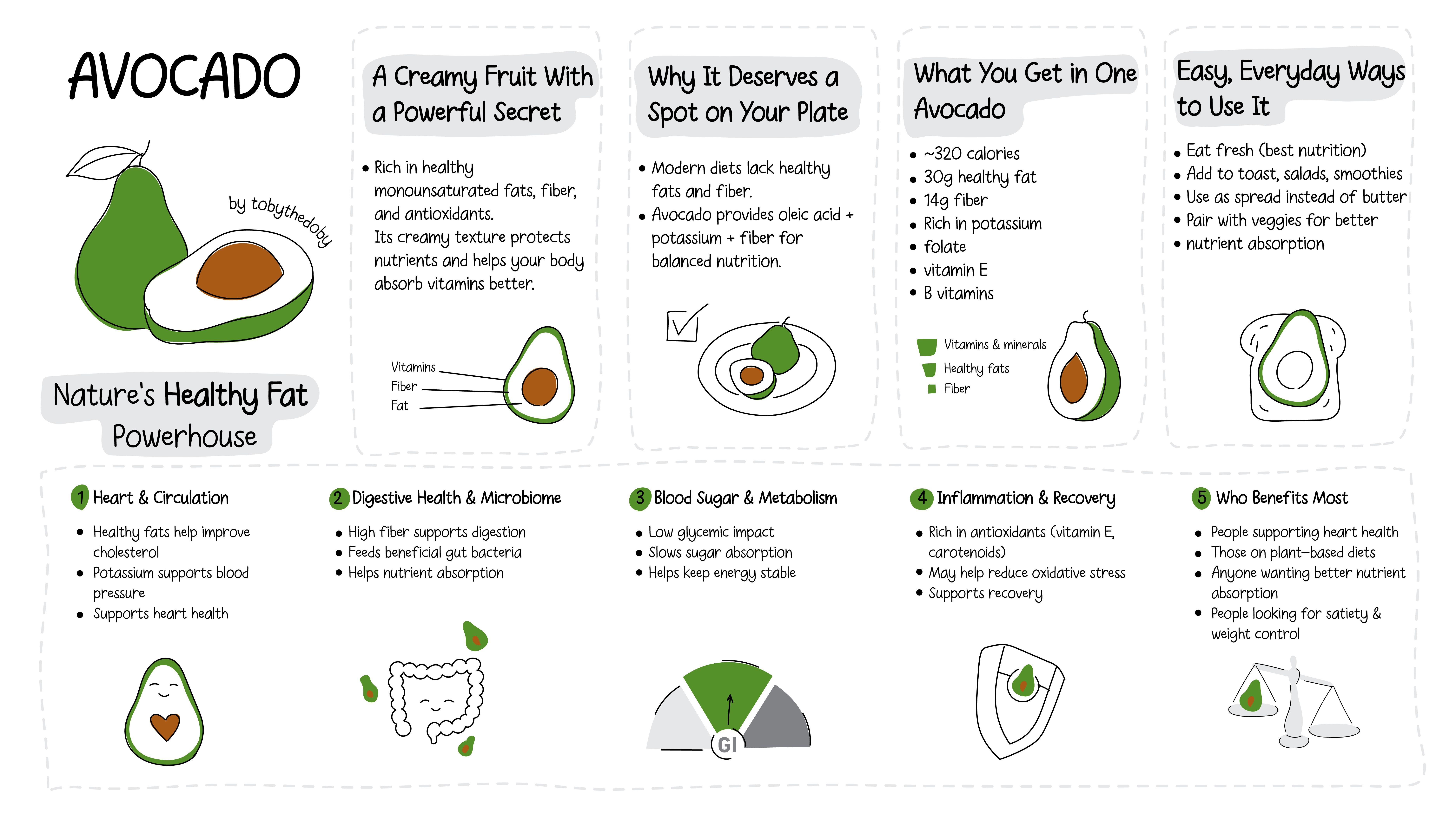
Avocados are nutrient-dense fruits providing 21.4g of healthy fats and 10.1g of fiber per cup, which helps lower cholesterol and improve nutrient absorption.

Avocado · Photograph
Daily avocado consumption provides a unique nutritional profile that distinguishes it from almost all other fruits. While most fruits are primarily carbohydrate-based, avocados deliver substantial amounts of monounsaturated healthy fats, prebiotic fiber, and an exceptional concentration of fat-soluble carotenoids.
Key Nutrients
% Daily Value based on 2,000 cal diet
Why Avocado Health Benefits Matter Daily for Your Wellness
Daily avocado consumption provides a unique nutritional profile that distinguishes it from almost all other fruits. While most fruits are primarily carbohydrate-based, avocados deliver substantial amounts of monounsaturated healthy fats, prebiotic fiber, and an exceptional concentration of fat-soluble carotenoids.
The combination of oleic acid (the same lipid found in extra virgin olive oil), potassium, and phytosterols creates a nutritional synergy that supports cardiovascular resilience and nutrient bioavailability. Research suggests that when avocados are consumed daily as a staple, they act as a "nutrient booster," significantly increasing the absorption of antioxidants from other vegetables in the same meal.
Key Active Compounds: The Lipid-Micronutrient Matrix
The "superfood" status of avocados is driven by specific bioactives that target systemic inflammation and lipid profiles.
- Oleic Acid: The primary monounsaturated fat (comprising 67% of total fat content), known for reducing markers of inflammation.
- Lutein and Zeaxanthin: Critical carotenoids for ocular health and cognitive function; avocados are the premier fruit source for these antioxidants.
- β-sitosterol: A dominant phytosterol (76.4 mg per 100g) that competes with cholesterol for absorption in the digestive tract.
- Phenolic Compounds: Including chlorogenic and ferulic acids, which provide free radical scavenging activity.
- Tocopherols: Contains all four forms of Vitamin E (α, β, γ, δ) for comprehensive cellular protection.
Conclusion
Daily avocado consumption provides an unparalleled combination of healthy fats, fiber, and fat-soluble antioxidants. By supporting heart health through cholesterol modulation and enhancing the bioavailability of other nutrients, avocados act as a foundational functional food. While they are calorie-dense, their ability to promote satiety and gut microbiome diversity makes them a superior choice for long-term wellness.
Incorporating half to one full avocado into your daily routine is a science-backed strategy for optimizing cardiovascular and metabolic health. Ready to make meal planning easier with nutrient-dense ingredients like avocados? Check out our personalized meal planner to build balanced meals around whole foods that support your health goals.
How Avocado Compares
| Compared with | What's different |
|---|---|
| Avocado vs. Mango | Higher in water and natural sugars with much lower fat content. |
| Avocado vs. Olive Oil | High in vitamin E and monounsaturated fats but lacks the high fiber and water content of avocado. |
Health Benefits
Things to Know
Medication Interactions: Vitamin K can interact with blood thinners like Warfarin. Maintain a consistent daily intake rather than sporadic large doses.
Potassium Monitoring: While 690mg of potassium is excellent for heart health, individuals with advanced-stage kidney disease (CKD) must carefully monitor their intake.
Calorie Management: At over 300 calories per fruit, avocados should replace other fat sources (like butter or mayo) rather than being added to a high-calorie diet.

Common Uses
- —Replacing butter or mayonnaise with mashed avocado to add healthy fats and fiber to sandwiches and toast.
- —Adding avocado slices to leafy greens to ensure the body can absorb the fat-soluble vitamins (A, D, E, K) in the meal.
- —Consuming a half avocado daily as a prebiotic source to improve microbial diversity in the digestive tract.
- —Utilizing the high potassium content of avocados to support muscle function and fluid balance after exercise.
- —Blending avocado into fruit smoothies to add a velvety texture and healthy fats that blunt the glycemic response of the other fruits.
- —Including avocado in breakfast or lunch to trigger long-term fullness and prevent mid-day energy crashes.
Glossary
Shop This Ingredient
Stock your pantry with quality avocado.
Buy on AmazonAs an Amazon Associate, Plantopedia earns from qualifying purchases. This costs you nothing extra and helps us keep the encyclopedia free.
Frequently Asked Questions
For most healthy adults, eating a whole avocado daily is safe and highly beneficial for heart health. However, you must account for the 320 calories and high potassium levels. If you are managing weight or have renal concerns, consult a provider to determine if a half-portion is more appropriate for your caloric budget.
Botanically, the avocado is a large berry (a fruit), but nutritionally it functions as a "fatty vegetable." Unlike most fruits that are high in fructose, the avocado's health benefits stem from its 75% fat composition and high fiber, making it unique in the plant kingdom for metabolic support.
No. While they contain healthy fats, the high fiber content promotes satiety and reduces the urge to snack. Clinical trials suggest that including avocado in a meal can reduce the desire to eat for up to five hours, making it a powerful tool for calorie control despite its energy density.
Avocado oil retains the healthy fats and Vitamin E but lacks the 14g of fiber, potassium, and B-vitamins found in the whole fruit. For comprehensive heart health and digestive support, the whole fruit is significantly superior, though the oil remains an excellent high-smoke-point cooking fat.
Individuals with late-stage kidney disease should limit their intake due to elevated potassium levels. Additionally, those on blood-thinning medications should maintain a consistent dose to avoid fluctuations in Vitamin K levels. Finally, people with a latex allergy may experience cross-reactivity (Latex-Fruit Syndrome) and should introduce avocados with caution under medical supervision.
Quick Answers
Common questions, answered in a line.
Avocados act as a nutrient booster by significantly increasing the absorption of fat-soluble antioxidants from other vegetables in the same meal. This is due to the fruit's unique matrix of monounsaturated healthy fats, which helps the body process fat-soluble vitamins like A, D, E, and K.
Avocados are rich in monounsaturated fats (specifically oleic acid), potassium, and phytosterols which work together to support cardiovascular resilience. The dominant phytosterol, β-sitosterol, specifically helps by competing with cholesterol for absorption in the digestive tract.
Avocados are the premier fruit source for lutein and zeaxanthin, which are critical carotenoids for maintaining ocular health and cognitive function. These antioxidants, combined with various forms of Vitamin E, offer comprehensive cellular protection against free radicals.
Avocados contain prebiotic fiber and healthy fats that trigger long-term fullness and support gut microbiome diversity. These components make them an effective functional food for promoting satiety and preventing mid-day energy crashes when included in breakfast or lunch.
Avocados contain high levels of oleic acid, which makes up 67% of their total fat content and is known for reducing markers of inflammation. They also contain phenolic compounds like chlorogenic and ferulic acids that provide free radical scavenging activity.
An average avocado contains approximately 690mg of potassium, which is excellent for supporting muscle function, fluid balance, and heart health. However, individuals with advanced-stage kidney disease should monitor this intake carefully.
For Readers in the USA
Local context — sourcing, seasonality, and regional notes.
California produces about 90% of the domestic avocado crop, with the Hass variety being in peak season from spring through early fall. Most grocery stores in the US, including Kroger and Walmart, stock California Hass avocados during this window, while sourcing from Mexico or Peru during the winter months.
California avocados are the most common US-grown variety, while Florida's larger, smooth-skinned 'SlimCado' or tropical avocados offer a lower-fat, firmer alternative. You will typically find the pebbly-skinned Hass variety at retailers like Whole Foods or Safeway because of its superior creaminess and long shelf life.
The USDA Organic label ensures that avocados were grown without synthetic pesticides or fertilizers, though conventionally grown avocados are consistently ranked on the 'Clean Fifteen' list. Because the thick skin protects the edible fruit, the Environmental Working Group (EWG) notes they often have very low pesticide residues.
AI Clinical Review
- Lipid Profile: Correctly identifies oleic acid as the primary monounsaturated fat, mirroring the heart-healthy profile of extra virgin olive oil.
- Absorption Enhancement: Accurately highlights the "nutrient booster" effect, which is one of the avocado's most unique and clinically significant roles in nutrition.
- Phytosterol Mechanism: Properly explains how β-sitosterol interferes with cholesterol absorption in the small intestine.
- Potassium Superiority: Correctly notes that avocados provide more potassium per serving than bananas, a fact often overlooked in cardiovascular dietetics.
- Prebiotic Function: Rightly identifies the avocado as a significant source of fiber that supports the growth of healthy fecal metabolites.
- Acetogenins and Cancer: While the guide mentions acetogenins, research into their anti-tumor properties is currently in the experimental stage and requires human clinical trials to confirm therapeutic efficacy.
- Cognitive Decline Prevention: The link between avocado lutein and long-term prevention of neurodegenerative diseases is a strong area of observation but lacks definitive interventional proof.
- Weight Loss Specificity: While avocados increase satiety, clinical evidence is still being gathered to determine if they are more effective for weight loss than other healthy fat sources like nuts or seeds.
- Metabolic Syndrome Reversal: The degree to which daily avocado can single-handedly reverse markers of metabolic syndrome, independent of overall diet, is still under investigation.
- Calorie Density: Clinicians should remind patients that an avocado contains over 300 calories; it should be used as a replacement for other fats rather than an addition to an already high-calorie diet.
- Latex-Fruit Syndrome: Be aware of potential cross-reactivity; individuals allergic to latex may experience a reaction to avocados due to similar proteins.
- Vitamin K and Blood Thinners: Because of the high Vitamin K content, patients on Warfarin must maintain a consistent daily intake of avocado to avoid interfering with their medication's efficacy.
- CKD Limitations: For patients with advanced Chronic Kidney Disease, the high potassium in avocados can be dangerous and must be strictly limited.
- Whole Fruit vs. Oil: Emphasize that avocado oil, while healthy for cooking, lacks the potassium, fiber, and B-vitamins that make the whole avocado a functional food.
Frame as food education, not disease treatment.
References
- USDA FoodData Central - Avocado (Hass) Nutritional Profile: Standardized source for lipid and micronutrient data.
- Journal of the American Heart Association - Avocado Consumption and Cardiovascular Risk: Research indicating that two servings of avocado a week reduces CVD risk by 16%.
- Nutrients (MDPI) - Avocados and the Gut Microbiome: A study on how daily intake increases microbial diversity and fecal metabolite concentrations.
- The Journal of Nutrition - Avocado and Carotenoid Absorption: Clinical evidence showing that avocado lipids significantly enhance the bioavailability of antioxidants from other foods.
- Critical Reviews in Food Science and Nutrition - Bioactive Compounds in Persea Americana: A comprehensive review of acetogenins, phytosterols, and phenolic acids.
Know Your Numbers
Eating healthy is a start. Now get to know your biomarkers.
Food changes bloodwork — inflammation, lipids, blood sugar and nutrient status all respond to what you eat. 59 markers from $59.
- Results in 7–10 days at 2,000+ Quest sites
- Licensed provider reviews every result
- One flat price, no membership, HSA/FSA eligible
Educational information only, not medical advice. Panels are ordered and reviewed through our licensed partner; Plantopedia may earn a commission.
Filed Under
Health Goals This Supports
Related Ingredients
Best Breakfast Foods for Brain Fog
Breakfasts built around protein, fiber, and slow-digesting carbohydrates, rather than sugar and refined starch alone, are the most consistent way to support steady blood sugar and mental clarity through the morning. No single breakfast food is a proven cognitive enhancer, but research links...
Blood Sugar Balance for Beginners
Blood sugar balance means keeping your blood glucose from swinging too high or crashing too low after meals, largely by pairing carbohydrates with fiber, protein, and fat, moving your body regularly, and favoring whole foods over refined ones. For most people without diabetes, this is about...
Foods That May Help Lower LDL Cholesterol
LDL cholesterol carries cholesterol particles into artery walls, where they contribute to the plaque buildup behind heart attacks and stroke. A specific group of plant foods, oats and barley, ground flaxseed, legumes, soy, walnuts, almonds, and avocado, has randomized controlled trial evidence...
High-Potassium Foods for Blood Pressure Support
Whole foods dense in potassium, think white beans, potatoes eaten with the skin, leafy greens like spinach and swiss chard, avocado, and dried apricots, can play a modest, supporting role in blood pressure management. Potassium helps the body excrete sodium and eases tension in blood vessel...
How Plant-Based Foods Support the Heart
A practical introduction to plant-centered eating for cardiovascular health: the mechanisms that matter, what the cohort and trial evidence shows, a starter plate, and the myths worth dropping.
Potassium and Blood Pressure Support
Potassium is a mineral that helps the kidneys excrete excess sodium and helps blood vessel walls relax, and diets higher in potassium are associated with modestly lower blood pressure, especially in people with hypertension who eat a typical high-sodium diet. Whole plant foods like banana,...