Explore the evidence-based health benefits of almonds. Learn how vitamin E, monounsaturated fats, and fiber support heart health, weight man
Healthy fats, minerals, and texture; small-amount high-leverage add-in
The Short Answer
Almonds are nutrient-dense seeds that provide 6 grams of protein and 3.5 grams of fiber per ounce. They are an excellent source of vitamin E and monounsaturated fats, which support heart health and cholesterol metabolism.
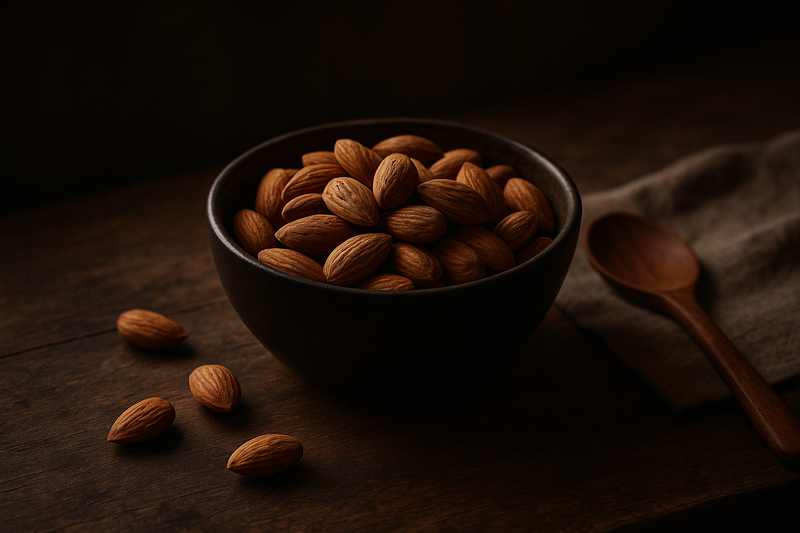
Almonds · Photograph
Why Almonds' Health Benefits Stand Out Almonds consistently rank among the most nutrient-dense nuts available.
Key Nutrients
% Daily Value based on 2,000 cal diet
Why Almonds' Health Benefits Stand Out
Almonds consistently rank among the most nutrient-dense nuts available. Their unique combination of vitamin E, monounsaturated fats, fiber, and minerals creates a synergistic effect that supports multiple aspects of health simultaneously.
Unlike many healthy foods that excel in one area, almonds deliver meaningful amounts of over a dozen essential nutrients. This nutrient density, combined with their satisfying protein and fiber content, makes them effective for supporting long-term health goals and weight management.
Key Active Compounds
Almonds contain several bioactive compounds that contribute to their therapeutic effects:
- Monounsaturated Fats: Comprise 80% of almond fat content, directly supporting heart health by improving lipid profiles.
- Vitamin E (alpha-tocopherol): A powerful fat-soluble antioxidant that protects cell membranes from oxidative stress.
- Polyphenols: Concentrated in the brown skin, providing 200–418mg per ounce.
- Flavonoids: Including quercetin and catechin, which offer anti-inflammatory properties.
- Plant Sterols: Naturally occurring compounds that support healthy cholesterol metabolism.
- L-Arginine: An amino acid that supports nitric oxide production and blood vessel function.
Buying Guide: Choosing Quality Almonds
To ensure you are getting the most health benefits, follow these selection and storage tips:
- Freshness Check: Look for almonds that are plump and uniform. Avoid nuts that appear shriveled or have a bitter, rancid smell, which indicates that the monounsaturated fats have oxidized.
- Skin-On is Superior: Whenever possible, choose "Natural" almonds (with the brown skin) to ensure you receive the full dose of polyphenols.
- Storage: Because of their high oil content, almonds should be stored in airtight containers in a cool, dark place. Refrigeration can extend their shelf life by up to six months.
Conclusion
Almonds are far more than a convenient snack; they are a sophisticated tool for metabolic health and heart health. By providing a high-density delivery system for vitamin E and monounsaturated fats, they help combat the two primary drivers of chronic disease: oxidative stress and systemic inflammation.
Integrating a daily ounce of almonds into your routine—ideally with the skins intact—creates a cumulative protective effect for your cardiovascular system and assists in long-term weight management. Whether you use them as a "buffer" to slow down blood sugar spikes or as a recovery aid for physical activity, almonds represent one of the most cost-effective and research-validated dietary shifts you can make for total body longevity. Ready to optimize your nutrition with personalized meal planning? Our meal planner can help you incorporate almonds and other nutrient-dense foods into your daily routine.
How Almonds Compares
| Compared with | What's different |
|---|---|
| Almonds vs. Cashews | Contains significantly more Vitamin E and fiber than cashews, which are higher in starch. |
| Almonds vs. Walnuts | Higher in protein and fiber, while walnuts offer more omega-3 fatty acids. |
| Almonds vs. Macadamia Nuts | Lower in fat and calories per ounce, though macadamias have a much higher monounsaturated fat content. |
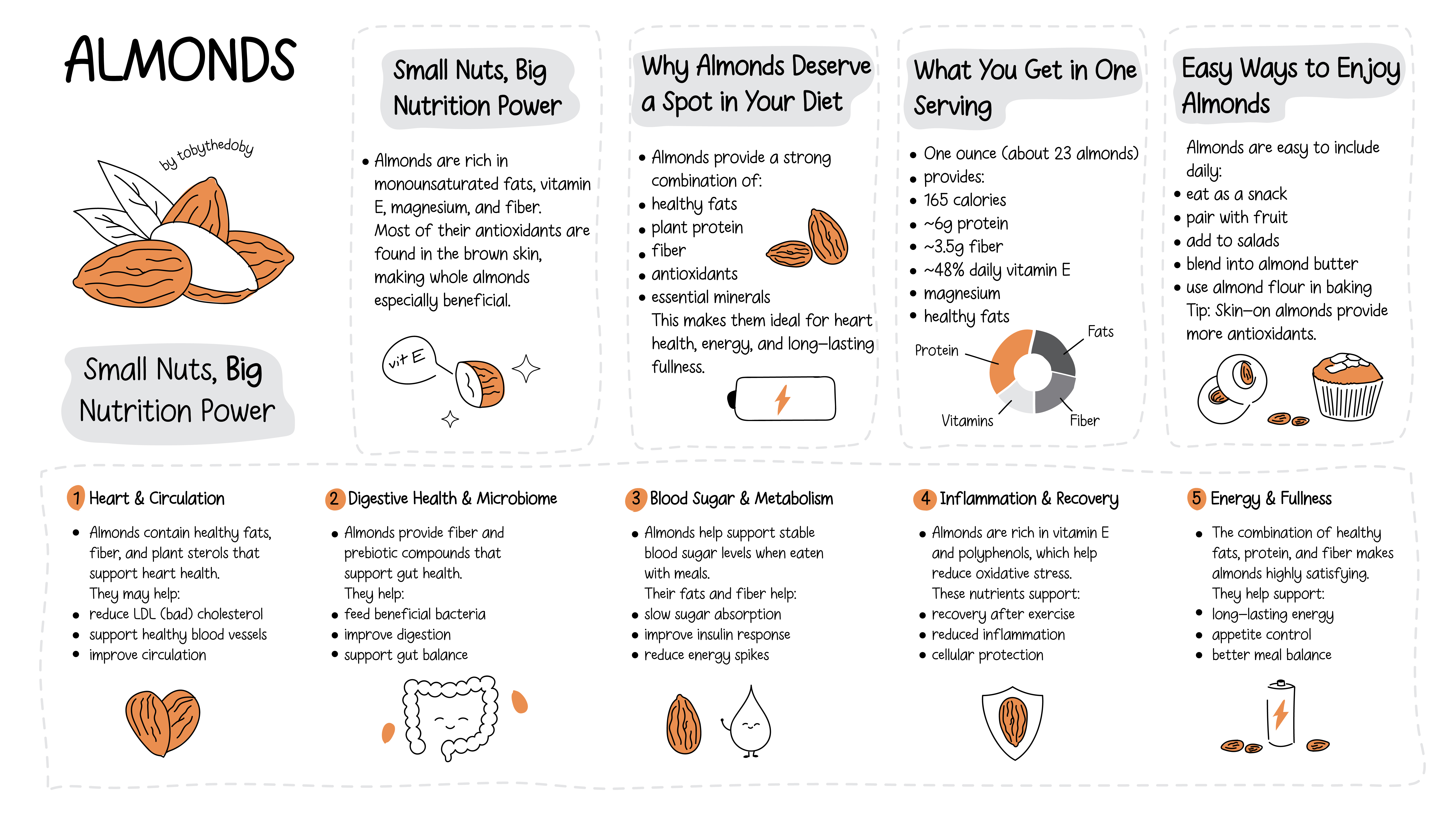
Health Benefits
Things to Know
Tree Nut Allergies: Almonds can trigger severe reactions; avoid completely if allergic.
Oxalates: Almonds are relatively high in oxalates. If you have a history of kidney stones, consult your doctor.
Phytic Acid: This "antinutrient" can slightly reduce mineral absorption. Soaking almonds overnight can help neutralize it.
Calorie Density: Portion control is key for weight management—stick to a 1 oz serving.
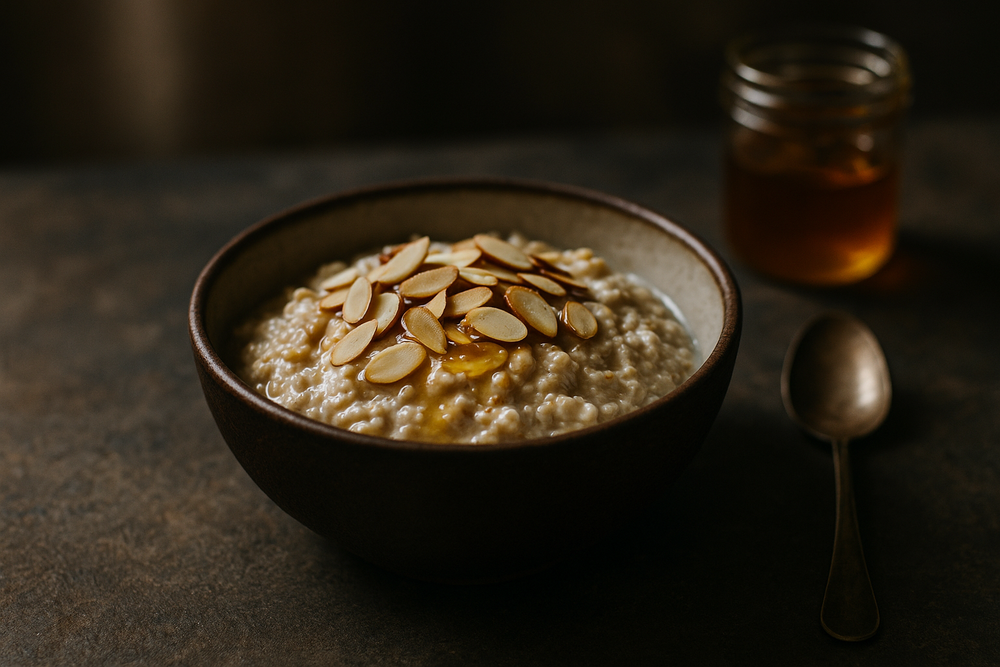
Common Uses
- —Eating a handful (approx. 23 nuts) as a replacement for processed carbs to lower cardiovascular risk and improve cholesterol.
- —Consuming almonds after a workout to reduce inflammation and muscle "power loss" during the 72-hour recovery window.
- —Pairing almonds with high-glycemic fruits or grains to "blunt" the resulting blood sugar spike.
- —Eating 10–15 almonds 30 minutes before a main meal to trigger fullness hormones and prevent overeating.
- —Utilizing the high Vitamin E content to protect aging brain cells from oxidative stress.
- —Using unsweetened almond milk as a low-calorie, fortified source of calcium and Vitamin D for bone health.
Best Forms
Provides the highest antioxidant content. The brown skin contains the majority of the flavonoids.
Retains most heart health benefits and may be easier to digest, though some heat-sensitive polyphenols may decrease.
Offers concentrated nutrition. Ensure it is free from added sugars or hydrogenated oils to protect your metabolic health.
While skinless almonds are still nutritious, they lack the concentrated antioxidants found in the peel.
Glossary
Shop This Ingredient
Stock your pantry with quality almonds.
Buy on AmazonAs an Amazon Associate, Plantopedia earns from qualifying purchases. This costs you nothing extra and helps us keep the encyclopedia free.
Frequently Asked Questions
Almonds lower "bad" LDL cholesterol while maintaining "good" HDL levels. Their monounsaturated fats and antioxidants prevent cholesterol from oxidizing, which reduces the risk of plaque buildup in the arteries and improves overall blood vessel elasticity.
Both offer significant health benefits of almonds. Raw almonds retain 100% of their heat-sensitive polyphenols, while light roasting can make the protein more digestible. To maximize heart health, choose dry-roasted over oil-roasted to avoid unnecessary inflammatory fats and extra calories.
Yes. Despite being calorie-dense, the combination of fiber and protein promotes satiety (fullness). Furthermore, the cell walls of whole almonds are difficult to break down, meaning about 15% of the almonds' calories pass through the digestive tract unabsorbed.
Eating almonds as a mid-morning or mid-afternoon snack is ideal for metabolic health. Their protein-fat-fiber matrix prevents energy crashes and "hangry" episodes, helping you maintain stable blood sugar levels until your next full meal.
Almonds are high in vitamin E, which can have a mild blood-thinning effect. If you are on anticoagulant medications like Warfarin, or if you have a history of kidney stones (due to almond oxalates), consult your doctor before starting a daily regimen.
Quick Answers
Common questions, answered in a line.
Eat almonds with the brown skin intact to ensure you receive the full dose of polyphenols. These bioactive compounds are concentrated in the skin and provide between 200–418mg of antioxidants per ounce.
Almonds are an excellent source of alpha-tocopherol (Vitamin E), which acts as a powerful fat-soluble antioxidant. This specific nutrient helps protect your cell membranes and aging brain cells from oxidative stress.
Store almonds in airtight containers in a cool, dark place to protect their high oil content from oxidation. Refrigerating your almonds can further extend their shelf life by up to six months.
Soaking almonds overnight can help neutralize phytic acid, an "antinutrient" that can slightly reduce mineral absorption. This process makes the nutrients in the nuts more accessible for your body to use.
Eating almonds can help "blunt" blood sugar spikes when you pair them with high-glycemic fruits or grains. They act as a metabolic buffer to slow down the absorption of sugars into your system.
Almonds contain L-arginine, an amino acid that supports the production of nitric oxide and improves blood vessel function. They also provide plant sterols that support healthy cholesterol metabolism.
Consuming almonds after a workout can help reduce inflammation and minimize muscle "power loss" during the 72-hour recovery window. Their combination of protein and antioxidants supports physical recovery.
People with a history of kidney stones should consult a doctor before eating almonds because they are relatively high in oxalates. Additionally, those with tree nut allergies must avoid almonds completely to prevent severe reactions.
For Readers in the USA
Local context — sourcing, seasonality, and regional notes.
California grows nearly 100% of the U.S. commercial almond supply and about 80% of the global supply, making it the primary hub for the nut. This domestic production ensures that almonds are readily available and affordable in every state throughout the year.
U.S. grocery stores like Costco, Whole Foods, and Trader Joe's carry almonds year-round, though the fresh California harvest typically reaches shelves in late summer or early fall. Look for 'New Crop' labels at farmers markets in the fall for the highest moisture content and flavor.
To be labeled 'USDA Organic,' almonds must be grown without synthetic pesticides or fertilizers, while standard almonds may be treated with conventional methods. Additionally, all almonds sold in the U_S_ must be pasteurized for food safety, though many labeled as 'raw' are steam-treated to meet this FDA requirement.
The Nonpareil variety is the most common consumer almond in the U.S. because of its thin shell and aesthetically pleasing, smooth skin. Other popular American varieties include the Mission, which is shorter and thicker, often preferred for roasting and flavoring due to its stronger taste.
AI Clinical Review
- Bioaccessibility Focus: Correctly identifies that not all almond fat is absorbed. This is a critical clinical nuance for weight management.
- Skin-Polyphenol Link: Rightly emphasizes that the brown skin contains the majority of the nut's antioxidants; blanched almonds lose a significant therapeutic edge.
- Magnesium Role: Accurately connects the mineral content to glucose metabolism and insulin sensitivity.
- Vitamin E Form: Correctly specifies that almonds provide $ \alpha $-tocopherol, the most biologically active form of Vitamin E for humans.
- Endothelial Benefit: Properly cites the improvement in flow-mediated dilation (FMD) as a primary mechanism for heart health.
- Mental Stress Resilience: Emerging "Heart Rate Variability" (HRV) studies suggest almonds might help the heart recover faster from mental stress, but more robust data is required.
- Roasting vs. Raw Phenolics: While roasting increases flavor, the exact "tipping point" where heat destroys more antioxidants than it makes bioavailable (via cell wall breakdown) is still being debated.
- GABA and Mood: Some studies look at the L-arginine and magnesium in almonds for mood support, but they are not a substitute for clinical psychiatric care.
- Prebiotic Specificity: While we know almonds act as prebiotics, researchers are still identifying exactly which strains of "good" bacteria they favor most.
- Oxalate Risk: Almonds are very high in oxalates. If you are prone to kidney stones, pair them with a calcium source (like yogurt) to block oxalate absorption in the gut.
- Phytic Acid Interference: Like all nuts, almonds contain phytates that can block the absorption of their own minerals. Soaking them for 8–12 hours can "unlock" more zinc and iron.
- Rancidity: The high monounsaturated fat content makes almonds prone to oxidation. Store them in a cool, dark place or the fridge to prevent them from becoming pro-inflammatory.
- Allergy Awareness: Almond allergies are among the most common tree nut allergies and can be life-threatening; cross-contamination in processing facilities is a major risk.
- Portion Control: Despite the "calorie paradox," they are still energy-dense. A "handful" should be the literal measurement to avoid unintended weight gain.
Mention allergy context where appropriate; keep serving size realistic.
References
- USDA FoodData Central: Primary source for nutritional density and mineral profiling.
- Journal of Nutrition: Clinical research on almond consumption and LDL cholesterol reduction.
- Harvard T.H. Chan School of Public Health: Analysis of nuts and chronic disease prevention.
- American Heart Association: Guidelines on monounsaturated fats and cardiovascular health.
Know Your Numbers
Eating healthy is a start. Now get to know your biomarkers.
Food changes bloodwork — inflammation, lipids, blood sugar and nutrient status all respond to what you eat. 59 markers from $59.
- Results in 7–10 days at 2,000+ Quest sites
- Licensed provider reviews every result
- One flat price, no membership, HSA/FSA eligible
Educational information only, not medical advice. Panels are ordered and reviewed through our licensed partner; Plantopedia may earn a commission.
Filed Under
Health Goals This Supports
Related Ingredients
Best Evening Snacks for Better Sleep
The evening snacks with the most direct clinical trial evidence share a few traits: some natural melatonin or its building block tryptophan, magnesium, and a modest amount of carbohydrate, without the large or fatty meal that can disrupt digestion and sleep instead of helping it. Tart cherries...
Best Nuts and Seeds for Heart Health
Walnuts, almonds, pistachios, pecans, hazelnuts, flaxseed and chia have the strongest human trial evidence for blood lipids, at about one ounce a day. Here is what the pooled trials show, how certain that evidence is, and how to work nuts into a pattern rather than bolt them on.
Best Plant-Based Foods for Heart Health
Legumes, oats and barley, nuts, extra virgin olive oil, soy foods and vegetables carry the most credible human evidence for cardiovascular health. Here is what each one does, at what dose, and where the limits are.
Foods That Help Avoid the Afternoon Crash
The early-afternoon dip is partly circadian and partly postprandial. You cannot delete the first, but meal size, carbohydrate quality and a short walk change how hard the second lands.
Foods That May Help Lower LDL Cholesterol
LDL cholesterol carries cholesterol particles into artery walls, where they contribute to the plaque buildup behind heart attacks and stroke. A specific group of plant foods, oats and barley, ground flaxseed, legumes, soy, walnuts, almonds, and avocado, has randomized controlled trial evidence...
How Late-Night Eating Affects Sleep
Eating close to bedtime can disrupt sleep through at least three pathways: reflux from lying down soon after a meal, a shift in the body's internal clock because food helps set metabolic rhythms, and a sharper blood sugar rise on top of the insulin resistance the body naturally develops each...
Magnesium-Rich Plant Foods for Sleep
The plant foods that deliver the most magnesium per realistic serving, plus a sober read of what magnesium trials actually show for sleep.
What to Avoid Eating Late at Night
A ranked, evidence-weighted look at which late-night foods and drinks are most likely to disrupt sleep, how timing and dose change the answer, and which common restrictions are not worth making.