Best Nuts and Seeds for Heart Health
Walnuts, almonds, pistachios, pecans, hazelnuts, flaxseed and chia have the strongest human trial evidence for blood lipids, at about one ounce a day. Here is what the pooled trials show, how certain that evidence is, and how to work nuts into a pattern rather than bolt them on.
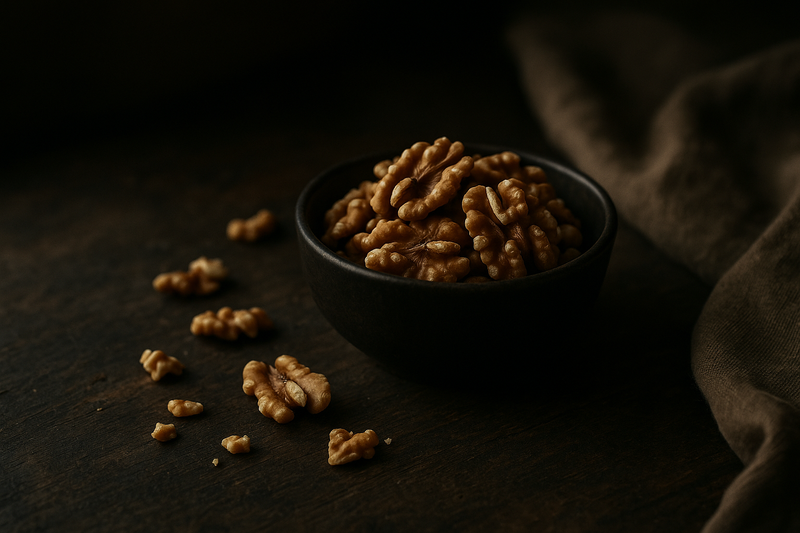
For heart health, the best-supported choices are walnuts, almonds, pistachios, pecans and hazelnuts, plus ground flaxseed and chia seeds, eaten at roughly one ounce a day inside an overall plant-forward pattern. Pooled randomized trials show modest reductions in LDL cholesterol, total cholesterol, triglycerides and apolipoprotein B. Nuts do not meaningfully lower blood pressure, and none of them works in isolation. Which nut you pick matters less than eating them consistently.
Key takeaways
- A large meta-analysis of 139 randomized trials found nuts lowered LDL cholesterol by about 0.11 mmol/L (roughly 4 mg/dL) and total cholesterol by about 0.13 mmol/L, with no significant change in HDL or blood pressure.
- The authors rated certainty for the cholesterol findings as very low, because trials were inconsistent and publication bias was likely, so treat the size of the effect as approximate.
- Walnuts and almonds have the most trial data behind them, largely because they have been studied the most, not because other nuts have failed.
- The practical dose in most trials is about 1 ounce (28 to 30 grams) a day, and swapping nuts in for refined snacks matters more than adding them on top.
- Nut allergy is potentially life-threatening, and salted, candied or chocolate-coated products undo much of the point.
How these foods were chosen
Four filters shaped this list.
Human trial evidence, not mechanism. Every food here has been tested in randomized controlled trials with measured blood lipid outcomes, and several appear in trials with cardiovascular event endpoints. Antioxidant content and test-tube findings did not qualify a food on their own.
Whole-food form. Raw or dry-roasted, unsalted, without added sugar or oil coatings. Nut butters with no added sugar or salt count.
Realistic dose. Trials generally used 8 to 168 grams a day, with the most common and most sustainable amount around 30 grams. Foods requiring implausible intakes were excluded.
US availability. Everything here is stocked in ordinary supermarkets, usually cheapest in the bulk bin or as store-brand bags.
One honest caveat before the list: differences between individual nuts are small and the comparisons are indirect. Almonds and walnuts show somewhat larger LDL reductions in pooled analyses, but they also have three to four times as many studies as most other nuts, which inflates apparent precision rather than proving superiority.
The food list
Walnuts
Walnuts carry the largest body of lipid trials of any tree nut. Updated meta-analyses of controlled trials report reductions in total cholesterol, LDL cholesterol and triglycerides with walnut intake. They are also the main whole-food plant source of alpha-linolenic acid, the plant omega-3 fatty acid. Roughly 7 halves make an ounce.
Almonds
Almonds rival walnuts for study volume and show comparable LDL reductions. They are useful because the intact nut is only partially digested, so a portion of the fat is not absorbed, and because they are easy to keep at a desk. About 23 almonds make an ounce.
Pistachios
Pistachios appear across the pooled trials with favorable effects on total and LDL cholesterol. The practical advantage is portion control: shelling them slows you down, and 49 kernels is a full ounce, which makes the serving look generous.
Pecans
Pecans have fewer trials than walnuts or almonds but fit the same profile of unsaturated fat, fiber and plant sterols, and they were included in the pooled tree nut analyses. Reach for them when you want something that tastes indulgent without added sugar.
Hazelnuts
Hazelnuts are high in monounsaturated fat, the fat class that dominates olive oil, and were among the nuts represented in the 139-trial analysis. Buy them plain, not as the sweetened spread.
Ground flaxseed
Flaxseed is the highest whole-food source of alpha-linolenic acid and also supplies viscous soluble fiber and lignans. It must be ground to be absorbed, since whole seeds usually pass through intact. Two tablespoons a day stirred into oatmeal or yogurt is a common trial-scale amount.
Chia seeds
Chia seeds contribute alpha-linolenic acid and a large amount of soluble fiber, which forms a gel in water. The trial evidence for chia and blood lipids is thinner than for walnuts or almonds, so treat chia as a good fiber and fat vehicle rather than a proven lipid-lowering agent.
Honorable mentions
Sunflower seeds, pumpkin seeds and sesame seeds all deliver unsaturated fat, magnesium and fiber, and are inexpensive alternatives for people with tree nut allergies (check for cross-contamination). Peanuts are botanically legumes but were pooled with tree nuts in the major meta-analysis and behaved similarly.
How to actually use them
- Measure once. Pour a one-ounce portion into your hand a few times so you learn what it looks like. Nuts are calorie dense, and grazing from an open bag is the most common way the benefit disappears.
- Swap, do not stack. Replace crackers, chips or a granola bar. Trials that showed benefit generally substituted nuts into the diet rather than adding calories on top.
- Grind flax, soak chia. Buy flax whole and grind it in a coffee grinder, or buy pre-ground and refrigerate it. Chia can go straight into liquid.
- Store cold. The unsaturated fats that make these foods useful also go rancid. Refrigerate or freeze anything you will not finish in a month.
- Cook with them. Toasted walnuts on roasted vegetables, almond butter in a dressing, pistachios over grains, pumpkin seeds on soup. Nuts as an ingredient get eaten more reliably than nuts as a snack.
Why the overall pattern matters more than any single food
The strongest cardiovascular evidence involving nuts comes from a trial of a whole diet, not a nut. In the PREDIMED trial, 7,447 Spanish adults at high cardiovascular risk were randomized to a Mediterranean diet supplemented with mixed nuts, the same diet supplemented with extra virgin olive oil, or a reduced-fat control diet. Over a median of about 4.8 years, the nut group had a hazard ratio of 0.72 (95% CI 0.54 to 0.96) for major cardiovascular events, and the olive oil group 0.70. The trial was retracted and republished in 2018 after randomization irregularities were found at a small number of sites, and the reanalyzed results held.
That is the right frame. The nuts arrived alongside more vegetables, more legumes, more fish, extra virgin olive oil and less red and processed meat. American Heart Association guidance describes the same architecture: a variety of vegetables and fruits, mostly whole grains, protein mainly from plants, liquid plant oils in place of saturated fat sources, minimally processed foods, and limited added sugar and sodium. Nuts are one component of that pattern, and lipid changes of the size seen in trials are meaningful mainly when they sit inside it.
Who should adapt or be cautious
- Tree nut or peanut allergy. This is a hard stop, not a tolerance question. Do not experiment. Seeds are usually an option, but confirm with your allergist and check labels for shared equipment. Signs of a severe allergic reaction (hives, swelling of the lips, tongue or throat, wheezing, repeated vomiting, faintness or collapse) are a medical emergency. Follow your allergy action plan and call 911.
- Young children. Whole nuts are a choking hazard under roughly age four. Use smooth nut butters spread thin, or finely ground nuts.
- Weight management. Nuts are energy dense. Trials that controlled for calories still found lipid benefits, but that depended on substitution. Portion deliberately.
- Sodium restriction. If you have high blood pressure or heart failure, buy unsalted. Salted nuts can add several hundred milligrams of sodium per serving.
- Brazil nuts. These are extremely concentrated in selenium, and eating them daily can push intake past safe limits. Treat them as occasional, not a daily nut.
- Kidney disease or kidney stones. Nuts and seeds contribute potassium, phosphorus and, in the case of almonds, oxalate. If you have chronic kidney disease or recurrent calcium oxalate stones, ask your nephrologist or dietitian for specific amounts.
- Diverticular disease. If you were once told to avoid nuts and seeds because of diverticulosis, ask your clinician whether that advice still applies to you. Practice has changed and blanket avoidance is no longer standard.
- Anyone on lipid-lowering medication. Nuts complement treatment. They do not replace it, and no dietary change should prompt you to alter a prescription on your own.
Chest pain or pressure, sudden shortness of breath, one-sided weakness, facial droop or slurred speech are emergencies. Call 911 rather than reading further.
Bottom line
About an ounce a day of unsalted walnuts, almonds, pistachios, pecans or hazelnuts, plus ground flaxseed or chia, is a reasonable, well-tolerated way to nudge blood lipids in a favorable direction. The pooled trial effects are modest and rated low certainty, blood pressure does not appear to change, and the strongest cardiovascular evidence comes from whole dietary patterns that include nuts. Choose the ones you will actually eat, buy them plain, and let them replace something less useful.
Frequently asked questions
How many nuts should I eat per day? Most trials used about 1 ounce, which is 28 to 30 grams, roughly a small handful. Higher intakes above 60 grams a day showed somewhat larger total cholesterol effects in pooled analyses, but they also add substantial calories. One ounce is the sensible default for most people.
Are roasted nuts worse than raw? Dry-roasted plain nuts are fine. The variables that matter are added salt, added sugar and added oils, plus how the fats are stored afterward. Oil-roasted, honey-roasted and chocolate-coated products are a different food category.
Do nuts lower blood pressure? The 139-trial meta-analysis found no significant effect on systolic or diastolic blood pressure. If blood pressure is your target, sodium reduction, potassium-rich foods, physical activity, alcohol moderation and prescribed medication carry far more weight than nut intake.
Is peanut butter as good as tree nuts? Peanuts performed similarly to tree nuts in the pooled trials, so unsweetened, unsalted peanut butter is a reasonable and inexpensive option. Read the label: products with added sugar and hydrogenated oil are not equivalent. Check exact nutrient amounts in USDA FoodData Central if you want to compare brands.
Will nuts make me gain weight? In controlled trials, nut intake has not consistently caused weight gain, likely because nuts are filling and some of their fat is not fully absorbed. That result depends on substitution. Eaten in addition to everything else, the calories do count.
Sources and evidence
- Tree nut and peanut consumption and cardiovascular risk factors, meta-analysis of 139 randomized controlled trials
- Walnut consumption and blood lipids, updated meta-analysis of controlled trials (https://ajcn.nutrition.org/article/S0002-9165(22)02916-1/fulltext)
- Nut consumption and blood lipids, updated systematic review and meta-analysis (https://www.nmcd-journal.com/article/S0939-4753(24)00390-9/fulltext)
- PREDIMED trial of a Mediterranean diet with extra virgin olive oil or mixed nuts, republished 2018
- American Heart Association diet and lifestyle recommendations
- 2021 AHA scientific statement on dietary guidance to improve cardiovascular health
- Nutrient composition of specific nuts and seeds, USDA FoodData Central
- Current federal dietary guidance for Americans, ODPHP
Know Your Numbers
Eating healthy is a start. Now get to know your biomarkers.
Food changes bloodwork — inflammation, lipids, blood sugar and nutrient status all respond to what you eat. 59 markers from $59.
- Results in 7–10 days at 2,000+ Quest sites
- Licensed provider reviews every result
- One flat price, no membership, HSA/FSA eligible
Educational information only, not medical advice. Panels are ordered and reviewed through our licensed partner; Plantopedia may earn a commission.