Discover the top chia seeds health benefits. Learn how omega-3, natural fiber, and complete protein support heart health, digestive health,
Healthy fats, minerals, and texture; small-amount high-leverage add-in
The Short Answer
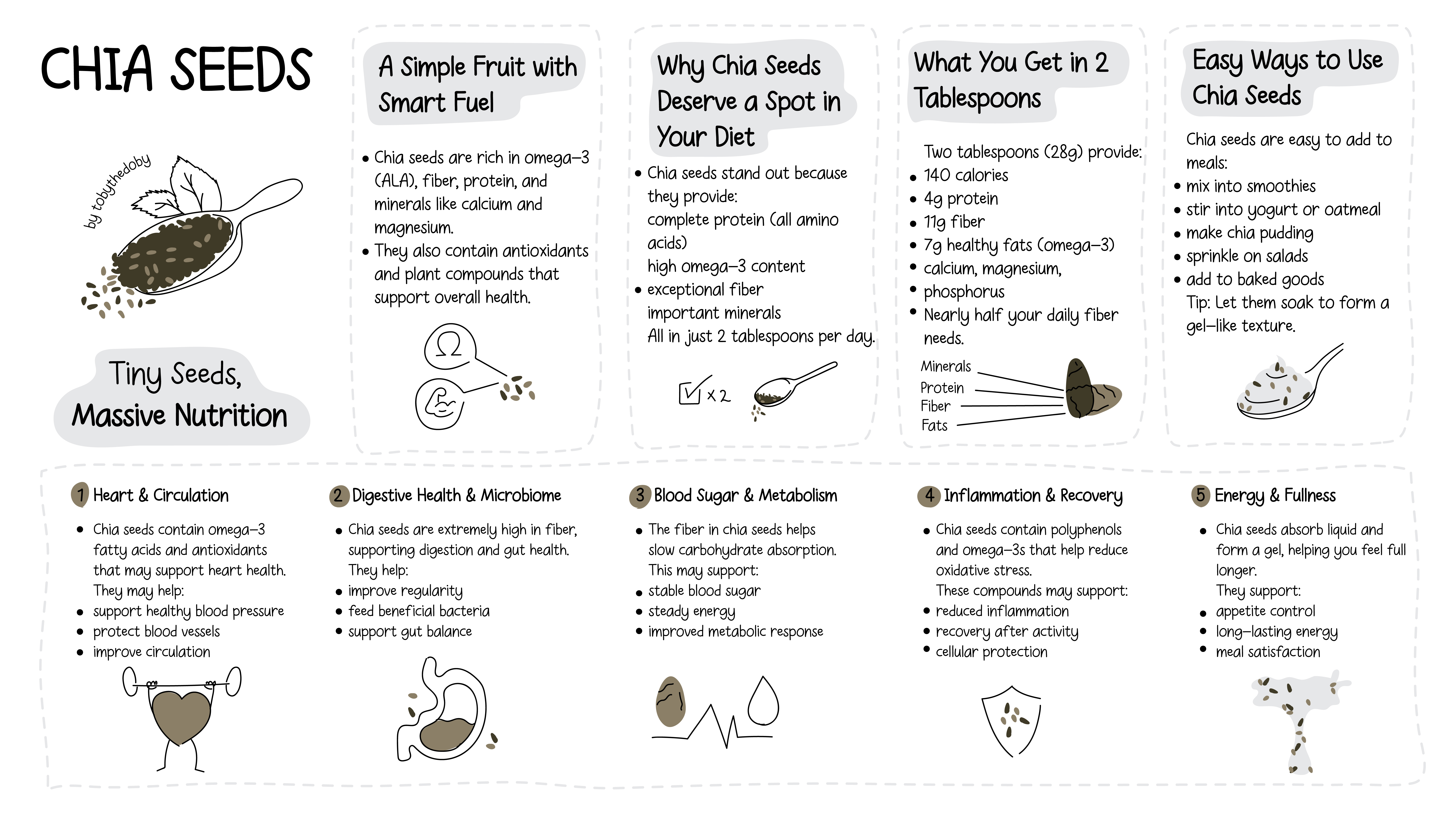
Chia seeds are a nutrient-dense superfood containing 11g of fiber and 5g of omega-3 fatty acids per ounce. They are unique for being a plant-based complete protein, providing all nine essential amino acids.
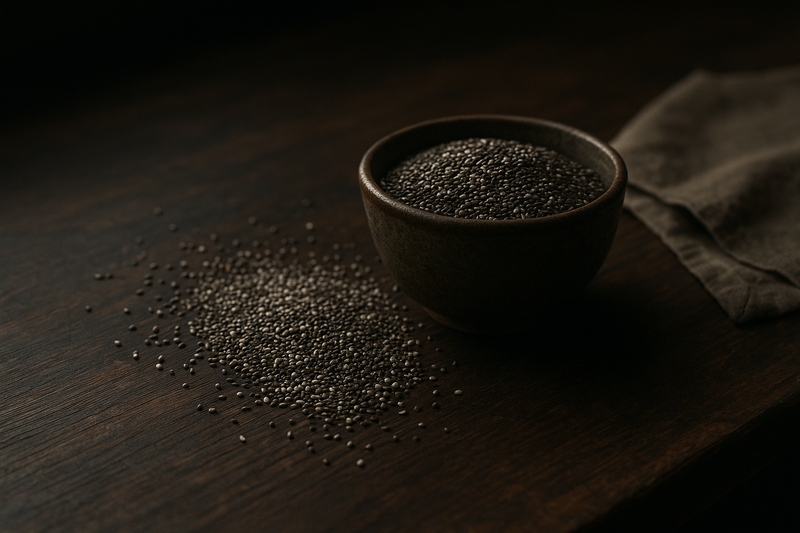
Chia Seeds · Photograph
Chia seeds stand out in the plant kingdom for their unique nutritional profile. Unlike many plant proteins, chia provides all nine essential amino acids your body cannot produce on its own. The omega-3 content—primarily alpha-linolenic acid (ALA)—exceeds most other plant sources gram for gram. Combined with their impressive mineral content and 11 grams of natural fiber per serving, chia seeds offer a simple way to fill common nutritional gaps in modern diets.
Key Nutrients
% Daily Value based on 2,000 cal diet
Why Chia Seeds' Health Benefits Matter for Modern Nutrition
Chia seeds stand out in the plant kingdom for their unique nutritional profile. Unlike many plant proteins, chia provides all nine essential amino acids your body cannot produce on its own. The omega-3 content—primarily alpha-linolenic acid (ALA)—exceeds most other plant sources gram for gram. Combined with their impressive mineral content and 11 grams of natural fiber per serving, chia seeds offer a simple way to fill common nutritional gaps in modern diets.
Key Active Compounds
Chia seeds contain several bioactive compounds that contribute to their health-supporting properties:
- Alpha-linolenic acid (ALA): A plant-based omega-3 fatty acid that makes up 75% of the total fat content.
- Quercetin: A flavonoid with antioxidant and anti-inflammatory properties that supports heart health.
- Chlorogenic acid: A phenolic compound that may support healthy blood pressure levels.
- Caffeic acid: A polyphenol that contributes to high antioxidant activity.
- Mucilage: The natural fiber that creates a gel, aiding in digestive health.
- Phytosterols: Plant compounds that may help support healthy lipid profiles.
Conclusion
Chia seeds are a quintessential "functional food," bridging the gap between basic caloric intake and medicinal nutrition. By providing a dense concentration of omega-3, natural fiber, and complete protein, they support the foundations of heart health and digestive health.
Integrating 1-2 tablespoons into your daily routine—whether ground for better absorption or whole for gut regularity—offers a simple, research-backed strategy for enhancing metabolic health. As modern diets often lack essential fiber and healthy fats, the humble chia seed remains one of the most effective ways to restore nutritional balance. Ready to build meals that maximize your chia seed benefits? Try our personalized meal planner to create balanced meals featuring nutrient-dense ingredients like chia seeds.
How much EPA and DHA does that chia turn into?
2 ounces of chia seeds = 10 g of ALA, converting to roughly 0.8 g EPA and 0.1 g DHA.
625% of the 1.6 g/day ALA Adequate Intake for adult men, and 909% of the 1.1 g/day figure for women.
ALA per 28 g ounce from USDA FoodData Central. Conversion rates ~8% ALA→EPA and ~1% ALA→DHA (Burdge & Calder, Reprod Nutr Dev 2005). Target is the NASEM Adequate Intake for ALA: 1.6 g/day men, 1.1 g/day women.
Is chia enough for your omega-3 needs?
One ounce of chia delivers about 5 g of ALA, roughly three times the adult Adequate Intake, so plain ALA needs are easily covered. The limit is conversion: at ~8% to EPA and ~1% to DHA, that same ounce yields only around 0.4 g EPA and 0.05 g DHA, so people relying entirely on plants often add an algae-based EPA/DHA oil.
How Chia Seeds Compares
| Compared with | What's different |
|---|---|
| Chia Seeds vs. Flax Seeds | Contains more fiber and can be eaten whole; flax must be ground to access nutrients. |
| Chia Seeds vs. Hemp Hearts | Higher in omega-3s and fiber, while hemp provides more protein and a softer texture. |
| Chia Seeds vs. Basil Seeds | Chia forms a thick gel in liquids and is higher in calcium, whereas basil seeds swell faster. |
Health Benefits
Things to Know
Start Slowly: Begin with 1 teaspoon of natural fiber daily to avoid gas or bloating.
Hydrate Adequately: Chia absorbs up to 12 times its weight in water. Always drink extra fluids.
Medication Interactions: The high omega-3 and quercetin content may have mild blood-thinning effects. Consult a doctor if you take anticoagulants.
Choking Risk: Never consume dry chia seeds by the spoonful; they can expand in the esophagus. Always mix with food or liquid.
Common Uses
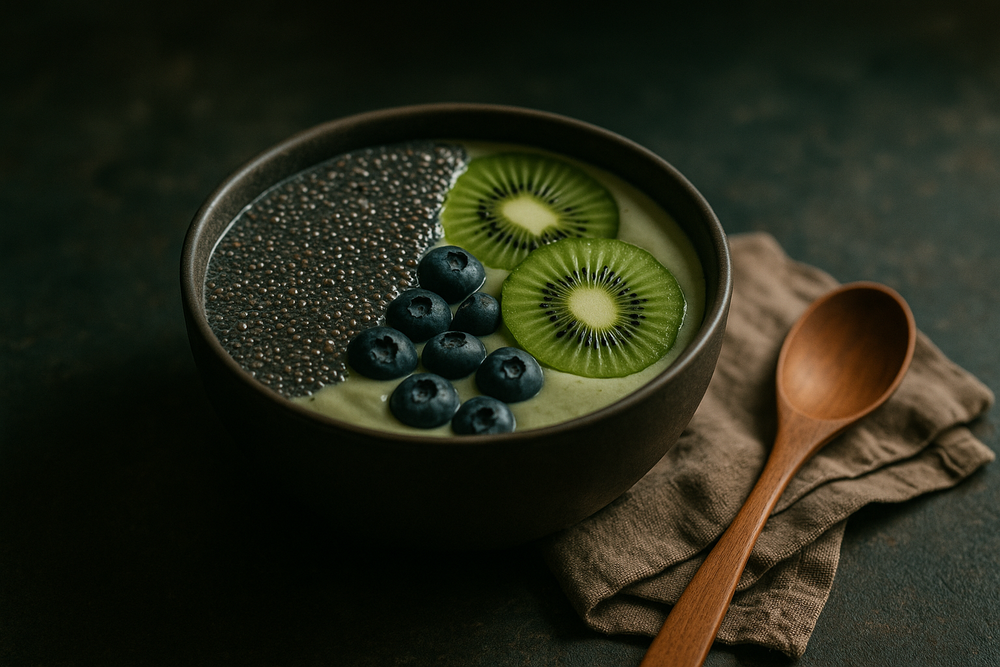
- —Adding chia seeds to oatmeal or smoothies to slow the digestion of carbohydrates and prevent post-meal insulin spikes.
- —Mixing 1 tablespoon of ground chia with 3 tablespoons of water to create a "chia egg" for binding recipes.
- —Consuming chia gel (soaked seeds) daily to add bulk to stool and act as a prebiotic for beneficial gut bacteria.
- —Using ground chia seeds in yogurts or cereals to increase the bioavailability and absorption of plant-based omega-3s.
- —Drinking a "chia fresca" (water, lime, and chia) before meals to promote fullness and reduce calorie intake.
- —Incorporating chia into recovery shakes to provide the minerals and anti-inflammatory fats needed for tissue repair.
Best Forms
Research indicates that milling the seeds increases blood levels of omega-3 (ALA and EPA) more effectively than whole seeds because it breaks the tough outer shell.
Perfect for natural fiber benefits and creating "chia pudding." They act as a gentle sweep for the digestive tract.
Pre-soaking seeds for 15 minutes ensures they are fully hydrated, reducing the risk of dehydration or choking.
Glossary
Shop This Ingredient
Stock your pantry with quality chia seeds.
Buy on AmazonAs an Amazon Associate, Plantopedia earns from qualifying purchases. This costs you nothing extra and helps us keep the encyclopedia free.
Frequently Asked Questions
Start with 1 tablespoon (14g) daily and gradually increase to 2 tablespoons (28g). This provides 11g of natural fiber and substantial omega-3 fatty acids. Always consume plenty of water to prevent digestive discomfort and allow the fiber to work properly.
Ground chia seeds may offer better nutrient absorption, particularly for omega-3 fatty acids. Research suggests ground chia can increase blood levels of ALA and EPA more effectively than whole seeds. However, both forms provide excellent natural fiber and complete protein benefits.
Yes, they are generally safe for daily consumption in amounts of 1–2 tablespoons. However, introduce them gradually to avoid digestive upset, stay hydrated, and consult your healthcare provider if you take blood thinners, have low blood pressure, or suffer from swallowing difficulties.
Yes, chia seeds support digestive health through their high natural fiber content. They contain both soluble and insoluble fiber, plus prebiotics that support beneficial gut bacteria. The mucilage (gel) formed by chia also helps regulate bowel movements and improve regularity.
Yes, chia seeds contain all nine essential amino acids, making them a rare complete plant-based protein. While two tablespoons provide 4g of protein—less than meat—they are an invaluable addition to vegetarian diets for supporting muscle maintenance and tissue repair.
Research suggests chia seeds may support heart health via chlorogenic acid and omega-3 ALA, which help manage blood pressure and reduce inflammation. Their high fiber content also helps lower "bad" LDL cholesterol by binding to bile acids in the gut.
Quick Answers
Common questions, answered in a line.
Chia seeds are a rare plant-based complete protein because they contain all nine essential amino acids that the body cannot produce on its own. This distinguishes them from many other plant proteins that lack one or more of these vital building blocks.
Chia seeds are an exceptional source of omega-3s, specifically alpha-linolenic acid (ALA), which makes up 75% of their total fat content. Gram for gram, the omega-3 content in chia seeds exceeds that of most other plant-based sources.
Chia seeds contain several powerful antioxidants, including quercetin, chlorogenic acid, and caffeic acid. These bioactive compounds provide anti-inflammatory benefits and help protect the body against oxidative stress.
Chia seeds support heart health through their high concentration of alpha-linolenic acid (ALA), phytosterols, and the antioxidant quercetin. These components work together to support healthy lipid profiles and provide anti-inflammatory benefits for the cardiovascular system.
You should never consume dry chia seeds by the spoonful because they can expand in the esophagus and create a choking risk. To consume them safely, always mix the seeds with food or liquid, as they can absorb up to 12 times their weight in water.
Chia seeds contain a specific type of natural fiber called mucilage, which creates a gel-like substance when wet. This gel adds bulk to stool and serves as a prebiotic to support beneficial bacteria in the gut.
You can use chia seeds as a vegan egg replacement by mixing one tablespoon of ground chia with three tablespoons of water. This creates a "chia egg" that acts as an effective binding agent in various recipes.
For Readers in the USA
Local context — sourcing, seasonality, and regional notes.
In the U.S., chia seeds are widely available at major grocery chains like Whole Foods, Trader Joe’s, Kroger, and Costco, often located in the baking or health food aisles. You can also find them in bulk bins at local natural food co-ops to save on packaging.
While most chia seeds sold in the U.S. are imported from Latin America, domestic commercial production has expanded into southern states like Arizona, California, and Florida. These regions offer the frost-free growing season and specific day-length requirements necessary for the plants to flower and set seed.
The USDA Organic seal on chia seeds ensures they were produced without synthetic fertilizers or pesticides and meet strict federal standards for organic farming. This certification is popular among U.S. consumers looking to avoid glyphosate and other chemical residues in their supplements.
In America, chia seeds are most commonly used in "chia pudding," smoothies, and as a vegan "egg" substitute in gluten-free baking. They gained mainstream popularity in the U.S. during the 1980s via "Chia Pets," but have since transitioned into a staple of the American health food market.
AI Clinical Review
- Milling for Bioavailability: Correctly notes that ground chia significantly increases the blood levels of ALA and EPA compared to whole seeds, as the tough outer shell is difficult for human enzymes to crack.
- Complete Protein Status: Accurately identifies chia as a rare plant-based complete protein, which is vital for vegetarian and vegan nutritional planning.
- Mucilage Function: Properly explains the role of the gel-forming fiber in slowing gastric emptying and glucose absorption.
- ALA Conversion Nuance: Rightly mentions that while chia is high in ALA, the body must convert it to EPA/DHA, a process that can be limited in some individuals.
- Choking Risk Warning: Provides a critical safety warning regarding the consumption of dry seeds, which is a recognized medical emergency risk.
- Direct Weight Loss: While chia increases satiety, long-term clinical trials specifically linking chia consumption to significant weight loss (independent of calorie restriction) have shown mixed results.
- ALA to DHA Conversion Rates: The exact efficiency of converting chia's ALA into DHA (essential for brain health) is often very low (less than 1%) and varies based on genetics and diet.
- Hormonal Balance: Some preliminary studies suggest chia may help balance certain hormones related to metabolic syndrome, but more interventional human trials are required.
- Skin Health: While rich in antioxidants, the direct impact of dietary chia on skin conditions like eczema or aging is currently based more on nutrient profiles than clinical dermatology trials.
- Hydration is Non-Negotiable: Because chia is highly hydrophilic, eating them without adequate water can lead to constipation rather than relieving it.
- Gradual Introduction: The massive fiber content (11g per serving) can cause significant GI distress if a patient jumps from a low-fiber diet to 2 tablespoons daily overnight.
- Phytic Acid: Like most seeds, chia contains phytates that can bind to minerals. Soaking or milling helps mitigate this, though it is less of a concern than in grains.
- Blood-Thinning Potential: Large amounts of omega-3s and quercetin can have a mild anticoagulant effect. Patients on Warfarin or Aspirin therapy should maintain a consistent intake.
- Storage: While antioxidants keep them stable, ground chia should be stored in the refrigerator to prevent the exposed omega-3 oils from oxidizing.
Mention allergy context where appropriate; keep serving size realistic.
References
- USDA FoodData Central: Verified nutritional data for Salvia hispanica.
- Harvard T.H. Chan School of Public Health: Analysis of fiber and cardiovascular outcomes.
- Journal of Nutritional Biochemistry: Clinical studies on ALA conversion and omega-3 absorption.
- Frontiers in Plant Science: Research on the antioxidant and polyphenol matrix of chia.
Know Your Numbers
Eating healthy is a start. Now get to know your biomarkers.
Food changes bloodwork — inflammation, lipids, blood sugar and nutrient status all respond to what you eat. 59 markers from $59.
- Results in 7–10 days at 2,000+ Quest sites
- Licensed provider reviews every result
- One flat price, no membership, HSA/FSA eligible
Educational information only, not medical advice. Panels are ordered and reviewed through our licensed partner; Plantopedia may earn a commission.
Filed Under
Health Goals This Supports
Related Ingredients
Anti-Inflammatory Breakfast Ideas
Eight breakfast templates built from whole grains, fruit, legumes and unsaturated fats, with the reasoning behind each, easy substitutions, and honest limits on what a single meal can do.
Best Breakfast Foods for Brain Fog
Breakfasts built around protein, fiber, and slow-digesting carbohydrates, rather than sugar and refined starch alone, are the most consistent way to support steady blood sugar and mental clarity through the morning. No single breakfast food is a proven cognitive enhancer, but research links...
Best Breakfast Foods for Mental Clarity
Mental clarity in the morning comes from meal shape, not a hero ingredient. Here is the pattern, eight breakfasts that follow it, and an honest read of the evidence.
Best Foods for Gut Health
High-fiber plants eaten in variety plus a small daily serving of genuinely fermented food is the combination with the best human evidence behind it. Here is the food list, the dosing, and the cautions.
Best Low-Bloat Plant-Based Foods
If bloating is a recurring problem, the most consistent evidence points to lowering your total intake of rapidly fermentable carbohydrates (FODMAPs) rather than adding one "de-bloating" food. Whole plant foods like ripe kiwi, oats, well-pressed firm tofu, cooked spinach, less-ripe banana, chia...
Best Nuts and Seeds for Heart Health
Walnuts, almonds, pistachios, pecans, hazelnuts, flaxseed and chia have the strongest human trial evidence for blood lipids, at about one ounce a day. Here is what the pooled trials show, how certain that evidence is, and how to work nuts into a pattern rather than bolt them on.
Best Plant-Based Foods for Steady Energy
A practical, evidence-checked look at the plant foods most likely to support steady energy through the day, why the overall eating pattern matters more than any single item, and when persistent fatigue needs a clinician rather than a grocery list.
Blood Sugar and Nighttime Wake-Ups
Waking up in the middle of the night can sometimes relate to blood sugar swings, either a drop (nocturnal hypoglycemia, mainly relevant for people on insulin or certain diabetes medications) or a rebound rise after a low, but this is one of several possible causes, not the most common one for...
Chia Seeds, Flaxseed, and Oats for Constipation
Chia seeds, flaxseed, and oats all relieve occasional constipation, but not through identical routes. Chia forms a thick mucilage gel almost immediately in water and performed as well as psyllium and a standard laxative in a recent clinical trial. Ground flaxseed reduced constipation symptom...
Fermented Foods vs. Fiber: What Helps the Gut More?
A head-to-head look at the two most popular gut strategies: what the single randomized trial comparing them found, what the long-term data say, and how to decide which one to work on first.
Fiber, Prebiotics, and the Gut Microbiome
A step-by-step explanation of how dietary fiber becomes short-chain fatty acids in the colon, what randomized trials and large cohorts actually show, and why a good mechanism is not the same as a proven benefit.
Foods for Steady Blood Sugar and Better Energy
Fatigue has many possible causes, and diet is only one of them, but a common contributor is the energy dip after a sharp rise and fall in blood sugar following a high-glycemic meal. Foods combining fiber, protein, and healthy fat, such as legumes, whole grains, nuts, and seeds, raise blood...
Foods That Help Stool Move More Easily
For constipation, the foods with the best evidence are kiwi and prunes: in randomized trials, two to three kiwi a day or two servings of prunes daily increased weekly bowel movements and softened stool as well as, or better than, psyllium fiber supplements. Pairing fiber-rich foods with enough...
Foods That Support Focus and Clear Thinking
No single food clears brain fog, but a specific cluster of foods has real research behind attention, processing speed, and steady mental energy: plant sources of omega-3 fats like walnuts and chia seeds, flavonoid-rich blueberries, leafy greens like spinach, whole grains such as oats, extra...
Gut Health for Beginners
A plain-English starting point for gut health: what the microbiome is, what actually shifts it, and which popular claims do not hold up.
High-Fiber Foods for Metabolic Health
An evidence-ranked list of high-fiber foods for metabolic health, with the selection criteria made explicit, realistic serving amounts, and guidance on who should adapt or be cautious.
High-Fiber Foods That Support Better Energy
Fiber contributes almost no calories of its own, but viscous fibers in oats, barley, beans and chia slow glucose absorption and extend fullness. Here are the foods with real human evidence behind them, and the honest limits of what fiber can do for tiredness.
How Blood Sugar Affects Sleep
Blood sugar swings, both up and down, can disrupt sleep through separate mechanisms. A drop in glucose overnight can trigger a stress-hormone response (adrenaline, cortisol, growth hormone) that wakes the body, causes sweating, or produces vivid dreams. Persistently high blood sugar before bed...
How Fiber Affects Bloating
Fiber can make bloating better or worse, and sometimes both, depending on the type of fiber, the amount, and how quickly you increase it. Fermentable fibers, found in beans, onion, wheat, and many fruits, feed gut bacteria that produce gas as a byproduct, which can stretch the intestine and feel...
How Fiber and Polyphenols Support Inflammation Balance
A mechanism-first look at how dietary fiber and plant polyphenols interact with the gut, the immune system and inflammatory markers, and an honest account of what human trials can and cannot support.
How Fiber Changes the Gut Microbiome
A mechanism explainer: what happens to fiber after it leaves the small intestine, which microbes act on it, what they produce, and how much of that chain has been demonstrated in people rather than mice.
How Food Affects Brain Health
A beginner-friendly explanation of the actual routes by which food reaches the brain, the handful of principles that matter, and a starter plate you can build this week.
How Gut Health and Brain Health Are Connected
A plain-language walkthrough of how the gut and brain communicate, followed by an honest account of what human trials have and have not demonstrated.
How Much Fiber Do You Need for Regular Bowel Movements?
Most adults need roughly 25 to 38 grams of fiber a day to support regular, comfortable bowel movements, with the target running lower for women (about 25 g under age 50, 21 g after) than for men (about 38 g under age 50, 30 g after), per Mayo Clinic and the Dietary Guidelines for Americans. Most...
How Plant-Based Foods Support the Gut
Plant foods feed the microbes in your large intestine, which ferment fiber into short-chain fatty acids. Variety across the week matters more than any single gut food.
How to Build a Gut-Friendly Plate
A beginner's guide to assembling meals that feed your gut microbiome, built on fiber, plant variety and a small daily fermented food. Includes a starter plate, a weekly checklist, and an honest account of what the evidence does and does not show.
Hydration, Fiber, and Gut Motility
Fiber and water both influence how easily stool moves through your colon, but they work through different mechanisms and neither is a guaranteed fix for constipation on its own. Soluble fiber absorbs water and forms a gel that softens stool, insoluble fiber adds bulk that stimulates the colon...
Magnesium-Rich Plant Foods for Sleep
The plant foods that deliver the most magnesium per realistic serving, plus a sober read of what magnesium trials actually show for sleep.
Signs Your Gut Microbiome May Be Out of Balance
There is no single symptom or test that proves your gut microbiome is "out of balance," a state researchers call dysbiosis, because a healthy microbiome varies between people and there is no agreed definition of "normal" for most adults. Persistent bloating, excess gas, and changes in bowel...
The Gut-Brain Connection Explained Simply
The gut and brain communicate constantly through nerves, hormones, immune signals and bacterial metabolites. This explains the mechanism step by step, then separates what human trials have demonstrated from what remains laboratory theory.
What to Eat After Antibiotics
After a course of antibiotics, the most useful dietary shift is eating more fiber, from vegetables, legumes, and whole grains, and adding fermented foods like yogurt or kefir if you tolerate dairy. Research comparing dietary changes with probiotic and microbial-transplant approaches found that a...
What to Eat When You Have Brain Fog
Brain fog (trouble concentrating, mental fatigue, forgetfulness, and a sense of thinking through mud) is not a diagnosis on its own, and no single food fixes it. The dietary pattern most consistently linked to better day-to-day mental clarity emphasizes steady blood sugar, adequate hydration,...
What to Eat When Your Body Feels Inflamed
If your joints ache, your energy sags, or you simply feel puffy and "inflamed" without a clear diagnosis, no single food will fix that. The dietary pattern with the strongest evidence behind it centers on vegetables, fruit, legumes, whole grains, nuts, seeds, and olive oil, eaten regularly, with...