Chia Seeds, Flaxseed, and Oats for Constipation
Chia seeds, flaxseed, and oats all relieve occasional constipation, but not through identical routes. Chia forms a thick mucilage gel almost immediately in water and performed as well as psyllium and a standard laxative in a recent clinical trial. Ground flaxseed reduced constipation symptom...
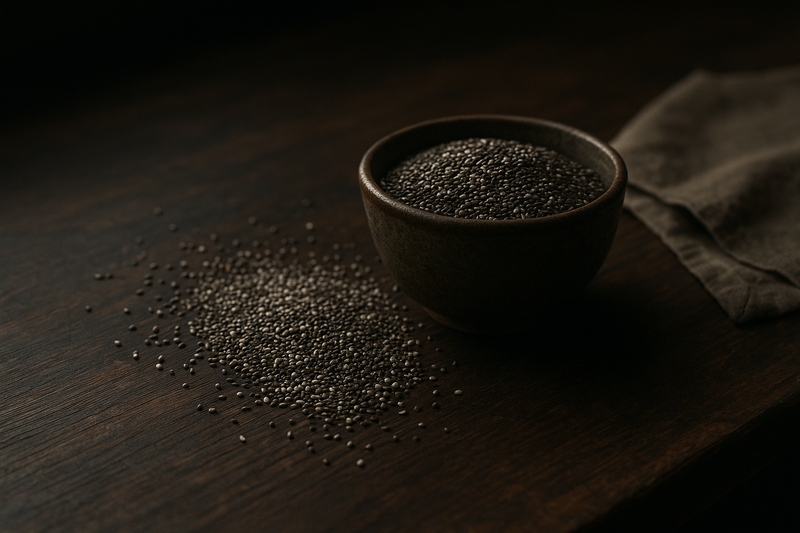
Chia seeds, flaxseed, and oats all relieve occasional constipation, but not through identical routes. Chia forms a thick mucilage gel almost immediately in water and performed as well as psyllium and a standard laxative in a recent clinical trial. Ground flaxseed reduced constipation symptom scores over 12 weeks in randomized trials. Oats and oat bran increase stool frequency in meta-analyses, and one 12-week trial let more than half its participants stop using laxatives entirely. All three need adequate water and a gradual introduction to work well.
Key takeaways
- Chia seeds form a fast, thick mucilage gel and were non-inferior to psyllium and a standard osmotic laxative in a recent clinical trial.
- Ground flaxseed reduced constipation symptom scores over 12 weeks in randomized trials, mostly studied in people with type 2 diabetes.
- Oats and oat bran reliably increase stool frequency in meta-analyses, and one 12-week study let 59 percent of participants stop laxatives.
- The three foods work through overlapping but distinct fiber mechanisms, so combining them, such as oatmeal topped with chia and flaxseed, is a reasonable practical approach.
- None of these foods should substitute for medical evaluation of constipation that is new, severe, or accompanied by warning symptoms.
Definitions
Constipation, per NIDDK's definition, means fewer than three bowel movements a week, or stools that are hard, dry, difficult to pass, or leave a sense of incomplete emptying. Soluble fiber dissolves in water and can form a viscous gel that softens and bulks stool. Insoluble fiber adds bulk and speeds transit without dissolving. Chia seeds and flaxseed are dense sources of both, in different ratios, while oats contribute a distinctive soluble fiber called beta-glucan alongside insoluble bran.
Side-by-side comparison
| Chia seeds | Flaxseed (ground) | Oats / oat bran | |
|---|---|---|---|
| Fiber per typical serving | About 10 g per ounce (2 tbsp); roughly 4 parts soluble to 1 part insoluble | About 2 g per tablespoon; mixed soluble and insoluble, plus lignans | About 4 g per half cup dry oats; oat bran runs higher |
| Main fiber mechanism | Mucilage gel forms almost on contact with water, holding water in stool | Bulks stool; must be ground, since whole seeds often pass through undigested | Beta-glucan gel plus insoluble bran raises stool weight and softness |
| Best clinical evidence | RCT: non-inferior to psyllium and polyethylene glycol over 28 days; reduced symptoms in a double-blind IBS-C trial | RCTs in people with type 2 diabetes and constipation: lower constipation scores after 12 weeks versus placebo | Meta-analysis of RCTs: 40 to 70 g/day raised stool frequency; a 12-week oat bran trial let 59% of participants stop laxatives |
| Typical amount studied | Roughly 7 to 35 g/day depending on the trial | About 10 g twice daily (20 g/day) | 40 to 70 g of oats or oat bran per day |
| How it's usually eaten | Soaked into a pudding, or stirred into yogurt or a smoothie | Ground and stirred into oatmeal, smoothies, or baked goods | Cooked as oatmeal, or oat bran sprinkled into other food |
Evidence for chia and flaxseed
The most direct chia data comes from a trial presented at the American College of Gastroenterology that compared chia seeds against psyllium and polyethylene glycol, two standard first-line constipation treatments, over 28 days; chia performed as well as both. A separate double-blind, placebo-controlled trial of chia seed powder combined with pea protein and xyloglucan found meaningful improvement in constipation, abdominal pain, and bloating in people with constipation-predominant irritable bowel syndrome, though that trial tested chia as part of a combination product rather than chia alone. Flaxseed's strongest evidence comes from two related randomized trials in people with type 2 diabetes and constipation, using about 10 grams of ground flaxseed baked into cookies twice a day for 12 weeks. Constipation symptom scores dropped significantly compared with placebo, and a companion trial found flaxseed performed comparably to psyllium. Because both trials enrolled people with diabetes specifically, it isn't fully established that the same effect size applies to constipation without diabetes present, though the underlying fiber mechanism has no obvious reason to behave differently.
Evidence for oats
A meta-analysis of randomized trials in adults with functional constipation found that oat-based fiber, in the range of 40 to 70 grams of oats or oat bran daily, significantly increased stool frequency and reduced straining. An earlier 12-week trial on oat bran found that 59 percent of participants were able to stop taking laxatives entirely, performing about as well as their prior laxative regimen had. A broader systematic review of oats and bowel health concluded that 14 studies in people without diagnosed bowel disease showed oats or oat bran increased stool weight and reduced constipation, though it also noted there isn't strong evidence that oats outperform other cereal fibers specifically. Evidence in children is more mixed: one pilot study found no significant change in stool frequency with daily oatmeal, even though fiber intake rose.
How they complement each other
These three foods don't compete so much as cover different parts of the same job. Chia's near-instant mucilage gel and flaxseed's bulking effect work well stirred into a food you'd eat anyway, while oats double as an actual meal, which makes it easier to reach the 40 to 70 gram range the trials used. A common, practical combination is a bowl of oatmeal topped with a tablespoon of ground flaxseed and a spoonful of chia, layering a beta-glucan gel, a lignan-rich bulking fiber, and a fast-forming mucilage gel in one meal. There's no head-to-head trial proving this combination beats any single food, but each ingredient's mechanism is additive rather than redundant. Some people also find fruits like kiwi or prunes helpful alongside these three, though that comparison is outside the scope here; a wider mix of fiber types generally supports a more diverse gut microbiome as well.
A practical decision guide
- Want the fastest-acting, easiest-to-add option? Stir 1 to 2 tablespoons of chia into water, yogurt, or a smoothie and let it gel for about 10 minutes before eating.
- Prefer a meal-based habit you'll actually stick with? Build a daily bowl of oatmeal, working up toward 40 grams of dry oats.
- Have trouble chewing or swallowing whole seeds? Use ground flaxseed rather than whole, and make sure chia fully hydrates first.
- Managing blood sugar? The type 2 diabetes trials used flaxseed and psyllium in that exact population with good tolerance, though check with your clinician about how it fits your plan.
- On a budget or with limited access to specialty foods? Oats are typically the cheapest and most widely available of the three.
- Whichever you choose, add it gradually over one to two weeks and pair it with extra water.
Cautions
All three need adequate fluid to work as intended; dry fiber without enough water can worsen constipation instead of relieving it, and swallowing chia seeds without pre-soaking them poses a choking risk because they swell quickly. Whole flaxseed largely passes through undigested, so grind it fresh or buy it pre-ground and store it in the refrigerator, since ground flax turns rancid faster than whole seed. Increasing any fiber quickly can cause gas, bloating, or cramping, so go slow. People with a history of bowel strictures, prior bowel surgery, swallowing difficulty, or inflammatory bowel disease should check with their clinician before adding a large fiber load. None of these foods are a substitute for medical treatment of constipation caused by an underlying condition, and none should replace a prescribed medication without your clinician's input.
When to seek care
See a doctor if constipation doesn't improve after a few weeks of consistent diet and fluid changes, or if you have a family history of colon or rectal cancer. Seek care right away, rather than adjusting your diet further, if constipation comes with rectal bleeding or blood in the stool, constant abdominal pain, inability to pass gas, vomiting, fever, unexplained weight loss, or new constipation that starts after age 50. Constipation can have several possible causes, including thyroid conditions, certain medications, and, less commonly, an intestinal blockage, so persistent or severe symptoms need a clinical evaluation rather than more fiber.
Bottom line
Chia seeds, flaxseed, and oats each have real, trial-backed evidence for easing occasional constipation, working through overlapping but distinct fiber mechanisms. Oats have the deepest and broadest evidence base, chia has the most direct head-to-head comparison against standard treatments, and flaxseed's strongest data comes from people with type 2 diabetes specifically. Pick the one that fits your routine, add water, go slow, and treat this as a supporting habit rather than a fix for constipation that doesn't improve or that comes with warning symptoms.
Frequently asked questions
Which works fastest, chia, flaxseed, or oats?
Chia's mucilage gel forms within minutes of contact with liquid, which is why it's often used as a quick stir-in, but "fastest to gel" isn't the same as "fastest to relieve symptoms." Clinical trials for all three generally measured results over one to twelve weeks, not a single dose.
Can I take all three together?
There's no trial testing the combination directly, but there's no known reason the mechanisms would conflict, and a mixed-fiber bowl of oatmeal with chia and flaxseed is a common, reasonable approach. Introduce them gradually and watch for bloating as your gut adjusts.
How much water do I need with these fibers?
Trials don't specify an exact fluid amount, but soluble, gel-forming fibers depend on water to work as intended. A practical approach is a full glass of water with each fiber-containing meal or snack, on top of your usual daily fluid intake.
Is whole chia as effective as ground chia?
Whole chia seeds absorb water and swell on their own, unlike whole flaxseed, which largely passes through undigested unless ground. Because of this, whole chia is commonly used as-is in trials, while flaxseed is typically studied ground.
Are supplements like psyllium a better choice than these foods?
Psyllium has strong, well-established evidence for constipation and performed comparably to chia in the trial described above. It's a reasonable option, especially if you want a standardized dose, but food-based fiber sources bring a wider mix of nutrients along with the fiber.
Sources and evidence
- NIDDK, symptoms and causes of constipation
- Chia seeds for the treatment of chronic constipation, American College of Gastroenterology abstract
- Efficacy and safety of chia seed powder, pea protein, and xyloglucan in constipation-predominant IBS, randomized controlled trial
- Randomized trial of flaxseed to manage constipation in patients with type 2 diabetes
- Effects of dietary fiber supplementation on chronic constipation, systematic review and meta-analysis
- Oats and bowel disease, systematic literature review
- Comparative assessment of flaxseed and chia seed effects on fecal microbiota composition
- USDA FoodData Central
Know Your Numbers
Eating healthy is a start. Now get to know your biomarkers.
Food changes bloodwork — inflammation, lipids, blood sugar and nutrient status all respond to what you eat. 59 markers from $59.
- Results in 7–10 days at 2,000+ Quest sites
- Licensed provider reviews every result
- One flat price, no membership, HSA/FSA eligible
Educational information only, not medical advice. Panels are ordered and reviewed through our licensed partner; Plantopedia may earn a commission.