Prunes — health benefits and uses
Fiber + phytonutrients; use as a whole-food sweet, snack, or smoothie base
The Short Answer
Prunes are dried plums that support digestion primarily through their 6.4g of sorbitol and 3.1g of fiber per 4-fruit serving. They are also a significant source of Vitamin K and boron, which help maintain bone density.
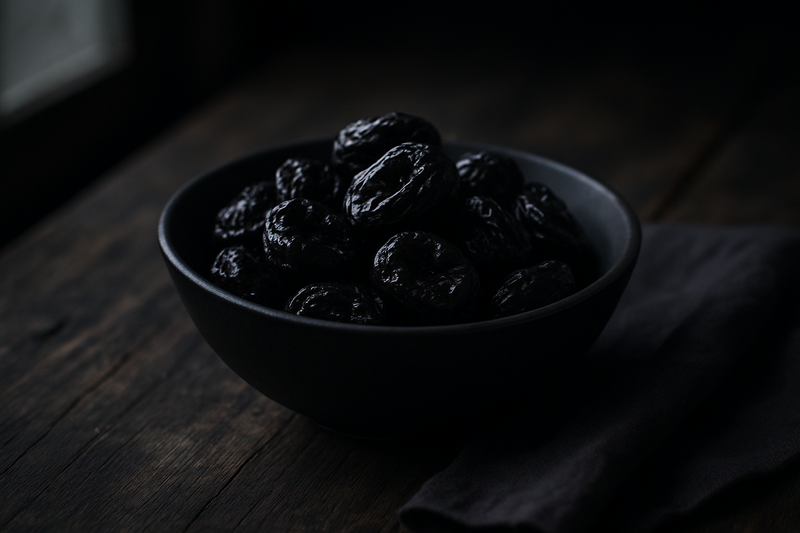
Prunes · Photograph
Prunes are dried plums (Prunus domestica) that pack impressive nutritional density into their wrinkled exterior. While they're most famous for digestive support, emerging research suggests these dried fruits may benefit heart health, bone metabolism, and blood sugar control through their unique combination of fiber, phenolic compounds, and essential minerals.
Key Nutrients
% Daily Value based on 2,000 cal diet
Key active compounds in prunes
Prunes contain several bioactive compounds that contribute to their health benefits:
• Sorbitol - A natural sugar alcohol providing 14.7g per 100g, responsible for the primary laxative effect through osmotic action in the intestines • Neochlorogenic acid - The dominant phenolic compound at 131mg per 100g, contributing to antioxidant activity and digestive support • Chlorogenic acid - A well-studied polyphenol providing 44mg per 100g, linked to cardiovascular and metabolic benefits • Quinic acid - An organic acid at 0.4g per 100g supporting digestive function and mineral absorption • Boron - A trace mineral providing 2.2mg per 100g, meeting full daily requirements and supporting bone metabolism • Anthocyanins - Water-soluble pigments providing 7.6mg per 100g with potent antioxidant properties
Buying guide for prunes
Whole dried prunes are your best choice for maximum benefits. Look for organic varieties without sulfur dioxide or added sugars. Prunes should be plump, slightly soft, and dark purple-black in color. Avoid overly hard or overly mushy prunes.
Prune juice should be 100% prune juice without added sugars, preservatives, or artificial flavors. Check that it's not from concentrate for better nutrient retention.
Fresh plums can be dried at home but won't achieve the same sorbitol concentration as commercial prunes, which use specific drying processes and plum varieties.
Prune supplements aren't necessary if you can eat whole prunes, as the whole food provides the ideal combination of compounds working synergistically.
Store prunes in a cool, dry place in an airtight container. They can last 6-12 months when properly stored and don't require refrigeration.
Prep and pairing ideas
Prunes work well in both sweet and savory applications:
With oatmeal or yogurt - Chop 3-4 prunes into morning oats or Greek yogurt for added fiber and natural sweetness
In salads - Dice prunes into grain salads with nuts and vegetables for sweetness that balances tangy dressings
With protein - Pair prunes with cheese, nuts, or lean meats for balanced snacks that combine protein, healthy fats, and beneficial carbohydrates
Cooked preparations - Add chopped prunes to stews, tagines, or braised dishes for depth of flavor and nutritional enhancement
Smoothies - Blend 2-3 pitted prunes with other fruits for natural sweetness and fiber without added sugars
Common pairings that enhance benefits
Prunes + nuts (especially almonds or walnuts) - The healthy fats help slow sugar absorption while providing complementary minerals like magnesium and vitamin E
Prunes + dairy (yogurt, kefir, or milk) - Calcium from dairy works synergistically with prunes' boron and vitamin K for bone health support, while probiotics may enhance digestive benefits
Prunes + whole grains (oats, quinoa, or brown rice) - Additional fiber creates sustained energy release and enhanced satiety, while B-vitamins in grains complement prunes' mineral profile
Bottom line
Prunes offer science-backed health benefits extending beyond their famous digestive effects. The combination of sorbitol, fiber, phenolic compounds, and essential minerals like potassium and boron creates multiple pathways for health support.
The evidence is strongest for digestive health, with emerging research suggesting benefits for heart health, blood sugar control, and bone metabolism. Starting with 4-5 prunes daily provides meaningful benefits for most people while minimizing potential side effects.
Choose whole dried prunes over juice when possible for maximum fiber and sorbitol content. Monitor your individual response and adjust intake accordingly, keeping in mind that consistency matters more than large amounts.
Ready to optimize your nutrition with evidence-based meal planning? Try our meal planner to incorporate prunes and other beneficial foods into your weekly routine.
How Prunes Compares
| Compared with | What's different |
|---|---|
| Prunes vs. Fresh Plums | Contains significantly more sorbitol and fiber, providing a stronger laxative effect. |
| Prunes vs. Dates | Higher in Vitamin K and boron for bone health, whereas dates offer more calories and sugar. |
| Prunes vs. Raisins | Higher in fiber and Vitamin K, while raisins are smaller and higher in tartaric acid. |
Health Benefits
Things to Know
Start slowly: - Begin with 2-3 prunes daily and gradually increase to assess your digestive tolerance, as excess sorbitol can cause cramping, bloating, and diarrhea
Medication interactions: - Prunes are high in vitamin K (50% DV per 100g), which can interact with blood-thinning medications like warfarin; maintain consistent intake and inform your healthcare provider
Individual sensitivities: - People with IBS, fructose intolerance, or sensitive digestive systems may experience excessive GI effects from sorbitol content
Blood sugar considerations: - While prunes have a low glycemic index, they still contain natural sugars; people with diabetes should monitor blood glucose response
Pregnancy and nursing: - Prunes are generally safe but the laxative effect should be considered; consult your healthcare provider if you're pregnant or breastfeeding
Timing matters: - For digestive support, eating prunes in the morning with water may be most effective

Shop This Ingredient
Stock your pantry with quality prunes.
Buy on AmazonAs an Amazon Associate, Plantopedia earns from qualifying purchases. This costs you nothing extra and helps us keep the encyclopedia free.
Frequently Asked Questions
Heart and circulation Prunes may support cardiovascular health through their high potassium content (745mg per 100g) and phenolic compounds. Research shows prune phenolics can inhibit LDL cholesterol oxidation in laboratory studies, which may help prevent arterial damage. The potassium supports healthy blood pressure by balancing sodium intake and supporting proper heart muscle contractions. Digestive health and microbiome The digestive benefits of prunes are well-established, primarily through sorbitol's osmotic laxative action. Sorbitol draws water into the intestines, softening stool and promoting regularity. The high fiber content (7g per 100g) feeds beneficial gut bacteria and adds bulk to stool. Phenolic compounds may provide additional digestive support through anti-inflammatory effects on the gut lining. Blood sugar and metabolism Despite containing natural sugars, prunes have a surprisingly low glycemic index of 29, meaning they don't cause rapid blood sugar spikes. The combination of fiber, sorbitol, and fructose slows glucose absorption. This makes prunes a practical option for people monitoring blood sugar who want natural sweetness without dramatic glucose fluctuations. Inflammation and recovery Prunes provide concentrated antioxidant compounds that may help manage oxidative stress. The phenolic profile, particularly neochlorogenic and chlorogenic acids, demonstrates anti-inflammatory potential in laboratory studies. While human research is limited, the antioxidant density suggests prunes could support recovery from exercise or daily stress.
Whole dried prunes offer the most complete nutritional profile and highest concentrations of beneficial compounds. They provide maximum fiber content (7g per 100g) and the full 14.7g sorbitol per 100g that drives digestive benefits. Prune juice contains fewer beneficial compounds but may be easier to consume for some people. It provides about 6.1g sorbitol per 100g (less than half of whole prunes) and only 2.5g fiber per 100g. However, it still delivers potassium, phenolic compounds, and minerals in an easily absorbed form. Prune paste or puree retains most beneficial compounds while offering versatility in cooking and baking. It can replace some sugar in recipes while adding nutritional value. Avoid prune products with added sugars or artificial preservatives, which dilute the natural benefits and add unnecessary calories.
For digestive support: Start with 4-5 prunes (about 60g) daily, which provides enough sorbitol and fiber for most people without overwhelming the digestive system. For general health benefits: Up to 8-10 prunes (100g) daily provides optimal nutrient density including full daily boron requirements, substantial potassium, and beneficial phenolic compounds. For first-time users: Begin with 2-3 prunes daily for 3-5 days, then gradually increase based on digestive tolerance. Maximum safe amount: Most people can handle up to 10-12 prunes daily, but exceeding this may cause digestive discomfort due to high sorbitol intake. Always drink adequate water when increasing prune intake, as the fiber and sorbitol work best with proper hydration.
Quick Answers
Common questions, answered in a line.
Prunes have a natural laxative effect primarily due to sorbitol, a sugar alcohol that exerts an osmotic action in the intestines. This process is further supported by the fruit's fiber content and compounds like neochlorogenic acid and quinic acid.
Prunes contain 2.2mg of boron per 100g, which meets the full daily requirement and works with vitamin K to support bone metabolism. When paired with calcium-rich dairy like yogurt or kefir, these nutrients work synergistically to enhance bone health support.
The best prunes are whole, organic varieties that are plump, slightly soft, and dark purple-black without added sugars or sulfur dioxide. Avoid prunes that are overly hard or mushy, and choose whole fruit over juice to ensure you get the maximum fiber and sorbitol content.
Whole dried prunes are generally superior to juice because they provide the maximum fiber and sorbitol content. While 100% prune juice is an option, the whole food offers a synergistic combination of bioactive compounds and fiber that juice lacks.
Prunes contain 50% of the Daily Value of vitamin K per 100g, which can interfere with blood-thinning medications like warfarin. If you take these medications, you should maintain a consistent intake of prunes and inform your healthcare provider.
People with IBS, fructose intolerance, or sensitive digestive systems may experience cramping, bloating, and diarrhea due to the sorbitol in prunes. Because of these effects, it is recommended to start with only 2-3 prunes daily to assess your individual tolerance.
Pairing prunes with nuts like almonds or walnuts provides healthy fats that help slow sugar absorption and offer complementary minerals. They also pair well with whole grains for sustained energy release or with dairy to enhance the absorption of bone-supporting nutrients.
For Readers in the USA
Local context — sourcing, seasonality, and regional notes.
California produces approximately 99% of the United States' prune supply and 40% of the world's supply, primarily in the Sacramento and San Joaquin Valleys. The harvest typically occurs between August and September, though prunes remain available year-round due to drying.
You can find prunes in the dried fruit aisle of major U.S. retailers like Walmart, Kroger, and Costco, often sold under brands like Sunsweet or Mariani. They are also widely available at health food stores like Whole Foods Market and Sprouts, where bulk bins are common.
The 'Improved French' plum is the predominant variety used for U.S. prune production because it dries well without fermenting at the pit. In American culinary contexts, 'Sugar Plums' is an older term sometimes used for these varieties, though 'dried plums' is the modern label.
The USDA provides specific grading standards for prunes based on size, moisture content, and quality, while the FDA regulates labeling to ensure 'no added sugar' claims are accurate. Always look for the USDA Organic seal if you wish to avoid synthetic pesticides.
AI Clinical Review
- Prunes reliably support constipation relief: their combo of sorbitol (a naturally occurring sugar alcohol that draws water into the bowel) and fiber is well established for promoting regularity. • The nutrition snapshot is directionally accurate—prunes provide meaningful potassium, vitamin K, boron, and fiber in modest portions. • Glycemic impact is relatively gentle for a dried fruit; pairing prunes with protein or fat can further steady blood sugar for those who monitor glucose. • Form matters: whole prunes generally deliver more fiber and sorbitol than juice, which aligns with better digestive benefits.
- Heart-health claims largely come from small studies and lab models (e.g., reduced LDL oxidation); we have limited trials showing hard cardiovascular outcomes. • Bone health findings are promising (especially in postmenopausal women) but are based on short-to-medium duration trials using 50–100 g/day; effects on long-term fracture risk are unknown. • Anti-inflammatory/antioxidant benefits are biologically plausible due to phenolics, yet human outcome data remain limited. • “Best time of day” guidance is not well studied; consistency and adequate fluids likely matter more than timing.
- Typical effective range: start with 2–3 prunes daily and titrate to about 4–6 (≈40–60 g) as tolerated; higher intakes (≥8–10) increase the chance of gas, cramping, or diarrhea due to sorbitol. Hydration helps. • Medication and medical conditions: because prunes contain vitamin K, people on warfarin should keep intake consistent and coordinate with their clinician. Those with chronic kidney disease or on potassium-sparing medications should consider the potassium load. • Blood sugar and dental health: despite a lower glycemic index, prunes still add natural sugars; monitor portions if you have diabetes, and be mindful that sticky dried fruit can raise cavity risk—pair with meals and maintain oral hygiene. • IBS/low-FODMAP considerations: sorbitol is a FODMAP and may aggravate symptoms for some; introduce slowly or discuss with a clinician/dietitian. For infants and toddlers, dosing is different—ask a pediatric clinician before use for constipation.
Frame as food education, not disease treatment.
References
- USDA FoodData Central - Prunes, dehydrated (low-moisture), uncooked nutrition data (fdc.nal.usda.gov)
- Chemical
Know Your Numbers
Eating healthy is a start. Now get to know your biomarkers.
Food changes bloodwork — inflammation, lipids, blood sugar and nutrient status all respond to what you eat. 59 markers from $59.
- Results in 7–10 days at 2,000+ Quest sites
- Licensed provider reviews every result
- One flat price, no membership, HSA/FSA eligible
Educational information only, not medical advice. Panels are ordered and reviewed through our licensed partner; Plantopedia may earn a commission.
Filed Under
Health Goals This Supports
Related Ingredients
Best Plant-Based Foods for Constipation
Kiwifruit, prunes, ground flaxseed, legumes, and whole grains have the best trial evidence among plant foods for relieving occasional constipation, mostly by adding bulk, water, and fermentable fiber to stool. Two to three kiwifruit or 50 to 100 grams of prunes (about 5 to 10) daily are the...
Chia Seeds, Flaxseed, and Oats for Constipation
Chia seeds, flaxseed, and oats all relieve occasional constipation, but not through identical routes. Chia forms a thick mucilage gel almost immediately in water and performed as well as psyllium and a standard laxative in a recent clinical trial. Ground flaxseed reduced constipation symptom...
Foods That Help Stool Move More Easily
For constipation, the foods with the best evidence are kiwi and prunes: in randomized trials, two to three kiwi a day or two servings of prunes daily increased weekly bowel movements and softened stool as well as, or better than, psyllium fiber supplements. Pairing fiber-rich foods with enough...
Hydration, Fiber, and Gut Motility
Fiber and water both influence how easily stool moves through your colon, but they work through different mechanisms and neither is a guaranteed fix for constipation on its own. Soluble fiber absorbs water and forms a gel that softens stool, insoluble fiber adds bulk that stimulates the colon...