Are black beans the best plant protein for your gut? Discover how their high fiber and anthocyanins improve blood sugar management and heart
Protein + fiber leverage; batch-cook, meal-prep, and satiety angle
The Short Answer
Black beans provide 8 grams of protein and 7 grams of fiber per half-cup serving, making them excellent for gut health and blood sugar management. Their dark skin contains anthocyanins, the same antioxidants found in blueberries, which help reduce
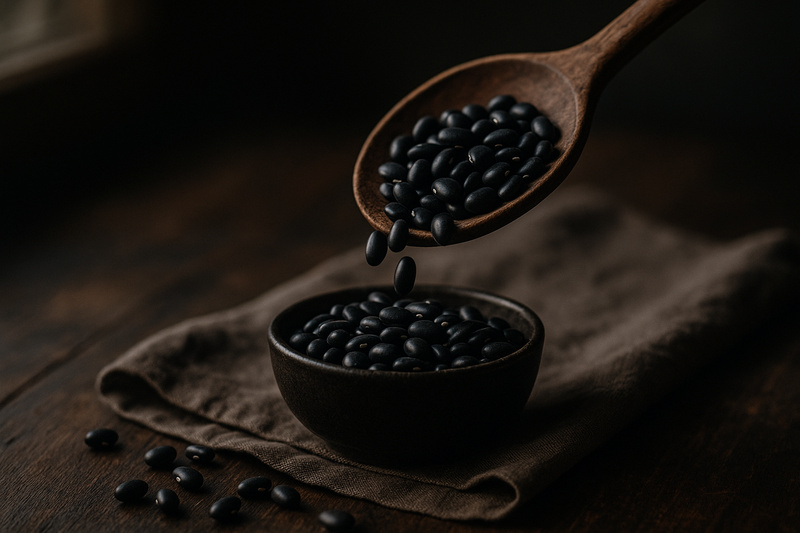
Black Beans · Photograph
What makes the health benefits of black beans stand out in the legume world is their unique mix of macros and phytochemicals. Most plant proteins don't give you a double-shot of protein and fiber in every bite, which is why these are so valuable for weight management and digestive health. In addition, that deep black color isn't just for show—it’s a sign of high anthocyanin levels, the same powerful antioxidants you find in "superfoods" like blueberries.
Key Nutrients
% Daily Value based on 2,000 cal diet
Key Takeaways
- 1. The deep black hull is a concentrated source of anthocyanins, the same health-protective pigments found in blueberries, which help reduce oxidative stress.
- 2. Provides a rare combination of high protein (8g) and high fiber (7g) per half-cup, making it exceptionally effective for long-term weight management and hunger control.
- 3. Actively slows down carbohydrate digestion by inhibiting specific enzymes, which helps prevent the rapid insulin spikes often caused by other starches.
- 4. Naturally cholesterol-free and rich in soluble fiber, which binds to bile acids to help "scrub" excess cholesterol from the cardiovascular system.
- 5. Delivers significant amounts of folate (32% DV) and magnesium (15% DV), supporting DNA repair, nerve function, and arterial health.
Why black beans' health benefits matter for your wellness
What makes the health benefits of black beans stand out in the legume world is their unique mix of macros and phytochemicals. Most plant proteins don't give you a double-shot of protein and fiber in every bite, which is why these are so valuable for weight management and digestive health. In addition, that deep black color isn't just for show—it’s a sign of high anthocyanin levels, the same powerful antioxidants you find in "superfoods" like blueberries.
Key active compounds in black beans
Here’s the chemistry that drives the benefits:
- Anthocyanins: Dark pigments that function as antioxidants and help your body manage carbs by slowing down digestion.
- Quercetin: A flavonoid that fights inflammation and keeps your heart resilient.
- Saponins: Compounds that may help pull cholesterol levels down.
- Kaempferol: Another anti-inflammatory flavonoid that protects your cells.
- Phenolic acids: These boost your overall antioxidant capacity.
- Catechins and myricetin: Extra flavonoids that focus specifically on cardiovascular health.
Conclusion
Black beans are an incredibly cheap and effective way to overhaul your health, mainly because they provide a massive hit of fiber and antioxidants in every serving. The science shows they are a reliable tool for blood sugar support, heart health, and keeping inflammation under control. Whether you go with the convenience of canned or the higher bioavailability of soaked dried beans, adding 1/2 cup to your daily routine is a research-backed move for your metabolism.
Just remember to start small to keep your digestion happy and pair them with whole grains to get your full amino acid profile. Ready to build balanced meals around nutrient-dense foods like black beans? Our meal planner helps you create personalized nutrition plans that include your favorite ingredients while meeting your health goals.
How Black Beans Compares
| Compared with | What's different |
|---|---|
| Black Beans vs. Pinto beans | Black beans have a denser, creamier texture and provide more anthocyanin antioxidants. |
| Black Beans vs. Black lentils | Black beans hold their shape better during cooking, while black lentils cook much faster. |
| Black Beans vs. Kidney beans | Black beans are higher in fiber and folate per serving compared to red kidney beans. |
Health Benefits
Things to Know
Digestive Adjustment: Start with just a quarter cup. If you have IBS, the fiber can be a lot at once; try pressure-cooking them to make them easier to digest.
Med interactions: If you're on diabetes meds, keep an eye on your numbers since beans provide natural blood sugar support.
Kidney/Blood Health: High potassium means people with kidney disease should check with a doctor. Also, if you're on blood thinners, don't go from zero beans to three cups a day overnight—keep your intake consistent.
Classic Combo: Beans and brown rice make a "complete" protein.
Add-ins: Toss them into salads for a quick fiber boost or blend them into soups for a creamy texture without the fat.
Vitamin C: Pair them with peppers or lime juice to help your body absorb the iron.

Common Uses
- —Used as a central protein source in vegetarian and vegan diets; pairing with brown rice or corn creates a complete amino acid profile.
- —Integrated into meals containing high-glycemic grains (like white rice) to dampen the overall glucose response and provide steady energy.
- —Consumed regularly as a source of resistant starch and prebiotic fiber to support the growth of beneficial gut bacteria and improve bowel regularity.
- —Combined with Vitamin C-rich foods like lime juice, bell peppers, or tomatoes to significantly enhance the absorption of its non-heme iron content.
- —Using rinsed canned beans as a quick, fiber-dense addition to salads, soups, and omelets when fresh preparation isn't possible.
Best Forms
This is the best way to get the most nutrients. Soaking helps break down "antinutrients" like phytic acid, which improves the bioavailability of the minerals.
Super convenient and still very healthy. Just make sure to rinse them thoroughly—this can cut the sodium by 40%.
Great for gluten-free baking, but less studied in the lab.
Cheapest option and gives you total control over the salt.
Look for "no salt added" or "low sodium" on the label.
Worth it if you're trying to avoid pesticide residues.
Prep Ideas
- — Classic Combo: Beans and brown rice make a "complete" protein.
- — Add-ins: Toss them into salads for a quick fiber boost or blend them into soups for a creamy texture without the fat.
- — Vitamin C: Pair them with peppers or lime juice to help your body absorb the iron.
Glossary
Shop This Ingredient
Stock your pantry with quality black beans.
Buy on AmazonAs an Amazon Associate, Plantopedia earns from qualifying purchases. This costs you nothing extra and helps us keep the encyclopedia free.
Frequently Asked Questions
Yes, black beans are excellent for daily consumption. They provide high-quality plant protein, essential minerals, and antioxidants. Because they are so high in fiber, you should start with smaller portions if you are new to legumes. This allows your digestive system and microbiome to adjust comfortably without causing significant bloating.
One half-cup of cooked black beans provides roughly 8 grams of protein. While they aren't a complete protein alone, pairing them with grains like brown rice creates a full amino acid profile. This makes them a substantial plant-based alternative to animal proteins for athletes and anyone following a vegan diet.
No, black beans are specifically valued for providing blood sugar support. Their high fiber and protein content slow the absorption of glucose into your bloodstream. Additionally, the anthocyanins in black beans inhibit enzymes that digest carbohydrates, which effectively prevents the sharp insulin spikes often seen after eating high-glycemic foods like rice.
Black beans can cause gas because of their complex sugars and high fiber. To minimize this, you should soak dried beans thoroughly or rinse canned versions well. Gradually increasing your intake over two weeks helps your gut bacteria adapt. Drinking plenty of water is also essential for processing the extra fiber.
Canned black beans retain almost all the nutritional value found in dried beans. They are a reliable source of protein, fiber, and antioxidants. However, you must choose low-sodium varieties and rinse them thoroughly under cold water. This simple step can reduce the salt content by up to 40% for better health.
Quick Answers
Common questions, answered in a line.
Black beans contain a unique mix of high protein and fiber that supports weight management and digestive health. This "double-shot" of macros is rare among plant proteins, making them a valuable tool for those looking to feel full longer and maintain a healthy weight.
The dark color of black beans comes from high levels of anthocyanins, which are powerful antioxidants also found in blueberries. These pigments help the body manage carbohydrates by slowing down digestion and providing overall antioxidant protection.
Black beans support heart health through compounds like quercetin, saponins, catechins, and myricetin. These flavonoids and phytochemicals help fight inflammation, maintain heart resilience, and may help lower cholesterol levels.
If you are taking diabetes medications, you should monitor your blood sugar levels closely when eating black beans because they provide natural blood sugar support. Because they are high in potassium, individuals with kidney disease should also consult a doctor before increasing their intake.
You can increase iron absorption from black beans by pairing them with vitamin C-rich foods like lime juice, bell peppers, or tomatoes. This combination significantly enhances the body's ability to absorb the non-heme iron found in the beans.
To get a complete amino acid profile, you should pair black beans with whole grains like brown rice or corn. While black beans are a great source of plant protein, combining them with these grains ensures you receive all the essential building blocks your body needs.
To prevent digestive discomfort when adding black beans to your diet, start with a small serving of about a quarter cup. People with IBS may also find that pressure-cooking the beans makes them easier to digest and gentler on the system.
For Readers in the USA
Local context — sourcing, seasonality, and regional notes.
Most black beans in the U.S. are grown in North Dakota, Michigan, and Minnesota, with the peak harvest occurring in late summer and early fall. While the harvest is seasonal, dried and canned black beans are available year-round at every major U.S. supermarket.
Black beans are a staple in American grocery chains like Walmart, Kroger, and Publix, and are essential ingredients in regional cuisines like Tex-Mex, Southwestern, and Floridian-Caribbean cooking. They are commonly served in dishes like Gallo Pinto, black bean soup, and veggie burgers.
Black beans sold in the U.S. are regulated by the FDA, and those labeled "USDA Organic" must be grown without most synthetic fertilizers or pesticides. Look for the USDA Organic seal if you want to ensure the beans meet federal organic production standards.
AI Clinical Review
- Strong nutrient case: black beans provide meaningful fiber, plant protein, folate, magnesium, and potassium—nutrients linked to heart and metabolic health.
- Blood sugar support is plausible and supported by human meal studies: beans lower post‑meal glucose/insulin compared with higher‑glycemic meals, especially when paired with rice or other starches.
- Gut health: the fiber and resistant starch in beans feed beneficial microbes; gradually increasing portions is a practical way to limit gas.
- Forms and prep: both cooked dried and rinsed, low‑sodium canned beans are nutritious; proper cooking inactivates lectins.
- Antioxidant claims (anthocyanins, quercetin, saponins) are based largely on lab and small human studies; direct, long‑term clinical outcomes from black beans themselves remain limited.
- Inflammation findings (e.g., IL‑6 changes) are short‑term and mixed; benefits are more confidently attributed to overall legume‑rich dietary patterns rather than one ingredient.
- Enzyme‑inhibition mechanisms for blood sugar control come mostly from test‑tube models; the real‑world impact at typical serving sizes is not fully quantified.
- Amounts: many people do well with about 1/2 cup cooked per day or 1–2 cups per week to start; increase gradually with fluids to minimize GI symptoms.
- Sodium/potassium: choose no‑salt‑added canned beans and rinse to lower sodium; those with chronic kidney disease or on potassium/phosphorus‑restricted diets should review portions with a clinician.
- IBS/FODMAP sensitivity: small, well‑rinsed servings of canned beans or thoroughly soaked/pressure‑cooked dried beans may be better tolerated; individual thresholds vary.
- Diabetes medications: because beans can lower post‑meal glucose, those on insulin or sulfonylureas should monitor for hypoglycemia when increasing intake.
Mention soaking/cooking tolerance tips where relevant; avoid raw legume prep errors.
References
- USDA FoodData Central - Black beans nutrition data (fdc.nal.usda.gov)
- Black beans fiber and antioxidant capacity pilot study - PubMed (pubmed.ncbi.nlm.nih.gov)
- New insights into chemical compositions and health-promoting properties of black beans - Wiley Online Library (onlinelibrary.wiley.com)
- NIH National Center for Complementary and Integrative Health - Antioxidants overview (nccih.nih.gov)
- American Heart Association - Fiber and heart health (heart.org)
Know Your Numbers
Eating healthy is a start. Now get to know your biomarkers.
Food changes bloodwork — inflammation, lipids, blood sugar and nutrient status all respond to what you eat. 59 markers from $59.
- Results in 7–10 days at 2,000+ Quest sites
- Licensed provider reviews every result
- One flat price, no membership, HSA/FSA eligible
Educational information only, not medical advice. Panels are ordered and reviewed through our licensed partner; Plantopedia may earn a commission.
Filed Under
Health Goals This Supports
Related Ingredients
Best Plant-Based Foods for Constipation
Kiwifruit, prunes, ground flaxseed, legumes, and whole grains have the best trial evidence among plant foods for relieving occasional constipation, mostly by adding bulk, water, and fermentable fiber to stool. Two to three kiwifruit or 50 to 100 grams of prunes (about 5 to 10) daily are the...
Best Plant-Based Foods for Heart Health
Legumes, oats and barley, nuts, extra virgin olive oil, soy foods and vegetables carry the most credible human evidence for cardiovascular health. Here is what each one does, at what dose, and where the limits are.
Best Plant-Based Foods for Steady Energy
A practical, evidence-checked look at the plant foods most likely to support steady energy through the day, why the overall eating pattern matters more than any single item, and when persistent fatigue needs a clinician rather than a grocery list.
Foods That Help Avoid the Afternoon Crash
The early-afternoon dip is partly circadian and partly postprandial. You cannot delete the first, but meal size, carbohydrate quality and a short walk change how hard the second lands.
Gut Health for Beginners
A plain-English starting point for gut health: what the microbiome is, what actually shifts it, and which popular claims do not hold up.
Heart-Healthy Plant-Based Grocery List
A store-section-by-store-section shopping list built on beans, intact whole grains, produce, nuts, seeds and olive oil, with the evidence behind each block. Includes substitutions, prep shortcuts and cautions for kidney disease, sodium restriction and anticoagulant users.
High-Fiber Foods for Metabolic Health
An evidence-ranked list of high-fiber foods for metabolic health, with the selection criteria made explicit, realistic serving amounts, and guidance on who should adapt or be cautious.
High-Fiber Foods That Support Better Energy
Fiber contributes almost no calories of its own, but viscous fibers in oats, barley, beans and chia slow glucose absorption and extend fullness. Here are the foods with real human evidence behind them, and the honest limits of what fiber can do for tiredness.
How Fiber and Polyphenols Support Inflammation Balance
A mechanism-first look at how dietary fiber and plant polyphenols interact with the gut, the immune system and inflammatory markers, and an honest account of what human trials can and cannot support.
How Fiber Changes the Gut Microbiome
A mechanism explainer: what happens to fiber after it leaves the small intestine, which microbes act on it, what they produce, and how much of that chain has been demonstrated in people rather than mice.
How Food Affects Brain Health
A beginner-friendly explanation of the actual routes by which food reaches the brain, the handful of principles that matter, and a starter plate you can build this week.
How Plant-Based Foods Support the Gut
Plant foods feed the microbes in your large intestine, which ferment fiber into short-chain fatty acids. Variety across the week matters more than any single gut food.
How Plant-Based Foods Support the Heart
A practical introduction to plant-centered eating for cardiovascular health: the mechanisms that matter, what the cohort and trial evidence shows, a starter plate, and the myths worth dropping.
Magnesium-Rich Plant Foods for Sleep
The plant foods that deliver the most magnesium per realistic serving, plus a sober read of what magnesium trials actually show for sleep.
Plant-Based Foods That Support Immune Health
Which plant foods genuinely support immune function, judged by nutrient contribution and human evidence rather than marketing, plus how to build them into a week.