Broccoli is a cruciferous powerhouse rich in sulforaphane, Vitamin K, and folate. Discover how its unique sulfur compounds support cellular
Cruciferous nutrient-density angle; practical prep and flavor pairings
The Short Answer
Broccoli is highly nutritious, providing 100% of your daily Vitamin C and 90% of your Vitamin K in just one cup. It is a primary source of sulforaphane, a sulfur compound that supports cellular detoxification and heart health.
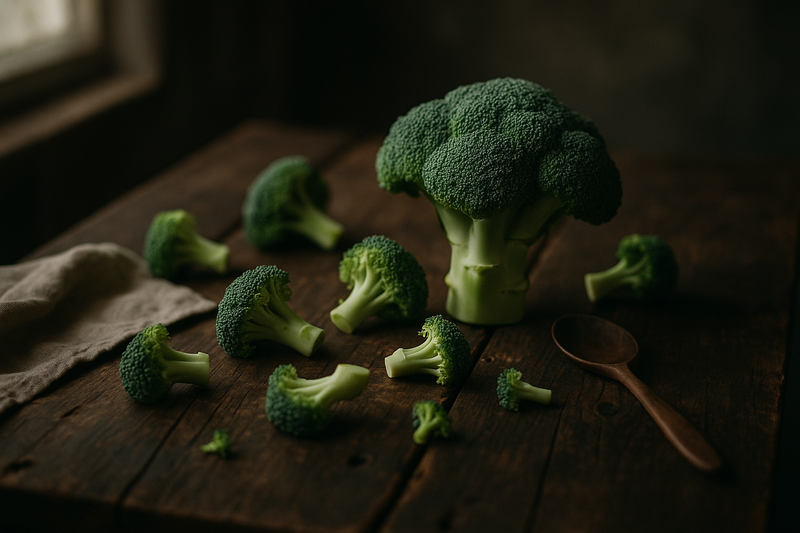
Broccoli · Photograph
Why Broccoli Health Benefits Deserve Attention Broccoli stands out because it offers a "synergy of nutrients" in a single serving.
Key Nutrients
% Daily Value based on 2,000 cal diet
Key Takeaways
- 1. Contains glucoraphanin, which converts into sulforaphane—a compound studied for its ability to activate the body’s natural antioxidant and detoxification pathways.
- 2. A single 100g serving provides approximately 90mg of Vitamin C, meeting or exceeding the daily requirement for most adults.
- 3. Rich in Vitamin K (up to 93mcg per cup), which is essential for bone mineralization and proper blood coagulation.
- 4. Offers 2.2g of fiber per serving, supporting gut motility and serving as a fuel source for beneficial microbiome bacteria.
- 5. Features a low glycemic index of 32 and high water content, making it an ideal vegetable for blood sugar stability and weight management.
Why Broccoli Health Benefits Deserve Attention
Broccoli stands out because it offers a "synergy of nutrients" in a single serving. Unlike supplements that isolate compounds, broccoli provides the fiber, minerals, and enzymes necessary for optimal absorption.
Its role in "nutrigenomics"—the study of how food affects gene expression—is a primary focus of modern research, specifically regarding how sulforaphane can trigger protective "Phase II" detoxification enzymes. For individuals looking to maximize nutrient density while maintaining low caloric intake, broccoli is an essential dietary pillar.
Key Active Compounds
- Sulforaphane: A potent isothiocyanate that triggers cellular defense mechanisms and manages oxidative stress.
- Glucosinolates: Sulfur-containing precursors that serve as the foundation for broccoli's bioactive potential.
- Indole-3-Carbinol: A unique compound studied for its anti-inflammatory effects and role in hormonal health.
- Quercetin & Kaempferol: Flavonoids that support cardiovascular integrity and provide secondary antioxidant defense.
- Vitamin K1 (Phylloquinone): A fat-soluble vitamin vital for bone health and the synthesis of blood-clotting proteins.
Conclusion
Broccoli is a premier functional food that offers a unique combination of essential vitamins and specialized sulfur compounds like sulforaphane. Its ability to support heart health, regulate blood sugar, and provide potent antioxidant defense makes it a vital component of a nutrient-dense diet.
By utilizing preparation methods that preserve its enzymes—such as light steaming—and pairing it with healthy fats, you can unlock the full spectrum of broccoli's health-promoting potential.
How Broccoli Compares
| Compared with | What's different |
|---|---|
| Broccoli vs. Cauliflower | Broccoli has edible florets and stalks, while cauliflower is the underdeveloped flower bud. |
| Broccoli vs. Broccoli Rabe | Broccoli has leafy stalks and loose buds with a much more bitter flavor profile. |
| Broccoli vs. Brussels Sprouts | Broccoli grows in clumps, whereas Brussels sprouts grow as small individual heads on a long stalk. |
Health Benefits
Things to Know
Blood Thinner Interactions: Broccoli is very high in Vitamin K. If you take warfarin or other anticoagulants, you must keep your broccoli intake consistent to avoid interfering with your medication's efficacy.
Digestive Gas: The fiber and sulfur compounds can cause bloating in some people. Start with 1/2 cup and consider light steaming to make the vegetable more straightforward to digest.
Thyroid Health: While cruciferous vegetables contain goitrogens, they are generally only an issue if you have a severe iodine deficiency. Cooking broccoli further reduces any potential thyroid interference.
Preparation Tip: To maximize sulforaphane, chop your broccoli 40 minutes before cooking, or add a pinch of mustard seed powder to cooked broccoli to provide the necessary myrosinase enzyme.
The Fat-Soluble Synergy: Always eat broccoli with a healthy fat like olive oil or avocado. This is necessary to absorb the high levels of Vitamin K and carotenoids.
The Iron Booster: Squeeze fresh lemon juice over your broccoli. The Vitamin C in the lemon significantly improves the absorption of the non-heme iron found in the vegetable.
The Enzyme Hack: Pair cooked broccoli with a raw crucifer, like a few shreds of raw cabbage or a pinch of mustard powder, to "reactivate" the production of sulforaphane.
Daily Target: 1 cup (100g) of florets or leaves daily provides a robust therapeutic dose of vitamins and sulfur compounds.
Minimum Frequency: Consuming broccoli 3–4 times per week is associated with significant long-term health benefits in observational studies.
Maximum Tolerance: Most individuals can safely consume up to 3 cups daily, provided they increase their intake gradually to avoid digestive upset.
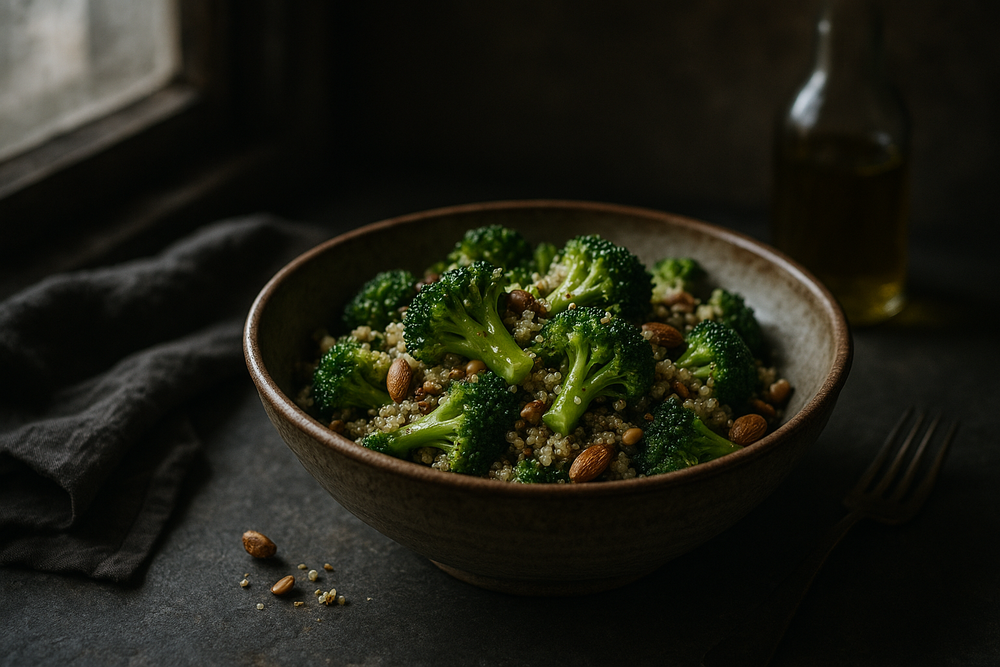
Common Uses
- —Integrated into diets to utilize isothiocyanates that help neutralize free radicals and reduce oxidative stress.
- —Consumed for its quercetin and kaempferol content, flavonoids associated with supporting healthy blood pressure and vascular function.
- —Used as a reliable whole-food source of Vitamin C and folate to maintain robust immune responses.
- —Eaten for its Indole-3-carbinol, a compound researched for its role in estrogen metabolism and cellular health.
Active Compounds
A potent isothiocyanate that triggers cellular defense mechanisms and manages oxidative stress.
Sulfur-containing precursors that serve as the foundation for broccoli's bioactive potential.
A unique compound studied for its anti-inflammatory effects and role in hormonal health.
Flavonoids that support cardiovascular integrity and provide secondary antioxidant defense.
A fat-soluble vitamin vital for bone health and the synthesis of blood-clotting proteins.
Best Forms
This is the best form for health benefits. Light steaming (3–4 minutes) is enough to soften the fiber while keeping the myrosinase enzyme active to produce sulforaphane.
Often overlooked, the leaves are even more nutrient-dense than the florets, containing higher concentrations of Vitamin K, calcium, and carotenoids.
High in insoluble fiber and minerals. Peel the woody outer layer to access the tender, nutritious core.
Boiling broccoli for extended periods can leach up to 50% of the Vitamin C and glucosinolates into the water.
Prep Ideas
- — The Fat-Soluble Synergy: Always eat broccoli with a healthy fat like olive oil or avocado. This is necessary to absorb the high levels of Vitamin K and carotenoids.
- — The Iron Booster: Squeeze fresh lemon juice over your broccoli. The Vitamin C in the lemon significantly improves the absorption of the non-heme iron found in the vegetable.
- — The Enzyme Hack: Pair cooked broccoli with a raw crucifer, like a few shreds of raw cabbage or a pinch of mustard powder, to "reactivate" the production of sulforaphane.
Glossary
Shop This Ingredient
Stock your pantry with quality broccoli.
Buy on AmazonAs an Amazon Associate, Plantopedia earns from qualifying purchases. This costs you nothing extra and helps us keep the encyclopedia free.
Frequently Asked Questions
Research suggests broccoli may support heart health, reduce inflammation, and provide cancer-protective compounds. It's exceptionally high in vitamin C, vitamin K, and folate, plus it contains sulforaphane and other bioactive compounds with antioxidant properties. The evidence is strongest for its role in providing essential nutrients and providing robust antioxidant protection for cells.
While no official daily requirement exists, research suggests 1 cup (about 100g) of broccoli provides meaningful amounts of key nutrients, including nearly 100% of daily vitamin C needs. Start with 3-4 servings per week and increase gradually if well-tolerated. Most people can safely consume 1-2 cups of broccoli daily.
Raw broccoli provides higher levels of vitamin C and heat-sensitive compounds like sulforaphane. However, light cooking can make some nutrients more absorbable and may be easier to digest for some people. Both forms offer benefits - choose based on your preference and digestive comfort. Light steaming for 3-4 minutes preserves most nutrients.
Sulforaphane is a sulfur compound formed when broccoli is chopped or chewed. Laboratory studies show it has potent antioxidant and anti-inflammatory properties, and it can activate cellular defense mechanisms. While human clinical evidence is still emerging, it's one of the most studied compounds in broccoli for its potential long-term health benefits.
Broccoli contains vitamin K (77-93mcg per 100g), which can interact with warfarin and similar medications by affecting blood clotting. If you take blood thinners, maintain consistent broccoli intake rather than making sudden changes, and consult your healthcare provider about any dietary modifications. Consistency is key to managing the medication's therapeutic window effectively.
Yes, broccoli leaves contain higher levels of many nutrients than florets, including carotenoids, vitamin K, calcium, and antioxidant compounds. Stems provide high fiber content and comparable micronutrients to florets. Both parts are entirely edible and add nutritional value to your meals, making the entire plant a versatile health resource.
Quick Answers
Common questions, answered in a line.
Broccoli is essential for nutrigenomics because it contains sulforaphane, which triggers protective "Phase II" detoxification enzymes to influence gene expression. This process helps the body manage oxidative stress and cellular defense through food-driven biological changes.
To maximize sulforaphane, you should chop broccoli 40 minutes before cooking or add a pinch of mustard seed powder to the cooked vegetable. These methods provide or preserve the myrosinase enzyme required to activate broccoli's most potent bioactive compounds.
You should always eat broccoli with a healthy fat, such as olive oil or avocado, to ensure the absorption of Vitamin K and carotenoids. Because Vitamin K is fat-soluble, dietary fats are necessary to unlock these specific nutritional benefits.
Broccoli supports cardiovascular integrity through the flavonoids quercetin and kaempferol, which help maintain healthy blood pressure and vascular function. Additionally, its nutrient synergy provides secondary antioxidant defense for the heart.
Adding fresh lemon juice to broccoli improves the absorption of its non-heme iron due to the high Vitamin C content in the lemon. This simple preparation hack helps your body more effectively process the plant-based minerals found in the florets.
Broccoli can cause bloating or gas due to its high fiber and sulfur content. To improve digestion, the article suggests starting with a small 1/2 cup serving and using light steaming to make the vegetable easier for the gut to process.
Broccoli contains Indole-3-Carbinol, a unique compound that is specifically researched for its role in hormonal health and estrogen metabolism. This makes the vegetable a key dietary component for those focused on cellular and hormonal balance.
For Readers in the USA
Local context — sourcing, seasonality, and regional notes.
California produces about 90% of the United States' broccoli, primarily in the Salinas Valley and Santa Maria regions. While it is grown year-round in California and Arizona, it is considered a cool-season crop that peaks in quality during the spring and fall months.
Broccoli is a staple in the produce section of every major US grocery chain, including Kroger, Walmart, Whole Foods Market, and Safeway. For the freshest local varieties, American shoppers often visit farmers markets from October through May in warmer states or late summer in northern regions.
The USDA Organic seal ensures that broccoli is grown without synthetic fertilizers, prohibited pesticides, or GMOs. To meet these federal standards, organic broccoli growers must undergo annual inspections and follow strict soil management and pest control practices.
In the U.S., you will most commonly find Calabrese (standard green heads) and Broccolini (a hybrid of broccoli and Chinese broccoli) in retail stores. Other varieties popular in American home gardens or specialty markets include Romanesco, known for its lime-green fractal patterns, and Chinese broccoli (Gai Lan).
AI Clinical Review
- Broccoli is a nutrient-dense vegetable, notably high in vitamin C, vitamin K, folate, fiber, and water while being low in calories—these benefits are well established.
- It accurately highlights glucosinolates and their conversion to sulforaphane via the myrosinase enzyme, and notes that raw or lightly steamed broccoli better preserves these compounds.
- The piece appropriately distinguishes between established nutritional benefits (vitamins, fiber) and emerging research on phytochemicals like sulforaphane and indole-3-carbinol.
- Practical cooking guidance (light steaming, using leaves and stems) aligns with how preparation can influence nutrient retention and intake.
- Reported amounts of glucosinolates and other bioactives vary widely by variety, growing conditions, plant part, storage, and cooking; single point estimates should be viewed as approximate, not guaranteed per serving.
- Blood pressure and heart-health effects cited for quercetin are mostly from supplemental doses; it’s unclear how much impact typical broccoli portions have on these outcomes by themselves.
- Many anti-inflammatory, gut, and metabolic findings come from cell/animal studies or from broccoli sprout extracts (which are richer in precursors) rather than from everyday servings of cooked broccoli.
- Aryl hydrocarbon receptor (AHR)-related immune effects are biologically plausible but remain early-stage for human clinical relevance.
- If you take warfarin or similar blood thinners, keep vitamin K intake consistent and discuss any big changes in broccoli consumption with your clinician.
- Broccoli can cause gas or bloating for some, especially from the stems (higher in fiber and fructans). Smaller portions and light steaming may improve tolerance.
- Preparation matters for sulforaphane: brief steaming preserves myrosinase; longer cooking and most frozen/blanched products inactivate it. Pairing well-cooked broccoli with a myrosinase source (e.g., a pinch of mustard powder or some raw crucifer) can help restore formation.
- There’s no official “dose.” A practical range is about 1/2–1 cup per day (or several times per week) within a varied diet; sprouts are more concentrated in precursors than mature florets if targeting sulforaphane specifically.
Frame as food education, not disease treatment.
References
- PubMed — Broccoli: A Multi-Faceted Vegetable for Health: An In-Depth Review of Its Nutritional Attributes, Antimicrobial Abilities, and Anti-inflammatory Properties (pubmed.ncbi.nlm.nih.gov)
- PubMed — Dietary Broccoli Lessens Development of Fatty Liver and Liver Cancer in Mice Given Diethylnitrosamine and Fed a Western or Control Diet (pubmed.ncbi.nlm.nih.gov)
- PubMed — Broccoli consumption affects the human gastrointestinal microbiota (pubmed.ncbi.nlm.nih.gov)
- PMC, National Library of Medicine — The Multifaceted Health Benefits of Broccoli-A Review of Glucosinolates, Phenolics and Antimicrobial Peptides (pmc.ncbi.nlm.nih.gov)
- USDA FoodData Central — USDA FoodData Central (fdc.nal.usda.gov)
Know Your Numbers
Eating healthy is a start. Now get to know your biomarkers.
Food changes bloodwork — inflammation, lipids, blood sugar and nutrient status all respond to what you eat. 59 markers from $59.
- Results in 7–10 days at 2,000+ Quest sites
- Licensed provider reviews every result
- One flat price, no membership, HSA/FSA eligible
Educational information only, not medical advice. Panels are ordered and reviewed through our licensed partner; Plantopedia may earn a commission.
Filed Under
Health Goals This Supports
Related Ingredients
Blood Sugar Balance for Beginners
Blood sugar balance means keeping your blood glucose from swinging too high or crashing too low after meals, largely by pairing carbohydrates with fiber, protein, and fat, moving your body regularly, and favoring whole foods over refined ones. For most people without diabetes, this is about...
Foods for Steady Blood Sugar and Better Energy
Fatigue has many possible causes, and diet is only one of them, but a common contributor is the energy dip after a sharp rise and fall in blood sugar following a high-glycemic meal. Foods combining fiber, protein, and healthy fat, such as legumes, whole grains, nuts, and seeds, raise blood...
Foods That May Help Joint Stiffness
No single food will fix joint stiffness, and anyone who tells you otherwise is overselling it. But a consistent eating pattern built around vegetables, fruit, whole grains, legumes, nuts, seeds, and olive oil is linked in clinical trials to modest reductions in joint pain and morning stiffness,...
Foods That May Worsen Bloating
Bloating has less to do with any single "bad" food and more to do with how much fermentable carbohydrate reaches your gut at once, how sensitive your gut is to stretching, and how quickly gas clears. The foods most consistently linked to bloating are beans and lentils, cruciferous vegetables...
How Fiber Changes the Gut Microbiome
A mechanism explainer: what happens to fiber after it leaves the small intestine, which microbes act on it, what they produce, and how much of that chain has been demonstrated in people rather than mice.
How Late-Night Eating Affects Sleep
Eating close to bedtime can disrupt sleep through at least three pathways: reflux from lying down soon after a meal, a shift in the body's internal clock because food helps set metabolic rhythms, and a sharper blood sugar rise on top of the insulin resistance the body naturally develops each...
Plant-Based Foods That Support Immune Health
Which plant foods genuinely support immune function, judged by nutrient contribution and human evidence rather than marketing, plus how to build them into a week.
Vitamin C Foods Beyond Oranges
Oranges are a good vitamin C source but far from the best. A ranked look at everyday foods that outperform them, why they qualify, and how to use them without wasting the vitamin.
Why Beans Cause Gas and How to Make Them Easier to Digest
Beans cause gas mainly because of raffinose-family oligosaccharides, sugars like raffinose and stachyose that your small intestine cannot break down. Humans do not produce the enzyme needed to digest these sugars, so they pass largely intact into the colon, where resident bacteria ferment them....