Pecans are a nutritional powerhouse, delivering more polyphenols than most tree nuts and a high concentration of gamma-tocopherol. Discover
Healthy fats, minerals, and texture; small-amount high-leverage add-in
The Short Answer
Pecans provide a concentrated source of antioxidants like gamma-tocopherol and polyphenols, alongside 55% of the Daily Value for manganese in a single one-ounce serving.

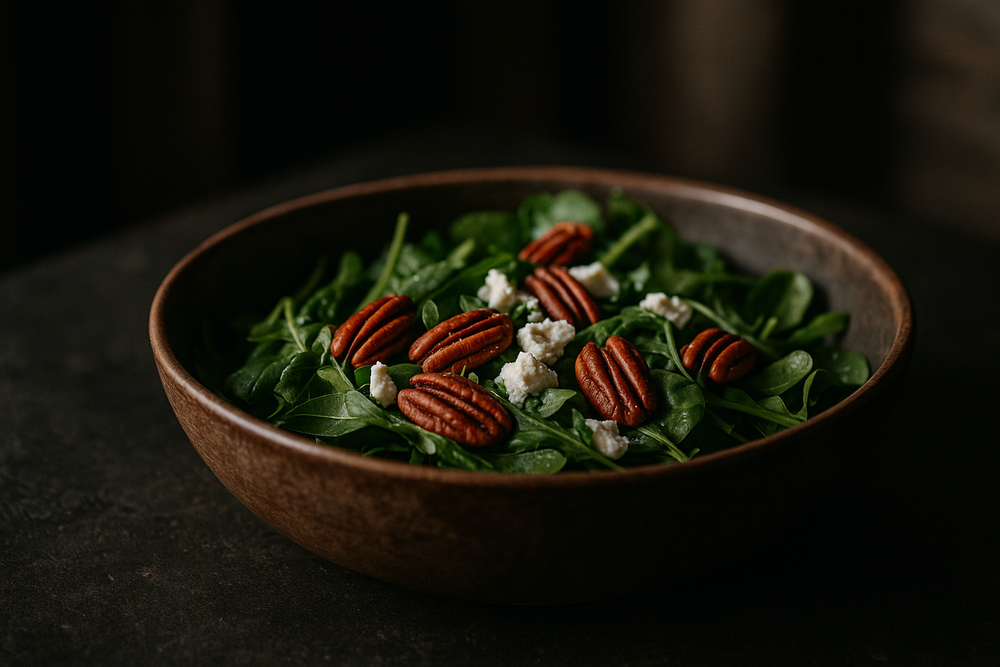
Pecans · Photograph
In the landscape of functional foods, pecans serve as a concentrated source of minerals that are often under-consumed in modern diets. Their exceptionally high levels of manganese and copper are vital for collagen synthesis and maintaining a healthy metabolism.
Key Nutrients
% Daily Value based on 2,000 cal diet
Key Takeaways
- 1. Contains 524.1 mg of polyphenols per ounce, surpassing walnuts and almonds in total antioxidant density.
- 2. Features a unique form of Vitamin E that is highly effective at neutralizing inflammatory markers and protecting lipids from oxidation.
- 3. Packed with 95 mg of phytosterols per 100g, which compete with dietary cholesterol to limit its absorption in the gut.
- 4. Provides 55% of the daily value for manganese, a trace mineral essential for carbohydrate metabolism and bone formation.
- 5. Composed primarily of monounsaturated fats (MUFAs), similar to those found in extra virgin olive oil, which support vascular health.
Why Pecan Health Benefits Matter for Your Wellness Routine
In the landscape of functional foods, pecans serve as a concentrated source of minerals that are often under-consumed in modern diets. Their exceptionally high levels of manganese and copper are vital for collagen synthesis and maintaining a healthy metabolism.
Because pecans provide more antioxidants per serving than many fruits, they offer a practical way to combat systemic inflammation through whole-food nutrition. Their buttery texture and high satiety factor also make them a strategic tool for those looking to replace processed snacks with nutrient-dense alternatives.
Key Active Compounds
- Polyphenols: Including flavonoids and phenolic acids that provide robust antioxidant defense.
- Gamma-Tocopherol: A specialized form of Vitamin E that protects blood lipids from oxidative damage.
- Beta-Sitosterol: A plant sterol that assists in managing circulating cholesterol levels.
- Manganese: A critical cofactor for enzymes involved in bone mineralization and glucose regulation.
- Monounsaturated Fats: Healthy lipids that support heart health and improve the absorption of fat-soluble vitamins.
Conclusion
Pecans are a premier source of antioxidants, specifically gamma-tocopherol and polyphenols, that support heart health and metabolic resilience. Their dense mineral profile, particularly manganese and copper, makes them a vital food for bone health and cellular recovery. By choosing raw or lightly roasted varieties and maintaining consistent portion sizes, you can effectively use pecans to enhance your overall nutrient intake and support your inflammatory defenses.
How Pecans Compares
| Compared with | What's different |
|---|---|
| Pecans vs. Walnuts | Pecans have a thinner, brittle shell and a buttery, sweet taste compared to the earthy, bitter walnut. |
| Pecans vs. Almonds | Pecans contain significantly more manganese and copper per serving than almonds. |
Health Benefits
Things to Know
Tree Nut Allergies: Pecans constitute a significant allergen. If you have a known tree nut allergy, pecans must be strictly avoided.
Caloric Density: With nearly 200 calories per ounce, pecans should be used as a replacement for other fats or snacks rather than an addition to a full-calorie diet.
Kidney Disease: Pecans contain organic phosphorus (phytate). Individuals with advanced kidney disease should monitor their intake and consult a dietitian.
Storage and Rancidity: Due to their high oil content, pecans can go rancid quickly. Store them in an airtight container in the refrigerator or freezer to protect the heart-healthy fats.
The Bone-Building Pair: Add pecans to a bowl of yogurt or calcium-fortified cereal. The manganese in the pecans works synergistically with calcium to support bone matrix formation.
The Metabolism-Boosting Snack: Pair pecans with a piece of dark chocolate or a few berries. The combined polyphenols offer a massive antioxidant boost with a very low glycemic impact.
The Savory Crust: Use crushed pecans as a coating for baked fish or chicken. This adds healthy monounsaturated fats and essential minerals to lean protein sources.
Optimal Daily Amount: 1 to 1.5 ounces (approx. 49–75 halves) is the typical range suggested for assessing heart health and antioxidant benefits.
Starting Amount: Begin with 0.5 ounces (about 25 halves) to help your digestive system adapt to the fiber and healthy fat.
Weight Management Tip: Measure your portions instead of eating directly from the bag to stay within your daily calorie goals.
Common Uses
- —Integrated into heart-healthy diets to help balance cholesterol levels through phytosterol competition.
- —Consumed by athletes to leverage manganese and copper for tissue repair and to combat exercise-induced oxidative stress.
- —Used as a low-carb, high-fat snack to provide sustained energy without triggering significant insulin spikes.
- —Added to salads or grains to increase the meal's total polyphenol and fiber content.
Active Compounds
Including flavonoids and phenolic acids that provide robust antioxidant defense.
A specialized form of Vitamin E that protects blood lipids from oxidative damage.
A plant sterol that assists in managing circulating cholesterol levels.
A critical cofactor for enzymes involved in bone mineralization and glucose regulation.
Healthy lipids that support heart health and improve the absorption of fat-soluble vitamins.
Best Forms
The gold standard for nutrient preservation. Raw pecans keep the heat-sensitive Vitamin E and delicate oils intact.
Enhance the flavor and crunch. While roasting may slightly reduce Vitamin E levels, it can increase the bioavailability of certain minerals. Avoid roasted pecans made with highly processed seed oils.
Offer the longest shelf life and the best protection against rancidity. Cracking them fresh ensures the highest possible antioxidant activity.
Prep Ideas
- — The Bone-Building Pair: Add pecans to a bowl of yogurt or calcium-fortified cereal. The manganese in the pecans works synergistically with calcium to support bone matrix formation.
- — The Metabolism-Boosting Snack: Pair pecans with a piece of dark chocolate or a few berries. The combined polyphenols offer a massive antioxidant boost with a very low glycemic impact.
- — The Savory Crust: Use crushed pecans as a coating for baked fish or chicken. This adds healthy monounsaturated fats and essential minerals to lean protein sources.
Glossary
Shop This Ingredient
Stock your pantry with quality pecans.
Buy on AmazonAs an Amazon Associate, Plantopedia earns from qualifying purchases. This costs you nothing extra and helps us keep the encyclopedia free.
Frequently Asked Questions
Pecans may support heart health through their phytosterol content, which can help manage cholesterol levels. They're also rich in antioxidants, such as gamma-tocopherol and polyphenols, which may help reduce inflammation. Additionally, pecans provide essential minerals, such as manganese and copper, for bone health and metabolism, supporting systemic resilience and healthy cellular function.
Most research suggests 1 to 1.5 ounces (about 49-75 pecan halves) daily may be beneficial. Start with smaller amounts like 0.5 ounces and gradually increase. Since pecans are calorie-dense at 196 calories per ounce, portion control is essential for weight management and ensuring they fit within your overall nutritional plan.
Pecans contain 95mg of plant sterols per 100g, particularly beta-sitosterol, which competes with dietary cholesterol absorption in your digestive tract. While this mechanism suggests potential cholesterol benefits, most evidence is based on nutrient composition rather than large-scale human trials. They are best used as a replacement for saturated fats in your diet.
No, pecans are tree nuts and should be strictly avoided by anyone with documented tree nut allergies. They can trigger severe allergic reactions, including anaphylaxis, in sensitive individuals. If you have any nut allergy concerns, consult with an allergist before consuming pecans or products that may contain traces of tree nuts.
Both forms retain most nutrients, but roasting may slightly reduce some heat-sensitive compounds like vitamin E. Raw pecans have a shorter shelf life due to their high oil content. Both forms provide the same core benefits when appropriately stored and consumed fresh, but roasted varieties usually offer a more intense flavor.
Yes, but portion control is key. At 196 calories per ounce, pecans are calorie-dense. However, their combination of protein, fiber, and healthy fats may help with satiety, keeping you full for longer. Stick to measured portions of 0.5 to 1 ounce daily and account for the calories in your plan.
Quick Answers
Common questions, answered in a line.
Pecans are a nutritional powerhouse that provides more polyphenols than most tree nuts. These compounds, including flavonoids and phenolic acids, offer a robust antioxidant defense and help the body combat systemic inflammation.
Pecans contain manganese and copper, which are vital minerals for collagen synthesis and bone matrix formation. manganese specifically acts as a critical cofactor for enzymes involved in bone mineralization.
Pecans contain gamma-tocopherol, a specialized form of Vitamin E that protects blood lipids from oxidative damage. This compound, along with healthy monounsaturated fats, supports overall heart health and metabolic resilience.
Pecans contain beta-sitosterol, a plant sterol that assists in managing circulating cholesterol levels. By using phytosterol competition, pecans can be integrated into heart-healthy diets to help balance cholesterol.
Pecans provide a concentrated source of manganese and copper, which are essential for maintaining a healthy metabolism and tissue repair. They are often used as a high-fat, low-carb snack to provide sustained energy without triggering insulin spikes.
Due to their high oil content, pecans can go rancid quickly and should be stored in an airtight container in the refrigerator or freezer. Proper storage protects the heart-healthy monounsaturated fats from spoiling.
Individuals with advanced kidney disease should monitor their pecan intake and consult a dietitian because the nuts contain organic phosphorus in the form of phytate. Proper management is necessary to maintain nutrient balance for those with kidney concerns.
For Readers in the USA
Local context — sourcing, seasonality, and regional notes.
The United States is the world’s leading producer of pecans, with the majority of the crop grown in Georgia, New Mexico, and Texas. These three states account for nearly 75% of total U.S. production, benefiting from the warm climates and long growing seasons required for the trees to thrive.
While pecans are available year-round, the primary harvest season in the U.S. begins in late September and typically runs through December. During this period, you can find the freshest "new crop" pecans at local farmers markets across the Southern United States and in major grocery stores nationwide.
In the U.S., you can buy pecans at major grocery chains like Kroger, Publix, and H-E-B, as well as big-box retailers like Costco and Walmart. For higher-quality or regional varieties like Elliot or Stuart, many Americans purchase directly from family-owned orchards in Georgia or Texas through online shipping.
The FDA allows a qualified health claim stating that eating 1.5 ounces of pecans per day as part of a diet low in saturated fat and cholesterol may reduce the risk of heart disease. To ensure you are getting the most nutrient-dense product, look for the USDA Organic seal, which verifies the nuts were grown without synthetic pesticides.
AI Clinical Review
- Pecans are nutrient-dense and rich in unsaturated fats, fiber, and key minerals (notably manganese and copper), fitting well within heart‑healthy eating patterns.
- Their antioxidant profile—especially gamma‑tocopherol (a form of vitamin E) and diverse polyphenols—is accurately described and plausibly linked to oxidative stress and inflammation pathways.
- The discussion of phytosterols and monounsaturated fats supporting cholesterol management aligns with broader nut research, and the practical advice on forms, storage, and portion sizes (~1 oz) is helpful.
- Much of the health narrative for pecans extrapolates from composition data and studies on mixed nuts; pecan‑specific randomized trials are limited and generally small, so disease outcomes (e.g., fewer heart events) aren’t established.
- Laboratory antioxidant measures don’t directly translate to clinical benefits; polyphenol levels vary by cultivar, storage, and roasting, and human biomarker changes remain inconsistent.
- Typical servings provide modest phytosterol amounts; meaningful LDL‑lowering from sterols alone usually requires far higher intakes, so benefits likely come from overall diet quality and replacing saturated fats.
- Claims about microbiome effects are plausible but preliminary; with ~2 g fiber per ounce, pecans contribute to fiber goals but won’t drive major changes by themselves.
- A practical intake is 1–1.5 oz per day (about 49–75 halves), which provides benefits seen in nut‑inclusive diets while adding ~190–200 kcal; measure portions if weight management is a goal.
- Allergy: Pecans are tree nuts—avoid entirely if you have a tree‑nut allergy and consult an allergist for individualized guidance.
- Medications and conditions: Vitamin K in pecans is low, but if you take warfarin (Coumadin), keep your overall vitamin K intake consistent; people with chronic kidney disease should review nut portions due to phosphorus (and potassium) with their renal dietitian.
- Choose minimally processed forms (raw or lightly roasted, unsalted/unsweetened) and store airtight in the fridge or freezer to prevent rancidity; use pecans to replace, not simply add to, less healthy snacks.
Mention allergy context where appropriate; keep serving size realistic.
References
- USDA FoodData Central - Pecan nutrition data (fdc.nal.usda.gov)
- WebMD Health Benefits of Pecans comprehensive review (webmd.com)
- PMC Antioxidant Properties of Pecan Shell Components study (pmc.ncbi.nlm.nih.gov)
- Nutrivore Pecan Nutrients detailed analysis (nutrivore.com)
Know Your Numbers
Eating healthy is a start. Now get to know your biomarkers.
Food changes bloodwork — inflammation, lipids, blood sugar and nutrient status all respond to what you eat. 59 markers from $59.
- Results in 7–10 days at 2,000+ Quest sites
- Licensed provider reviews every result
- One flat price, no membership, HSA/FSA eligible
Educational information only, not medical advice. Panels are ordered and reviewed through our licensed partner; Plantopedia may earn a commission.