Tigernut Oil — health benefits and uses
Tigernuts were a prized food in ancient Egypt and remain central to Spanish horchata.
The Short Answer
Tigernut oil is a nutrient-dense finishing oil high in monounsaturated oleic acid (64–76%) and antioxidant vitamin E. Its mild, buttery sweetness makes it ideal for raw dressings, drizzling over roasted vegetables, or as a heart-healthy alternative to olive

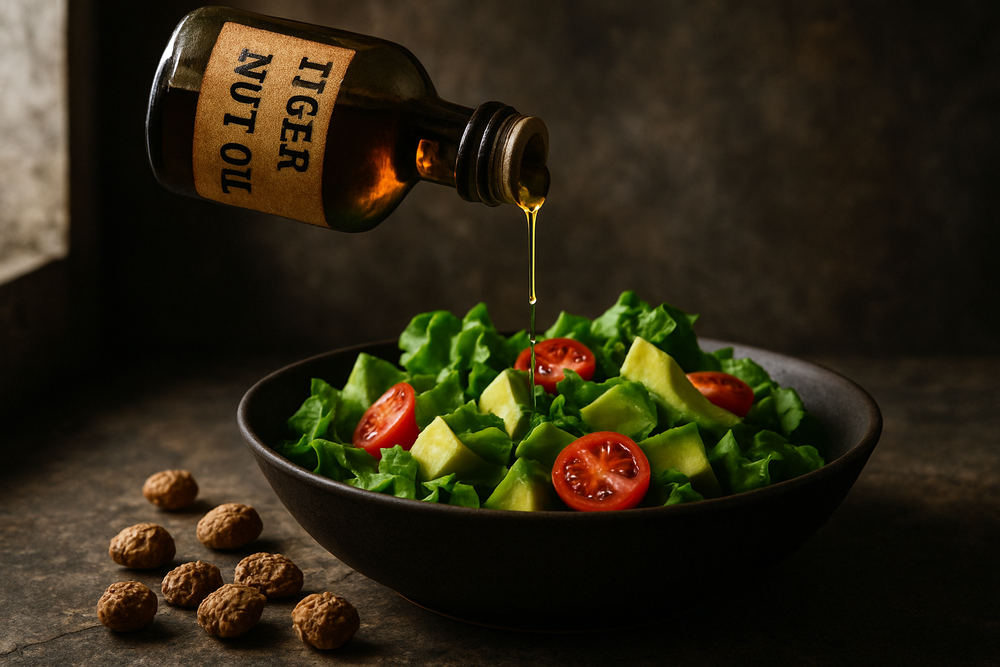
Tigernut Oil · Photograph
Discover the tiger nut oil health benefits backed by research: a high-oleic, vitamin E-rich finishing oil pressed from tigernut tubers. Learn how it compares to olive oil, whether it's safe for nut allergies, and how to use it daily.
Key Nutrients
% Daily Value based on 2,000 cal diet
Key active compounds in tiger nut oil
- Oleic acid — a monounsaturated fatty acid (MUFA) that makes up roughly 64–76% of the total fat. In broader nutrition research, oleic acid is linked to improved blood lipid profiles and reduced cardiovascular risk when it replaces saturated fats.
- Palmitic acid — a saturated fatty acid at around 12–15%; naturally present in most vegetable oils.
- Linoleic acid — an omega-6 polyunsaturated fatty acid (PUFA) at approximately 9–12%; an essential fat the body cannot make on its own.
- Tocopherols — the vitamin E family (alpha, gamma, and delta forms), totalling around 97 mg per 100 g of oil. They act as fat-soluble antioxidants, protecting cell membranes and the oil itself from going rancid.
- Polyphenols — plant-derived compounds that provide additional antioxidant and potential anti-inflammatory support and help stabilise the oil against oxidation.
- Phytosterols — plant sterols structurally similar to cholesterol that may modestly reduce intestinal cholesterol absorption when consumed in meaningful amounts.
Buying guide: what to look for on the label
When shopping for tiger nut oil, a few label checks make a real difference in quality:
- "Cold-pressed" or "extra-virgin": Confirms mechanical extraction without heat or solvents, protecting tocopherols and polyphenols.
- Dark glass bottle: Vitamin E-rich oils are sensitive to light degradation. Avoid clear plastic if you can.
- Single ingredient: The ingredient list should read "tigernut oil" (or Cyperus esculentus oil) and nothing else for a pure product.
- Harvest or pressing date: Fresher oil means better antioxidant content. Aim to use within 12–18 months of pressing; check any "best before" date.
- Origin transparency: Spanish or West African origin is typical; producers who share their source are generally more trustworthy.
- Organic certification: Not essential but preferred if you want to minimise pesticide residue, especially for a raw finishing oil.
Prep and pairing ideas
Tiger nut oil's mild sweetness and buttery texture make it one of the more versatile finishing oils in the plant-based kitchen. A few simple starting points:
- Salad dressings: Whisk 2 tablespoons of cold-pressed tiger nut oil with 1 tablespoon of apple cider vinegar, a pinch of sea salt, and a teaspoon of Dijon mustard for a quick vinaigrette. The oil's slight sweetness balances the acid without any added sugar.
- Drizzle over roasted vegetables or hummus: A finishing drizzle over roasted carrots, butternut squash, or a bowl of hummus adds richness and a gentle nutty-sweet aroma. The vitamin E in the oil remains intact when it is not heated.
- Grain bowls and cold pasta: Toss cooled farro, quinoa, or wheat berries with tiger nut oil, lemon zest, and fresh herbs. The oil coats grains lightly without overwhelming their flavour.
Three natural pairings:
- Tiger nut oil + citrus: The oil's sweetness is lifted by lemon or orange zest and juice. This combination works well over bitter greens like radicchio or in a Moroccan-inspired carrot salad.
- Tiger nut oil + fresh herbs (parsley, mint, coriander): Blending the oil with soft herbs creates a fast herb oil that is particularly good with legumes like white beans or chickpeas — a useful combination for anyone focused on plant-based protein and heart health together.
- Tiger nut oil + warm spices (cumin, coriander, cinnamon): The sweet undertone echoes North African and West African culinary traditions where tigernuts originate. Drizzle over a spiced lentil soup or use as the fat base in a spiced grain dish.
Bottom line
Tiger nut oil is a nutritionally compelling finishing and salad oil whose strongest assets are its high oleic acid content and exceptional vitamin E density — two features that align it closely with extra-virgin olive oil on paper. For people who want a nut-free, mildly sweet alternative to olive oil, it is a practical and well-tolerated choice.
The honest caveat is that most of its health benefits are inferred from its composition and from the broader MUFA and vitamin E literature rather than demonstrated in human clinical trials testing tiger nut oil specifically. The prebiotic and fibre-related benefits popular articles attribute to tigernuts belong to the whole tuber, not to the oil. Used in reasonable amounts — a tablespoon or two daily as a replacement for less healthy fats — cold-pressed extra-virgin tiger nut oil is a genuinely useful addition to a plant-forward, heart-conscious kitchen.
How Tigernut Oil Compares
| Compared with | What's different |
|---|---|
| Tigernut Oil vs. Olive Oil | Tigernut oil has a sweeter, buttery profile compared to olive oil's peppery or grassy notes. |
| Tigernut Oil vs. Almond Oil | Tigernut oil is higher in monounsaturated fats and safer for those with tree nut allergies. |
Health Benefits
Things to Know
Tree nut allergy: Tiger nut oil comes from a tuber in the sedge family, not a botanical nut. For many people with tree nut allergies it may be tolerated, but this is not guaranteed. If you have multiple severe food allergies, introduce it in a small amount first and seek allergy-specialist guidance.
Sedge family sensitivity: Anyone who reacts to Cyperus plants or other sedge-family members should use caution.
Calorie density: Like all oils, tiger nut oil provides approximately 120 calories per tablespoon. People managing weight, metabolic syndrome, or type 2 diabetes should factor it into their overall energy budget.
Vitamin E accumulation: Tigernut oil is one of the highest vitamin E-containing culinary oils. If you also take high-dose vitamin E supplements, be mindful of your combined daily intake.
Anticoagulants (blood thinners) such as warfarin: High cumulative vitamin E from diet and supplements can theoretically influence clotting. Discuss any significant dietary changes with your prescriber.
Antidiabetic medications: Shifting dietary fat composition toward higher MUFA intake can influence insulin sensitivity; coordinate changes with your healthcare team.
Lipid-lowering drugs (statins, ezetimibe): Replacing saturated fat with a high-oleic oil is generally encouraged, but mention the change to your doctor so your lipid response can be monitored appropriately.
Gallbladder disease or fat malabsorption: All concentrated fats, including tiger nut oil, may need to be limited. Follow medical guidance.
Pregnancy and breastfeeding: No known safety concerns at normal culinary amounts, but very little data exist specifically for tigernut oil. Standard dietary fat guidance applies.
Prep Ideas
- — Salad dressings: Whisk 2 tablespoons of cold-pressed tiger nut oil with 1 tablespoon of apple cider vinegar, a pinch of sea salt, and a teaspoon of Dijon mustard for a quick vinaigrette. The oil's slight sweetness balances the acid without any added sugar.
- — Drizzle over roasted vegetables or hummus: A finishing drizzle over roasted carrots, butternut squash, or a bowl of hummus adds richness and a gentle nutty-sweet aroma. The vitamin E in the oil remains intact when it is not heated.
- — Grain bowls and cold pasta: Toss cooled farro, quinoa, or wheat berries with tiger nut oil, lemon zest, and fresh herbs. The oil coats grains lightly without overwhelming their flavour.
- — Tiger nut oil + citrus: The oil's sweetness is lifted by lemon or orange zest and juice. This combination works well over bitter greens like radicchio or in a Moroccan-inspired carrot salad.
- — Tiger nut oil + fresh herbs (parsley, mint, coriander): Blending the oil with soft herbs creates a fast herb oil that is particularly good with legumes like white beans or chickpeas — a useful combination for anyone focused on plant-based protein and heart health together.
- — Tiger nut oil + warm spices (cumin, coriander, cinnamon): The sweet undertone echoes North African and West African culinary traditions where tigernuts originate. Drizzle over a spiced lentil soup or use as the fat base in a spiced grain dish.
Shop This Ingredient
Stock your pantry with quality tigernut oil.
Buy on AmazonAs an Amazon Associate, Plantopedia earns from qualifying purchases. This costs you nothing extra and helps us keep the encyclopedia free.
Frequently Asked Questions
Heart and circulation Tigernut oil's fatty acid profile closely mirrors extra-virgin olive oil, which has one of the strongest evidence bases of any dietary fat for cardiovascular health. The high oleic acid content is associated in general nutrition research with improved LDL-to-HDL cholesterol ratios (LDL = low-density lipoprotein, the "bad" cholesterol; HDL = high-density lipoprotein, the "good" cholesterol) and reduced oxidative damage to LDL particles when it replaces saturated fat in the diet. The vitamin E and polyphenols in tiger nut oil may add a layer of protection by reducing lipid peroxidation (the process by which fats in the blood and cell membranes are damaged by reactive oxygen species). Phytosterols, present at typical vegetable-oil levels, may contribute a modest cholesterol-lowering effect over time. However, it is important to be honest about the evidence gap: no large randomised controlled trials (RCTs) — the gold-standard study design — have tested tiger nut oil specifically on human cardiovascular outcomes. The cardiovascular case for this oil rests on compositional similarity to olive oil and on the broader MUFA literature, not on dedicated trials. That inference is reasonable but not proven for tigernut oil itself. Digestive health and microbiome Here the evidence diverges sharply by form. Whole tigernuts are legitimately prebiotic (meaning they feed beneficial gut bacteria) because they are rich in resistant starch and dietary fibre. Tiger nut oil, however, is virtually devoid of both. Cold-pressing extracts the fat; fibre and starch stay behind in the press cake. In practical terms: using tiger nut oil instead of butter or a heavily saturated fat may support overall digestive comfort, but if gut microbiome support is your primary goal, whole tigernuts or tigernut flour are the right tools. No human clinical trials show that tiger nut oil independently improves bowel habits or gut microbiota composition. Blood sugar and metabolism High-oleic oils as a category are associated in broader nutrition research with improved insulin sensitivity and glycaemic control (how the body manages blood glucose) compared with diets high in saturated fat or refined carbohydrate. Tigernut oil, sharing that high-MUFA profile, may offer similar metabolic advantages when used as part of an overall balanced, Mediterranean-style eating pattern. No controlled human studies have tested tiger nut oil specifically for blood sugar outcomes. People managing diabetes or metabolic syndrome should treat it like any other calorie-dense fat — include it within a medically guided dietary plan and account for its energy contribution. Inflammation and recovery Oleic-acid-rich oils and oils rich in polyphenols and tocopherols are associated in mechanistic and animal research with anti-inflammatory and antioxidant effects. Animal studies on tiger nut oil specifically suggest hepatoprotective (liver-protecting) and nephroprotective (kidney-protecting) effects, with no signs of toxicity at tested doses. These findings are encouraging but require confirmation in well-designed human trials before strong claims can be made. For now, tiger nut oil's potential anti-inflammatory value is best understood as a feature of its overall nutritional quality rather than a targeted therapeutic effect.
For most people using tiger nut oil as a salad dressing or finishing oil, cold-pressed extra-virgin is the preferred choice. Here's why that distinction matters: Cold-pressed extra-virgin: Produced by mechanically pressing the dried tigernut tubers at low temperatures, with no chemical solvents. This method preserves the full tocopherol content, polyphenols, and the oil's characteristic mild, sweet flavour. Best used unheated or at low heat (drizzling, dressings, gentle sautéing). Refined tigernut oil: Processed further to remove colour, odour, and trace impurities. The fatty acid backbone remains similar, but some polyphenols and minor antioxidants may be reduced. More neutral in flavour and suitable for higher-heat cooking. Cosmetic-grade: Formulated for topical skin and hair use; not intended for consumption. For maximum nutritional value — particularly vitamin E and polyphenols — cold-pressed extra-virgin tiger nut oil is the better buy.
There is no established specific recommended dose for tiger nut oil because it has not been studied in large clinical trials. In practice, most culinary guidance and the safety literature suggest treating it like other high-quality vegetable oils: Typical culinary range: 1–2 tablespoons (15–30 mL) per day as part of meals, replacing less healthy fats rather than adding on top of an already high-fat diet. Start low: If you are new to tiger nut oil, begin with 1 teaspoon in a dressing or drizzle and increase gradually to check personal tolerance. Contextualise within total fat intake: Dietary guidelines in most countries recommend that total fat make up roughly 20–35% of daily calories, with an emphasis on unsaturated fats. Tiger nut oil contributes to that budget, not to an unlimited allowance. For vitamin E specifically: One tablespoon provides 13.6 mg of vitamin E, near the adult RDA of 15 mg. If you take a multivitamin or standalone vitamin E supplement, account for combined intake — the tolerable upper intake level for supplemental vitamin E in adults is 1,000 mg/day, well above what culinary oil alone would contribute. If you are using tiger nut oil specifically in the context of a heart-health or cholesterol management plan, discuss appropriate amounts with a registered dietitian or physician.
Quick Answers
Common questions, answered in a line.
No, tiger nut oil is pressed from a small tuber in the sedge family, not from a botanical tree nut. While many people with tree nut allergies tolerate it, individuals with multiple severe food allergies or sensitivities to the Cyperus plant family should exercise caution.
Tiger nut oil has a high smoke point and a composition similar to olive oil, but it is best used as a finishing oil to preserve its high vitamin E content. Heating the oil can degrade the tocopherols and polyphenols that provide its antioxidant benefits.
Tiger nut oil is primarily composed of oleic acid, a monounsaturated fat that makes up about 64–76% of its profile. It also contains palmitic acid (12–15%), linoleic acid (9–12%), and high levels of vitamin E tocopherols totaling 97 mg per 100 g.
When buying tiger nut oil, look for "cold-pressed" or "extra-virgin" labels and a dark glass bottle to protect the oil from light degradation. Ensure the ingredient list contains only Cyperus esculentus oil and check for a pressing date within the last 12–18 months.
Tiger nut oil is an excellent base for salad dressings when whisked with apple cider vinegar or lemon juice, and it works well as a drizzle over hummus and roasted vegetables. Its mild sweetness also pairs naturally with warm spices like cumin, coriander, and cinnamon.
People taking anticoagulants (blood thinners) like warfarin should consult a doctor because the exceptionally high vitamin E content in tiger nut oil can theoretically influence blood clotting. It may also interact with antidiabetic medications by affecting insulin sensitivity.
For Readers in the USA
Local context — sourcing, seasonality, and regional notes.
You can buy tigernut oil at specialty health food stores like Whole Foods Market, through online retailers like Amazon and Thrive Market, or at African specialty grocers. While it is rarely found in conventional supermarkets like Kroger or Safeway, boutique brands such as Organic Gemini often distribute to natural food co-ops across the US.
The FDA classifies tigernuts as a tuber (root vegetable) rather than a tree nut, meaning the oil is typically exempt from the "Big 9" allergen labeling requirements for nuts. However, because the US market for this oil is niche, consumers with severe allergies should still check for "processed in a facility" warnings to ensure no cross-contamination with peanuts or tree nuts.
While the tubers are traditionally grown in West Africa and Spain, US production is emerging in warmer regions like Texas, California, and the Southeast. Because tigernuts (also known as yellow nutsedge) thrive in heat, domestically produced oil is most likely to be sourced from these Southern states where the plant can grow as a perennial or summer crop.
AI Clinical Review
- Clearly explains that tiger nut oil is rich in oleic acid (a monounsaturated fat, MUFA) and that swapping MUFAs for saturated fats supports heart health.
- Accurately highlights its high vitamin E content and antioxidant role, which also helps the oil resist rancidity.
- Helpfully notes that tigernuts are tubers (not tree nuts), making the oil a potential option for some people with nut allergies.
- Distinguishes well between whole tigernuts (fiber/prebiotic benefits) and the oil (essentially pure fat without fiber).
- No large randomized controlled trials (RCTs) have tested tiger nut oil itself for cardiovascular outcomes; benefits are inferred from its composition and MUFA research.
- Claims around metabolic effects (e.g., insulin sensitivity) are plausible by analogy with other high‑oleic oils but have not been directly confirmed for tiger nut oil in humans.
- Animal data suggesting liver/kidney protection are preliminary and need human studies before drawing conclusions.
- Portion matters: about 1–2 tablespoons per day used as a replacement for more saturated fats fits most dietary patterns; each tablespoon is ~120 kcal and provides near a day’s worth of vitamin E.
- If you take vitamin E supplements or anticoagulants (e.g., warfarin), discuss total vitamin E intake with your clinician to avoid excessive combined doses.
- Allergy context: many with tree‑nut allergy may tolerate it since it’s a tuber oil, but anyone with severe, multiple food allergies or known sensitivity to sedge plants should introduce it cautiously.
- Form and use: cold‑pressed/extra‑virgin retains more antioxidants and is best for dressings/finishing; refined is more neutral and suitable for higher‑heat cooking. Store in dark glass and use within 12–18 months of pressing for best quality.
Generally well tolerated; a good nut-allergy-friendly alternative.
References
- USDA FoodData Central — vegetable oil nutrition data (fdc.nal.usda.gov)
- Comprehensive review: Tiger nut nutrition, processing, and health benefits (PMC8871521) (pmc.ncbi.nlm.nih.gov)
- Bioactive compounds and health potential of tiger nut oil — review (PMC10534246) (pmc.ncbi.nlm.nih.gov)
- Regulatory novel food safety assessment of tiger nut oil (PMC11599872) (pmc.ncbi.nlm.nih.gov)
- Tiger nut oil composition and physico-chemical properties — Wiley journal review (onlinelibrary.wiley.com)
- Physicochemical characteristics of Nigerian tigernut oil — food science journal (foodsciencejournal.com)
- Effect of Cyperus esculentus oil on liver, kidney, and hematological parameters — animal study (foodsciencejournal.com)
- Human study: Tigernuts and antioxidant vitamin status in male subjects (journals.indexcopernicus.com)
- Cleveland Clinic: 9 health benefits of tiger nuts (health.clevelandclinic.org)
- News-Medical: Health benefits of tiger nuts — nutrition, uses and side effects (news-medical.net)
Know Your Numbers
Eating healthy is a start. Now get to know your biomarkers.
Food changes bloodwork — inflammation, lipids, blood sugar and nutrient status all respond to what you eat. 59 markers from $59.
- Results in 7–10 days at 2,000+ Quest sites
- Licensed provider reviews every result
- One flat price, no membership, HSA/FSA eligible
Educational information only, not medical advice. Panels are ordered and reviewed through our licensed partner; Plantopedia may earn a commission.