Almond Paste — health benefits and uses
Ground almonds have enriched Mediterranean and Persian sweets for centuries.
The Short Answer
Almond paste is a baking ingredient made from ground almonds and sugar, providing 3g of protein and 8g of healthy fats per 2-tablespoon serving. It is rich in vitamin E and monounsaturated fats, though its high sugar content requires moderate use.
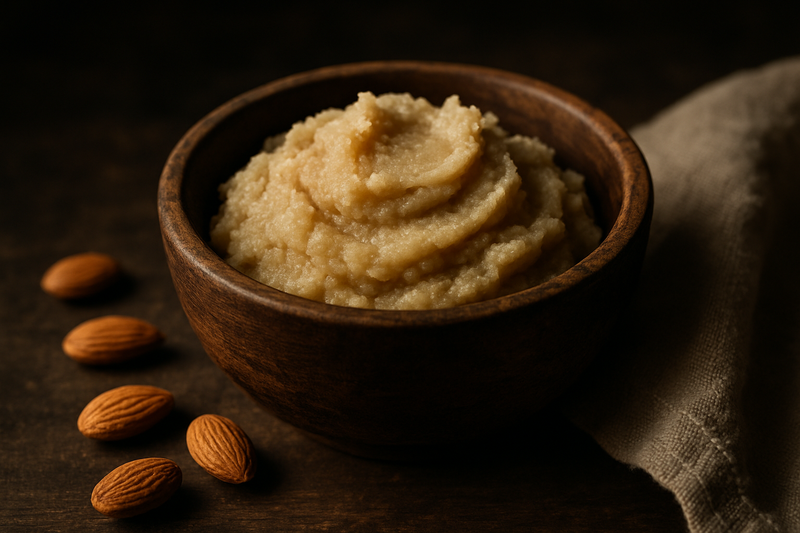
Almond Paste · Photograph
Discover the real almond paste health benefits and side effects — from heart-friendly fats and vitamin E to sugar content warnings. Compare almond paste vs almond butter, learn the best forms for baking, and find out who should be cautious. Evidence-aligned, layperson-friendly guide.
Key Nutrients
% Daily Value based on 2,000 cal diet
Key Active Compounds in Almond Paste
- Alpha-tocopherol (vitamin E): The main biologically active form of vitamin E in plant foods. Acts as a fat-soluble antioxidant, protecting cell membranes and lipoproteins from oxidative damage. Almonds are one of the best dietary sources; almond paste retains this depending on how much almond (vs. sugar) the formula contains.
- Monounsaturated fatty acids (MUFAs): Primarily oleic acid, the same type found in olive oil. Associated in human studies with improved LDL cholesterol profiles and cardiovascular support.
- Phytosterols (e.g., beta-sitosterol): Plant compounds structurally similar to cholesterol. They compete with dietary cholesterol for absorption in the gut, which may help lower LDL levels when consumed regularly.
- Phenolic acids (e.g., ferulic acid, p-coumaric acid): Polyphenols concentrated mainly in almond skins. They act as antioxidants and have shown anti-inflammatory activity in lab and animal studies. Products made with unblanched almonds retain more of these.
- Flavonoids (e.g., catechin): A family of polyphenols found in many plant foods. They may support vascular function and antioxidant defenses when nuts are consumed regularly.
- Plant protein: Almonds provide all essential amino acids in moderate amounts; almond paste delivers a small but real protein contribution per serving.
Buying Guide: How to Choose a Better Almond Paste
Optional module 1 of 2
Shopping for almond paste can be confusing because products range from nearly pure nut paste to heavily sweetened confections. Here is what to look for:
Check the ingredient list first, not the front of the pack. A product labelled "almond paste" should list almonds as the first (and ideally the only main) ingredient. If sugar appears before almonds, the product is more confection than paste.
Almond percentage matters. Some premium European-style almond pastes state the almond percentage on the label (e.g., "66% almonds"). Higher percentage = more fat, protein, vitamin E, and fiber per gram; lower sugar load.
Blanched vs. unblanched almonds. Blanched (skin-removed) almonds produce a paler, smoother paste but lose some phenolic compounds concentrated in the skin. Unblanched (natural, skin-on) pastes are less common in commercial baking but deliver more antioxidant polyphenols.
Fresh vs. shelf-stable vs. frozen. Fresh refrigerated almond paste (found in specialty or European grocers) tends to have a cleaner ingredient list and higher almond content. Shelf-stable versions often require preservatives or higher sugar for stability. Frozen almond paste is a practical middle ground — check the label for additives.
Avoid products with partially hydrogenated oils (a source of trans fats) listed in the ingredients. Most modern products have removed these, but it is worth confirming.
Label tip: If the nutrition label shows more than 10 g of sugar per 28 g serving, you are looking at a high-sugar product. Aim for ≤6 g of added sugar per serving for a more health-conscious choice.
Prep and Pairing Ideas
Almond paste is most at home in baking, but its uses extend further than croissants and marzipan figures. Here are practical ways to use it, with a nod to why the combinations work nutritionally:
Classic frangipane tart: Cream almond paste with eggs and a little butter, spread into a pastry shell, and top with pears or stone fruit. The almond's MUFAs pair well with the fibre from fruit skins; using a reduced-sugar paste keeps the overall glycaemic load manageable.
Almond paste stuffed dates: Press a small amount of unsweetened almond paste (about 1 teaspoon) into a Medjool date. The date provides quick-release natural sugars balanced by the fat and protein of the almond paste — a better post-workout snack than a pure-sugar sweet.
Swirled into overnight oats: A teaspoon of unsweetened almond paste stirred into oats with a banana and cinnamon adds fat and protein, which slows glucose absorption from the oats and keeps you fuller longer. This mirrors the mechanism seen in almond + carbohydrate human studies.
Homemade lower-sugar almond paste: Blend 200 g of blanched almonds in a food processor to a fine meal, add 2–3 tablespoons of maple syrup (instead of the traditional equal-weight sugar), a few drops of almond extract, and just enough water to bind. Result: roughly 60–70% less added sugar than commercial versions.
Bottom Line
Almond paste is a genuinely interesting ingredient sitting at the intersection of confectionery and whole-nut nutrition. Its almond fraction brings real nutritional value — monounsaturated fats, vitamin E, plant protein, phytosterols, and polyphenols — all of which are supported by solid human clinical data when almonds are consumed regularly. The complication is simple: most commercial almond paste also carries a significant sugar load that can undermine those benefits if portions are large or consumption is frequent.
The smarter path is to choose products with the highest almond content you can find, use sweetened versions in small, mindful amounts within balanced recipes, and consider unsweetened almond paste or 100% almond butter when you want the nutritional benefits without the sugar trade-off. For people with tree nut allergies, the answer is straightforward: avoid it entirely.
Almond paste is not a health food in the way a handful of whole almonds is. But in the context of a mostly whole-food diet, a quality almond paste used thoughtfully in baking is a better choice than many alternatives — and it tastes exceptional.
How Almond Paste Compares
| Compared with | What's different |
|---|---|
| Almond Paste vs. Almond Butter | Almond paste contains roughly 50% sugar, while almond butter is typically 100% nuts with no added sugar. |
| Almond Paste vs. Marzipan | Marzipan has a much higher sugar content and a finer texture, making it more pliable for molding. |
| Almond Paste vs. Frangipane | Frangipane is a spreadable custard made by mixing almond paste with butter, eggs, and flour. |
Health Benefits
Things to Know
Tree nut allergy — the most important safety note.: Almond paste is a concentrated almond product and a significant allergen. Reactions can range from mild oral tingling to anaphylaxis (a severe, life-threatening allergic response). Anyone with a confirmed or suspected tree nut or almond allergy must avoid almond paste entirely and check labels for cross-contamination warnings.
Diabetes and blood sugar management.: Sweetened almond paste can deliver 10–16 g of sugar per ounce. People managing blood glucose with insulin or oral medications should factor almond paste into their carbohydrate count and discuss with their healthcare provider. Unsweetened versions are a safer option.
Calorie density and weight management.: Even unsweetened almond paste is energy-dense (~160–170 calories per oz for pure ground almonds). People in a calorie-controlled programme for weight loss should measure portions carefully.
Anticoagulant medications (e.g., warfarin).: High cumulative vitamin E intake from nuts plus supplements can theoretically increase bleeding risk. Typical baking portions are small, but if you eat nuts frequently and also take blood thinners, mention this to your prescribing clinician.
Kidney disease.: Almonds are relatively high in phosphorus, potassium, and oxalates. People with chronic kidney disease (CKD) are often advised to moderate these minerals; check with a renal dietitian.
Children and added sugar.: Sweetened almond paste can contribute substantially to a child's daily added-sugar limit in even modest pastry servings. Opt for lower-sugar versions in family baking.
Pregnancy.: Almond paste made with raw egg whites carries a small salmonella risk. Commercially produced pastes are generally pasteurised, but homemade recipes using raw egg should be avoided during pregnancy.
Fat malabsorption conditions: (e.g., pancreatitis, some liver disorders). The high fat content of almond paste may not be well-tolerated; consult a dietitian.

Shop This Ingredient
Stock your pantry with quality almond paste.
Buy on AmazonAs an Amazon Associate, Plantopedia earns from qualifying purchases. This costs you nothing extra and helps us keep the encyclopedia free.
Frequently Asked Questions
It is worth being direct upfront: there are no major human clinical trials studying almond paste as an isolated ingredient. The benefits below are inferred from (a) robust research on whole almonds and (b) almond paste's known nutrient profile. Where the evidence is extrapolated, that is stated. Heart and Circulation Almond paste's fat profile is dominated by MUFAs and polyunsaturated fats, with relatively little saturated fat. This mirrors the fat quality in whole almonds, which have a well-established evidence base. Multiple randomized controlled trials (RCTs) — the gold standard in nutrition research — show that eating 30–60 g of almonds daily can reduce LDL ("bad") cholesterol by roughly 4–7% and improve the LDL-to-HDL ratio. Phytosterols in almond paste add a secondary mechanism: they block some dietary cholesterol absorption in the intestine. The practical caveat: most almond paste servings in baking are much smaller than 30 g of pure almonds, and the sugar content in commercial pastes may blunt cardiovascular benefits. Using almond paste to replace butter or cream in a pastry recipe may modestly improve the fat quality of that baked good, but do not expect heart-disease-level effects from a croissant filling. Evidence is moderate for almonds; extrapolated for almond paste. Digestive Health and Microbiome Whole almonds contain fermentable fiber and prebiotic compounds (substances that feed beneficial gut bacteria) that have shown modest increases in stool bulk and improvements in gut bacteria diversity in human studies. Almond paste retains some of this fiber — approximately 1 g per 28 g serving — but significantly less per calorie than whole almonds, partly because skins are often removed in blanched almond paste and partly because sugar displaces fiber-containing almond solids. At typical pastry-serving sizes, digestive benefits are likely modest at best. Large portions of sweetened paste can cause bloating or loose stools in sensitive individuals due to sugar load. Blood Sugar and Metabolism The fat, protein, and fiber in almonds collectively slow gastric emptying (the rate at which food leaves the stomach), which blunts the post-meal blood glucose spike when almonds are eaten alongside carbohydrate-rich foods. Several human studies have demonstrated this effect with whole or lightly processed almonds. Unsweetened almond paste could theoretically offer a similar glycemic-moderating effect compared to sugar-only fillings, because the fat and protein content is still present. However, commercial sweetened almond paste typically contains 10–16 g of sugars per ounce, which can raise blood glucose meaningfully, especially in people with diabetes or insulin resistance. Evidence is emerging and strongly formulation-dependent. Inflammation and Recovery Human trials using 30–60 g of whole almonds daily have reported reductions in markers of oxidative stress (cellular damage from unstable molecules called free radicals) and modest reductions in some inflammatory cytokines (signaling proteins that promote inflammation). Vitamin E and phenolic compounds are the likely drivers. Almond paste carries these same bioactives — but high sugar intake, which is present in most commercial products, actively promotes inflammatory signaling. The net anti-inflammatory effect of almond paste is therefore highly dependent on the sugar load of the product you choose. Evidence is emerging; direct almond-paste data is absent.
Not all almond pastes are nutritionally equal. Here is a practical breakdown: Traditional sweetened almond paste (e.g., Solo brand style): roughly 50–60% almonds, balance sugar, sometimes egg white. The most common baking format. High in added sugar (10–16 g per oz). Still provides MUFAs and some vitamin E, but the sugar content limits health upside at larger portions. Marzipan-style paste: Even higher sugar ratio than standard almond paste, finer texture, used for molded confections. Nutritionally similar to sweetened paste but typically sweeter. Treat it as a confection, not a functional food. Unsweetened / reduced-sugar almond paste: Made with little or no added sugar; some recipes use a small amount of honey or maple syrup. Preserves the almond's fat, protein, and micronutrient density while lowering glycemic impact. The best choice if health is the priority. 100% ground almond paste (almond butter): Pure ground almonds with no sugar added. Nutritionally closest to whole almonds — higher fiber, lower carbohydrates, more vitamin E per calorie. Different texture and use case (more spreadable, less suitable for classic frangipane), but the healthiest option in the paste/butter category. Industrial almond baking fillings: Pre-formulated for commercial bakeries, often with corn syrup, hydrogenated oils, and stabilizers added. Nutrition varies widely; many provide 15–17 g of added sugar per 40 g serving. Read the ingredient list carefully. Bottom line on form: The shorter the ingredient list and the closer to "almonds only," the better the nutritional profile. For health-focused baking, unsweetened almond paste or 100% almond butter will give you more of the benefits with far less sugar.
There is no official recommended daily intake specifically for almond paste. The most useful reference point comes from whole-almond research: the amount used in most positive clinical trials is 30–60 g of almonds per day (roughly a small handful). If your almond paste is approximately 50–60% almonds, that equates to about 50–100 g of paste to reach the studied almond dose — which in sweetened commercial products would also mean consuming 18–35 g of added sugar, well above what most health guidelines recommend in a single sitting. Practical starting guidance: For general health-conscious baking: 1–2 tablespoons (15–30 g) of sweetened almond paste per serving in a recipe is a reasonable culinary amount. For maximising the almond nutrition without excess sugar: use unsweetened almond paste or 100% almond butter, where 2–3 tablespoons (30–45 g) is roughly comparable to a small handful of almonds. Start small if almond products are new to you — some people experience digestive discomfort (bloating, loose stools) from larger nut portions. Almond paste is energy-dense. If you are tracking calories, 30 g of sweetened paste adds approximately 130 calories to a recipe; 30 g of unsweetened ground almond paste adds roughly 170 calories.
Optional module 2 of 2 The health-conscious home baker Wants to reduce butter and refined sugar in pastry recipes without sacrificing flavour or texture. Can substitute unsweetened almond paste for part of the fat/sugar component in tarts, muffins, or cookies to improve the fat quality and add protein. Benefits most from choosing paste with ≥60% almond content and a short ingredient list. The active person looking for calorie-dense, nutrient-rich snack ingredients Needs portable, satisfying energy in baked goods or snack bars for training or hiking. A tablespoon of almond paste in an energy bar adds MUFAs, vitamin E, and protein alongside carbohydrates, providing more sustained energy than sugar alone. Should still be mindful of total sugar load, especially in commercial products.
Quick Answers
Common questions, answered in a line.
Almond paste is rich in alpha-tocopherol (vitamin E), monounsaturated fatty acids (MUFAs), phytosterols, and phenolic acids. These compounds act as antioxidants, support heart health by improving LDL cholesterol profiles, and help reduce inflammation.
You should check the ingredient list to ensure almonds are the first ingredient and ideally aim for products with less than 6g of added sugar per 28g serving. Premium European-style pastes often state an almond percentage; a higher percentage indicates more protein and fiber.
People with tree nut allergies must strictly avoid almond paste as it can cause life-threatening anaphylaxis. Additionally, those with diabetes, kidney disease, or those taking anticoagulant medications should consult a doctor due to its high sugar, mineral, and vitamin E content.
You can make a healthier version by blending 200g of blanched almonds with 2–3 tablespoons of maple syrup and a few drops of almond extract. This homemade method results in approximately 60–70% less added sugar than most commercial almond pastes found in stores.
Almond paste contains healthy monounsaturated fats and protein that can slow the absorption of glucose from carbohydrates. Stirring unsweetened paste into oats or stuffing it into dates provides a more balanced energy release than consuming pure sugar sweets.
Blanched almond paste is smoother and paler but lacks the phenolic acids and flavonoids found in almond skins. Pastes made with unblanched, skin-on almonds retain more antioxidant polyphenols, though they are less common in commercial baking.
Pregnant women should avoid homemade almond paste recipes that use raw egg whites due to the risk of salmonella. While most commercial almond pastes are pasteurized and safe, it is important to check labels for raw ingredients or high sugar content.
For Readers in the USA
Local context — sourcing, seasonality, and regional notes.
In the U.S., you can find almond paste year-round in the baking aisle of major grocery chains like Kroger, Safeway, and Whole Foods, typically sold in 7-ounce tubes or cans. While available throughout the year, stock increases significantly during the winter holiday season to meet the demand for traditional American and European holiday baking.
The United States is the world's leading producer of almonds, with over 80% of the global supply grown in California's Central Valley. This domestic abundance ensures that most almond paste sold in U.S. markets is made from California-grown nuts, which are harvested from August through October.
In the United States, "almond paste" must contain almonds and sugar, while "marzipan" typically contains more sugar and sometimes egg whites or corn syrup to make it more pliable for molding. The FDA does not have a strict Standard of Identity for almond paste, so ingredient ratios can vary widely between American brands like Odense or Solo.
When shopping for almond paste in the U.S., look for the USDA Organic seal to ensure the almonds were grown without synthetic pesticides and the product contains no GMO ingredients. Additionally, some specialty American brands offer "California-grown" or "Non-GMO Project Verified" labels for consumers seeking specific agricultural standards.
AI Clinical Review
- Clearly distinguishes almond paste from whole almonds and explains how added sugar changes the health profile; the almond-to-sugar ratio truly drives nutrition.
- Accurately reflects the strongest human evidence: trials with whole almonds show modest LDL reductions and favorable fat quality, which may translate in part to almond-based pastes.
- Provides realistic nutrition and portion context (calorie density, variable vitamin E) and sensible guidance to favor higher‑almond or unsweetened options.
- Flags key safety considerations, especially tree‑nut allergy, and correctly contrasts forms (almond paste vs marzipan vs almond butter).
- There are no clinical trials on almond paste itself; benefits are inferred from whole‑almond studies, so dose–response and real‑world effects in pastries remain uncertain.
- Glycemic impact is highly formulation‑dependent; we lack head‑to‑head studies comparing sweetened pastes with unsweetened pastes or other fillings.
- Anti‑inflammatory and microbiome claims largely derive from whole almonds; net effects of sweetened paste (where sugar may counter benefits) are not well quantified.
- Nutrient retention (vitamin E, polyphenols) varies with blanching, processing, and storage; specific ranges for commercial pastes are not well characterized.
- Portion guidance: for sweetened paste, 1–2 tablespoons (≈15–30 g) is a reasonable culinary amount; to capture more almond benefits without excess sugar, use unsweetened almond paste or almond butter (≈30–45 g) within balanced meals.
- Who should be cautious: anyone with tree‑nut allergy (avoid entirely); people with diabetes (count added sugars or choose unsweetened); those with chronic kidney disease (monitor potassium, phosphorus, oxalates); and people on anticoagulants or high‑dose vitamin E supplements (discuss with a clinician).
- Pregnancy: avoid homemade pastes made with raw egg whites; opt for pasteurized commercial products.
- Quality matters: higher‑almond, unsweetened, and unhydrogenated products offer a better nutrient profile; marzipan and many industrial fillings function more as confections and are best used sparingly.
Tree nut allergen; sweetened versions are high in sugar, choose plain.
References
- USDA FoodData Central — Almond Paste (primary nutrition reference) (fdc.nal.usda.gov)
- University Hospitals nutritional data: Almond paste, 1 cup firmly packed (uhhospitals.org)
- Nutrition facts cross-reference — almond paste per 1 oz serving (eatthismuch.com)
- Almond paste macronutrient and micronutrient profile (tools.myfooddata.com)
- Almond paste (marzipan paste) detailed nutrition breakdown (inlivo.com)
- Human RCT: Almonds and LDL cholesterol reduction — Berryman et al., Journal of the American Heart Association (2015) (ahajournals.org)
- Human trial: Almonds and postprandial glycaemia — Josse et al., Metabolism (2007) (metabolismjournal.com00074-3/abstract)
- NIH Office of Dietary Supplements — Vitamin E fact sheet (safety and interactions reference) (ods.od.nih.gov)
- NIH NCCIH — Almonds and cardiovascular health overview (nccih.nih.gov)
- Almond paste composition reference (scoopulator.app)
Know Your Numbers
Eating healthy is a start. Now get to know your biomarkers.
Food changes bloodwork — inflammation, lipids, blood sugar and nutrient status all respond to what you eat. 59 markers from $59.
- Results in 7–10 days at 2,000+ Quest sites
- Licensed provider reviews every result
- One flat price, no membership, HSA/FSA eligible
Educational information only, not medical advice. Panels are ordered and reviewed through our licensed partner; Plantopedia may earn a commission.