Best Evening Snacks for Better Sleep
The evening snacks with the most direct clinical trial evidence share a few traits: some natural melatonin or its building block tryptophan, magnesium, and a modest amount of carbohydrate, without the large or fatty meal that can disrupt digestion and sleep instead of helping it. Tart cherries...
Direct answer
The evening snacks with the most direct clinical trial evidence share a few traits: some natural melatonin or its building block tryptophan, magnesium, and a modest amount of carbohydrate, without the large or fatty meal that can disrupt digestion and sleep instead of helping it. Tart cherries or tart cherry juice, kiwifruit, a small bowl of oatmeal, a banana with nut butter, and a light dairy or fortified plant-milk option are the standouts. None of these replace treatment for a diagnosed sleep disorder.
Key takeaways
- Tart cherry juice and kiwifruit have the most direct clinical trial evidence for improving sleep measures when eaten in the hour or two before bed.
- Good evening snacks tend to combine a tryptophan or magnesium source with a small amount of carbohydrate, and stay light, since heavy or fatty late meals are linked to worse sleep.
- Effects seen in these trials are modest and the studies are small; food is a supporting habit, not a treatment for a diagnosed sleep disorder.
- Consistent timing, roughly the same snack about an hour before bed, seems to matter as much as the specific food choice.
- Persistent trouble sleeping deserves a conversation with a clinician, especially if it has lasted weeks or affects daytime functioning.
Design principles
Four principles show up across the research on food and sleep. Keep it light: large, high-fat meals close to bedtime are linked with more fragmented, lower-quality sleep and a higher chance of reflux, so evening snacks in these studies tend to be small, roughly 100 to 200 calories. Pair carbohydrate with a tryptophan or protein source: a small amount of carbohydrate helps tryptophan, an amino acid your body can't make on its own and needs from food, cross into the brain more easily by reducing competition from other amino acids, where it's converted first to serotonin and then to melatonin. Look for magnesium: magnesium is a cofactor in hundreds of enzyme reactions, including ones involved in nervous system regulation, and the NIH Office of Dietary Supplements lists it among nutrients many adults fall short on. Keep timing consistent: eating roughly the same small snack about an hour before bed, night after night, seems to matter as much as the specific food in the trials that show a benefit.
Concrete ideas
- Tart cherries or a small glass (about 1 cup) of tart cherry juice
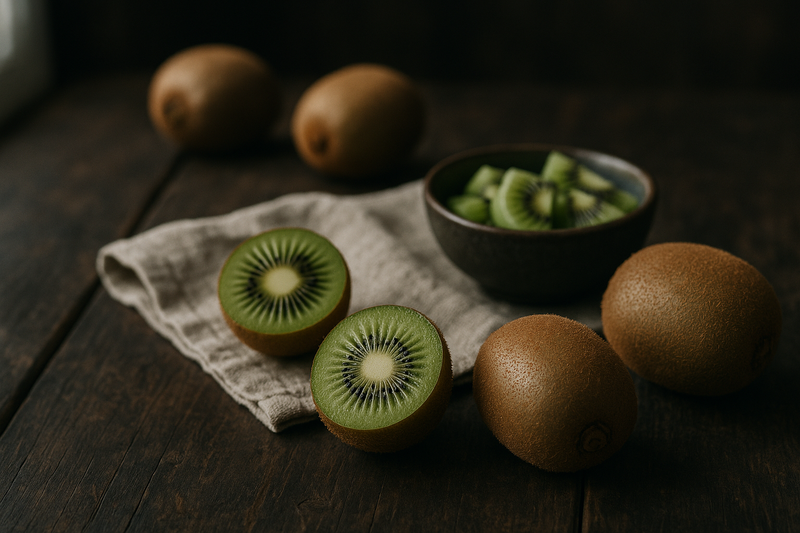
- Two kiwifruits, sliced
- A small bowl of oatmeal made with milk, topped with a few chopped walnuts
- Half a banana with a tablespoon of almond butter
- Plain Greek yogurt or kefir with a small drizzle of honey
- A small handful of walnuts or almonds
- Whole-grain crackers with a slice of turkey or low-sodium cheese
- Warm milk or fortified soy milk
- Edamame, lightly salted
- A small handful of pumpkin seeds
Why each fits
Tart cherries have the most direct human trial data of any food on this list. In a small randomized, placebo-controlled crossover study, tart cherry juice measurably raised melatonin levels and increased time in bed, total sleep time, and sleep efficiency; a separate two-week trial in adults with insomnia found participants slept roughly 80 to 90 minutes longer per night on tart cherry juice versus placebo. The effect appears modest and more noticeable in people with mild sleep difficulty than as a fix for significant insomnia. Kiwifruit performed similarly well in a randomized trial of university students with chronic insomnia symptoms: those who ate about two kiwis an hour before bed for four weeks reported better subjective sleep quality and daytime functioning than a comparison group eating pears, though objective sleep measurements didn't show as clear a difference. Kiwi is rich in folate and serotonin, which may explain part of the effect, though the exact mechanism isn't fully confirmed. Oatmeal with walnuts and banana with nut butter both follow the carbohydrate-plus-tryptophan pairing principle: the carbohydrate helps usher tryptophan-containing protein toward serotonin and melatonin production, while walnuts and nut butters add magnesium and a small amount of naturally occurring melatonin, though walnut-specific human sleep trials are limited. Greek yogurt, kefir, turkey, cheese, and milk all supply tryptophan-containing protein in a small, easily digested package. The popular idea that turkey is unusually sleep-inducing is mostly explained by meal size and timing around a big holiday meal, rather than turkey having exceptional tryptophan content compared with other proteins. Kefir and yogurt add the ritual of a light, familiar bedtime routine, which has value on its own even where food-specific sleep evidence is thinner. Walnuts, almonds, edamame, and pumpkin seeds are grouped together because their strongest evidence is nutritional rather than a dedicated sleep trial: they're reliable magnesium sources, and magnesium is involved in the nervous system pathways tied to relaxation and sleep regulation, per the NIH Office of Dietary Supplements. That's a plausible-mechanism food category rather than one with sleep-specific trials behind it, and the NIH's National Center for Complementary and Integrative Health notes that evidence for magnesium supplements improving sleep specifically is still limited.
Substitutions
- No kiwi, or allergic to it: try berries or a small orange instead, understanding the sleep-specific evidence is stronger for kiwi.
- Dairy intolerance: swap milk or yogurt for fortified soy or oat milk, or a dairy-free kefir alternative.
- Nut allergy: use pumpkin seed or sunflower seed butter and seeds instead of almonds, walnuts, or almond butter.
- Managing blood sugar: choose whole tart cherries over juice, or dilute juice with water, and pair with a protein source.
- Avoiding meat: swap turkey for edamame, tofu, or a plant-based protein on crackers.
Prep and time-saving notes
Keep tart cherry juice concentrate in the fridge and mix a small glass with water as needed, rather than buying pre-diluted bottles every week. Wash and slice a batch of kiwi at the start of the week; it keeps well refrigerated for two to three days. Make a batch of overnight oats so there's no cooking required before bed. Pre-portion nuts and seeds into small containers for grab-and-go snacking without measuring each night. Keep whole-grain crackers, a protein source, and nut butter on hand as a no-prep default option.
Who should adapt
People managing diabetes or blood sugar should watch portion size and added sugar in tart cherry juice and pair it with protein. People with GERD or reflux should keep any evening snack small and avoid lying down right after eating, regardless of which food is chosen. People on monoamine oxidase inhibitors should be cautious with aged cheeses and ask their prescriber about food interactions. People with chronic kidney disease may need individualized guidance on potassium- and magnesium-rich foods like bananas and nuts from their care team. Anyone with a tree nut, peanut, or dairy allergy should use the substitutions above rather than the specific foods listed.
When to seek care
Occasional trouble falling asleep is common and often responds to habit changes like these. Talk to a clinician if sleep difficulty happens three or more nights a week and lasts longer than a few weeks, or if it's affecting your ability to function during the day. Seek prompt evaluation for loud snoring with gasping or choking during sleep, which can signal sleep apnea, for significant daytime sleepiness where you actually fall asleep unintentionally, or for new sleep problems alongside chest pain, irregular heartbeat, or shortness of breath. Evening snacks are a supportive habit, not a treatment for insomnia, sleep apnea, or other diagnosed sleep disorders.
Bottom line
A handful of foods, tart cherries, kiwifruit, oatmeal, nuts, and light dairy, have real trial evidence or a plausible, well-understood mechanism behind their use as evening sleep snacks, and none carry meaningful downsides for most healthy adults in small portions. Treat them as one part of a consistent bedtime routine, not a cure for poor sleep, and get persistent sleep problems evaluated rather than managed with food alone.
Frequently asked questions
How soon before bed should I eat one of these snacks?
Most of the studies referenced here had participants eat their snack about one to two hours before bedtime. Eating right before lying down, especially something large, can cause discomfort or reflux that works against sleep.
Is melatonin from tart cherry juice as strong as a melatonin supplement?
No. Tart cherry juice contains naturally occurring melatonin, but in much smaller amounts than a typical over-the-counter supplement, and the trials showing benefit measured modest changes in sleep timing and quality, not the larger effect sometimes seen with supplemental doses.
Can these snacks help with jet lag or shift work sleep problems?
These foods haven't been specifically tested for jet lag or shift work, which involve circadian rhythm disruption that food alone is unlikely to fix. Light exposure and schedule strategies are the primary tools for those situations; talk to a clinician if shift work is affecting your sleep.
Will eating carbohydrates at night make me gain weight?
A small, roughly 100 to 200 calorie snack timed for sleep isn't the kind of intake pattern linked to weight gain in research; total daily calorie balance matters far more than the exact timing of a modest snack. If you have specific weight or metabolic concerns, individualized guidance from a clinician or dietitian is more useful than general timing rules.
What if none of these foods help my sleep?
That's useful information. Food-based strategies produce modest effects at best in the research behind them, and if sleep problems persist despite consistent habits, it's a sign to bring the issue to a clinician rather than testing more foods.
Sources and evidence
- Effect of tart cherry juice on melatonin levels and enhanced sleep quality, randomized crossover study
- Acute effects of fresh versus dried kiwifruit on sleep quality and sleep-related urinary metabolites
- Effects of tryptophan-rich breakfast and light exposure on melatonin secretion at night
- NIH Office of Dietary Supplements, Magnesium fact sheet for health professionals
- NIH Office of Dietary Supplements, Magnesium consumer fact sheet
- NHLBI, insomnia diagnosis and when to see a doctor
- Sleep Foundation, healthy bedtime snacks
Know Your Numbers
Eating healthy is a start. Now get to know your biomarkers.
Food changes bloodwork — inflammation, lipids, blood sugar and nutrient status all respond to what you eat. 59 markers from $59.
- Results in 7–10 days at 2,000+ Quest sites
- Licensed provider reviews every result
- One flat price, no membership, HSA/FSA eligible
Educational information only, not medical advice. Panels are ordered and reviewed through our licensed partner; Plantopedia may earn a commission.