Pulasan — health benefits and uses
A Southeast Asian fruit eaten fresh, sweeter than its rambutan cousin.
The Short Answer
Pulasan is a sweet tropical fruit that provides 25mg of Vitamin C per 100g serving, supporting immune health and collagen production. To eat it, twist the leathery rind to reveal the translucent flesh, which is usually eaten raw while discarding the seed.

Pulasan · Photograph
Discover pulasan fruit health benefits, nutrition facts, and how to eat it fresh. Learn how this sweet Southeast Asian tropical fruit compares to rambutan, what vitamins and antioxidants it contains, and who should eat it with caution.
Key Nutrients
% Daily Value based on 2,000 cal diet
Key active compounds in pulasan
- Ascorbic acid (vitamin C): The primary water-soluble antioxidant in pulasan; essential for immune defense, collagen formation, and protecting cells from oxidative damage. Values reported range from about 11 mg to 40 mg per 100 g of aril.
- Flavonoids: A broad class of plant polyphenols (antioxidant compounds found widely in fruits and vegetables) with antioxidant and potential anti-inflammatory properties, identified in pulasan fruit and leaves.
- Polyphenols: A large family of antioxidant plant chemicals found in the aril and skin; may help protect cells from oxidative stress, though pulasan-specific bioavailability data in humans is lacking.
- Hydroquinone: A phenolic (aromatic ring-containing) compound listed among pulasan's antioxidant constituents; concentration in the edible aril and relevance at typical dietary amounts are not well established.
- Pyrogallol: A trihydroxybenzene phenolic compound (a specific type of plant antioxidant molecule) cited in pulasan; contributes to radical-scavenging capacity in lab settings.
- Potassium: An electrolyte (a mineral that carries an electrical charge in body fluids) that supports fluid balance, nerve signaling, and healthy blood pressure.
Prep and pairing ideas
Getting the most out of fresh pulasan is simple:
- Twist and eat: Hold the fruit in both hands and twist gently. The thick rind splits to reveal the translucent aril. Pop it in your mouth and work the flesh off the seed — do not bite or swallow the seed.
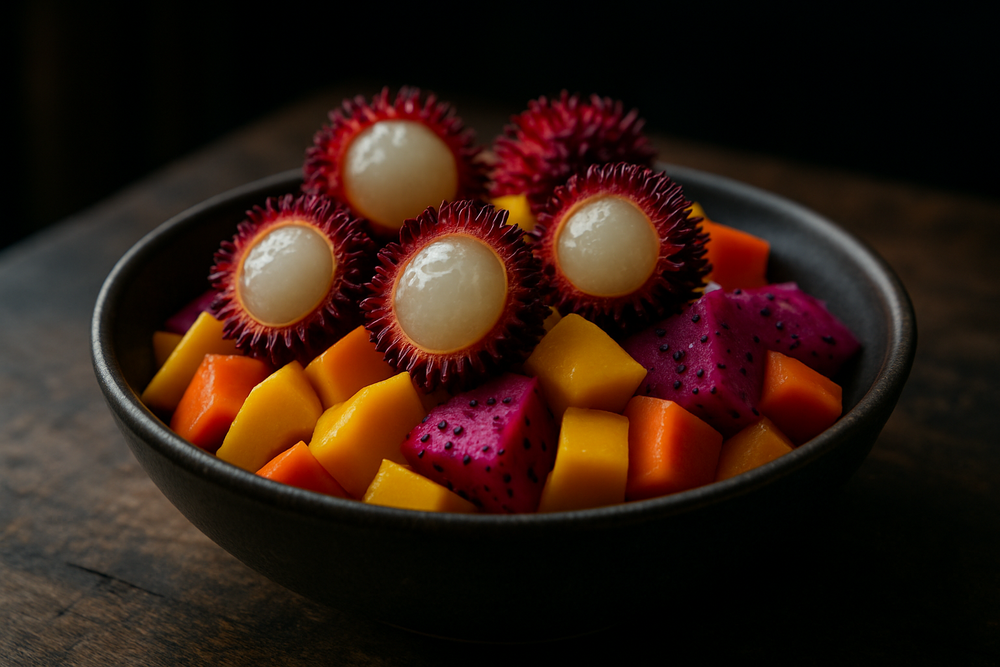
- Tropical fruit bowl: Combine pulasan arils with sliced mango, dragon fruit, and a squeeze of lime for a visually striking, vitamin C-rich bowl. The varying sweetness and textures make each bite different.
- Pulasan with plain yogurt: Spoon arils over unsweetened Greek yogurt. The yogurt's probiotics (beneficial live bacteria) complement pulasan's mild fiber, and the protein slows sugar absorption — useful for anyone watching their blood glucose.
- Chilled pulasan as a snack: Refrigerate the whole unpeeled fruit for 30 minutes before eating. Cold pulasan has a slightly firmer, more refreshing aril — ideal on a hot day.
Bottom line
Pulasan is a genuinely enjoyable, low-calorie tropical fruit with a real nutritional profile: meaningful vitamin C, modest fiber, hydrating water content, and a collection of antioxidant plant compounds. Its potential benefits for immunity, digestion, skin health, and cardiovascular wellness are biologically plausible and consistent with what decades of fruit-nutrition research tells us about eating more whole fruit. What it does not yet have is its own body of human clinical trials — so the specific claims you may read elsewhere are best understood as reasonable inferences, not confirmed outcomes.
For most people, that is perfectly fine. Pulasan does not need to be a medicine to be worth eating. It is sweet, easy to eat, naturally whole-food-plant-based, and brings genuine variety to a fruit-forward diet. If you can find it at a Southeast Asian market or specialty grocer, twist one open and try it. Just remember to set the seed aside.
🌱 Explore how pulasan and other whole fruits fit into your health goals at Plantopedia's Goals hub.
How Pulasan Compares
| Compared with | What's different |
|---|---|
| Pulasan vs. Rambutan | Pulasan has a thicker, leathery skin with short nubs instead of long, soft hairs. |
| Pulasan vs. Lychee | Pulasan is sweeter and the flesh separates more easily from the seed (freestone). |
Health Benefits
Things to Know
Seed safety: Pulasan contains a single, moderately large seed that is not edible. Always remove and discard it. Take extra care with young children or anyone with swallowing difficulties.
Allergy cross-reactivity: If you have a known allergy to rambutan, lychee, or other Sapindaceae family fruits, exercise caution with pulasan — cross-reactivity is possible. Start with a very small amount and monitor your response.
Diabetes and blood sugar: Pulasan is relatively sweet. People managing diabetes, prediabetes, or insulin resistance should treat it like other sweet fruits: count the carbohydrates (approximately 15 g per 100 g of aril), keep portions moderate, and monitor blood glucose as usual.
Medication interactions: No specific drug interactions have been documented for pulasan. Like other sweet tropical fruits, large servings may affect postprandial (after-meal) blood glucose and could theoretically require adjustment in people on insulin or glucose-lowering medications. Discuss with your healthcare provider if you are unsure.
Fructose sensitivity or IBS: People with fructose intolerance or irritable bowel syndrome (IBS) — a condition involving a sensitive gut that reacts to certain fermentable sugars — may experience bloating or discomfort with larger portions. Start small and observe your response.
Pregnancy and breastfeeding: No pulasan-specific safety data exist for pregnancy. It can generally be treated as any other whole tropical fruit — fine in normal food amounts, not in medicinal quantities.
Freshness matters: Pulasan spoils quickly after harvest. Eat it within a few days of purchase and store it in the refrigerator if not consuming immediately.
Prep Ideas
- — Twist and eat: Hold the fruit in both hands and twist gently. The thick rind splits to reveal the translucent aril. Pop it in your mouth and work the flesh off the seed — do not bite or swallow the seed.
- — Tropical fruit bowl: Combine pulasan arils with sliced mango, dragon fruit, and a squeeze of lime for a visually striking, vitamin C-rich bowl. The varying sweetness and textures make each bite different.
- — Pulasan with plain yogurt: Spoon arils over unsweetened Greek yogurt. The yogurt's probiotics (beneficial live bacteria) complement pulasan's mild fiber, and the protein slows sugar absorption — useful for anyone watching their blood glucose.
- — Chilled pulasan as a snack: Refrigerate the whole unpeeled fruit for 30 minutes before eating. Cold pulasan has a slightly firmer, more refreshing aril — ideal on a hot day.
Shop This Ingredient
Stock your pantry with quality pulasan.
Buy on AmazonAs an Amazon Associate, Plantopedia earns from qualifying purchases. This costs you nothing extra and helps us keep the encyclopedia free.
Frequently Asked Questions
No human clinical trials have examined pulasan specifically. The benefits described below are evidence-informed inferences based on pulasan's nutrient content and robust data from related fruits and dietary patterns. Think of them as plausible, not proven. Heart and circulation Pulasan provides vitamin C and antioxidant polyphenols that may help neutralize free radicals — unstable molecules that can damage blood vessel walls and contribute to atherosclerosis (plaque buildup in arteries). Its modest potassium content also fits the general picture of a heart-friendly fruit: potassium helps relax blood vessel walls and supports healthy blood pressure regulation. That said, pulasan has not been studied in cardiovascular trials; any heart-protective benefit is consistent with the broader evidence that diets rich in varied whole fruits reduce cardiometabolic risk, not a claim specific to pulasan. Digestive health and gut health Pulasan's combination of dietary fiber and high water content (roughly 83–90% of its weight is water) is the basis for its reputation as a digestion-friendly fruit. Dietary fiber adds bulk to stool, helps maintain regular bowel movements, and feeds beneficial gut bacteria — effects well supported in general fiber research. The specific fiber values for pulasan vary across sources (roughly 0.14 g to 1.5 g per 100 g), so it is a mild contributor rather than a high-fiber powerhouse. Eating it alongside other fiber-rich whole foods is the most practical approach. Blood sugar and metabolism Pulasan contains natural sugars (predominantly fructose and glucose) alongside fiber, which may slightly slow sugar absorption compared with drinking juice or eating refined sugar. General evidence supports including whole fruits in moderate amounts as part of a diabetes-friendly diet, and pulasan can fit that framework. However, no glycemic index measurement or blood sugar intervention trial exists for pulasan specifically, so any specific claim about blood sugar control should be treated as hypothetical. People with diabetes or insulin resistance should count pulasan's carbohydrate content and monitor their response. Inflammation and recovery The flavonoids and polyphenols in pulasan theoretically support the body's antioxidant defenses, which play a role in managing chronic low-grade inflammation — a driver of many long-term health conditions. One in vitro study (a laboratory experiment, not a human study) found strong radical-scavenging activity in ethanol extracts of pulasan leaves, though seed and peel extracts were weak. These findings are mechanistically interesting but apply to non-edible plant parts under lab conditions, not to eating the fruit itself. Treating pulasan as one piece of a generally anti-inflammatory, plant-forward diet is the sensible framing. Immune support and skin health Vitamin C is one of the most well-documented nutrients for immune function: it supports the activity of white blood cells and acts as a direct antioxidant in immune tissues. Pulasan's vitamin C also contributes to collagen synthesis — the process your body uses to maintain skin structure, wound healing, and connective tissue. While no pulasan-specific immunity or skin trials exist, the mechanism is sound and the vitamin C content is real. Think of pulasan as one enjoyable way to diversify your vitamin C intake, rather than a standalone immune booster.
The adventurous fruit lover looking to diversify their diet Eats a variety of whole fruits but wants to expand beyond common options Interested in Southeast Asian food culture and naturally nutrient-dense snacks Benefits from pulasan's vitamin C, fiber, and antioxidant variety without any supplement needed Enjoys the novelty of a fruit you can twist open with your hands The health-conscious person watching their energy and weight Looking for naturally sweet, satisfying snacks with low calorie density Wants hydration and natural sugars without added ingredients Pulasan's high water content and modest fiber can support a feeling of fullness Best eaten fresh to preserve fiber and avoid the extra sugar of processed versions
The fresh aril is the gold standard — and the way pulasan has been eaten across Southeast Asia for centuries. Here is how different forms compare: Fresh whole fruit (aril only): Provides the full complement of water, fiber, vitamin C, and antioxidants without any added ingredients. The fiber is intact, which slows sugar absorption and supports gut health. This is the recommended form for most purposes. Fruit salad or mixed tropical dishes: Combining pulasan with other fruits like mango, papaya, or pineapple maintains most of the nutritional profile and naturally dilutes the sugar concentration per serving. A practical and delicious option. Juice or smoothies: Juicing removes most of the fiber, concentrating the natural sugars and potentially raising the glycemic effect. Blending into smoothies retains more fiber but changes the texture. Fine occasionally; not ideal as the main way to consume pulasan if digestive benefits are a goal. Jams, syrups, and confectionery: These forms concentrate sugar and often add more. They are culinary pleasures rather than health tools. Enjoy them as treats rather than health foods. Leaf and peel extracts: These are experimental preparations studied in laboratory settings — not food, not available to consumers, and without human safety data. Stick to the fruit.
There is no established evidence-based therapeutic dose for pulasan because it has not been studied in human trials. The practical guidance mirrors general whole-fruit recommendations: Typical culinary intake: About 50–150 g of fresh aril (roughly 2–5 individual fruits) on days you eat it is a reasonable, normal amount for most healthy adults. For blood sugar awareness: A single small serving of 50–75 g (1–2 fruits) with a meal is a sensible starting point for people with diabetes, who should monitor their response. General principle: Eat it as part of a varied diet that includes many different fruits and vegetables, rather than focusing on any single ingredient. Variety in produce intake is consistently associated with better health outcomes than large amounts of one fruit. Start low: If pulasan is new to you, try 1–2 fruits first. This is especially wise if you have a sensitive digestive system or a history of fruit allergies within the Sapindaceae family. No supplement dose: Pulasan is not sold as a standardized supplement in most markets, and no dosage guidance exists for extracts or concentrates.
Quick Answers
Common questions, answered in a line.
To eat a pulasan, hold the fruit in both hands and twist it gently until the thick rind splits to reveal the translucent aril. You can then pop the fruit into your mouth to work the flesh off the seed, but be sure to discard the seed rather than biting or swallowing it.
Pulasan contains several key antioxidants, including ascorbic acid (vitamin C), flavonoids, polyphenols, hydroquinone, and pyrogallol. These compounds help protect body cells from oxidative stress and may provide anti-inflammatory properties.
Pulasan provides approximately 11 mg to 40 mg of vitamin C per 100 grams of fruit aril. This water-soluble antioxidant is essential for immune defense, collagen formation, and protecting cells from oxidative damage.
Yes, you can eat pulasan if you have diabetes, but you should treat it like other sweet fruits by counting the carbohydrates and keeping portions moderate. The fruit contains about 15g of carbohydrates per 100g of aril and may affect postprandial blood glucose levels.
No, the pulasan seed is not edible and should always be removed and discarded. You should take extra care when serving the fruit to young children or anyone with swallowing difficulties due to the size of the single seed.
If you have a known allergy to rambutan or lychee, you should exercise caution with pulasan because cross-reactivity is possible. These fruits all belong to the Sapindaceae family, so it is best to start with a very small amount to monitor your response.
Pulasan should be eaten within a few days of purchase because it spoils quickly after harvest. To maintain its quality, store the fruit in the refrigerator if you are not planning to consume it immediately.
For Readers in the USA
Local context — sourcing, seasonality, and regional notes.
Fresh pulasan is primarily found at specialized Southeast Asian markets in major hubs like Los Angeles, Houston, or South Florida, and through high-end tropical fruit distributors that ship nationwide. While rarely available at mainstream supermarkets, it is occasionally stocked by exotic fruit vendors at regional farmers markets in USDA Zone 10 or 11.
In the United States, fresh pulasan is typically available during late summer and autumn, often appearing between August and October. Since the fruit is highly perishable and rarely grown commercially in the continental US, availability depends on the timing of imports from Southeast Asia or limited harvests from Hawaii.
Commercial pulasan cultivation in the United States is almost entirely restricted to Hawaii and Puerto Rico due to the fruit's strict requirement for a humid, tropical climate. The trees are highly sensitive to cold and will not survive or fruit in the continental US, including southern states like Florida or California, without significant greenhouse protection.
While the USDA regulates the import of exotic fruits like pulasan to prevent the spread of pests, there are currently no specific FDA warnings regarding its consumption. As with all imported produce, it is recommended to wash the thick outer rind thoroughly before twisting it open to prevent surface contaminants from touching the edible aril.
AI Clinical Review
- Frames pulasan as a nutritious whole fruit (vitamin C, modest fiber, potassium, high water) rather than a “superfood,” which aligns with broad evidence on fruit-rich dietary patterns supporting health.
- Accurately explains edible portion (aril only) and safe handling (discard the seed), with clear, practical prep tips.
- Provides realistic nutrient ranges (e.g., vitamin C variability by ripeness/region) and positions benefits as plausible rather than proven—appropriate given limited research.
- Offers sensible portion guidance and pairing ideas (e.g., with yogurt/protein) that can help moderate glycemic impact.
- No human clinical trials on pulasan specifically; most benefit statements are extrapolated from composition data and studies on related fruits.
- Antioxidant findings largely come from in vitro work and from non-edible parts (leaves/peel); translation to effects from eating the aril is uncertain.
- Reported nutrient values (especially fiber and vitamin C) vary across sources, so exact contributions per serving may differ.
- Glycemic index/load and cardiometabolic outcomes have not been established for pulasan; real-world blood sugar effects remain to be quantified.
- Portion guidance: 50–150 g aril (about 2–5 fruits) is reasonable for most adults; people with diabetes may start with 50–75 g alongside a meal and monitor glucose.
- Form matters: fresh aril retains fiber and vitamin C; juices/jams concentrate sugars and can raise post-meal blood glucose compared with whole fruit.
- Safety considerations: do not eat the seed (choking hazard); consider potential cross‑reactivity if allergic to rambutan/lychee (same plant family); those with IBS or fructose intolerance may tolerate only small amounts.
- Special populations: pregnancy/lactation—typical food amounts are acceptable, but avoid supplements/extracts; individuals on insulin or glucose‑lowering drugs should discuss fruit portions with their clinician if making notable diet changes.
Contains a single seed; only the aril is eaten.
References
- USDA FoodData Central — general fruit nutrition reference (fdc.nal.usda.gov)
- USDA MyPlate — Fruits Group dietary guidance (myplate.gov)
- Antioxidant Activities in Different Parts of Pulasan (Nephelium mutabile) — in vitro study (iopscience.iop.org)
- Pulasan Fruit: Health Benefits, Nutrition, Uses and Recipes — Netmeds health library (netmeds.com)
- Pulasan Nutrition Facts — Fruitspedia review (fruitspedia.com)
- Pulasan – Health Benefits, Uses and Important Facts — Pots & Pans (potsandpans.in)
- Pulasan: Benefits, Dosage & Side Effects — NutriDex (nutridex.info)
- Health Benefits of Pulasan — Medindia (medindia.net)
- Pulasan — Flavor, Taste, Uses, Nutrition & Health Effects — Tasterium (tasterium.com)
- What is Pulasan Fruit? Health Benefits and Nutrition — NewsBytesApp (newsbytesapp.com)
Know Your Numbers
Eating healthy is a start. Now get to know your biomarkers.
Food changes bloodwork — inflammation, lipids, blood sugar and nutrient status all respond to what you eat. 59 markers from $59.
- Results in 7–10 days at 2,000+ Quest sites
- Licensed provider reviews every result
- One flat price, no membership, HSA/FSA eligible
Educational information only, not medical advice. Panels are ordered and reviewed through our licensed partner; Plantopedia may earn a commission.