Puy Lentils — health benefits and uses
A protected French green lentil prized for its mineral, peppery depth.
The Short Answer
Puy lentils are a nutrient-dense legume providing 11g of protein and 181mcg of folate per serving, prized for their ability to stay firm after 20 minutes of simmering. Unlike most dried beans, they require no soaking and have a distinct peppery flavor.
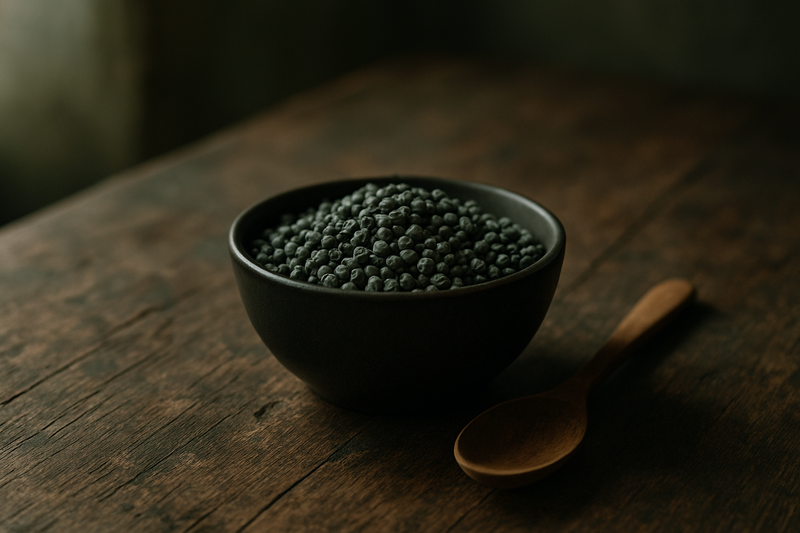
Puy Lentils · Photograph
Discover the Puy lentils health benefits backed by research — from heart health and blood sugar control to plant-based protein and iron for vegetarians. Includes nutrition facts, cooking tips, and safety guidance.
Key Nutrients
% Daily Value based on 2,000 cal diet
Key active compounds in Puy lentils
- Polyphenols (including phenolic acids and tannins) — plant compounds with antioxidant properties, concentrated mainly in the lentil's outer seed coat. Antioxidants are molecules that help neutralise free radicals, unstable molecules that can damage cells over time.
- Flavonoids — a subgroup of polyphenols that may support healthy blood vessel function in experimental models; also contribute to colour pigmentation.
- Saponins — naturally occurring glycosides (sugar-linked compounds) in legumes that can bind bile acids and cholesterol in the gut in lab settings, potentially contributing to the cholesterol-lowering effects seen in pulse-rich diets.
- Phytates (phytic acid) — a phosphorus storage compound in seeds that can modestly reduce how well you absorb iron and zinc (this is called reduced bioavailability). Phytates also have antioxidant properties. Cooking reduces phytate levels somewhat.
- Resistant starch — a type of starch that escapes digestion in the small intestine, reaching the large intestine intact where it feeds beneficial gut bacteria. It also contributes to the low glycaemic response of lentils.
- Oligosaccharides — short-chain carbohydrates (such as raffinose and stachyose) that are not fully digested and act as prebiotics (food for gut bacteria). These are also what cause gas in some people.
Prep and pairing ideas
Puy lentils need no soaking — one of their practical advantages over larger legumes. A basic method: rinse thoroughly under cold water, then simmer in unsalted water or stock at a ratio of about 1 cup lentils to 2.5 cups liquid for 20–25 minutes until just tender. Salt at the end; salting too early can toughen the skin and may slow softening. For salads, stop cooking when they're tender but still holding their shape — a quick taste test around the 18-minute mark guides this well.
Common pairings and why they work
1. Puy lentils + roasted beets + goat cheese or tahini Beets provide vitamin C (improving iron absorption from the lentils), earthy sweetness that complements the peppery lentil flavour, and additional folate. Goat cheese adds calcium and richness; tahini keeps it fully plant-based while adding healthy fats that help absorb fat-soluble antioxidants.
2. Puy lentils + wilted spinach + lemon dressing Spinach adds additional non-heme iron, magnesium, and vitamin K. The lemon dressing is critical here: the vitamin C in lemon juice can increase non-heme iron absorption from both the lentils and the spinach by two to three times. A classic combination precisely because it works nutritionally as well as in flavour.
3. Puy lentils + walnuts + Dijon vinaigrette (the classic French salad) Walnuts contribute omega-3 fatty acids (ALA — alpha-linolenic acid) and additional plant protein, while their fat content helps your body absorb the fat-soluble polyphenols in the lentils. Dijon mustard contains modest amounts of selenium and acts as an emulsifier. This is the traditional lentilles du Puy salad format for good reason.
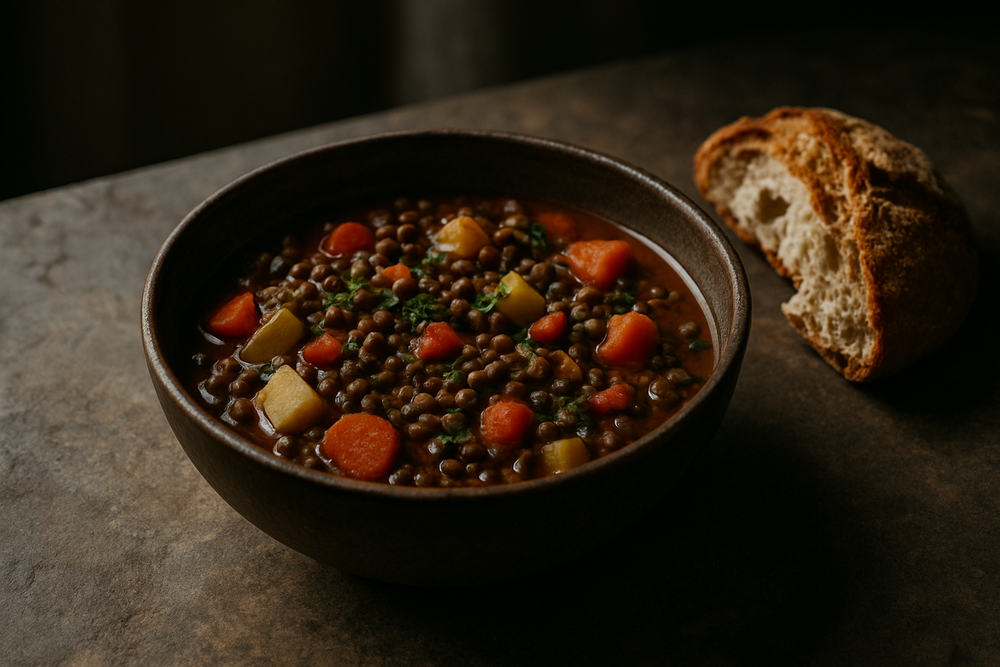
For warm preparations, Puy lentils hold up beautifully in soups and stews alongside root vegetables and aromatic herbs like thyme and bay. They're a natural partner for salmon, sausage, or smoked tofu in the classic French bistro style.
Bottom line
Puy lentils are a genuinely nutrient-dense, versatile, and evidence-backed food. The research case for pulses — particularly around LDL cholesterol, blood pressure, and blood sugar management — is among the most solid in the plant foods literature. Puy lentils bring the full nutritional profile of lentils (high protein, high fibre, low glycaemic index, rich in folate and iron) packaged in a form that's easy to cook, pleasant to eat, and remarkably practical: no soaking, 20–25 minutes to cook, and good shelf life.
They're especially valuable for people eating little or no meat, as they address several common nutrient gaps simultaneously — protein, iron, folate, zinc, and potassium. For most people, adding ½ cup cooked Puy lentils to meals three or more times a week, in place of more refined carbohydrates, is a straightforward, low-risk way to move a diet meaningfully in a health-supporting direction.
As always, food patterns matter more than any single ingredient. Puy lentils work best as part of a varied, whole-food diet rather than a standalone "superfood" fix.
Looking to match ingredients to specific health goals? Browse Plantopedia's goals guide to find evidence-aligned food strategies for your priorities.
How Puy Lentils Compares
| Compared with | What's different |
|---|---|
| Puy Lentils vs. Green Lentils | Puy lentils hold their firm, peppery shape when cooked while green lentils soften and become creamy. |
| Puy Lentils vs. Red Lentils | Puy lentils are small and firm for salads; red lentils dissolve into a thick puree for soups and dals. |
| Puy Lentils vs. Beluga Lentils | Puy lentils have a peppery taste; Beluga lentils are milder with a smooth, caviar-like appearance. |
Health Benefits
Things to Know
Gas and bloating are common: when you first significantly increase your lentil intake. Start with ¼ cup cooked and build up gradually over one to two weeks.
Kidney disease: Puy lentils are rich in potassium and phosphorus. People with advanced chronic kidney disease (CKD stages 3b–5) or on dialysis should speak with a renal dietitian before eating lentils regularly, as these minerals require careful management in reduced kidney function.
IBS and low-FODMAP diets: Lentils contain fermentable oligosaccharides — the "O" in FODMAP (Fermentable Oligosaccharides, Disaccharides, Monosaccharides And Polyols). People with irritable bowel syndrome (IBS) following a low-FODMAP protocol should start with very small portions (~2–3 tablespoons cooked) and assess tolerance, or speak with a dietitian.
Legume allergy: Cross-reactivity between legumes (peanuts, peas, beans, lentils) is possible. If you have a known legume allergy, consult an allergist before introducing Puy lentils.
Iron absorption: Lentil iron is non-heme (plant-based) and absorbs at roughly 3–8% efficiency compared with ~15–35% for heme iron (meat). Eating a vitamin C–rich food at the same meal — tomatoes, bell pepper, citrus juice — meaningfully improves absorption.
Medication interactions:
Potassium-sparing diuretics or ACE inhibitors/ARBs: A sudden large increase in high-potassium foods can raise serum potassium in people with impaired kidney function. Monitor if increasing intake substantially.
Thyroid medication (e.g., levothyroxine): Large, sudden increases in dietary fibre may slightly affect absorption timing. Keep intake consistent rather than fluctuating wildly.
Warfarin (anticoagulant): Lentils are not notably high in vitamin K, so major interactions are unlikely, but any large dietary shift warrants discussion with your prescriber.
Pregnancy: The high folate content of Puy lentils is genuinely valuable during pregnancy and the preconception period, supporting fetal neural tube development. However, folate from food does not replace prescribed folic acid supplements during early pregnancy.
Undercooked lentils: retain higher lectin activity (lectins are proteins that can cause digestive upset in large amounts from raw legumes). Always cook Puy lentils until tender.
Shop This Ingredient
Stock your pantry with quality puy lentils.
Buy on AmazonAs an Amazon Associate, Plantopedia earns from qualifying purchases. This costs you nothing extra and helps us keep the encyclopedia free.
Frequently Asked Questions
Heart and circulation The evidence for pulses and cardiovascular health is among the strongest in plant-food research. A meta-analysis of randomised controlled trials (RCTs — the gold standard study design) found that diets containing roughly one serving of pulses per day led to an approximately 8–10% reduction in LDL cholesterol (often called "bad" cholesterol) and modest reductions in systolic blood pressure (the top number in a blood pressure reading). A separate systematic review of controlled trials confirmed blood pressure benefits specifically. These effects are attributed to the combination of soluble fibre (which binds cholesterol in the gut before it's absorbed), plant protein, very low saturated fat content, and beneficial minerals like potassium and magnesium. Puy lentils tick every one of these boxes, though it's worth being clear: no clinical trial has tested Puy lentils specifically against other lentil varieties for heart outcomes. The evidence applies to lentils and pulses as a group. For cardiovascular support, the consistent message from the science is: replace refined grains or processed meat with pulses like Puy lentils several times a week, rather than adding them on top of an otherwise unchanged diet. Digestive health and microbiome Puy lentils provide two distinct types of fibre: soluble fibre (which dissolves in water, slowing digestion and feeding gut bacteria) and insoluble fibre (which adds bulk to stool and speeds transit time). Together, these support regular bowel movements and a more diverse gut microbiome (the community of bacteria living in your digestive tract). The resistant starch and oligosaccharides in lentils act as prebiotics, selectively feeding beneficial bacterial species and supporting the production of short-chain fatty acids (SCFAs) — compounds produced when gut bacteria ferment fibre that have been linked to colon health and reduced systemic inflammation in research models. The trade-off is gas and bloating, particularly when you first increase your intake. This is not harmful; it reflects your gut bacteria adapting to more fermentable material. Starting with smaller portions (around ¼ cup cooked) and building up over one to two weeks typically resolves the discomfort for most people. Blood sugar and metabolism Puy lentils have a low glycaemic index (GI) — a measure of how quickly a food raises blood glucose compared with pure glucose. Their GI sits well below that of white rice, white bread, or most starchy side dishes. The combination of slowly digestible starch, protein, and fibre means glucose enters the bloodstream gradually rather than in a spike, which reduces the corresponding insulin demand. A well-designed RCT published in Archives of Internal Medicine found that people with type 2 diabetes who replaced high-GI carbohydrates with legumes (roughly one serving daily) for three months showed improvements in HbA1c (a marker of average blood sugar over approximately three months) and reductions in cardiovascular risk markers compared with a high–wheat fibre control group. This is direct human trial evidence — though it covers legumes broadly rather than Puy lentils alone. For people managing blood sugar, substituting Puy lentils for refined carbohydrates at one or two meals per day is a practical, evidence-aligned strategy. People using insulin or blood sugar–lowering medications should monitor their response and consult a clinician, as diet changes can affect medication requirements. Inflammation and recovery Puy lentils contain polyphenols, flavonoids, and the mineral magnesium, all of which have been shown to modulate inflammatory pathways in laboratory and animal studies. Some RCTs of pulse-rich diets have reported small reductions in hs-CRP (high-sensitivity C-reactive protein, a blood marker of general inflammation), but findings are inconsistent — and much of the reduction in these trials may be explained by weight loss or wider dietary improvements rather than lentils specifically. The honest summary: direct human evidence that Puy lentils alone reduce inflammatory markers is preliminary. Their most credible anti-inflammatory role is as part of an overall plant-forward eating pattern — displacing processed foods and excess saturated fat — rather than as a standalone remedy. Plant-based protein and satiety At around 11 g of protein per ½ cup cooked, Puy lentils are one of the more protein-dense plant foods available. Protein is the macronutrient most associated with satiety (feeling full), and combining it with high fibre amplifies that effect. Acute feeding trials (short studies measuring hunger after a single meal) show that pulse-based meals increase fullness and reduce calorie intake at the next meal compared with refined carbohydrate meals. In longer RCTs where pulses replaced calorie-equivalent foods, participants experienced modest additional weight loss — roughly 0.5–1 kg over 6–8 weeks — without deliberately eating less. This isn't dramatic, but it reflects a meaningful shift in food quality that also brings nutrient benefits far beyond any single macronutrient.
Buying guide: dried, pre-cooked, or canned? Whole dried Puy lentils are the gold standard for flavour, texture, and value. Look for lentils labelled "Lentilles Vertes du Puy AOP" (the French protected designation of origin) for the authentic variety, though "French green lentils" or "Puy-type lentils" are nutritionally very similar and considerably more affordable. Store in a cool, dry place in an airtight container; they keep well for 12–18 months. Older dried lentils take longer to cook and may turn mushy despite their reputation for firmness. Pre-cooked vacuum-packed Puy lentils (the kind sold in foil pouches at supermarkets) are genuinely convenient and nutritionally comparable to home-cooked. Check the label: some brands add salt or citric acid. Rinsing reduces sodium if that's a concern. Canned Puy lentils are less common than canned brown or green lentils, but work well when available. As with pre-cooked pouches, rinsing reduces added sodium significantly. The texture can be slightly softer than home-cooked. Lentil flour and pastas made from red or brown lentils are widely available, but Puy lentil flour is rare. The evidence base from whole-pulse trials doesn't transfer cleanly to flour products, which have a higher GI and less intact fibre structure. If protein and blood sugar benefits are your goal, whole or minimally processed forms are preferable. Label tip: For any form, the ideal ingredient list is one item: lentils (and water for pouches/cans). Avoid products with added sugars, excessive sodium (more than 300 mg per serving), or flavourings you don't recognize.
The human trials that demonstrate cardiovascular and blood sugar benefits from lentils and pulses generally used ½ to 1 cup cooked pulses per day (approximately 90–150 g cooked), consumed at least three to four times per week, often replacing refined grains or processed animal protein in the diet. For most healthy adults, this is a reasonable and achievable target. Practically: Starting out: Begin with ¼ cup cooked (roughly 2–3 tablespoons dry) a few times a week, especially if your current diet is low in fibre. This reduces the likelihood of gas and bloating. Building up: Increase to ½ cup cooked per serving over two to three weeks as your digestive system adapts. Established intake: ½ cup (roughly 100 g cooked) most days of the week, as part of a varied plant-forward diet, aligns with the intakes studied in clinical trials. Protein focus: If you're using Puy lentils as a primary protein source — for example, as a meat replacement in a plant-based meal — a 1 cup cooked portion (approximately 22 g protein) is reasonable and within the ranges studied. There is no established upper safe limit for lentils in healthy adults; they are a whole food, not a supplement. However, very large quantities eaten rapidly without gut adaptation can cause significant discomfort. People with kidney disease, IBS, or certain medical conditions should follow personalised guidance from a healthcare provider or registered dietitian.
Quick Answers
Common questions, answered in a line.
Puy lentils are unique because they require no soaking and maintain their firm shape after 20–25 minutes of simmering. To prepare them, rinse under cold water, simmer in a 1:2.5 ratio of lentils to liquid, and wait until the end of cooking to add salt to prevent the skins from toughening.
Puy lentils are rich in plant-based protein, fiber, iron, and folate, making them highly effective for managing cholesterol and blood sugar. They also contain polyphenols and resistant starch, which support heart health and feed beneficial gut bacteria.
You can improve iron absorption from Puy lentils by pairing them with foods high in vitamin C, such as lemon juice, bell peppers, or tomatoes. The vitamin C helps your body process non-heme plant iron, potentially increasing absorption by two to three times.
People with advanced chronic kidney disease (CKD) or those on dialysis should consult a dietitian before eating Puy lentils due to their high potassium and phosphorus content. These minerals require careful management when kidney function is reduced.
Puy lentils contain oligosaccharides, which are fermentable carbohydrates (FODMAPs) that act as prebiotics but can cause gas or bloating. To minimize digestive discomfort, start with a small serving of 1/4 cup and increase your intake gradually over one to two weeks.
Puy lentils are an excellent food for pregnancy because they are high in folate, which supports fetal neural tube development. While highly beneficial, the folate found in lentils should complement rather than replace prescribed folic acid supplements.
Puy lentils contain resistant starch and oligosaccharides that function as prebiotics, feeding beneficial bacteria in the large intestine. These compounds escape early digestion to support a healthy gut microbiome and contribute to a low glycemic response.
For Readers in the USA
Local context — sourcing, seasonality, and regional notes.
You can find Puy lentils at major US retailers like Whole Foods Market, Trader Joe's, and specialized local cooperatives, often labeled as "French Green Lentils." While authentic AOC-protected Puy lentils are imported from France, many US stores also carry domestic varieties grown in the Pacific Northwest that share similar culinary properties.
Yes, authentic "Lentilles Vertes du Puy" are available in the US and must carry the European AOP or French AOC seal to verify they were grown in the Le Puy region. Domestic versions, often sold as "French-style" or "Green Lentils," are widely grown in Idaho, Montana, and Washington and offer a similar peppery flavor at a lower price point.
The Dietary Guidelines for Americans recommend consuming about 1.5 cups of cooked pulses, including Puy lentils, per week to meet core nutritional needs. Puy lentils are recognized by the USDA as a "nutrient-dense" food, providing a concentrated source of fiber and plant-based protein that supports heart health.
While dried Puy lentils are available year-round in US grocery stores, they are traditionally harvested in late summer, appearing freshest in markets from August through October. Their long shelf life makes them a pantry staple across the US, especially popular in the Northeast and Pacific Northwest for hearty winter stews and salads.
AI Clinical Review
- Clearly explains that Puy lentils share the health profile of pulses: high protein and fiber, low glycemic impact, and useful amounts of folate, iron, potassium, and magnesium.
- Accurately reflects human research showing that regular pulse intake can lower LDL cholesterol and modestly improve blood pressure, and that replacing refined carbs with legumes supports better blood sugar control.
- Offers practical, evidence-aligned guidance on portions (about ½–1 cup cooked pulses per day in studies) and emphasizes substitution over addition for cardiometabolic benefit.
- Sensibly highlights vitamin C to improve non‑heme iron absorption and notes realistic culinary advantages (firm texture, 20–25 minute cook time) that support adherence.
- Most clinical trials pool legumes or pulses; there are few, if any, head‑to‑head trials on Puy lentils specifically. Benefits are inferred from the broader lentil/pulse literature.
- Anti‑inflammatory findings are inconsistent in humans; observed reductions in markers like hs‑CRP may reflect overall diet quality or weight change rather than lentils alone.
- Microbiome benefits (via resistant starch and oligosaccharides) are biologically plausible and supported by short‑term studies, but long‑term, Puy‑specific outcomes remain limited.
- Practical intake: building toward roughly ½ cup cooked most days (or ½–1 cup/day several days per week) aligns with studied amounts; use lentils to replace refined grains or processed meats for the clearest benefit.
- Digestive comfort: gas and bloating are common when increasing fiber quickly—start small and step up over 1–2 weeks. Those with IBS or on a low‑FODMAP plan may need smaller portions and individualized advice.
- Medical cautions: people with moderate‑to‑advanced chronic kidney disease or those on ACE inhibitors/ARBs or potassium‑sparing diuretics should discuss regular high‑potassium foods like lentils with a clinician. Keep total dietary fiber consistent if you take levothyroxine; major shifts can affect absorption timing.
- Nutrient nuances and safety: lentil iron is non‑heme—pair with vitamin C‑rich foods to boost absorption. During preconception and pregnancy, lentils help with folate but do not replace prescribed folic acid. Cook thoroughly to inactivate lectins; canned or pouch varieties are fine—rinse to reduce sodium.
Rinse and cook until just tender; no soaking needed.
References
- USDA FoodData Central — Lentils, green, raw (nutrition data) (fdc.nal.usda.gov)
- Harvard T.H. Chan School of Public Health — The Nutrition Source: Legumes and Pulses (nutritionsource.hsph.harvard.edu)
- Ha V. et al. — Meta-analysis of RCTs: dietary pulse intake and cardiovascular risk factors, American Journal of Clinical Nutrition 2014 (academic.oup.com)
- Jenkins DJA et al. — RCT: legumes as part of a low-GI diet in type 2 diabetes, Archives of Internal Medicine 2012 (jamanetwork.com)
- Jayalath VH et al. — Systematic review and meta-analysis: dietary pulses and blood pressure, American Journal of Hypertension 2014 (academic.oup.com)
- Norwegian Food Composition Database (Matvaretabellen) — Lentils, green, Puy, uncooked (matvaretabellen.no)
- Puy lentils nutrition data — SnapCalorie (snapcalorie.com)
- Global Grains — Puy-type lentils: nutritional composition (globalgrains.co.uk)
- Mayo Clinic — Legumes: health benefits and nutrition guidance (mayoclinic.org)
- Pulse satiety: systematic review and meta-analysis of acute feeding trials (representative) (pubmed.ncbi.nlm.nih.gov)
Know Your Numbers
Eating healthy is a start. Now get to know your biomarkers.
Food changes bloodwork — inflammation, lipids, blood sugar and nutrient status all respond to what you eat. 59 markers from $59.
- Results in 7–10 days at 2,000+ Quest sites
- Licensed provider reviews every result
- One flat price, no membership, HSA/FSA eligible
Educational information only, not medical advice. Panels are ordered and reviewed through our licensed partner; Plantopedia may earn a commission.