Reishi Mushroom — health benefits and uses
Revered in Chinese tradition as a longevity and immune tonic.
The Short Answer
Reishi mushroom is a functional fungus used primarily for immune support and stress reduction. Its effects are driven by beta-glucans and ganoderic acids, which are typically extracted through long simmering (decoction) or dual-extract tinctures to manage
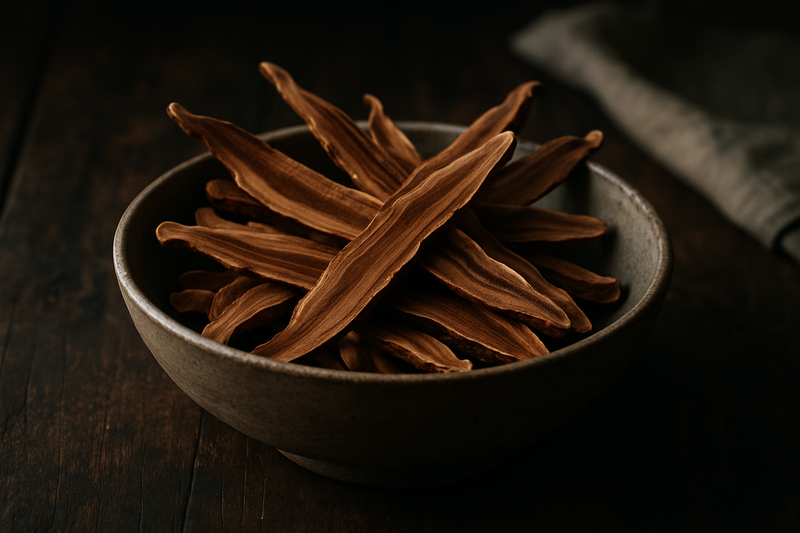
Reishi Mushroom · Photograph
Discover the real reishi mushroom benefits and side effects, backed by human clinical data. Learn how to use reishi tea and extracts for immune support, sleep, and stress — plus who should avoid it and what drug interactions to watch for.
Key Nutrients
% Daily Value based on 2,000 cal diet
Key active compounds in reishi mushroom
Reishi's effects come from a complex mixture of molecules that work differently in the body. Here are the main ones:
- β-1,3/1,6-D-glucans — Branched polysaccharides (chains of sugar molecules) in the fungal cell wall. They bind to receptors on immune cells, essentially "training" the immune system to respond more effectively. These are the primary compounds driving reishi's immune-support reputation.
- Ganoderic acids — A family of triterpenoids (steroid-like plant chemicals) unique to Ganoderma species. Research suggests they have anti-inflammatory, liver-protective, and potential cholesterol-lowering properties.
- Lucidenic acids — Closely related triterpenoids with antioxidant and anti-inflammatory activity in lab studies.
- Ganoderma lucidum polysaccharides (GLPS) — Water-soluble complex carbohydrates that enhance immune function, may influence cytokine (immune signalling molecule) production, and appear to support antioxidant defences.
- Fungal sterols and secondary metabolites — Minor compounds including phenolics and alkaloid-like molecules that may add synergistic antioxidant and anti-inflammatory effects.
Hot-water extracts are richest in polysaccharides and glucans; alcohol or "dual" (water + alcohol) extracts concentrate triterpenoids like ganoderic acids. This is why the extraction method matters when comparing products.
Prep and pairing ideas
Classic reishi decoction (tonic tea) This is the most traditional and practical way to use dried reishi at home.
- Use 3–6 g of dried reishi slices (available at Asian grocers and herbal suppliers).
- Add to 3–4 cups (700–950 ml) of cold water in a small saucepan.
- Bring to a boil, then reduce heat and simmer uncovered for 45–60 minutes until the liquid reduces by roughly half.
- Strain out the mushroom pieces. The resulting tea will be dark, earthy, and intensely bitter.
- Sip 1–2 cups throughout the day. Some people simmer the same slices a second time for a weaker second brew.
Pairing ideas that work well with reishi tea:
- Reishi + cinnamon + ginger — Both warming spices help temper reishi's bitterness and add their own anti-inflammatory compounds. Combine in the same decoction or add as a finishing touch. A small amount of raw honey can be stirred in after straining.
- Reishi + lion's mane mushroom — Another well-researched functional mushroom with preliminary evidence for cognitive support. Pairing them in a dual-mushroom powder blend or tea creates a complementary immune and neurological tonic. Look for products that standardise both.
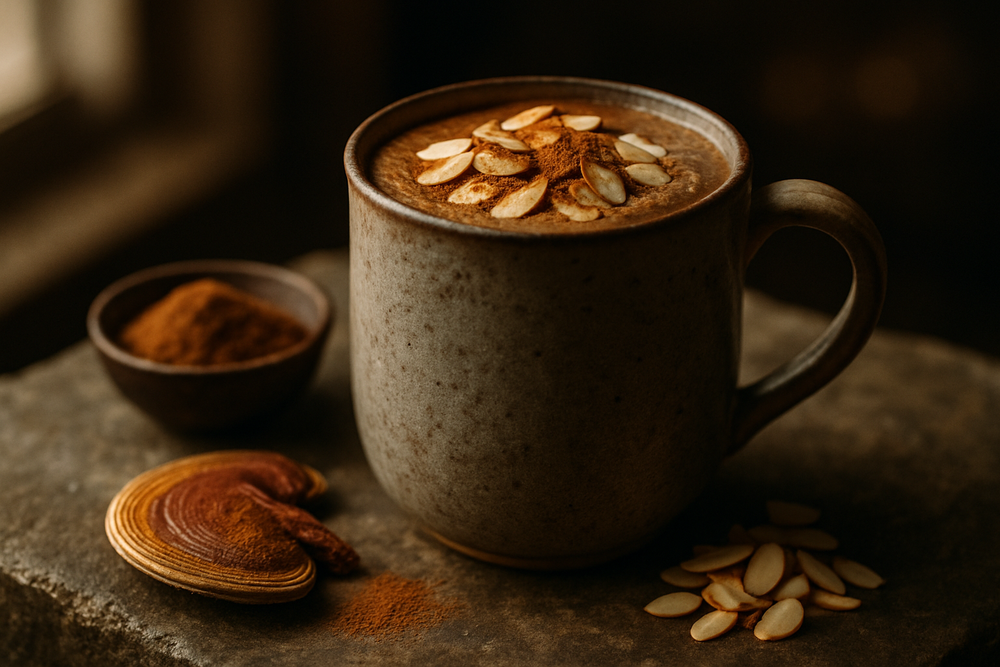
- Reishi powder + cacao — Stirring a teaspoon of reishi powder into warm cacao or a plant-based hot chocolate is one of the most palatable delivery methods. Cacao's own polyphenols (antioxidant plant compounds) complement reishi's antioxidant profile, and the rich flavour masks bitterness effectively.
Myths vs facts about reishi mushroom
Optional module: Myths vs facts
Myth: Reishi is a cancer cure. Fact: No credible clinical evidence shows reishi cures or prevents cancer. It has been studied as an adjunct to conventional therapy, where some trials show improved immune response and quality of life — not remission or survival extension on its own. Always continue evidence-based oncology care.
Myth: More reishi = more benefit. Spore products are the strongest and best. Fact: Spore-based products are the most concentrated form but also carry the highest documented risk of bleeding complications and immune dysregulation based on case reports. Standardised fruiting body extracts have the most human trial support, and "more" is not always better — very high doses increase side effect risk without proven additional benefit.
Myth: Reishi is completely safe because it's natural. Fact: Natural does not mean risk-free. Reishi has meaningful interactions with blood thinners, diabetes medications, and immunosuppressants. Rare liver toxicity cases have been reported. "Natural" is a description of origin, not a safety guarantee.
Bottom line
Reishi mushroom is one of the better-studied functional mushrooms in human clinical research, and it earns its reputation in a few specific areas: immune modulation, fatigue reduction, and quality-of-life support — especially as a complement to conventional cancer care. The evidence for hard outcomes like preventing cardiovascular disease, reversing diabetes, or extending lifespan is thin and inconsistent.
It is not a daily food in the conventional sense. It is a medicinal botanical used in small, deliberate doses — most often as a simmered tea or standardised extract. The safety profile is reasonably good for short-term use in healthy adults, but the blood-thinning interaction is real and clinically important, meaning anyone on anticoagulants, antiplatelet drugs, or heading into surgery needs to discuss reishi with their doctor before starting.
If you are curious about reishi for immune resilience, stress, or fatigue support, a standardised hot-water extract or a traditional decoction is a sensible, evidence-grounded starting point — taken at modest doses, with food, and in conversation with a healthcare provider if you have any ongoing health conditions.
Looking to match reishi with other evidence-informed ingredients for a specific health goal? Browse our goals section for curated combinations.
How Reishi Mushroom Compares
| Compared with | What's different |
|---|---|
| Reishi Mushroom vs. Shiitake Mushroom | Woody and bitter, typically simmered as tea rather than eaten; contains ganoderic acids. |
| Reishi Mushroom vs. Oyster Mushroom | Soft and culinary, used for cooking; reishi is cork-like and used exclusively as a supplement or tea. |
| Reishi Mushroom vs. Lion's Mane Mushroom | Focuses on immune and sleep support; lion's mane is primarily used for cognitive and nerve health. |
Health Benefits
Things to Know
Blood thinning risk — the most critical concern.: Reishi can slow blood clotting. This is a meaningful interaction, not a theoretical one. People on anticoagulants (blood thinners) such as warfarin, heparin, or direct oral anticoagulants (e.g., apixaban, rivaroxaban) face a real increased bleeding risk. The same applies to antiplatelet drugs including aspirin, clopidogrel, and many NSAIDs (non-steroidal anti-inflammatory drugs like ibuprofen).
Stop before surgery.: Most authoritative sources recommend discontinuing reishi at least 1–2 weeks before any surgery or invasive procedure to reduce bleeding risk.
Diabetes medications.: Reishi may modestly lower blood glucose. If you take insulin or oral hypoglycemic agents, it could increase the risk of hypoglycemia (dangerously low blood sugar). Monitor closely and inform your healthcare provider.
Blood pressure medications.: Reishi may have mild blood pressure–lowering effects. Combined with antihypertensive drugs (ACE inhibitors, ARBs, beta-blockers, diuretics), this could cause an additive drop in blood pressure.
Immunosuppressive therapy.: Reishi's immune-stimulating properties could theoretically counteract immunosuppressant drugs used after organ transplants or for autoimmune disease (e.g., corticosteroids, calcineurin inhibitors). This combination requires medical supervision.
Autoimmune conditions.: Because reishi modulates immune function, people with lupus, rheumatoid arthritis, multiple sclerosis, or similar conditions should discuss use with a specialist.
Liver conditions.: Rare case reports link reishi products (especially high-dose or spore-based forms) to liver enzyme elevations. Use with caution if you have existing liver disease or a history of unexplained liver injury.
Pregnancy and breastfeeding.: Safety data are insufficient. Most authoritative references advise avoiding supplemental reishi during pregnancy and while breastfeeding.
Children and adolescents.: Limited paediatric research; not established as safe or effective in younger populations.
Common mild side effects: include dry mouth, mild digestive upset, skin rash, or dizziness, typically at higher doses or with spore-based products.
Prep Ideas
- — Use 3–6 g of dried reishi slices (available at Asian grocers and herbal suppliers).
- — Add to 3–4 cups (700–950 ml) of cold water in a small saucepan.
- — Bring to a boil, then reduce heat and simmer uncovered for 45–60 minutes until the liquid reduces by roughly half.
- — Strain out the mushroom pieces. The resulting tea will be dark, earthy, and intensely bitter.
- — Sip 1–2 cups throughout the day. Some people simmer the same slices a second time for a weaker second brew.
- — Reishi + cinnamon + ginger — Both warming spices help temper reishi's bitterness and add their own anti-inflammatory compounds. Combine in the same decoction or add as a finishing touch. A small amount of raw honey can be stirred in after straining.
- — Reishi + lion's mane mushroom — Another well-researched functional mushroom with preliminary evidence for cognitive support. Pairing them in a dual-mushroom powder blend or tea creates a complementary immune and neurological tonic. Look for products that standardise both.
- — Reishi powder + cacao — Stirring a teaspoon of reishi powder into warm cacao or a plant-based hot chocolate is one of the most palatable delivery methods. Cacao's own polyphenols (antioxidant plant compounds) complement reishi's antioxidant profile, and the rich flavour masks bitterness effectively.
Glossary
Shop This Ingredient
Stock your pantry with quality reishi mushroom.
Buy on AmazonAs an Amazon Associate, Plantopedia earns from qualifying purchases. This costs you nothing extra and helps us keep the encyclopedia free.
Frequently Asked Questions
Immune support and cancer adjunct care This is where the strongest human evidence sits. Multiple RCTs and controlled studies show that reishi extracts can enhance NK cell activity (natural killer cells are a front-line immune defence that can attack abnormal cells), improve lymphocyte (white blood cell) function, and alter cytokine profiles in healthy volunteers and cancer patients. A review of five RCTs involving 373 cancer patients found that adding reishi to conventional cancer therapy (chemotherapy or radiotherapy) increased tumor regression rates and improved quality of life scores — though notably, no survival benefit was demonstrated. Memorial Sloan Kettering Cancer Center also reports small trials in which reishi raised plasma antioxidant capacity and enhanced immune responses during cancer treatment. Important caveat: Reishi is adjunctive — it should never replace standard oncologic care. Study heterogeneity, small sample sizes, and highly variable preparations make it difficult to draw firm conclusions. Fatigue, stress, and sleep quality Several trials using standardized reishi extracts at doses between about 1.4 g and 3 g per day for 4–8 weeks have reported significant reductions in fatigue and anxiety in people with neurasthenia (a condition characterised by persistent physical and mental exhaustion), cancer-related fatigue, and fibromyalgia. Improvements in sleep quality have also been documented in some trials. These effects are often framed through the lens of reishi's adaptogen status — a traditional category describing substances thought to help the body resist physical and psychological stress. The mechanism may involve the HPA axis (the hypothalamic–pituitary–adrenal axis, your body's central stress-response system), but direct hormonal endpoints like cortisol have rarely been measured in human trials. For now, the evidence supports reishi for subjective fatigue relief; it does not yet establish it as a proven hormone-balancing therapy. Heart and circulation Small clinical studies show modest improvements in cholesterol and triglyceride levels in people with type 2 diabetes or metabolic abnormalities, with some reductions in total cholesterol, LDL cholesterol (often called "bad" cholesterol), and blood fats. Ganoderic acids are thought to influence how the liver processes cholesterol. However, the MSD Manual (a major clinical reference for healthcare professionals) concludes that evidence for reishi in hyperlipidemia (high blood fat levels) and cardiovascular disease remains insufficient. Memorial Sloan Kettering echoes this, noting that RCTs do not support a meaningful effect on overall cardiovascular risk in people with type 2 diabetes. Treat any cardiometabolic benefit as a possible bonus, not a primary reason to take reishi. Digestive health and colorectal support One notable randomized clinical study found that a water-soluble reishi extract at 1.5 g per day for 12 months suppressed the development of colorectal adenomas (pre-cancerous polyps in the colon) in high-risk patients. This is a genuinely interesting finding, though it needs replication in larger trials before it changes practice. Traditional use also includes liver support, and small trials suggest improvements in liver enzyme profiles in some conditions — but results are often confounded by multi-herb formulas, making it hard to credit reishi alone. Blood sugar and metabolism Several small trials using a standardized reishi polysaccharide extract called Ganopoly (at 5.4 g per day in divided doses over 12 weeks) reported modest reductions in HbA1c (a 3-month average blood sugar marker) and fasting blood glucose in people with type 2 diabetes. Other RCTs have shown little or no effect. The evidence is genuinely mixed, and no major clinical guideline recommends reishi as a diabetes management tool. If you use insulin or oral diabetes medications, this matters for safety as much as benefit — see the cautions section below. Inflammation and oxidative stress Small studies in healthy adults and people with chronic conditions show that reishi supplementation can raise plasma antioxidant capacity (the blood's measured ability to neutralise damaging free radical molecules). Polysaccharides and triterpenoids from reishi inhibit NF-κB signalling (a key molecular switch that turns on inflammatory genes) in experimental models. In human terms, this may translate to reduced fatigue and improved subjective wellbeing rather than measurable changes in inflammatory blood markers. Think of the anti-inflammatory evidence as supportive and mechanistically plausible, not clinically proven for specific inflammatory diseases.
The answer depends on what you are trying to support and how you prefer to consume it. Here is a plain-language breakdown: Dried fruiting body slices (for traditional decoction/tea) The most traditional form. You simmer woody reishi slices for 20–60 minutes — or longer — in water to release water-soluble polysaccharides and glucans. The taste is intensely bitter and earthy. This is the closest to how reishi has been used historically, and it delivers a real dose of the immune-supporting compounds. See the prep section below for a basic method. Whole mushroom powder (capsules or loose) Ground dried reishi in capsule form. Contains the full spectrum of compounds but at lower concentration per gram than an extract. Clinical trials typically use 1.5–9 g per day in 2–3 divided doses. Convenient but you need more grams per dose than with an extract. Standardised hot-water extract (e.g., Ganopoly) The form used in most human trials. Concentrated in polysaccharides and glucans, with typical clinical doses of 1.5–5.4 g per day. Look for products that state polysaccharide percentage on the label (often 20–40%). This is the form with the most human research behind it. Dual extract (water + alcohol) Concentrates both polysaccharides (from the water phase) and triterpenoids like ganoderic acids (from the alcohol phase). Fewer human trials, but considered by many herbalists to be the most complete extract. Quality varies widely between brands. Spore powder and spore oil Highly concentrated preparations made from cracked reishi spores. Marketed aggressively for immune and longevity benefits, but case reports and expert reviewers flag higher risks of bleeding and immune dysregulation — particularly for people on anticoagulants or with autoimmune conditions. Use with extra caution, if at all, without professional guidance. The bottom line on form: For immune support and fatigue, a hot-water extract standardised for polysaccharide content is the best-evidenced choice. If you prefer a ritual and enjoy herbal teas, a traditional decoction from dried slices is a time-honoured alternative.
There is no single universal dose because it varies by form, preparation, and what you are trying to support. Here is what human clinical trials most commonly used: Whole mushroom powder: 1.5–9 g per day, typically split into 2–3 doses and taken with food. Hot-water extract (standardised): 1.5–5.4 g per day. The Ganopoly trials used 1.8 g three times daily (5.4 g total) for metabolic outcomes over 8–12 weeks. Water-soluble extract for colorectal adenoma prevention: 1.5 g per day for 12 months in the notable clinical trial. Fatigue and stress trials: Doses between 1.44 g and 3 g per day for 4–8 weeks. Start low and go slow. If you are new to reishi, beginning with 1–1.5 g per day of a standardised extract (or the equivalent in tea) for the first couple of weeks allows you to assess tolerance before increasing. Timing: Most people take reishi with food to reduce the chance of digestive upset. Some prefer evening dosing given its association with sleep and relaxation, though there is no strong evidence that timing dramatically changes efficacy. Duration: Most human trials run for 4–16 weeks. Data beyond 12 months is limited. Periodic breaks (e.g., 5 days on, 2 days off, or taking a 1-month break every 3 months) are a common traditional practice, though not formally validated in trials. A practical note on potency: The extract-to-mushroom ratio matters. A "10:1 extract" label means it took 10 g of dried mushroom to produce 1 g of extract — so 1 g of that extract is roughly equivalent to 10 g of whole mushroom powder. Always check whether a product's dosage is stated as raw powder or extract equivalent.
Optional module: Who benefits most The chronically fatigued professional or carer Research suggests reishi extracts can meaningfully reduce subjective fatigue, particularly in people dealing with persistent physical and mental exhaustion. May also support sleep quality and reduce anxiety symptoms based on trial data in neurasthenia and fibromyalgia populations. A convenient extract capsule or an evening decoction tea fits naturally into a stress-management routine alongside sleep hygiene and dietary changes. The person seeking complementary immune support during or after cancer treatment Multiple controlled trials show reishi can enhance NK cell activity and immune parameters when used alongside conventional oncology care. May improve quality of life scores and reduce treatment-related fatigue in some cancer patients. Must be coordinated with the oncology team — interactions with chemotherapy are complex and individual, and reishi should never substitute for medical treatment.
Quick Answers
Common questions, answered in a line.
Reishi mushrooms contain β-1,3/1,6-D-glucans and ganoderic acids that help the body. These compounds work by training immune cells to respond more effectively and providing anti-inflammatory and antioxidant support.
You can make reishi tea by simmering 3–6 grams of dried mushroom slices in water for 45–60 minutes. The resulting decoction is dark and bitter, and it is often paired with ginger, cinnamon, or honey to improve the flavor.
Reishi mushroom is not a cure for cancer, and there is no credible clinical evidence that it can prevent or treat the disease on its own. It is typically studied as an adjunct therapy to help improve immune response and quality of life during conventional cancer treatments.
Reishi mushroom should be avoided by people taking blood thinners, diabetes medications, or immunosuppressants due to potential drug interactions. It is also not recommended for pregnant or breastfeeding women, children, or those scheduled for surgery within two weeks.
Reishi mushroom can increase the risk of bleeding because it may slow blood clotting. This interaction is clinically significant for anyone taking anticoagulants like warfarin or antiplatelet drugs like aspirin and ibuprofen.
While reishi is generally safe for short-term use, it can cause dry mouth, digestive upset, skin rash, or dizziness. Rare but serious cases of liver toxicity have also been reported, particularly with high doses or spore-based products.
Pairing reishi powder with warm cacao or hot chocolate is an effective way to mask its intense bitterness. Cacao's own antioxidant polyphenols complement the mushroom's properties while making it much more palatable.
For Readers in the USA
Local context — sourcing, seasonality, and regional notes.
Wild Reishi (Ganoderma tsugae and G. curtisii) grows across the Eastern United States and Pacific Northwest, typically appearing from May through October. While foraged varieties are popular, most Reishi found in US supplements is commercially cultivated in controlled indoor environments to ensure year-round availability and purity.
In the US, you can find dried Reishi or extracts at major health retailers like Whole Foods Market and Sprouts, or at local Asian grocery stores. Many Americans also purchase Reishi products through specialized online herbal apothecaries and domestic mushroom farms that ship nationwide.
The FDA regulates Reishi as a dietary supplement rather than a drug, meaning it is not "FDA-approved" to treat or cure any specific disease. US consumers should look for the USDA Organic seal and third-party testing (like USP or NSF) to ensure the product is free from heavy metals and contaminants.
While Ganoderma lucidum is the primary species sold, the North American "Hemlock Varnish Shelf" (G. tsugae) is a common regional relative used similarly in US folk medicine. These native varieties are frequently sold by local growers at farmers markets in the Northeast and Appalachian regions.
AI Clinical Review
- Clearly explains that reishi’s best‑supported benefits are immune modulation (e.g., increased NK cell activity) and fatigue/quality‑of‑life support, especially as an adjunct in oncology—not a replacement for treatment.
- Accurately distinguishes extract types: hot‑water extracts concentrate beta‑glucans, while dual (water+alcohol) extracts add triterpenoids; this aligns with how most human studies were conducted.
- Takes a balanced view of metabolic and cardiovascular claims, noting mixed results and the lack of strong guidance for diabetes or lipid management.
- Provides practical, evidence‑anchored dosing ranges and sensible preparation advice (including the decoction method) with a “start low, go slow” approach.
- Cancer outcomes: small, heterogeneous RCTs show immune and symptom benefits but no survival advantage; standardization of products and dosing remains a limiting factor.
- Colorectal adenoma finding is promising but based on limited data; it needs replication before influencing screening or prevention practices.
- Stress, sleep, and “adaptogen” effects (adaptogen = a substance thought to help the body manage stress) are supported mainly by subjective outcomes; objective biomarkers and longer follow‑up are sparse.
- Bleeding risk is the key safety issue: reishi may thin the blood. People on anticoagulants/antiplatelets or planning procedures should avoid it or seek medical guidance; spore products may carry higher risk.
- Possible interactions include glucose‑lowering and blood‑pressure‑lowering effects; those on diabetes or antihypertensive medications, and anyone on immunosuppressants or with autoimmune disease, should check with a clinician.
- Form matters: standardized hot‑water fruiting‑body extracts (often 20–40% polysaccharides) have the most human data; be cautious with spore powders/oils. Verify extract ratios (e.g., 10:1) and quality testing.
- Duration: most trials last 4–16 weeks; long‑term safety is limited—particularly for pregnancy, breastfeeding, children, and those with liver disease history.
May thin blood; use caution with anticoagulants and before surgery.
References
- USDA FoodData Central – Mushrooms nutritional database (fdc.nal.usda.gov)
- MSD Manual Professional – Reishi monograph (safety, interactions, clinical evidence summary) (msdmanuals.com)
- Memorial Sloan Kettering Cancer Center – Reishi mushroom integrative medicine review (mskcc.org)
- WebMD – Reishi mushroom uses, side effects, and dosage (webmd.com)
- MedlinePlus Supplements – Reishi mushroom safety and drug interactions (e-lactancia.org)
- Sterling Medical Center – Functional mushroom supplement safety and interaction guide (sterlingmedicalcenter.org)
- PubMed – Evaluation of immune modulation by β-1,3;1,6 D-glucan (human trial) (pubmed.ncbi.nlm.nih.gov)
- Wiley/Phytotherapy Research – Ganoderma lucidum: a comprehensive and critical review (onlinelibrary.wiley.com)
- Drugs.com – Reishi mushroom: uses, benefits, and dosage clinical summary (drugs.com)
- Human Clinical Trials on Medicinal Mushrooms (compiled review of RCTs) (frythriveordie.com)
Know Your Numbers
Eating healthy is a start. Now get to know your biomarkers.
Food changes bloodwork — inflammation, lipids, blood sugar and nutrient status all respond to what you eat. 59 markers from $59.
- Results in 7–10 days at 2,000+ Quest sites
- Licensed provider reviews every result
- One flat price, no membership, HSA/FSA eligible
Educational information only, not medical advice. Panels are ordered and reviewed through our licensed partner; Plantopedia may earn a commission.