Rooibos — health benefits and uses
Traditional South African tea used for calm and antioxidant support.
The Short Answer
Rooibos is a caffeine-free herbal tea from South Africa rich in unique antioxidants like aspalathin, which may support heart health and blood sugar regulation.
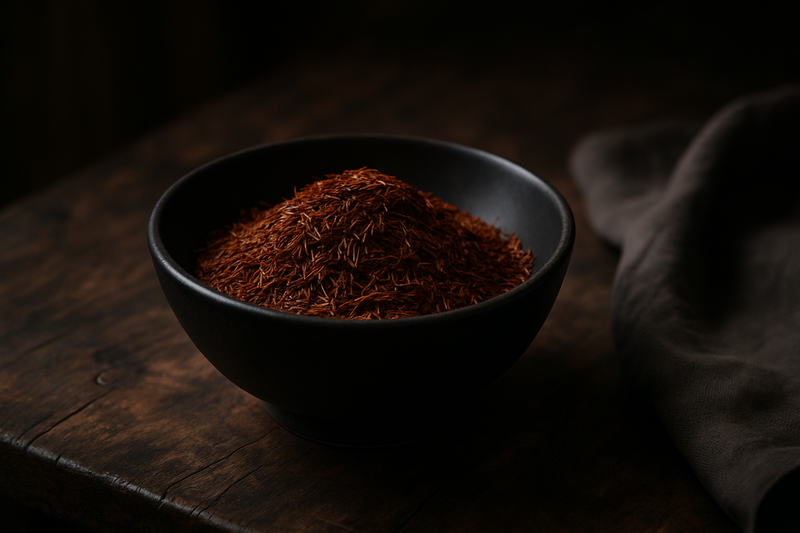
Rooibos · Photograph
Discover the real rooibos tea health benefits and side effects — from heart health and cholesterol to blood sugar, sleep, and daily safety. Backed by human trials and written in plain English.
Key Nutrients
% Daily Value based on 2,000 cal diet
Key active compounds in rooibos
Rooibos gets its health reputation primarily from its polyphenol profile, which is quite different from green or black tea.
- Aspalathin — A dihydrochalcone (a type of flavonoid, or plant pigment with antioxidant activity) found almost exclusively in rooibos. Present in much higher concentrations in green (unfermented) rooibos. May influence glucose (blood sugar) metabolism and protect cells from oxidative damage.
- Nothofagin — A companion dihydrochalcone that contributes to rooibos's overall antioxidant punch.
- Orientin and vitexin — C-glycosyl flavones (flavonoids attached to a sugar molecule) that support the tea's antioxidant and anti-inflammatory profile.
- Quercetin derivatives, luteolin, and rutin — Flavonols and flavones also found in many fruits and vegetables; amounts vary depending on fermentation and brewing time.
- Total polyphenols — After drinking rooibos, measurable levels of polyphenols appear in the bloodstream, confirming absorption. This pool of compounds is associated with improved antioxidant capacity and reduced oxidative stress markers.
Buying guide: choosing the best rooibos tea
Since rooibos varies quite a bit in quality and polyphenol content depending on source and processing, a little label-reading goes a long way.
- Loose-leaf vs tea bags: Loose-leaf rooibos generally contains larger pieces of leaf with a higher surface area of intact plant material, which can mean better flavor and polyphenol extraction. Tea bags are convenient and often perfectly fine — look for bags without bleach or plastic-sealed seams.
- Country of origin: True rooibos legally comes only from the Cederberg region of South Africa. "South African origin" on the label is a quality signal; blends or products that don't specify origin may include other plants.
- Red vs green on the label: Green rooibos tea bags and loose-leaf are increasingly available in health food stores and online. The packaging should specify "unfermented" or "green rooibos" — the color in the package will be more khaki-green than red-brown.
- Certified organic: South African rooibos farms are often small-scale and some are certified organic; organic certification can reduce pesticide exposure though rooibos is generally considered a low-pesticide crop.
- Avoid sweetened or flavored versions for health purposes: Many commercial rooibos blends add sugar, honey, or artificial flavors. Plain rooibos brewed at home gives you the polyphenols without added calories or sweeteners.
- Storage: Keep dried rooibos in an airtight container away from light and moisture. Unlike green tea, rooibos is quite shelf-stable and can last 1–2 years without significant flavor loss.
Prep and pairing ideas
Rooibos is one of the most versatile herbal teas in the kitchen — it holds up to milk, spices, and even cold preparations far better than most delicate green or white teas.
Classic hot brew: Steep 1 heaped teaspoon of loose rooibos (or 1 tea bag) in 240 ml of freshly boiled water (100°C/212°F) for 5–7 minutes. Unlike green tea, rooibos does not turn bitter with longer steeping, so you can let it go a bit longer if you want a stronger cup.
Rooibos latte: Brew a strong cup (8–10 minutes), then top with steamed oat milk or almond milk. A pinch of cinnamon and a scrape of vanilla bean make this a genuinely satisfying coffee alternative.
Iced rooibos: Brew a double-strength batch (2 bags per cup of water), allow to cool, then pour over ice. Add a slice of orange and a few mint leaves for a refreshing caffeine-free summer drink.
Common pairings:
- Rooibos + cinnamon + ginger: Cinnamon and ginger both have preliminary evidence for blood sugar support, making this trio a natural pairing. Warming and aromatic, it works particularly well as a post-dinner drink.
- Rooibos + turmeric + black pepper: Turmeric's curcumin and rooibos polyphenols are both studied for anti-inflammatory activity. Black pepper improves curcumin absorption. A "golden rooibos" latte is easy to make and feels genuinely nourishing.
- Rooibos + hibiscus: Hibiscus petals add tartness and a vivid color, plus their own flavonoid content. Research on hibiscus includes modest blood pressure support, complementing rooibos's cardioprotective signals. Delicious hot or iced.
Bottom line
Rooibos is a uniquely South African herbal tea with a genuinely interesting nutritional story. Its caffeine-free, low-tannin profile makes it one of the most accessible and gut-friendly teas available, while its signature polyphenols — especially aspalathin — give it a research profile that goes beyond simple hydration. Human evidence, though still building, supports modest benefits for cholesterol, antioxidant status, and possibly blood sugar. It is very well tolerated, pairs beautifully with other anti-inflammatory ingredients, and fits naturally into almost any dietary pattern.
Think of rooibos as a smart daily habit rather than a miracle remedy: a warm, comforting drink that happens to deliver real plant compounds with plausible health benefits, at essentially zero caloric cost.
Explore how rooibos fits your personal health goals at Plantopedia's goals hub.
How Rooibos Compares
| Compared with | What's different |
|---|---|
| Rooibos vs. Green Tea | Contains caffeine and L-theanine, whereas rooibos is naturally caffeine-free and low in tannins. |
| Rooibos vs. Honeybush Tea | A separate plant species with a distinct citrus-honey flavor and higher concentrations of pinitol. |
Health Benefits
Things to Know
Generally very safe.: Plain brewed rooibos at customary amounts (1–3 cups per day) is well tolerated in healthy adults with no serious adverse events recorded in published trials.
Liver caution at high doses.: Rare case reports have described temporary liver enzyme elevations associated with very high herbal tea intake. If you have existing liver disease, discuss high rooibos consumption with your doctor.
Blood sugar medications.: Emerging evidence that rooibos may lower blood glucose means there is a theoretical additive effect if you take insulin or oral hypoglycemic (blood-sugar-lowering) drugs. Monitor blood sugar carefully and inform your care team.
Iron-deficiency anemia.: Rooibos has far fewer tannins than black tea, so iron absorption interference is much lower. Still, if you have diagnosed iron-deficiency anemia, drink rooibos away from iron-rich meals rather than with them.
Pregnancy and breastfeeding.: Rooibos is widely consumed during pregnancy and is generally considered acceptable in moderate amounts (1–2 cups per day). Concentrated extracts or supplements lack robust safety data in pregnancy — stick to brewed tea and discuss with your midwife or OB.
Cardiometabolic medications.: Rooibos has modest effects on lipid profiles. No clinically significant drug interactions have been documented, but tell your prescriber if you drink it regularly and your medications are adjusted.
Anticoagulants.: No strong evidence of clotting effects, but as a general principle, inform your doctor of any major dietary changes if you take blood thinners.
Polypharmacy (taking multiple medications).: Formal interaction studies are scarce. If you take several prescription drugs, introduce rooibos gradually and mention it to your pharmacist.
Prep Ideas
- — Rooibos + cinnamon + ginger: Cinnamon and ginger both have preliminary evidence for blood sugar support, making this trio a natural pairing. Warming and aromatic, it works particularly well as a post-dinner drink.
- — Rooibos + turmeric + black pepper: Turmeric's curcumin and rooibos polyphenols are both studied for anti-inflammatory activity. Black pepper improves curcumin absorption. A "golden rooibos" latte is easy to make and feels genuinely nourishing.
- — Rooibos + hibiscus: Hibiscus petals add tartness and a vivid color, plus their own flavonoid content. Research on hibiscus includes modest blood pressure support, complementing rooibos's cardioprotective signals. Delicious hot or iced.
Shop This Ingredient
Stock your pantry with quality rooibos.
Buy on AmazonAs an Amazon Associate, Plantopedia earns from qualifying purchases. This costs you nothing extra and helps us keep the encyclopedia free.
Frequently Asked Questions
Heart health and cholesterol This is where the human evidence is strongest. A well-cited clinical trial published in the journal Phytomedicine found that adults at cardiovascular risk who drank rooibos daily showed significant improvements in LDL-cholesterol (the type linked to plaque buildup in arteries), HDL-cholesterol (the "helpful" type that carries cholesterol away from arteries), and markers of oxidative stress (cellular damage caused by unstable molecules called free radicals). Multiple systematic reviews have confirmed these findings across several small trials. The mechanism appears to involve rooibos polyphenols reducing oxidative damage to lipids (fats in the blood) and modulating pro-inflammatory signaling pathways. That said, the studies are short-term (weeks to a few months) and measure risk markers rather than hard outcomes like heart attacks. Rooibos can support a heart-healthy lifestyle; it is not a substitute for statins or other prescribed therapies. Digestive health and microbiome Rooibos contains dramatically lower levels of tannins (around 3–4%) than black tea (up to 11%) or green tea. Tannins are the astringent compounds that can irritate the gut lining, reduce iron absorption, and cause nausea in sensitive individuals. Because of this, many people who find black or green tea harsh on their stomach tolerate rooibos well. Direct human trials on rooibos and gut microbiome (the community of bacteria living in your intestines) are currently lacking. Most digestive claims rest on its low-tannin, zero-caffeine profile and traditional use rather than formal clinical endpoints. Still, as a hydrating, irritant-free beverage it is a reasonable choice for people with sensitive stomachs. Blood sugar and metabolism Emerging human data suggest rooibos may help lower fasting blood glucose (the level of sugar in your blood after an overnight fast) and improve related markers. Aspalathin is the likely driver — animal and cell studies show it can influence glucose transporter activity (the proteins that move sugar from the bloodstream into cells) and reduce oxidative stress in pancreatic beta cells (the cells that produce insulin). Human evidence is promising but limited to small, short-term trials measuring intermediate markers rather than long-term diabetes outcomes. If you take insulin or oral medications to lower blood sugar, see the cautions section below before significantly increasing your rooibos intake. Inflammation and recovery Several reviews report that drinking rooibos enhances systemic antioxidant status, improves glutathione redox balance (glutathione is the body's master internal antioxidant), and reduces markers of oxidative stress. Oxidative stress and chronic inflammation are tightly linked, so these findings suggest a potential anti-inflammatory role. Interestingly, one study found rooibos intake reduced exercise-related oxidative stress markers, hinting at a possible role in post-workout recovery. Most anti-inflammatory evidence, however, comes from biomarkers and animal models rather than large clinical trials focused on specific inflammatory diseases. Sleep and stress support This is indirect but practical. Because rooibos is caffeine-free, switching from coffee or black tea to rooibos in the afternoon or evening eliminates a known cause of sleep disruption without sacrificing the comfort of a warm drink. There are no clinical trials measuring sleep quality directly after rooibos consumption, but the absence of caffeine is itself the active benefit here for people who are sensitive to stimulants.
The difference comes down to processing. Red rooibos (fermented) is the traditional form. The leaves are oxidized — similar in concept to how green tea becomes black tea — turning them red-brown and developing the sweeter, slightly vanilla-like flavor most people recognize. Fermentation reduces aspalathin levels significantly. Green rooibos (unfermented) skips oxidation, preserving higher concentrations of aspalathin and nothofagin. Lab and animal studies often show stronger antioxidant activity for green rooibos, but fewer human clinical trials have used this form specifically. Practical takeaway: If maximizing aspalathin intake is your goal, green rooibos is the better choice. If you prefer taste and wider availability, traditional red rooibos still delivers meaningful polyphenol benefits. Both are caffeine-free.
No official recommended daily intake exists for rooibos. Here is what the available evidence suggests: Human trials have typically used 1–6 cups (200–240 ml each) per day over periods of 6 weeks to a few months. Traditional use in South Africa commonly involves 2–4 cups per day. A practical starting range for most adults is 1–3 cups per day. This is enough to deliver meaningful polyphenol intake without any documented risk. If you are new to rooibos, starting with 1 cup per day and building up is sensible — not because side effects are common, but because it is always a good idea to introduce any new food or drink gradually and observe your own response. There is no evidence that a cup before bed is harmful; in fact, its caffeine-free nature makes it one of the few teas that is actively suitable for evening consumption. Higher amounts (more than 6–8 cups daily) are not well studied and the rare liver enzyme reports at very high herbal tea intakes suggest erring on the side of moderation.
Quick Answers
Common questions, answered in a line.
Rooibos is naturally caffeine-free and has a very low tannin profile, making it one of the most accessible and gut-friendly teas available. Unlike black or green teas, it does not contain stimulants and is unlikely to interfere with sleep or cause digestive bitterness.
You should steep one teaspoon of loose-leaf rooibos or one tea bag in boiling water for 5 to 7 minutes. Because rooibos does not turn bitter like green tea, you can safely steep it for 8 to 10 minutes if you prefer a stronger flavor or a more robust latte base.
Rooibos tea contains a unique flavonoid called aspalathin, along with nothofagin, orientin, and vitexin. These polyphenols act as antioxidants that may help protect cells from oxidative damage and support healthy blood sugar metabolism.
Rooibos is generally considered very safe for most people when consumed in customary amounts of 1 to 3 cups per day. However, individuals with liver disease or those taking blood sugar medications like insulin should consult a doctor due to potential additive effects or rare reports of liver enzyme elevations.
Yes, rooibos is widely consumed during pregnancy and is generally considered acceptable in moderate amounts of 1 to 2 cups per day. It is recommended to stick to brewed tea rather than concentrated extracts, as supplements lack robust safety data for pregnant or breastfeeding women.
Rooibos has a much lower tannin content than black tea, which means it has a significantly lower impact on iron absorption. Despite this benefit, people with diagnosed iron-deficiency anemia should still drink rooibos between meals rather than during them to be safe.
Authentic rooibos is grown exclusively in the Cederberg region of South Africa. When shopping, look for "South African origin" on the label and choose loose-leaf versions for better polyphenol extraction, or tea bags that are free of bleach and plastic.
For Readers in the USA
Local context — sourcing, seasonality, and regional notes.
You can find rooibos tea at major US retailers like Whole Foods, Trader Joe’s, Sprouts, and Kroger, as well as via online specialty tea importers. While most standard supermarkets carry red rooibos, specialty health food stores and high-end grocers are the best places to find green (unfermented) varieties.
While rooibos is native to South Africa, it is widely available year-round in the US as a dried product, with "New Season" harvests typically arriving at American specialty retailers in late spring. Because the plant is highly shelf-stable once processed, there is no significant seasonal difference in nutritional quality for US consumers.
USDA Organic certification on rooibos ensures the product was grown without synthetic pesticides and meets strict US federal standards for organic handling. While rooibos is naturally a low-pesticide crop, looking for the USDA seal provides an extra layer of verified safety for American shoppers concerned about chemical residues.
In the US, rooibos is frequently used as a caffeine-free base for "Red Espressos" or "Red Lattes" in urban coffee shops, often served with honey and cinnamon. It is also a popular ingredient in American-style herbal "chai" blends, replacing traditional black tea to create a kid-friendly, evening-safe alternative.
AI Clinical Review
- Rooibos is naturally caffeine‑free and low in tannins, which many people with sensitive stomachs or sleep concerns find easier to tolerate than black or green tea.
- Human studies show modest, short‑term improvements in lipid markers (LDL, HDL) and oxidative stress, aligning with the article’s framing of rooibos as supportive rather than medicinal.
- The unique polyphenol profile—especially aspalathin—plausibly links rooibos to antioxidant and potential glycemic benefits.
- Practical guidance on forms (red vs green), brewing, and a sensible daily range (about 1–3 cups) is consistent with available evidence and traditional use.
- Cardiovascular findings are based on small, short‑duration trials that track surrogate markers, not long‑term outcomes like heart attacks or strokes.
- Blood‑sugar effects are promising but preliminary; dose–response and durability of benefit remain unclear in larger, longer studies.
- Digestive/microbiome benefits and sleep improvements are largely inferred (low tannins, no caffeine) rather than proven in controlled human trials.
- Green rooibos contains more aspalathin in lab analyses, but superiority over red rooibos for clinical outcomes has not been demonstrated. “Detox” is not a clinical endpoint; benefits are better described as supporting antioxidant capacity.
- A practical intake for most adults is 1–3 cups per day; very high intakes (>6–8 cups daily) and concentrated extracts are not well studied. In pregnancy/breastfeeding, stick to brewed tea unless your clinician advises otherwise.
- If you use insulin or oral glucose‑lowering medication, monitor for additive effects and discuss any significant increase in intake with your care team.
- If you have liver disease or a history of abnormal liver enzymes, avoid very high volumes of any herbal tea and check in with your clinician before making rooibos a high‑quantity daily habit.
- For iron‑deficiency anemia, rooibos is less likely than black/green tea to hinder iron absorption, but it’s still wise to drink it away from iron‑rich meals or supplements. If you take blood thinners or multiple medications, mention regular rooibos use to your clinician; choose plain, unsweetened products, and select red vs green based on preference rather than assumed health superiority.
Generally very well tolerated.
References
- USDA FoodData Central — brewed rooibos herbal tea (nutrition data) (fdc.nal.usda.gov)
- Systematic review: health benefits of rooibos in humans (CPUT digital repository) (digitalknowledge.cput.ac.za)
- Peer-reviewed review: the health benefits of rooibos tea in humans (PubMed 38204815) (pubmed.ncbi.nlm.nih.gov)
- Human trial: rooibos effects on oxidative stress and lipid profile in adults at cardiovascular risk (PubMed 20833235) (pubmed.ncbi.nlm.nih.gov)
- Systematic review: rooibos tea and health outcomes — Beverages journal (MDPI) (researchsystem.canberra.edu.au)
- Review: rooibos and type 2 diabetes — South African herbal tisanes (PMC 6321617) (pmc.ncbi.nlm.nih.gov)
- Review: neuroprotective effects of rooibos herbal tea (PMC 11704843) (pmc.ncbi.nlm.nih.gov)
- Review: rooibos phenolic constituents as a dietary supplement (ScienceDirect) (sciencedirect.com)
- SciForschen Nutrition and Food Sciences — rooibos systematic review (NFTOA166) (sciforschenonline.org)
- WebMD health overview: rooibos tea benefits and safety (webmd.com)
Know Your Numbers
Eating healthy is a start. Now get to know your biomarkers.
Food changes bloodwork — inflammation, lipids, blood sugar and nutrient status all respond to what you eat. 59 markers from $59.
- Results in 7–10 days at 2,000+ Quest sites
- Licensed provider reviews every result
- One flat price, no membership, HSA/FSA eligible
Educational information only, not medical advice. Panels are ordered and reviewed through our licensed partner; Plantopedia may earn a commission.