Soursop — health benefits and uses
Widely used in Caribbean and tropical folk medicine as a soothing tea.
The Short Answer
Soursop is a nutrient-dense tropical fruit providing 46 mg of vitamin C and 7.4 g of fiber per cup, though its seeds and leaves should be avoided due to neurotoxin concerns. The pulp is best enjoyed in smoothies or juices once all seeds are removed.
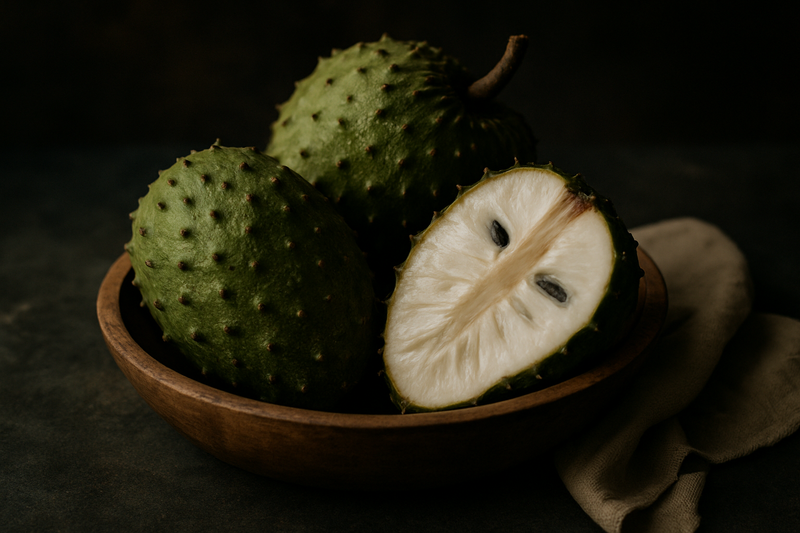
Soursop · Photograph
Discover the real soursop benefits and side effects — from vitamin C and fiber to the neurotoxin warning about seeds and leaf tea. Evidence-based, layperson-friendly guide with nutrition facts, safe prep tips, and smoothie ideas.
Key Nutrients
% Daily Value based on 2,000 cal diet
Key active compounds
Soursop's health-relevant chemistry goes beyond basic vitamins. Here are the main players:
- Annonacin — The most prominent annonaceous acetogenin (see Glossary) in soursop. Found in highest concentrations in seeds and leaves. Studied for cytotoxic (cell-killing) effects in laboratory settings, but also linked to neurotoxicity (nerve damage) and atypical parkinsonism with chronic heavy exposure.
- Annonaceous acetogenins (broader group) — A family of compounds unique to the Annonaceae plant family. They appear to disrupt mitochondrial function (the energy-producing parts of cells). Active area of preclinical research, but human safety and efficacy data are limited.
- Flavonoids — Polyphenolic plant compounds (see Glossary) that act as antioxidants in laboratory models. Common across many fruits and likely contribute to the general benefits of a fruit-rich diet.
- Phenolic acids and polyphenols — A broader group of antioxidant plant chemicals detected in soursop pulp and leaves. May modulate inflammatory pathways in cell studies, though soursop-specific human data are sparse.
- Vitamin C (ascorbic acid) — A water-soluble vitamin that functions as an antioxidant and supports collagen production and immune defenses. Well-studied in humans; soursop is a genuinely solid source.
Prep and pairing ideas
Soursop agua fresca (the easiest entry point) Scoop 1 cup of seeded pulp into a blender. Add 2 cups of cold water and a squeeze of lime. Blend 30 seconds, strain through a fine-mesh sieve or cheesecloth, discard seeds and fiber, sweeten lightly if desired, and serve over ice. This classic drink is refreshing, seed-free, and easy to make with fresh or frozen pulp.
Three practical pairings and why they work:
- Soursop + frozen mango + spinach (green smoothie) — Mango adds tropical sweetness that complements soursop's tart complexity, while spinach layers in iron and folate without overwhelming the flavor. Together, the vitamin C from soursop actually helps the body absorb the non-heme (plant-based) iron from spinach more effectively — a genuinely useful nutritional pairing.
- Soursop + coconut water + lime — Coconut water adds electrolytes (potassium, magnesium) that complement soursop's own mineral content. Lime juice brightens the flavor and adds a little extra vitamin C. This is a natural rehydration drink that sidesteps added sugar.
- Soursop + banana + oat milk (breakfast smoothie) — Banana's creaminess smooths out soursop's tartness and adds resistant starch, a type of fiber that feeds beneficial gut bacteria. Oat milk contributes a mild beta-glucan fiber, making this one of the more fiber-rich fruit smoothie combinations you can put together.
Bottom line
Soursop is a genuinely nutrient-dense tropical fruit — a real standout for vitamin C, dietary fiber, potassium, and several B vitamins. Used as a whole food — pulp blended into smoothies or agua fresca with every seed removed — it fits naturally into a plant-forward, varied diet and may support digestive regularity, immune function, and heart health as part of that dietary pattern.
The safety picture is more nuanced than most online coverage suggests. The seeds contain toxins. The leaves, consumed as tea over long periods, have been epidemiologically linked to a Parkinson's-like neurological condition. And concentrated "graviola" supplements are unproven in human trials and potentially risky. Enjoying the fresh pulp in moderation is a reasonable food choice; treating soursop as a medicinal supplement — especially for serious conditions like cancer — is not supported by current human evidence.
If soursop is new to you, start with half a cup of strained fresh pulp in an agua fresca. Remove the seeds. Enjoy the flavor. That's where the real value is.
Explore more tropical and antioxidant-rich ingredients at Plantopedia Goals to find produce that fits your health priorities.
How Soursop Compares
| Compared with | What's different |
|---|---|
| Soursop vs. Cherimoya | Soursop is much more acidic and tart, whereas cherimoya is known for a sweet, custardy flavor. |
| Soursop vs. Sugar Apple (Sweetsop) | Soursop has a prickly, spiked green skin, while sugar apple has a knobby, segmented exterior. |
Health Benefits
Things to Know
Seeds are toxic — no exceptions.: Every seed must be removed and discarded before eating, blending, or straining soursop. Do not blend whole soursop without removing seeds first.
Limit or avoid leaf tea and concentrated supplements: , especially with regular use. The neurotoxicity risk from chronic annonacin exposure is real, even if the absolute risk from occasional moderate fruit consumption appears low.
Kidney disease / potassium restriction.: One cup provides 626 mg of potassium. If your healthcare provider has placed you on a potassium-restricted diet, speak with them before adding soursop regularly.
Diabetes or blood sugar medications.: Soursop is relatively high in natural sugars. If you take insulin or oral hypoglycemic agents, monitor your blood sugar and avoid concentrated extracts, which may compound blood-sugar-lowering effects unpredictably.
Low blood pressure / antihypertensive medications.: Some preparations may have additive blood-pressure-lowering effects. Monitor for dizziness.
Neurological conditions (Parkinson's, seizure disorders).: Individuals with pre-existing neurological conditions may be more vulnerable to annonacin's effects. Discuss soursop intake — especially teas or supplements — with a neurologist.
Pregnancy and breastfeeding.: Safety data on soursop leaf tea and supplements in pregnancy are lacking. Stick to modest amounts of fresh pulp and avoid therapeutic preparations.
Chemotherapy or immunotherapy.: Do not use graviola supplements as a complementary cancer treatment without discussing it with your oncologist. They may interfere with conventional treatment or delay appropriate care.
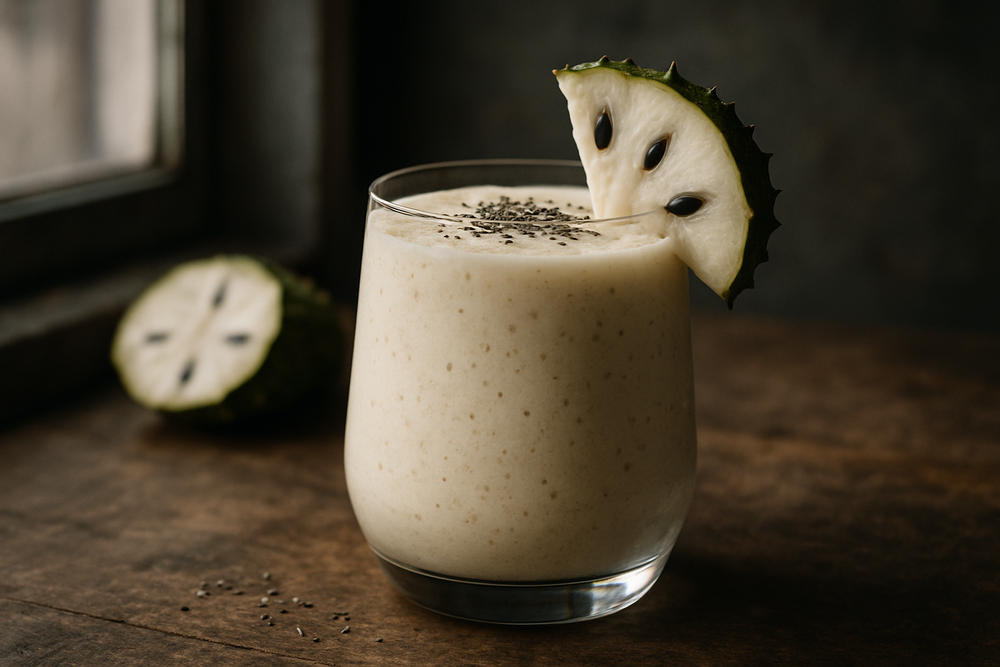
Prep Ideas
- — **Soursop + frozen mango + spinach (green smoothie)** — Mango adds tropical sweetness that complements soursop's tart complexity, while spinach layers in iron and folate without overwhelming the flavor. Together, the vitamin C from soursop actually helps the body absorb the non-heme (plant-based) iron from spinach more effectively — a genuinely useful nutritional pairing.
- — **Soursop + coconut water + lime** — Coconut water adds electrolytes (potassium, magnesium) that complement soursop's own mineral content. Lime juice brightens the flavor and adds a little extra vitamin C. This is a natural rehydration drink that sidesteps added sugar.
- — **Soursop + banana + oat milk (breakfast smoothie)** — Banana's creaminess smooths out soursop's tartness and adds resistant starch, a type of fiber that feeds beneficial gut bacteria. Oat milk contributes a mild beta-glucan fiber, making this one of the more fiber-rich fruit smoothie combinations you can put together.
Glossary
Shop This Ingredient
Stock your pantry with quality soursop.
Buy on AmazonAs an Amazon Associate, Plantopedia earns from qualifying purchases. This costs you nothing extra and helps us keep the encyclopedia free.
Frequently Asked Questions
Most of soursop's benefits align with what we know about fruit-rich diets broadly, supported by its specific nutrient profile. Direct human clinical trials on soursop are rare; the evidence below reflects what the research actually supports. Heart and circulation Soursop provides two nutrients with solid human-trial backing for cardiovascular health: potassium and dietary fiber. Potassium helps regulate fluid balance and blood pressure, and higher dietary fiber intake is consistently linked to healthier cholesterol levels and reduced cardiovascular risk in population studies. One cup of soursop contributes 626 mg of potassium (about 13% of your daily value) and 7.4 g of fiber. No randomized controlled trial has directly tested soursop's effect on blood pressure or lipid levels specifically, so benefits are inferred from nutrient composition and the broader evidence base for fruits and fiber. Digestive health and the gut microbiome Fiber is where soursop arguably has its clearest dietary benefit. At 7.4 g per cup — about 26% of the daily recommended intake — it contributes to stool bulk and regularity, helping food move through the digestive tract at a healthy pace. Fiber also acts as a prebiotic (food for beneficial gut bacteria), supporting a diverse gut microbiome. Again, soursop-specific gut trials are lacking, but the fiber content is well-documented and fits comfortably within the strong broader evidence that fruit and fiber intake supports digestive function. Blood sugar and metabolism This is where caution is warranted. Soursop pulp contains roughly 30 g of natural sugars per cup — which is relatively high for a fruit. Its fiber content may help slow glucose absorption and blunt blood sugar spikes compared with juice, but there is very little quality human clinical data on soursop's specific effect on fasting glucose, HbA1c (a longer-term marker of blood sugar control), or insulin sensitivity. Animal and cell studies using leaf extracts have shown some promising signals, but these cannot be directly applied to eating the fresh fruit. People managing diabetes or prediabetes should treat soursop as a moderate-portion fruit and monitor their individual response. Inflammation and recovery Soursop's vitamin C and polyphenol content support antioxidant activity in laboratory studies. Antioxidants help neutralize free radicals (see Glossary) — unstable molecules that can damage cells and contribute to chronic inflammation. However, evidence that eating soursop meaningfully reduces inflammatory markers like CRP (C-reactive protein) in living humans has not been established. Positioning soursop as one antioxidant-rich fruit within a plant-forward diet is reasonable; positioning it as an anti-inflammatory remedy is not yet supported by human data. Immune support and vitamin C Where soursop has the most direct evidence-to-benefit connection is immune support — not through any unique soursop magic, but simply because it's a strong source of vitamin C. Roughly 46 mg per cup provides about half of the daily recommended intake. Vitamin C has decades of human research behind its role in supporting immune cell function, skin barrier integrity, and collagen synthesis. Soursop is a tasty, practical way to contribute to that daily target.
Fresh pulp (seeds fully removed) — best choice Eating or blending the ripe white pulp after removing every seed is the most traditional, best-studied, and safest form. You get the full nutrient profile, minimal processing, and no concentrated acetogenins beyond what naturally occurs in the fruit itself. Agua fresca or smoothies (strained) — practical and enjoyable Blending soursop pulp with water, a squeeze of lime, and a little sweetener — then straining through a fine mesh to remove all fibrous matter and any seed fragments — is a classic preparation. It's refreshing, lowers the sugar concentration compared with undiluted pulp, and keeps the drink seed-free. For smoothies, simply remove seeds before blending and consider combining with leafy greens or lower-sugar fruits to balance the natural sugar load. Leaf tea or decoctions — use with caution or avoid Traditional preparations brewed from soursop leaves are used medicinally in many cultures, but the leaves contain higher concentrations of annonacin and acetogenins than the pulp. Epidemiological (population-level) studies in Caribbean communities, where soursop leaf tea consumption is common, have linked chronic heavy intake to atypical parkinsonism — a neurological condition that resembles Parkinson's disease. No established safe human dose exists for leaf tea. Graviola capsules, tinctures, or concentrated extracts — not recommended Marketed aggressively for immune support and (misleadingly) for cancer treatment, these products are largely unproven in human trials and often deliver acetogenin concentrations far above what you'd get from traditional fruit consumption. Major medical centers, including the National Cancer Institute and Cleveland Clinic, caution against using them as a substitute for evidence-based care.
There are no official therapeutic dosage guidelines for soursop fruit. From a practical, food-first standpoint: ½ to 1 cup (115–225 g) of strained pulp is a reasonable, traditional serving for most healthy adults — providing meaningful vitamin C and fiber without an excessive sugar load. Occasional rather than daily consumption is a sensible default, particularly given uncertainty about cumulative annonacin exposure over time. If you enjoy it regularly, stick to the pulp, remove all seeds, and avoid adding soursop leaf tea or supplements on top. If you have a health condition, particularly a neurological condition or kidney disease, discuss your intake with your healthcare provider. Starting with ½ cup is wise if your digestive system is not accustomed to high-fiber foods, since a jump in fiber intake can cause gas or loose stools in some people. There is no established upper safe limit for soursop pulp in healthy individuals, but moderation and variety across fruits is always the best default.
Quick Answers
Common questions, answered in a line.
You must remove every seed from soursop before eating or blending it because the seeds contain toxins. The seeds and leaves contain annonacin, a neurotoxin linked to nerve damage and atypical parkinsonism with chronic exposure.
Soursop is a nutrient-dense fruit that provides high amounts of vitamin C, dietary fiber, potassium, and several B vitamins. These nutrients support immune function, digestive regularity, and heart health when the pulp is consumed as part of a varied diet.
The safest way to prepare soursop is to scoop out the pulp and manually remove all seeds before blending or straining. You can use the seeded pulp to make agua fresca by blending it with water and lime, or add it to smoothies with ingredients like mango or banana.
Individuals with Parkinson's disease or other neurological conditions should consult a neurologist before consuming soursop due to its annonacin content. This compound is a neurotoxin that has been epidemiologically linked to a Parkinson's-like neurological condition.
Soursop leaf tea should be limited or avoided because it contains high concentrations of annonacin, a neurotoxin linked to nerve damage. While occasional moderate fruit pulp consumption is generally considered low risk, chronic exposure to leaf tea poses a real neurotoxicity risk.
Soursop pairs effectively with spinach because its high vitamin C content helps the body absorb the non-heme (plant-based) iron found in the leaves. Other beneficial pairings include coconut water for electrolytes or banana for added fiber and creaminess.
Individuals with kidney disease who are on a potassium-restricted diet should consult a doctor before eating soursop because one cup contains 626 mg of potassium. Additionally, those on blood sugar or blood pressure medications should monitor their levels closely due to potential additive effects.
For Readers in the USA
Local context — sourcing, seasonality, and regional notes.
In the United States, fresh soursop is primarily grown in South Florida, Puerto Rico, and Hawaii due to its need for a tropical climate. While limited production occurs in these regions, the majority of soursop found in the continental U.S. is imported from the Caribbean and Central America.
You can typically find fresh soursop at international grocery stores (such as H-Mart or local Caribbean markets), while frozen pulp is widely available at major retailers like Goya sections in Walmart or Publix. Fresh fruit is most common in late summer and fall, though frozen options provide year-round access.
The FDA has not approved soursop or "graviola" supplements for the treatment of any disease, and the agency has issued multiple warning letters to companies making unsubstantiated cancer-cure claims. Consumers should treat soursop as a food item rather than a medical treatment.
While "soursop" is the most common name in the U.S., you will frequently see it labeled as "guanábana" in Hispanic markets or "sirzak" in others. In Florida and Hawaii, you might also hear it referred to by its genus name, Annona, or simply as prickly custard apple.
AI Clinical Review
- Clear, evidence-aligned emphasis that soursop pulp is a good source of vitamin C, fiber, and potassium, and that most benefits mirror those of fruit-rich diets rather than unique pharmacologic effects.
- Strong, appropriate safety messaging: seeds are toxic; leaves and concentrated “graviola” products can deliver higher annonacin (an acetogenin—plant compound that can impair cell energy production) and pose neurotoxicity risk; fresh, seeded pulp is the safest form.
- Sensible stance on cancer and metabolic claims—lab data exist, but credible human trials are lacking; supplements should not replace standard care.
- Practical preparation advice (seed removal, straining) that meaningfully reduces risk while preserving nutrition and enjoyment.
- No randomized human trials directly test soursop’s effects on blood pressure, lipids, glycemic control, or inflammatory markers; current claims are extrapolated from nutrient content and preclinical studies.
- The dose–response and long-term safety thresholds for annonacin exposure from different forms (pulp vs. teas/extracts) are not well defined.
- Nutrient and sugar content can vary by cultivar, ripeness, and processing, so per-cup estimates are approximate.
- Limited data in pregnancy, breastfeeding, and among people receiving cancer therapies; interaction profiles remain uncertain.
- Portion guidance: 1/2–1 cup (115–225 g) of strained pulp on an occasional basis is a reasonable food serving; there is no established upper safe limit for pulp specifically.
- Avoid leaves/teas and concentrated extracts; never ingest or blend seeds. Straining helps remove any residual seed fragments and fibrous bits.
- People with kidney disease or potassium restrictions, neurological conditions, or those on antihypertensives or glucose-lowering drugs—and anyone in active cancer treatment—should check with a clinician before regular use.
- For diabetes, treat soursop as a moderate-sugar fruit (about 30 g per cup): pair with protein/added fiber, consider smaller portions, and monitor your individual glucose response.
Contains annonacin, a neurotoxin linked to atypical parkinsonism with heavy chronic intake; seeds are toxic.
References
- USDA FoodData Central — Soursop, raw (nutrition data used throughout this guide): (fdc.nal.usda.gov)
- USDA MyPlate — Fruits food group guidance: (myplate.gov)
- Cleveland Clinic — Soursop benefits overview: (health.clevelandclinic.org)
- Healthline — Soursop (Graviola): health benefits and uses: (healthline.com)
- WebMD — Health benefits of soursop: (webmd.com)
- University of Rochester Medical Center — Soursop nutrition facts: (urmc.rochester.edu)
- MedicineNet — Soursop (Graviola) health benefits and uses: (medicinenet.com)
- Wikipedia — Soursop (overview of botanical, culinary, and safety context): (en.wikipedia.org)
- University of Hawaii at Manoa — Hawaii Foods: Soursop (regional nutrition and culinary data): (manoa.hawaii.edu)
- Vitalibrary — Soursop benefits, side effects, and nutrition (evidence-based): (vitalibrary.com)
Know Your Numbers
Eating healthy is a start. Now get to know your biomarkers.
Food changes bloodwork — inflammation, lipids, blood sugar and nutrient status all respond to what you eat. 59 markers from $59.
- Results in 7–10 days at 2,000+ Quest sites
- Licensed provider reviews every result
- One flat price, no membership, HSA/FSA eligible
Educational information only, not medical advice. Panels are ordered and reviewed through our licensed partner; Plantopedia may earn a commission.