Soy Nuts — health benefits and uses
Protein + fiber leverage; batch-cook, meal-prep, and satiety angle
The Short Answer
Soy nuts are whole, mature soybeans that have been soaked and dry-roasted until crunchy. They are a high-protein legume snack, providing 18 grams of protein and 8 grams of fiber per half-cup serving.
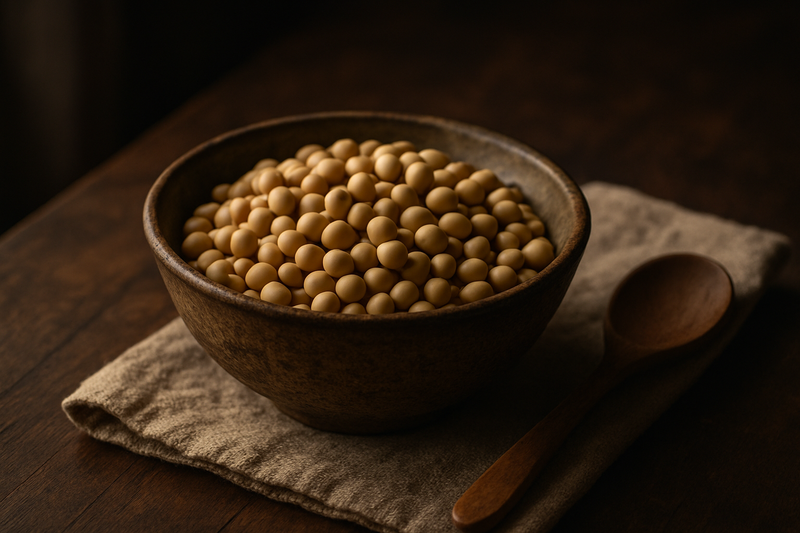
Soy Nuts · Photograph
Soy nuts are whole mature soybeans (Glycine max) that have been soaked, fully cooked, and dry-roasted until crispy. Despite the word "nut" in their name, they are firmly in the legume family — the same botanical group as lentils, chickpeas, and kidney beans. What sets them apart is their uniquely dense nutritional profile: more protein per ounce than most other plant snacks, meaningful fiber, heart-healthy unsaturated fats, and a class of plant compounds called isoflavones that you will not find in most other legumes.
Key Nutrients
% Daily Value based on 2,000 cal diet
Key active compounds in soy nuts
- Isoflavones (genistein, daidzein) — Phytoestrogens (plant compounds that can weakly mimic estrogen) with antioxidant and mild anti-inflammatory activity. Soybeans are the richest dietary source.
- Phytosterols — Plant sterols structurally similar to cholesterol that can modestly reduce how much cholesterol the gut absorbs.
- Saponins — Bioactive compounds common in legumes; studied for potential cholesterol-lowering and antioxidant effects, though human data are still emerging.
- Phenolic acids and flavonoids — A broad group of plant antioxidants that may support vascular health by reducing oxidative stress (cellular damage from unstable molecules called free radicals).
- Resistant starch and fermentable fibers — Carbohydrates that pass undigested into the large intestine, where gut bacteria ferment them to produce short-chain fatty acids (SCFAs) — molecules linked to gut health and blood sugar regulation.
What are soy nuts good for? Key health benefits explained
Heart and circulation
Legumes as a group are associated with improved cardiovascular risk factors — lower LDL cholesterol (the "lousy" cholesterol linked to arterial plaque), better blood pressure, and reduced inflammation — largely through their fiber, folate, phytosterols, and low saturated fat content. Soybeans stand out because they also provide isoflavones and a favorable fat profile (mainly polyunsaturated fats including linoleic acid, an omega-6 fatty acid).
Human trials using whole soy foods generally show modest reductions in LDL cholesterol when soy replaces higher-saturated-fat animal proteins. Evidence for soy nuts specifically is limited but consistent: studies using 25–50 g of roasted soy snacks per day over several weeks in adults with elevated cardiovascular risk tend to show directionally favorable effects on blood lipids and blood pressure. The benefit is greatest when soy nuts replace less healthy options — processed meats, fried snacks, salted crackers — rather than simply being added on top of an already calorie-dense diet.
Digestive health and microbiome
Soy nuts deliver both soluble fiber (which forms a gel in the gut, slowing digestion) and insoluble fiber (which adds bulk and supports regularity). The fermentable fibers they contain feed beneficial gut bacteria, which produce SCFAs — molecules that help maintain the gut lining, reduce inflammation, and support healthy blood sugar levels.
Observational data from large studies find that bean eaters tend to have lower body weight and smaller waist circumference than non-bean eaters, which researchers partly attribute to the satiety (feeling of fullness) effects of fiber and protein combined. One note: if you increase legume intake quickly, gas and bloating are common. Start small (about 1 oz) and build up over a few weeks.
Blood sugar and metabolism
Soy nuts have a low glycemic index (GI) — a measure of how quickly a food raises blood glucose. Their combination of protein, fat, and fiber slows digestion and blunts the blood sugar spike that usually follows eating carbohydrates. Human feeding studies on legume- and soy-rich diets consistently show modest improvements in post-meal glucose and insulin responses, particularly when soy nuts replace high-GI snacks like crackers, chips, or sweetened cereals.
For people managing type 2 diabetes or trying to prevent it, swapping a refined-carb snack for soy nuts is a low-effort, evidence-consistent move. That said, they still contain carbohydrates and should be counted within an overall meal plan.
Hormones and cycle health
This is one of the most common questions about soy — and one of the most nuanced. Soy isoflavones are phytoestrogens, meaning they can weakly bind to estrogen receptors in body tissues. This has led to concern that soy might "raise estrogen levels" or fuel hormone-sensitive cancers. Current evidence does not support this concern for most people consuming soy foods in typical dietary amounts.
Large observational studies, including research in East Asian populations with high soy intakes, find no increased breast cancer risk and, if anything, a modest protective signal when soy intake starts early in life. For postmenopausal women, soy food intake may modestly reduce hot flashes, though the evidence is mixed. People with estrogen receptor–positive (ER+) breast cancer or on aromatase inhibitors should discuss soy intake individually with their oncology team — current evidence leans toward "likely safe at food amounts," but personalized guidance matters.
Inflammation and recovery
Soy nuts contain isoflavones, phytosterols, saponins, and phenolic acids — all studied for antioxidant and anti-inflammatory activity. Human trial data on inflammation markers like C-reactive protein (CRP — a blood marker of systemic inflammation) come mostly from soy-rich diet interventions and soy protein studies rather than soy nuts specifically, with some showing modest reductions in people with metabolic risk factors. Direct soy nut–specific data are limited. The most practical takeaway: replacing pro-inflammatory snacks (fried foods, processed meats) with soy nuts is likely to reduce overall dietary inflammatory load, even if soy nuts are not an anti-inflammatory therapy on their own.
Prep and pairing ideas
Soy nuts are one of the easiest ingredients to work with because they require zero cooking from the bag. Here are practical ways to use them:
Three everyday uses:
- Salad topper — Swap croutons or cheese crisps for 2 tablespoons of dry-roasted soy nuts. Adds crunch plus 5–6 g of protein and about 1.5 g of fiber.
- Grain bowl protein layer — Scatter a small handful over farro, quinoa, or brown rice with ro
How Soy Nuts Compares
| Compared with | What's different |
|---|---|
| Soy Nuts vs. Edamame | Soy nuts are dry-roasted mature beans, while edamame are immature beans, usually steamed or boiled. |
| Soy Nuts vs. Roasted Chickpeas | Soy nuts contain nearly double the protein (18g vs 9g) and significantly more folate per serving. |
| Soy Nuts vs. Peanuts | Soy nuts are legumes with more fiber and isoflavones, whereas peanuts are higher in total fats. |
Health Benefits
Things to Know
Soy allergy: — Soy is a top-8 allergen. Anyone with a confirmed soy allergy must avoid soy nuts entirely. Some people with peanut allergy or other legume allergies may cross-react to soy; get specialist advice before introducing soy nuts.
Home preparation — always soak and cook first: — Raw or undercooked soybeans contain trypsin inhibitors and lectins that impair protein digestion and can cause GI distress. Soak dried soybeans for 6–8 hours (or overnight), then boil fully before roasting. Commercial soy nuts are already fully cooked and safe to eat straight from the bag.
Gas and bloating: — Very common when increasing legume intake. Fermentable oligosaccharides (a type of short-chain carbohydrate) in soybeans cause gas in the colon. Start with ~1 oz/day and build up over 2–4 weeks.
IBS and gut sensitivity: — Soybeans are moderately high in FODMAPs (fermentable carbohydrates that can trigger IBS symptoms). People with IBS may need to limit portion size or trial a low-FODMAP elimination phase.
Kidney disease: — Soybeans are relatively high in protein, potassium, and phosphorus. If you have chronic kidney disease (CKD), get individualized dietary guidance from a renal dietitian before making soy nuts a regular food.
Thyroid conditions / levothyroxine: — Soy foods can reduce absorption of levothyroxine (thyroid hormone replacement). Space your medication and soy nuts by at least 3–4 hours. Ensure adequate iodine intake from other sources.
Hormone-sensitive cancers / endocrine therapy: — While food-amount soy intake appears safe in most observational data, discuss with your oncology team if you are on aromatase inhibitors or selective estrogen receptor modulators (SERMs) like tamoxifen.
Sodium watch: — Salted or flavored soy nuts can add significant sodium. Choose unsalted or lightly salted versions if managing blood pressure or heart failure.
Warfarin (blood thinner): — Soybeans contain some vitamin K. Sudden large changes in legume intake could affect INR stability (a measure of how quickly blood clots). Keep intake consistent and inform your prescriber if you add soy nuts regularly.

Prep Ideas
- — Salad topper — Swap croutons or cheese crisps for 2 tablespoons of dry-roasted soy nuts. Adds crunch plus 5–6 g of protein and about 1.5 g of fiber.
- — Grain bowl protein layer — Scatter a small handful over farro, quinoa, or brown rice with ro
Shop This Ingredient
Stock your pantry with quality soy nuts.
Buy on AmazonAs an Amazon Associate, Plantopedia earns from qualifying purchases. This costs you nothing extra and helps us keep the encyclopedia free.
Frequently Asked Questions
| Form | Notes | |---|---| | Dry-roasted, unsalted | Best overall choice — whole food, no added oil, no added sodium, ready-to-eat. Best fit for WFPB (whole food plant-based) eating. | | Dry-roasted, lightly salted | Fine for most people; check sodium per serving (aim for <140 mg per oz). Avoid if managing hypertension or heart failure. | | Oil-roasted or flavored | Higher calorie density and sodium; still provide protein, fiber, and isoflavones, but less heart-healthy than dry-roasted versions. | | Homemade from dried soybeans | Most control over ingredients. Always soak and fully cook (boil) soybeans before roasting — this inactivates heat-sensitive antinutrients (trypsin inhibitors and lectins) that can cause digestive problems if eaten raw or undercooked. See prep notes below. | | Soy nut butter | Similar nutrition in spreadable form. Check labels for added sugar, palm oil, and salt. A useful swap for peanut or tree-nut butters in allergy-friendly contexts. | Label tip: Look for ingredients that read simply "whole soybeans" or "soybeans" with minimal additions. A short ingredient list is a good sign of minimal processing.
Quick Answers
Common questions, answered in a line.
Soy nuts are whole mature soybeans that have been soaked, fully cooked, and dry-roasted until they become crispy. Despite their name, they are actually legumes, placing them in the same botanical family as lentils, chickpeas, and kidney beans.
Yes, soy nuts are known for having a dense nutritional profile, offering more protein per ounce than most other plant-based snacks. They also provide meaningful amounts of fiber, heart-healthy unsaturated fats, and unique plant compounds called isoflavones.
Soy nuts support heart health by providing fiber, phytosterols, and polyunsaturated fats that can help lower LDL cholesterol and improve blood pressure. These benefits are most significant when soy nuts replace less healthy snacks like processed meats or fried foods.
Soy nuts have a low glycemic index, meaning their combination of protein, fat, and fiber slows digestion and prevents sharp spikes in blood sugar. Research suggests that swapping refined-carb snacks for soy nuts can improve post-meal glucose and insulin responses.
Current evidence suggests that consuming soy foods like soy nuts in typical dietary amounts does not increase breast cancer risk for most people. Large studies have actually found no increased risk, and for postmenopausal women, these foods may even help modestly reduce hot flashes.
Increasing soy nut intake too quickly can cause gas and bloating due to fermentable fibers that produce gas in the colon. To minimize digestive discomfort, it is recommended to start with a small portion of about one ounce and gradually increase intake over several weeks.
People with soy allergies must avoid soy nuts, and those with thyroid conditions should space their medication and soy intake by at least 3–4 hours. Additionally, individuals with chronic kidney disease or those taking blood thinners like Warfarin should consult a healthcare provider before regular consumption.
For Readers in the USA
Local context — sourcing, seasonality, and regional notes.
In the US, you can find soy nuts in the snack or bulk aisles of major grocery chains like Whole Foods Market, Sprouts Farmers Market, and Kroger. They are also common in health food stores and via online retailers, often sold under brands like Seapoint Farms or NOW Real Food.
Look for the USDA Organic seal on soy nut packaging if you want to ensure the soybeans were grown without synthetic pesticides and are non-GMO. Because the vast majority of conventional soybeans grown in the US are genetically modified, organic certification is the most reliable way to find non-GMO soy snacks.
Soybeans are primarily a summer crop harvested in the Midwest—the "Soybean Belt"—during the fall months of September and October. However, because soy nuts are a processed, shelf-stable snack made from dried beans, they are available year-round in retail stores across the country.
Soy is one of the nine major allergens requiring mandatory labeling under the US Food Allergy Safety, Treatment, and Education (FASTER) Act. If you have a soy allergy, you must avoid soy nuts, and always Check the "Contains" statement on snack mixes for hidden soy ingredients.
AI Clinical Review
- Clearly identifies soy nuts as roasted whole soybeans and highlights their strong nutritional profile (complete protein, fiber, and mostly unsaturated fats) consistent with legume research.
- Accurately notes that swapping soy nuts for more refined, salty, or high–saturated fat snacks is what most likely drives improvements in LDL cholesterol, blood pressure, and glycemic control.
- Explains isoflavones as weak phytoestrogens and reflects the consensus that typical soy food intakes do not raise breast cancer risk; mentions possible modest benefit for hot flashes.
- Emphasizes correct home-prep safety (soak and fully cook before roasting) to inactivate antinutrients—an important, practical point.
- Trials on soy nuts specifically are limited; most data come from broader soy food or soy protein studies, so the exact dose and size of benefits for LDL, blood pressure, or inflammation remain uncertain.
- Individual responses to isoflavones vary (for example, only some people convert them to “equol,” a more active metabolite), which may influence effects on lipids and menopausal symptoms.
- Human data linking roasted soybeans to microbiome shifts and short‑chain fatty acid–related outcomes are early and not yet definitive.
- Weight effects likely come from replacing higher‑calorie, lower‑fiber snacks; evidence for soy nuts causing weight loss independently is limited.
- Portion guidance: 1 oz (about 28 g) is a practical serving; research doses often range 25–50 g/day. Choose dry‑roasted, unsalted or lightly salted options; oil‑roasted/flavored versions add calories and sodium.
- Medication/condition cautions: avoid if you have a soy allergy; separate soy foods from levothyroxine by 3–4 hours; keep intake consistent if on warfarin; people with chronic kidney disease, hormone‑sensitive cancers, or on endocrine therapy should get personalized guidance.
- GI tolerance: soybeans are moderate in FODMAPs—start small and increase gradually, especially if you have IBS or are prone to gas/bloating.
- Home preparation: if making soy nuts from dried beans, always soak and boil before roasting; commercial products are already fully cooked and ready to eat.
Mention soaking/cooking tolerance tips where relevant; avoid raw legume prep errors.
References
- PubMed — Longer-term soy nut consumption improves vascular function and cardiometabolic risk markers in older adults: Results of a randomized, controlled cross-over trial (pubmed.ncbi.nlm.nih.gov)
- PMC, National Library of Medicine — The health effects of soy: A reference guide for health professionals (pmc.ncbi.nlm.nih.gov)
- PubMed — The effect of tree nut, peanut, and soy nut consumption on blood pressure: a systematic review and meta-analysis of randomized controlled clinical trials (pubmed.ncbi.nlm.nih.gov)
- PubMed — Soy inclusion in the diet improves features of the metabolic syndrome: a randomized crossover study in postmenopausal women (pubmed.ncbi.nlm.nih.gov)
- PMC, National Library of Medicine — Consumption of Nuts and Seeds and Health Outcomes Including Cardiovascular Disease, Diabetes and Metabolic Disease, Cancer, and Mortality: An Umbrella Review (pmc.ncbi.nlm.nih.gov)
- USDA FoodData Central — USDA FoodData Central (fdc.nal.usda.gov)
Know Your Numbers
Eating healthy is a start. Now get to know your biomarkers.
Food changes bloodwork — inflammation, lipids, blood sugar and nutrient status all respond to what you eat. 59 markers from $59.
- Results in 7–10 days at 2,000+ Quest sites
- Licensed provider reviews every result
- One flat price, no membership, HSA/FSA eligible
Educational information only, not medical advice. Panels are ordered and reviewed through our licensed partner; Plantopedia may earn a commission.