Soybean Oil — health benefits and uses
Use intentionally; compare extracted oil vs whole-food fat alternatives
The Short Answer
Soybean oil is a neutral, high-smoke-point cooking oil containing 8g of Omega-6 and 0.9g of Omega-3 per tablespoon. It is a significant source of Vitamin K, providing 21% of the daily value in a single serving.

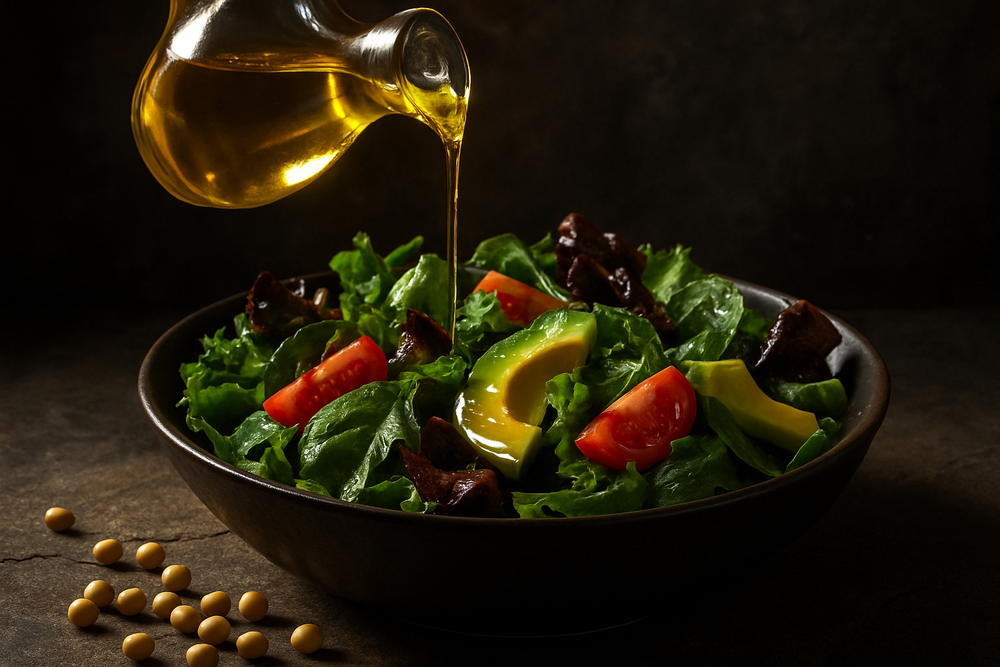
Soybean Oil · Photograph
Soybean oil — pressed and refined from the seeds of Glycine max — is one of the most produced and consumed cooking oils on the planet. It sits quietly in salad dressings, restaurant fryers, packaged snacks, and countless processed foods, often listed simply as "vegetable oil." Because it is so ubiquitous, understanding its actual strengths and limitations matters more than you might expect.
Key Nutrients
% Daily Value based on 2,000 cal diet
Key active compounds
These are the main components in soybean oil that influence health outcomes:
- Linoleic acid (omega-6 polyunsaturated fatty acid): The dominant fat in soybean oil, making up roughly 50–55% of its total fat content. Essential for the body — meaning you must get it from food — and associated with heart benefits when it replaces saturated fat. Often abbreviated LA.
- Alpha-linolenic acid or ALA (omega-3 polyunsaturated fatty acid): Present in smaller amounts (~5–7%), ALA is a plant-based omega-3. It is a precursor to the longer-chain omega-3s EPA and DHA, though the conversion rate in humans is low.
- Oleic acid (monounsaturated fatty acid): About 22–30% of the fat content. The same type of fat found abundantly in olive oil. Contributes to oxidative stability and heart-health benefits.
- Phytosterols (beta-sitosterol, campesterol, stigmasterol): Plant-derived compounds structurally similar to cholesterol that partially block cholesterol absorption in the intestine, contributing modestly to lower LDL ("bad") cholesterol.
- Vitamin E (tocopherols): Antioxidant compounds that protect the oil and, to a lesser extent, your cells from oxidative damage.
- Vitamin K (phylloquinone): A fat-soluble vitamin important for blood clotting and bone health; soybean oil provides a modest contribution.
Myths vs. facts
Myth 1: "Soybean oil will disrupt your hormones because it's a soy product." Fact: Highly refined soybean oil contains negligible soy protein and almost no isoflavones — the compounds associated with hormonal effects in soy research. The hormonal concerns studied in whole soy foods do not transfer directly to the refined oil.
Myth 2: "Omega-6 oils like soybean oil cause chronic inflammation." Fact: Human biomarker studies do not consistently show that replacing saturated fat with omega-6-rich vegetable oils raises inflammatory markers. The "omega-6 is inflammatory" claim is largely based on precursor chemistry, not human outcome data. Balance with omega-3 sources is still sensible, but soybean oil is not proven to be a direct driver of inflammation at normal intake levels.
Myth 3: "Soybean oil is the same as eating soybeans." Fact: Whole soybeans, edamame, tofu, and tempeh are nutritionally dense foods with fiber, protein, vitamins, minerals, and isoflavones. Soybean oil retains essentially none of that. It is a calorie-dense extracted fat, not a whole food.
Prep and pairing ideas
Soybean oil's neutral flavor and moderate-to-high smoke point make it functionally versatile. Here are a few practical uses — and smarter whole-food companions:
- Stir-frying vegetables: A small amount of soybean oil (half a teaspoon to one teaspoon) works well for stir-frying leafy greens, tofu, or broccoli over medium-high heat. Pair with garlic, ginger, and a splash of low-sodium soy sauce or rice vinegar for flavor without adding more oil.
- Homemade vinaigrettes:
How Soybean Oil Compares
| Compared with | What's different |
|---|---|
| Soybean Oil vs. Olive Oil | Higher in monounsaturated fats and lower in Omega-6; better for cold dressings. |
| Soybean Oil vs. Corn Oil | Lower in Omega-3 (ALA) and slightly higher in saturated fat than soybean oil. |
| Soybean Oil vs. Canola Oil | Higher smoke point (approx 450°F) and lower in polyunsaturated fats than soybean oil. |
Health Benefits
Things to Know
Calorie density: At ~120 kcal per tablespoon, even small amounts add up fast. Two tablespoons adds ~240 calories with zero fiber or protein to help you feel full.
WFPB dietary pattern: Strict WFPB guidelines recommend minimizing or eliminating all extracted oils, including soybean oil, in favor of whole-food fat sources.
Soy allergy: Highly refined soybean oil is tolerated by most soy-allergic individuals because residual protein is extremely low. Cold-pressed or expeller-pressed soy oil carries a higher risk. Always consult your allergist.
Warfarin (Coumadin) and other vitamin K–antagonist blood thinners: Soybean oil contributes some vitamin K. This is typically modest compared to leafy greens, but people on anticoagulant therapy should keep their vitamin K intake consistent — including from oils — to avoid swings in drug effectiveness.
Fat-malabsorption conditions: Gallbladder disease, pancreatitis, and conditions like Crohn's disease that impair fat absorption can be worsened by large amounts of any added oil.
Weight management: Because of its high calorie density and prevalence in processed foods, soybean oil can silently contribute to excess calorie intake without increasing satiety.
Medications with fat-dependent absorption: Some drugs and fat-soluble supplements (vitamins A, D, E, K) are absorbed better with fat. Discuss timing with your pharmacist if you take critical-dose medications.
Prep Ideas
- — Stir-frying vegetables: A small amount of soybean oil (half a teaspoon to one teaspoon) works well for stir-frying leafy greens, tofu, or broccoli over medium-high heat. Pair with garlic, ginger, and a splash of low-sodium soy sauce or rice vinegar for flavor without adding more oil.
- — Homemade vinaigrettes:
Shop This Ingredient
Stock your pantry with quality soybean oil.
Buy on AmazonAs an Amazon Associate, Plantopedia earns from qualifying purchases. This costs you nothing extra and helps us keep the encyclopedia free.
Frequently Asked Questions
Heart and circulation This is where the strongest evidence lives. Soybean oil is predominantly unsaturated fat, and a large body of clinical and cohort research shows that swapping saturated fat for polyunsaturated fat from vegetable oils lowers LDL cholesterol. Studies from the Nurses' Health Study and Health Professionals Follow-up Study found that replacing 5% of daily calories from saturated fat with polyunsaturated fat was associated with roughly 25% lower coronary heart disease risk. The U.S. Food and Drug Administration (FDA) has issued a qualified health claim for soybean oil, stating: "Supportive but not conclusive scientific evidence suggests that eating about 1½ tablespoons (20.5 g) per day of soybean oil, in place of saturated fat and without increasing the total number of calories you eat each day, may reduce the risk of coronary heart disease." The key phrase is "in place of." Adding soybean oil on top of an already high-fat diet does not produce these benefits. The benefit comes from substitution. Phytosterols in soybean oil also reduce cholesterol absorption in the gut. At therapeutic doses (around 2 g per day), phytosterols can lower LDL by about 10–12%. Typical amounts from cooking oil contribute modestly — a real effect, but a small one compared with a dietary pattern overhaul. Digestive health and nutrient absorption Soybean oil does not benefit digestion the way a high-fiber food does, but it plays a supporting role in nutrient absorption. Dietary fat — including from soybean oil — is needed to absorb fat-soluble vitamins A, D, E, and K. Drizzling a small amount of oil on a salad or roasted vegetables can meaningfully improve how much of those nutrients your body actually takes up. For most people with normal digestive function, moderate amounts of soybean oil are well tolerated. Those with gallbladder disease, pancreatitis, or fat-malabsorption conditions may experience discomfort with any large amount of added fat and should discuss this with a clinician. Blood sugar and metabolism Soybean oil contains no carbohydrate and does not directly raise blood glucose. As a fat, it slows how quickly food leaves the stomach, which can blunt sharp blood sugar spikes after a meal. However, direct human trials isolating soybean oil's effect on insulin sensitivity are limited. Most evidence is extrapolated from studies of unsaturated fats in general — not soybean oil specifically. For people managing blood sugar, the bigger levers are overall dietary pattern, carbohydrate quality, and body weight. Oil choice matters less than those fundamentals, though calorie density is worth watching. Inflammation and recovery One of the most common concerns about soybean oil is that its high omega-6 content makes it "pro-inflammatory." This claim is repeated widely online, but human biomarker studies do not consistently support it at typical intake levels. Replacing saturated fat with omega-6 polyunsaturated fat from vegetable oils tends to be neutral or modestly beneficial for inflammatory markers like CRP (C-reactive protein, a blood test that signals inflammation). That said, a diet very high in omega-6 fats relative to omega-3 fats may not be optimal for keeping inflammatory pathways in balance. Because soybean oil is so widely used in processed foods, it is easy to consume far more omega-6 than omega-3 without realizing it. If you use soybean oil regularly, pairing it with omega-3-rich whole foods (flaxseed, chia, walnuts) is a reasonable balancing strategy. The evidence here is emerging, not definitive. Hormones and cycle health Refined soybean oil contains very little residual soy protein and nearly no isoflavones — the plant estrogen compounds that are the focus of most hormonal research on soy foods like tofu or edamame. The concern that soybean oil disrupts hormones is largely extrapolated from whole soy food research and does not apply well to the refined oil. The polyunsaturated fatty acids in soybean oil do influence the production of eicosanoids (hormone-like signaling molecules), which play roles in vascular tone and inflammation, but direct human trials on soybean oil and sex hormone levels are scarce. Current evidence is largely mechanistic and should not be considered established.
Not all soybean oil is the same. Here is what to know: Highly refined soybean oil — the standard variety sold for cooking and used in processed foods. Neutral flavor, high functionality for frying and baking. Retains very little soy protein. This is what most people encounter. High-oleic soybean oil — a specialty variety bred to be higher in monounsaturated oleic acid (similar to olive oil) and more stable at high heat. Also covered under the FDA qualified health claim. A better option if you fry regularly. Cold-pressed or minimally refined soy oil — retains more of the natural flavor, nutrients, and potentially more residual soy protein. May be of concern for people with soy allergy. Partially hydrogenated soybean oil — largely phased out of food manufacturing due to its trans fat content. Avoid any product still listing this on the label, as trans fats increase cardiovascular risk. WFPB flag: From a strict whole-food plant-based perspective, all forms of soybean oil are extracted, processed fats. Even "better" versions like high-oleic soybean oil are concentrated calorie sources that lack the fiber, protein, and full nutrient matrix of whole soy foods. WFPB dietary patterns generally recommend minimizing or eliminating added oils and choosing whole-food fat sources instead.
Quick Answers
Common questions, answered in a line.
Soybean oil is rich in linoleic acid (omega-6) and oleic acid (monounsaturated fat), both of which are associated with heart benefits when they replace saturated fats. It also contains phytosterols, which help lower LDL cholesterol by partially blocking its absorption in the intestine.
Highly refined soybean oil contains negligible soy protein and almost no isoflavones, meaning the hormonal concerns associated with whole soy foods do not apply to the refined oil. Research does not support the claim that the oil disrupts hormones like whole soy products might.
Soybean oil is a calorie-dense extracted fat that contains essentially no fiber, protein, or isoflavones found in whole soybeans. While edamame and tofu are nutritionally dense whole foods, the oil is a refined source of fat and calories.
Human biomarker studies do not consistently show that replacing saturated fat with omega-6-rich oils like soybean oil raises inflammatory markers. The idea that it causes chronic inflammation is a common myth not supported by human outcome data.
Individuals taking Warfarin or other vitamin K-antagonist blood thinners should maintain consistent intake of soybean oil because it contains phylloquinone (vitamin K). Changes in intake can affect how these medications work, as vitamin K plays a key role in blood clotting.
Soybean oil is highly calorie-dense, providing about 120 calories per tablespoon without fiber or protein to promote fullness. This can lead to excess calorie intake and potential weight gain if consumed in large amounts or through processed foods.
For Readers in the USA
Local context — sourcing, seasonality, and regional notes.
The United States is the world's second-largest producer of soybeans, with the "Corn Belt" states—primarily Illinois, Iowa, and Minnesota—leading production. While the plants are harvested in the fall, the refined oil is available year-round across the country.
In U.S. grocery stores, soybean oil is most commonly sold labeled as "Vegetable Oil" and is a staple at major retailers like Walmart, Kroger, and Costco. If you are looking for pure soybean oil, check the ingredients list on the back of generic vegetable oil bottles.
The USDA reports that over 90% of soybeans grown in the U.S. are genetically modified (GMO), so consumers seeking non-GMO or organic versions should look for the USDA Organic seal. This certification ensures the oil was produced without synthetic hexane solvents.
AI Clinical Review
- Emphasizes substitution over addition: replacing saturated fats (like butter/lard) with soybean oil’s unsaturated fats lowers LDL cholesterol and may reduce coronary risk; this aligns with long-standing clinical and epidemiologic data and the FDA’s qualified health claim (~1.5 Tbsp/day when used in place of saturated fat).
- Clarifies that refined soybean oil contains negligible soy protein/isoflavones, so hormone-related findings from whole soy foods don’t translate to the oil.
- Accurately flags calorie density: oil adds energy without fiber or protein, yet small amounts can help absorb fat‑soluble vitamins (A, D, E, K).
- Distinguishes oil types: high‑oleic soybean oil offers better high‑heat stability; partially hydrogenated versions (trans fat) should be avoided.
- Inflammation: despite biochemical concerns about omega‑6 fats, human studies at typical intakes generally show neutral to modestly favorable inflammatory markers; long‑term outcomes specific to soybean oil remain limited.
- Metabolic health: direct trials isolating soybean oil’s effects on insulin sensitivity, weight, or fatty liver are sparse; overall diet quality and energy balance remain the dominant drivers.
- Hormones and reproductive health: mechanistic links via eicosanoids exist, but robust human data showing soybean oil meaningfully alters sex hormones or cycle health are lacking.
- Dose and context matter: if you use it, benefits are tied to swapping for saturated fat—not adding on top—and portions add up quickly (~120 kcal per tablespoon).
- Blood thinners: soybean oil contributes vitamin K; people on warfarin or other vitamin K–antagonists should keep vitamin K intake consistent and coordinate with their clinician.
- Soy allergy: highly refined soybean oil is usually tolerated, but cold‑pressed/expeller‑pressed oils may retain more protein—read labels and consult an allergist if you have a confirmed soy allergy.
- Digestive conditions: those with gallbladder disease, pancreatitis, or fat‑malabsorption may react poorly to added oils of any kind; get personalized guidance before increasing use. Also aim to balance omega‑6 intake with omega‑3 sources (e.g., flax, chia, walnuts).
Flag strict WFPB limitations for extracted oils and highly processed fat products.
References
- PubMed — Soybean oil lowers circulating cholesterol levels and coronary heart disease risk, and has no effect on markers of inflammation and oxidation (pubmed.ncbi.nlm.nih.gov)
- PMC, National Library of Medicine — Soybean oil induces neuroinflammatory response through brain-gut axis under high-fat diet (pmc.ncbi.nlm.nih.gov)
- PubMed — Safety assessment of SDA soybean oil: results of a 28-day gavage study and a 90-day/one generation reproduction feeding study in rats (pubmed.ncbi.nlm.nih.gov)
- PubMed — Foods Fortified with Soybean or Palm Oil Show No Effect on Inflammation or Oxidized Low-Density Lipoprotein in Adults with Overweight or Obesity: a Secondary Analysis of a Randomized Placebo (pubmed.ncbi.nlm.nih.gov)
- PMC, National Library of Medicine — Soybean Oil Is More Obesogenic and Diabetogenic than Coconut Oil and Fructose in Mouse: Potential Role for the Liver (pmc.ncbi.nlm.nih.gov)
- PMC, National Library of Medicine — The health effects of soy: A reference guide for health professionals (pmc.ncbi.nlm.nih.gov)
- USDA FoodData Central — USDA FoodData Central (fdc.nal.usda.gov)
Know Your Numbers
Eating healthy is a start. Now get to know your biomarkers.
Food changes bloodwork — inflammation, lipids, blood sugar and nutrient status all respond to what you eat. 59 markers from $59.
- Results in 7–10 days at 2,000+ Quest sites
- Licensed provider reviews every result
- One flat price, no membership, HSA/FSA eligible
Educational information only, not medical advice. Panels are ordered and reviewed through our licensed partner; Plantopedia may earn a commission.