Sword Beans — health benefits and uses
A tropical legume used in traditional Asian home gardens.
The Short Answer
Sword beans are nutritious tropical legumes providing 4.6g of protein and 32mg of Vitamin C per 100g. They must be soaked for 12–24 hours and boiled thoroughly to neutralize antinutrients before consumption.
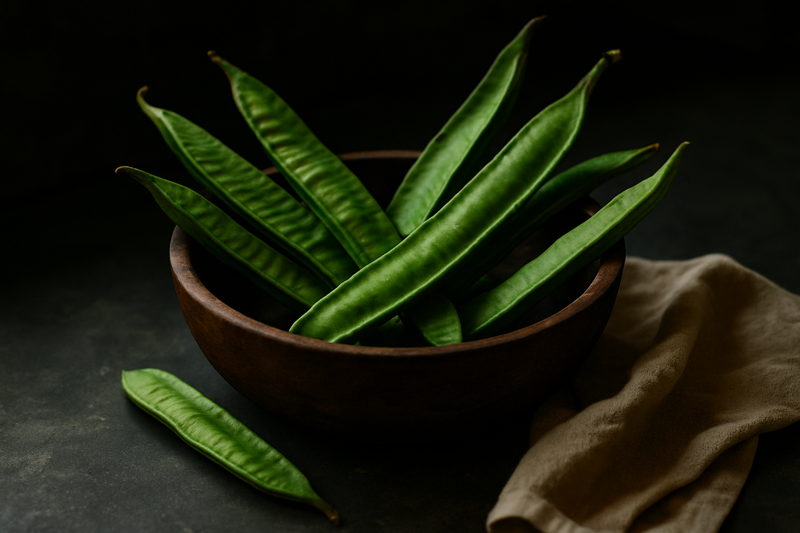
Sword Beans · Photograph
Discover sword bean health benefits, nutrition facts for pods and seeds, and how to cook sword bean seeds safely to reduce antinutrients. A practical, evidence-aligned guide for anyone curious about this underrated tropical legume.
Key Nutrients
% Daily Value based on 2,000 cal diet
Key active compounds
- Polyphenols (total phenolics): A broad class of plant compounds with antioxidant activity. Sword bean seeds and pods contain measurable phenolic content (around 160 mg gallic acid equivalents per 100 g in some analyses), which may support vascular and anti-inflammatory health, though human trials are lacking.
- Flavonoids: A subgroup of polyphenolic compounds shown in lab studies to have antioxidant and antibacterial effects in sword bean extracts.
- Phytic acid (phytate): A phosphorus storage compound in seeds that can bind minerals like iron and zinc and reduce how well your body absorbs them. Proper soaking and boiling significantly lowers phytic acid levels. Notably, it also has some antioxidant properties at lower doses.
- Tannins: Polyphenolic compounds that can bind to proteins and reduce their digestibility. Partly removed or inactivated through heat processing.
- Trypsin inhibitors and lectins: Protein-based compounds that can interfere with digestive enzymes or irritate the gut lining if eaten raw or undercooked. These are significantly reduced by prolonged boiling with water changes.
Prep and pairing ideas
Preparing young pods (the easy route)
- Choose pods where the seeds inside are still small and soft — the pod should snap cleanly, not bend.
- Trim the ends, remove any tough strings along the seam.
- Cut into 3–5 cm pieces.
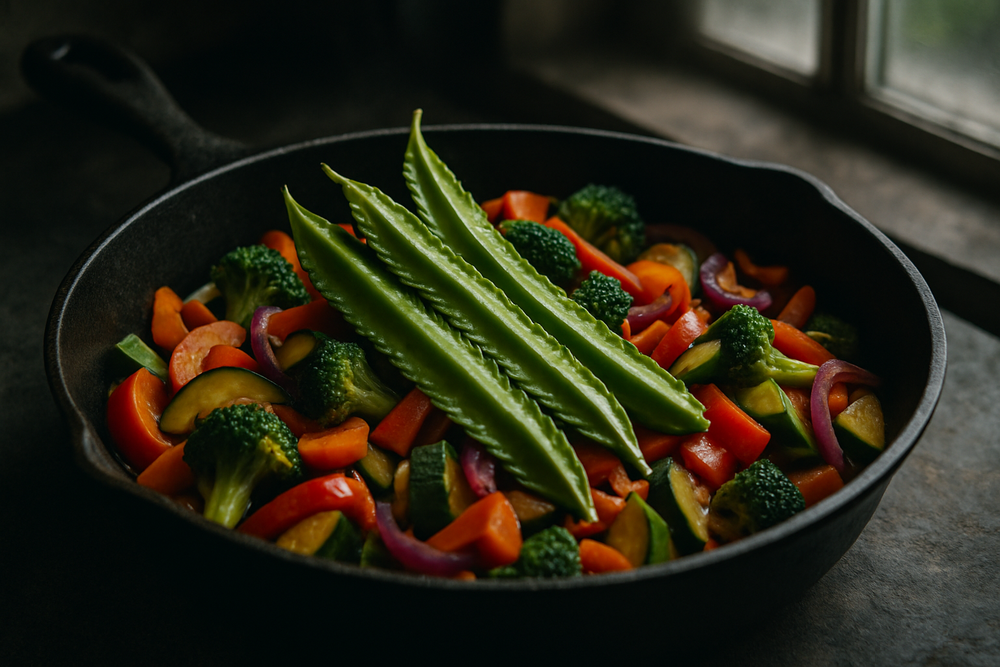
- Blanch in boiling salted water for 3–5 minutes, or stir-fry over high heat for 4–6 minutes until tender but not mushy.
- Use anywhere you would use flat green beans or runner beans.
Preparing mature dry seeds (the essential steps)
- Sort seeds, rinse well, then soak in plenty of cold water for 12–24 hours. Drain and discard soak water.
- Cover with fresh water. Bring to a boil and boil vigorously for 10 minutes. Drain and discard this water (this step removes heat-stable antinutrients).
- Cover again with fresh water. Simmer for 45–75 minutes until completely tender throughout — no firm or chalky centres.
- Season and use in curries, bean stews, or grain bowls. Do not serve seeds al dente.
Three practical pairings
- Young sword bean pods + coconut milk curry: Coconut milk softens the slight bitterness of the pods and adds healthy fats that support absorption of fat-soluble nutrients. A classic South Indian preparation.
- Cooked sword bean seeds + tomatoes and garlic: Tomatoes are rich in vitamin C, which actively enhances non-haem (plant-based) iron absorption from the seeds — a smart pairing for anyone tracking iron intake.
- Sword bean pods + brown rice: Together they form a more complete amino acid profile (the building blocks of protein) than either food alone, and the resistant starch in the rice combines with legume fiber for an extended fullness effect.
Bottom line
Sword bean is a nutritionally interesting tropical legume that earns its place in a whole-food, plant-based diet. The young pods are easy, versatile, and nutritious — high in vitamin C, a decent source of protein and fiber, and low in fat. The mature seeds are a more powerful nutritional package but demand proper preparation to be safe and digestible.
The evidence base for sword bean specifically is still developing; most of what we can say about its benefits for heart health, blood sugar, and digestion is reasonably inferred from decades of research on legumes and pulses as a food group, rather than from clinical trials on sword bean itself. That is not a reason to avoid it — legumes overall have one of the strongest evidence bases in nutrition — but it is a reason to hold off on dramatic claims.
Cook it right, eat it regularly alongside a varied diet, and it is a genuinely worthwhile addition to your table.
How Sword Beans Compares
| Compared with | What's different |
|---|---|
| Sword Beans vs. Jack Beans | Sword beans produce much larger, curved pods up to 40cm long and require longer boiling to be safe. |
| Sword Beans vs. Runner Beans | Sword beans have a tougher skin and contain significantly higher levels of heat-sensitive antinutrients. |
Health Benefits
Things to Know
Always cook fully.: Young pods should be cooked through, not eaten raw. Mature seeds must be soaked, then boiled for at least 45–60 minutes with at least one water change. Do not use the cooking water as a broth for seed preparations — discard it.
Legume allergy: If you are allergic to other beans or pulses (such as peanuts, soybeans, or kidney beans), there is a possibility of cross-reactivity. Introduce sword bean cautiously and watch for any allergic symptoms.
Sensitive digestion: People with irritable bowel syndrome (IBS) or inflammatory bowel disease (IBD) may find even well-cooked legumes aggravate symptoms. Start with small amounts of the young pods and see how you respond before trying the seeds.
Chronic kidney disease (CKD): Mature seeds contain considerable potassium and phosphorus. If you have CKD or are on a renal diet, discuss legume intake with your dietitian before adding sword bean seeds regularly.
Mineral absorption: High intakes of poorly processed seeds — rich in phytic acid — can reduce the absorption of iron, zinc, and calcium taken at the same meal. This is relevant if you rely on plant-based iron sources or take mineral supplements: pair iron-rich foods with vitamin C (which sword bean pods naturally contain) and avoid taking mineral supplements at the same time as a large seed-heavy meal.
Medications: High-fiber meals can slow absorption of some oral medications. Space tablets at least an hour away from very high-fiber meals as a general precaution. People on potassium-sparing diuretics, ACE inhibitors, or angiotensin receptor blockers (common blood pressure medications) should be mindful of the potassium load from frequent large servings of mature seeds.
Pregnancy and breastfeeding: Sword bean has not been studied in clinical safety trials in pregnant or breastfeeding people. Young cooked pods are likely fine in normal culinary amounts, but avoid large quantities of mature seeds during pregnancy due to incomplete safety data.
Prep Ideas
- — Choose pods where the seeds inside are still small and soft — the pod should snap cleanly, not bend.
- — Trim the ends, remove any tough strings along the seam.
- — Cut into 3–5 cm pieces.
- — Blanch in boiling salted water for 3–5 minutes, or stir-fry over high heat for 4–6 minutes until tender but not mushy.
- — Use anywhere you would use flat green beans or runner beans.
- — Sort seeds, rinse well, then soak in plenty of cold water for 12–24 hours. Drain and discard soak water.
- — Cover with fresh water. Bring to a boil and boil vigorously for 10 minutes. Drain and discard this water (this step removes heat-stable antinutrients).
- — Cover again with fresh water. Simmer for 45–75 minutes until completely tender throughout — no firm or chalky centres.
- — Season and use in curries, bean stews, or grain bowls. Do not serve seeds al dente.
- — Young sword bean pods + coconut milk curry: Coconut milk softens the slight bitterness of the pods and adds healthy fats that support absorption of fat-soluble nutrients. A classic South Indian preparation.
- — Cooked sword bean seeds + tomatoes and garlic: Tomatoes are rich in vitamin C, which actively enhances non-haem (plant-based) iron absorption from the seeds — a smart pairing for anyone tracking iron intake.
- — Sword bean pods + brown rice: Together they form a more complete amino acid profile (the building blocks of protein) than either food alone, and the resistant starch in the rice combines with legume fiber for an extended fullness effect.
Glossary
Shop This Ingredient
Stock your pantry with quality sword beans.
Buy on AmazonAs an Amazon Associate, Plantopedia earns from qualifying purchases. This costs you nothing extra and helps us keep the encyclopedia free.
Frequently Asked Questions
The honest headline: most of what we know about sword bean's effects on human health is inferred from general legume science. Direct clinical trials on sword bean in people are minimal. Here is what the evidence suggests, area by area. Heart and circulation Large epidemiological studies (population-level research) and dietary intervention trials consistently show that people who eat more legumes and pulses have lower LDL cholesterol (the "bad" cholesterol), better blood pressure, and reduced cardiovascular risk compared to those who eat fewer. Sword bean aligns closely with this picture: it is low in fat, contains soluble fiber (the type linked to cholesterol lowering), potassium, magnesium, and polyphenol antioxidants. No human trials have tested sword bean specifically for heart outcomes, but its nutrient composition mirrors the legumes studied in cardiovascular research. Mature seeds, with their higher fiber and mineral content, may offer the most benefit in this area. Digestive health and microbiome Dietary fiber is one of the best-supported dietary components for gut health. Regular legume intake is associated with better bowel regularity, higher stool bulk, and a more diverse gut microbiome (the community of bacteria living in your digestive tract) in observational and intervention studies. Sword bean pods and seeds both contribute fiber — importantly, whole-seed flour contains roughly three times the fiber of dehulled seed flour, suggesting the seed coat matters. Young pods are generally well tolerated. Raw or undercooked mature seeds, however, can cause gas, bloating, or more significant gastrointestinal discomfort due to residual antinutrients — a strong argument for thorough cooking. Blood sugar and metabolism Legumes as a category are associated with slower post-meal glucose (blood sugar) rises, improved insulin sensitivity, and reduced type 2 diabetes risk when they replace refined carbohydrates in the diet. This effect is driven by their combination of high fiber, resistant starch, and protein — all of which slow digestion and blunt the blood sugar spike after a meal. Sword bean's macronutrient profile fits this pattern well. Researchers studying sword bean flour have noted properties consistent with glycemic benefit, but direct studies measuring blood sugar or insulin responses to sword bean in people have not yet been published. Inflammation and recovery Lab studies (in vitro, meaning in test tubes rather than in people) show that sword bean seed and pod extracts have meaningful antioxidant capacity and antibacterial activity, largely linked to their polyphenol and flavonoid content. This is encouraging, but test-tube results do not always translate to effects in the human body. Broader evidence from mixed-bean and pulse studies suggests that habitual legume intake may modestly reduce markers of systemic inflammation (whole-body low-grade immune activation), but sword bean-specific human data in this area do not yet exist. Consider this area emerging rather than established.
The "best" form depends on what you're cooking and what health goal you have in mind. Young fresh pods are the most accessible and safest entry point. Cook them like green beans: stir-fry, steam, blanch, or add to curries. Their vitamin C content, moderate fiber, and low antinutrient load make them a practical everyday vegetable. Pods should be harvested young (before the seeds inside harden) and cooked thoroughly — do not eat them raw. Mature dry seeds are a more concentrated source of protein, iron, and B vitamins, but safety preparation is non-negotiable. See the prep section below for the step-by-step approach. If you are new to sword beans, start with pods rather than seeds. Seed flour is an emerging ingredient in composite baking and food formulation. Research suggests it can meaningfully boost the protein and fiber content of breads, flatbreads, and porridges. Heat-treated sword bean flour (where antinutrients have been reduced by processing) has better digestibility than raw flour. Not widely available in shops yet outside specialist markets. Polyphenol extracts are studied in laboratories but are not standard food products and have no established human dosing. Skip supplements for now — eat the whole food instead.
There are no formal clinical dosage guidelines for sword bean — it is a food, not a supplement, so the answer is largely culinary. Young pods: A portion of 50–150 g cooked (roughly a large side serving) is consistent with how it is eaten across Asian cuisines and is nutritionally comparable to any green vegetable serving. Most people can eat this daily without issue. Mature seeds: 30–60 g dry weight per person per meal (which roughly doubles in weight after cooking) is a reasonable starting point, similar to how you would approach kidney beans or black beans. If you are new to legumes or have a sensitive gut, start at the lower end — 2–3 times per week — and build up slowly. This gives your gut microbiome time to adjust, which reduces gas and bloating over several weeks of consistent intake. General principle: More is not automatically better. A varied diet that includes sword bean alongside other legumes, vegetables, whole grains, and diverse plant foods is more valuable than eating large quantities of any single ingredient.
Plant-based eaters seeking affordable protein diversity Mature seeds offer roughly 20–25 g protein per 100 g dry weight, comparable to lentils and chickpeas. A useful rotation ingredient alongside more familiar pulses to keep meals interesting. The iron content (with vitamin C from the pods as a natural booster) helps address a common gap in plant-based diets. People looking for low-fat, high-fiber vegetable variety Young pods fit easily into calorie-conscious eating without sacrificing satiety thanks to their fiber content. Vitamin C contribution is higher than you might expect from a pod vegetable — relevant for anyone who does not eat much citrus. Works well in Asian-inspired cooking for those wanting to diversify beyond standard Western vegetables.
Quick Answers
Common questions, answered in a line.
Sword bean seeds must be soaked for 12–24 hours, boiled vigorously for 10 minutes, and then simmered for 45–75 minutes until tender. Always discard the soaking and initial boiling water to remove heat-stable antinutrients like phytic acid and lectins.
Sword beans contain polyphenols, flavonoids, tannins, and phytic acid, which act as antioxidants to support vascular and anti-inflammatory health. These plant compounds help protect cells from damage, though more human trials are needed to confirm specific effects.
Yes, young sword bean pods should always be cooked through by blanching or stir-frying and should not be eaten raw. Proper heat processing is necessary to reduce antinutrients like trypsin inhibitors and lectins that can irritate the gut lining.
Sword bean pods pair well with coconut milk to soften bitterness, or with tomatoes and garlic to enhance iron absorption. Combining sword beans with brown rice also creates a more complete amino acid profile and increases feelings of fullness.
Individuals with legume allergies, irritable bowel syndrome (IBS), or chronic kidney disease (CKD) should exercise caution with sword beans. Additionally, pregnant women should avoid large amounts of mature seeds, as clinical safety data for this group is currently incomplete.
Sword beans contain phytic acid and tannins, which are antinutrients that can bind to minerals like iron and zinc, reducing their absorption. To minimize these effects, you should soak and boil the beans thoroughly and pair them with vitamin C-rich foods like tomatoes.
For Readers in the USA
Local context — sourcing, seasonality, and regional notes.
You can grow sword beans in the United States in USDA Hardiness Zones 9 through 11, including parts of Florida, Texas, and Southern California. Because they require a long, frost-free growing season and high humidity, they are primarily a summer crop in the American South.
In the U.S., you are most likely to find sword beans at H Mart, 99 Ranch Market, or local independent Indo-Pacific and Caribbean grocers. They are rarely stocked by mainstream retailers like Kroger or Safeway, so checking specialty international markets is your best bet.
While the FDA does not have specific regulations for sword beans, they emphasize that all legumes containing lectins must be properly soaked and boiled to meet food safety standards. Consumers should ensure these beans are never eaten raw to prevent foodborne illness.
Yes, sword beans are often sold under the name "Canavalia gladiata" or may be labeled as "Jack Bean" in some U.S. specialty shops, though the two are distinct species. In Florida and the Caribbean-American community, they are sometimes referred to as "Overlook Beans."
AI Clinical Review
- Clear distinction between young pods and mature seeds, including why pods are easier to tolerate and seeds need thorough soaking and boiling.
- Framing benefits through the broader legume evidence (cholesterol, blood pressure, glycemic control) is appropriate given limited sword‑bean–specific human data.
- Practical preparation steps (soak, discard soak/cook water, simmer until fully tender) accurately target antinutrients like lectins and trypsin inhibitors that can cause GI upset when undercooked.
- Sensible nutrition takeaways: pods as a vitamin C–rich vegetable; seeds as a concentrated source of plant protein, fiber, and non‑heme iron, with the reminder that vitamin C aids iron absorption.
- Human clinical trials on sword bean are scarce; most citations are compositional, in vitro, or animal studies, so specific claims about heart, metabolic, or anti‑inflammatory effects remain inferential.
- Reported polyphenol and antioxidant figures can vary by cultivar and processing; their real‑world bioavailability (how much the body actually uses) hasn’t been established.
- Seed‑flour applications show promise for boosting protein/fiber in foods, but data on tolerability, long‑term metabolic effects, and optimal processing are limited.
- Safety hinges on preparation: do not eat seeds raw or al dente. For newcomers, start with young pods; for seeds, begin with modest portions (about 30–60 g dry weight per meal) and increase gradually to reduce gas/bloating.
- Who should check in with a clinician or dietitian first: people with legume allergies; those with IBS or sensitive digestion; individuals with chronic kidney disease (potassium/phosphorus load); and anyone on potassium‑sparing diuretics, ACE inhibitors, or ARBs.
- Pregnancy and breastfeeding: culinary amounts of well‑cooked pods are likely fine, but avoid large intakes of mature seeds due to limited safety data.
- Form matters: heat‑treated seed flours are preferable to raw flours for digestibility; skip concentrated extracts/supplements—there’s no established human dosing.
Young pods are safest; mature seeds contain antinutrients and must be boiled with water changes.
References
- USDA FoodData Central — legume nutritional composition reference (fdc.nal.usda.gov)
- Harvard T.H. Chan School of Public Health, The Nutrition Source — Legumes and Pulses: human health evidence overview (nutritionsource.hsph.harvard.edu)
- Wikipedia: Canavalia gladiata — botanical overview and traditional uses (en.wikipedia.org)
- ICAR Indian Horticulture — A lesser known underutilized sword bean (epubs.icar.org.in)
- International Journal of Food Science & Technology — Nutritional and antinutritional attributes of sword bean (peer-reviewed analysis) (academic.oup.com)
- African Journal of Food, Agriculture, Nutrition and Development — Evaluation of nutritional value and protein quality of raw and differentially processed sword bean seeds (ajol.info)
- Lund University publication — Potential of Canavalia gladiata as a food ingredient (lunduniversity.lu.se)
- Journal of Current Research in Agriculture — Review: nutritional and antinutritional properties of Canavalia species (journalcra.com)
- European Journal of Pharmaceutical and Medical Research — Antibacterial potential of Canavalia gladiata (storage.googleapis.com)
- PROSEA / PROTA4U — Plant Resources of South East Asia: Canavalia gladiata (prosea.prota4u.org)
Know Your Numbers
Eating healthy is a start. Now get to know your biomarkers.
Food changes bloodwork — inflammation, lipids, blood sugar and nutrient status all respond to what you eat. 59 markers from $59.
- Results in 7–10 days at 2,000+ Quest sites
- Licensed provider reviews every result
- One flat price, no membership, HSA/FSA eligible
Educational information only, not medical advice. Panels are ordered and reviewed through our licensed partner; Plantopedia may earn a commission.