Teff Flour — health benefits and uses
A tiny ancient Ethiopian grain, the backbone of Ethiopian and Eritrean cuisine.
The Short Answer
Teff flour is a nutrient-dense, gluten-free grain providing 2.3 mg of iron and 4 g of fiber per 100g. It is best used for making traditional fermented injera or as a partial wheat substitute to add an earthy, malty flavor to baked goods.
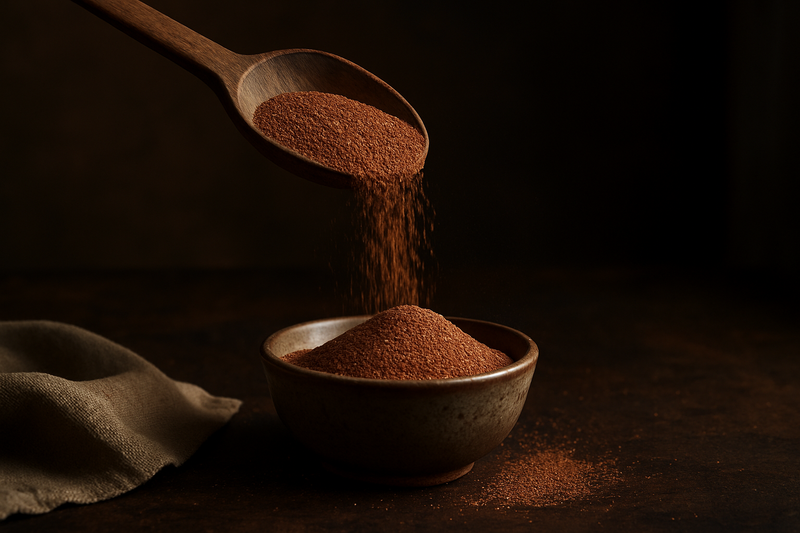
Teff Flour · Photograph
Discover the teff flour health benefits backed by research — from blood sugar support and iron for anemia to gluten-free baking tips. Includes nutrition facts, safety notes, and expert prep guidance.
Key Nutrients
% Daily Value based on 2,000 cal diet
Key active compounds in teff flour
- Phenolic acids — Plant compounds such as ferulic acid and caffeic acid found in the bran and germ. They act as antioxidants (molecules that neutralise cell-damaging free radicals) and may support reduced oxidative stress. Most data are from laboratory studies.
- Flavonoids — A broad class of polyphenolic plant compounds with antioxidant and potential anti-inflammatory properties. Flavonoids in teff extracts have shown vascular benefits in early research; their full effect in everyday dietary amounts needs more study.
- Tannins — Polyphenolic compounds that give teff a slightly astringent quality. They have antioxidant activity but can also act as antinutrients by binding to iron and zinc. Fermentation and soaking significantly reduce tannin levels.
- Phytates (phytic acid) — Phosphorus-storage molecules in seeds that can reduce how well your body absorbs minerals like iron and zinc. Traditional fermentation for injera substantially breaks down phytates, improving mineral bioavailability (how much your body can actually absorb and use).
- Resistant starch — A form of starch that escapes digestion in the small intestine and feeds beneficial gut bacteria. Cooling cooked teff or fermenting teff batter increases resistant starch content.
Prep and pairing ideas
Teff flour has a distinctive flavour — earthy, malty, slightly chocolatey — that works best when you lean into it rather than fight it.
Partial substitution for wheat flour: Replace 25–30% of all-purpose or wholemeal flour with teff flour in muffins, pancakes, quick breads, and waffles. It adds moisture, a dense crumb, and a nutty depth. Going beyond 30–40% without other binders (eggs, psyllium husk, flax egg) can result in a crumbly, dense texture.
Full gluten-free baking: Combine teff flour with other gluten-free flours — sorghum, brown rice, or oat flour — plus a binder like psyllium husk or xanthan gum to mimic gluten structure. A common starting ratio is 50% teff + 30% sorghum + 20% tapioca starch.
Traditional injera: Mix teff flour with water and ferment the batter for 2–3 days at room temperature using a starter or wild culture. The fermentation sours the batter, reduces antinutrients, and creates the characteristic spongy, tangy flatbread. Cook in a lightly oiled flat pan in a thin layer. Serve with lentil stews, roasted vegetables, or chickpea curries.
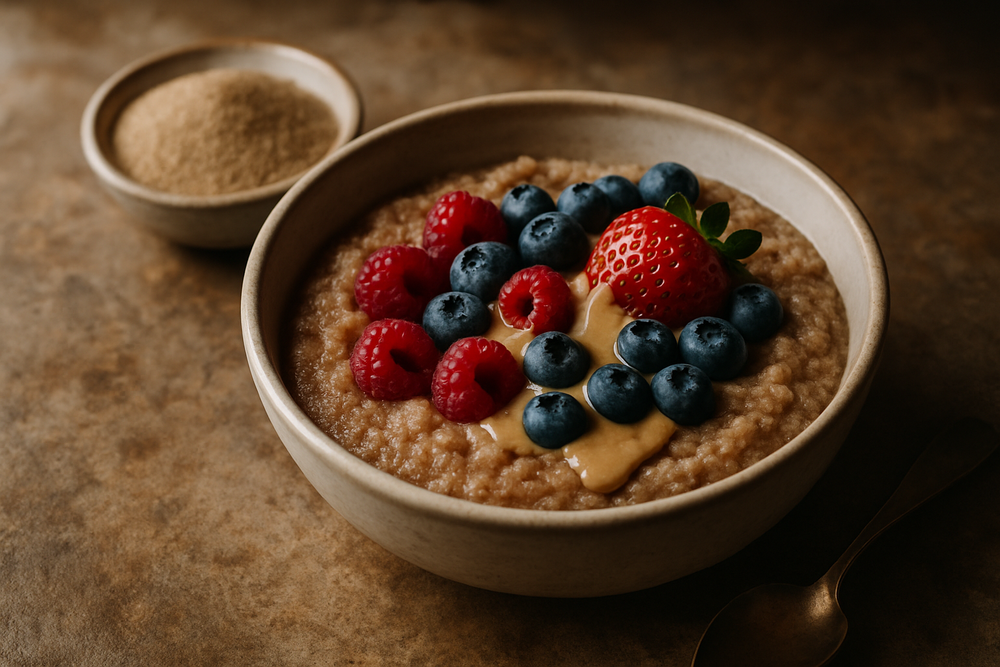
Porridge: Cook teff flour with 3 parts water to 1 part flour over medium heat, stirring constantly for 5–7 minutes. Season with cinnamon, a pinch of salt, and top with berries and a drizzle of tahini for a calcium-rich breakfast.
Common pairings and why they work:
- Teff + citrus (lemon, orange): Vitamin C dramatically increases non-heme iron absorption — pairing teff-based pancakes or porridge with fresh orange slices or a squeeze of lemon makes the iron more bioavailable.
- Teff + lentils or chickpeas: Both are plant-based iron and protein sources. Together in an injera-based meal, they create a complete, high-iron, high-protein plant plate that is the traditional Ethiopian way to eat teff.
- Teff + dark chocolate or cacao: Teff's malt-chocolate undertones pair beautifully with cacao in brownies or energy balls, and both contribute antioxidant phenolic compounds. This is a practical way to make teff flour appealing to people new to it.
Bottom line
Teff flour earns its reputation as one of the most nutritionally complete gluten-free flours available. Its iron, calcium, magnesium, and fibre content genuinely set it apart from the refined starches that dominate most gluten-free baking. Research suggests it may support blood sugar control, digestive regularity, and overall micronutrient intake — particularly in people eating gluten-free or plant-based diets where these nutrients are commonly under-consumed.
The evidence base is strongest for its nutritional composition and most promising (but still emerging) for specific clinical outcomes like glycaemic control and inflammation. It is not a cure or treatment for any condition, but as a whole-grain flour that happens to be naturally gluten-free, it is a practical, evidence-aligned upgrade for a wide range of eaters.
Use it in injera, porridges, pancakes, or blended gluten-free baking mixes. Pair it with vitamin C-rich foods to unlock its iron. And if you have celiac disease, always look for the certified gluten-free label.
If you want to explore other ingredients that support similar health goals, browse the Plantopedia goals library for food-first strategies across energy, digestion, and more.
How Teff Flour Compares
| Compared with | What's different |
|---|---|
| Teff Flour vs. Whole Wheat Flour | Teff is significantly higher in iron and calcium than wheat, with a darker, maltier flavor. |
| Teff Flour vs. Buckwheat Flour | Teff is finer and more earthy than coarse buckwheat, which has a stronger, bitter herbal note. |
| Teff Flour vs. Almond Flour | Teff is rich in iron and resistant starch, whereas almond flour is high in fat and low in starch. |
Health Benefits
Things to Know
Introduce gradually.: Teff flour is significantly higher in fibre than most refined flours. If your current diet is low in fibre, a sudden large increase can cause gas, bloating, or loose stools. Start with small amounts — a quarter to half cup per day — and build up over several weeks.
Drink enough water.: Dietary fibre only works well with adequate fluid intake. Without enough water, a high-fibre diet can worsen constipation rather than relieve it.
Celiac disease: Only use certified gluten-free teff flour. Cross-contact at processing facilities is a genuine concern.
Iron overload conditions (hemochromatosis): Teff is iron-rich. People with hereditary hemochromatosis or other iron-overload disorders should discuss iron-rich foods with their clinician.
Chronic kidney disease: Teff flour is a meaningful source of phosphorus and potassium. If you are on a kidney diet with mineral restrictions, check with your dietitian before adding teff regularly.
Medications and timing: Iron and calcium in teff flour can reduce absorption of certain medications — including levothyroxine (thyroid medication), fluoroquinolone and tetracycline antibiotics, and bisphosphonates (bone medications) — if eaten at the same meal. Space these medications at least 2–4 hours away from mineral-rich foods.
Blood sugar medications: Replacing refined grains with teff may lower your blood glucose response. If you take insulin or oral hypoglycaemic agents, monitor your levels and speak with your clinician before making major dietary grain changes.
IBS and sensitive digestion: High-fibre foods can aggravate irritable bowel syndrome (IBS) symptoms for some people. Fermented forms (like injera) may be better tolerated. Adjust portion size based on your response.
Allergy: Teff allergy is rare but possible, particularly in people with multiple food or grass allergies. Introduce it cautiously if you have a history of grain or seed allergies.
Pregnancy and supplements: Whole teff flour as food is considered safe in pregnancy and may support iron and folate intake. Concentrated teff extracts or supplement forms have limited safety data; stick to food-form teff during pregnancy.
Prep Ideas
- — Teff + citrus (lemon, orange): Vitamin C dramatically increases non-heme iron absorption — pairing teff-based pancakes or porridge with fresh orange slices or a squeeze of lemon makes the iron more bioavailable.
- — Teff + lentils or chickpeas: Both are plant-based iron and protein sources. Together in an injera-based meal, they create a complete, high-iron, high-protein plant plate that is the traditional Ethiopian way to eat teff.
- — Teff + dark chocolate or cacao: Teff's malt-chocolate undertones pair beautifully with cacao in brownies or energy balls, and both contribute antioxidant phenolic compounds. This is a practical way to make teff flour appealing to people new to it.
Glossary
Shop This Ingredient
Stock your pantry with quality teff flour.
Buy on AmazonAs an Amazon Associate, Plantopedia earns from qualifying purchases. This costs you nothing extra and helps us keep the encyclopedia free.
Frequently Asked Questions
Heart and circulation Teff flour's combination of dietary fibre, magnesium, and potassium aligns with what nutritional science broadly associates with heart health. Viscous and insoluble fibres — both present in teff — can modestly lower LDL ("bad") cholesterol when they replace refined grains in the diet, consistent with wider whole-grain evidence. Magnesium and potassium support healthy blood pressure regulation. Reviews of teff's nutritional profile describe a favourable cardiovascular nutrient fingerprint, but direct clinical trials measuring blood lipids or blood pressure specifically from teff consumption are limited. For now, heart-health benefits are best understood as consistent with what whole grains do broadly, rather than uniquely proven for teff. Digestive health and gut health Teff flour provides roughly 4 g of fibre per quarter-cup serving, comparable to or higher than most other cereal flours. Dietary fibre increases stool bulk, promotes regularity, and feeds beneficial gut bacteria. Human data specific to teff and microbiome changes are limited, but traditional teff-heavy diets in Ethiopia have been consumed safely for generations without widespread digestive adverse effects. Fermented teff batter (as used in injera) increases resistant starch and breaks down some fermentable carbohydrates, which can improve digestibility and tolerance for some individuals. If you are new to high-fibre foods, introduce teff gradually and drink plenty of water to avoid temporary gas or bloating. Blood sugar and metabolism This is arguably the most research-supported area for teff flour. A clinical study in adults with diabetes found that teff-based diets were associated with improved glycaemic control parameters — better blood sugar markers — compared with usual diets, though the study was small and design limitations apply. Reviews consistently describe teff as a low-glycaemic-index grain, meaning it raises blood sugar more slowly than refined flours, primarily because of its high fibre and complex carbohydrate content. Fermented teff products like injera may further reduce the glycaemic impact by increasing resistant starch. The clearest practical guidance from the evidence: substituting refined flours with teff flour as part of a balanced diet may help moderate post-meal blood glucose rises. People on insulin or glucose-lowering medications should monitor their blood sugar and consult their clinician when making significant grain substitutions. Hormones and cycle health Teff's dense mineral profile — particularly iron, magnesium, and B vitamins — may indirectly support menstrual health and reduce fatigue, especially in people with inadequate intake of these nutrients. A 2024 review noted associations between teff intake and improvements in premenstrual symptoms, likely through better micronutrient status and fibre-mediated effects on insulin dynamics. High-fibre, low-glycaemic diets can also modestly influence the hormonal environment by improving insulin sensitivity, which in turn may affect sex hormone balance. However, no large, high-quality trials have directly measured hormone levels or menstrual cycle outcomes in people consuming teff flour. These benefits should be understood as indirect and potential, not established clinical outcomes. Inflammation and recovery A recent laboratory study of white teff flour extract found antioxidant and anti-inflammatory effects — reductions in inflammatory biomarkers and markers of oxidative stress. This is consistent with teff's phytochemical profile: phenolic acids, flavonoids, and tannins all have antioxidant mechanisms. However, this work used concentrated extracts in experimental models, not whole flour in everyday meals. Human clinical trials measuring inflammatory markers after regular teff flour consumption have not yet been well characterised. Anti-inflammatory claims for teff flour should therefore be treated as mechanistic and emerging, pending more rigorous human trials.
People eating gluten-free by medical necessity Individuals with celiac disease lose reliable access to iron, fibre, and B vitamins when they eliminate wheat. Teff flour is naturally gluten-free and, when certified gluten-free (processed in a dedicated facility), is safe for people with celiac disease. It provides fibre and minerals that most gluten-free flour blends lack. Choose bags labelled "certified gluten-free" to avoid cross-contact with wheat, barley, or rye. Vegetarians, vegans, and people at risk of iron deficiency Plant-based diets rely heavily on non-heme iron (the type found in plants, which is absorbed less efficiently than iron from meat). Teff flour is one of the richest plant-based iron sources available as a flour. Pairing teff with vitamin C-rich foods (citrus, bell peppers, tomatoes) significantly enhances non-heme iron absorption. Its calcium and magnesium content also supports bone health in those who avoid or limit dairy.
Yes, teff is naturally gluten-free. The grain itself contains no gluten proteins — the proteins found in wheat, barley, and rye that trigger an immune reaction in people with celiac disease. However, "naturally gluten-free" does not automatically mean "safe for celiac disease." Teff can be grown near or processed alongside gluten-containing grains, and cross-contact at the mill or packaging facility is a real risk. The practical rule: if you have celiac disease or a serious non-celiac gluten sensitivity, choose teff flour specifically labelled "certified gluten-free." This means the product has been tested and confirmed to contain fewer than 20 parts per million (ppm) of gluten — the threshold considered safe for most people with celiac disease. General-purpose teff flour sold without that certification may have been processed on shared equipment and carries a risk of gluten cross-contact. For people with wheat sensitivity who do not have celiac disease, regular teff flour is generally fine, though certified products remain a safer option.
There is no established single recommended dose for teff flour — it is a food, not a supplement, and intake naturally varies with recipes and meal patterns. Practical daily ranges based on research and traditional use: Light use / new to teff: Start with 2–4 tablespoons (15–30 g) mixed into a smoothie, porridge, or baked good. This lets your digestive system adjust to the higher fibre content. Regular dietary use: 30–60 g per day (roughly ¼–½ cup) as part of one or two meals or baked goods is a common range in nutritional studies and practical recipes. Traditional staple use: In Ethiopian diets where teff is a dietary cornerstone, intake can be considerably higher — 100 g or more daily — typically in the form of injera across multiple meals. Start low guidance: If you currently eat a low-fibre diet, jumping straight to ½ cup of teff flour per day may cause digestive discomfort. Increase your intake by about 5–10 g per week, drink an extra glass of water per day, and give your gut microbiome time to adapt. There is no upper limit established for whole-grain teff flour as food in healthy adults, but the caveats above (kidney disease, iron overload, medication timing) still apply regardless of quantity.
Quick Answers
Common questions, answered in a line.
Teff flour tastes earthy, malty, and slightly chocolatey, making it a unique addition to both sweet and savory dishes. These natural undertones pair especially well with ingredients like dark chocolate, cacao, and warm spices like cinnamon.
To improve iron absorption from teff flour, pair it with foods high in vitamin C, such as lemons, oranges, or berries. Vitamin C dramatically increases the bioavailability of non-heme iron, making the flour's high mineral content more effective for the body.
When baking with teff flour, you can replace 25–30% of all-purpose or wholemeal flour to add moisture and a nutty depth. Using more than 30–40% teff flour usually requires a binder like eggs, psyllium husk, or flax eggs to prevent the texture from becoming too dense or crumbly.
Fermenting teff flour to make traditional injera reduces antinutrients like tannins and phytates while increasing resistant starch content. This process improves mineral bioavailability, meaning your body can more easily absorb and use the iron and zinc found in the grain.
Teff flour is a rich source of iron, calcium, magnesium, and fiber, which sets it apart from many refined gluten-free starches. It also contains active plant compounds like phenolic acids and flavonoids that act as antioxidants to help neutralize free radicals.
People with chronic kidney disease, iron overload conditions like hemochromatosis, or those taking specific medications such as thyroid hormone (levothyroxine) should consult a doctor before eating teff regularly. Its high phosphorus, potassium, and iron content can interfere with certain diets and drug absorption.
To make a calcium-rich teff porridge, cook one part teff flour with three parts water over medium heat for 5–7 minutes while stirring constantly. For extra flavor and nutrients, season it with a pinch of salt and cinnamon, and top it with fresh berries and a drizzle of tahini.
For Readers in the USA
Local context — sourcing, seasonality, and regional notes.
You can find teff flour at major U.S. retailers like Whole Foods Market, Sprouts Farmers Market, and Bob’s Red Mill sections in Kroger or Safeway. For the most authentic varieties, check Ethiopian and Eritrean specialty markets in cities like Washington D.C., Seattle, or Minneapolis.
In the U.S., teff is primarily grown in the High Plains and Intermountain West, including states like Idaho, Nevada, and Oregon, where the dry climate mimics its native Ethiopian highlands. It is a warm-season crop harvested in late summer or early fall.
Teff flour is available in two main varieties in the U.S.: ivory (white) and brown (masked), with brown teff offering a deeper, nuttier flavor and ivory being milder. While both have similar nutritional profiles, ivory teff is often preferred for lighter-colored cakes or breads.
When purchasing teff flour in the U.S., look for the USDA Organic seal and the "Certified Gluten-Free" logo to ensure the product meets federal standards for purity. The FDA regulates these labels to help consumers avoid cross-contamination with wheat during processing.
AI Clinical Review
- Teff is a naturally gluten-free whole grain and, when milled as whole-grain flour, offers more fiber, iron, calcium, and magnesium than many common gluten-free starches.
- The explanation that fermentation (e.g., injera) reduces phytates and may improve mineral absorption is accurate and consistent with traditional practice and lab data.
- Framing of blood-sugar benefits as most likely when teff replaces refined grains is appropriate; fiber and resistant starch can blunt post‑meal glucose rises.
- Practical guidance on certified gluten-free labeling (≤20 ppm) for people with celiac disease is clinically sound.
- Human trials directly testing teff on outcomes like A1C, lipids, blood pressure, or inflammatory biomarkers are small and limited; most support comes from composition studies and extrapolation from whole‑grain research.
- Antioxidant/anti-inflammatory claims largely derive from cell or extract studies; effects from typical culinary amounts of whole flour remain uncertain.
- Iron content is meaningful, but real‑world absorption varies with meal context (vitamin C, tannins, phytate) and individual status; teff alone is unlikely to correct iron deficiency without broader diet changes.
- Dose: For most adults, 30–60 g/day (about 1/4–1/2 cup flour) is a practical range; increase gradually with fluids to minimize gas or bloating.
- Safety: Choose certified gluten-free products if you have celiac disease; cross-contact during milling is a real risk.
- Medical cautions: People with iron overload (e.g., hemochromatosis) or with chronic kidney disease (due to phosphorus/potassium) should discuss regular use with a clinician.
- Medication timing: Minerals in teff (iron, calcium, magnesium) can reduce absorption of levothyroxine, certain antibiotics (tetracyclines/fluoroquinolones), and bisphosphonates—separate by 2–4 hours.
- Digestive sensitivity: Those with IBS or sensitive digestion may tolerate fermented forms (like injera) better; adjust portion size to symptoms.
Naturally gluten-free; a good plant iron source.
References
- USDA FoodData Central — teff grain and flour nutrient data (fdc.nal.usda.gov)
- MyPlate — Whole grains guidance (myplate.gov)
- Clinical study: Nutritional values of teff in diabetic patients (PMC) (pmc.ncbi.nlm.nih.gov)
- Review: Unlocking the potential of teff for sustainable, gluten-free diets (PMC) (pmc.ncbi.nlm.nih.gov)
- Review: Nutritional composition and health benefits of teff — Wiley (onlinelibrary.wiley.com)
- Review: Nutrient composition of teff compared with other grains, IJMS table (PMC) (pmc.ncbi.nlm.nih.gov)
- Study: White teff flour ethanolic extract — phytochemical, antioxidant and anti-inflammatory potential (PMC) (pmc.ncbi.nlm.nih.gov)
- Review: Nutritional profile and health benefits of teff — The Pharma Journal (thepharmajournal.com)
- Teff nutrition overview — TeffCo (teffco.com)
- Precision Nutrition — Teff food overview (precisionnutrition.com)
Know Your Numbers
Eating healthy is a start. Now get to know your biomarkers.
Food changes bloodwork — inflammation, lipids, blood sugar and nutrient status all respond to what you eat. 59 markers from $59.
- Results in 7–10 days at 2,000+ Quest sites
- Licensed provider reviews every result
- One flat price, no membership, HSA/FSA eligible
Educational information only, not medical advice. Panels are ordered and reviewed through our licensed partner; Plantopedia may earn a commission.