Toasted Sesame Seeds — health benefits and uses
Toasted sesame is central to East Asian cooking and traditionally seen as a nourishing, warming seed.
The Short Answer
Toasted sesame seeds are nutritionally dense, providing 89mg of calcium and 1.3g of fiber per serving, along with heart-healthy lignans like sesamin. Roasting enhances their nutty flavor and increases the availability of the antioxidant sesamol.
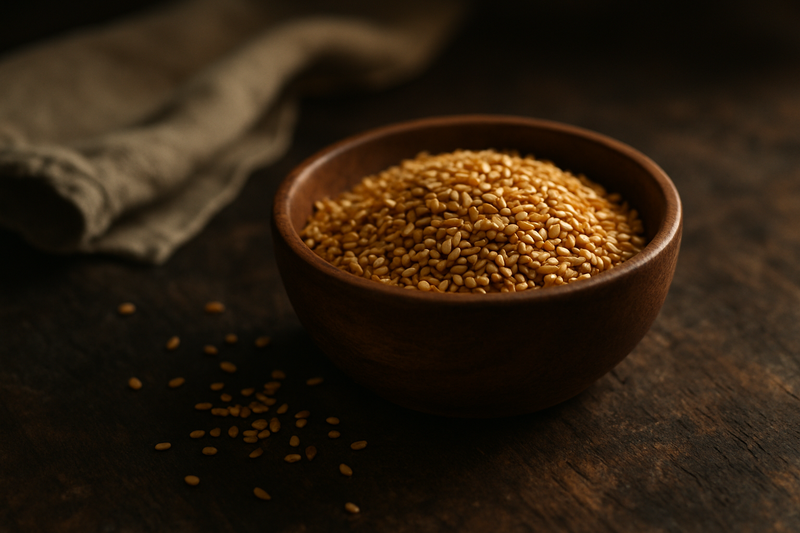
Toasted Sesame Seeds · Photograph
Discover the health benefits of toasted sesame seeds — from calcium and plant protein to heart-friendly fats and antioxidant lignans. Learn toasted vs raw nutrition, how much to use daily, allergy safety, and easy ways to add them to rice bowls, noodles, and stir-fries.
Key Nutrients
% Daily Value based on 2,000 cal diet
Key active compounds
- Sesamin — A lignan found mainly in sesame seeds and oil; acts as an antioxidant and has been studied in relation to lipid (fat) metabolism and inflammatory pathways.
- Sesamolin — A closely related lignan; converts partly to sesamol during roasting and processing, contributing to sesame oil's exceptional shelf stability.
- Sesamol — A phenolic antioxidant (a plant chemical with free-radical-scavenging properties) that becomes more prominent after heat treatment; shown to be a potent antioxidant in laboratory studies.
- Phytosterols — Plant sterols that compete with dietary cholesterol for absorption in the intestine; found in meaningful amounts in sesame seeds and associated with modest LDL cholesterol reductions in dietary research.
- Tocopherols (Vitamin E compounds) — Fat-soluble antioxidants that protect cell membranes from oxidative damage; contribute to sesame oil's stability and may support cardiovascular and skin health.
- Linoleic acid — The predominant polyunsaturated (heart-healthy) omega-6 fatty acid in sesame seeds; the fat profile is low in saturated fat and high in unsaturated fats.
Prep and pairing ideas
Dry-toasting sesame seeds is quick and easy:
- Place sesame seeds in a small, dry skillet (no oil) over medium-low heat.
- Stir or shake the pan frequently for 3–5 minutes until seeds turn lightly golden and you can smell a nutty aroma.
- Immediately pour them onto a plate or into a bowl — they continue to cook briefly from residual heat, so don't leave them in the hot pan.
- Cool completely before storing in an airtight jar; they keep at room temperature for 2–3 weeks or in the freezer for several months.
Common pairings: three practical combinations and why they work
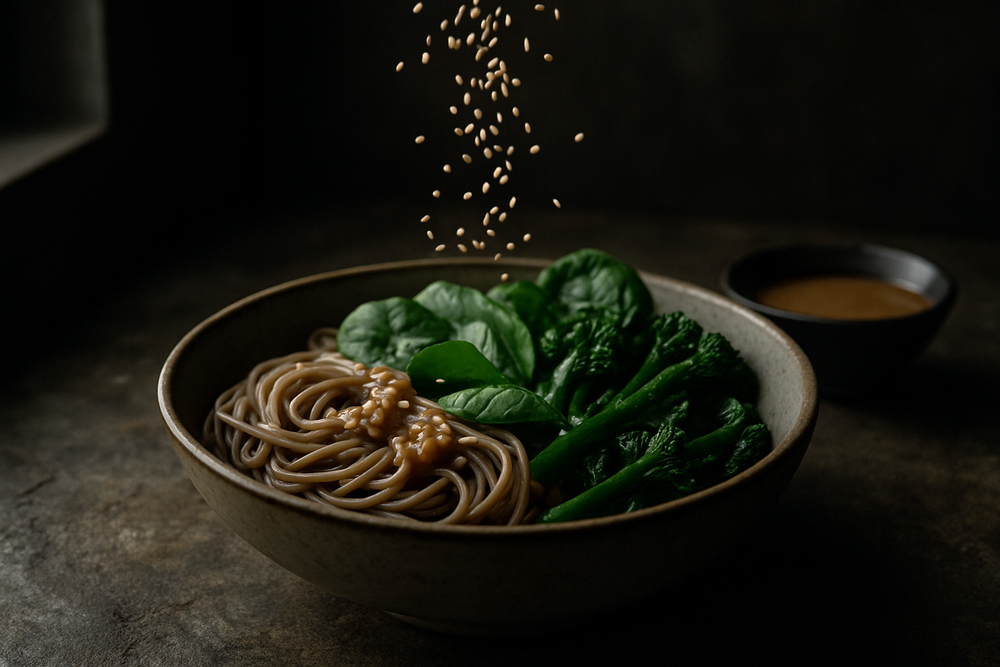
1. Toasted sesame seeds + brown rice or soba noodles This is the most classic pairing, and it earns its place nutritionally too. Brown rice and soba noodles are complex carbohydrates with moderate glycemic impact; sesame's fat, fiber, and protein help slow starch digestion and add minerals the grains lack — especially calcium, copper, and iron. The textural contrast (chewy grain vs. crunchy seed) also makes the dish more satisfying.
2. Toasted sesame seeds + steamed or stir-fried leafy greens (bok choy, spinach, broccoli) Greens like spinach and broccoli are rich in non-heme iron (the plant form of iron, which is less readily absorbed). Adding sesame seeds contributes additional iron while also providing a mild fat source — and dietary fat helps with the absorption of fat-soluble vitamins (A, E, K) found in leafy greens. The flavor pairing is a natural match for Asian-style cooking.
3. Toasted sesame seeds + miso dressing or tahini-based sauce Using both toasted whole seeds and tahini (made from toasted sesame) in the same dish doubles the sesame's mineral contribution while creating a richer, creamier texture. Miso's fermented umami flavor and probiotic potential complement sesame's nuttiness. A simple miso-tahini dressing over grain bowls or roasted root vegetables is a nutritionally dense, satisfying combination.
Buying guide: whole seeds, tahini, and what to check on the label
Whole toasted sesame seeds
- Look for seeds labeled "roasted and toasted" or "dry-toasted" without added oil, salt, or preservatives.
- Unhulled (brown/black) sesame seeds retain more calcium and fiber in the outer hull; hulled (white/ivory) sesame seeds are milder and more commonly sold toasted.
- Buy in small batches if possible — sesame seeds are high in polyunsaturated fat and can go rancid. Smell before using; stale sesame smells musty or bitter.
- Store in a sealed glass jar, away from heat and light. Refrigerate or freeze for best shelf life beyond a few weeks.
Tahini made from toasted sesame
- Read the ingredient list: it should say only "sesame seeds" (or "roasted sesame seeds"). Some brands add oil, salt, or other ingredients.
- A thin layer of oil on top of tahini is natural separation, not a quality issue — just stir well.
- Dark tahini (made from unhulled seeds) has a slightly more bitter taste and somewhat higher mineral content than light (hulled-seed) tahini.
Sesame seed snack mixes and gomasio
- Check the sodium content — some gomasio blends are very salty and some sesame snacks contain added sugars.
- A good gomasio ratio is roughly 7–10 parts sesame to 1 part salt; check that sesame is the first ingredient.
Bottom line
Toasted sesame seeds are a small seed with a surprisingly dense nutritional profile — standout calcium, copper, magnesium, and iron content alongside healthy unsaturated fats, plant protein, fiber, and a unique set of antioxidant lignans. Toasting enhances flavor and aroma without meaningfully reducing nutritional value compared to raw seeds.
The current evidence base supports modest benefits for heart and cardiometabolic health, with emerging signals around digestion, blood sugar balance, and inflammation — primarily from small human trials and mechanistic studies. They are not a cure or treatment for any condition, but at 1–2 tablespoons per day, toasted sesame seeds are one of the easiest, most versatile ways to boost the mineral density and antioxidant variety of everyday plant-based meals.
The most important safety consideration is allergenicity: sesame is a major allergen in most countries and toasting does not make it safer for allergic individuals. Everyone else can toast, sprinkle, grind, or blend to their taste.
Want to build meals around ingredients like this one? Browse the Plantopedia Goals guide to find eating patterns that match your health priorities.
How Toasted Sesame Seeds Compares
| Compared with | What's different |
|---|---|
| Toasted Sesame Seeds vs. Raw Sesame Seeds | Raw seeds have a milder, bitter flavor, while toasted seeds are nuttier and crunchier. |
| Toasted Sesame Seeds vs. Black Sesame Seeds | Black sesame seeds have a stronger, earthy flavor and higher antioxidant content than white seeds. |
| Toasted Sesame Seeds vs. Poppy Seeds | Poppy seeds are smaller and provide more manganese, whereas sesame seeds offer more calcium. |
Health Benefits
Things to Know
Sesame allergy is a major allergen in the US, Canada, the EU, and many other countries.: Sesame is listed alongside peanuts, tree nuts, milk, eggs, fish, shellfish, soy, and wheat as a priority allergen. Even tiny amounts — estimated at around 100 mg of seeds or as few as two seeds — can trigger reactions in sensitized people.
Toasting does NOT remove allergenicity.: The proteins that cause sesame allergy are heat-stable, meaning cooked, roasted, and toasted sesame is just as risky as raw sesame for allergic individuals.
Cross-contact risk: Sesame seeds are widely used in restaurants, bakeries, and food manufacturing. Labels should be checked carefully for "may contain sesame" or "processed in a facility with sesame."
Kidney disease: High mineral content (especially phosphorus, potassium, and calcium per 100 g) means people with advanced chronic kidney disease should discuss portion sizes with their renal dietitian.
Energy density: At about 565 kcal per 100 g, sesame seeds are calorie-dense. This is not a concern at 1–2 tablespoon servings, but worth keeping in mind if you are adding tahini or seeds in large amounts.
Medication interactions: No well-documented drug-nutrient interactions exist at culinary doses. People on antihypertensive or blood sugar-lowering medications making significant dietary shifts toward more sesame should inform their healthcare provider. Those on warfarin (an anticoagulant) should keep high-fat seed and nut intake relatively consistent and discuss major changes with their doctor.
Infants: If introducing sesame as part of early allergen exposure, follow current pediatric guidance on safe timing and form.
Pregnancy: Culinary amounts are generally considered safe; larger supplemental doses have not been well-studied. Consult your care provider if you have concerns.
Prep Ideas
- — Place sesame seeds in a small, dry skillet (no oil) over medium-low heat.
- — Stir or shake the pan frequently for 3–5 minutes until seeds turn lightly golden and you can smell a nutty aroma.
- — Immediately pour them onto a plate or into a bowl — they continue to cook briefly from residual heat, so don't leave them in the hot pan.
- — Cool completely before storing in an airtight jar; they keep at room temperature for 2–3 weeks or in the freezer for several months.
Glossary
Shop This Ingredient
Stock your pantry with quality toasted sesame seeds.
Buy on AmazonAs an Amazon Associate, Plantopedia earns from qualifying purchases. This costs you nothing extra and helps us keep the encyclopedia free.
Frequently Asked Questions
Heart and circulation Research into sesame seeds and heart health is largely based on small, short-term human trials using sesame seeds (typically 25–50 g per day), tahini, or sesame oil as the primary cooking fat. These studies have reported modest reductions in total and LDL cholesterol (the "bad" type linked to arterial plaque), mild improvements in HDL cholesterol (the "good" type), and small decreases in blood pressure in people with hypertension or dyslipidemia (abnormal blood fat levels). The likely drivers are sesame's overall nutrient package: high unsaturated fats (especially linoleic acid), meaningful fiber, and bioactives like phytosterols and lignans — all consistent with heart-healthy dietary patterns. No large, long-term outcome trials tracking heart attacks or stroke specifically from sesame intake exist yet, so this area sits at moderate evidence. At the 1–2 tablespoon culinary dose, effects are expected to be modest rather than dramatic, but every nutrient-dense whole food addition can contribute to a heart-friendly diet overall. Digestive health and microbiome Toasted sesame seeds contribute around 1.3 g of dietary fiber per tablespoon — adding up to over 2.5 g if you use two tablespoons. Fiber supports stool bulk, bowel regularity, and provides fermentable material that can benefit gut bacteria. Human trials specifically studying sesame seeds for constipation or microbiome changes are scarce, so digestive benefits are currently emerging evidence, inferred mainly from fiber content rather than dedicated gut health studies. One practical note: whole sesame seeds have tough hulls that may pass partially intact if not well chewed. People with sensitive digestion or those who want to maximize mineral absorption may do better with ground sesame (gomasio or tahini) than whole seeds. Blood sugar and metabolism Toasted sesame seeds are low in net carbohydrates and combine fiber, fat, and protein in a ratio that helps slow carbohydrate digestion and blunt postprandial (after-meal) blood glucose spikes. A few small human studies in people with type 2 diabetes using sesame oil as the primary cooking fat reported modest improvements in fasting blood glucose and HbA1c (a marker of average blood sugar over 2–3 months), but these were combined dietary interventions — not sesame seeds alone. At culinary doses, the blood sugar benefit is emerging: using toasted sesame seeds as a topping instead of refined, high-sodium sauces or condiments shifts the nutritional balance of a meal in a favorable direction, but they should not be viewed as a standalone blood sugar treatment. Hormones and cycle health Sesame seeds contain lignans that can have weak phytoestrogenic (mildly mimicking estrogen in the body) and hormone-modulating effects. Small trials in postmenopausal adults have suggested potential improvements in lipid profiles and antioxidant status, but direct effects on sex hormones, menopausal symptoms, or menstrual health in humans remain unclear. This is emerging territory — sesame can be part of a varied, hormone-supportive diet but should not be promoted as a primary hormone-balancing therapy. Inflammation and recovery Sesame's antioxidant profile — sesamin, sesamol, and tocopherols — remains largely intact after roasting. Small human studies using sesame products have reported reductions in oxidative stress markers and inflammatory biomarkers, but most of the mechanistic evidence comes from animal and cell-based studies. Current human data classify inflammation-related benefits as emerging. The most practical approach is to include sesame as part of a broader anti-inflammatory eating pattern (plenty of whole grains, legumes, fruits, and vegetables), rather than relying on it alone.
From a nutrition standpoint, toasted and raw sesame seeds are very close. Studies comparing the two show only minor differences in minerals and macronutrients after roasting. The practical advantages of toasting are: Flavor and aroma: Dry-toasting activates the Maillard reaction, producing nutty, fragrant compounds that make seeds far more appealing as a garnish. Antioxidant compounds: Sesamol content may actually increase slightly during roasting as sesamolin converts. Minor tradeoffs: Some heat-sensitive compounds (like certain water-soluble B vitamins) may decrease marginally, but the effect at culinary temperatures is small. For maximum nutrition and digestibility, you have several options: Whole toasted seeds — best for texture and crunch as a topping; some fraction may pass through the gut less digested if not chewed well. Gomasio (ground toasted sesame + salt) — traditional Japanese condiment; grinding improves mineral and fat bioavailability. Tahini made from toasted seeds — a paste that is easier to digest and rich in all the seed's fats and minerals; great in sauces and dressings. Toasted sesame oil — delivers fat-soluble lignans and tocopherols but almost no fiber, protein, or minerals; best used as a finishing flavor oil, not a high-heat cooking fat.
There is no official recommended daily intake specifically for toasted sesame seeds. Here is what the available evidence and dietary guidance suggest: Culinary use: 1–2 tablespoons (9–18 g) per day is a practical, well-tolerated amount for most adults. This is the typical serving used when sprinkling seeds over rice bowls, noodles, salads, or stir-fries. Clinical studies investigating sesame's effects on cholesterol, blood pressure, and blood sugar have often used much higher amounts — 25–50 g of seeds per day (roughly 3–5 tablespoons) or sesame oil as the primary cooking fat. These amounts go well beyond typical culinary use and may be appropriate under dietary guidance but are not necessary for general health benefits. Start modest: If you are new to sesame or have a sensitive digestive system, begin with 1 teaspoon and build up. High amounts at once can cause bloating or loose stools due to fat and fiber content. Allergy exception: If you have a sesame allergy, there is no safe dose of toasted sesame seeds. For whole-food plant-based (WFPB) eaters: MyPlate and similar guidance include nuts and seeds as part of the protein foods group; 1–2 tablespoons of sesame seeds counts as a meaningful plant protein and mineral contribution within a daily nuts-and-seeds target of around 30–40 g.
Quick Answers
Common questions, answered in a line.
To dry-toast sesame seeds, place them in a dry skillet over medium-low heat for 3–5 minutes until they are golden and fragrant. Stir or shake the pan frequently to prevent burning, then immediately transfer the seeds to a plate or bowl to stop the cooking process.
Toasted sesame seeds are rich in minerals like calcium, copper, magnesium, and iron, along with healthy unsaturated fats, plant protein, and fiber. They also contain unique antioxidant lignans like sesamin and sesamolin, which may support heart health and lipid metabolism.
Yes, sesame is considered a major allergen globally, and even tiny amounts—as few as two seeds—can trigger a reaction in sensitized individuals. The proteins responsible for the allergy are heat-stable, meaning toasting does not make the seeds safer to eat.
Toasted sesame seeds pair excellently with brown rice, soba noodles, leafy greens, and miso-based dressings. Adding them to greens like spinach or broccoli provides healthy fats that help your body absorb fat-soluble vitamins like A, E, and K.
Store toasted sesame seeds in a sealed glass jar away from heat and light to prevent them from going rancid. They will stay fresh at room temperature for 2–3 weeks, or they can be stored in the freezer for several months for a longer shelf life.
When buying tahini, look for labels that list only "sesame seeds" or "roasted sesame seeds" as the ingredients. Avoid brands with unnecessary added oils, salts, or preservatives, and remember that natural oil separation on top is normal and just requires stirring.
Unhulled sesame seeds, which are typically brown or black, retain their outer hull and contain higher levels of calcium and fiber. Hulled seeds are white or ivory in color, have a milder flavor, and are the variety most commonly sold as toasted.
For Readers in the USA
Local context — sourcing, seasonality, and regional notes.
In the United States, you can find toasted sesame seeds at major grocery chains like Kroger, Whole Foods Market, and Walmart, usually in the spice aisle or international food section. They are also a staple at Asian grocery stores like H-Mart and 99 Ranch Market, where they are often sold in larger, more cost-effective bulk bags.
As of January 2023, the FDA officially recognizes sesame as the ninth major food allergen in the U.S., requiring it to be clearly labeled on all packaged foods. This federal regulation helps consumers identify sesame in products like bread, crackers, and sauces where it was previously listed under vague terms like "spices" or "natural flavors."
Most sesame seeds sold in the U.S. are imported, but commercial domestic production is concentrated in warm Southern states like Texas and Oklahoma. Because sesame is a drought-tolerant crop, it is increasingly grown in the American Southwest as a resilient alternative to traditional crops during hot summer months.
The most common varieties found in U.S. kitchens are white and black sesame seeds, with "Everything Bagel" seasoning being a popular American way to consume them. While white seeds are the standard for hamburger buns and stir-fries, black sesame seeds are trending in U.S. artisanal bakeries for use in cookies, ice cream, and lattes.
AI Clinical Review
- Accurately frames toasted sesame seeds as mineral‑dense (notably calcium, copper, magnesium, iron) with mostly preserved nutrition after dry‑toasting and about 50 kcal per tablespoon.
- Explains sesame’s key bioactives (lignans like sesamin/sesamolin/sesamol, phytosterols, tocopherols) and how roasting can increase sesamol without major nutrient losses.
- Appropriately characterizes cardiometabolic benefits as modest and most evident in small, short‑term trials using seeds, tahini, or oil.
- Clearly identifies sesame as a major allergen and notes that heat does not reduce allergenicity, which is critical for safety.
- Heart outcomes: human studies are limited in size and duration, and no trials link sesame intake directly to fewer heart attacks or strokes; expect small effects at garnish‑level doses.
- Glycemic control: improvements reported with sesame oil or larger intakes don’t establish that 1–2 tablespoons of seeds alone change HbA1c or fasting glucose in a meaningful way.
- Gut/microbiome: digestive benefits are inferred from fiber; direct trials on constipation or microbiome shifts with whole seeds are sparse.
- Hormone/phytoestrogen effects: signals exist, mainly mechanistic or small studies; consistent changes in sex hormones or menopausal symptoms aren’t established.
- Allergy and cross‑contact: sesame is a priority allergen; roasting/toasting does not inactivate proteins. Even trace amounts can trigger reactions in sensitized individuals.
- Practical dose: 1–2 tablespoons (about 9–18 g) per day is a sensible culinary range; larger amounts raise calorie intake quickly. Start smaller if you have a sensitive gut.
- Form matters: unhulled seeds provide more calcium; grinding (gomasio/tahini) can aid absorption vs whole seeds; toasted sesame oil offers flavor and fat‑soluble compounds but little fiber/minerals and isn’t for high‑heat cooking.
- Who should check in: people with advanced kidney disease (mineral load), those adjusting diets while on blood‑pressure or diabetes medications, and anyone on anticoagulation should discuss consistent intake with their clinician. For infants and during pregnancy, culinary amounts are generally acceptable; follow pediatric/OB guidance, especially regarding allergy introduction.
Sesame is a recognized major allergen; toasting does not remove allergenicity.
References
- USDA FoodData Central — Seeds, sesame seeds, whole, roasted and toasted (nutrient profile) (fdc.nal.usda.gov)
- MyPlate Protein Foods Group — nuts and seeds as plant-based protein sources (myplate.gov)
- Health Canada — Sesame as a Priority Food Allergen (safety and labeling guidance) (canada.ca)
- University of Manchester InformAll — Allergy information for Sesamum indicum (allergen stability and dose thresholds) (research.bmh.manchester.ac.uk)
- PMC / NCBI — Diagnosis of sesame allergy: estimated lowest adverse effect levels and protein per seed (peer-reviewed clinical review) (pmc.ncbi.nlm.nih.gov)
- Thermo Fisher Scientific — Sesame allergen fact sheet (heat stability and clinical considerations) (thermofisher.com)
- UH Hospitals Nutrition Facts — Seeds, sesame seeds, whole, roasted and toasted, 1 oz (USDA-based micronutrient breakdown) (uhhospitals.org)
- HLAgro — Nutritional differences between raw and roasted sesame seeds (comparison of nutrient retention) (hlagro.com)
- Triage Method Human Nutrition Explorer — Sesame seeds, whole, roasted and toasted (detailed macro and micronutrient data) (triagemethod.com)
Know Your Numbers
Eating healthy is a start. Now get to know your biomarkers.
Food changes bloodwork — inflammation, lipids, blood sugar and nutrient status all respond to what you eat. 59 markers from $59.
- Results in 7–10 days at 2,000+ Quest sites
- Licensed provider reviews every result
- One flat price, no membership, HSA/FSA eligible
Educational information only, not medical advice. Panels are ordered and reviewed through our licensed partner; Plantopedia may earn a commission.