Turnips — health benefits and uses
Color, fiber, and everyday plate-building angle
The Short Answer
Turnips are a nutrient-dense root vegetable providing 30% of your daily Vitamin C per cup. They offer a mild, peppery flavor similar to a radish when raw, but become tender and sweet like a potato when roasted or mashed.

Turnips · Photograph
Turnips (Brassica rapa subsp. rapa) are a cool-weather root vegetable in the cruciferous family — the same botanical group as broccoli, cabbage, and kale. They have fed communities across Europe, Asia, and North America for centuries, yet they remain one of the most underused vegetables in modern kitchens. That gap is worth closing: turnips are inexpensive, widely available, and genuinely useful for diversifying your vegetable intake.
Key Nutrients
% Daily Value based on 2,000 cal diet
Key active compounds (phytochemicals)
Phytochemicals are naturally occurring plant compounds that have biological activity in the body. Turnips contain several:
- Glucosinolates — Sulfur-containing compounds characteristic of all cruciferous vegetables. When the plant is cut, chewed, or lightly cooked, an enzyme called myrosinase converts them into active forms.
- Isothiocyanates — The main active breakdown products of glucosinolates. Cell and animal studies show antioxidant and anti-inflammatory properties; human evidence is emerging and mostly drawn from cruciferous vegetables as a group.
- Anthocyanins — Water-soluble pigments that give purple-topped turnip varieties their color. Research on anthocyanin-rich diets links them to vascular health benefits.
- Phenolic acids — A broad class of plant compounds (caffeic, ferulic, and p-coumaric acids) that contribute to overall dietary antioxidant capacity.
- Flavonoids — Polyphenolic compounds found across plant foods; cohort studies associate higher flavonoid intake with lower cardiovascular risk.
Prep and pairing ideas
Buying guide
- Fresh turnips are the most flavorful option. Look for firm, smooth bulbs, heavy for their size, with no soft spots or deep cracks. Smaller turnips (golf-ball to tennis-ball size) tend to be sweeter and less fibrous than very large ones.
- Label tip: Purple-topped turnips are the standard variety; entirely white turnips are also common and slightly milder. Either works for any preparation.
- Frozen turnips are available pre-diced and work well in soups and stews; they will be softer when thawed and do not roast as crisply as fresh.
- Canned turnips exist but are less common; sodium content varies — rinse before use if sodium is a concern.
- Storage: Keep fresh turnips in the refrigerator crisper drawer, unwashed, for up to two weeks. If greens are attached, remove them and store separately — they wilt within two to three days.
Common pairings
- Turnip + apple + whole-grain mustard — Raw or roasted turnip alongside tart apple and a grainy mustard dressing creates a balance of sweetness, acidity, and mild heat. Works as a slaw, a side salad, or a grain bowl topping.
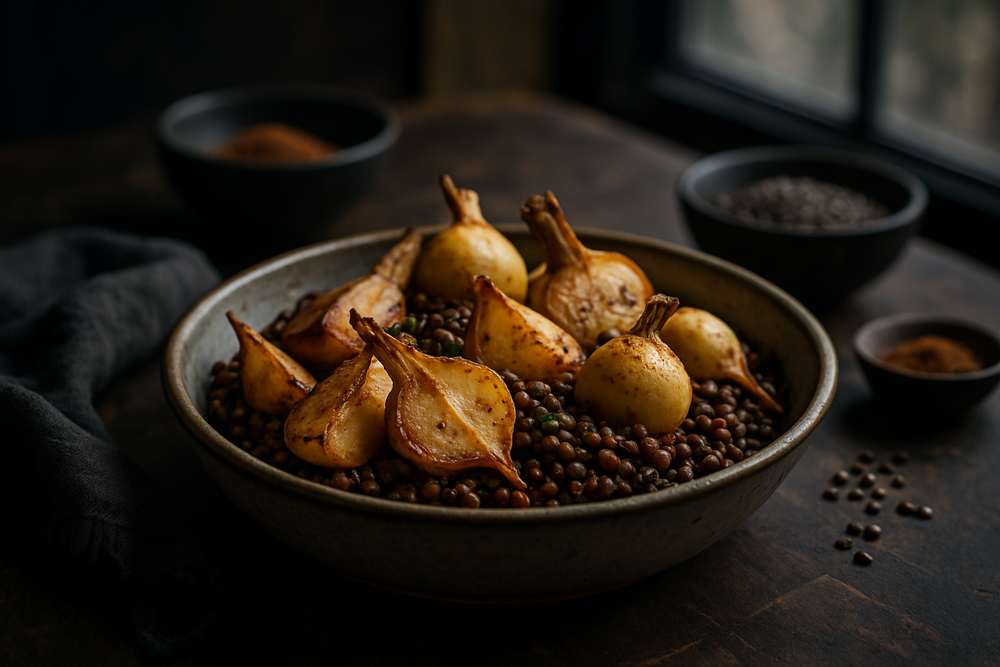
- Turnip + lentils + warming spices (cumin, turmeric, coriander) — Cubed turnip added to a red lentil soup or curry in the last 20 minutes of cooking absorbs the broth beautifully and adds texture. The combination provides complementary fiber, plant protein, and iron.
- Turnip + potato + fresh herbs (thyme, rosemary, chives) — Replacing half the potato in a mash or roasted sheet pan with turnip cuts the calorie and carbohydrate load while keeping a familiar flavor profile. Fresh herbs bridge any residual sharpness.
How Turnips Compares
| Compared with | What's different |
|---|---|
| Turnips vs. Radish | Radishes are sharper and peppery, while turnips are milder and become sweet when cooked. |
| Turnips vs. Rutabaga | Rutabagas are larger, yellowish inside, and sweeter than the white-fleshed, peppery turnip. |
| Turnips vs. Potato | Turnips have roughly half the calories and a sharper, cruciferous flavor compared to potatoes. |
Health Benefits
Things to Know
GI adjustment: Increasing fiber quickly can cause gas, bloating, or loose stools. Start with half a cup and build up over one to two weeks while drinking adequate fluids.
Thyroid medication (levothyroxine): Very high raw cruciferous vegetable intake combined with low iodine could theoretically affect thyroid function. Cooked turnips at normal serving sizes are generally considered safe; discuss major diet changes with your doctor if you have hypothyroidism.
Warfarin and vitamin K: Turnip roots are relatively low in vitamin K. Turnip greens, however, contain more. If you take a vitamin K–antagonist anticoagulant like warfarin, aim for consistent — not zero — intake of leafy greens, and flag any major changes to your prescriber.
IBS and fermentable carbohydrates: Some people with irritable bowel syndrome are sensitive to FODMAPs (short-chain carbohydrates that ferment in the gut). Turnips in moderate portions are generally considered lower in FODMAPs, but individual tolerance varies.
Cruciferous allergy: Rare but reported. If you have a known allergy to mustard, cabbage, or broccoli, treat turnips with the same caution.
Kidney stones: Turnips are not among the highest-oxalate foods, but overall dietary balance and fluid intake still matter if you have a history of kidney stones.
Pregnancy: Folate content is a genuine benefit for people of childbearing potential, but total folate needs in pregnancy typically require a dedicated supplement alongside food sources.
Prep Ideas
- — Fresh turnips are the most flavorful option. Look for firm, smooth bulbs, heavy for their size, with no soft spots or deep cracks. Smaller turnips (golf-ball to tennis-ball size) tend to be sweeter and less fibrous than very large ones.
- — Label tip: Purple-topped turnips are the standard variety; entirely white turnips are also common and slightly milder. Either works for any preparation.
- — Frozen turnips are available pre-diced and work well in soups and stews; they will be softer when thawed and do not roast as crisply as fresh.
- — Canned turnips exist but are less common; sodium content varies — rinse before use if sodium is a concern.
- — Storage: Keep fresh turnips in the refrigerator crisper drawer, unwashed, for up to two weeks. If greens are attached, remove them and store separately — they wilt within two to three days.
- — Turnip + apple + whole-grain mustard — Raw or roasted turnip alongside tart apple and a grainy mustard dressing creates a balance of sweetness, acidity, and mild heat. Works as a slaw, a side salad, or a grain bowl topping.
- — Turnip + lentils + warming spices (cumin, turmeric, coriander) — Cubed turnip added to a red lentil soup or curry in the last 20 minutes of cooking absorbs the broth beautifully and adds texture. The combination provides complementary fiber, plant protein, and iron.
- — Turnip + potato + fresh herbs (thyme, rosemary, chives) — Replacing half the potato in a mash or roasted sheet pan with turnip cuts the calorie and carbohydrate load while keeping a familiar flavor profile. Fresh herbs bridge any residual sharpness.
Shop This Ingredient
Stock your pantry with quality turnips.
Buy on AmazonAs an Amazon Associate, Plantopedia earns from qualifying purchases. This costs you nothing extra and helps us keep the encyclopedia free.
Frequently Asked Questions
Evidence is clear that overall vegetable intake matters. Most research on cruciferous vegetables as a category — not turnips alone — informs the specific claims below. That context is important: turnips contribute meaningfully to a plant-rich diet, but they are not a standalone treatment for any condition. Heart and circulation Turnips are naturally low in calories, free of cholesterol and sodium, and provide fiber and potassium — a combination that fits neatly into dietary patterns consistently linked to lower cardiovascular risk. Large cohort studies (observational studies tracking thousands of people over years) find that higher vegetable intake, including cruciferous vegetables, is associated with lower rates of cardiovascular disease and stroke. The benefit likely comes from effects on blood pressure, cholesterol, and overall diet quality. Replacing higher-calorie, sodium-rich sides with turnips is a simple, practical step in that direction. Digestive health and microbiome With around 3 grams of fiber per cooked cup, turnips contribute to both soluble fiber (which feeds beneficial gut bacteria and supports blood sugar regulation) and insoluble fiber (which adds bulk and supports regular bowel movements). Human trials on higher-fiber diets consistently show improvements in stool frequency, stool consistency, and gut microbiome diversity. There are no turnip-specific gut health trials, but turnips can meaningfully contribute to the fiber levels used in studies that show digestive benefit. Practical note: If you are currently eating a low-fiber diet, add turnips and other vegetables gradually — alongside plenty of water — to minimize gas or bloating as your gut adjusts. Blood sugar and metabolism Turnips are a lower-carbohydrate, higher-fiber alternative to starchy sides like white potatoes or refined grains. Fiber slows the digestion and absorption of sugars from a meal, which can help moderate the post-meal blood glucose spike. Human trials on mixed high-fiber vegetable diets show improved glycemic control — particularly in people with insulin resistance or type 2 diabetes. No clinical trials have tested turnips in isolation for blood sugar outcomes, but substituting them for higher-glycemic options is a strategy that aligns with established dietary guidance for blood sugar management. Hormones and cycle health Cruciferous vegetables provide glucosinolates that, when metabolized, can influence liver enzyme activity involved in hormone breakdown — particularly estrogen. Human studies using broccoli, Brussels sprouts, and related vegetables have shown changes in estrogen metabolite ratios and enhanced detoxification enzyme function. Turnip roots likely contribute similar compounds, though no human trials have directly tested turnip intake on hormone outcomes. Effects appear modest and depend on overall dietary patterns rather than any single food. Caution: People with thyroid conditions should know that very large amounts of raw cruciferous vegetables — combined with low iodine intake — could theoretically interfere with thyroid hormone production. Cooked portions at typical serving sizes are generally considered safe; discuss any concerns with your clinician. Inflammation and recovery The glucosinolate-derived compounds in turnips, especially isothiocyanates, show antioxidant and anti-inflammatory properties in cell and animal models. Human studies using cruciferous vegetables as a group suggest potential reductions in oxidative stress markers, though results are not fully consistent across studies. Cooking method matters here: light cooking (quick sautéing, roasting) tends to preserve more active glucosinolate-derived compounds than prolonged boiling.
Both forms have genuine merit; the best answer depends on the variety, your taste preferences, and the rest of your meal. Roasted (most beginner-friendly): High dry heat at around 425°F (220°C) for 20–35 minutes caramelizes the natural sugars and produces a mellow, slightly sweet flavor with virtually no bitterness. This is the method most likely to convert a turnip skeptic. Cut into 1-inch cubes or wedges, toss with a small amount of oil, season generously, and roast until edges are golden. Boiled and mashed: Cut into cubes, simmer in salted water for 20–30 minutes, drain thoroughly, then mash alone or mixed with parsnips, carrots, or potatoes. Draining well is key — excess water makes mash watery and amplifies any bitterness. In soups and stews: Cubed turnips hold their shape in brothy dishes and absorb surrounding flavors well. They work particularly well in lentil soups, vegetable broths, and bean stews. This is also the easiest swap for part of the potato in an existing recipe. Raw in salads or slaws: Young, small turnips have a milder, slightly peppery bite that works well sliced thin, julienned, or grated. Pair with citrus dressing or creamy tahini to balance the sharpness. Pickled or fermented: Quick-pickling with vinegar and spices gives turnips a tangy, crisp character that works in grain bowls and sandwiches. Traditional lacto-fermented turnips introduce beneficial live cultures. Be mindful of sodium content if you're managing blood pressure. Greens (leafy tops): Sauté briefly with garlic and a pinch of salt, steam, or add to soups. Treat them like hearty mustard greens. Separate them from the roots and store individually, as the greens wilt faster.
There is no established therapeutic dose for turnips specifically. The practical guidance comes from overall vegetable targets rather than a precise turnip number. General adult target: Major dietary guidelines recommend approximately 2.5 to 3 cups of vegetables per day for most adults. Turnips can contribute 1/2 to 2 cups on the days you eat them, comfortably fitting within that range. For beginners or those with sensitive digestion: Start at 1/2 cup cooked two to three times per week. Increase portion and frequency over two to four weeks as your gut adjusts. For people swapping turnips for potatoes: A direct one-for-one substitution by volume works well in most recipes and naturally reduces calorie and carbohydrate load without requiring calorie counting. Cruciferous variety over quantity: Rather than eating large amounts of one cruciferous vegetable daily, rotating across turnips, broccoli, cabbage, cauliflower, and kale gives you a wider range of gluco
Quick Answers
Common questions, answered in a line.
To pick the best turnips, look for firm, smooth bulbs that feel heavy for their size and have no soft spots or deep cracks. Smaller turnips, roughly the size of a golf ball or tennis ball, are typically sweeter and less fibrous than larger ones.
Fresh turnips should be stored unwashed in the refrigerator's crisper drawer, where they can stay fresh for up to two weeks. If the greens are still attached, remove them and store them separately, as they will wilt within two to three days.
Turnips are rich in glucosinolates, isothiocyanates, anthocyanins, phenolic acids, and flavonoids. These naturally occurring plant compounds contribute to the vegetable's antioxidant and anti-inflammatory properties, with some linked to improved vascular and cardiovascular health.
Yes, you can substitute turnip for half of the potatoes in mashes or roasted dishes to reduce the total calorie and carbohydrate load. Combining them with fresh herbs like thyme, rosemary, or chives helps bridge the flavors and balances any residual sharpness.
If you take warfarin, you should maintain a consistent intake of turnip greens because they contain more vitamin K than the roots. While turnip roots are relatively low in vitamin K, significant changes in your consumption of the greens should be discussed with your doctor.
Turnips are generally considered a lower-FODMAP food and are usually well-tolerated by people with IBS in moderate portions. However, because individual tolerance to fermentable carbohydrates varies, it is recommended to monitor your own reaction.
To avoid gas or bloating, start by eating half a cup of turnips and gradually increase your intake over one to two weeks. Increasing your fluid intake while adding more fiber-rich vegetables to your diet can also help minimize digestive discomfort.
For Readers in the USA
Local context — sourcing, seasonality, and regional notes.
Turnips are a cool-weather crop grown primarily in states like California, Georgia, and Michigan, with peak seasons in late fall and early spring. While available year-round in most U.S. supermarkets, you will find the sweetest, most tender varieties at local farmers markets between October and April.
In the U.S., you can find fresh turnips at major retail chains like Kroger, Walmart, and Whole Foods, as well as specialty Asian markets for specific varieties. Hakurei turnips, a popular Japanese salad variety, are frequently sold by local organic farmers at regional farmers markets during the spring and fall.
Standard purple-top turnips are the most common in American produce aisles, though regional favorites like the Southern "Seven Top" are grown specifically for their greens. In the Pacific Northwest and Northeast, you may also encounter the small, white, sweet Hakurei variety, often referred to as "Tokyo turnips."
Southern U.S. cuisine traditionally features turnip greens slow-simmered with ham hocks or smoked turkey, while the roots are often included in traditional "boiled dinners" in New England. Regardless of region, the USDA recommends choosing USDA Organic certified turnips if you wish to avoid synthetic pesticides and fertilizers during cultivation.
AI Clinical Review
- Clearly places turnips within the cruciferous vegetable family and explains glucosinolates converting to isothiocyanates (active compounds), aligning with current nutrition science on crucifers as a group.
- Nutrition snapshot is consistent with standard databases: low calorie, a source of fiber, vitamin C, folate, and potassium; turnip greens are correctly noted as rich in vitamin K and carotenoids.
- Cooking guidance is practical and evidence‑consistent: lighter cooking and thorough draining can improve flavor and help preserve some glucosinolate activity; roasting is often better accepted than boiling.
- Positioning turnips as a lower‑carbohydrate substitute for potatoes fits with strategies to moderate post‑meal blood glucose and overall calorie intake when part of a balanced meal pattern.
- Few human trials test turnip roots specifically; most benefits cited (cardiovascular, metabolic, inflammation) come from broader crucifer or high‑vegetable studies and should be viewed as supportive, not definitive for turnips alone.
- Hormone‑related effects (e.g., estrogen metabolism) are documented mainly with broccoli/Brussels sprouts; magnitude appears modest and links to clinical outcomes remain uncertain.
- The amount your body absorbs of isothiocyanates varies with variety, chopping/chewing, cooking method, and your gut microbiome—so individual responses can differ.
- Anthocyanin‑related vascular benefits are based on general anthocyanin research; turnip‑specific clinical data are limited.
- Portions: Working toward 2.5–3 cups of vegetables per day is reasonable; 1/2–2 cups of turnip on days you eat it fits well. Increase fiber gradually with adequate fluids to minimize gas or bloating.
- Thyroid considerations: Very large amounts of raw crucifers plus low iodine intake could theoretically affect thyroid function. Typical cooked servings are safe for most; people with hypothyroidism or taking levothyroxine should discuss major diet changes with their clinician.
- Anticoagulation: Turnip roots are low in vitamin K, but the greens are high. If you take warfarin, keep leafy‑green intake consistent rather than eliminating it.
- Digestive sensitivity and sodium: Moderate portions of turnips are generally low in FODMAPs, though tolerance is individual. Pickled/fermented forms can be high in sodium, which matters if you’re managing blood pressure.
Frame as food education, not disease treatment.
References
- PMC, National Library of Medicine — A Critical Review on Phytochemical Profile and Biological Effects of Turnip (Brassica rapa L.) (pmc.ncbi.nlm.nih.gov)
- USDA FoodData Central — USDA FoodData Central (fdc.nal.usda.gov)
- PMC, National Library of Medicine — Root Vegetables-Composition, Health Effects, and Contaminants (pmc.ncbi.nlm.nih.gov)
- PubMed — Phytochemical and Health-Beneficial Progress of Turnip (Brassica rapa) (pubmed.ncbi.nlm.nih.gov)
- PMC, National Library of Medicine — Phytochemical characterization of turnip greens (Brassica rapa ssp. rapa): A systematic review (pmc.ncbi.nlm.nih.gov)
Know Your Numbers
Eating healthy is a start. Now get to know your biomarkers.
Food changes bloodwork — inflammation, lipids, blood sugar and nutrient status all respond to what you eat. 59 markers from $59.
- Results in 7–10 days at 2,000+ Quest sites
- Licensed provider reviews every result
- One flat price, no membership, HSA/FSA eligible
Educational information only, not medical advice. Panels are ordered and reviewed through our licensed partner; Plantopedia may earn a commission.