White Pepper — health benefits and uses
Used in traditional Chinese cooking as a warming digestive spice.
The Short Answer
White pepper is the seed of the pepper plant with the outer husk removed, providing a concentrated source of piperine (5–9%) for digestive support and a mild, earthy heat.
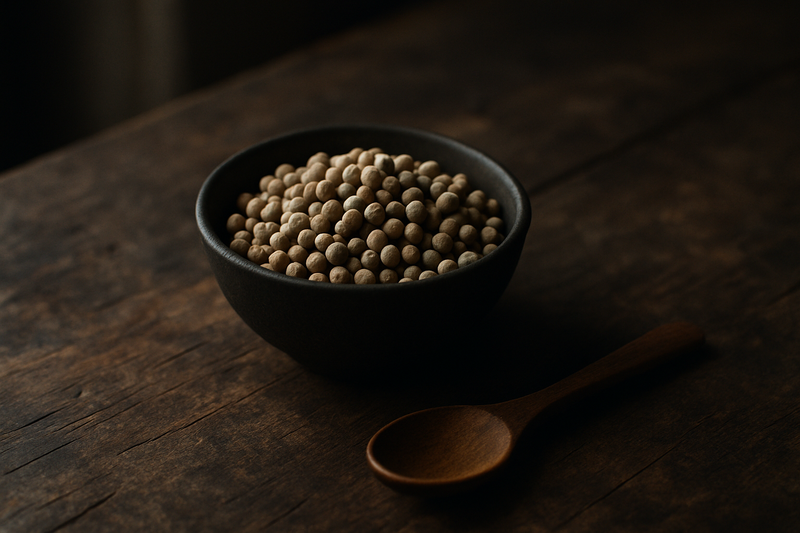
White Pepper · Photograph
Discover white pepper health benefits and how to use it every day — from digestive support and anti-inflammatory properties to nutrition facts per teaspoon, safety tips, and why it belongs in your Chinese soups and light-colored sauces.
Key Nutrients
% Daily Value based on 2,000 cal diet
Key active compounds in white pepper
- Piperine — An alkaloid (a nitrogen-containing plant compound) that accounts for roughly 5–9% of white pepper by weight. It is the main source of heat, and the compound most studied for digestive, anti-inflammatory, and bioavailability-enhancing effects. Bioavailability means how much of a nutrient or compound the body actually absorbs and uses.
- Volatile oils and terpenes — Aromatic molecules responsible for white pepper's distinctive earthy scent. They may have mild antimicrobial and antioxidant activity, though most evidence is from laboratory studies rather than human trials.
- Phenolic compounds — A broad family of antioxidant plant chemicals present in pepper berries. In cell and animal studies they help reduce oxidative stress (cellular damage caused by unstable molecules called free radicals) and may modulate inflammatory pathways.
Buying guide: what to look for when choosing white pepper
White pepper's quality varies more than you might expect. Here is how to choose well:
- Whole peppercorns over pre-ground when possible. Whole berries retain their volatile oils and piperine content far longer than ground powder. Grind only what you need.
- Check the color and smell. Good-quality white peppercorns are uniformly pale cream to light tan. Dull gray or uneven coloring can signal poor processing or age. Fresh white pepper has a distinctly earthy, slightly fermented aroma — sharp but not musty.
- Single-origin or named-origin pepper (Sarawak, Muntok, Vietnamese) tends to have more consistent quality and traceability than generic bulk pepper.
- Ground white pepper label tips. Look for products listing white pepper as the sole ingredient. Avoid blends labeled "white pepper seasoning" if you want pure pepper, as they often contain fillers, salt, or flow agents.
- Organic certification is available but not essential for a spice used in teaspoon quantities; residue exposure from conventional white pepper at culinary amounts is very low.
- Shelf life. Whole peppercorns keep well for 2 to 3 years; ground pepper is best within 6 to 12 months of opening.
Prep and pairing ideas
White pepper shines in places where black pepper's color or sharp heat would dominate the dish.
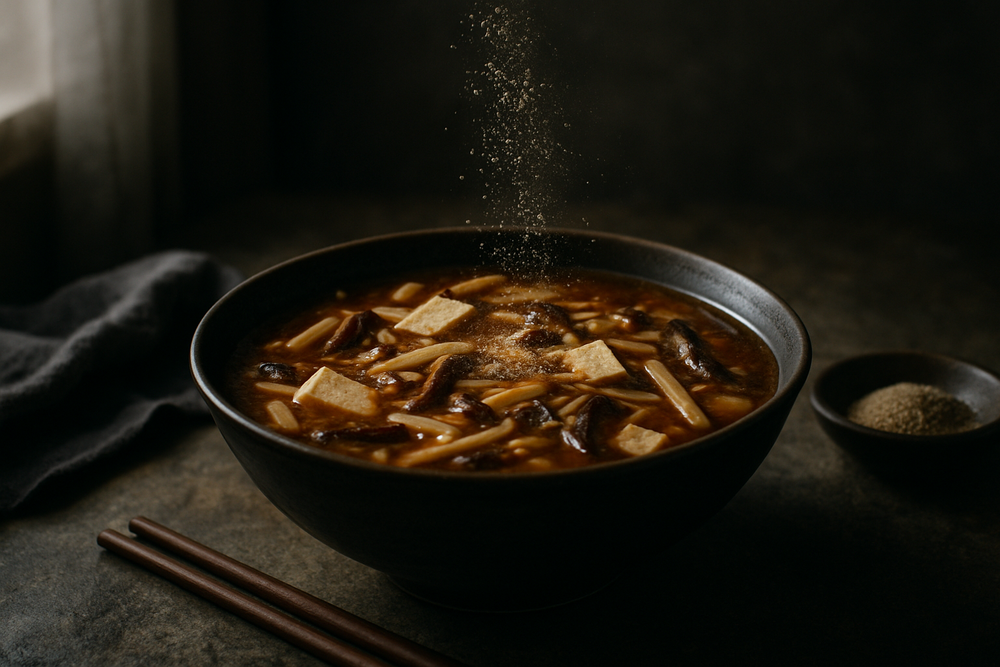
Classic Chinese hot and sour soup. White pepper is the defining spice of this dish. Add 1 teaspoon per 4 servings toward the end of cooking so the volatile oils are not lost to long simmering. It pairs perfectly with tofu, mushrooms, bamboo shoots, and a splash of rice vinegar.
Creamy pasta or béchamel sauce. Stir ground white pepper into the sauce base off the heat. It keeps the sauce visually clean while adding gentle warmth that complements the dairy or plant-milk fat. Pair with nutmeg — both spices have terpene compounds that work harmoniously together.
Mashed potatoes or cauliflower mash. Add a generous pinch of white pepper with garlic and a drizzle of olive oil. The pepper's earthiness contrasts the natural sweetness of the starch without overpowering it.
Turmeric dishes. This is a genuinely functional pairing: piperine in white pepper significantly enhances absorption of curcumin, the active compound in turmeric. Add white pepper to golden milk, turmeric rice, or curried lentils.
Congee (rice porridge). In Chinese and Vietnamese traditions, a finishing pinch of white pepper over congee with ginger and scallions is almost universal. The pepper's warmth complements ginger's heat and supports digestion.
Bottom line
White pepper is a mild, earthy, visually clean spice that earns its place in the kitchen on flavor grounds alone — and comes with a compelling supporting cast of biologically active compounds. Piperine, its main active ingredient, has genuine evidence behind it for digestive support and enhanced nutrient absorption, though most of that research uses concentrated extracts rather than culinary amounts. Anti-inflammatory, blood sugar, and cardiovascular benefits are promising but still emerging.
For most people, using 1 to 2 teaspoons of white pepper daily in cooking is safe, flavorful, and a small but real contribution to a spice-rich, anti-inflammatory diet. It is not a substitute for medical care, but it is a worthy addition to a thoughtful, whole-food approach to eating.
How White Pepper Compares
| Compared with | What's different |
|---|---|
| White Pepper vs. Black Pepper | Whole dried berries with the outer skin intact; more floral and sharp. |
| White Pepper vs. Red Peppercorns | Harvested ripe with a fruity, sweet heat; much shorter shelf life. |
| White Pepper vs. Allspice | Mild, sweet, and smoky with notes of cinnamon; not a true peppercorn. |
Health Benefits
Things to Know
GI sensitivity.: If you have gastroesophageal reflux disease (GERD), peptic ulcers, active gastritis, or irritable bowel syndrome (IBS), pungent spices including white pepper may aggravate symptoms. Start with small amounts and observe how your body responds.
Medication interactions (supplements only).: High-dose piperine supplements can inhibit cytochrome P450 enzymes (specifically CYP3A4), which the liver uses to process many medications. This can raise blood levels of drugs including certain anticoagulants, antiepileptics, and immunosuppressants. Culinary amounts of white pepper are unlikely to reach the doses needed to cause this effect, but if you take any of the above medications and are considering piperine supplements, consult your prescribing physician.
Pregnancy and breastfeeding.: Culinary use of white pepper is generally considered safe. High-dose piperine supplements lack adequate safety data in pregnancy and should be avoided unless advised by a doctor.
Allergy or intolerance.: Rare but possible. If you have a known pepper allergy, avoid white pepper and related species.
Drug bioavailability.: Because piperine can increase absorption of some substances, people on narrow therapeutic-window medications should discuss regular high pepper intake with their healthcare provider before making significant dietary changes.
Children.: Culinary use is fine at age-appropriate amounts, but the pungency may irritate young children's GI tracts; introduce gradually.
Glossary
Shop This Ingredient
Stock your pantry with quality white pepper.
Buy on AmazonAs an Amazon Associate, Plantopedia earns from qualifying purchases. This costs you nothing extra and helps us keep the encyclopedia free.
Frequently Asked Questions
Most evidence for white pepper's health effects comes from research on piperine or black pepper. Because white pepper is the same botanical species and retains similar piperine levels, researchers consider these findings reasonably applicable — but direct human trials on white pepper specifically are limited. Here is what the evidence says by body system. Digestive health and microbiome White pepper has a long history of use as a carminative spice — one that helps ease gas and bloating. Research on piperine shows it can stimulate taste receptors, trigger gastric acid secretion, and activate digestive enzymes in the pancreas and small intestine, all of which support the breakdown and absorption of food. Some small human studies using concentrated piperine (typically 5–20 mg doses, equivalent to several teaspoons of pepper) show faster gastrointestinal transit, which may help with sluggish digestion. At culinary amounts, these effects are likely milder, but regular use of white pepper as part of a varied, plant-rich diet may still offer meaningful digestive support. Evidence is moderate but primarily based on piperine extracts rather than whole white pepper. Inflammation and recovery Piperine has been shown in cell studies and animal models to reduce pro-inflammatory signaling molecules called cytokines, and to suppress two key inflammatory pathways known as NF-κB and COX-2. These are the same pathways targeted by some anti-inflammatory medications, though at culinary doses the effect is far subtler. There are no dedicated human trials measuring inflammatory markers after white pepper consumption specifically. The anti-inflammatory potential of white pepper is best understood as part of a broader spice-rich, whole-food dietary pattern rather than as a standalone intervention. Evidence is emerging. Blood sugar and metabolism Piperine has shown promise in preclinical research for influencing insulin sensitivity, glucose transporters, and fat cell formation. A small number of human studies using piperine extracts or black pepper combinations have reported modest improvements in fasting blood sugar and post-meal glucose response, particularly in people at metabolic risk. No well-controlled human trials isolate white pepper for blood sugar outcomes. These findings are interesting but should be treated as experimental. White pepper is not a substitute for diabetes management strategies. Heart and circulation White pepper contributes negligible sodium and small amounts of potassium and magnesium per serving — nutrients associated with healthy blood pressure. Some human and animal studies with piperine suggest modest improvements in blood lipids (fats in the blood) and antioxidant status, but these use concentrated extracts rather than food amounts. White pepper fits comfortably into a heart-healthy eating pattern, but its direct cardiovascular impact at culinary doses is small. Extrapolation from piperine research should be done cautiously. Nutrient absorption — a notable supporting role One of the most consistently replicated findings in pepper research is that piperine enhances the bioavailability of other nutrients and plant compounds. The most studied example is curcumin (from turmeric): adding piperine increased curcumin absorption by up to 2,000% in one widely cited human study. Piperine appears to do this by slowing the activity of certain detoxifying enzymes in the gut and liver, giving compounds more time to be absorbed. This effect has also been demonstrated for beta-carotene, selenium, and some B vitamins. If you regularly cook with both white pepper and other colorful vegetables or spices, this is a genuinely practical benefit supported by human data.
Ground white pepper The most practical form for everyday cooking. It disperses evenly through light-colored dishes without visible specks. Pre-ground pepper loses aroma faster than whole peppercorns, so buy in smaller quantities and store in an airtight container away from light and heat. Whole white peppercorns Freshly ground whole peppercorns deliver more aroma and flavor than pre-ground, because volatile compounds are preserved until the moment of grinding. Use whole peppercorns in stocks, pickling brines, and slow-cooked dishes, or grind fresh over finished plates. White pepper blends and seasoning mixes Common in Chinese five-spice variants and seasoning rubs. Be mindful of added sodium in commercial blends. Piperine supplements Most clinical trials use isolated piperine at 5–20 mg per dose. These supplements are chemically similar whether derived from white or black pepper, but their risk profile differs from culinary use. Supplement-dose piperine can interact with medications. If you are considering a supplement, read the cautions section below first and speak with your doctor.
There is no established therapeutic dose for whole white pepper as a food. Most clinical research has used isolated piperine at 5–20 mg per dose, which is roughly equivalent to 1 to 4 teaspoons of ground white pepper — though extraction and bioavailability from whole food are not identical to purified compounds. Practical culinary range: 1 to 2 teaspoons (2 to 4 g) of ground white pepper distributed across meals in a day is a reasonable, culturally common amount that falls within safe limits for most healthy adults. Start low. If your digestive system is sensitive to spice, begin with a quarter teaspoon per meal and observe your response before increasing. Supplement doses are different. If you are using piperine supplements rather than food-form white pepper, follow product labeling and discuss with a healthcare provider, particularly if you take prescription medications. No upper limit has been formally established by major food safety authorities for culinary pepper use, but large amounts — multiple tablespoons daily — could cause GI irritation in sensitive individuals and may have more significant effects on drug metabolism. If you are exploring ways to add more anti-inflammatory spices to your routine, see what Plantopedia recommends for your goals at /goals.
Quick Answers
Common questions, answered in a line.
Piperine is the primary active compound in white pepper, making up approximately 5–9% of its weight. This alkaloid provides the spice's characteristic heat and is the main component studied for its digestive, anti-inflammatory, and nutrient-absorption benefits.
White pepper contains piperine, which significantly enhances the body's ability to absorb curcumin, the active compound found in turmeric. This functional pairing is ideal for dishes like golden milk, turmeric rice, or curried lentils to maximize nutrient bioavailability.
When buying white pepper, look for whole peppercorns that are uniformly pale cream to light tan in color. Avoid berries that are dull gray or unevenly colored, and choose single-origin options like Sarawak or Muntok for more consistent quality and traceability.
White pepper is the defining spice in Chinese hot and sour soup, typically added at a rate of 1 teaspoon per 4 servings. To preserve its aromatic volatile oils, it should be added toward the end of the cooking process rather than being simmered for a long time.
Whole white peppercorns generally stay fresh for 2 to 3 years when stored properly. If you are using pre-ground white pepper, it is best to use it within 6 to 12 months of opening to ensure the best flavor and potency of its volatile oils.
People with gastroesophageal reflux disease (GERD), peptic ulcers, active gastritis, or IBS should use white pepper with caution. Because it is a pungent spice, it may aggravate digestive symptoms, so it is best to start with small amounts to see how your body responds.
White pepper is preferred in creamy pasta, béchamel, and mashed potatoes because it adds warmth and earthiness without leaving black specks. It keeps light-colored sauces visually clean while its terpenes complement ingredients like dairy, plant milks, and nutmeg.
For Readers in the USA
Local context — sourcing, seasonality, and regional notes.
You can find white pepper at major US grocery chains like Kroger, Safeway, and Whole Foods, as well as specialty retailers like Penzeys Spices or local Asian markets. While standard grocery stores carry ground versions, Asian markets often provide higher-quality whole Muntok or Sarawak peppercorns at better prices.
The USDA does not have specific grading for white pepper quality, but look for the USDA Organic seal if you want to ensure the peppercorns were grown without synthetic pesticides. Most white pepper sold in the US is imported, so checking for reputable brands ensures the product meets FDA food safety standards for spice purity.
White pepper is not commercially grown in the US mainland because it requires a tropical climate; most US supply is imported from Indonesia, Vietnam, and Malaysia. While Florida or Hawaii could theoretically support Piper nigrum, the vast majority of what Americans consume comes from Southeast Asian spice trade routes.
In American cooking, white pepper is a "secret ingredient" in Southern white gravy, New England clam chowder, and classic mashed potatoes to maintain a uniform white appearance. It is also a staple in Chinese-American cuisine, providing the signature heat in Hot and Sour soup and egg drop soup found across the US.
AI Clinical Review
- Clearly explains that white and black pepper come from the same plant and differ mainly by processing, which affects flavor and appearance.
- Appropriately frames most health claims around piperine, the best-studied active compound in pepper, and notes the relative lack of white-pepper–specific trials.
- Accurately highlights piperine’s role in enhancing absorption of certain compounds (for example, curcumin), which is supported by human data.
- Sensibly presents white pepper as a low-calorie seasoning with modest micronutrients, where the practical value comes from phytochemicals rather than macros.
- Anti-inflammatory, blood sugar, and lipid effects are mostly from animal/cell work or small human studies using piperine or black pepper; it’s uncertain how much benefit typical culinary amounts of white pepper provide.
- Digestive support (gastric secretion, enzyme activity) is biologically plausible but human evidence with food-form white pepper is limited.
- Converting teaspoons of pepper to milligram doses of piperine is imprecise—piperine content varies by origin, processing, and storage, and food matrices change absorption.
- Culinary use is generally safe, but pungent spices can aggravate GERD, ulcers, active gastritis, or IBS—start with small amounts and monitor symptoms.
- Piperine supplements (often 5–20 mg) can inhibit drug‑metabolizing pathways such as CYP3A4 and P‑glycoprotein (liver/gut systems that process many medicines). People on narrow‑therapeutic‑window drugs—e.g., anticoagulants, antiepileptics, immunosuppressants—should consult a clinician before using supplements.
- In pregnancy and breastfeeding, stick to normal food amounts; avoid high‑dose piperine supplements unless advised by a healthcare professional.
- Practical intake: 1–2 teaspoons per day in cooking is a reasonable range for most adults. Whole peppercorns retain aroma longer than pre‑ground, but neither form should be viewed as a treatment for medical conditions.
Safe in culinary amounts.
References
- USDA FoodData Central — white pepper (ground), nutritional data (fdc.nal.usda.gov)
- University of Rochester Medical Center — white pepper nutrition encyclopedia entry (urmc.rochester.edu)
- MyFoodData / USDA — white pepper nutrition facts and nutrient breakdown (tools.myfooddata.com)
- FatSecret / USDA — calories and macros in white pepper (foods.fatsecret.com)
- Vitalibrary — white pepper health benefits, nutrition and side effects overview (vitalibrary.com)
- Dr. Axe — white pepper vs. black pepper: benefits, uses and side effects (draxe.com)
- Listonic — white pepper nutrients, health benefits and shopping tips (listonic.com)
- Consensus.app wellness summary — white pepper nutrition facts and health benefits (topics.consensus.app)
- Shoba G. et al. (1998) — "Influence of piperine on the pharmacokinetics of curcumin in animals and human volunteers," Planta Medica (foundational human study on piperine and curcumin bioavailability; search PubMed PMID 9619120)
- Regency Spices — nutrition and buying tips for white pepper (regencyspices.hk)
Know Your Numbers
Eating healthy is a start. Now get to know your biomarkers.
Food changes bloodwork — inflammation, lipids, blood sugar and nutrient status all respond to what you eat. 59 markers from $59.
- Results in 7–10 days at 2,000+ Quest sites
- Licensed provider reviews every result
- One flat price, no membership, HSA/FSA eligible
Educational information only, not medical advice. Panels are ordered and reviewed through our licensed partner; Plantopedia may earn a commission.