Annatto (Achiote) — health benefits and uses
Used across Latin America as a colorant and mild digestive.
The Short Answer
Annatto (achiote) is a vibrant seed used as a natural food coloring and spice, prized for its high concentration of antioxidant carotenoids like bixin and vitamin E tocotrienols.
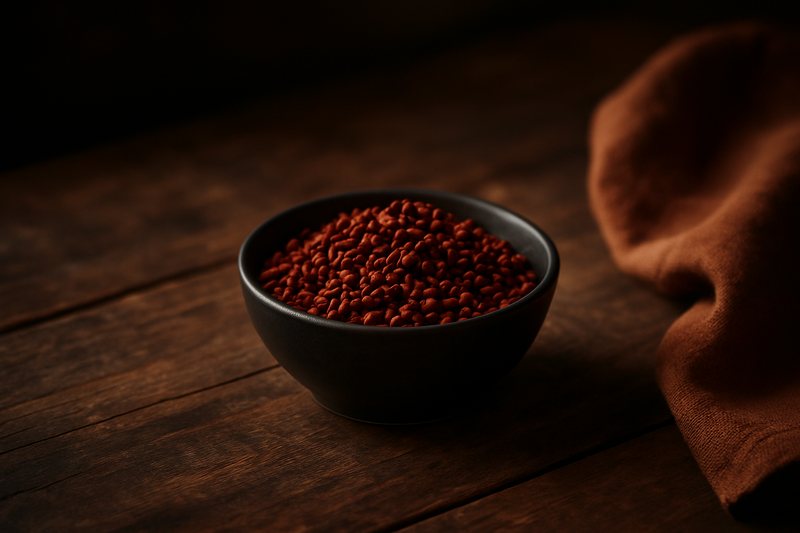
Annatto (Achiote) · Photograph
Discover the evidence-based health benefits and side effects of annatto (achiote) seeds — from antioxidant carotenoids and vitamin E tocotrienols to culinary uses in Latin American cooking. Learn how to use them safely every day.
Key Nutrients
% Daily Value based on 2,000 cal diet
Key active compounds in annatto seeds
- Bixin — The dominant orange-red pigment in the seed coat. A fat-soluble apocarotenoid (a carotenoid-derived compound) and potent free radical scavenger. Preclinical studies link it to lung-protective and liver-protective effects.
- Norbixin — A water-soluble derivative of bixin. Used as a natural food colorant in dairy and snack foods. Along with bixin, norbixin was the key compound in a human study that showed reduced post-meal inflammation.
- Delta- and gamma-tocotrienol — Unsaturated vitamin E analogs concentrated in the seed oil. Associated with antioxidant, anti-inflammatory, and potentially bone-supportive effects in human trials.
- Geranylgeraniol — A diterpenoid alcohol (a small, naturally occurring plant compound) found in annatto oil. Computational research suggests antioxidant and anti-inflammatory activity; human trial data are currently lacking.
- Polyphenolic compounds — A group of phenolic antioxidants that work alongside the carotenoids and tocotrienols, contributing to annatto's overall antioxidant capacity.
Prep and pairing ideas
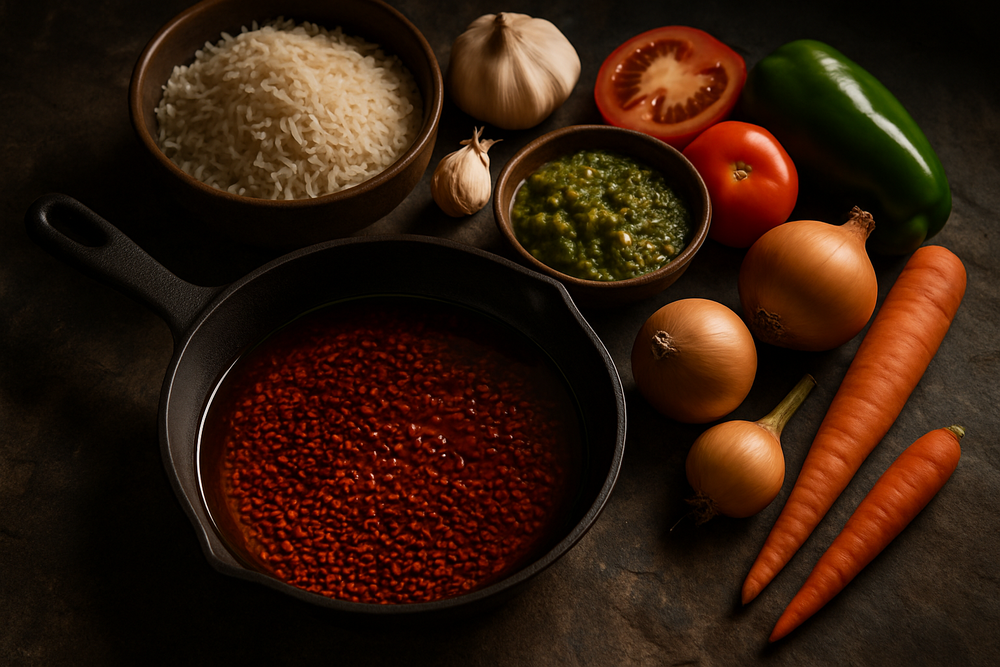
Achiote oil base Warm 3 tablespoons of neutral oil (avocado or light olive oil) in a small pan over medium-low heat. Add 1 tablespoon of whole annatto seeds. Swirl gently for 5–7 minutes until the oil turns a vivid orange. Remove seeds and use the colored oil as your cooking base — this is the foundation of countless Latin American dishes and transfers bixin efficiently into the dish.
Achiote paste for grain bowls Blend 2 teaspoons of ground annatto seeds with a splash of apple cider vinegar, a pinch of cumin, and a clove of garlic. Thin with water or lime juice. Toss with cooked brown rice, black beans, and roasted vegetables for a vibrant, whole-food plant-based bowl.
Sofrito starter Classic sofrito (the aromatic base used in Puerto Rican, Cuban, and Dominican cooking) often begins with achiote oil. Sauté onion, bell pepper, garlic, and culantro in the orange-tinted oil. The carotenoids dissolve into the fat, coloring and flavoring everything that follows.
Common pairings
| Pairing | Why it works |
|---|---|
| Coconut milk | Fat helps extract bixin from the seeds; the mild sweetness balances annatto's earthiness in stews and soups. |
| Cumin and oregano | Classic achiote marinade trio — annatto adds color and mild pepper notes while cumin adds warmth. |
| Citrus (lime or bitter orange) | Traditional in Yucatecan cochinita pibil-style preparations; the acid brightens annatto's color and rounds the flavor. |
Bottom line
Annatto (achiote) seeds are more than a natural food dye. Their active carotenoids — bixin and norbixin — have genuine antioxidant and anti-inflammatory activity supported by at least one human crossover trial. Their tocotrienol content makes them one of the most unusual spices in the world from a vitamin E standpoint, and clinical trials in postmenopausal women suggest tocotrienol supplements derived from annatto are well tolerated at up to 600 mg/day for three months.
At the same time, most of annatto's broader benefits (digestion, blood sugar, cholesterol) remain preliminary — backed by preclinical work, traditional use, and computational research rather than large human trials. Culinary use is safe, flavorful, and adds a modest antioxidant contribution to a plant-forward diet. Supplement-level doses deserve more caution, especially if you take blood thinners, diabetes medications, or are undergoing cancer treatment.
Explore more ways to use food to support your health goals at Plantopedia's goals guide.
How Annatto (Achiote) Compares
| Compared with | What's different |
|---|---|
| Annatto (Achiote) vs. Saffron | A spice with peppery, nutty notes and orange color, whereas saffron is floral, honey-like, and crimson. |
| Annatto (Achiote) vs. Turmeric | Provides an earthy, musky depth and orange tint, while turmeric is bitter, pungent, and bright yellow. |
| Annatto (Achiote) vs. Paprika | Used primarily for red-orange color and mild flavor, while paprika ranges from sweet to smoky and hot. |
Health Benefits
Things to Know
Allergy risk: Rare allergic reactions to annatto have been documented. If you notice hives, itching, or digestive upset after eating annatto-colored foods, it's worth flagging to your doctor.
Blood thinners: High-dose tocotrienol supplements share vitamin E's theoretical ability to slow platelet aggregation. If you take warfarin, aspirin, or clopidogrel, speak to your prescriber before using annatto supplements.
Diabetes medications: Tocotrienols and carotenoids from annatto have influenced carbohydrate metabolism and oxidative stress in animal studies. If you take metformin, sulfonylureas, or insulin, monitor blood sugar more closely if adding high-dose supplements.
Lipid-lowering drugs: Early computational research explores annatto compounds for dyslipidemia (abnormal blood fat levels). Interaction evidence in humans is minimal, but worth mentioning to your doctor if you're on statins.
Chemotherapy: Strong antioxidants can theoretically interfere with pro-oxidant cancer treatments. If you're in active cancer treatment, do not add concentrated annatto supplements without your oncology team's approval.
Pregnancy and breastfeeding: Culinary amounts are almost certainly safe and have been eaten safely across cultures for centuries. High-dose extracts or supplements have not been adequately studied in pregnant or breastfeeding people — avoid them unless directed by a clinician.
Culinary use is broadly safe: Regulatory agencies including the FDA, EMA, and EFSA consider annatto food colorants and tocotrienol supplements generally recognized as safe (GRAS) at typical dietary intakes.
Glossary
Shop This Ingredient
Stock your pantry with quality annatto (achiote).
Buy on AmazonAs an Amazon Associate, Plantopedia earns from qualifying purchases. This costs you nothing extra and helps us keep the encyclopedia free.
Frequently Asked Questions
The evidence ranges from well-supported (antioxidant activity) to emerging or preliminary (digestion, blood sugar). Here's an honest breakdown by body system. Heart and circulation A randomized clinical trial called the Eggant study followed healthy adults who ate two eggs per day — either plain or enriched with annatto — for eight weeks. Neither group showed adverse changes in cardiovascular risk markers like blood lipids or inflammatory parameters. This is reassuring for everyday annatto use but stops short of demonstrating a heart-protective benefit. Computational studies of annatto oil compounds like geranylgeraniol suggest potential for supporting healthy cholesterol metabolism, but this remains theoretical without human outcome trials. Digestive health and microbiome Human trial data here are limited. Preclinical (animal and lab) studies and traditional ethnomedicinal use suggest annatto may support gastrointestinal motility and have antidiarrheal properties. These are interesting leads, but they haven't yet been confirmed in controlled human studies, so any digestive benefits should be considered preliminary. Blood sugar and metabolism There are no robust human glycemic (blood sugar) control trials using whole annatto seeds. Annatto-extracted tocotrienols have improved carbohydrate metabolism and reduced inflammatory markers in obese animal models. Traditional healers have also used bixin-rich preparations for diabetes management. Both lines of evidence are hypothesis-generating rather than conclusive — more human research is needed before any blood sugar claim can be made with confidence. Inflammation and recovery This is where annatto has its strongest human evidence. In a randomized crossover study, healthy adults took a standardized annatto carotenoid extract (containing bixin and norbixin) before a high-calorie meal. Compared with a placebo, the extract significantly reduced post-meal markers of inflammation — specifically the cytokines (cell-signaling proteins) IL-1, IL-6, and TNF-α — and lowered lipid oxidation over 60 to 120 minutes. The effect was larger when bixin and norbixin were combined than when either was used alone. Important caveats: this was a short-term response in healthy volunteers, and the extract was standardized (much more concentrated than a culinary sprinkle of whole seeds). Still, it's meaningful real-world data.
Buying guide: matching the form to your goal Whole dried seeds (whole-food choice) The most traditional form. Look for seeds with a deep, brick-red to rust color — dull or pale seeds have likely lost potency. Store in an airtight container away from light; they keep well for up to a year. Infuse in warm oil for 5–10 minutes to extract both color and flavor, then remove the seeds before cooking. This is the least processed, most whole-food option. Ground powder or achiote paste Paste is typically whole seeds blended with oil, vinegar, and other spices — a convenient shortcut for marinades and stews. Check the label: the best pastes list annatto seed as the first ingredient, with minimal additives. Powder can be used like any ground spice, but color extraction is less efficient than oil infusion. Annatto carotenoid extract (bixin/norbixin) Used commercially as a natural food colorant (look for E160b on European food labels). Some health food brands sell it as a supplement. This is the form used in the inflammation trial. If using a supplement, follow label instructions and note this is far more concentrated than culinary seeds. Annatto tocotrienol oil (supplement) Delta- and gamma-tocotrienol supplements derived from annatto seeds are sold for bone health and antioxidant support. Clinical trials used 300–600 mg/day for 12 weeks. This is a supplement-level dose, not something achievable through cooking — treat it like a nutraceutical and discuss with your healthcare provider before starting.
Culinary use (whole or ground seeds): Typical recipes call for roughly 1–3 grams of seeds per dish (about ½–1½ teaspoons). At this level, annatto is a flavoring and coloring agent, not a therapeutic supplement. Used this way, it's widely considered safe for regular daily consumption. Carotenoid extract: The human inflammation trial used a single pre-meal dose of a standardized bixin/norbixin extract. This is more concentrated than anything achievable through cooking. If considering a carotenoid supplement, follow product-specific guidance. Tocotrienol supplements: Clinical trials in postmenopausal osteopenic women used 300–600 mg/day for 12 weeks without adverse effects on liver, kidney, or other blood markers. Regulatory risk assessments suggest 3–5 mg per kilogram of body weight per day is unlikely to cause harm, but individual variation exists. Start at the lower end of any recommended range, and involve a healthcare provider — particularly if you take medications listed in the cautions section above. General guidance: If your goal is simply to enjoy annatto's flavor and get a modest carotenoid boost, cooking with it regularly is the most practical and lowest-risk approach. Reserve supplements for specific therapeutic goals discussed with a qualified practitioner.
The everyday cook who wants cleaner labels You've been using artificial orange-yellow dyes in packaged foods without thinking much about it. You're building a more whole-food plant-forward kitchen and want natural color and flavor from real ingredients. You cook Latin American or Caribbean dishes regularly and want to understand what's actually in the seed. The antioxidant-focused eater dealing with inflammation You're interested in foods with genuine antioxidant research behind them, not just marketing. You've noticed you feel sluggish or inflamed after heavy meals and are curious about foods that may blunt that response. You already eat a varied diet rich in colorful produce and want to add culinary diversity beyond familiar spices like turmeric and paprika.
Quick Answers
Common questions, answered in a line.
Annatto seeds are a rich source of bixin, norbixin, and vitamin E analogs known as tocotrienols. These compounds act as potent antioxidants and free radical scavengers that may help reduce inflammation and protect the liver and lungs.
You can make achiote oil by warming one tablespoon of whole annatto seeds in three tablespoons of neutral oil for 5 to 7 minutes. This process extracts the fat-soluble bixin, creating a vivid orange base used for sautéing aromatics like onion, garlic, and peppers.
Annatto is often paired with cumin, oregano, and citrus like lime or bitter orange to create traditional marinades. It also works well with coconut milk, as the fat helps extract the seeds' pigments while the sweetness balances annatto's earthy, peppery notes.
High doses of annatto supplements may interact with blood thinners, diabetes medications, and certain cancer treatments. Specifically, the tocotrienols in annatto might slow platelet aggregation or influence carbohydrate metabolism, so consulting a doctor is recommended.
Annatto is unique because it contains high concentrations of delta- and gamma-tocotrienol, which are unsaturated analogs of vitamin E. These specific compounds are associated with antioxidant, anti-inflammatory, and potentially bone-supportive effects in human trials.
Achiote paste is a vibrant seasoning made by blending ground annatto seeds with apple cider vinegar, garlic, and spices like cumin. You can thin the paste with water or lime juice and toss it with rice, beans, or roasted vegetables for flavor and color.
While rare, some individuals may experience allergic reactions to annatto, manifesting as hives, itching, or digestive upset. If you notice these symptoms after consuming annatto-colored foods, you should consult a healthcare professional.
For Readers in the USA
Local context — sourcing, seasonality, and regional notes.
You can find annatto seeds or achiote paste at major US retailers like Walmart, Kroger, and Whole Foods, typically in the international or Hispanic food aisles. For the freshest whole seeds, check local Mexican or Caribbean carnicerías and specialty spice shops.
In the United States, annatto is one of the most common natural food dyes used in yellow American cheese, cheddar, butter, and snack foods like crackers. The FDA classifies it as a color additive exempt from certification, meaning it is derived from natural sources rather than petroleum.
While annatto is native to tropical regions, it can be grown in USDA hardiness zones 10-12, which includes parts of Southern Florida, the Rio Grande Valley in Texas, and Hawaii. In most other US regions, the achiote tree must be grown in a greenhouse to survive the winter.
Annatto is a cornerstone of Puerto Rican and Dominican-American cuisine, used to color yellow rice (arroz con gandules) and flavor pasteles. It is also essential for authentic Mexican-American dishes like Yucatecan cochinita pibil or al pastor marinades.
AI Clinical Review
- Clearly distinguishes culinary use from supplement dosing and sets realistic expectations for benefits from typical kitchen amounts.
- Accurately highlights bixin and norbixin as the main carotenoids and notes a randomized crossover study showing reduced post‑meal inflammatory and oxidative markers with a standardized extract.
- Correctly identifies annatto as an unusually rich source of delta‑ and gamma‑tocotrienols, with human data in postmenopausal women supporting short‑term (12‑week) safety at 300–600 mg/day.
- Appropriately frames annatto as broadly safe in culinary amounts, with rare allergy reports and GRAS status, while advising more caution with concentrated supplements.
- Long‑term cardiometabolic outcomes are uncertain: the “Eggant” trial is reassuring (no harm) but not proof of heart benefit, and most lipid/blood sugar claims rely on animal or computational work.
- The anti‑inflammatory findings come from an acute, pre‑meal extract study; effects may not translate to everyday cooking doses of whole seeds.
- Digestive and microbiome benefits remain preliminary and are not yet supported by well‑controlled human trials.
- Dose and form matter: typical recipes use ~1–3 g seeds; color and carotenoid extraction are better with fat (e.g., achiote oil). Supplements (carotenoid concentrates or tocotrienol oils) deliver far higher exposures.
- Safety: allergies are uncommon but possible—start small if you have a history of colorant sensitivities. Stop and seek care if hives, itching, or GI upset occur.
- Medication/condition cautions: high‑dose tocotrienols or carotenoid extracts may interact with blood thinners/antiplatelets, diabetes medications, and can conflict with certain chemotherapies—check with your clinician.
- Special populations: avoid high‑dose supplements in pregnancy or while breastfeeding due to limited data; discuss any supplement use with your healthcare team, especially if you take statins or manage chronic conditions.
Rare allergy reports; culinary use is generally safe.
References
- USDA FoodData Central — general nutrient database (fdc.nal.usda.gov)
- Human crossover trial: annatto carotenoid extract reduces post-meal inflammation and oxidative stress in healthy adults (pubmed.ncbi.nlm.nih.gov)
- Food and Function journal: same annatto carotenoid trial, full text (sciencedirect.com)
- Eggant randomized clinical trial: annatto-enriched eggs and cardiovascular risk markers over 8 weeks (pmc.ncbi.nlm.nih.gov)
- 12-week safety and bone health trial: annatto tocotrienols in postmenopausal osteopenic women (pmc.ncbi.nlm.nih.gov)
- Animal study: annatto-extracted tocotrienols reduce inflammation and oxidative stress in obese mice (pmc.ncbi.nlm.nih.gov)
- Comprehensive review: phytochemistry, biological activities, and food potential of annatto (pmc.ncbi.nlm.nih.gov)
- Review: bixin from Bixa orellana seeds — ethnomedicinal and pharmacological aspects (wjpr.s3.ap-south-1.amazonaws.com)
- In silico study: geranylgeraniol and tocotrienols in annatto oil for dyslipidemia and inflammation (mdpi.com)
- Regulatory risk assessment: tocotrienols from annatto (Bixa orellana L.) (hilarispublisher.com)
Know Your Numbers
Eating healthy is a start. Now get to know your biomarkers.
Food changes bloodwork — inflammation, lipids, blood sugar and nutrient status all respond to what you eat. 59 markers from $59.
- Results in 7–10 days at 2,000+ Quest sites
- Licensed provider reviews every result
- One flat price, no membership, HSA/FSA eligible
Educational information only, not medical advice. Panels are ordered and reviewed through our licensed partner; Plantopedia may earn a commission.