Barley Grass — health benefits and uses
Used as a cleansing, alkalizing green in modern wellness practice.
The Short Answer
Barley grass is a nutrient-dense young grass providing 60 mcg of Vitamin K and 25 mg of Vitamin C per tablespoon. It is primarily used as a concentrated source of antioxidants like chlorophyll and superoxide dismutase to support gut health and reduce

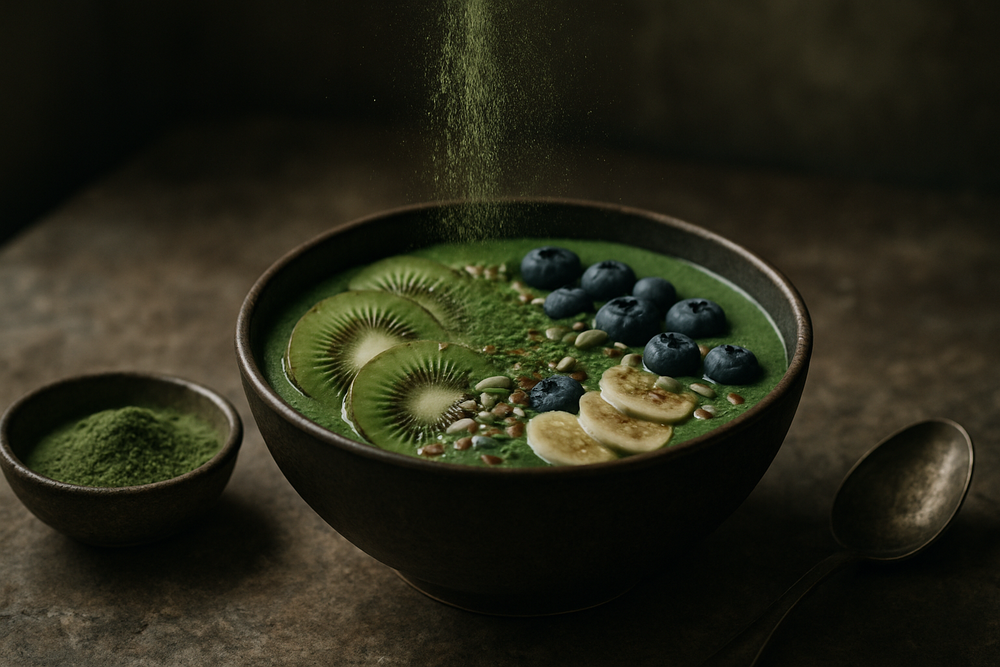
Barley Grass · Photograph
Discover barley grass powder benefits, side effects, and how to use it daily. Learn what the research actually says about this green superfood powder for gut health, detox, immune support, and more — plus who should be cautious.
Key Nutrients
% Daily Value based on 2,000 cal diet
Key active compounds
Understanding what is actually inside barley grass powder helps make sense of its potential effects.
- Chlorophyll — The green pigment that makes photosynthesis work. Structurally similar to hemoglobin (the oxygen-carrying molecule in red blood cells), it functions as an antioxidant and is often associated with "detox" and alkalizing marketing claims. Preliminary research supports antioxidant activity; strong detox evidence in humans is still lacking.
- Flavonoids — A broad class of plant polyphenols (antioxidant compounds with multiple phenol chemical rings) found in measurable amounts in barley grass. May help neutralize free radicals (unstable molecules that damage cells) and modulate inflammation.
- Polyphenols — Umbrella term for a family of plant chemicals characterized by multiple phenol groups. Linked in lab and animal studies to anti-inflammatory, cholesterol-lowering, and potential anticancer activity.
- Superoxide dismutase (SOD) — An enzyme (a protein that speeds up biological reactions) reported in barley grass that acts as a built-in antioxidant, helping protect cells from oxidative damage. Activity may be reduced by heat during processing.
- Amino acids and small peptides — Barley grass powder provides a useful spectrum of protein building blocks, including some essential amino acids your body cannot make on its own.
- Beta-carotene and carotenoids — Precursors to vitamin A that double as antioxidants and give barley grass part of its yellow-green color.
Prep and pairing ideas
Barley grass powder has a grassy, mildly bitter, earthy flavor. Here are practical ways to work with it — not against it.
Green smoothie base: Blend 1 teaspoon barley grass powder with frozen banana, spinach, pineapple, and unsweetened almond milk. The banana and pineapple sweetness balances the bitterness beautifully, and the vitamin C in the fruit may even enhance iron absorption from the powder.
Morning water shot: Stir half a teaspoon into 200 mL of cold water with a squeeze of lemon. Simple, quick, and easy to track your dose. Lemon juice also masks bitterness and adds extra vitamin C.
Overnight oats boost: Fold a teaspoon into overnight oats or chia pudding before refrigerating. The flavor is mild enough to disappear, and you add fiber on top of fiber — great for digestive support.
Salad dressing: Whisk a small amount of powder into a tahini-lemon dressing. The powder disperses evenly and the savory base tones down any earthiness.
Bottom line
Barley grass powder is a genuinely nutrient-dense addition to a plant-forward diet. Per tablespoon, it delivers meaningful amounts of vitamin K, vitamin C, iron, folate, potassium, fiber, and a range of antioxidant plant compounds — all for about 20 calories.
The honest picture on health claims: gut health and digestive support have the strongest early human evidence; anti-inflammatory effects are promising in lab and small clinical settings; heart health and blood sugar benefits are plausible but not yet well proven in large human trials. "Detox" and immune-boosting claims are mostly supported by nutrient logic and preclinical data rather than rigorous controlled studies.
That does not make it a bad choice — it makes it a smart, sensible one when expectations are realistic. Add it to your smoothie because it adds real nutrition, not because it promises to do something a drug cannot.
People on blood thinners, those with celiac disease, and anyone managing a chronic condition should speak with their clinician first. Everyone else: start small, go slow, and enjoy the green.
Explore how barley grass fits into your broader health goals: Browse Plantopedia's goals hub to find ingredient guides aligned with what you are working toward.
How Barley Grass Compares
| Compared with | What's different |
|---|---|
| Barley Grass vs. Wheatgrass | Milder, slightly sweeter taste compared to the intense, bitter earthiness of wheatgrass. |
| Barley Grass vs. Spirulina | Higher in Vitamin K and Vitamin C, whereas spirulina is significantly higher in protein and B12. |
| Barley Grass vs. Matcha | A whole-leaf powder containing fiber, while matcha is a caffeinated ground tea leaf. |
Health Benefits
Things to Know
Gluten risk: Barley grass harvested before grain formation is inherently low in gluten, but manufacturing cross-contamination is real. If you have celiac disease or non-celiac gluten sensitivity, only buy products certified gluten-free by a recognized third-party organization.
Vitamin K interaction: At 50% of the daily value per tablespoon, barley grass is a high-vitamin-K food. People taking warfarin or other anticoagulants (blood thinners) need consistent vitamin K intake — sudden increases or large fluctuations can disrupt clotting control. Tell your clinician and keep your dose consistent.
Blood sugar medications: The fiber and potential hypoglycemic (blood-sugar-lowering) effects of barley grass may modestly affect glucose — if you take insulin or oral hypoglycemics, monitor blood sugar and adjust as directed by your clinician.
Blood pressure medications: Barley grass is relatively high in potassium and magnesium, which can modestly influence blood pressure and electrolyte balance. Not usually a concern at typical doses, but worth flagging if you are on antihypertensives.
Pregnancy and breastfeeding: Concentrated supplement amounts have not been studied for safety in pregnancy or lactation. Stick to food-level amounts or discuss with your midwife or OB.
Grass and grain allergies: People with known allergy to barley, grasses, or cereal grains may react to barley grass products.
Immunocompromised individuals: Avoid unpasteurized fresh barley grass juice due to higher microbial load risk.
Start low: Even for healthy adults, introduce barley grass powder gradually (half a teaspoon daily for the first week) to let your digestive system adjust to the extra fiber.
Shop This Ingredient
Stock your pantry with quality barley grass.
Buy on AmazonAs an Amazon Associate, Plantopedia earns from qualifying purchases. This costs you nothing extra and helps us keep the encyclopedia free.
Frequently Asked Questions
Here is where the science gets nuanced. Most benefits are described as emerging — meaning real signals exist, but more human research is needed before drawing firm conclusions. Heart and circulation Small human studies and practitioner reports suggest barley grass supplementation may help lower LDL cholesterol (often called "bad" cholesterol) and support healthy blood circulation. However, the most robust human evidence for cholesterol lowering comes from barley grain and its soluble fiber called beta-glucan — not from barley grass specifically. Barley grass powder does contribute antioxidant polyphenols, vitamin K, and chlorophyll that may help reduce oxidative stress (an imbalance between cell-damaging free radicals and the antioxidants that neutralize them) and support vascular health. Animal studies suggest blood-pressure-lowering and lipid-lowering effects, but these haven't been replicated in large human trials yet. Think of it as a supportive part of a heart-healthy diet, not a standalone treatment. Digestive health and microbiome This is one of the stronger areas. Barley grass powder delivers approximately 3 g of fiber per tablespoon, which can support bowel regularity and nourish the gut microbiome (the community of bacteria and other microorganisms living in your digestive tract). Small clinical trials specifically found that green barley leaf supplementation improved symptoms of ulcerative colitis (a type of chronic inflammatory bowel disease) and appeared to support intestinal lining healing when used alongside standard care. Outside of bowel disease, general digestive benefits — such as constipation relief — are plausible given the fiber content but have not been tested in controlled barley grass–specific trials. Start with a small amount (half a teaspoon) if your gut is sensitive; a sudden jump in fiber can cause gas or loose stools. Blood sugar and metabolism Barley grain has well-documented effects on blood glucose (blood sugar) and insulin through its beta-glucan content. Barley grass is less studied for this specific use, but some small and preclinical studies point to potential blood-sugar-moderating and insulin-sensitizing effects — likely due to its fiber, antioxidant polyphenols, and overall micronutrient profile. These findings are early and modest. Barley grass powder is best considered a complementary addition to an overall low-glycemic, high-fiber eating pattern rather than a primary blood sugar strategy. If you take insulin or oral diabetes medication, monitor your glucose and loop in your clinician. Inflammation and recovery Barley grass contains measurable flavonoids, polyphenols, and enzymes that have demonstrated anti-inflammatory (inflammation-reducing) effects in cell and animal models. As mentioned above, small human trials in ulcerative colitis report symptom improvement and reduced inflammatory activity, which is a promising signal. For systemic (whole-body) inflammation — the kind linked to chronic disease risk — no large-scale human trials yet confirm meaningful effects. The nutrient density of barley grass makes it a reasonable addition to an anti-inflammatory eating pattern, but it should be framed as one piece of the puzzle, not a cure. Immune support and antioxidant defense Barley grass contributes vitamin C, vitamin A (as beta-carotene), iron, folate, and chlorophyll — nutrients that collectively support immune cell production, red blood cell formation, and antioxidant defense. Marketing often highlights "immune support" and "detox," and while the nutrient logic is sound, direct human trial evidence for immune enhancement or liver detoxification from barley grass powder specifically is still limited.
Dried powder vs. juice vs. tablets — what the evidence suggests Dried powder is the most researched and practical form. Low-temperature drying preserves most vitamins, enzymes, and antioxidants while giving you a stable, measurable serving size you can add to smoothies or water. Look for powder labeled "cold-pressed" or "low-temperature dried." Fresh or frozen juice offers high chlorophyll content and a lively flavor but comes with two caveats: dosing is harder to standardize, and unpasteurized fresh juice carries a higher risk of microbial contamination — a meaningful concern for immunocompromised individuals or pregnant people. Tablets and capsules simply compress or encapsulate the same dried powder, which is convenient if you dislike the earthy taste. You typically need several capsules to equal one teaspoon of powder, so check the label's per-serving amount. Combined greens blends mix barley grass with wheatgrass, spirulina, chlorella, and others. These are popular but make it hard to know how much barley grass you are actually getting. If the blend is your primary greens source, that is fine; if you want targeted barley grass research to apply, a single-ingredient powder gives you more control.
The everyday smoothie builder Wants a convenient nutrient boost without overhauling their diet Already blending greens but looking for variety beyond spinach Benefits from the vitamin C, vitamin K, iron, and fiber in a single add-in Tip: start with half a teaspoon to assess tolerance before scaling up The gut-health focused eater Dealing with digestive irregularity or managing an inflammatory bowel condition alongside medical care Already eating a high-fiber, plant-based diet and looking for complementary additions May appreciate the small clinical evidence specifically linking barley grass supplementation to improved ulcerative colitis symptoms Tip: introduce slowly, stay well hydrated, and treat it as a complement to — not replacement for — medical management
Most supplements and human studies use 1 to 3 teaspoons (approximately 3 to 10 g) of dried barley grass powder per day, often split across one or two servings mixed into beverages or food. Some people start with just half a teaspoon daily for the first week and work up gradually. This "start low, go slow" approach is especially important if you are not used to high-fiber greens. For fresh juice, typical practitioner-suggested amounts are 30 to 60 mL (about 2 to 4 tablespoons) once or twice daily. There is no established official recommended dose for barley grass specifically — no regulatory body or major medical organization has set a formal guideline. The ranges above are based on typical supplemental use and the amounts used in small clinical studies. If you are taking it for a specific health concern, work with a registered dietitian or clinician rather than self-prescribing escalating doses.
Quick Answers
Common questions, answered in a line.
Barley grass powder contains chlorophyll, flavonoids, polyphenols, and the antioxidant enzyme superoxide dismutase (SOD). These compounds help neutralize free radicals and modulate inflammation, though heat during processing can reduce the activity of certain enzymes like SOD.
Barley grass powder has a grassy, earthy, and mildly bitter flavor. To balance this taste, you can blend it with sweet fruits like banana or pineapple, or mix it into savory bases like tahini-lemon salad dressings.
Individuals taking blood thinners like warfarin should be cautious because barley grass is high in vitamin K. High levels of vitamin K can interfere with anticoagulant medications, so it is important to maintain a consistent intake and consult a clinician.
Barley grass harvested before grain formation is inherently low in gluten, but cross-contamination during manufacturing is a risk. If you have celiac disease, ensure you only purchase products that are certified gluten-free by a recognized third-party organization.
You can add barley grass to your diet by stirring it into a morning water shot with lemon, blending it into green smoothies, or folding it into overnight oats. Adding vitamin C from lemon or fruit may also help enhance the absorption of iron from the powder.
It is recommended to start with a low dose, such as half a teaspoon daily for the first week, to allow your digestive system to adjust to the extra fiber. Barley grass provides a range of nutrients including vitamin K, iron, folate, and potassium for about 20 calories per tablespoon.
For Readers in the USA
Local context — sourcing, seasonality, and regional notes.
Barley grass is primarily cultivated in the Midwestern and Western United States, with top-producing states including Idaho, Montana, and North Dakota. While the grain is harvested in late summer, the young grass used for supplements is typically harvested in early spring or fall when nutrient density is at its peak.
You can find barley grass powder at major US health food chains like Whole Foods Market and Sprouts, as well as in the supplement aisles of large retailers like Walmart and Target. Many American consumers also purchase organic, US-grown varieties through online marketplaces or local natural food cooperatives.
The USDA Organic seal ensures that barley grass was grown without synthetic pesticides or fertilizers, which is a common preference for concentrated green powders. Additionally, the FDA regulates these products as dietary supplements, meaning they must follow Current Good Manufacturing Practices (cGMP) for purity and labeling.
AI Clinical Review
- Clearly distinguishes barley grass (leafy green) from barley grain, including why this matters for gluten and for beta‑glucan–related claims.
- Provides a realistic summary of evidence: strongest early human signals are for digestive support (e.g., small ulcerative colitis trials), while other benefits remain preliminary.
- Offers a practical nutrition snapshot (notably high vitamin K, vitamin C, iron, and fiber) and sensible use ranges (about 1–3 teaspoons/day for powder).
- Appropriately frames forms (powder, juice, tablets) and notes contamination and standardization considerations rather than implying one “magic” format.
- Cardiometabolic outcomes (cholesterol, blood pressure, insulin sensitivity) are suggested by preclinical work and small studies; robust, longer human trials are limited.
- “Detox” and immune‑boosting claims are largely based on nutrient rationale and lab data; clinically meaningful effects in healthy adults aren’t established.
- Enzyme (e.g., superoxide dismutase) activity and polyphenol bioavailability can vary with processing; real‑world potency may not match in‑vitro findings.
- Safety/medications: High vitamin K can interfere with warfarin and other vitamin‑K–sensitive anticoagulants—keep intake consistent and involve your clinician. People on diabetes meds should monitor glucose when starting; those on antihypertensives should note the potassium content.
- Gluten: Barley grass itself is low in gluten, but cross‑contamination happens—choose certified gluten‑free products if you have celiac disease or gluten sensitivity.
- Dosing and tolerance: Typical powder use is 1–3 tsp (≈3–10 g) daily; start low to minimize gas or loose stools and increase fluids as fiber rises.
- Special populations: Limited safety data in pregnancy/lactation; avoid unpasteurized fresh juice if immunocompromised. Consider allergy risk in those sensitive to grasses/cereals.
Contains gluten traces in some products; check labels if sensitive.
References
- USDA FoodData Central — barley grass nutrition data (fdc.nal.usda.gov)
- Healthline: Barley Grass — Overview, Benefits, and Side Effects (healthline.com)
- WebMD: Health Benefits of Barley Grass (webmd.com)
- PMC review — Barley as a nutritional powerhouse for gut health and chronic disease (2024) (pmc.ncbi.nlm.nih.gov)
- PMC review — Preventive and Therapeutic Role of Functional Ingredients of Barley Grass (2018) (pmc.ncbi.nlm.nih.gov)
- NIH Dietary Supplement Label Database — Barley Grass product 80445 (api.ods.od.nih.gov)
- NIH Dietary Supplement Label Database — Green Barley Grass product 10949 (api.ods.od.nih.gov)
- Drugs.com: Barley Grass — Uses, Benefits, and Side Effects (drugs.com)
- WholisticMatters: Barley Grass for Inflammatory Balance (wholisticmatters.com)
- MedicineNet: Barley Grass Benefits, Uses, and Precautions (medicinenet.com)
Know Your Numbers
Eating healthy is a start. Now get to know your biomarkers.
Food changes bloodwork — inflammation, lipids, blood sugar and nutrient status all respond to what you eat. 59 markers from $59.
- Results in 7–10 days at 2,000+ Quest sites
- Licensed provider reviews every result
- One flat price, no membership, HSA/FSA eligible
Educational information only, not medical advice. Panels are ordered and reviewed through our licensed partner; Plantopedia may earn a commission.