Broccoli Sprouts — health benefits and uses
A modern functional food concentrated in the compounds studied for cellular defense.
The Short Answer
Broccoli sprouts are a potent source of sulforaphane, a compound that activates cellular antioxidant pathways and phase II detoxification enzymes. To maximize benefits, consume them raw and chewed thoroughly to ensure the conversion of glucoraphanin into
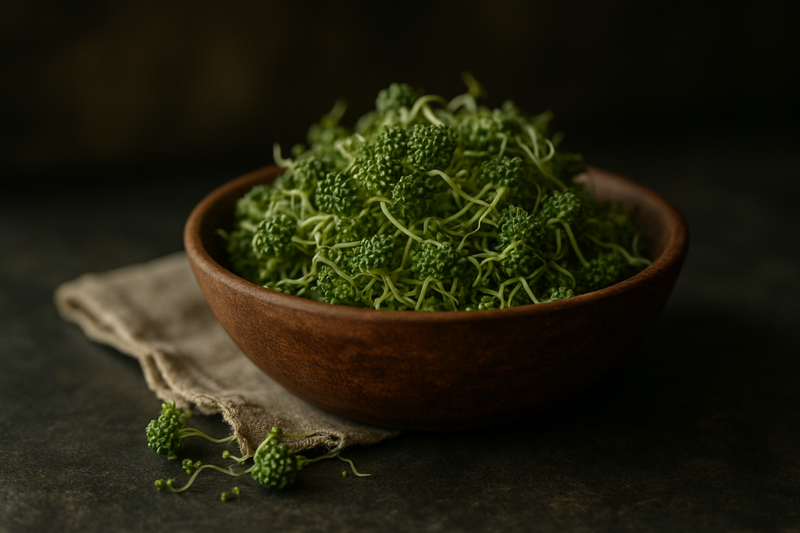
Broccoli Sprouts · Photograph
Discover the science-backed broccoli sprouts health benefits—from sulforaphane's role in detox and liver support to blood sugar, inflammation, and immune health. Includes nutrition facts, safety tips for raw sprouts, dosage ranges from human trials, and easy ways to add them to your meals.
Key Nutrients
% Daily Value based on 2,000 cal diet
Key active compounds in broccoli sprouts
- Glucoraphanin — A glucosinolate (a sulfur-containing plant compound) stored in the sprout's cells. On its own it's inactive. When you chew or chop sprouts, a plant enzyme called myrosinase is released, converts glucoraphanin into sulforaphane, and the magic begins.
- Sulforaphane — An isothiocyanate (a class of reactive sulfur compound) and the primary reason broccoli sprouts are so heavily studied. It switches on a master antioxidant pathway in your cells called NRF2 and activates phase II detoxification enzymes that help the body tag and remove harmful substances.
- Indole-3-carbinol and related indoles — Breakdown products of other glucosinolates that may influence how the body processes estrogen and detoxifies carcinogens. Most evidence here is preclinical (cell and animal studies).
- Flavonoids (e.g., quercetin) — Polyphenolic antioxidants that likely work alongside sulforaphane to reduce oxidative stress and inflammation.
How to eat broccoli sprouts for maximum sulforaphane
The form matters more than most people realize.
Fresh raw sprouts (chewed well): This is the form most clinical trials have used and the one that delivers the most sulforaphane. Chewing ruptures cell walls, bringing glucoraphanin and myrosinase into contact so conversion happens right in your mouth and gut. Three-day-old sprouts appear to be the sweet spot for glucoraphanin density.
Broccoli sprout beverages and extracts (research-grade): Trials have used glucoraphanin-rich and sulforaphane-rich beverages providing 150–600 µmol/day, and capsule extracts providing 30–200 µmol/day. These are well absorbed, as confirmed by sulforaphane metabolites appearing in urine within hours.
Lightly cooked sprouts: Cooking reduces bacterial risk but can inactivate myrosinase, cutting sulforaphane formation significantly. If you cook them, add a small amount of raw cruciferous vegetable (like a pinch of mustard powder or raw daikon) alongside—the myrosinase from those foods can partially compensate.
Powders and supplements: Many commercial broccoli sprout supplements exist, but they vary widely in glucoraphanin and sulforaphane content. Look for products standardized to a specific sulforaphane or glucoraphanin amount, and note that most commercial doses are lower than those used in trials.
Prep and pairing ideas
Broccoli sprouts have a mild, slightly peppery flavor that's easy to work into everyday meals. The goal is minimal heat to preserve sulforaphane.
Cold sandwich or wrap: Layer a small handful on top of your usual fillings just before eating. The peppery bite works especially well with avocado, hummus, or a sharp mustard.
Salad topper: Scatter sprouts over any grain bowl or green salad. Pairing with vitamin C-rich ingredients (lemon juice, bell pepper) may help with overall antioxidant synergy.
Blended into a smoothie: A small amount (1–2 tablespoons) blends almost invisibly. Combine with banana, frozen mango, and a squeeze of lime. You won't taste them.
Lightly stir-fried (if you prefer cooked): Add sprouts at the very end of cooking—just 30 seconds in the pan—to reduce bacterial risk while minimizing enzyme loss. Pair with garlic and sesame oil.
On eggs: Fold into an omelette right before folding closed, or pile onto scrambled eggs after plating.
Bottom line
Broccoli sprouts are one of the most concentrated whole-food sources of sulforaphane—a compound with a genuine, and growing, human clinical trial base behind it. The strongest evidence supports improvements in pollutant detoxification, liver enzymes in fatty liver, and inflammatory markers in metabolic disease. Blood sugar and prostate health effects are real but modest and based on shorter trials. The gap between "improved biomarkers" and "prevented disease" is real, and no responsible reading of this evidence supports calling broccoli sprouts a treatment or cure for anything.
What they clearly are is a low-calorie, nutrient-dense whole food worth adding to most adults' diets—with one important asterisk: raw sprouts carry a genuine food safety risk, and vulnerable individuals should cook them or avoid them. For everyone else, a small handful on a salad a few times a week is a low-effort, evidence-aligned upgrade.
How Broccoli Sprouts Compares
| Compared with | What's different |
|---|---|
| Broccoli Sprouts vs. Broccoli Florets | Contain up to 100 times more glucoraphanin per gram than the mature vegetable. |
| Broccoli Sprouts vs. Radish Sprouts | Provide a milder, less peppery flavor than the sharp heat of radish sprouts. |
| Broccoli Sprouts vs. Alfalfa Sprouts | Offer significantly higher levels of sulforaphane-precursors than alfalfa. |
Health Benefits
Things to Know
Raw sprout bacterial risk: Public health agencies including the CDC identify raw sprouts as a known source of Salmonella, E. coli, and Listeria. Rinsing alone does not reliably remove contamination. This risk applies to all raw sprout types, not just broccoli.
High-risk groups should avoid raw sprouts: Pregnant individuals, older adults, young children, and immunocompromised people are advised to avoid raw or lightly cooked sprouts, or to consume only thoroughly cooked versions.
Blood sugar medications: Concentrated sprout extracts may have an additive blood-sugar-lowering effect. If you take metformin or insulin, monitor blood sugar and flag this to your prescriber.
Cancer treatment: Sulforaphane modulates detoxification enzymes and HDAC (histone deacetylase—an enzyme that controls gene expression) activity, which could theoretically interact with certain chemotherapy agents or targeted cancer therapies. Only use high-dose extracts under oncologist supervision if you are receiving cancer treatment.
Liver conditions: Low-dose glucoraphanin has improved liver enzymes in fatty liver trials; however, people with significant liver disease should consult a clinician before using high-dose extracts.
IBS/IBD: Higher doses may worsen bloating or GI discomfort. Start with small amounts and increase gradually.
Pregnancy: Avoid raw sprouts due to bacterial risk; cooked sprouts are safer but less studied.
Thyroid: Very high habitual intake of glucosinolates from cruciferous vegetables is theoretically linked to thyroid interference, though typical serving sizes of broccoli sprouts are unlikely to pose a problem for people with normal thyroid function eating a varied diet.
Shop This Ingredient
Stock your pantry with quality broccoli sprouts.
Buy on AmazonAs an Amazon Associate, Plantopedia earns from qualifying purchases. This costs you nothing extra and helps us keep the encyclopedia free.
Frequently Asked Questions
Heart and circulation The cardiovascular evidence is largely indirect but worth noting. A 12-week randomized controlled trial in Qidong, China—a region with high air pollution—found that a daily broccoli sprout beverage delivering around 600 µmol of glucoraphanin significantly increased urinary excretion of benzene and acrolein metabolites compared to placebo. In plain terms, participants were clearing more toxic byproducts of air pollution from their bodies, and chronic pollution exposure is a known driver of cardiovascular disease. Separately, a two-month randomized trial in Japanese men with fatty liver showed that 30 mg/day of glucoraphanin from broccoli sprout extract meaningfully reduced liver enzymes (ALT, γ-GTP, and ALP). This matters for heart health because non-alcoholic fatty liver disease (NAFLD—a buildup of fat in liver cells not caused by alcohol) is closely tied to cardiovascular risk. Neither study measured blood pressure or cholesterol directly, so the link to hard cardiovascular outcomes remains inferential. Digestive health and gut support A randomized controlled trial in adults who tested positive for Helicobacter pylori (a stomach bacterium linked to ulcers and gastric cancer) found that eating 70 g/day of broccoli sprouts for 8 weeks reduced bacterial load and lowered markers of oxidative damage in the stomach lining. The effect was meaningful but not complete—bacterial levels crept back up after stopping—so sprouts are not a replacement for standard antibiotic treatment if your doctor has prescribed it. Broccoli sprout extract can cause mild GI side effects (gas, soft stools, abdominal discomfort) at higher doses, which is worth knowing if you're adding large amounts. People with irritable bowel syndrome (IBS) or inflammatory bowel disease (IBD) may be more sensitive. Blood sugar and metabolism A 12-week randomized, double-blind, placebo-controlled trial in drug-naïve people with prediabetes (blood sugar above normal but not yet at diabetes threshold) found that broccoli sprout extract taken once daily produced modest but statistically significant reductions in fasting blood glucose compared to placebo. A separate trial in people with type 2 diabetes reported improvements in inflammatory and oxidative stress markers closely linked to glycemic (blood sugar) control. These are encouraging signals, but the trials were short (12 weeks or less) and measured surrogate markers rather than long-term complications like nerve damage or kidney disease. Sulforaphane's proposed mechanism—improving insulin signaling and reducing glucose production in the liver via NRF2 activation—is largely confirmed in animal models, not yet in large human outcome trials. Inflammation and recovery In the same type 2 diabetes trial mentioned above, broccoli sprouts with high sulforaphane content reduced markers of systemic inflammation (body-wide low-grade inflammation, a driver of chronic disease) and oxidative stress (cellular damage from unstable molecules called free radicals). The H. pylori trial also showed reduced oxidative damage in the stomach lining. Lab evidence shows sulforaphane inhibits NF-κB, a key switch that turns on inflammatory gene programs. Again, the gap between these lab findings and hard clinical outcomes is real—but the human biomarker data add credibility that the mechanism operates in people, not just petri dishes. Hormones and prostate health A phase II study in men with recurrent prostate cancer used roughly 200 µmol/day of sulforaphane from broccoli sprout extract for up to 20 weeks. The primary goal (≥50% decline in PSA—prostate-specific antigen, a protein used to monitor prostate cancer activity) was rarely achieved, but there was a statistically significant slowing of PSA doubling time during treatment, suggesting the cancer was progressing more slowly. The extract was well tolerated. A separate randomized trial in men on active surveillance for localized prostate cancer used glucoraphanin-rich broccoli soup for 12 months and found reduced disease progression and gene expression changes consistent with anti-cancer activity. These are early-phase results focused on biomarkers, not survival. Anyone with an active cancer diagnosis should discuss use with their oncologist.
The health-conscious eater looking for a nutrient upgrade Already eats a mostly whole-food diet and wants to add more phytochemical diversity without a big calorie load. Interested in foods with a meaningful research base, not just popular trends. Happy to toss a small handful into a daily salad or sandwich—no supplements needed. Someone managing metabolic health (with doctor's knowledge) Has received a prediabetes or high-inflammation diagnosis and is exploring food-first strategies alongside conventional care. Wants to understand what the actual clinical trial doses look like before buying supplements. Already monitoring blood sugar and can watch for any additive effects if taking glucose-lowering medication.
Most human clinical trials have used: Fresh sprouts: Around 70 g/day (about 2.5 oz, or a loosely packed cup) of 3-day-old sprouts for 8 weeks. Extract capsules: Glucoraphanin doses of 30 mg/day for liver health studies; sulforaphane doses of 200 µmol/day for prostate cancer biomarker studies over 12–20 weeks. Beverages: 600–800 µmol/day of glucoraphanin for pollution detoxification studies. For everyday food use, there is no established "optimal" dose. A practical starting point is 1–2 tablespoons to ¼ cup (about 10–30 g) daily, added raw to meals. This is well below the amounts that caused even mild GI side effects in trials. If you are considering a broccoli sprout supplement, start low—especially if you have a sensitive digestive system—and increase gradually over 2–4 weeks. Do not assume that more is better; the dose-response relationship in humans is still being worked out. Looking for more guidance on food-based approaches to wellness? Explore Plantopedia's goals hub to find ingredient recommendations matched to your specific health priorities.
Quick Answers
Common questions, answered in a line.
To get the most sulforaphane, eat fresh raw broccoli sprouts and chew them thoroughly. Chewing ruptures the plant's cell walls, allowing the enzyme myrosinase to convert glucoraphanin into active sulforaphane directly in your mouth and gut.
Raw broccoli sprouts carry a food safety risk because they can harbor bacteria like Salmonella, E. coli, and Listeria. Because rinsing does not reliably remove these pathogens, public health agencies recommend that high-risk groups avoid raw versions.
High-risk groups, including pregnant individuals, older adults, young children, and immunocompromised people, should avoid eating raw or lightly cooked broccoli sprouts. These individuals are advised to consume only thoroughly cooked versions to eliminate bacterial risks.
Cooking broccoli sprouts can significantly reduce sulforaphane levels because heat inactivates myrosinase, the enzyme needed for its formation. To compensate, you can add a raw cruciferous food like mustard powder or daikon to provide the necessary enzymes.
Broccoli sprouts contain glucoraphanin, which is converted into sulforaphane, a compound that activates the NRF2 antioxidant pathway and phase II detoxification enzymes. They also provide indole-3-carbinol and flavonoids like quercetin to help reduce oxidative stress.
Concentrated broccoli sprout extracts may interact with blood sugar medications like metformin or insulin by having an additive blood-sugar-lowering effect. They may also interact with certain chemotherapy agents or targeted cancer therapies by modulating detoxification enzymes.
Three-day-old broccoli sprouts are considered the "sweet spot" because they have the highest density of glucoraphanin. As the sprout ages, the concentration of this precursor to sulforaphane may change.
For Readers in the USA
Local context — sourcing, seasonality, and regional notes.
In the US, you can find broccoli sprouts at major grocery chains like Whole Foods, Trader Joe's, and Safeway, as well as local farmers markets and natural food co-ops. They are typically located in the refrigerated produce section near other sprouts, leafy greens, or pre-packaged salads.
Broccoli sprouts are available year-round in the US because they are primarily grown in controlled indoor environments or commercial hydroponic facilities. This consistent indoor production ensures a steady supply to American supermarkets regardless of the outdoor growing season or regional climate.
The FDA classifies raw sprouts as a high-risk food for foodborne illness and recommends that children, the elderly, pregnant women, and those with weakened immune systems only eat them if they have been thoroughly cooked. For general safety, the FDA advises consumers to buy sprouts that are kept refrigerated and to discard any that look wilted or smell musty.
To ensure you are buying broccoli sprouts grown without synthetic pesticides or fertilizers, look for the USDA Organic seal on the packaging. This certification guarantees the seeds and growing medium meet strict federal standards for organic production, which is a common priority for health-conscious American shoppers.
AI Clinical Review
- Clearly explains that broccoli sprouts are unusually rich in glucoraphanin, which converts (via the enzyme myrosinase) to sulforaphane—an activator of the body’s antioxidant and detox pathways (NRF2/phase II).
- Accurately highlights the strongest human data: improved excretion of air‑pollution metabolites and small but meaningful improvements in liver enzymes in fatty liver trials.
- Gives realistic intake ranges used in studies (about 70 g/day fresh sprouts or standardized extracts) and a practical, smaller food-first starting range for everyday use.
- Appropriately emphasizes food safety: raw sprouts carry a real risk of bacterial contamination and certain groups should avoid them or use thoroughly cooked forms.
- Cardiometabolic benefits (e.g., fasting glucose, inflammatory markers) are promising but come from short, small trials that focus on biomarkers rather than long‑term outcomes like cardiovascular events or diabetes complications.
- Prostate cancer findings are early-phase and centered on PSA kinetics or gene expression, not survival or recurrence-free endpoints.
- Claims around hormone modulation (indole pathways) are mostly preclinical; robust human data are limited.
- Optimal dosing, duration, and long‑term safety—especially with high‑dose supplements—remain unsettled.
- Safety first: raw sprout contamination risk is nontrivial. Pregnant individuals, older adults, young children, and people with weakened immunity should avoid raw sprouts; cooked is safer but yields less sulforaphane.
- Form matters: raw, well‑chewed sprouts deliver the most sulforaphane; heating inactivates myrosinase. If lightly cooking, adding a myrosinase source (e.g., a pinch of mustard powder) can help.
- Supplements vary widely in actual sulforaphane/glucoraphanin content; choose standardized products, start low, and expect possible mild GI effects (gas, loose stools).
- Check with a clinician if you use glucose‑lowering meds, are undergoing cancer treatment, have significant liver or thyroid disease, or have IBS/IBD, as interactions or symptom flares can occur.
Raw sprouts carry a bacterial contamination risk; buy fresh and rinse, or grow cleanly.
References
- USDA FoodData Central — broccoli sprouts, raw (nutrition data) (fdc.nal.usda.gov)
- CDC — Salmonella and raw sprout safety guidance (archive.cdc.gov)
- Randomized trial: broccoli sprout beverage and pollutant detoxification in Qidong, China (pubmed.ncbi.nlm.nih.gov)
- Randomized trial: broccoli sprout extract for liver enzymes in fatty liver (Japanese men) (pmc.ncbi.nlm.nih.gov)
- Randomized trial: broccoli sprouts and inflammatory markers in type 2 diabetes (sciencedirect.com)
- Randomized trial: broccoli sprout extract for fasting blood glucose in prediabetes (nature.com)
- Phase II trial: sulforaphane-rich broccoli sprout extract in men with recurrent prostate cancer (pubmed.ncbi.nlm.nih.gov)
- Bioavailability trial: sulforaphane absorption from broccoli sprout beverages (aacrjournals.org)
- Review: anticancer properties of sulforaphane, including human trial data (pmc.ncbi.nlm.nih.gov)
- Review: sulforaphane absorption and chemopreventive targets in humans (pmc.ncbi.nlm.nih.gov)
Know Your Numbers
Eating healthy is a start. Now get to know your biomarkers.
Food changes bloodwork — inflammation, lipids, blood sugar and nutrient status all respond to what you eat. 59 markers from $59.
- Results in 7–10 days at 2,000+ Quest sites
- Licensed provider reviews every result
- One flat price, no membership, HSA/FSA eligible
Educational information only, not medical advice. Panels are ordered and reviewed through our licensed partner; Plantopedia may earn a commission.