Black Seed Oil — health benefits and uses
Called 'the seed of blessing' in Middle Eastern and Unani traditions for immunity.
The Short Answer
Black seed oil is a medicinal oil containing 30–48% thymoquinone, a potent antioxidant used to support immune health and reduce inflammation. It is best consumed as a finishing drizzle on hummus or mixed with honey to balance its sharp, peppery flavor.
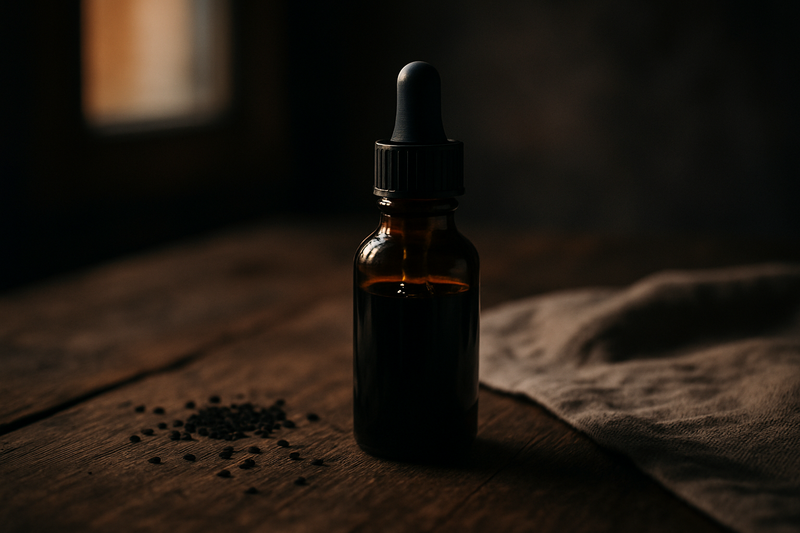
Black Seed Oil · Photograph
Discover the evidence-backed black seed oil benefits, dosage and side effects in one clear guide. Learn how much to take daily, who should avoid it, and the best ways to use peppery Nigella sativa oil with food.
Key Nutrients
% Daily Value based on 2,000 cal diet
Key active compounds
- Thymoquinone — The standout compound, making up roughly 30–48% of Nigella sativa essential oil. It functions as both an antioxidant (neutralizing harmful free radicals in the body) and an anti-inflammatory agent. Most of the oil's documented health effects trace back to this molecule.
- p-Cymene — A fragrant monoterpene (a type of natural hydrocarbon) present at around 7–15% of the essential oil fraction. Contributes to the characteristic aroma and may have complementary antimicrobial and anti-inflammatory activity.
- Carvacrol — A phenolic (plant-derived) monoterpene at roughly 6–12% of the essential oil. Well known from oregano and thyme research for antimicrobial and anti-inflammatory properties.
- Phenolic compounds and flavonoids — A broad family of plant antioxidants. Clinical trials show that people who take black seed oil tend to have higher levels of antioxidant enzymes (SOD, GPx) and total antioxidant capacity afterwards, effects largely credited to these molecules.
- Alkaloids, steroids, and terpenoids — A diverse supporting cast of bioactive molecules that contribute to the oil's immunomodulatory (immune-system-influencing) and antimicrobial actions documented in laboratory and early-stage studies.
Prep and pairing ideas
Black seed oil's assertive, slightly bitter, peppery flavor can be polarizing straight from the spoon — but it shines when used as a finishing drizzle or blended into something with complementary flavors.
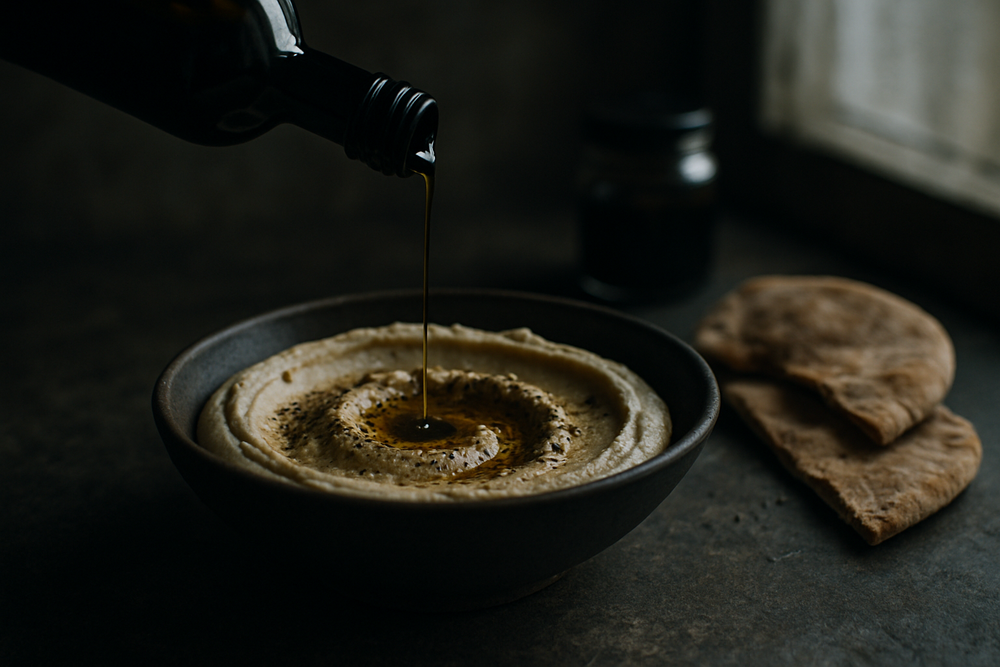
Hummus drizzle — The classic pairing. Drizzle ½ teaspoon over a bowl of hummus and finish with a pinch of za'atar. The earthiness of chickpeas softens the oil's edge beautifully, and the fat helps with absorption of fat-soluble compounds.
Honey and lemon tonic — Mix ½ teaspoon of black seed oil into a teaspoon of raw honey with a squeeze of lemon in warm (not boiling) water. A traditional morning ritual that masks the sharpness considerably.
Smoothie blend — Add ½ to 1 teaspoon to a smoothie built around banana, dates, and almond milk. The sweetness balances the bitterness, and blending the oil with other food components may improve tolerability.
Buying guide: what to look for in a black seed oil product
Cold-pressed vs refined: Choose cold-pressed (sometimes labeled "virgin") black seed oil. Heat and chemical processing can degrade thymoquinone content and overall phytochemical quality. Cold-pressed oil will be darker and more pungent — that intensity is a quality signal, not a flaw.
Third-party testing: Look for a batch-specific Certificate of Analysis (CoA) from an independent lab. This verifies thymoquinone content, confirms purity, and checks for heavy metals or pesticide residues. Reputable brands make their CoA available on request or on their website.
Packaging: Thymoquinone degrades in light and heat. Buy oil in dark glass bottles, store in a cool, dark place, and use within the stated shelf life (usually 12–18 months of opening).
Capsules: If you cannot tolerate the flavor, softgel capsules with 500–1,000 mg of standardized oil per capsule are used in several clinical trials. Check that the thymoquinone percentage is stated on the label.
Avoid: Vague sourcing ("from the Middle East" without specifics), no CoA available, translucent plastic bottles, or any product that makes cure or treatment claims on the label.
Bottom line
Black seed oil is one of the more evidence-backed botanical oils available, with a growing body of human trial data supporting modest benefits for cardiovascular markers, blood sugar control, and inflammatory biomarkers. Its key active compound, thymoquinone, is genuinely interesting science. At the same time, it is not a cure for anything, the trials are mostly short and small, and some interactions — particularly with blood pressure and diabetes medications — are clinically significant.
Used sensibly — a small amount daily, cold-pressed, stored well, and drizzled over food rather than gulped by the tablespoon — black seed oil fits neatly into a food-as-medicine approach to health. Think of it less like a drug and more like a flavorful, functional addition to an already sound diet.
If you are managing heart health, blood sugar, or chronic inflammation and want to explore whether black seed oil might support your goals, it is worth a conversation with your doctor before you start.
Looking to explore other ingredients that support similar goals? Browse the Plantopedia goals library for evidence-aligned guides organized by health outcome.
How Black Seed Oil Compares
| Compared with | What's different |
|---|---|
| Black Seed Oil vs. Oregano Oil | Lower in thymoquinone but significantly higher in carvacrol for intense antimicrobial use. |
| Black Seed Oil vs. Flaxseed Oil | Neutral flavor and high in ALA omega-3, lacking the peppery bioactive compounds of Nigella. |
| Black Seed Oil vs. Sesame Oil | A culinary oil high in oleic acid with a mild nutty flavor rather than a medicinal profile. |
Health Benefits
Things to Know
Blood pressure medications: (ACE inhibitors, ARBs, beta-blockers, diuretics): Black seed oil has documented blood-pressure-lowering effects. Combining it with these drugs could push blood pressure too low. Monitor and discuss with your prescribing doctor.
Diabetes medications: (insulin, sulfonylureas, metformin, other oral agents): Additive blood-sugar-lowering effects can cause hypoglycemia. Blood glucose monitoring and possible dose adjustment may be needed under medical supervision.
Anticoagulants and antiplatelet drugs: (warfarin, aspirin, clopidogrel): Black seed oil may affect blood clotting. This combination could increase bleeding risk.
Other blood-thinning or blood-pressure supplements: (high-dose fish oil, garlic, ginkgo): Additive effects are plausible; caution is warranted.
Pregnancy: Safety data are inadequate. Multiple expert sources recommend avoiding supplemental doses during pregnancy.
Breastfeeding: Insufficient human safety data; avoid without medical guidance.
Children: Weight-adjusted dosing and long-term pediatric safety data are lacking.
Seed or spice allergies: Allergic reactions, including contact dermatitis and skin blistering, have been reported. Patch test before topical use; discontinue if any reaction occurs.
Sensitive stomachs: GI side effects (nausea, loose stools, stomach cramps) are among the most common complaints, especially at higher doses.
Timing: Taking it with food reduces the chance of stomach upset. Many people find morning with breakfast works well.
Shop This Ingredient
Stock your pantry with quality black seed oil.
Buy on AmazonAs an Amazon Associate, Plantopedia earns from qualifying purchases. This costs you nothing extra and helps us keep the encyclopedia free.
Frequently Asked Questions
Heart and circulation Multiple randomized controlled trials (RCTs — studies where participants are randomly assigned to a treatment or placebo) and several meta-analyses report that black seed oil can reduce total cholesterol, LDL ("bad") cholesterol, and triglycerides while modestly lowering blood pressure. One well-cited RCT gave healthy adults 5 mL of black seed oil daily for 8 weeks and found significant improvements in all three lipid markers compared to a mineral oil control. A separate 6-week standardized-capsule trial found significant reductions in blood pressure and heart rate. Effect sizes are moderate, not dramatic. Black seed oil appears to act as a helpful adjunct to heart-healthy habits, not a standalone intervention. Digestive health and microbiome Traditional use has long included small amounts of black seed oil to ease gas, bloating, and slow digestion. Ironically, the most consistent digestive signal from clinical research is that larger doses cause GI upset — stomach pain, nausea, loose stools, and occasional vomiting are among the most frequently reported side effects in trials. This suggests that the gut is a major site of interaction and that less is more. Specific trials on IBS, dyspepsia, or the gut microbiome (the community of bacteria living in your gut) remain limited. Start with a small amount and build up gradually. Blood sugar and metabolism This is one of the better-supported areas. Multiple meta-analyses show that Nigella sativa supplementation (both oil and ground seed, typically 1–2 g/day) can reduce fasting blood glucose and HbA1c — HbA1c is a lab marker that reflects average blood sugar over the past 2–3 months — in people with type 2 diabetes or metabolic syndrome. The magnitude is clinically meaningful but modest; black seed oil is not a substitute for prescribed diabetes management. Because it can lower blood sugar independently, combining it with insulin or oral hypoglycemic (blood-sugar-lowering) drugs raises the risk of hypoglycemia (dangerously low blood sugar). Inflammation and recovery This is the area with the strongest and most consistent human data. Systematic reviews and meta-analyses consistently show that Nigella sativa supplementation reduces key inflammatory biomarkers including hs-CRP (high-sensitivity C-reactive protein, a general marker of body-wide inflammation), TNF-α (tumor necrosis factor-alpha, a signaling protein that drives inflammation), and MDA (malondialdehyde, a marker of oxidative cellular damage). At the same time, antioxidant defenses improve. These effects have been replicated across diverse populations and are largely attributed to thymoquinone. Most trials measure surrogate markers rather than hard clinical outcomes (like hospitalization or joint damage), so interpreting these results requires some caution. Still, for someone managing a chronic inflammatory condition alongside conventional care, the evidence here is encouraging. Hormones and cycle health The evidence is emerging rather than established. Some trials note modest reductions in body weight and improvements in insulin sensitivity — both of which are hormonally regulated — but dedicated studies on sex hormones, thyroid function, or menstrual health are sparse. Most supportive data in this area come from animal studies. If you have an endocrine condition, introduce black seed oil cautiously and with medical oversight.
This is a common question, and the honest answer is that different forms have slightly different profiles and uses. | Form | Strengths | Considerations | | --- | --- | --- | | Cold-pressed oil | Concentrated thymoquinone; easy to dose; used in most CVD and blood sugar trials | Strong flavor; no fiber; more expensive per gram | | Ground seed / powder | Retains fiber and protein; used in 8–12 week metabolic trials | Less standardized; harder to control thymoquinone dose | | Softgel capsules | Precise dosing; tasteless; some standardized for thymoquinone | More expensive; check for third-party testing | | Essential oil | Very concentrated; mostly experimental/topical | Not suitable for oral use at full strength | For most people exploring black seed oil for cardiovascular or blood sugar support, cold-pressed oil or standardized capsules are the most studied and practical options. Whole seeds or powder are a reasonable culinary choice that deliver additional fiber.
Most human clinical trials use between 1 and 5 mL of oil per day (roughly ¼ to 1 teaspoon), or 1–2 g of seed powder per day, for periods of 4–12 weeks. Consumer guidance typically suggests: Beginners: Start with ¼ teaspoon (about 1 mL) once daily with food. This lets your digestive system adjust to the strong flavor and essential oil content. General use: Build gradually to ½ to 1 teaspoon (2.5–5 mL) per day, which covers the dose range used in most positive trials. Upper limit: Most expert sources flag 2 teaspoons per day as the practical ceiling for oral use. Higher amounts are not better supported and increase the risk of GI side effects and potential toxicity from alkaloid constituents like melanthin at very high doses. Duration: Most trials run 8–12 weeks. There is insufficient data on continuous long-term use; cycling (8–12 weeks on, a break, then reassess) is a reasonable precautionary approach until more data are available. There is no universally agreed therapeutic dose. These ranges reflect what has been tested, not a clinical prescription. Discuss amounts with your healthcare provider, especially if you have any of the conditions listed in the cautions section.
Quick Answers
Common questions, answered in a line.
Thymoquinone is the primary active compound in black seed oil, comprising approximately 30–48% of its essential oil content. This potent molecule functions as both an antioxidant and an anti-inflammatory agent, and is responsible for most of the oil's documented health effects.
Yes, black seed oil may interact with blood pressure, diabetes, and anticoagulant medications. Because it can lower blood pressure and blood sugar, combining it with drugs like metformin or ACE inhibitors may cause levels to drop too low or increase bleeding risks.
To ensure high quality, choose cold-pressed black seed oil packaged in dark glass bottles. Look for products that provide a third-party Certificate of Analysis (CoA) to verify thymoquinone content and purity, and avoid oils sold in translucent plastic bottles.
Black seed oil can be drizzled over hummus, mixed into honey and lemon water, or blended into smoothies with banana and almond milk. These methods help mask its assertive, peppery flavor while the presence of food can improve tolerability and absorption.
Common side effects of black seed oil include gastrointestinal issues such as nausea, stomach cramps, and loose stools. Additionally, some individuals may experience allergic reactions or contact dermatitis, and it is recommended to take the oil with food to reduce stomach upset.
Pregnant and breastfeeding women should avoid black seed oil due to inadequate safety data. Additionally, individuals on blood pressure or diabetes medications, and those with known seed or spice allergies, should consult a doctor before use.
Black seed oil should be stored in a cool, dark place to protect its thymoquinone content from light and heat degradation. When stored properly in dark glass, the oil typically has a shelf life of 12 to 18 months after opening.
For Readers in the USA
Local context — sourcing, seasonality, and regional notes.
You can find high-quality black seed oil at major US health food retailers like Whole Foods Market and Sprouts Farmers Market, or via large online platforms like Amazon and Thrive Market. Many independent natural food stores and local co-ops also stock cold-pressed varieties in their supplement or specialty oil aisles.
Look for the USDA Organic seal on black seed oil labels to ensure the product was produced without synthetic pesticides or fertilizers, which is overseen by the National Organic Program. Since the FDA does not approve dietary supplements for safety or effectiveness before they are marketed, choosing a USDA-certified organic brand provides an extra layer of quality control regarding farming practices.
While Nigella sativa is primarily grown in the Middle East and South Asia, small-scale cultivation exists in the US, particularly in USDA Plant Hardiness Zones 8 through 11 where the climate is warmer. However, the majority of black seed oil sold in the US is imported, as the plant requires a long, warm growing season not found in most northern states.
In the US, black seed oil is frequently referred to as "black cumin seed oil," though it should not be confused with common cumin (Cuminum cyminum) used in taco seasoning. You may also see it labeled as "kalonji oil" in Indian-American grocery stores or "habatus sauda" in specialty Halal markets across the country.
AI Clinical Review
- Accurately identifies thymoquinone as the key bioactive and frames black seed oil as an adjunct to, not a replacement for, standard care.
- Summarizes human trials and meta-analyses showing modest improvements in LDL, triglycerides, blood pressure, and glycemic markers (e.g., fasting glucose, HbA1c = 2–3 month average).
- Highlights consistently observed reductions in inflammatory/oxidative stress biomarkers (hs-CRP, TNF-α, MDA) alongside improved antioxidant enzyme activity.
- Offers practical, evidence-aligned dosing ranges (about 1–5 mL/day for 8–12 weeks) and realistic flavor-masking strategies.
- Long-term efficacy and safety beyond ~12 weeks are not well characterized; durability of benefits after stopping is unclear.
- Trials vary in quality and product standardization; thymoquinone content differs among brands, and head-to-head comparisons of oil vs seed powder are limited.
- Most outcomes are biomarker-based; data linking use to hard clinical endpoints (e.g., fewer cardiovascular events) are lacking.
- Evidence for digestive, microbiome, and endocrine/menstrual effects is preliminary, with few rigorous human studies.
- Typical intake used in studies: 2.5–5 mL/day (about ½–1 tsp) with food; start low (~1 mL) to gauge tolerance. Higher intakes raise the chance of GI upset.
- Product quality matters: choose cold-pressed oil in dark glass with third-party testing/CoA; capsules can help with dosing; do not ingest undiluted essential oil.
- Speak with a clinician first if you use antihypertensives, diabetes medications, or anticoagulants/antiplatelets; monitor blood pressure or glucose if relevant.
- Avoid during pregnancy; use caution while breastfeeding and in children; patch test before topical use if you have sensitive skin or spice/seed allergies.
Strong flavor; use small amounts. May interact with blood pressure and diabetes meds.
References
- PMC, National Library of Medicine — Review on Clinical Trials of Black Seed (Nigella sativa ) and Its Active Constituent, Thymoquinone (pmc.ncbi.nlm.nih.gov)
- PMC, National Library of Medicine — Functional, Nutraceutical, and Pharmacological Properties of Black Seed (pmc.ncbi.nlm.nih.gov)
- PubMed — Nigella sativa (black seed) safety: an overview (pubmed.ncbi.nlm.nih.gov)
- PubMed — Concerns about the health effects of industrially produced seed oils are without scientific foundation: a scoping narrative review of the clinical and observational evidence (pubmed.ncbi.nlm.nih.gov)
- PubMed — Black Cumin (Nigella sativa L.): A Comprehensive Review on Phytochemistry, Health Benefits, Molecular Pharmacology, and Safety (pubmed.ncbi.nlm.nih.gov)
- Wiley Online Library — Fsn3.70725 (onlinelibrary.wiley.com)
- USDA FoodData Central — USDA FoodData Central (fdc.nal.usda.gov)
- PMC, National Library of Medicine — Screening of Thymoquinone Content in Commercial Nigella sativa Products to Identify a Promising and Safe Study Medication (pmc.ncbi.nlm.nih.gov)
Know Your Numbers
Eating healthy is a start. Now get to know your biomarkers.
Food changes bloodwork — inflammation, lipids, blood sugar and nutrient status all respond to what you eat. 59 markers from $59.
- Results in 7–10 days at 2,000+ Quest sites
- Licensed provider reviews every result
- One flat price, no membership, HSA/FSA eligible
Educational information only, not medical advice. Panels are ordered and reviewed through our licensed partner; Plantopedia may earn a commission.