Fiddlehead Ferns — health benefits and uses
A traditional spring wild food among Northeastern and Indigenous foragers.
The Short Answer
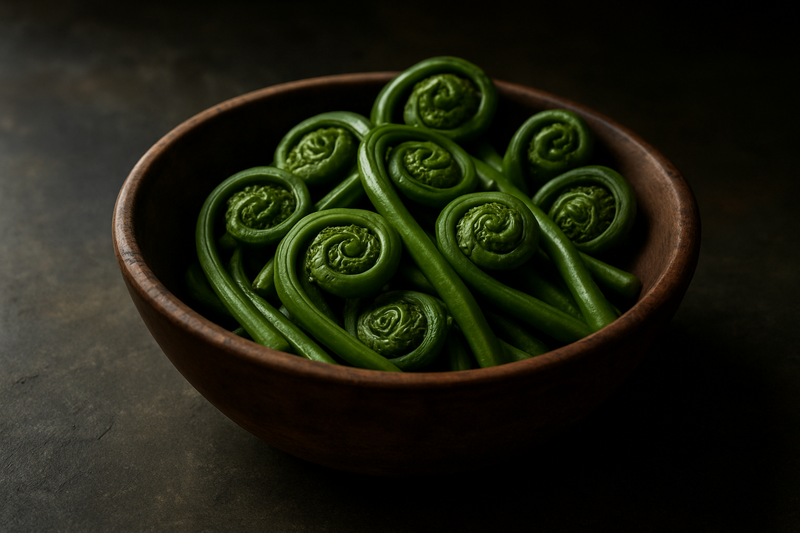
Fiddlehead ferns are the edible, coiled fronds of young ostrich ferns, prized for a flavor similar to a blend of asparagus and broccoli. To ensure safety, they must be thoroughly washed and boiled or steamed for 10–15 minutes before further cooking.
Fiddlehead Ferns · Photograph
Discover the fiddlehead fern health benefits, full nutrition facts, and exactly how to cook fiddlehead ferns safely. Learn why these coiled spring shoots are worth adding to your plate — and the one rule you must never skip.
Key Nutrients
% Daily Value based on 2,000 cal diet
Key active compounds in fiddlehead ferns
- Provitamin A carotenoids (e.g., beta-carotene): Pigmented plant compounds that your body converts into vitamin A. They act as antioxidants and support vision, skin integrity, and immune function.
- Phenolic compounds: A broad family of plant metabolites — including phenolic acids and flavonoids — that show strong antioxidant capacity in laboratory studies. Fiddlehead extracts tested in one published study showed exceptionally high phenolic content compared with many common vegetables.
- Vitamin C: A water-soluble antioxidant essential for collagen synthesis, wound healing, and immune defense.
- Niacin (Vitamin B3): Supports cellular energy metabolism and DNA repair — fiddleheads are one of the better plant sources per calorie.
- Omega-3 fatty acid (ALA): Alpha-linolenic acid (ALA) is a short-chain plant omega-3 present in small amounts in fiddleheads. It serves as a precursor to longer-chain omega-3s and contributes modestly to an anti-inflammatory dietary pattern.
- Copper and manganese: Trace minerals that act as cofactors for antioxidant enzymes in the body, supporting oxidative stress defenses.
Are fiddlehead ferns good for you? Key health areas reviewed
Heart and circulation
Fiddleheads are naturally low in calories, fat, and sodium, and provide about 370 mg of potassium per 100 g. Potassium is a mineral consistently linked to healthy blood pressure regulation in population research. Their dietary fiber content also supports the cholesterol- and blood-pressure-related benefits associated with vegetable-rich dietary patterns. There are no clinical trials evaluating fiddleheads specifically for cardiovascular outcomes, so any heart-health benefit is best understood as part of a broader whole-food eating pattern rather than as a unique effect of fiddleheads alone.
Digestive health and microbiome
A serving of cooked fiddleheads can deliver a meaningful portion of your daily fiber goal — estimates range from about 3 g per 100 g raw weight up to 7 g per half-cup cooked in some analyses, depending on preparation. Dietary fiber feeds beneficial gut bacteria (a process called prebiotic fermentation), supports bowel regularity, and is one of the most consistently evidence-supported dietary factors for long-term digestive health. As with any high-fiber food, introducing fiddleheads gradually can help prevent bloating or gas if you are not accustomed to a high-fiber diet.
Blood sugar and metabolism
Fiddleheads are a non-starchy vegetable with a low glycemic load — meaning they cause a relatively small and slow rise in blood sugar relative to their carbohydrate content. Their fiber content further moderates the glycemic response. While no human trials have tested fiddleheads specifically for blood glucose management, their nutritional profile fits well within dietary patterns recommended for people managing or reducing risk of type 2 diabetes.
Inflammation and recovery
Laboratory studies on multiple fiddlehead species found high total phenolic content and antioxidant capacity that significantly exceeded many common vegetables. One published analysis measured total phenolic content around 220 mg gallic acid equivalents per gram of extract, with antioxidant capacity exceeding 1 g Trolox equivalents per gram of extract in ORAC assays (a standardized test of antioxidant strength). These are in vitro (test-tube) findings — no human trials have yet confirmed anti-inflammatory effects from eating fiddleheads. The small amount of ALA omega-3 they provide may also contribute modestly to an anti-inflammatory dietary pattern when combined with other omega-3 sources.
Immune support and brain health
Fiddleheads provide roughly 30% of the Daily Value for vitamin C per 100 g raw, along with 20% DV for vitamin A from provitamin A carotenoids. Both nutrients are well-established in research on immune function, epithelial integrity (the maintenance of barrier tissues like skin and mucous membranes), and protection of neural tissue from oxidative damage. No human studies have directly linked fiddlehead consumption to improved immune outcomes or cognitive performance, but their nutrient combination is consistent with dietary patterns associated with immune resilience and brain health.
How to cook fiddlehead ferns safely — and what form is best
This section is critical. Do not skip it.
Can you eat fiddlehead ferns raw?
No. Raw or undercooked fiddleheads can cause foodborne illness. Public health authorities have documented multiple gastrointestinal illness outbreaks — involving nausea, vomiting, diarrhea, and abdominal cramps — linked to undercooked fiddleheads. The exact compound responsible has not been definitively identified, but the pattern is well established. Brief sautéing or stir-frying from raw does not reach the time-temperature combination needed to make them safe.
The safe cooking method (boil or steam first, then cook)
Step 1 — Clean: Rinse thoroughly in several changes of cold water to remove any papery brown scales and debris.
Step 2 — Boil or steam:
- Boiling: Cook in fresh water for 10–15 minutes, then discard the cooking water.
- Steaming: Steam for at least 10–12 minutes (some public health guidance recommends up to 20 minutes).
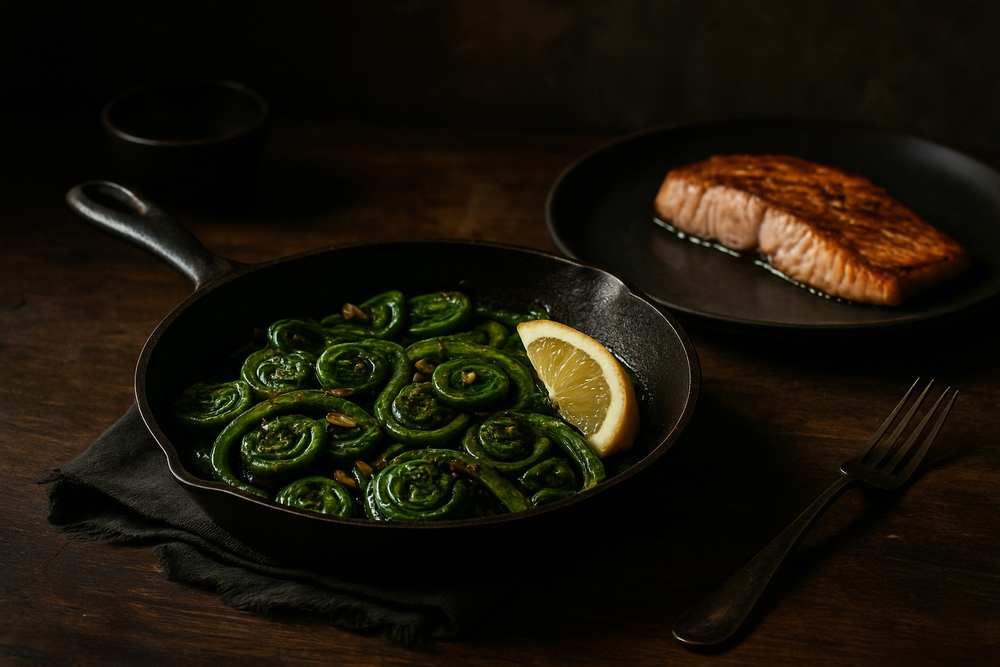
Step 3 — Finish to taste: Once thoroughly cooked, fiddleheads can be quickly sautéed in olive oil with garlic and lemon, tossed into pasta or grain bowls, added to an omelette, or served simply with salt and pepper.
Fresh vs. frozen vs. canned
| Form | What to know |
|---|---|
| Fresh | Best flavour; extremely short spring season. Tightly coiled, small (under 2–3 cm), brown-scaled. Must be washed and cooked fully. |
| Frozen | Convenient and available year-round; often pre-cleaned and blanched but still requires full boiling or steaming before eating. |
| Canned or pickled | Only safe if made from already fully cooked fiddleheads. Pickling alone does not replace adequate heat treatment. |
Prep and pairing ideas
Fiddleheads shine in simple preparations that let their flavour — earthy, grassy, slightly bitter — take centre stage. Because they must be boiled or steamed first, think of that step as your cooking base, and the final preparation as the flavour layer.
Three practical pairings
- Fiddleheads + garlic + lemon: After boiling, sauté briefly in olive oil with minced garlic and finish with a squeeze of lemon. The acid brightens the earthy bitterness and echoes how you might finish asparagus or broccolini. This is the classic, for good reason.
- Fiddleheads + eggs: Add boiled fiddleheads to a spring vegetable frittata or fold them into a soft scramble. The protein from eggs complements fiddleheads' own modest protein content, and the fat from the eggs helps absorb the fat-soluble carotenoids (provitamin A compounds) more effectively. Fat-soluble nutrients are absorbed better when eaten alongside a fat source.
- Fiddleheads + whole grains (farro, barley, or brown rice): Toss cooked fiddleheads through a warm grain bowl with a tahini dressing or miso vinaigrette. The combination delivers complementary fiber, plant protein, and B vitamins, and makes a satisfying, nutritionally complete spring meal.
Bottom line
Fiddlehead ferns are a genuinely nutrient-dense spring vegetable — low in calories, surprisingly high in protein for a green, and packed with vitamins A, C, niacin, copper, manganese, iron, and potassium. Their phenolic compounds show impressive antioxidant activity in laboratory studies, and their overall nutritional profile fits naturally within heart-healthy, anti-inflammatory, and plant-based dietary patterns.
The honest caveat: dedicated human clinical trials on fiddleheads as a specific health intervention simply don't exist yet. The health benefits attributed to them are largely inferred from their nutrient content and the broader evidence base for vegetable-rich diets — which is still meaningful, but worth stating clearly.
What is not inferred is the food safety rule: always boil or steam fiddleheads thoroughly, discard the cooking water, and never eat them raw. Source only ostrich-fern fiddleheads from a reliable supplier or a knowledgeable forager. Follow those two rules, and fiddleheads are a delicious, fleeting, and nutritionally worthwhile addition to a spring plate.
How Fiddlehead Ferns Compares
| Compared with | What's different |
|---|---|
| Fiddlehead Ferns vs. Asparagus | Thicker, woodier stalks with a more sulfurous flavor compared to the grassy, nutty taste of ferns. |
| Fiddlehead Ferns vs. Spinach | A leafy green with similar Vitamin A levels but a tender, non-crunchy texture. |
Health Benefits
Things to Know
Species identification is essential.: Only ostrich-fern (Matteuccia struthiopteris) fiddleheads are considered safe for regular culinary use. Bracken fern (Pteridium aquilinum) contains ptaquiloside, a compound classified as a carcinogen, and should never be eaten. If you are foraging, verify identification with an expert source or purchase from a reputable supplier.
Never eat raw or undercooked fiddleheads.: This applies to everyone, without exception.
Pregnancy and breastfeeding: Standard food-safety guidance generally advises extra caution with wild-foraged foods during pregnancy. Pregnant individuals should ensure fiddleheads are sourced reliably and fully cooked, and should consult their healthcare provider.
High-risk groups: Young children, older adults, and people who are immunocompromised are more vulnerable to severe foodborne illness and should adhere strictly to cooking guidelines.
Warfarin (anticoagulant) users: Fiddleheads, like other green vegetables, appear to contain vitamin K. If you take a vitamin K–sensitive blood thinner like warfarin, maintain a consistent intake and discuss any dietary changes with your healthcare provider.
Sensitive digestion: Introduce fiddleheads gradually; a sudden increase in high-fiber foods can cause gas or bloating in some people.
Medication timing: As with other high-fiber foods, large servings close to oral medication timing may theoretically affect absorption. Spacing a high-fiber meal and medications by a short interval is generally recommended, though this has not been studied specifically for fiddleheads.
Discard unfurled fronds.: Once the coil has opened, fiddleheads are past their culinary and safety prime.
Refrigerate leftovers promptly: to reduce any foodborne illness risk.
Prep Ideas
- — **Fiddleheads + garlic + lemon:** After boiling, sauté briefly in olive oil with minced garlic and finish with a squeeze of lemon. The acid brightens the earthy bitterness and echoes how you might finish asparagus or broccolini. This is the classic, for good reason.
- — **Fiddleheads + eggs:** Add boiled fiddleheads to a spring vegetable frittata or fold them into a soft scramble. The protein from eggs complements fiddleheads' own modest protein content, and the fat from the eggs helps absorb the fat-soluble carotenoids (provitamin A compounds) more effectively. Fat-soluble nutrients are absorbed better when eaten alongside a fat source.
- — **Fiddleheads + whole grains (farro, barley, or brown rice):** Toss cooked fiddleheads through a warm grain bowl with a tahini dressing or miso vinaigrette. The combination delivers complementary fiber, plant protein, and B vitamins, and makes a satisfying, nutritionally complete spring meal.
Shop This Ingredient
Stock your pantry with quality fiddlehead ferns.
Buy on AmazonAs an Amazon Associate, Plantopedia earns from qualifying purchases. This costs you nothing extra and helps us keep the encyclopedia free.
Frequently Asked Questions
There is no established therapeutic dose for fiddleheads — they are a seasonal food, not a supplement. Culinary serving sizes typically range from about ½ to 1 cup of cooked fiddleheads (approximately 40–100 g), eaten as a vegetable side dish or component of a meal. Given their short availability window of just a few weeks each spring, most people eat them a handful of times per season rather than daily. That seasonal rhythm is fine; they contribute meaningfully to your nutrient intake whenever you include them. Practical guidance: Start with a small serving (about ½ cup cooked) the first time, especially if you have a sensitive stomach, to assess tolerance. Ensure every serving is thoroughly cooked per the boil-or-steam-first method above. There is no evidence that eating more than one cup at a sitting provides additional health benefit, and very large servings of any high-fiber food can cause digestive discomfort. Fiddleheads are not available as a standardised supplement, and whole food form is preferred. If your goal is to increase vegetable variety in your diet, fiddleheads are an excellent seasonal option. To explore other nutrient-dense vegetables and whole plants organized by health goal, visit Plantopedia's goals hub.
The spring-season plant-based eater Looking to add variety and visual interest beyond the usual green vegetables Wants a whole food that packs protein, fiber, and antioxidants into a low-calorie serving Comfortable with seasonal cooking and simple prep techniques The antioxidant-focused wellness reader Interested in dietary sources of phenolic antioxidants and provitamin A carotenoids Building an anti-inflammatory diet pattern that draws from diverse whole plants Understands that fiddleheads' benefits come from their nutrient package within an overall diet, not from any single compound in isolation
Quick Answers
Common questions, answered in a line.
No, you should never eat fiddlehead ferns raw because they can cause foodborne illness. Public health authorities have documented gastrointestinal outbreaks involving nausea, vomiting, and diarrhea linked to raw or undercooked fiddleheads.
To cook fiddleheads safely, you must first clean them thoroughly and then boil them for 10–15 minutes or steam them for at least 10–12 minutes. Always discard the cooking water after boiling, and only sauté or stir-fry them after this initial heat treatment is complete.
Fiddlehead ferns are a nutrient-dense spring vegetable rich in vitamins A and C, niacin, potassium, and antioxidants. They are low in calories and sodium while providing a meaningful amount of dietary fiber and plant-based omega-3 fatty acids.
Fiddlehead ferns provide roughly 30% of the Daily Value for vitamin C and 20% for vitamin A, both of which are essential for immune function. These nutrients support barrier tissues like skin and help protect the body against oxidative damage.
Fiddlehead ferns are a good source of dietary fiber, providing between 3g and 7g per serving depending on the preparation. This fiber supports digestive health by feeding beneficial gut bacteria and promoting bowel regularity.
Only ostrich-fern (Matteuccia struthiopteris) fiddleheads are considered safe for regular culinary use. You must avoid bracken ferns, as they contain ptaquiloside, a compound classified as a carcinogen.
Fiddlehead ferns have an earthy, grassy, and slightly bitter flavor profile. Their taste is often compared to other green spring vegetables like asparagus or broccolini.
For Readers in the USA
Local context — sourcing, seasonality, and regional notes.
In the U.S., the Ostrich fern (Matteuccia struthiopteris) is the primary edible variety, harvested mostly in the Northeast, Upper Midwest, and Pacific Northwest. You can identify them by a deep U-shaped groove on the inside of the stem and a thin, papery brown covering, distinguishing them from potentially toxic look-alikes.
Fresh fiddlehead ferns have an extremely short season, typically lasting only a few weeks from late April through early June. They are a staple at spring farmers markets in Maine, Vermont, and the Pacific Northwest, appearing shortly after the ground thaws and before the ferns unfurl.
While difficult to find in standard supermarkets, specialty grocers like Whole Foods Market or regional chains in the Northeast (such as Hannaford or Wegmans) often stock them during their brief spring window. If you cannot find them fresh, some U.S. health food stores carry frozen or pickled versions throughout the rest of the year.
The FDA and the CDC advise that fiddleheads must be boiled for 10-15 minutes or steamed for 10-12 minutes to prevent foodborne illness. This guidance remains consistent across U.S. state health departments following several documented outbreaks of gastrointestinal distress linked to undercooked ferns.
AI Clinical Review
- Clear, evidence-aligned food safety guidance: ostrich fern only, never eat raw, and boil/steam thoroughly before any further cooking—this mirrors public health advisories.
- Balanced nutrition picture: low calorie, good fiber for a green vegetable, and meaningful amounts of vitamins A and C, niacin, copper, manganese, iron, and potassium.
- Places potential benefits in context of overall diet rather than claiming unique therapeutic effects—appropriate given the current research base.
- Practical notes that fat helps carotenoid absorption and that fiddleheads fit well in plant-forward, heart-healthy patterns are accurate and useful.
- Antioxidant and anti-inflammatory claims come largely from lab assays (e.g., phenolics, ORAC); human trials linking fiddlehead intake to clinical outcomes are lacking.
- Reported nutrient values can vary with species, harvest timing, and preparation; boiling reduces some water‑soluble vitamins like vitamin C.
- Omega-3 (ALA) content is small, and conversion to EPA/DHA is limited—so effects on inflammation are likely modest.
- Immune and brain-health statements are reasonable inferences from nutrients present but have not been tested directly in humans for this specific food.
- Safety first: Thorough cooking is non‑negotiable; discard cooking water. Frozen products typically still require full cooking.
- Species identification matters: If foraging, confirm ostrich fern; avoid bracken fern due to known toxins. When uncertain, buy from reputable sellers.
- Who should check in with a clinician: Pregnant individuals, young children, older adults, and people who are immunocompromised; those on warfarin should keep vitamin K intake consistent.
- Practical use: Common serving is about 1/2–1 cup cooked; introduce gradually if you’re not used to higher-fiber foods. High-fiber meals may interfere with absorption of some oral medications—separate timing if advised by your clinician, and refrigerate leftovers promptly.
Must be cooked thoroughly; raw or undercooked fiddleheads can cause foodborne illness.
References
- USDA FoodData Central — Fiddlehead ferns nutrient data (fdc.nal.usda.gov)
- MyPlate — Vegetables group guidance (myplate.gov)
- BC Centre for Disease Control — Fiddleheads food safety fact sheet (public health guidance on cooking times and outbreak history) (bccdc.ca)
- WebMD — Health benefits of fiddlehead ferns (overview of nutrition and culinary uses) (webmd.com)
- PMC — Nutritional and antioxidant potential of fiddleheads from various fern species (peer-reviewed lab study, phenolic content and ORAC data) (pmc.ncbi.nlm.nih.gov)
- Nutrition-and-you — Fiddlehead ferns nutrition facts and health benefits (nutrition-and-you.com)
- Precision Nutrition — Fiddleheads recipe and nutrition encyclopedia entry (precisionnutrition.com)
- Dr. Axe / Draxe.com — Fiddleheads nutrition overview (draxe.com)
- Forage Girl — Nutritional value of fiddleheads (foragegirl.com)
Know Your Numbers
Eating healthy is a start. Now get to know your biomarkers.
Food changes bloodwork — inflammation, lipids, blood sugar and nutrient status all respond to what you eat. 59 markers from $59.
- Results in 7–10 days at 2,000+ Quest sites
- Licensed provider reviews every result
- One flat price, no membership, HSA/FSA eligible
Educational information only, not medical advice. Panels are ordered and reviewed through our licensed partner; Plantopedia may earn a commission.