Cacao Butter — health benefits and uses
Fat, texture, and satiety angle; clarify strict WFPB vs flexible plant-based use
The Short Answer
Cacao butter is a plant-based fat containing 120 calories and 13.6g of fat per tablespoon. While it is high in saturated fat, about one-third is stearic acid, which research suggests has a neutral effect on LDL cholesterol levels.
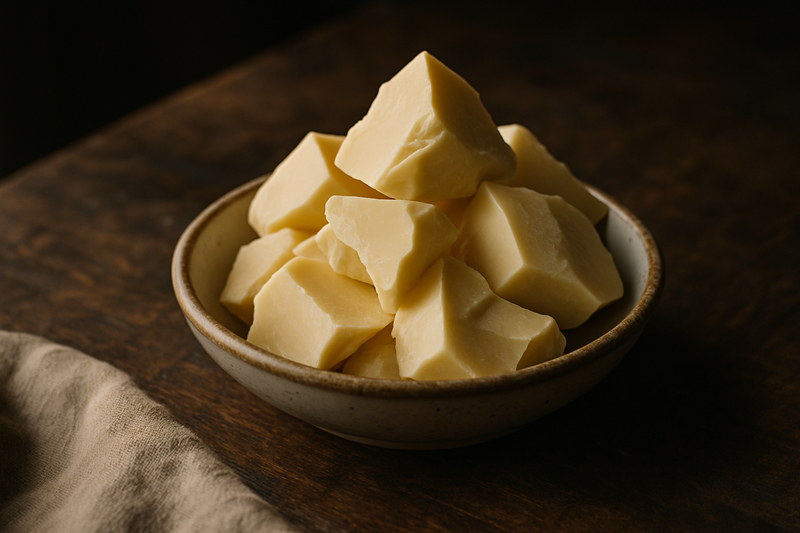
Cacao Butter · Photograph
Cacao butter is the smooth, ivory-colored fat pressed from the seeds of Theobroma cacao — the same plant that gives us chocolate, cocoa powder, and cacao nibs. You have almost certainly tasted it: it is the fat that makes chocolate melt luxuriously on the tongue. In food-as-medicine and plant-based circles, it shows up in homemade chocolate bars, raw desserts, golden lattes, and superfood energy balls.
Key Nutrients
% Daily Value based on 2,000 cal diet
Key active compounds in cacao butter
- Stearic acid (~35%) — A saturated fatty acid (a fat molecule with no double bonds in its carbon chain) that research suggests has a relatively neutral effect on LDL ("bad") cholesterol, unlike many other saturated fats.
- Oleic acid (~35%) — A monounsaturated fatty acid (one double bond in its carbon chain) — the same fat found abundantly in olive oil — associated with improved blood lipid profiles when it replaces saturated fats in the diet.
- Palmitic acid (~25%) — A saturated fatty acid that can raise LDL cholesterol. It is the main reason cacao butter is not considered a heart-neutral fat overall.
- Tocopherols (vitamin E family) — Fat-soluble antioxidants that help protect the fat from oxidation and may support skin and immune health in small amounts.
- Phytosterols (trace) — Plant sterols structurally similar to cholesterol; in large therapeutic doses they can reduce cholesterol absorption, but the amounts in culinary use of cacao butter are too small to produce this effect.
- Polyphenols (trace, residual) — The flavanols that make dark chocolate famous for its health associations are concentrated in the cocoa solids. The fat fraction retains only tiny residual amounts. Do not buy cacao butter expecting a polyphenol boost.
Is cacao butter healthy? What the evidence actually says
Heart and circulation
This is the most discussed — and most misunderstood — area. The headline claim you often see is that cacao butter is "heart-healthy because it contains oleic acid, like olive oil." That is partially true but incomplete.
- The oleic acid argument holds some weight. About a third of cacao butter's fat is oleic acid, which is associated with favorable blood lipid profiles when it replaces saturated fat. This does make cacao butter a step above dairy butter or coconut oil in terms of blood-lipid impact.
- Stearic acid appears more neutral. Another ~35% is stearic acid, which research consistently shows does not raise LDL cholesterol the way palmitic acid does. This is genuinely better news than critics of saturated fat sometimes acknowledge.
- Palmitic acid complicates the picture. The remaining ~25% is palmitic acid, which can raise LDL cholesterol. The net effect on cardiovascular risk markers is roughly neutral compared to butter, but less favorable than predominantly unsaturated oils (olive, canola, avocado oil).
- The chocolate study problem. Most human trials showing cardiometabolic benefits from "cocoa" or "dark chocolate" are studying cocoa flavanols in the cocoa solids — not cacao butter in isolation. You cannot transfer those findings to the fat alone.
Bottom line for heart health: Cacao butter is not a health food for your heart, but it is also not the enemy. Within an overall diet low in saturated fat, small amounts are unlikely to cause harm. For people with high LDL cholesterol, cardiovascular disease, or a strong family history, major guidelines advise limiting saturated fat overall and choosing unsaturated fats instead.
Digestive health and microbiome
Cacao butter contains zero fiber and zero prebiotic compounds — so it does not feed your gut microbiome (the community of bacteria in your digestive tract) the way whole plant foods do. Some wellness sources claim its fatty acids "lubricate" the digestive tract, but there are no controlled human trials to back this up.
Eating large amounts of concentrated fat can slow gastric emptying (the rate at which food leaves your stomach), which may worsen acid reflux in susceptible people. For genuine digestive health support, whole cacao products, nuts, seeds, legumes, fruits, and vegetables are far more valuable.
Blood sugar and metabolism
As a pure fat, cacao butter has no direct effect on blood sugar — it contains no carbohydrates. Fat does slow the absorption of carbohydrates eaten alongside it, which can blunt post-meal glucose spikes. However, this is a property of all dietary fats, not something unique to cacao butter.
The metabolic improvements seen in cocoa studies — improved insulin sensitivity (how well your cells respond to insulin), lower fasting blood sugar — are driven by cocoa flavanols, not the fat. Cacao butter alone has no meaningful evidence for improving glycemic control.
Inflammation and recovery
Marketing materials frequently credit cacao butter with anti-inflammatory and antioxidant properties. The small amounts of vitamin E (tocopherols) it provides do have antioxidant activity, but the systemic anti-inflammatory benefits of eating whole dark chocolate come predominantly from its polyphenol-rich cocoa solids.
Robust human trials testing cacao butter in isolation for systemic inflammation (body-wide inflammation measured by markers like C-reactive protein) are lacking. Diets rich in whole plant foods, fiber, and unsaturated fats have far stronger evidence for reducing systemic inflammation than adding cacao butter to your routine.
Hormones and cycle health
WebMD notes a theoretical concern that topical cocoa butter could influence estrogen levels in women, though evidence is very limited and not well-characterized in human studies. For oral (eaten) cacao butter, there are no strong human trials showing it meaningfully affects sex hormones, menstrual symptoms, or menopause outcomes. People with hormone-sensitive conditions (such as certain hormone-receptor-positive cancers) should make dietary fat decisions in consultation with their oncology team rather than based on expected hormonal actions from this fat.
Myths vs. facts about cacao butter
Myth 1: "Cacao butter is rich in antioxidants and polyphenols like dark chocolate." Fact: The polyphenols in dark chocolate live in the cocoa solids, not the fat. Cacao butter retains only trace residual amounts. If you want flavanols, eat a small piece of good-quality dark chocolate or add unsweetened cocoa powder — not just the butter.
Myth 2: "Cocoa butter prevents stretch marks." Fact: Cocoa butter is widely used for this purpose, but multiple clinical trials have compared it against placebo and found no significant difference in stretch mark prevention or reduction. It is a good moisturizer, but the stretch-mark claim is not supported by evidence.
Myth 3: "Because it's plant-based, cacao butter is a healthy everyday fat." Fact: Plant origin does not automatically make a fat health-promoting in large quantities. Cacao butter is still a calorie-dense extracted fat high in saturated fat. On strict whole-food plant-based frameworks, it is classified alongside other extracted oils — to be used sparingly if at all, with whole food fat sources (nuts, seeds, avocado) prioritized.
How Cacao Butter Compares
| Compared with | What's different |
|---|---|
| Cacao Butter vs. Olive Oil | Cacao butter is solid at room temperature and chocolate-scented, while olive oil is a liquid monounsaturated fat. |
| Cacao Butter vs. Coconut Oil | Cacao butter contains stearic acid which is cholesterol-neutral, whereas coconut oil is higher in lauric acid. |
| Cacao Butter vs. Cocoa Powder | Cacao butter is the pure fat extracted from the bean; cocoa powder contains the fiber and antioxidant flavonols. |
Health Benefits
Things to Know
Saturated fat context: Cacao butter is ~60% saturated fat. Major heart-health guidelines (American Heart Association, Harvard's Healthy Eating Plate) recommend replacing saturated fats with unsaturated fats where possible. Cacao butter is not off-limits, but it should not be your go-to daily cooking fat.
WFPB restriction: Strict whole-food plant-based dietary frameworks exclude all extracted oils and isolated fats — including plant-derived ones like cacao butter. If you follow this approach, reserve it for occasional use in special recipes, or skip it in favor of whole cacao products (cacao paste or nibs).
Calorie density: At ~120 kcal per tablespoon, cacao butter adds up quickly. People managing weight or calorie intake should measure rather than estimate.
Cholesterol considerations: If your LDL is elevated or you have been advised to reduce saturated fat, keep cacao butter as an occasional ingredient rather than a regular one. Discuss your overall fat intake with your dietitian or doctor.
Gallbladder and fat malabsorption: Large amounts of any concentrated fat can trigger discomfort in people with gallbladder disease, a history of pancreatitis, or fat-malabsorption conditions. Use small amounts and monitor your response.
Medication interactions: No specific drug–nutrient interactions are well-documented for cacao butter alone. However, if you are on lipid-lowering therapy (statins

Shop This Ingredient
Stock your pantry with quality cacao butter.
Buy on AmazonAs an Amazon Associate, Plantopedia earns from qualifying purchases. This costs you nothing extra and helps us keep the encyclopedia free.
Frequently Asked Questions
Serving: 1 tablespoon (14 g) of food-grade cacao butter Calories: 120 kcal Total fat: 14 g (almost entirely fatty acids — see above) Protein: 0 g Carbohydrates: 0 g Fiber: 0 g Micronutrients present in small amounts: Vitamin E (tocopherols): A fat-soluble antioxidant; cacao butter provides modest amounts that contribute to — but should not be your primary source of — daily vitamin E. Vitamin D2: Present in small quantities; not sufficient as a primary vitamin D source. Potassium, phosphorus, magnesium: All present in minor amounts. Cocoa powder is a far richer source of these minerals than the isolated fat. Iron, copper, manganese: Trace amounts only; again, cocoa powder and whole cacao products outperform the pure fat on mineral content. The takeaway: Cacao butter is an energy-dense, nearly pure fat. It is not an "empty" food in the way refined sugar is, but it offers nowhere near the nutrient density of whole cacao products, nuts, or seeds.
What form works best for cooking and baking? Food-grade cacao butter (chips, wafers, or blocks) is the form you will encounter most often for culinary use. It melts at around 34–38°C (93–100°F) — just below body temperature — which is why chocolate melts in your mouth. It is solid at room temperature, which makes it useful for: Setting no-bake chocolate desserts and truffles Creating a dairy-free "chocolate shell" coating Adding richness to hot drinks and smoothies Homemade raw chocolate bars (combined with cocoa powder and a sweetener) Unrefined vs. deodorized cacao butter: Unrefined retains a faint chocolate aroma and potentially slightly more trace antioxidants. A good choice when you want a subtle cacao note. Deodorized (neutral-smelling) is the standard in commercial chocolate manufacturing. Nutritionally, the difference at culinary doses is minor. Label tips: Look for "food grade" on the packaging — cosmetic-grade products may contain additives not intended for consumption. Organic certification reduces the risk of pesticide residues. A short ingredient list (ideally: cacao/cocoa butter, nothing else) is a good sign. Avoid products with added hydrogenated fats, artificial flavors, or emulsifiers if you want the cleanest option. What about chocolate products containing cacao butter? Dark chocolate with ≥70% cocoa content delivers both cacao butter and meaningful amounts of cocoa solids (flavanols). If you enjoy chocolate for health reasons, this is a smarter choice than eating cacao butter alone — you get the flavanols alongside the fat. Keep portions to about 20–30 g (a square or two) and choose low-added-sugar options.
Quick Answers
Common questions, answered in a line.
Cacao butter is not considered a heart-healthy fat, though it may be less harmful than dairy butter or coconut oil. While its oleic acid and stearic acid are relatively neutral for heart health, the 25% palmitic acid content can raise LDL (bad) cholesterol.
No clinical evidence supports the claim that cocoa butter prevents or reduces stretch marks. While multiple clinical trials have compared it to placebos, no significant difference was found, though it remains an effective general moisturizer for the skin.
Cacao butter is a pure fat that contains zero fiber and no prebiotic compounds to feed the gut microbiome. While some claim the fat "lubricates" the digestive tract, there are no human trials to support this, and large amounts may actually slow gastric emptying or worsen acid reflux.
Cacao butter does not contain significant antioxidants; those health-promoting polyphenols and flavanols are found in the cocoa solids, not the fat. Cacao butter only retains tiny residual amounts of these compounds, so it should not be relied upon for an antioxidant boost.
Cacao butter has a neutral effect on blood sugar because it is a pure fat with zero carbohydrates. While it can slow the absorption of sugars when eaten with other foods, the metabolic improvements seen in chocolate studies are driven by cocoa solids rather than the butter itself.
Cacao butter is roughly 60% saturated fat, which includes stearic acid and palmitic acid. Because of this high concentration, major health guidelines recommend using it sparingly and prioritizing unsaturated fats like olive or avocado oil for daily cooking.
Cacao butter is the smooth, ivory-colored fat pressed from the seeds of the Theobroma cacao plant. It is the primary ingredient responsible for the melting texture of chocolate and is frequently used in raw desserts, energy balls, and keto-friendly recipes.
For Readers in the USA
Local context — sourcing, seasonality, and regional notes.
In the United States, you can find food-grade cacao butter at major health food chains like Whole Foods Market and Sprouts Farmers Market, or via large online retailers like Amazon and Thrive Market. It is typically located in the baking aisle or the "superfoods" section. When shopping, ensure the label specifically states "food grade" or "edible," as many versions sold in the beauty aisle are intended for topical use only and may contain non-food additives.
Look for the USDA Organic seal and "Fair Trade" certifications to ensure the cacao butter meets federal organic standards and ethical labor practices. Because the U.S. FDA regulates cacao butter as a food additive and a cosmetic ingredient, checking for these third-party certifications helps verify that the product was produced without synthetic pesticides. Many premium U.S. brands also provide a "Certificate of Analysis" (COA) upon request to prove the fat is free from heavy metal contaminants like lead and cadmium.
While the Theobroma cacao tree is native to tropical regions, a small amount of commercial cacao is grown in the United States, specifically in Hawaii and Puerto Rico. Most cacao butter sold in the U.S. is imported from West Africa, South America, or Southeast Asia, where the tropical climate allows for year-round harvesting and processing. Small-scale "bean-to-bar" chocolate makers in cities like San Francisco, Brooklyn, and Seattle often press their own cacao butter from imported ethically sourced beans.
AI Clinical Review
- Clearly distinguishes cacao/cocoa butter (the fat) from cocoa solids, noting that most polyphenols live in the solids and only trace amounts remain in the fat.
- Accurately summarizes the fat profile: high in stearic acid (generally LDL‑neutral), oleic acid (beneficial when replacing saturated fat), and palmitic acid (can raise LDL), so it’s not as heart‑friendly as predominantly unsaturated oils.
- Emphasizes energy density and minimal micronutrients/fiber, with a realistic serving (~1 Tbsp ≈ 14 g ≈ 120 kcal).
- Correctly cautions that many “chocolate benefits” in studies come from cocoa flavanols, not cacao butter alone, and that stretch‑mark prevention claims are unsupported.
- Direct randomized trials on cacao butter alone and hard cardiovascular outcomes are limited; most inferences come from fatty‑acid substitution research rather than cocoa‑butter–specific trials.
- Anti‑inflammatory and gut‑microbiome benefits from eating cacao butter lack robust human evidence; vitamin E content is modest and unlikely to drive systemic effects.
- Potential hormonal effects (topical or oral) are not well characterized; current data are sparse and not definitive.
- Any effect on post‑meal blood glucose likely reflects general fat‑slowing digestion rather than a unique property of cacao butter; no clear metabolic advantage over other fats is established.
- Portion matters: consider ~1–2 tsp (5–10 g) in recipes and keep total saturated fat within guideline ranges (≤10% of calories for most; 5–6% if you have high LDL or cardiovascular disease risk).
- For antioxidant/flavanol benefits, choose dark chocolate (≥70% cocoa) or unsweetened cocoa powder; cacao butter alone won’t deliver these compounds.
- Use food‑grade cacao/cocoa butter for eating; cosmetic‑grade products may include non‑food additives. Unrefined has a cocoa aroma; deodorized is neutral—nutritionally similar.
- Check in with a clinician if you have elevated LDL/CVD, gallbladder disease, fat‑malabsorption, or a history of pancreatitis; individuals with hormone‑sensitive conditions should personalize saturated‑fat targets and overall diet with their care team.
Flag strict WFPB limitations for extracted oils and highly processed fat products.
References
- PubMed — Effects of cocoa butter on serum lipids in humans: historical highlights (pubmed.ncbi.nlm.nih.gov)
- PMC, National Library of Medicine — Effects of Cocoa Butter and Cocoa Butter Equivalent in a Chocolate Confectionery on Human Blood Triglycerides, Glucose and Insulin (pmc.ncbi.nlm.nih.gov)
- PubMed — The role of fatty acid saturation on plasma lipids, lipoproteins, and apolipoproteins: I. Effects of whole food diets high in cocoa butter, olive oil, soybean oil, dairy butter, and milk cho (pubmed.ncbi.nlm.nih.gov)
- PubMed — Assessment of cocoa (Theobroma cacao L.) butter content and composition throughout fermentations (pubmed.ncbi.nlm.nih.gov)
- PMC, National Library of Medicine — The Preliminary Results for Evaluating Cocoa Butter's Hepatoprotective Effects against Lipid Accumulation and Inflammation in Adult Male Rats Chronically Fed Ethanol (pmc.ncbi.nlm.nih.gov)
- PMC, National Library of Medicine — Effect of cocoa butter and sunflower oil supplementation on performance, immunoglobulin, and antioxidant vitamin status of rats (pmc.ncbi.nlm.nih.gov)
- USDA FoodData Central — USDA FoodData Central (fdc.nal.usda.gov)
Know Your Numbers
Eating healthy is a start. Now get to know your biomarkers.
Food changes bloodwork — inflammation, lipids, blood sugar and nutrient status all respond to what you eat. 59 markers from $59.
- Results in 7–10 days at 2,000+ Quest sites
- Licensed provider reviews every result
- One flat price, no membership, HSA/FSA eligible
Educational information only, not medical advice. Panels are ordered and reviewed through our licensed partner; Plantopedia may earn a commission.