Cassava (Yuca Root) — health benefits and uses
A staple energy food across Africa, Latin America, and Asia.
The Short Answer
Cassava is a starchy root vegetable high in energy-providing carbohydrates and resistant starch, but it must be peeled and thoroughly cooked to neutralize natural cyanogenic compounds.
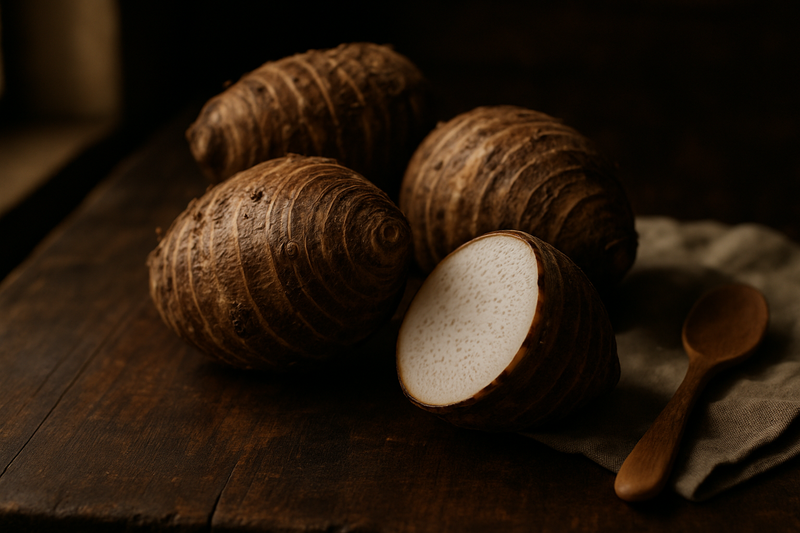
Cassava (Yuca Root) · Photograph
Discover the cassava (yuca root) health benefits and side effects in one place. Learn how this starchy tropical tuber supports energy, digestion, and heart health — plus the essential safety steps to remove cyanide before eating.
Key Nutrients
% Daily Value based on 2,000 cal diet
Key active compounds in cassava
- Cyanogenic glycosides (linamarin and lotaustralin): Natural plant defense compounds found in cassava roots and leaves. When the root is cut, crushed, or chewed, an enzyme called linamarase breaks these compounds down and can release hydrogen cyanide. Thorough cooking, soaking, and fermentation eliminate the risk. (See the safety section below for details.)
- Resistant starch (especially RS3): A fraction of starch that passes through the small intestine undigested and is fermented by gut bacteria in the colon, producing short-chain fatty acids — including butyrate — that nourish the gut lining, support immune balance, and may improve insulin sensitivity.
- Carotenoids (including β-carotene): Pigmented compounds with pro-vitamin A activity, found in cassava leaves and in biofortified yellow cassava varieties. They support vision, immune function, and antioxidant defenses.
- Flavonoids and phenolic compounds: Plant polyphenols concentrated mainly in cassava leaves and stems. They have antioxidant and anti-inflammatory properties in laboratory studies, though human evidence is still limited.
- Phytosterols: Plant compounds structurally similar to cholesterol; modest amounts in cassava may contribute to the cholesterol-lowering effects observed in some studies.
Myths vs. facts about cassava safety
Myth 1: "Cassava is poisonous and should be avoided." Fact: Raw cassava does contain cyanogenic compounds, but these are effectively eliminated by peeling and thorough cooking. Commercially processed cassava products that follow established safety standards are considered safe. Billions of people eat cassava safely every day.
Myth 2: "Tapioca is toxic because it comes from cassava." Fact: Tapioca is a highly refined starch extracted from cassava roots. The processing involved removes virtually all cyanogenic content, and tapioca products sold in stores are safe to consume.
Myth 3: "Cassava flour is a nutritious, low-carb alternative to wheat flour." Fact: Cassava flour is gluten-free and grain-free, which makes it genuinely useful for people with celiac disease or gluten intolerance. However, it is not low-carb — it is nearly as high in carbohydrates as wheat flour. Its nutritional advantage over wheat flour is the absence of gluten, not a reduction in calories or carbohydrates.
Prep and pairing ideas
Classic boiled yuca: Peel the tough brown skin completely (cut off the ends, score the skin, and peel away; remove any pink or discolored flesh), then boil chunks in salted water for 20–30 minutes until fork-tender. Drain and serve with a squeeze of lime and fresh herbs.
Cassava cold salad: Boil, drain, cool, then toss with olive oil, red onion, cilantro, and tomato. Eating cassava cold maximizes resistant starch content — a practical gut health upgrade.
Cassava mash with legumes: Mash boiled cassava with a little olive oil and garlic, then serve alongside black beans or lentils. The legumes add the protein and iron that cassava root lacks, and the fat slows glucose absorption.
In soups and stews: Diced cassava holds its shape well in slow-cooked stews (think Brazilian moqueca or Caribbean sancocho). Cooking in broth adds flavor without adding refined fats.
Cassava flour pancakes or tortillas: Use cassava flour 1:1 as a wheat flour substitute in most simple recipes for people avoiding gluten. Note that cassava flour baked goods are still high in carbohydrates.
Buying guide: fresh vs. flour vs. frozen
Fresh whole root: Look for cassava roots with firm, unblemished skin. Avoid roots with soft spots, mold, or cuts exposing discolored (blue-tinged or black) flesh — discoloration indicates oxidation and the root may be past its best. Fresh cassava keeps in a cool, dry place for up to a week, or peel, cut, and freeze it for up to a year.
Frozen cassava: Pre-peeled, par-cooked frozen cassava is a convenient and equally nutritious option. It is also safer because pre-peeling has already removed the high-cyanide outer layer. Look for brands with no added salt or preservatives. Cook from frozen in boiling water until completely tender.
Cassava flour: Choose brands that specify "cassava flour" (made from the whole dried root) rather than "tapioca starch" (just the extracted starch, lower in fiber). For blood sugar management, look for MOCAF or "high-resistant-starch" cassava flour if available. Store in an airtight container in a cool, dry place.
Label tip: Cassava flour and tapioca starch are both derived from cassava but are not interchangeable in recipes. Cassava flour is denser and absorbs more liquid; tapioca starch is lighter and used as a thickener.
Bottom line
Cassava (yuca root) is a nutritious, energy-dense whole plant food that can be a valuable part of a varied, balanced diet when properly prepared. It provides a meaningful dose of vitamin C, potassium, and B vitamins, along with resistant starch and fiber that support gut health and may benefit cholesterol levels. The evidence for its heart health and digestive benefits is encouraging, though most studies are small or preliminary.
The safety rule is simple and non-negotiable: always peel and thoroughly cook cassava before eating. Raw or undercooked cassava poses a real cyanide risk. Beyond that, the main dietary consideration is its high glycemic index and calorie density — treat it like any refined starchy staple, keep portions moderate, and build meals around protein, healthy fats, and plenty of non-starchy vegetables.
Cassava is not a superfood, but it is a legitimate, culturally rich, and practically useful staple. Used thoughtfully, it earns a place in a health-conscious kitchen.
How Cassava (Yuca Root) Compares
| Compared with | What's different |
|---|---|
| Cassava (Yuca Root) vs. Potato | Much higher in calories and carbohydrates (330 kcal per cup) compared to potatoes. |
| Cassava (Yuca Root) vs. Yucca (Ornamental) | Actually the same plant; Yuca is the root, while Yucca (double C) is an unrelated desert shrub. |
| Cassava (Yuca Root) vs. Tapioca | A refined starch extracted from cassava, removing the fiber and protein found in the whole root. |
Health Benefits
Things to Know
Always peel and thoroughly cook cassava.: Never eat it raw. The outer brown fibrous skin contains the highest concentration of cyanogenic compounds and must be removed before cooking. Boil, steam, or roast until completely tender throughout.
Bitter varieties are riskier.: Bitter cassava (common in some traditional agricultural systems) contains far higher cyanide levels than sweet varieties typically sold in Western supermarkets. Regardless of variety, cooking is non-negotiable.
High glycemic index — watch portions.: A cup of boiled cassava is equivalent in carbohydrate content to roughly 2 slices of white bread. People with diabetes, prediabetes, or insulin resistance should treat cassava as a high-carbohydrate staple and build meals around it accordingly.
Low in protein.: If cassava is a primary food source without protein variety, malnutrition risk increases. Always pair cassava with legumes, eggs, fish, poultry, or other protein sources.
Potassium monitoring.: Cassava provides about 451 mg of potassium per cup. People with chronic kidney disease or those on potassium-sparing diuretics or ACE inhibitors (a blood pressure medication class) should factor this into their total daily potassium intake and discuss with their healthcare provider.
Antidiabetic medications.: Large cassava portions can raise blood glucose quickly, which may interfere with insulin or oral diabetes medication dosing. Resistant starch–enriched cassava products appear gentler on blood sugar but should still be discussed with a doctor.
Pregnancy.: In communities where cassava is a dietary staple, chronic low-level cyanide exposure and limited dietary diversity may affect maternal and fetal health. Pregnant women in cassava-dependent settings should prioritize dietary diversification and ensure adequate protein and micronutrient intake.
Gas and bloating.: Some people experience digestive discomfort — bloating or gas — when eating large amounts of cassava or high-resistant-starch cassava products. Starting with smaller portions allows the gut microbiome to adjust gradually.
Glossary
Shop This Ingredient
Stock your pantry with quality cassava (yuca root).
Buy on AmazonAs an Amazon Associate, Plantopedia earns from qualifying purchases. This costs you nothing extra and helps us keep the encyclopedia free.
Frequently Asked Questions
Heart and circulation A small human study found that regular cassava consumption, alongside sweet potato, improved blood lipid profiles in adults with moderately elevated glucose and cholesterol — specifically raising HDL ("good") cholesterol and lowering LDL ("bad") cholesterol. Cassava also provides about 451 mg of potassium per cup, an electrolyte that helps regulate blood pressure, and modest fiber that can support cholesterol management when part of an overall heart-healthy diet. Research on cassava-derived resistant starch suggests it may modestly reduce LDL cholesterol by increasing short-chain fatty acid production in the colon, though most of that data comes from studies on resistant starch broadly rather than cassava specifically. The preparation method matters enormously here: boiled cassava provides these benefits; deep-fried cassava adds saturated or trans fats that offset any cardiovascular gains. Digestive health and gut microbiome Boiled cassava provides about 3 g of fiber per cup and contains resistant starch that acts like a prebiotic — meaning it feeds beneficial gut bacteria rather than being absorbed as energy. When those bacteria ferment resistant starch, they produce butyrate, a short-chain fatty acid that nourishes the cells lining your colon, supports regular bowel movements, and may reduce low-grade intestinal inflammation. Human trials using resistant starch interventions (typically from modified cassava flour, called MOCAF) have shown increases in butyrate production, improved microbial diversity, and reductions in inflammatory markers. Cooling cooked cassava before eating — such as in a cold cassava salad — increases the resistant starch content further because the starch recrystallizes into a form that resists digestion. Blood sugar and metabolism This is where cassava's profile gets nuanced. Boiled cassava has a glycemic index (a measure of how quickly a food raises blood glucose) in the mid-70s — roughly equivalent to white bread or white rice. Large hot servings can cause a rapid rise in blood sugar, which is a concern for people with diabetes or insulin resistance. However, modified cassava flour (MOCAF) enriched with resistant starch (RS3) has been shown in adults with type 2 diabetes to improve insulin resistance — the condition where cells stop responding normally to insulin. Traditional cassava preparations like fufu (a fermented, pounded form) appear to release glucose more slowly than boiled or fried cassava. Cooling cooked cassava also lowers the glycemic impact. The takeaway: it is not just whether you eat cassava, but how you prepare it and how much you eat at one time. Inflammation and recovery Most of the anti-inflammatory evidence for cassava comes from laboratory and animal studies, not large human trials. Cassava leaves and composite cassava flour-leaf mixtures have shown concentration-dependent inhibition of inflammatory signaling in cell studies. The root's contribution to inflammation management is likely indirect — through its resistant starch and fiber supporting the production of anti-inflammatory butyrate in the gut — rather than from potent antioxidants in the root itself. Cassava root is not a high-polyphenol food. For meaningful anti-inflammatory plant compounds, cassava leaves (when properly cooked) are considerably richer in phytochemicals than the root.
Fresh boiled cassava root is the most nutritious whole-food option. Peeling removes the outer toxic bark, and boiling in water inactivates cyanogenic glycosides while softening the starch. Vitamin C and potassium are retained reasonably well. For extra gut benefits, cook, then refrigerate cassava and eat it cold or reheated gently — this increases resistant starch. Mashed or pureed cassava has a similar nutritional profile to boiled. Adding olive oil or avocado keeps the glycemic impact more manageable by slowing digestion. Fried cassava (fries, chips, wedges) is a popular preparation but significantly higher in calories and fat. While cyanide is eliminated by cooking, frequent consumption of deep-fried cassava is not recommended for those managing weight, blood sugar, or cardiovascular health. Cassava flour (including MOCAF, gari, fufu, tapioca products) varies widely in nutritional quality depending on processing. MOCAF — modified cassava flour enriched in resistant starch — has the most promising evidence for metabolic benefits. Traditional fermented forms like fufu digest more slowly than plain flour. Tapioca starch is the most refined and lowest in fiber and micronutrients. Cassava flour is a genuinely useful gluten-free wheat flour substitute for people with celiac disease. Biofortified yellow cassava contains higher β-carotene (pro-vitamin A) than standard white cassava. A randomized controlled trial in Nigerian preschool children showed that daily consumption improved serum retinol and hemoglobin levels — a meaningful benefit in populations where vitamin A deficiency is common. Cassava leaves are considerably more nutritious than the root — higher in protein, iron, zinc, calcium, and carotenoids — but must also be thoroughly cooked to reduce cyanide. They are commonly used as a cooked leafy vegetable in Central Africa and parts of Asia.
The USDA MyPlate guidelines classify cassava as a starchy vegetable, where ¾ cup of cooked cassava counts as a 1-cup equivalent. For most healthy adults eating a varied diet, a portion of ½ to 1 cup (80–160 g) of boiled cassava two to four times per week is a reasonable amount that provides energy and nutrients without overcrowding the plate with high-glycemic carbohydrates. If cassava is a dietary staple — as it is for hundreds of millions of people in tropical regions — the total daily amount may be much higher, but that context should be accompanied by dietary diversity: protein-rich foods, leafy vegetables, legumes, and other micronutrient sources. Start low if you are new to cassava or cassava flour. A ½-cup serving of boiled cassava is a sensible starting point. If you are introducing high-resistant-starch cassava flour (MOCAF), begin with small amounts (1–2 tablespoons in a recipe) and increase gradually to avoid gas and bloating. People with diabetes should treat cassava like white rice or white bread in their carbohydrate budget — count it, pair it with protein and fat, and consider glycemic-friendlier preparations (cooled, fermented, or resistant starch–enriched) when possible.
Quick Answers
Common questions, answered in a line.
Raw cassava contains cyanogenic glycosides that can release hydrogen cyanide, which is why it must always be peeled and thoroughly cooked. The outer brown skin and any discolored flesh contain the highest concentration of these compounds and must be removed before boiling, steaming, or roasting.
Cassava is a gluten-free and grain-free alternative to wheat flour, but it is not a low-carb food as it contains nearly as many carbohydrates as wheat. While it is excellent for those with celiac disease, it should be treated as a high-carbohydrate staple rather than a low-calorie substitute.
Yes, tapioca is safe to eat because the intensive processing used to extract the starch from cassava roots removes virtually all cyanogenic content. Commercially sold tapioca products follow established safety standards and do not pose the same risks as raw cassava root.
To maximize gut health benefits, you should eat cassava cold after it has been boiled, which increases its resistant starch (RS3) content. This type of starch passes to the colon undigested, where gut bacteria ferment it into beneficial short-chain fatty acids like butyrate.
Avoid fresh cassava roots that have soft spots, mold, or cuts revealing blue-tinged or black flesh, as this indicates oxidation. A healthy, fresh root should be firm with unblemished skin; otherwise, pre-peeled frozen cassava is a safe and convenient alternative.
Because cassava is high in potassium (451 mg per cup), people with chronic kidney disease or those taking potassium-sparing diuretics should monitor their intake. It is important to factor these levels into your daily totals and consult a healthcare provider if you have renal concerns.
No, cassava flour and tapioca starch are not interchangeable because cassava flour is made from the whole dried root and is much denser. While tapioca starch is a light thickener, cassava flour absorbs more liquid and is better suited as a 1:1 wheat substitute in simple recipes.
For Readers in the USA
Local context — sourcing, seasonality, and regional notes.
In the United States, fresh yuca root is widely available year-round at major grocery chains like Whole Foods, Kroger, and Publix, as well as at local Hispanic and Caribbean markets. Because it is imported primarily from Costa Rica and Ecuador, it does not have a limited domestic growing season.
While the majority of cassava is imported, it is commercially grown on a small scale in South Florida and Hawaii due to the tropical climate required for the plant to thrive. Domestic production is limited, so most yuca found in US stores is sourced from Central and South America.
When buying cassava flour in the US, look for the USDA Organic seal to ensure it was produced without synthetic pesticides, and check for "Certified Gluten-Free" labels if you have celiac disease. Many premium US brands like Otto's Naturals or Bob's Red Mill provide these third-party certifications for safety and quality.
In the US, "yuca" is the most common name for the root in culinary contexts, but it should not be confused with "yucca," which refers to an unrelated ornamental desert plant. You will most frequently encounter yuca in American dining through "yuca fries" or as a staple side dish in Cuban and Puerto Rican restaurants.
AI Clinical Review
- Clearly explains that proper peeling and thorough cooking neutralize cassava’s natural cyanide compounds and makes it safe for most people.
- Accurately frames cassava as a high-carbohydrate, low‑protein staple and recommends pairing with protein, healthy fats, and non‑starchy vegetables.
- Highlights resistant starch and how cooling or fermenting cooked cassava can increase it, with plausible gut and metabolic benefits.
- Distinguishes cassava flour from tapioca starch and correctly notes that gluten‑free does not mean low‑carb.
- Appropriately notes the added vitamin A value of biofortified yellow cassava in deficiency‑prone settings and that leaves are more micronutrient‑dense than the root.
- Cardiovascular effects (e.g., LDL/HDL changes) come from small or mixed human studies and from broader resistant‑starch data; cassava‑specific, long‑term trials are limited.
- Glycemic and insulin‑sensitivity benefits of modified cassava flours (e.g., MOCAF) are promising but based on small trials; product‑to‑product variability can change real‑world impact.
- Microbiome benefits are largely inferred from resistant starch studies; durable, clinically meaningful outcomes (e.g., on inflammation or metabolic disease) need stronger human evidence.
- Anti‑inflammatory claims for cassava leaves/root rely mainly on lab or animal models; human data for the root as eaten are sparse.
- Safety first: always peel and cook thoroughly; avoid raw cassava and don’t reuse cooking water. Choose reputable brands for flour and frozen products.
- Portion guidance: for most adults, ½–1 cup cooked per serving is reasonable; people with diabetes should count it like rice or white bread and monitor post‑meal glucose, favoring cooled/fermented forms.
- Special populations: those with chronic kidney disease or on ACE inhibitors/potassium‑sparing diuretics should account for cassava’s potassium; pregnant people in cassava‑dependent settings should prioritize dietary diversity and adequate protein.
- Preparation matters: boiling/baking is preferable to deep‑frying; cooling increases resistant starch but may cause gas/bloating in some—introduce gradually.
Must be peeled and thoroughly cooked; raw cassava contains cyanogenic compounds.
References
- USDA FoodData Central — Cassava, raw (FDC ID 169985), full nutrient profile (fdc.nal.usda.gov)
- USDA MyPlate — Vegetable group: starchy vegetables including cassava (myplate.gov)
- Cleveland Clinic — Health benefits of cassava (yuca), safety and nutrition overview (health.clevelandclinic.org)
- CDC Morbidity and Mortality Weekly Report — Outbreak of cyanide poisoning from inadequately processed cassava flour (cdc.gov)
- WHO/JECFA — Cyanogenic glycosides safety evaluation and acceptable limits in cassava products (apps.who.int)
- PMC/Human trial — Sweet potato and cassava can modify cholesterol profile in humans (pmc.ncbi.nlm.nih.gov)
- PMC/Human trial — Modified cassava flour (MOCAF) resistant starch improves insulin resistance in type 2 diabetes (pmc.ncbi.nlm.nih.gov)
- PMC/RCT — Daily consumption of pro-vitamin A biofortified yellow cassava improves serum retinol in Nigerian preschool children (pmc.ncbi.nlm.nih.gov)
- PLOS Neglected Tropical Diseases — Konzo: from poverty, cassava, and cyanogen intake to neurodegenerative disease (journals.plos.org)
- Medical News Today — What to know about cassava: nutrition, benefits, and toxicity (medicalnewstoday.com)
Know Your Numbers
Eating healthy is a start. Now get to know your biomarkers.
Food changes bloodwork — inflammation, lipids, blood sugar and nutrient status all respond to what you eat. 59 markers from $59.
- Results in 7–10 days at 2,000+ Quest sites
- Licensed provider reviews every result
- One flat price, no membership, HSA/FSA eligible
Educational information only, not medical advice. Panels are ordered and reviewed through our licensed partner; Plantopedia may earn a commission.