Cheonggukjang — health benefits and uses
Korean home cooks prize it as a gut-friendly, protein-dense winter food.
The Short Answer
Cheonggukjang is a pungent Korean fermented soybean paste providing 6g of protein and up to 1,300mcg of Vitamin K2 per serving. It is primarily used to make savory stews (jjigae) and is prized for its high probiotic Bacillus content and heart-healthy bioactive
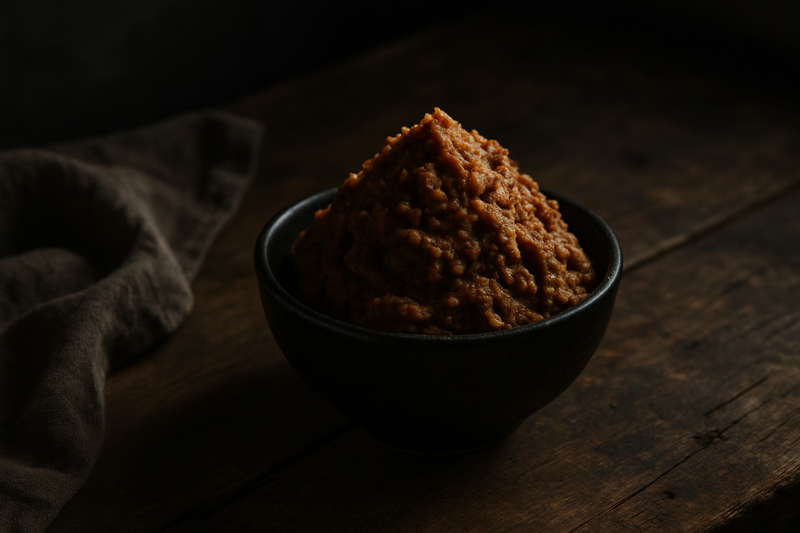
Cheonggukjang · Photograph
Discover cheonggukjang health benefits and how to use it — from gut microbiome support and blood sugar balance to heart health and menopause relief. Learn nutrition facts, safety tips, and easy ways to add this fast-fermented Korean soybean paste to your diet.
Key Nutrients
% Daily Value based on 2,000 cal diet
Key active compounds in cheonggukjang
- Isoflavones (genistein and daidzein) — phytoestrogens (plant compounds that weakly mimic estrogen) concentrated in soybeans and made more bioavailable by fermentation. Linked to antioxidant activity and potential benefits for menopause symptoms, bone metabolism, and cardiovascular risk markers.
- Fermentation-derived bioactive peptides — short protein fragments produced when Bacillus enzymes break down soy proteins. Studied for blood pressure–lowering, lipid-lowering, and clot-dissolving (fibrinolytic) effects in preclinical models.
- Fibrinolytic proteases — enzymes such as nattokinase-like compounds generated during Bacillus fermentation. May support healthy blood circulation; most evidence is preclinical.
- Vitamin K2 (menaquinones) — a fat-soluble vitamin essential for blood clotting and bone metabolism. Cheonggukjang can contain 42–1,300 mcg per serving depending on the batch, comparable to natto.
- Saponins — amphipathic glycosides (soap-like plant molecules that interact with cell membranes) in legumes. Associated with cholesterol-lowering and immune-modulating effects.
- Phenolic acids — a class of polyphenols (antioxidant plant compounds) including ferulic and p-coumaric acids. Levels rise during fermentation and may reduce oxidative stress.
- Phytic acid — a phosphorus-rich compound found in seeds that acts as an antioxidant but can modestly reduce absorption of iron and zinc.
- Live Bacillus cultures — including B. subtilis strains; act as probiotic-like organisms that may modulate gut microbiota composition.
Prep and pairing ideas
Cheonggukjang's funky depth makes it one of the most versatile fermented pastes in whole-food plant-based cooking — once you get past the aroma.
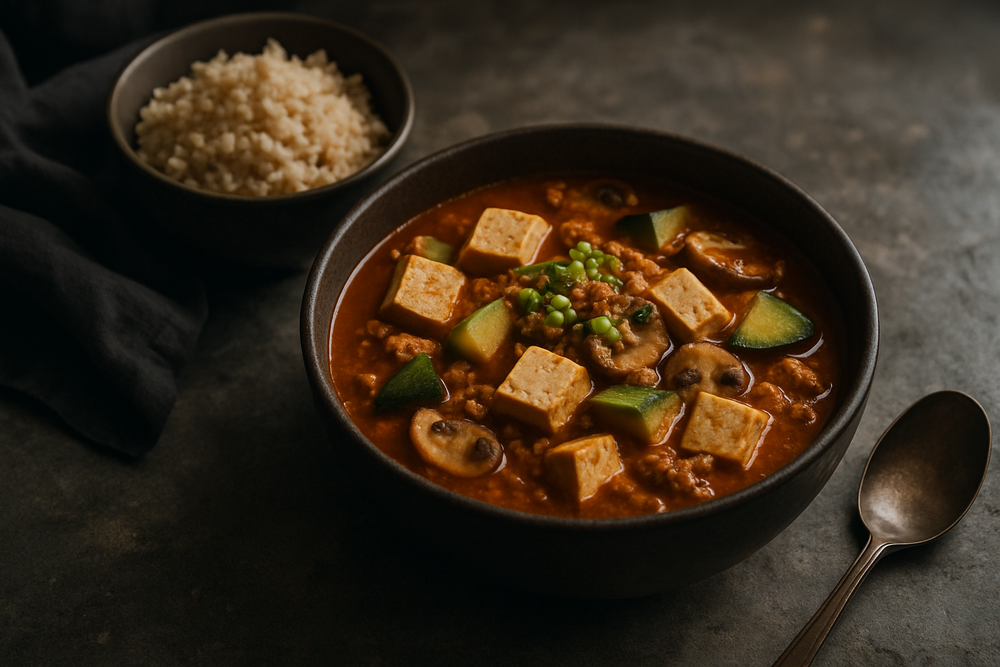
The classic: cheonggukjang jjigae (stew) Simmer 2–3 tablespoons of paste with cubed firm tofu, sliced zucchini, mushrooms, and a small piece of dried kelp in water or a light anchovy-free vegetable broth. Add a splash of doenjang (Korean fermented soybean paste) for extra depth if you like. Serve over brown rice. The heat reduces the probiotic count, but the fiber, isoflavones, peptides, and vitamin K2 remain stable.
Common pairings that work nutritionally and culinarily:
- Cheonggukjang + kimchi + brown rice. A complete fermented-food gut-support meal. Kimchi adds lactobacillus diversity; brown rice provides resistant starch that feeds the microbiome further. The flavors are made for each other.
- Cheonggukjang paste + miso + warm broth. Blend a small amount of each into a morning broth bowl. The two pastes balance each other — miso's smoother salt rounds out cheonggukjang's sharper edge. Combined isoflavone and probiotic load is substantial in a small volume.
- Cheonggukjang powder + walnut pieces + sesame seeds as a dry seasoning. Stir into warm porridge (congee or oat) for a savory breakfast. Walnuts add omega-3 fatty acids that may complement cheonggukjang's cardiovascular-supporting compounds; sesame adds lignans (another class of phytoestrogens).
Storage tip: Keep paste refrigerated and tightly sealed — the aroma is penetrating. Powdered forms store well in a sealed jar in a cool, dry place.
Bottom line
Cheonggukjang is one of the most nutritionally dense fermented foods in the Korean culinary tradition — a genuinely functional whole-food that delivers plant protein, prebiotic fiber, live Bacillus cultures, vitamin K2, and a suite of bioactive soy compounds in every bowl of stew. Human trial evidence is building, with the most credible data pointing toward improvements in gut microbiota diversity, blood lipid profiles, body composition, and menopausal symptoms. Most other claimed benefits — anti-inflammatory, immune, cognitive, anticancer — remain at the preclinical stage and should not be overstated.
The two practical cautions that stand out most are sodium (high) and vitamin K2 (potentially very high and variable). Both can matter a great deal for specific populations. For everyone else, introducing cheonggukjang gradually into a varied, plant-rich diet is a low-risk, high-flavor way to diversify your fermented-food intake and lean into one of East Asia's most underappreciated culinary traditions.
How Cheonggukjang Compares
| Compared with | What's different |
|---|---|
| Cheonggukjang vs. Doenjang | Cheonggukjang is fermented for only 2–4 days, resulting in a stronger aroma and whole beans. |
| Cheonggukjang vs. Natto | Natto is unseasoned and stringier; Cheonggukjang is often salted and used primarily in stews. |
| Cheonggukjang vs. Miso | Cheonggukjang has a pungent, cheesy aroma and chunky texture compared to Miso’s smooth, salty profile. |
Health Benefits
Things to Know
Sodium is the biggest practical concern.: A standard 2-tablespoon serving can deliver over 900 mg of sodium. People managing high blood pressure, kidney disease, or fluid retention should count cheonggukjang toward their daily sodium budget, not add it on top.
Vitamin K2 and blood thinners.: Cheonggukjang can contain very high vitamin K2. If you take warfarin (or another vitamin K–antagonist anticoagulant), inconsistent intake can destabilize your INR (a measure of how quickly your blood clots). Keep intake consistent and monitor with your prescriber.
Soy allergy or legume allergy.: Avoid entirely; cheonggukjang is essentially whole fermented soybeans.
Hormone-sensitive conditions.: The isoflavone content is significant. Evidence on fermented soy for people with estrogen-receptor-positive cancers is nuanced; consult your oncologist or GP.
Pregnancy and breastfeeding.: Fermented soy foods have a long traditional use history, but the very high vitamin K2 and sodium content mean it is worth discussing intake levels with your midwife or doctor.
Biogenic amines.: Like many fermented foods, cheonggukjang may contain tyramine and similar compounds. This is a theoretical concern for people on monoamine oxidase inhibitor (MAOI) antidepressants; direct data are limited, but caution is reasonable.
Antihypertensive and diuretic medications.: Excess sodium from salty preparations may reduce the effectiveness of blood-pressure medications.
Digestive adjustment.: Start with a small amount (1 teaspoon to 1 tablespoon) and increase gradually over 1–2 weeks to allow your gut to adapt.
Prep Ideas
- — **Cheonggukjang + kimchi + brown rice.** A complete fermented-food gut-support meal. Kimchi adds lactobacillus diversity; brown rice provides resistant starch that feeds the microbiome further. The flavors are made for each other.
- — **Cheonggukjang paste + miso + warm broth.** Blend a small amount of each into a morning broth bowl. The two pastes balance each other — miso's smoother salt rounds out cheonggukjang's sharper edge. Combined isoflavone and probiotic load is substantial in a small volume.
- — **Cheonggukjang powder + walnut pieces + sesame seeds as a dry seasoning.** Stir into warm porridge (congee or oat) for a savory breakfast. Walnuts add omega-3 fatty acids that may complement cheonggukjang's cardiovascular-supporting compounds; sesame adds lignans (another class of phytoestrogens).
Shop This Ingredient
Stock your pantry with quality cheonggukjang.
Buy on AmazonAs an Amazon Associate, Plantopedia earns from qualifying purchases. This costs you nothing extra and helps us keep the encyclopedia free.
Frequently Asked Questions
Heart and circulation Early human data are promising. A randomized, double-blind clinical trial of adults consuming a cheonggukjang-based fermented food found reductions in visceral fat (the metabolically active fat stored around internal organs) and improvements in blood lipid profiles — including lower triglycerides. Animal and cell studies further point to blood pressure–modulating, anti-atherosclerotic (plaque-reducing), and clot-dissolving activities driven by the fermentation-derived peptides and enzymes. However, large-scale human trials measuring hard cardiovascular outcomes are not yet available, so current evidence is best described as supportive rather than conclusive. Digestive health and microbiome Cheonggukjang is characterized in recent research as a gut microbiota–modulating food. A clinical study in menopausal women showed measurable increases in beneficial gut bacteria populations after supplementation. The combination of fiber, live Bacillus cultures, and fermentation-derived enzymes can support stool regularity and a more diverse gut environment for many people. Animal studies also suggest protection against chemically induced colitis (intestinal inflammation), though direct human evidence for conditions like irritable bowel syndrome remains limited. Some people experience temporary gas or bloating when they first add any strongly fermented food — start small. Blood sugar and metabolism Small human trials suggest cheonggukjang may support healthier blood glucose levels. One clinical study in menopausal women found that the group consuming a cheonggukjang preparation enriched with higher concentrations of beneficial microorganisms showed improvements in glucose parameters alongside reductions in menopausal symptoms. The proposed pathways involve soy isoflavones, fermentation-derived peptides, and favorable shifts in gut microbiota that collectively may improve insulin sensitivity (the body's ability to respond to insulin). That said, the evidence base is not large enough yet to make firm claims about diabetes prevention or management. Hormones and cycle health Cheonggukjang is notably rich in soy isoflavones — phytoestrogens that can bind to estrogen receptors in the body. A clinical trial in menopausal women found that consuming traditional cheonggukjang with a higher microbial count significantly reduced Kupperman index scores (a validated scale for rating menopausal symptom severity) and lowered the frequency of hot flashes. Researchers proposed that both the isoflavones and beneficial gut bacteria contributed through endocrine (hormonal) and gut-mediated pathways. For people with hormone-sensitive conditions such as certain breast or endometrial cancers, the evidence on fermented soy is nuanced; individualized medical guidance is recommended before regular high intake. Inflammation and recovery Cheonggukjang polysaccharides (complex carbohydrates from the soybean cell wall) and fermentation products show antioxidant, anti-inflammatory, and immune-stimulating activity in cell and animal models. A preclinical study found protection against cyclophosphamide-induced immunosuppression. In human trials, anti-inflammatory effects are inferred indirectly from improvements in metabolic markers and gut microbiota rather than from direct measurement of inflammatory biomarkers. This remains an emerging area.
Buying guide: paste, powder, or supplement? | Form | Best for | Things to check | | --- | --- | --- | | Traditional fermented paste | Cooking stews and soups; most whole-food nutrients intact | Check sodium per serving; refrigerate after opening; use within 1–2 weeks | | Powdered cheonggukjang | Blending into sauces, smoothies, or seasoning; longer shelf life | Confirms it is fermented, not just ground soy; still salty | | Capsules or tablets | Clinical-style supplementation in trials; convenience | Standardization varies widely; look for CFU or isoflavone content on label | | Ready-to-eat stew (jjigae) | Quickest entry point; culturally authentic experience | Restaurant and packaged versions often add more sodium; balance with low-sodium sides | The traditional paste in stew form is how most human trial data was gathered and how the food has been eaten for generations. It also delivers the whole-food fiber matrix alongside the probiotics — a combination supplements may not fully replicate.
There is no single established daily dose, because most human trials used standardized supplement forms rather than prescribing exact grams of paste. Here is what the evidence and traditional practice suggest: Everyday culinary use: 30–100 g of paste per meal occasion (roughly 2–7 tablespoons), used in a stew 3–5 times per week, reflects typical Korean dietary patterns and the intake range in traditional context. Clinical trial reference doses: Studies on menopausal symptoms and anti-obesity effects used standardized preparations consumed once or twice daily over 8–12 weeks, approximating realistic food-level intake. Exact grams varied by product. Practical starting point: Begin with 1 tablespoon (about 15 g) in a stew, 2–3 times per week. Assess digestion and sodium tolerance before increasing. Sodium ceiling check: If your daily sodium target is 2,300 mg, one standard serving of cheonggukjang (900+ mg sodium) uses roughly 40% of that allowance. Plan the rest of the day accordingly. Not a therapeutic dose: Eating cheonggukjang is not equivalent to taking a clinical supplement. Food-as-medicine thinking works best over the long term, at consistent intakes, alongside a varied whole-food diet.
Quick Answers
Common questions, answered in a line.
Cheonggukjang is a significant source of vitamin K2, which is essential for healthy bone metabolism and blood clotting. A single serving can provide anywhere from 42 to 1,300 mcg of this fat-soluble vitamin, depending on the specific batch.
Cheonggukjang contains isoflavones like genistein and daidzein, which are phytoestrogens that may help manage menopause symptoms. Fermentation makes these compounds more bioavailable, potentially supporting bone metabolism and cardiovascular health during this life stage.
Cooking cheonggukjang in a stew reduces the live probiotic count due to heat, but other nutrients like fiber, isoflavones, and vitamin K2 remain stable. To preserve the live Bacillus cultures, you can consume it in powder form or add the paste to warm rather than boiling broth.
People taking warfarin or other vitamin K-antagonist blood thinners should be cautious because cheonggukjang's high vitamin K2 content can interfere with blood clotting measurements. Consistent intake and monitoring with a healthcare provider are recommended for those on these medications.
Cheonggukjang is a high-sodium food, with a standard two-tablespoon serving potentially delivering over 900 mg of sodium. Individuals managing high blood pressure or kidney disease should track this intake carefully to avoid exceeding their daily sodium limits.
Cheonggukjang supports the gut microbiome by providing live Bacillus cultures and prebiotic fiber, which help modulate gut microbiota diversity. For the best digestive support, it can be paired with other fermented foods like kimchi or fiber-rich brown rice.
For Readers in the USA
Local context — sourcing, seasonality, and regional notes.
You can find cheonggukjang at major Korean grocery chains like H-Mart or Zion Market, as well as via specialized online retailers that ship fermented goods across the U.S. While less common in standard supermarkets like Kroger or Safeway, it is increasingly available in the refrigerated or frozen "Asian" sections of larger metropolitan grocery stores.
In the U.S., cheonggukjang is often labeled as "extra-strong fermented soybean paste" or "fast-fermented bean paste" to distinguish it from the more common, milder doenjang. Because of its intense aroma, some American-packaged brands may also use terms like "rich soybean paste" or "natto-style paste" on their English-language labels.
Look for the USDA Organic seal on soybean products to ensure the beans were grown without synthetic fertilizers or pesticides and are non-GMO. Since soybeans are a major U.S. crop often subject to genetic modification, choosing certified organic cheonggukjang is the most reliable way for U.S. consumers to avoid GMO soy.
The FDA requires all packaged fermented soybean pastes sold in the U.S. to include a standardized Nutrition Facts label detailing sodium content and serving sizes. Consumers should check these labels carefully, as sodium levels can vary significantly between brands imported from Korea and those produced by domestic U.S. manufacturers.
AI Clinical Review
- Clearly explains what cheonggukjang is and how it differs from miso and natto, including the role of Bacillus fermentation and the short, 2–3 day process.
- Appropriately highlights key nutrients and bioactives (isoflavones, vitamin K2, fermentation‑derived peptides) and ties them to plausible health effects seen in early human studies.
- Summarizes the most consistent human findings to date: modest improvements in blood lipids/body composition and reductions in menopausal symptom scores, with supportive microbiome shifts.
- Flags practical issues—especially high sodium and variable vitamin K2—and notes that heating reduces live bacteria while leaving other beneficial compounds intact.
- Most clinical trials are small, short (8–12 weeks), and use specific preparations; results may not generalize to all brands or home‑cooked versions.
- Cardiometabolic benefits (blood pressure, atherosclerosis risk, “fat‑burning”) rely partly on preclinical data; there are no large trials with hard outcomes like heart attacks or strokes yet.
- Claims around glucose control, inflammation, and immune effects are suggestive but not definitive; biomarker changes don’t always translate to clinical benefit.
- Vitamin K2 levels and live microbe counts vary widely by batch and product, making dose–response relationships uncertain.
- Sodium is high: a typical 2‑tablespoon serving can approach half of a day’s target. If you manage hypertension, kidney disease, or heart failure, account for it in your daily budget.
- Warfarin and other vitamin K–antagonist blood thinners: keep intake consistent and coordinate with your clinician, as K2 variability can shift INR.
- Not for those with soy or legume allergy; use caution with hormone‑sensitive cancers, MAOI therapy (possible biogenic amines), pregnancy, and breastfeeding—individualized advice is wise.
- Start small (for example, 1 tablespoon in stew a few times per week) to minimize GI upset; traditional paste used in stews is the most food‑like option, while powders/capsules may differ in microbes and standardization.
Pungent aroma and salty; introduce gradually.
References
- USDA FoodData Central — soybean and fermented soy nutritional reference (fdc.nal.usda.gov)
- Current perspectives on the physiological activities of fermented soybean-derived cheonggukjang — comprehensive review (Kim & Hwang) (pmc.ncbi.nlm.nih.gov)
- Cheonggukjang as a gut microbiota-modulating Korean fermented food — animal and composition study (pmc.ncbi.nlm.nih.gov)
- Clinical trial: efficacy of cheonggukjang in alleviating menopausal symptoms — randomized human trial (pmc.ncbi.nlm.nih.gov)
- Randomized double-blind trial: body changes and anti-obesity effect of cheonggukjang consumption (semanticscholar.org)
- Cheonggukjang polysaccharides and immune modulation — preclinical immunostimulatory study (sciencedirect.com)
- Current perspectives on fermented cheonggukjang physiological activities (SKKU publication) (pure.skku.edu)
- Comparison of antioxidant potential and nutritional characteristics of Korean fermented soy foods including cheonggukjang (pmc.ncbi.nlm.nih.gov)
- Korean national food composition database — cheonggukjang powder macronutrients and minerals (lampcook.com)
- Consumer and nutrition overview: What is cheonggukjang? Nutrition + how to use (nutritionadvance.com)
Know Your Numbers
Eating healthy is a start. Now get to know your biomarkers.
Food changes bloodwork — inflammation, lipids, blood sugar and nutrient status all respond to what you eat. 59 markers from $59.
- Results in 7–10 days at 2,000+ Quest sites
- Licensed provider reviews every result
- One flat price, no membership, HSA/FSA eligible
Educational information only, not medical advice. Panels are ordered and reviewed through our licensed partner; Plantopedia may earn a commission.