Douchi (Fermented Black Soybeans) — health benefits and uses
Used in Chinese cooking as a warming, digestion-supporting seasoning.
The Short Answer
Douchi, or fermented black soybeans, is a pungent Chinese condiment prized for its intense umami flavor and high concentration of antioxidant anthocyanins. Just one tablespoon provides 1.8 mg of iron and 1.8 g of protein, though it is primarily used as a
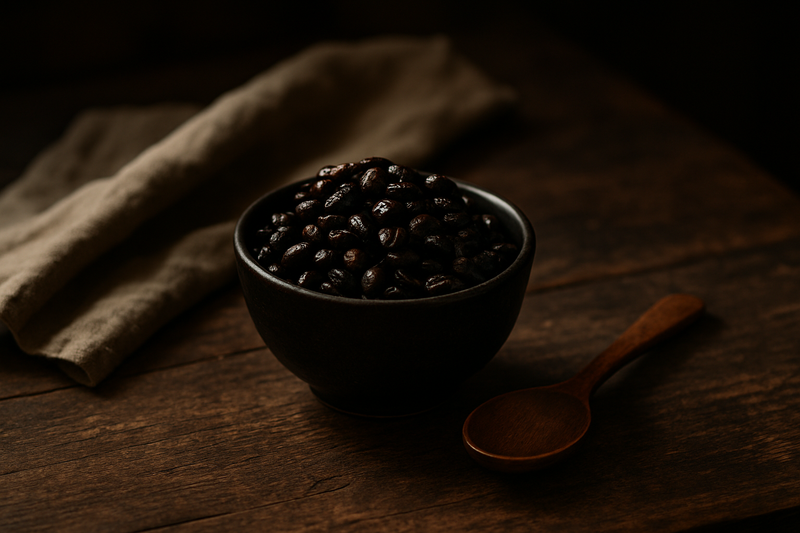
Douchi (Fermented Black Soybeans) · Photograph
Discover the fermented black beans health benefits and side effects — from gut and heart support to the sodium reality check every cook needs. Evidence-based guide to douchi, with nutrition facts, safe daily amounts, and practical plant-based recipe ideas.
Key Nutrients
% Daily Value based on 2,000 cal diet
Key active compounds in douchi
- Anthocyanins — water-soluble pigments from the black seed coat; strong antioxidant and anti-inflammatory activity in lab models; fermentation preserves and may enhance them
- Isoflavones (daidzein, genistein) — phytoestrogenic compounds (plant chemicals that can weakly mimic estrogen) linked in broader soy research to cardiometabolic and bone benefits
- Total phenolics and flavonoids — a broad family of plant secondary metabolites; their concentrations measurably increase during fermentation
- GABA — produced by microbes during fermentation; associated with blood-pressure-lowering and calming effects in some small studies of other fermented foods
- Bioactive peptides — short amino acid sequences released when soybean proteins are broken down by microbial enzymes; show antihypertensive (blood-pressure-lowering) and antidiabetic properties in cell and animal models
- Glutamates — responsible for the intense umami flavor; naturally formed during protein breakdown in fermentation
Prep and pairing ideas
Douchi is almost always used cooked, not raw. Heat mellows its pungency and diffuses the flavor through a dish.
Classic black bean stir-fry base: Rinse 1 tablespoon of douchi, roughly chop or lightly mash. Sauté with garlic and a small amount of oil for 60 seconds before adding your main ingredients (tofu, tempeh, eggplant, broccoli). The beans become the flavor foundation.
Steamed tofu with black bean sauce: Rinse and mash 2 teaspoons of douchi with a little ginger, a splash of rice wine, and sesame oil. Spoon over firm tofu and steam for 10–12 minutes. This is one of the most traditional preparations and one of the most sodium-efficient, since the beans are diluted across a whole dish.
Whole food plant-based pairings that work especially well:
- Douchi + eggplant — the eggplant absorbs the funky brine flavor beautifully, especially when braised; the combination is a classic Chinese preparation (yu-xiang qiezi style, adapted)
- Douchi + tempeh — both are fermented soy products, but tempeh's firmer texture and mild flavor benefit from the punch that douchi provides; adds depth to tempeh tacos or grain bowls
- Douchi + bitter greens (broccoli rabe, gai lan) — the mild bitterness of cruciferous greens and the saltiness of black beans balance each other, and the combination is rich in polyphenols from both sources
Storage: Dry douchi keeps in a sealed container at room temperature for up to one year. Wet-cured douchi should be refrigerated and used within a few weeks once opened.
Bottom line
Douchi is one of the most flavor-efficient whole-food plant-based ingredients you can keep in your pantry. A teaspoon of fermented black beans does what tablespoons of other condiments attempt: it adds immediate, layered umami with a depth that makes plant-based food genuinely satisfying.
The health story is nuanced. Fermentation does appear to meaningfully increase the antioxidant, prebiotic, and bioactive peptide content of black soybeans. Emerging research — mostly in concentrated functional food forms rather than culinary doses — suggests potential benefits for gut microbiota, cardiometabolic markers, and healthy aging. But the sodium content is real and high, and it can undercut those benefits if you're not careful. Rinse well, use small amounts, and account for it in your daily sodium budget.
If you have hypertension, kidney disease, soy allergy, or are on medications that interact with sodium or soy, speak with your healthcare provider before adding douchi regularly to your diet. For everyone else, it's a fascinating, evidence-adjacent ingredient that earns its place in a varied, plant-forward eating pattern.
Explore how douchi fits into a broader approach to fermented foods and plant-based eating: 👉 Browse ingredient goals and functional eating guides
How Douchi (Fermented Black Soybeans) Compares
| Compared with | What's different |
|---|---|
| Douchi (Fermented Black Soybeans) vs. Black beans (Turtle beans) | Douchi is a salty condiment used in small amounts; black beans are a mild legume eaten as a protein source. |
| Douchi (Fermented Black Soybeans) vs. Miso | Douchi consists of whole fermented beans, whereas miso is a smooth, salty paste made from ground soy. |
| Douchi (Fermented Black Soybeans) vs. Tempeh | Douchi is salted and pungent; tempeh is unsalted, firm, and used as a meat substitute rather than a sauce. |
Health Benefits
Things to Know
Sodium is the primary concern.: Even rinsed douchi can deliver 400–800 mg sodium per tablespoon. If you're on a sodium-restricted diet (typically less than 1,500–2,000 mg/day for cardiovascular or kidney reasons), count douchi toward your daily limit carefully.
High blood pressure and heart failure: High sodium intake can counteract antihypertensive medications. Use with caution and rinse thoroughly. People on diuretics, ACE inhibitors, ARBs, or beta-blockers should be consistent about portion size.
Chronic kidney disease (CKD stages 3–5): Excess sodium and potassium can worsen fluid retention and blood pressure in CKD. Avoid or use only very sparingly, and discuss with your care team.
Soy allergy: Douchi is a soy product. Avoid entirely if you have a confirmed soy allergy. Check labels for cross-contamination with wheat or shellfish in commercial preparations.
Lithium users: Large or inconsistent sodium intake can alter how the kidneys handle lithium, potentially shifting blood levels. Keep douchi portions small and consistent.
Warfarin users: Douchi is not a major source of vitamin K (unlike natto), but any change in fermented soy food intake should be introduced gradually to keep your overall diet stable.
Hormone-sensitive conditions: If you have estrogen-receptor-positive breast cancer or are on hormone-modulating therapy, discuss your overall soy intake — including douchi — with your oncologist.
Pregnancy and breastfeeding: Culinary amounts of douchi are unlikely to pose specific risk beyond the general sodium concern, but data are limited. Focus on rinsing well and moderate portions.
Histamine intolerance: Fermented foods can be high in histamine. If you experience flushing, hives, or GI symptoms after fermented foods, start with very small amounts.
Immunocompromised individuals: Wet-cured unpasteurized douchi carries a theoretical risk from live microbial cultures. Stick to dry salted versions, which are more heavily processed.
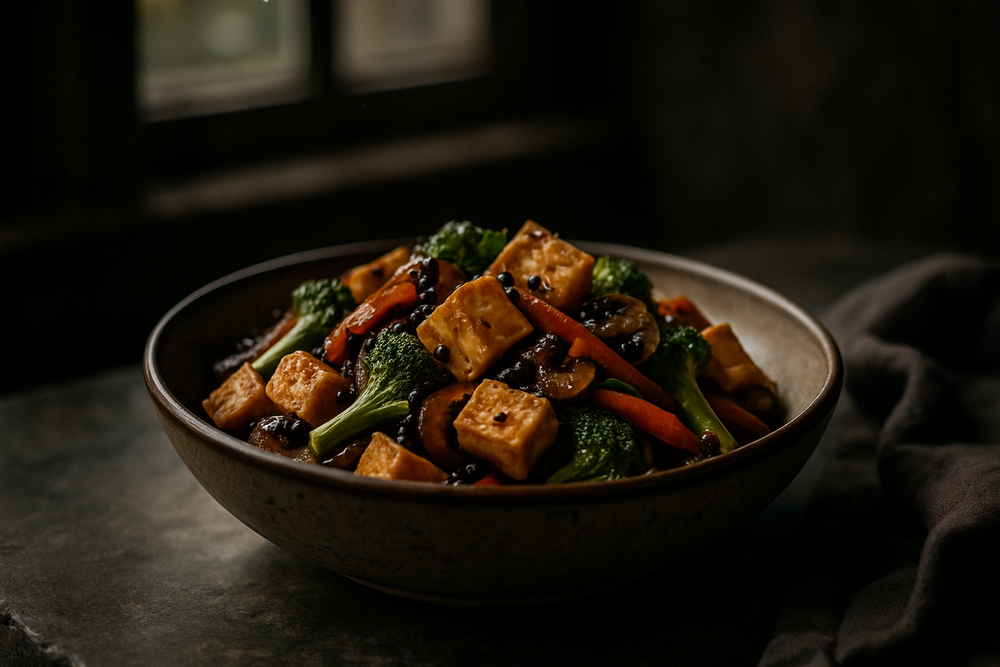
Prep Ideas
- — Douchi + eggplant — the eggplant absorbs the funky brine flavor beautifully, especially when braised; the combination is a classic Chinese preparation (yu-xiang qiezi style, adapted)
- — Douchi + tempeh — both are fermented soy products, but tempeh's firmer texture and mild flavor benefit from the punch that douchi provides; adds depth to tempeh tacos or grain bowls
- — Douchi + bitter greens (broccoli rabe, gai lan) — the mild bitterness of cruciferous greens and the saltiness of black beans balance each other, and the combination is rich in polyphenols from both sources
Shop This Ingredient
Stock your pantry with quality douchi (fermented black soybeans).
Buy on AmazonAs an Amazon Associate, Plantopedia earns from qualifying purchases. This costs you nothing extra and helps us keep the encyclopedia free.
Frequently Asked Questions
Heart and circulation The polyphenols and anthocyanins in black soybeans have genuine cardiometabolic interest behind them. A randomized controlled trial (RCT) in overweight and obese Korean adults found that an anthocyanin-rich black soybean seed-coat preparation improved visceral fat (fat stored around internal organs) and plasma lipid profiles compared with placebo. A separate RCT in older adults using a fermented black bean and adlay (a grain) supplement observed favorable changes in cholesterol markers alongside improvements in frailty scores. Animal studies support these signals further: fermented black soybean and adlay mixtures reduced dyslipidemia (abnormal blood fat levels) and visceral fat accumulation in high-fat-diet rodents, apparently by activating AMPK-SIRT1 pathways — molecular switches that regulate fat burning and energy metabolism. The sodium caveat is significant. Unwashed douchi can contain roughly 4,000 mg of sodium per 100 g, and even a rinsed 15 g serving may deliver 800–1,200 mg — approaching half the daily recommended limit in a single tablespoon. That sodium load can raise blood pressure and counteract the very cardiovascular benefits suggested by the polyphenol research. The net effect on heart health depends heavily on how often you use it, how well you rinse it, and what else is in your diet. Digestive health and microbiome Are fermented black beans good for gut health? The short answer is: plausibly yes, but the evidence is mostly from concentrated supplements and animal models, not culinary teaspoons. Black soybeans are rich in dietary fiber and provide all eight essential amino acids. Fermentation with lactic acid bacteria and Bacillus species generates oligosaccharides (a type of prebiotic fiber that feeds beneficial gut bacteria) and GABA, and measurably increases antioxidant and anti-inflammatory activity in lab assays. In older adults, the fermented black bean and adlay supplement RCT found modulation of the gut microbiota alongside improvements in frailty and nutritional status. Animal research shows fermented black soybean products can shift the Firmicutes-to-Bacteroidetes ratio — a ratio researchers use as a rough marker of microbiota balance — and increase cecal propionate, a short-chain fatty acid linked to metabolic health. As a culinary seasoning, the direct contribution of douchi to fiber and prebiotic intake is modest. But as part of a broader fermented-food habit, it likely adds something useful. Blood sugar and metabolism Evidence in this area is emerging rather than established for culinary doses. The polyphenols and bioactive peptides in fermented black soybeans demonstrate antidiabetic properties in cell and animal models — improving insulin sensitivity and reducing fat accumulation in the liver. Mechanistically, this appears linked to AMPK-SIRT1 and PI3K-Akt signaling pathways. The one human RCT most directly relevant here (anthocyanin-rich black soybean testa in overweight adults) showed improvements in visceral fat and lipid profiles, which can indirectly support glycemic control. However, there are no large clinical trials specifically testing culinary douchi amounts on blood glucose outcomes. Evidence is promising but not yet practice-changing. Inflammation and recovery Direct human data on inflammatory biomarkers with douchi specifically are limited. Most of what we know comes from in vitro (cell culture) studies, where fermented black soybeans show strong antioxidant activity across multiple assays (FRAP, ABTS, DPPH) and anticholinesterase (enzyme-inhibiting) activity relevant to neuroinflammation. Reviews of the broader fermented black soybean literature note antioxidant, antihypertensive, and immunomodulatory properties attributed to hydrolyzed proteins and polyphenols. In practical terms: the fermentation process does meaningfully increase the antioxidant content of the beans. Whether a tablespoon in a stir-fry delivers enough of these compounds to shift inflammatory markers in humans remains an open research question. Hormones and cycle health Black soybeans and douchi contain soy isoflavones — phytoestrogens that can weakly bind estrogen receptors. This has generated interest around menopausal symptom relief, bone density, and hormone-related cancer risk in the broader soy literature. However, most of the human evidence comes from tofu, soymilk, and isoflavone supplements, not fermented black soybeans specifically. Fermentation may alter the forms and bioavailability of isoflavones (making some more absorbable), but this is not yet well studied for douchi. People with hormone-sensitive cancers or on endocrine therapies (like aromatase inhibitors or SERMs) should think of douchi as another small contributor to total dietary soy exposure, and discuss overall soy intake with their clinician.
Douchi comes in a few distinct forms, and the choice affects both sodium exposure and potential functional benefits. Dry salted douchi is the most widely available type in Western supermarkets and Chinese grocery stores. The beans are fermented, heavily salted, and dried. They keep for months at room temperature once opened, and rinsing before use meaningfully reduces surface sodium. Wet-cured refrigerated douchi is brine-packed and typically unpasteurized, meaning it may harbor more live microbial activity. It has a shorter shelf life and higher moisture content, and sodium can be even higher than the dry version. It's the type more likely to carry live Bacillus or lactic acid bacteria cultures. Fermented black bean pastes and sauces (such as black bean garlic sauce) often contain douchi as a base but add oil, sugar, garlic, and more salt — making them even higher in sodium and less suitable for health-focused use. They're convenient but harder to control. Fermented black soybean supplements or grain-blended functional foods are the forms used in most clinical research. These are not the same as the tablespoon of douchi in your pantry, and their results shouldn't be directly extrapolated to culinary use. For health-focused, plant-based cooking, dry or wet-cured douchi rinsed under running water for 30–60 seconds is the most practical starting point. Rinse, rough-chop or lightly mash, and use as a seasoning base.
The umami-focused plant-based cook who is trying to build deeply satisfying meals without meat or fish sauce: Douchi adds a fermented, savory depth that's hard to replicate with fresh herbs alone A teaspoon into a sauce or marinade provides flavor that would otherwise require much larger quantities of salt-heavy condiments It pairs naturally with tofu, tempeh, and vegetables — proteins and ingredients that can taste flat without a savory anchor The healthy-aging adult without hypertension who eats a varied diet: Small regular amounts of fermented black soybeans may contribute to the prebiotic and polyphenol diversity that supports microbiota health and antioxidant status The iron content per small serving (10% DV) is meaningful for older adults who may be at risk for iron insufficiency Research on frailty and nutritional status in older adults, while not yet specific to culinary douchi, is promising
For culinary use, most guidelines and food writers suggest ½ to 2 teaspoons (roughly 2–10 g) per meal occasion, rinsed before cooking. That range delivers flavor without overwhelming a dish's sodium budget. Some pilot human supplementation studies with fermented black soybeans (typically combined with adlay grain in functional food form) have used 5–10 g per day, with informal guidance to stay under 15 g/day without professional oversight given the sodium load. Start low if you're new to douchi: Try ½ teaspoon rinsed and mashed into a stir-fry for two. Taste before adding any other salt to the dish — you likely won't need any. Work up to 1 teaspoon if you want more depth. If you're counting sodium carefully, weigh your portion after rinsing and use a food tracking app to log it. Sodium reduction from rinsing is meaningful but variable — roughly 20–40% can be removed by a 30–60 second rinse under cold running water. Is douchi high in probiotics like natto or kimchi? This is a common question. The fermentation process does involve live microbes, and wet-cured unpasteurized versions may retain some live Bacillus cultures. However, dry salted douchi has typically been heat-processed and heavily salted, conditions that reduce live bacterial counts significantly. It's better understood as a prebiotic and bioactive food than a reliable probiotic (source of live beneficial bacteria) in the way that yogurt or fresh kimchi are.
Quick Answers
Common questions, answered in a line.
Douchi contains anthocyanins, isoflavones, GABA, bioactive peptides, and total phenolics. These compounds are preserved or enhanced during the fermentation process, offering various antioxidant, anti-inflammatory, and blood-pressure-lowering properties in lab and animal models.
Douchi provides intense umami flavor and depth, making plant-based foods more satisfying with very small amounts. It is one of the most flavor-efficient whole-food ingredients, allowing a single teaspoon to deliver the complexity that other condiments require tablespoons to achieve.
To lower sodium, you should always rinse your douchi and use small amounts, such as one tablespoon or less, as a flavor foundation for a whole dish. Even when rinsed, fermented black beans can contain 400–800 mg of sodium per tablespoon, so they must be counted toward your daily salt budget.
Individuals with hypertension, chronic kidney disease, soy allergies, or those taking lithium or blood pressure medications should exercise caution or avoid douchi. The high sodium content can interfere with medications like ACE inhibitors and beta-blockers or worsen fluid retention in kidney patients.
Douchi pairs exceptionally well with eggplant, tempeh, and bitter greens like broccoli rabe or gai lan. Eggplant and tempeh effectively absorb the deep, salty brine flavor, while the saltiness of the beans helps balance the natural bitterness of cruciferous vegetables.
Dry douchi can be stored in a sealed container at room temperature for up to one year. If you are using wet-cured douchi, it must be refrigerated and used within a few weeks after the container has been opened.
Douchi is almost always used cooked rather than raw because heat helps mellow its natural pungency and diffuses the flavor throughout the dish. A common method is to sauté rinsed and chopped beans with garlic and oil for about 60 seconds before adding other ingredients.
For Readers in the USA
Local context — sourcing, seasonality, and regional notes.
You can find douchi at major Asian grocery chains like H Mart, 99 Ranch Market, and Mitsuwa, as well as in the international aisle of some Whole Foods or Kroger locations. Local Chinatown markets across the US typically offer the widest variety of both dry-packed and jarred versions.
In the US, douchi is most commonly sold as "Fermented Black Beans" or "Salted Black Beans," though you may also see the Cantonese name "Tochi" on some labels. Look for brands like Yang Jiang, which is widely distributed in the US and recognizable by its iconic yellow cardboard canister.
The FDA requires douchi to be labeled with a clear "Contains: Soy" statement, and because they are fermented with salt, they are categorized as a high-sodium preserved food. If you are looking for organic options, look for the USDA Organic seal, though these are more commonly found in specialty natural food stores than traditional Asian markets.
While douchi is a pantry staple available year-round, US home cooks often use it during the winter months to add deep, savory "umami" flavor to hearty braised dishes and stews. In American plant-based culinary circles, it has gained popularity as a natural flavor enhancer for "Western" staples like kale, roasted Brussels sprouts, and grain bowls.
AI Clinical Review
- Accurately positions douchi as a potent seasoning (not a main protein serving) and explains its umami value for plant‑forward cooking.
- Summarizes fermentation‑driven changes well (more polyphenols, anthocyanins, GABA, and bioactive peptides) and keeps claims tied to these mechanisms.
- Emphasizes sodium as the main health constraint, with practical steps (rinsing, small portions) and realistic intake ranges.
- Distinguishes prebiotic/bioactive effects from probiotic claims, noting that most dry salted products are unlikely to deliver many live microbes.
- Most human data come from concentrated extracts or blended “functional foods” (e.g., fermented black soybean with adlay) rather than the teaspoon amounts used in cooking; dose–response for culinary douchi is unclear.
- Microbiome and metabolic benefits are promising but rely heavily on animal models or small trials; translating those findings to typical kitchen use needs more research.
- Antihypertensive, anti‑inflammatory, and glycemic effects are mechanistically plausible yet not confirmed in large, well‑controlled trials using culinary doses.
- Portion and sodium: ½–2 tsp (about 2–10 g) per dish is a sensible range. A tablespoon can contain roughly 800–1,200 mg sodium before rinsing; a 30–60 second rinse may lower this by ~20–40%. Count it toward your daily sodium target.
- Form matters: dry salted douchi is shelf‑stable and usually low in live cultures; wet‑cured versions may have more microbial activity but higher sodium and shorter shelf life; sauces/pastes often add extra salt, oil, and sugar.
- Who should check with a clinician first: individuals with hypertension, heart failure, or chronic kidney disease; those with soy allergy (avoid); people on lithium or with hormone‑sensitive cancers considering total soy intake; immunocompromised individuals (prefer dry salted over unpasteurized wet‑cured).
- Expect limited “probiotic” impact when cooked—treat douchi as a flavor‑dense, prebiotic/bioactive ingredient rather than a primary source of live cultures.
Very high sodium; rinse and use as a small-quantity flavoring.
References
- USDA FoodData Central — black soybean nutritional data (fdc.nal.usda.gov)
- RCT: fermented black bean and adlay supplement improved frailty in older adults (academic.oup.com)
- Clinical trial registration: gut microbiota modulation with fermented black soybean supplement (clinicaltrials.gov)
- Animal study: fermented black soybean and adlay improved metabolic syndrome via AMPK-SIRT1 and gut microbiota (pubmed.ncbi.nlm.nih.gov)
- Review: fermentation with Pediococcus acidilactici increases black soybean bioactives, GABA, and antioxidant activity (pmc.ncbi.nlm.nih.gov)
- Review: fermented black soybean bioactive peptides, health properties, and functional food applications (pmc.ncbi.nlm.nih.gov)
- Review including RCT: anthocyanin-rich black soybean testa improved visceral fat and lipid profiles in overweight adults (pmc.ncbi.nlm.nih.gov)
- ScienceDirect Topics: douchi composition overview and proposed health effects (sciencedirect.com)
- Diversivore pantry guide: culinary use, sodium content, and preparation of douchi (diversivore.com)
- NutritionAdvance: overview of fermented soy products including douchi (nutritionadvance.com)
Know Your Numbers
Eating healthy is a start. Now get to know your biomarkers.
Food changes bloodwork — inflammation, lipids, blood sugar and nutrient status all respond to what you eat. 59 markers from $59.
- Results in 7–10 days at 2,000+ Quest sites
- Licensed provider reviews every result
- One flat price, no membership, HSA/FSA eligible
Educational information only, not medical advice. Panels are ordered and reviewed through our licensed partner; Plantopedia may earn a commission.