Fermented Tofu (Furu) — health benefits and uses
Chinese tradition calls fermented tofu a digestive, protein-rich accompaniment to plain rice.
The Short Answer
Fermented tofu, or furu, is a salty, creamy soy condiment providing 316 mg of sodium and 17 calories per cube. It is a source of selenium and soy isoflavones, though it should be used sparingly due to its high salt content.
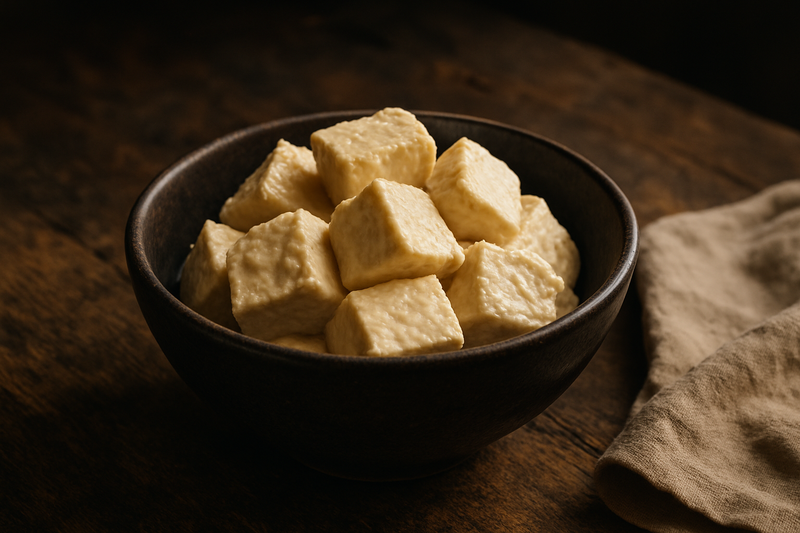
Fermented Tofu (Furu) · Photograph
Discover the fermented tofu (furu) health benefits and side effects — from blood sugar and gut health research to its sky-high sodium content. Learn how much is safe, how to use it in congee and greens, and whether this plant-based cheese condiment fits a heart-healthy diet.
Key Nutrients
% Daily Value based on 2,000 cal diet
Key active compounds
- Soy isoflavones (genistein, daidzein): Polyphenolic compounds — molecules with antioxidant properties found in plants — that act as weak phytoestrogens (plant-derived compounds that loosely mimic estrogen). Fermentation changes how these are absorbed but does not remove them.
- Fermentation-derived small peptides: Short amino acid chains produced when microbial enzymes partially digest soy proteins during aging. Some have shown blood-pressure-lowering and antioxidant effects in experimental studies, though specific data for furu are limited.
- Organic acids and flavor compounds: Lactic and acetic acids plus aromatic molecules generated during fermentation. These primarily drive furu's cheese-like taste; their health effects are indirect — they make vegetables more enjoyable to eat.
- Selenium: A trace mineral involved in antioxidant defense and thyroid hormone metabolism; fermented tofu is reported to be a notably rich source relative to serving size.
- Manganese and copper: Trace minerals that act as cofactors — helper molecules — for enzymes involved in energy production and iron metabolism.
- Sodium (as brine): Not a health-promoting compound per se, but the dominant nutritional feature of furu that must be understood before any benefit discussion.
Buying guide for fermented tofu
What to look for on the label:
- Ingredient list should be short: tofu (soybeans, coagulant), salt, water, and perhaps rice wine or spices. Avoid products with long lists of preservatives if minimally processed options are available.
- Check sodium per serving (not per 100 g). A "serving" defined as one cube on a label may be 11–15 g; confirm the cube count per jar.
- "Fuyu" is the Cantonese transliteration commonly seen on English-language packaging; "furu" or "tofu ru" appear on Mandarin-influenced labels. They are the same product category.
Fresh vs. jarred: Furu is not sold fresh — aging in brine is what creates its texture and flavor. Jarred is the only practical form.
Specialty vs. mainstream: Asian grocery stores carry a wider variety (red fermented tofu colored with red yeast rice, sesame-oil packed, wine-fermented), which offer different flavor profiles but similar sodium profiles. Once opened, store jarred furu in the refrigerator; it keeps for several months because the high-salt brine inhibits spoilage.
Prep and pairing ideas
Furu's power is its concentration. A little goes far. Here are three practical ways to use it:
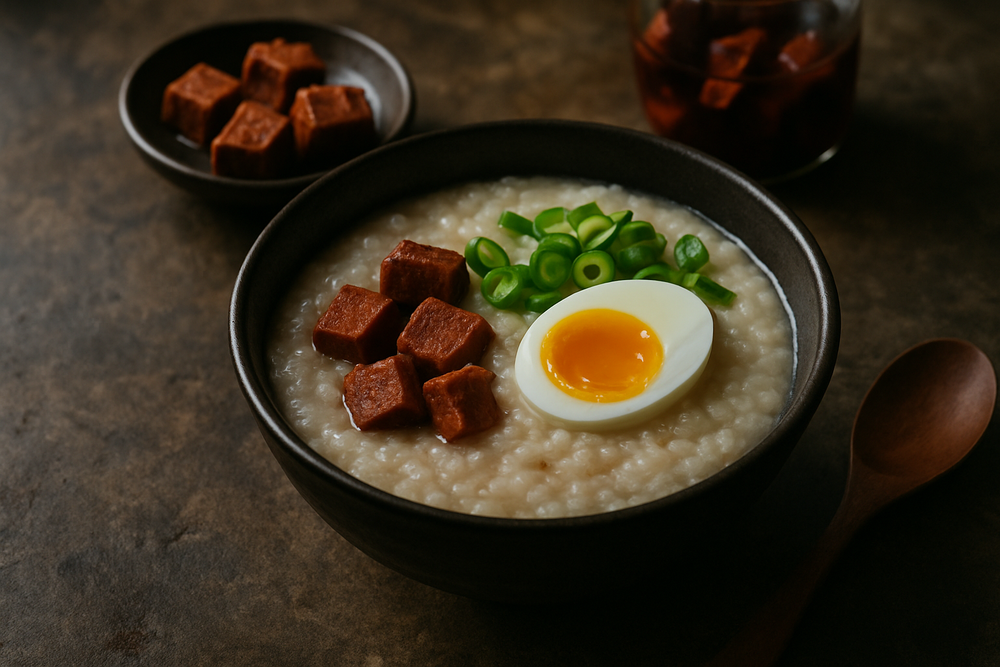
1. Congee (rice porridge) finisher Stir half a cube of plain white furu into a bowl of cooked congee just before serving. It dissolves into a creamy, savory swirl and means you need no other salt or soy sauce in the bowl. Add sliced ginger, scallion, and a soft-boiled egg (or silken tofu) for a complete, warming meal.
Why it works: The brine's umami compounds amplify the mild rice base without adding complexity from multiple condiments — you control sodium with one ingredient.
2. Leafy greens stir-fry sauce Mash one cube of furu with a teaspoon of sesame oil and a splash of water to form a smooth paste. Toss with stir-fried morning glory, bok choy, or water spinach at the end of cooking. This is a classic Cantonese preparation.
Why it works: The fat in sesame oil helps distribute the flavor evenly and rounds out the saltiness. You skip oyster sauce entirely, which also tends to be high in sodium.
3. Dipping sauce for steamed dumplings or spring rolls Blend one cube of furu with a small amount of rice vinegar, a pinch of chili flakes, and a drop of toasted sesame oil. Use as a small dipping condiment.
Why it works: The acid from vinegar cuts through furu's richness, making a more balanced dip than soy sauce-forward alternatives — and the portion used per dumpling is tiny, limiting total sodium.
Bottom line
Fermented tofu (furu) is a genuinely fascinating ingredient at the crossroads of traditional food culture and modern nutritional science. The observational evidence suggests that fermented bean curd consumed regularly as part of a plant-rich diet may be associated with lower diabetes risk and that fermented soy foods as a category appear linked to modest cardiovascular benefit. These are promising signals, not proven clinical outcomes.
The hard constraint is sodium. Furu is one of the saltiest foods in any cuisine, and its benefits cannot be separated from that reality. For most healthy adults, using one small cube as a flavor anchor in an otherwise low-sodium, vegetable-forward meal is a smart way to get the culinary pay-off with manageable risk. For anyone managing blood pressure, kidney function, or heart failure, furu deserves the same careful accounting as any high-sodium condiment.
Think of it less as a health supplement and more as a deeply satisfying, plant-based seasoning — one that happens to come with a side of interesting science.
Explore how fermented foods and plant proteins fit into your broader health goals at Plantopedia's Goals page.
How Fermented Tofu (Furu) Compares
| Compared with | What's different |
|---|---|
| Fermented Tofu (Furu) vs. Soft Tofu | Creamier and more pungent than plain tofu with a salty, cheese-like profile used as a condiment. |
| Fermented Tofu (Furu) vs. Tempeh | Significantly higher in sodium per gram and typically consumed in small cubes rather than large pieces. |
Health Benefits
Things to Know
Sodium is the primary risk: At ~2,873 mg sodium per 100 g, even two cubes (~22 g) can contribute nearly 30% of the recommended daily sodium limit for healthy adults (2,300 mg/day in many national guidelines).
Hypertension and pre-hypertension: Furu can undermine blood-pressure-lowering efforts. If you take antihypertensive medications, high-sodium condiments like furu may partially work against their effect.
Kidney disease: Individuals with chronic kidney disease are typically advised to limit sodium strictly; consult your dietitian before using furu regularly.
Heart failure and edema: Even modest extra sodium from condiments can be clinically significant for people managing fluid retention.
Thyroid medications: Large soy intakes can interfere with levothyroxine absorption. Small culinary amounts of furu are unlikely to be a major factor, but consistency in intake and separation from medication timing are commonly advised.
Warfarin and anticoagulants: Direct data on furu and vitamin K are limited. Some fermented soy foods (notably natto) are high in vitamin K; if you take warfarin, discuss any regular fermented soy use with your pharmacist or clinician and keep intake consistent.
Hormone-sensitive conditions: Furu contributes to total soy isoflavone exposure. If you have been advised to limit soy for hormone-related reasons, count furu within your overall soy pattern.
Gastric cancer risk awareness: High-salt, salt-preserved foods have been associated with increased gastric cancer risk in some population studies. Furu as a condiment (not a staple) is a different exposure level, but those with family history of gastric cancer should be mindful of total salt-preserved food intake.
Pregnancy: No specific furu contraindication exists, but limiting high-sodium foods is generally prudent during pregnancy. Discuss total soy intake with your midwife or OB if you have concerns.
Soy allergy: Furu is made from soybeans and is not appropriate for anyone with a soy allergy.
Glossary
Shop This Ingredient
Stock your pantry with quality fermented tofu (furu).
Buy on AmazonAs an Amazon Associate, Plantopedia earns from qualifying purchases. This costs you nothing extra and helps us keep the encyclopedia free.
Frequently Asked Questions
Heart and circulation The strongest human data on fermented soy and heart health come from two large Japanese cohort studies — studies that follow thousands of people over many years and look for patterns between diet and disease. One BMJ cohort of 92,915 Japanese adults found that participants in the highest fifth of fermented soy intake had roughly 10–18% lower risks of all-cause and cardiovascular mortality compared with those eating the least, with natto (a different fermented soy food) driving most of the signal. A meta-analysis — a study that pools results from multiple previous studies — found that fermented soy intake as a category was associated with reduced cardiovascular mortality (hazard ratio 0.84, 95% CI 0.73–0.97), while non-fermented soy showed no significant link. Furu is not the primary food studied in these datasets; natto and miso are. However, all fermented soy foods share isoflavones and microbially produced peptides that may support endothelial function (the health of the cells lining your blood vessels). The important counterpoint: furu and miso are also high in sodium, and high sodium intake is itself a well-established cardiovascular risk factor. Any potential heart benefit must be weighed against consistent portion discipline. Digestive health and microbiome Direct human trials specifically on furu and digestive outcomes are lacking. Fermented tofu contains microbially active cultures during production, but most commercial jarred furu has been brined and may be heat-treated, meaning live microorganisms may not survive to the gut in meaningful numbers. It should not be assumed to deliver probiotic benefits — the delivery of live beneficial bacteria — comparable to fresh fermented foods like live-culture yogurt or kimchi. That said, furu's intense flavor makes plant-heavy meals more satisfying. If a half-cube of furu makes a bowl of bitter greens genuinely delicious, and you eat those greens more regularly as a result, the downstream gut-health benefit from increased vegetable fiber is real — just indirect. Blood sugar and metabolism This is where furu has its most specific human evidence. A large Chinese prospective cohort — a study that tracked 15,633 adults for a median of 11 years — found that regular consumption of fermented bean curd was associated with a 32% lower risk of developing type 2 diabetes (OR 0.68, 95% CI 0.55–0.84) after adjusting for lifestyle and dietary factors. The researchers hypothesized that fermented soy may influence gut microbiota and metabolic signaling through fermentation-derived compounds. Caveats matter here: this is one observational study in a Chinese population, causality cannot be confirmed, and the protective effect may partly reflect an overall healthy dietary pattern rather than furu specifically. Fermented tofu's very high sodium load is also a genuine consideration for anyone managing metabolic risk, since high sodium intake is linked to hypertension and cardiovascular disease, which frequently co-occur with diabetes. Inflammation and recovery Human data specifically linking furu to reduced inflammation are limited. Soy isoflavones and fermentation-derived peptides have shown modest anti-inflammatory effects in some clinical and mechanistic studies, but these findings are mostly from non-fermented soy or other fermented soy products, and results are mixed. Paradoxically, chronically high sodium intake can promote vascular and immune activation — a form of low-grade inflammation — which could partially offset subtle anti-inflammatory benefits from soy compounds. Think of furu as a flavoring vehicle rather than a primary anti-inflammatory strategy. Hormones and cycle health Soy foods contain isoflavones, which can have weak estrogen-like activity in the body. The research on hormonal effects has focused primarily on standard tofu, soy milk, and isoflavone supplements rather than fermented tofu. Fermentation does not strip isoflavones out — they are still present in furu — but because serving sizes are so small (a cube or two, not a full portion of tofu), the total isoflavone exposure from furu is quite modest. Major nutrition bodies generally consider moderate soy intake safe for most adults, including those with thyroid conditions, provided medication timing is managed. Anyone advised by a clinician to monitor total soy intake should count furu within their overall soy pattern.
Furu is almost exclusively sold jarred and brined, which is also its traditional form. Unlike some fermented foods where freshness affects live culture count, furu's culinary identity depends on extended aging. Here is how the main forms compare: Plain white furu (salted, jarred): The form studied in cohort research on fermented bean curd and diabetes. Mildest flavor. Most versatile for congee, greens, and sauces. Seasoned furu (chili, sesame oil, five-spice, wine-lees): Same base product with added aromatics. Sodium is similar; fat varies by style. No specific health studies compare these varieties to plain furu. Furu sauce or paste: Fermented tofu blended into a looser condiment. Useful for marinades and dipping sauces; sodium concentration stays high, but smaller amounts may be used per application. For whole-food, plant-based cooking, plain white furu is the most straightforward choice: fewer additives, consistent flavor, easy to portion.
There is no established recommended daily intake for furu because it is a condiment, not a staple food. The Chinese cohort that found a diabetes-risk association did not specify exact gram amounts — participants consumed it habitually as part of traditional meals, typically in small quantities. A practical framework: | Scenario | Suggested limit | Sodium contribution | | --- | --- | --- | | Healthy adult, normal blood pressure | 1–2 small cubes (11–22 g) per meal occasion | 316–632 mg per occasion | | Active hypertension management | ½ cube or less, infrequent use | 150 mg or less | | Kidney disease or heart failure | Discuss with clinician; likely to restrict | Variable | The guiding principle: use furu the way you would use a strong cheese or fish sauce — a small amount to build flavor, not a food you eat by the spoonful. Keep the rest of the meal low in added sodium to stay within daily targets. If you are new to furu, start with half a cube to assess tolerance and flavor preference before scaling up.
Quick Answers
Common questions, answered in a line.
Fermented tofu is a rich source of selenium, manganese, and copper, providing essential minerals for antioxidant defense and energy production. It also contains soy isoflavones and fermentation-derived small peptides, though its high sodium content is its most prominent nutritional feature.
Fermented tofu (furu) contains soy isoflavones like genistein and daidzein, which are antioxidant molecules that act as weak phytoestrogens. These plant-derived compounds loosely mimic estrogen and their absorption is altered by the fermentation process.
You can use fermented tofu by stirring half a cube into rice congee, mashing it into a sauce for leafy green stir-fries, or blending it with vinegar for a dumpling dip. Because it is highly concentrated, a small amount provides a creamy, savory umami flavor to plant-based meals.
When buying fermented tofu, look for a short ingredient list containing tofu, salt, water, and perhaps rice wine or spices. Avoid products with long lists of preservatives and always check the sodium content per serving (usually one cube) rather than per 100 grams.
People with hypertension, kidney disease, or heart failure should use fermented tofu with extreme caution due to its exceptionally high sodium content. It may also interfere with certain medications like levothyroxine or warfarin, and is unsafe for individuals with a soy allergy.
Store jarred fermented tofu in the refrigerator once it has been opened to maintain its quality. The high-salt brine acts as a natural preservative that inhibits spoilage, allowing the product to keep for several months when chilled.
Fermented tofu (furu) is one of the saltiest condiments available, containing approximately 2,873 mg of sodium per 100 grams. Just two small cubes can account for nearly 30% of the recommended daily sodium limit for a healthy adult.
For Readers in the USA
Local context — sourcing, seasonality, and regional notes.
You can buy fermented tofu at major nationwide Asian grocery chains like H-Mart, 99 Ranch Market, and Mitsuwa Marketplace, as well as through large online retailers. While rarely found in standard American supermarkets like Kroger or Publix, it is increasingly available in the "International" aisles of Whole Foods Market in select urban regions.
In the U.S., you will most commonly find "White" fermented tofu (plain or with chili) and "Red" fermented tofu, which is aged with red yeast rice. Red varieties are often preferred by American home cooks for braising meats like "char siu" pork, while white varieties are the standard choice for flavoring morning congee or stir-fried greens.
Fermented tofu is a shelf-stable, jarred product available year-round in the U.S. and does not have a specific growing season. Because it is imported or produced in temperature-controlled facilities, its availability remains consistent across all 50 states regardless of the local climate or time of year.
Most fermented tofu sold in the U.S. is imported from Taiwan, Hong Kong, or China and must comply with FDA labeling requirements, including a standard Nutrition Facts panel. While USDA Organic versions are rare in traditional Asian markets, specialty health food stores in the U.S. may carry domestic, small-batch brands that utilize organic soybeans and non-GMO ingredients.
AI Clinical Review
- Frames furu as a fermented soy condiment (not a protein staple) and spotlights sodium as the main safety issue—this is clinically sound and the most relevant variable for blood pressure and cardiovascular risk.
- Appropriately characterizes the evidence base: observational cohorts suggest benefits of fermented soy foods and one large Chinese cohort links fermented bean curd intake with lower diabetes risk, but causality isn’t established.
- Notes that most jarred furu is unlikely to function as a probiotic food; this aligns with how brining/processing affects live microbes.
- Provides practical, low-portion culinary uses that help keep sodium in check while supporting higher vegetable intake—an indirect path to gut and cardiometabolic benefits.
- Direct randomized trials on furu itself (glycemic control, blood pressure, lipids, outcomes) are lacking; most data come from natto/miso or broader “fermented soy” categories.
- The actual micronutrient profile (e.g., selenium, copper) and sodium per cube vary by brand, style, and cube size, so generalizations may not apply to every product.
- Hormonal effects from isoflavones at typical furu portions are likely small, but data specific to furu—and to people with thyroid disease or hormone‑sensitive conditions—are limited.
- Net health effect depends on the whole diet’s sodium pattern; whether furu’s fermentation‑related compounds offset sodium‑related risk in real‑world use hasn’t been tested.
- Portion guidance: think condiment. For most healthy adults, 1/2–1 cube at a time (about 150–320 mg sodium) is a practical ceiling, keeping total daily sodium near general targets (≤2,300 mg/day; many with hypertension aim for 1,500–2,000 mg/day).
- Use extra caution—and discuss with a clinician—if you have hypertension, chronic kidney disease, heart failure, or edema; high‑sodium condiments can meaningfully affect blood pressure and fluid status.
- Medication considerations: soy can interfere with levothyroxine absorption—separate dosing consistently; vitamin K content in furu is uncertain, so those on warfarin should keep intake consistent and coordinate with their care team.
- Other safety notes: not suitable for soy allergy; pregnancy is not a specific contraindication, but moderating high‑sodium foods is prudent. At typical portions, furu is not a meaningful protein source—plan protein from other foods.
Extremely salty; use sparingly as a condiment.
References
- USDA FoodData Central — tofu, salted and fermented (fuyu), nutrient database (fdc.nal.usda.gov)
- Fermented bean curd and lower diabetes risk — large prospective Chinese cohort, Frontiers in Public Health 2023 (frontiersin.org)
- Fermented soy products linked to lower cardiovascular and all-cause mortality — BMJ prospective cohort study, 92,915 Japanese adults (bmj.com)
- Fermented soy intake and CVD risk in women — prospective cohort study, PubMed (pubmed.ncbi.nlm.nih.gov)
- Fermented vs. non-fermented soy and cardiovascular mortality — meta-analysis, Namazi et al. (r.jordan.im)
- Non-probiotic fermented soy and cardiometabolic risk reduction — PMC review (pmc.ncbi.nlm.nih.gov)
- Soy product consumption and cardiovascular mortality in 0.5 million adults — PubMed cohort (pubmed.ncbi.nlm.nih.gov)
- Nutrition profile for fermented tofu (fuyu) — third-party USDA-derived data (foodstruct.com)
- ScienceDaily summary of BMJ fermented soy mortality cohort (sciencedaily.com)
- Fermented tofu per-cube nutrient breakdown — EatThisMuch (eatthismuch.com)
Know Your Numbers
Eating healthy is a start. Now get to know your biomarkers.
Food changes bloodwork — inflammation, lipids, blood sugar and nutrient status all respond to what you eat. 59 markers from $59.
- Results in 7–10 days at 2,000+ Quest sites
- Licensed provider reviews every result
- One flat price, no membership, HSA/FSA eligible
Educational information only, not medical advice. Panels are ordered and reviewed through our licensed partner; Plantopedia may earn a commission.