Discover how the unique matrix of anthocyanins and natural melatonin provides powerful anti-inflammatory relief, accelerates muscle recovery
Fiber + phytonutrients; use as a whole-food sweet, snack, or smoothie base
The Short Answer
Cherries are a potent anti-inflammatory fruit containing 3g of fiber and 342mg of potassium per cup. They are one of the few natural food sources of melatonin, which helps regulate sleep cycles and supports muscle recovery.

Cherries · Photograph
Cherries stand out in the fruit kingdom for their exceptionally high concentration of polyphenols—specifically anthocyanins, the bioactive pigments responsible for their deep red hue. Research indicates that these compounds do more than provide color; they modulate inflammatory pathways, neutralize oxidative stress, and may even offer a unique form of sleep support by influencing the body's natural melatonin levels.
Key Nutrients
% Daily Value based on 2,000 cal diet
Why Cherry Health Benefits Matter for Your Wellness Routine
Cherries stand out in the fruit kingdom for their exceptionally high concentration of polyphenols—specifically anthocyanins, the bioactive pigments responsible for their deep red hue. Research indicates that these compounds do more than provide color; they modulate inflammatory pathways, neutralize oxidative stress, and may even offer a unique form of sleep support by influencing the body's natural melatonin levels.
A critical distinction exists between varieties: Tart (sour) cherries contain nearly double the phenolic compounds of sweet cherries. Total phenols reach approximately 228.9 mg per 100g in tart varieties compared to 109.8 mg in sweet cherries, making tart cherry concentrate a preferred tool for clinical and athletic applications.
Key Active Compounds: The Anthocyanin Matrix
A specialized set of plant secondary metabolites drives the "superfood" status of cherries:
- Anthocyanins: Powerful water-soluble pigments that provide the primary anti-inflammatory activity by inhibiting COX-1 and COX-2 enzymes.
- Hydroxycinnamic Acids: Including chlorogenic acid, which accounts for 60-74% of the fruit's total phenolic content and supports metabolic health.
- Flavonols (Quercetin): Provide potent antioxidant protection and support vascular endothelium function.
- Melatonin: Cherries are one of the few dietary sources of exogenous melatonin, contributing to their reputation for sleep support.
- Organic Acids (Malic Acid): Aids in pH balance and cellular energy metabolism.
Conclusion
Cherries are far more than a culinary garnish; they are a clinical powerhouse for reducing anti-inflammatory stress and providing natural sleep support. While tart varieties offer the most concentrated therapeutic compounds, both sweet and sour cherries provide a foundational matrix of anthocyanins that support heart, muscle, and metabolic health.
For those seeking functional recovery or better rest, integrating fresh cherries or tart cherry concentrate into a daily routine is a highly effective, research-backed strategy. Ready to build meals around anti-inflammatory foods like cherries? Our meal planning tool helps you create personalized nutrition plans featuring research-backed ingredients.
How Cherries Compares
| Compared with | What's different |
|---|---|
| Cherries vs. Sweet Cherries | Higher in sugar and larger in size, but contain about half the phenolic compounds of tart varieties. |
| Cherries vs. Tart Cherries (Montmorency) | Significantly higher in anthocyanins and melatonin, making them superior for recovery and sleep. |
| Cherries vs. Acerola Cherries | Smaller, tart stone fruit that is higher in Vitamin C but lacks the specific melatonin found in cherries. |
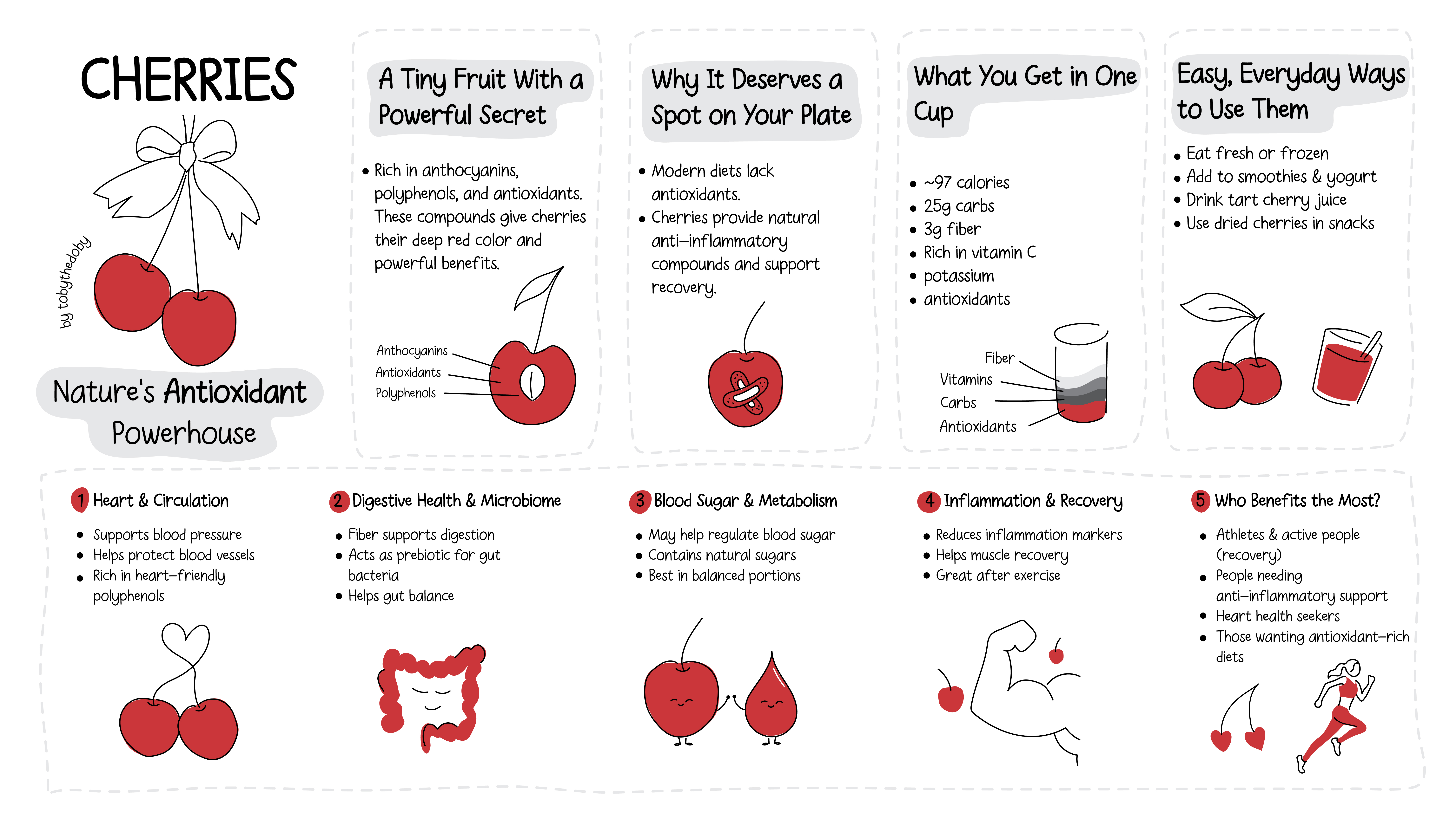
Health Benefits
Things to Know
FODMAP Sensitivity: Cherries are high in sorbitol. Individuals with IBS or fructose malabsorption may experience bloating or digestive discomfort with large portions.
Dental Health: The natural acids and sugars in cherries can affect tooth enamel; it is recommended to rinse with water after consuming tart cherry concentrate.
Medication Interactions: While Vitamin K levels are low, those on blood thinners should maintain a consistent cherry intake. Those with advanced kidney disease should monitor their potassium levels.

Common Uses
- —Drinking tart cherry juice concentrate after training to mitigate muscle damage and systemic inflammation.
- —Consuming cherries or juice 30–60 minutes before bed to prime the body’s circadian rhythm with natural melatonin.
- —Integrating fresh or frozen cherries into a daily diet to help lower uric acid levels and prevent flare-ups.
- —Eating a cup of fresh sweet cherries to provide the potassium and antioxidants needed for arterial flexibility.
- —Adding cherries to spinach salads to use their Vitamin C content to boost plant-based iron absorption.
- —Using frozen cherries to maintain high antioxidant intake during the off-season without sacrificing nutrient density.
Glossary
Shop This Ingredient
Stock your pantry with quality cherries.
Buy on AmazonAs an Amazon Associate, Plantopedia earns from qualifying purchases. This costs you nothing extra and helps us keep the encyclopedia free.
Frequently Asked Questions
Tart cherries contain nearly double the phenolic compounds and significantly more Vitamin A than sweet varieties. While both offer anti-inflammatory benefits, tart cherries are superior for targeted goals such as exercise recovery or sleep support due to their higher anthocyanin content and natural melatonin.
Cherry juice concentrate provides a much higher "dose" of polyphenols and is often used in clinical research for its high bioavailability. However, whole cherries provide essential fiber and a more complete nutrient matrix. For daily wellness, whole fruit is ideal; for specific recovery goals, unsweetened juice concentrate is more effective.
Research indicates that consuming tart cherry juice roughly 30–60 minutes before bed can improve sleep quality within the first week of consistent use. The exogenous melatonin and anti-inflammatory compounds work together to lower systemic stress, helping the body transition into a deeper, more restorative sleep state.
For most people, 1–2 cups of fresh cherries daily is safe and provides significant health benefits of cherries. However, because they are high in sorbitol, excessive intake can lead to digestive upset or loose stools. If you have diabetes, factor the 8–13g of natural sugars per 100g into your daily carbohydrate count.
No. Properly frozen cherries retain the vast majority of their anthocyanins and micronutrients. In fact, because cherries are frozen at peak ripeness, they often contain higher antioxidant levels than "fresh" cherries that have been sitting in transport for several days. They are an excellent year-round option for smoothies.
Quick Answers
Common questions, answered in a line.
Cherries provide anti-inflammatory relief by inhibiting COX-1 and COX-2 enzymes through their high concentration of anthocyanins. These bioactive pigments modulate inflammatory pathways and neutralize oxidative stress throughout the body.
Cherries are a rare dietary source of natural melatonin, which helps prime the body's circadian rhythm for better rest. Consuming them or their juice 30–60 minutes before bed is a research-backed strategy for sleep support.
Cherries contain a specialized matrix of bioactive compounds including anthocyanins, hydroxycinnamic acids like chlorogenic acid, flavonols such as quercetin, and natural melatonin. They also provide organic acids like malic acid for cellular energy metabolism.
Athletes use tart cherry juice concentrate after training to mitigate muscle damage and systemic inflammation. This helps accelerate functional recovery by leveraging the fruit's unique antioxidant and anti-inflammatory matrix.
Cherries contain Vitamin C, which can be used to boost the absorption of plant-based iron when eaten with foods like spinach. They also provide potassium and antioxidants that support heart health and arterial flexibility.
Individuals with FODMAP sensitivity, IBS, or fructose malabsorption may experience bloating because cherries are high in sorbitol. Additionally, those with advanced kidney disease should monitor their potassium levels when eating cherries.
Eating cherries or drinking their juice helps lower uric acid levels in the body. This is a common dietary strategy used to prevent painful flare-ups associated with high uric acid.
For Readers in the USA
Local context — sourcing, seasonality, and regional notes.
Fresh sweet cherries are primarily harvested in the United States from May through August, with peak production occurring in Washington, California, and Oregon. Sour or tart cherries have a much shorter window, typically appearing in July, predominantly from Michigan.
The most popular sweet cherry varieties in U.S. grocery stores are the dark-red Bing cherry and the yellow-blushed, sweeter Rainier cherry. Montmorency is the primary tart cherry variety grown in the U.S., though it is most commonly sold dried, frozen, or as juice concentrate.
Cherries consistently appear on the Environmental Working Group's (EWG) "Dirty Dozen" list, so many U.S. consumers look for the USDA Organic seal to minimize pesticide exposure. While conventionals are safe under FDA guidelines, organic options are widely available at retailers like Whole Foods and Sprouts.
AI Clinical Review
- Tart vs. Sweet Distinction: Correctly identifies that tart cherries have nearly double the phenolic compounds of sweet varieties, making them superior for clinical applications.
- COX Inhibition: Accurately highlights the molecular mechanism of anthocyanins in cherries as natural COX inhibitors.
- Melatonin Bioavailability: Properly notes that cherries provide exogenous melatonin that can measurably impact human sleep cycles.
- Oxidative Stress Reduction: Rightly connects cherry consumption with a decrease in systemic markers like C-reactive protein (CRP).
- Frozen Stability: Correctly observes that frozen cherries retain their bioactive "matrix," making them a viable clinical alternative to fresh fruit.
- Long-Term Gout Prevention: While acute uric acid reduction is well-documented, more long-term longitudinal studies are needed to establish cherries as a standalone clinical treatment for chronic gout.
- Cognitive Function: Emerging research suggests cherry polyphenols may support brain health, but large-scale human trials are required to confirm their impact on memory and neuroprotection.
- Dosage Standardization: While juice concentrate is often used in trials, the exact number of fresh cherries required to achieve specific therapeutic sleep or recovery outcomes remains variable.
- Bioavailability Variation: Individual differences in gut microbiota can influence how effectively cherry polyphenols are metabolized into active compounds.
- Sorbitol & IBS: Cherries are high in sorbitol; patients with sensitive digestion or IBS should be warned that large portions can cause significant gas or bloating.
- Potassium Monitoring: Like many stone fruits, cherries are potassium-rich. Patients with advanced Chronic Kidney Disease (CKD) must monitor their intake carefully.
- Blood Thinners: While Vitamin K levels are moderate, consistent daily intake of cherries is recommended for those on Warfarin to avoid fluctuations in coagulation markers.
- Dental Acidity: The natural acids in tart cherry concentrate can erode enamel; advise patients to dilute the juice or rinse with water.
- Sugar Concentration: Remind patients that "cherry-flavored" products or maraschino cherries do not provide these health benefits and are often loaded with inflammatory refined sugars.
Frame as food education, not disease treatment.
References
- USDA FoodData Central - Cherry Nutritional Profile: Standardized data for sweet and tart cherry composition.
- PMC - Cherry Antioxidants: From Farm to Table: A comprehensive review of polyphenol concentrations and stability.
- Journal of the International Society of Sports Nutrition - Tart Cherry Juice and Recovery: Clinical trials on muscle damage and inflammatory markers in athletes.
- European Journal of Nutrition - Tart Cherry Juice and Sleep Quality: Research confirming the impact of cherry-derived melatonin on sleep duration and efficiency.
- American Heart Association - Potassium and Vascular Health: Clinical guidelines on how electrolyte-rich fruits support blood pressure.
Know Your Numbers
Eating healthy is a start. Now get to know your biomarkers.
Food changes bloodwork — inflammation, lipids, blood sugar and nutrient status all respond to what you eat. 59 markers from $59.
- Results in 7–10 days at 2,000+ Quest sites
- Licensed provider reviews every result
- One flat price, no membership, HSA/FSA eligible
Educational information only, not medical advice. Panels are ordered and reviewed through our licensed partner; Plantopedia may earn a commission.