Ajwain Seeds — health benefits and uses
A staple Ayurvedic carminative traditionally chewed after meals to ease bloating.
The Short Answer
Ajwain seeds, or carom seeds, are a potent digestive spice containing 18 calories and 26 mg of calcium per teaspoon. They are most commonly used to relieve gas and bloating due to high levels of thymol.
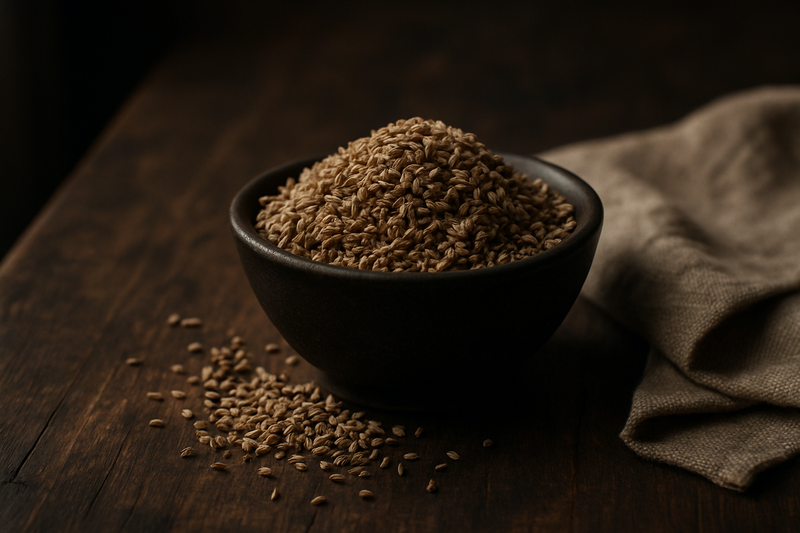
Ajwain Seeds · Photograph
Discover the science-backed ajwain (carom seeds) health benefits, uses, and side effects. Learn how this potent culinary seed may support digestion, ease gas and bloating, and fit safely into a whole-food plant-based diet.
Key Nutrients
% Daily Value based on 2,000 cal diet
Key active compounds
- Thymol — A monoterpene phenol (a type of aromatic organic compound) making up the majority of ajwain's essential oil. Responsible for its thyme-like smell and most of its antimicrobial, carminative, and antioxidant actions.
- Carvacrol — A close chemical relative of thymol, also a phenolic monoterpene. Contributes antibacterial, antifungal, and anti-inflammatory activity.
- γ-Terpinene (gamma-terpinene) — A monoterpene hydrocarbon (a class of natural plant compounds) in the essential oil. Adds antioxidant and mild anti-inflammatory effects.
- p-Cymene — An aromatic monoterpene that may amplify the antimicrobial effects of thymol and carvacrol and help modulate oxidative stress.
- Flavonoids and phenolic acids — A broader group of plant antioxidants present in the seed that contribute to overall free-radical-scavenging activity.
Prep and pairing ideas
Ajwain in Indian flatbreads (paratha or thepla) Knead ½–1 teaspoon of whole seeds directly into the dough. The dry heat activates thymol, releasing the full aroma and making the bread more digestible — a classic pairing with legume-heavy meals.
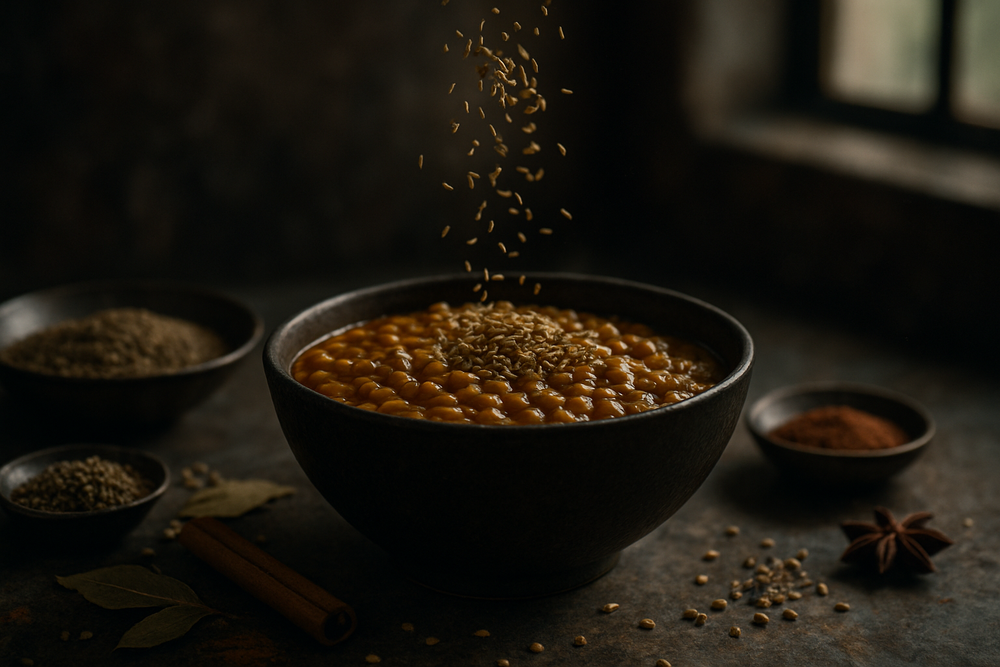
Tempering lentils (dal) Heat a teaspoon of oil or water in a small pan, add a generous pinch of ajwain seeds, and swirl for 20–30 seconds until they start to pop and smell fragrant. Pour the tempered spice over cooked lentils. The combination of ajwain and legumes is traditional precisely because ajwain's carminative action helps offset the gas that beans can produce.
Ajwain water for digestive support Bring 2 cups of water to a boil, add 1 teaspoon of whole seeds, and simmer for 5 minutes. Strain and sip warm. You can add a small pinch of black salt if you like. This is the simplest way to use ajwain for bloating or post-meal discomfort, and it keeps the dose mild.
Buying guide: choosing quality ajwain
- Whole seeds vs. ground: Buy whole seeds wherever possible. Pre-ground ajwain loses its volatile essential oil (and therefore its potency and flavor) quickly after opening. Grind small amounts fresh as needed.
- Freshness check: Rub a few seeds between your fingers. Fresh ajwain should release a sharp, immediate thyme-like scent. Faint or musty smell means the batch is old and the thymol has largely evaporated.
- Label tips: Look for seeds labeled "ajwain," "carom seeds," or "bishop's weed." Avoid blends with added salt, anti-caking agents, or fillers if you want pure whole-food use.
- Packaging: Opt for airtight glass jars or sealed foil packets over open bins. Store in a cool, dark place away from the stove; heat and light degrade thymol rapidly.
- Supplements: If considering an ajwain extract supplement, look for standardized thymol content on the label and a third-party quality certification (e.g., USP, NSF). Always discuss with a healthcare provider first, especially for medicinal-level use.
Bottom line
Ajwain is one of those rare ingredients that earns its place both as a flavor-maker and as a functional food with real science behind it. Its digestive benefits — easing gas, bloating, and upper-gut discomfort — have the most clinical support, backed by a randomized trial and a long tradition of effective use. Anti-inflammatory, antimicrobial, and early cardiovascular evidence is promising but still mostly drawn from small studies and concentrated preparations.
For most healthy adults, adding ajwain to everyday cooking is a low-risk, high-reward move. Use it freely in flatbreads, lentils, and spiced vegetables. If you're considering therapeutic doses — extracts, supplements, or medicinal ajwain water regimens — treat it with the same seriousness you'd give a herbal supplement and loop in your healthcare provider, particularly if you are pregnant, on medication, or managing a chronic condition.
Explore how ajwain and other potent culinary seeds fit into your broader health goals at /goals.
How Ajwain Seeds Compares
| Compared with | What's different |
|---|---|
| Ajwain Seeds vs. Thyme | Ajwain has a much sharper, peppery bite and higher thymol content for digestion. |
| Ajwain Seeds vs. Cumin Seeds | Ajwain is significantly more pungent and bitter, used primarily for gas and bloating. |
| Ajwain Seeds vs. Celery Seeds | Ajwain has a similar smell but is far more potent; celery seeds are milder and earthier. |
Health Benefits
Things to Know
Pregnancy: Avoid concentrated doses (extracts, essential oil, large amounts of seeds). Ajwain has documented emmenagogue and potentially abortifacient (pregnancy-ending) properties at high intakes. Culinary pinches in food are a different matter, but err on the side of caution and check with your midwife or doctor.
Trying to conceive / menstrual disorders: High-dose ajwain preparations may stimulate uterine activity. Stick to culinary amounts unless advised otherwise.
Breastfeeding: Traditional galactagogue use exists. Culinary use appears reasonable; medicinal doses and essential oils lack clear safety data in this group.
Infants and young children: Do not give concentrated extracts or essential oil directly. Food-level exposure through family meals is culturally common and considered low risk.
Peptic ulcers, gastritis, or acid reflux (GERD): Ajwain stimulates gastric acid secretion. Large doses may worsen symptoms. Start with small amounts and monitor your response.
Antihypertensive medications: High-dose extracts may add to blood-pressure-lowering effects, potentially causing hypotension (abnormally low blood pressure). Let your prescriber know if you plan to use ajwain therapeutically.
Blood sugar medications: Possible additive hypoglycemic effect with concentrated extracts. Monitor blood glucose if you change your ajwain intake significantly.
Anticoagulants / blood thinners: Limited direct data, but caution is prudent given ajwain's potent essential-oil chemistry.
Gastroactive drugs (PPIs, H2 blockers, antispasmodics): Ajwain's effect on gastric secretion and gut motility may interact theoretically with these medications.
Daily ceiling: Traditional guidance suggests not exceeding roughly 10 grams (about 5 teaspoons) of whole seeds per day to avoid gastrointestinal irritation, nausea, or dizziness.
Prep Ideas
- — Whole seeds vs. ground: Buy whole seeds wherever possible. Pre-ground ajwain loses its volatile essential oil (and therefore its potency and flavor) quickly after opening. Grind small amounts fresh as needed.
- — Freshness check: Rub a few seeds between your fingers. Fresh ajwain should release a sharp, immediate thyme-like scent. Faint or musty smell means the batch is old and the thymol has largely evaporated.
- — Label tips: Look for seeds labeled "ajwain," "carom seeds," or "bishop's weed." Avoid blends with added salt, anti-caking agents, or fillers if you want pure whole-food use.
- — Packaging: Opt for airtight glass jars or sealed foil packets over open bins. Store in a cool, dark place away from the stove; heat and light degrade thymol rapidly.
- — Supplements: If considering an ajwain extract supplement, look for standardized thymol content on the label and a third-party quality certification (e.g., USP, NSF). Always discuss with a healthcare provider first, especially for medicinal-level use.
Glossary
Shop This Ingredient
Stock your pantry with quality ajwain seeds.
Buy on AmazonAs an Amazon Associate, Plantopedia earns from qualifying purchases. This costs you nothing extra and helps us keep the encyclopedia free.
Frequently Asked Questions
Heart and circulation Early evidence suggests ajwain extracts may support a healthier lipid (blood fat) profile. Small clinical reports describe reductions in total cholesterol, LDL (often called "bad" cholesterol), and triglycerides, alongside increases in HDL ("good" cholesterol), in people with dyslipidemia (abnormal blood fat levels). Thymol and carvacrol are thought to exert vasodilatory (blood-vessel-relaxing) effects that could contribute to modest blood-pressure lowering. However, most of this cardiovascular evidence comes from small trials using standardized extracts or animal models — not from regular spice-level use. Ajwain is best framed as a flavorful part of a heart-friendly diet, not a standalone therapy for cholesterol or hypertension. Digestive health and microbiome This is where ajwain's evidence base is strongest. Traditionally prized as a carminative (a substance that relieves gas and bloating) and antispasmodic (something that reduces muscle spasms in the gut), ajwain is thought to stimulate gastric juice secretion, ease intestinal cramping, and inhibit gas-producing gut bacteria. A double-blind randomized clinical trial in patients with non-alcoholic fatty liver disease found that an aqueous extract of ajwain significantly reduced functional dyspepsia (persistent upper-gut discomfort) severity and even reduced liver fat compared to placebo — a notable result, though the extract was more concentrated than a culinary serving. Traditional practices like chewing a pinch of seeds after meals or sipping ajwain water (seeds steeped in hot water) for bloating and acidity have a long track record, even if large, high-quality human trials on culinary doses are still lacking. Blood sugar and metabolism Pharmacological reviews describe ajwain as hypoglycemic (blood-sugar-lowering) in animal models, with some small human studies suggesting modest improvements in glucose and metabolic markers when extracts are used. The mechanisms proposed include enhanced insulin sensitivity and slowed post-meal glucose absorption. That said, human data is sparse and not yet standardized. If you manage blood sugar with medication, see the cautions section below before adding concentrated ajwain preparations to your routine. Inflammation and recovery A randomized, double-blind, placebo-controlled trial found that a topical cream containing 10% ajwain essential oil significantly reduced neuropathic burning pain in the feet over four weeks, compared to placebo — a meaningful clinical finding. Other reports describe reduced joint discomfort with ajwain-containing preparations, consistent with its traditional use for arthritis. Importantly, the strongest anti-inflammatory evidence is for topical (applied to skin) forms, not oral seed consumption. Extrapolating these findings to "chewing seeds will fix joint pain" is a stretch the current evidence doesn't fully support. Hormones and cycle health Ayurvedic and traditional medicine texts describe ajwain as both an emmenagogue (something that stimulates or increases menstrual flow) and a galactagogue (something that supports breast-milk production). These properties are largely tradition-based rather than confirmed in controlled human trials. The same emmenagogue activity is what drives serious caution around high doses during pregnancy (see below). For everyday culinary use, these effects are unlikely to be relevant, but they matter a great deal if you are pregnant or trying to conceive.
Whole seeds (the default) are the safest, most accessible form and the best fit for a whole-food plant-based diet. Tossed into a hot pan during tempering, baked into flatbreads, or dry-roasted and chewed after meals — this is how ajwain has been used for centuries, and culinary doses are generally well tolerated. Ground or crushed seeds release more essential oil, intensifying both flavor and bioactivity. Useful in spice blends and dry rubs, though still a whole-food form. Ajwain water (infusion) — seeds boiled or steeped in water, then strained — is a popular traditional remedy for gas, bloating, and indigestion, and is commonly given to postpartum women and, indirectly via breast milk, to colicky infants. Systematic human trials on this specific preparation are limited, but its traditional safety record is long when made at culinary concentrations. Standardized aqueous extracts and syrups are the forms used in most clinical trials. They deliver controlled, higher doses of bioactives and should be treated more like supplements than food. Use only under professional guidance. Essential oil (topical) has shown real efficacy in randomized trials for neuropathic pain and superficial fungal infections. Ingesting undiluted essential oil is not recommended — it is highly concentrated and potentially toxic at even small volumes.
For everyday cooking, a pinch to 1 teaspoon (roughly 0.5–2 g) per meal is the standard culinary range and is considered safe for most healthy adults. This is the dose with the longest track record and the lowest risk. Traditional therapeutic practice often uses 1–3 grams once or twice daily — the equivalent of roughly ½ to 1½ teaspoons — typically as ajwain water or seeds chewed after meals. Traditional guidance suggests staying under roughly 10 grams (about 5 teaspoons) per day to avoid gastrointestinal irritation, nausea, or dizziness. Clinical trials have used standardized extracts at specific doses, which are not directly comparable to whole seeds eaten at home. Start low. If you're new to ajwain, begin with a small pinch in cooked food and notice how your stomach responds before increasing. If you experience heartburn, nausea, or mouth irritation, reduce the amount or discontinue. Children, pregnant individuals, and people on relevant medications should consult a health professional before using amounts beyond a small culinary pinch.
Quick Answers
Common questions, answered in a line.
Ajwain is a potent spice also known as carom seeds or bishop's weed, valued for its high concentration of thymol. This monoterpene phenol gives the seeds a sharp, thyme-like aroma and is responsible for many of its antimicrobial and digestive properties.
Ajwain helps relieve bloating and gas because it acts as a carminative, a substance that prevents or eases flatulence. It is traditionally used in legume-heavy meals like dal to offset the gas that beans can produce and is often consumed as a simmered water for post-meal discomfort.
Ajwain seeds contain active compounds like thymol, carvacrol, gamma-terpinene, and p-cymene. These monoterpenes provide a combination of antibacterial, antifungal, anti-inflammatory, and antioxidant actions that support overall health and digestive function.
Pregnant women should avoid concentrated ajwain extracts or oils because the spice has documented emmenagogue and potentially abortifacient properties. While small culinary pinches in food are generally considered different, it is safest to consult a healthcare provider regarding any medicinal intake.
Ajwain may interact with antihypertensive drugs, blood sugar medications, and gastroactive drugs like PPIs or H2 blockers. Because it can stimulate gastric acid secretion and potentially lower blood pressure or blood sugar in high doses, those on medication should consult their doctor.
To ensure quality, rub the seeds between your fingers; fresh ajwain should release a sharp, immediate thyme-like scent. It is best to buy whole seeds in airtight glass jars rather than pre-ground versions, which lose their volatile essential oils and potency quickly.
People with peptic ulcers, gastritis, or acid reflux (GERD) should be cautious as ajwain stimulates gastric acid secretion. Large doses of the spice may worsen these specific conditions, so it is recommended to start with small amounts and monitor your body's response.
For Readers in the USA
Local context — sourcing, seasonality, and regional notes.
You can find ajwain seeds at major U.S. grocery chains like Whole Foods Market, specialty retailers like Sprout's Farmers Market, and most Indian grocery stores (Desi stores). Many American consumers also purchase high-quality organic carom seeds through online retailers like Amazon or specialty spice purveyors.
In the U.S., look for ajwain seeds labeled with the USDA Organic seal to ensure they were grown without synthetic pesticides or irradiation. While the FDA regulates ajwain as a "Generally Recognized as Safe" (GRAS) food substance, organic certification provides extra assurance for those following a clean whole-food plant-based diet.
While ajwain is primarily imported from India and Iran, it can be grown in USDA Hardiness Zones 6–11 as an annual herb during the warm summer months. Because it requires a long, hot growing season to produce seeds, home gardeners in southern states like Texas, Arizona, and Florida typically have the most success.
In the U.S., ajwain is most commonly sold under the names "carom seeds" or "ajwain," but you may occasionally see it labeled as "bishop’s weed" in herbal apothecary shops. It is important not to confuse it with "lovage" or "celery seed," which look similar but have different flavor profiles and chemical compositions.
AI Clinical Review
- Clearly explains that ajwain’s main active, thymol, underlies its antimicrobial and carminative (gas‑relieving) effects and that most culinary use involves very small amounts.
- Accurately frames the strongest clinical signal around digestive comfort, noting a randomized trial with an aqueous extract and longstanding traditional use (e.g., ajwain water, post‑meal chewing).
- Distinguishes forms: culinary seeds versus concentrated extracts and essential oils, with topical oil showing benefit for certain pain and superficial fungal infections.
- Provides practical buying, storage, and preparation guidance consistent with preserving volatile oils and flavor.
- Cardiometabolic outcomes (cholesterol, blood pressure, blood sugar) are based mainly on small human studies and animal data; large, well‑controlled trials are limited, and effects from culinary doses remain uncertain.
- The NAFLD/functional dyspepsia findings come from an extract; we don’t know if typical kitchen doses replicate these results, and replication in larger cohorts is needed.
- Traditional claims related to menstruation and lactation are not well tested in modern clinical trials; current guidance is precautionary rather than definitive.
- Microbiome‑modulating and anti‑inflammatory effects are biologically plausible but need more human studies using standardized preparations and outcomes.
- Dose matters: culinary amounts (a pinch up to about 1 tsp per meal) are generally well tolerated; traditional upper limits around 10 g/day aim to avoid GI irritation—start low and assess your own response.
- Form matters: whole or lightly crushed seeds are food; standardized extracts act more like supplements; essential oil should not be ingested and topical use should be diluted to avoid skin irritation.
- Use extra caution and check with a clinician if you are pregnant or trying to conceive, breastfeeding (for therapeutic doses), giving to children, have reflux/ulcers, or take medications for blood pressure, blood sugar, or blood thinning.
- If you’re on gastroactive drugs (like PPIs/H2 blockers) or experience heartburn, note that ajwain can stimulate gastric acid; adjust timing and dose accordingly and monitor symptoms.
Potent; use sparingly and avoid concentrated doses in pregnancy.
References
- USDA FoodData Central — spice nutrition data (fdc.nal.usda.gov)
- **Phytochemistry and pharmacology review of **Trachyspermum ammi — comprehensive overview of active compounds and traditional uses (pmc.ncbi.nlm.nih.gov)
- Randomized double-blind trial: ajwain topical cream for neuropathic burning feet pain — 10% essential-oil cream outperformed placebo over 4 weeks (pubmed.ncbi.nlm.nih.gov)
- Randomized controlled trial: ajwain extract for dyspepsia and liver steatosis in NAFLD patients — significant improvement in upper-gut symptoms and liver fat vs. placebo (academia.edu)
- Non-inferiority trial: herbal mouthwash (including ajwain) vs. chlorhexidine for plaque and gingivitis in children — ajwain-containing formula was non-inferior for plaque and gingival inflammation (rcastoragev2.blob.core.windows.net)
- Clinical study: ajwain ointment against superficial dermatophyte infections — 1% essential oil ointment showed high cure rates for tinea infections (academia.edu)
- Clinical study: ajwain syrup for ventilator-associated pneumonia prevention — suggested antimicrobial benefit in ICU patients (sciencedirect.com)
- Healthline overview: carom seeds — benefits and uses — accessible evidence summary with safety notes (healthline.com)
- Ayurtimes: carom seeds benefits and side effects — traditional and pharmacological perspective including safety cautions (ayurtimes.com)
- MyPlate — Protein Foods Group (seeds and nuts context) (myplate.gov)
Know Your Numbers
Eating healthy is a start. Now get to know your biomarkers.
Food changes bloodwork — inflammation, lipids, blood sugar and nutrient status all respond to what you eat. 59 markers from $59.
- Results in 7–10 days at 2,000+ Quest sites
- Licensed provider reviews every result
- One flat price, no membership, HSA/FSA eligible
Educational information only, not medical advice. Panels are ordered and reviewed through our licensed partner; Plantopedia may earn a commission.