Chia Oil — health benefits and uses
Chia was an Aztec endurance food; the oil concentrates its omega-3s.
The Short Answer
Chia oil is a concentrated source of omega-3 fatty acids, providing 8.5 grams of alpha-linolenic acid (ALA) per 14-gram serving. It is best used raw in dressings or smoothies to preserve its delicate polyunsaturated fats.
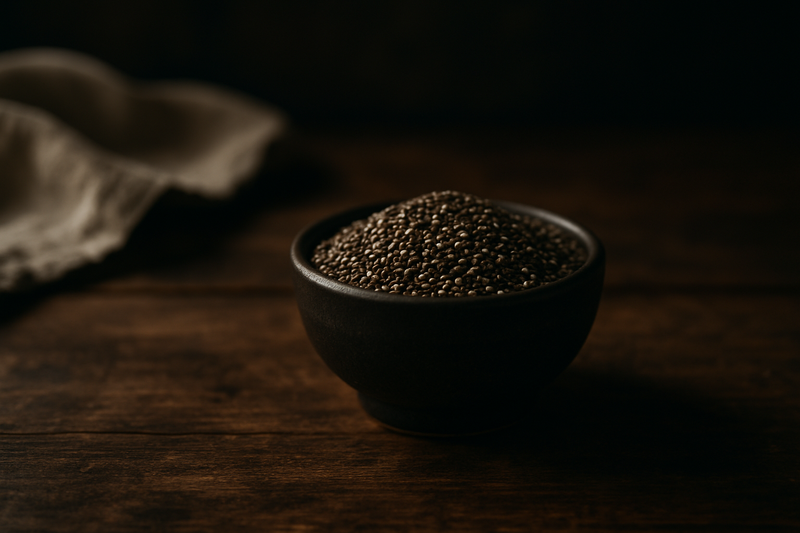
Chia Oil · Photograph
Discover the evidence-based chia seed oil health benefits, how to use it safely in dressings and smoothies, how much to take daily, and who should exercise caution — including interactions with medications and pregnancy notes.
Key Nutrients
% Daily Value based on 2,000 cal diet
Key active compounds in chia oil
- Alpha-linolenic acid (ALA): The dominant fatty acid (~60–65% of total fat). An essential omega-3 polyunsaturated fatty acid (PUFA) — meaning "polyunsaturated" that the fat molecule contains multiple double bonds — that supports cardiovascular function, brain health, and inflammatory balance.
- Linoleic acid (LA): An omega-6 essential fatty acid making up 15–20% of chia oil. Required for cell membrane integrity and hormone-like signalling molecules called eicosanoids.
- Vitamin E (tocopherols): Naturally occurring antioxidants in the oil that protect its fragile PUFAs from oxidising (going rancid) and contribute modestly to your daily vitamin E needs.
- Phytosterols: Plant compounds structurally similar to cholesterol. Present at around 20 mg per tablespoon; they compete with cholesterol for absorption in the gut and may modestly support healthy cholesterol levels.
- Phenolic compounds: A group of plant antioxidants that survive cold-pressing and add minor anti-inflammatory and oxidation-protective activity, though these are more concentrated in whole chia seeds than in the extracted oil.
Buying guide: how to choose a quality chia seed oil
Cold-pressed, unrefined: Look for "cold-pressed" on the label. This mechanical pressing method preserves the ALA content and natural antioxidants. Refined or solvent-extracted versions may have lower nutrient value.
Dark glass bottle: Light degrades PUFAs. Clear or plastic bottles are a red flag for a delicate oil like this.
Refrigerated at point of sale: If the retailer stores it at room temperature on a sunny shelf, the oil may already be partially oxidised before you buy it.
Capsule form: Encapsulated softgels provide the best protection from light and oxygen and deliver a standardised ALA dose (typically 500–1000 mg per capsule). Useful if you dislike the taste or want predictable dosing.
Fortified foods: Some spreads, nutrition bars, and yoghurts include chia oil to boost omega-3 content. These are convenient but check labels to confirm the chia oil dose falls within the ~2 g/day guidance.
Smell test: Fresh chia oil has a mild, slightly nutty, neutral smell. A sharp, paint-like, or fishy odour means it has oxidised — return it or discard it.
Prep and pairing ideas
Chia oil + lemon + garlic = simple dressing: Whisk 1 teaspoon chia oil with lemon juice, a crushed garlic clove, and a pinch of sea salt. The acidity of the lemon helps balance the oil's mild grassiness and slows oxidation once mixed.
Chia oil + frozen berries + oat milk = omega-3 smoothie: Add ½ teaspoon chia oil to your blender just before serving, not during a long blend cycle — heat from friction can degrade it. The berries' vitamin C may further protect the oil's ALA.
Chia oil + tahini + miso = creamy dip base: Tahini (sesame paste) provides body and additional healthy fats; miso adds umami and probiotic benefit. Combining these with chia oil creates a nutrient-dense dip without any heat processing.
Bottom line
Chia seed oil is a genuinely distinctive ingredient: the most ALA-concentrated mainstream cooking oil available from a plant source, with a fatty acid profile that can meaningfully improve your omega-3 status in modest amounts. The evidence for cardiovascular and anti-inflammatory benefits is plausible and supported by biomarker data and ALA research, though robust human trials using the oil specifically are still limited.
Its value is as a cold-use dietary enhancer — a drizzle on a salad, a swirl in a smoothie — not a therapeutic supplement or a cooking fat. Used within the recommended ~2 g/day range, stored properly, and kept away from heat, it is a safe and practical way for plant-based eaters in particular to close the omega-3 gap in their diet.
If you are looking for more ways to align your eating patterns with specific health goals, explore Plantopedia's goal-based guides at /goals.
How Chia Oil Compares
| Compared with | What's different |
|---|---|
| Chia Oil vs. Flaxseed Oil | Higher ALA content (60-65%) and a more neutral, less nutty flavor profile. |
| Chia Oil vs. Chia Seeds | Pure fat source with no fiber, whereas seeds provide 5g of fiber per tablespoon. |
Health Benefits
Things to Know
Heat sensitivity: Never cook with it. Oxidised oil is potentially harmful.
Storage: Keep refrigerated, tightly sealed, away from light. Use within 4–6 weeks of opening.
Daily limit: EU novel food guidance recommends around 2 g per day for the general population — roughly ½ teaspoon as an oil. This is conservative, and reflects its novel food classification rather than evidence of toxicity at higher doses, but it is sensible until more human data exist.
Blood-thinning medications (e.g., warfarin, clopidogrel, aspirin): Higher omega-3 intakes can modestly influence platelet aggregation (the clumping of blood cells that causes clotting). Supplemental doses of chia oil may warrant monitoring if you are on anticoagulants. Food-level amounts are generally considered low risk.
Blood pressure medications: Omega-3-rich diets can modestly lower blood pressure. Additive effects with antihypertensive drugs are possible; monitor symptoms.
Antidiabetic medications: If you significantly increase dietary omega-3 intake, glycaemic control may shift — monitor blood sugar if you are on medication.
Allergy: Anyone with a known allergy to chia seeds or related Salvia species should avoid the oil. Cross-reactivity with sesame or mustard is theoretically possible.
Pregnancy and breastfeeding: Adequate omega-3 intake is important during pregnancy, but specific data on chia oil safety in pregnancy are limited. Use as a minor component of a varied diet and discuss with your midwife or doctor before supplementing.
Lipid disorders: If you are being treated for abnormal cholesterol or triglycerides, let your healthcare provider know you are adding a concentrated ALA oil.
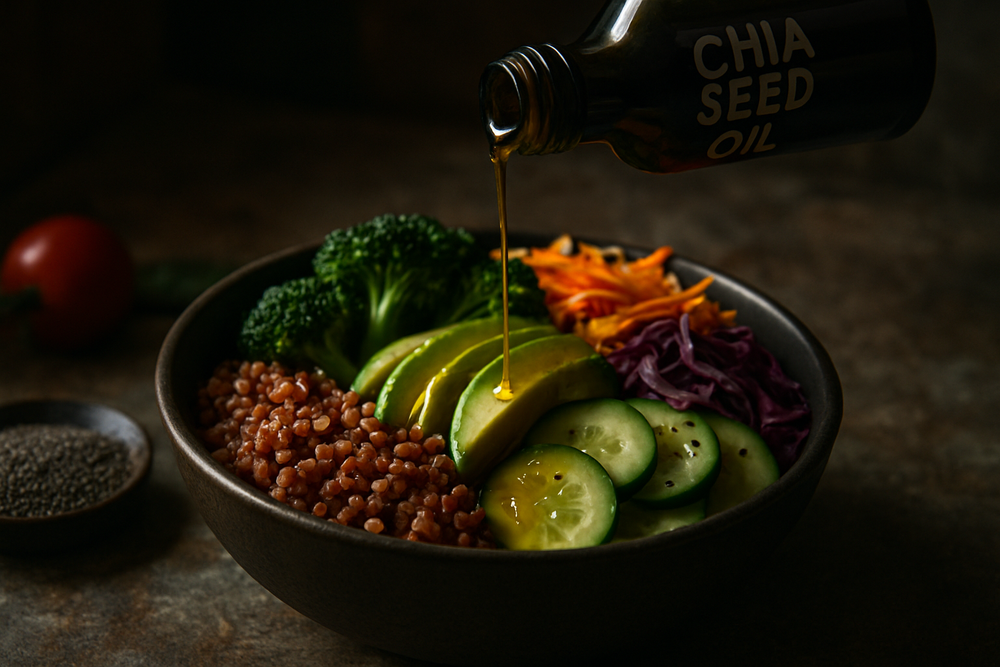
Shop This Ingredient
Stock your pantry with quality chia oil.
Buy on AmazonAs an Amazon Associate, Plantopedia earns from qualifying purchases. This costs you nothing extra and helps us keep the encyclopedia free.
Frequently Asked Questions
Heart and circulation Human studies using chia (mostly whole seeds, with some using the oil) consistently show that regular intake raises blood levels of ALA and its downstream metabolite EPA — both recognised markers of better omega-3 status. In large observational (population-watching) studies, higher plasma ALA is associated with lower rates of fatal heart attacks and less atherosclerosis (hardening of the arteries). Animal and mechanistic studies show chia oil can lower total cholesterol, LDL-cholesterol ("bad" cholesterol), and triglycerides while raising HDL-cholesterol ("good" cholesterol). The honest caveat: randomised controlled trials testing chia oil specifically for hard cardiovascular outcomes — actual heart attacks, blood pressure readings, lipid panels — are limited. Most of the human evidence is indirect, reflecting what we know about ALA biology and whole chia seeds. The cardiovascular case for chia oil is biologically plausible and supported by biomarker data, but should be considered moderate rather than definitive. Digestive health Be cautious about claims here. The well-documented digestive benefits of chia — improved bowel regularity, a gel-forming laxative effect — come from the seeds' soluble fibre and mucilage content. The oil fraction contains no fibre at all. There is currently no strong human evidence that isolated chia oil meaningfully improves digestion on its own. If gut regularity is your goal, whole chia seeds are the relevant food. Blood sugar and metabolism Animal studies and mechanistic research suggest chia oil may improve insulin sensitivity and glycaemic (blood sugar) profiles through its effects on lipid metabolism and inflammation. However, the human trials that showed modest improvements in post-meal glucose and metabolic markers used whole chia seeds — where the fibre matrix plays a central role. Claiming blood sugar benefits specifically for the isolated oil is speculative at this stage. People with diabetes should not adjust medications based on chia oil use without medical guidance. Inflammation and joint health ALA-rich plant oils are associated in population studies with lower markers of systemic (whole-body) inflammation and a reduced risk of inflammatory conditions including rheumatoid arthritis, though this evidence is weaker than for marine omega-3s. In cell and animal studies, chia oil modulates eicosanoid production (the signalling molecules that regulate inflammation) and reduces pro-inflammatory cytokines (chemical messengers that drive inflammation). The potential for chia seed oil to support inflammation and joint pain is promising but the human evidence is still emerging — it should not replace proven treatments for inflammatory conditions. Hormones and cycle health ALA can influence eicosanoid signalling, which may indirectly affect hormone-related processes such as prostaglandin balance during the menstrual cycle. However, human data specifically linking chia oil intake to hormonal outcomes are sparse. Any hormone-related benefits are largely extrapolated from marine omega-3 trials and animal models. Treat this area as speculative until dedicated human studies exist.
Do not heat chia seed oil. This is the single most important practical rule. Chia oil is extraordinarily rich in polyunsaturated fatty acids, which oxidise rapidly when exposed to heat, light, or air. Cooking with it — even gentle sautéing — destroys the beneficial ALA and produces potentially harmful oxidation byproducts. Its smoke point is very low. Use chia oil exclusively in cold or room-temperature applications: Drizzled over a finished salad or grain bowl Blended into a smoothie immediately before serving Stirred into yoghurt or overnight oats Used as a base for salad dressings and dips Added to cold sauces, dips, or hummus Store it in an airtight dark bottle in the refrigerator. Discard if it smells fishy, rancid, or bitter — these are signs of oxidation.
European food safety guidance sets a conservative upper limit of around 2 g per day — approximately half a teaspoon (2.5 ml) as a liquid oil. Most commercial supplement capsules provide 500–1000 mg of ALA per capsule, meaning 1–2 capsules per day falls comfortably within this range. For context: 2 g of chia oil delivers roughly 1.2 g of ALA, which already exceeds the recommended adequate intake for ALA in most adults (1.1 g for women, 1.6 g for men). This makes even small amounts nutritionally meaningful. Start low: If you are new to high-ALA oils, begin with ½ teaspoon (about 2 g) per day mixed into food. Some people experience mild digestive looseness when introducing concentrated PUFAs; starting small reduces this. Do not assume more is better: Chia oil is not a supplement where higher doses have been shown to produce greater benefits. The 2 g/day guidance reflects both its novel food status and the general principle that concentrated PUFA oils should be used as flavour and nutrient enhancers, not consumed in large quantities.
Quick Answers
Common questions, answered in a line.
You should not cook with chia seed oil because it is highly heat-sensitive and its healthy polyunsaturated fats (PUFAs) degrade when heated. Cooking with it causes oxidation, which can make the oil potentially harmful and strip away its nutritional value.
To keep chia seed oil fresh, store it in a tightly sealed dark glass bottle inside the refrigerator. Because it is highly susceptible to oxidation from light and heat, you should aim to use the oil within 4 to 6 weeks of opening.
Chia oil should have a mild, slightly nutty, and neutral smell when it is fresh. If you notice a sharp, fishy, or paint-like odor, the oil has likely oxidized and should be returned or discarded.
You can identify high-quality chia oil by looking for "cold-pressed" and "unrefined" on the label, which ensures the nutrients were preserved during extraction. It should also be sold in a dark glass bottle to protect the delicate omega-3 fats from light degradation.
People taking blood-thinning medications, blood pressure drugs, or antidiabetic medications should exercise caution and consult a doctor before using chia oil. High omega-3 intake can influence blood clotting, blood pressure levels, and glycemic control, potentially interacting with these treatments.
Chia seed oil contains about 60–65% alpha-linolenic acid (ALA), making it the most concentrated plant-based source of this omega-3 fatty acid available. It also provides linoleic acid (omega-6), vitamin E, and phytosterols which support heart and brain health.
For Readers in the USA
Local context — sourcing, seasonality, and regional notes.
In the United States, you can find high-quality chia oil at national health food chains like Whole Foods Market and Sprouts, or in the supplement aisle of major retailers like Walmart and Target. Specialty grocers and online marketplaces also carry cold-pressed versions, often labeled as "Extra Virgin" to denote minimal processing.
While most chia is imported from Latin America, U.S. production has expanded to states like Arizona, Kentucky, and Florida, where the long growing season allows the plant to mature before the first frost. Domestic chia is typically harvested in late fall or early winter, though the oil remains available year-round due to its shelf-stable bottled or capsule form.
To ensure the highest quality in the U.S., look for the USDA Organic seal and Third-Party Verification (like NSF or USP) on the label. Because the FDA regulates chia oil as a food or dietary supplement rather than a drug, these independent certifications provide assurance that the product is free from contaminants and matches the potency listed on the bottle.
AI Clinical Review
- Accurately highlights chia seed oil as one of the richest plant sources of ALA (omega‑3) and stresses that it’s for cold use only, not cooking.
- Clearly explains that ALA converts poorly to EPA/DHA, so chia oil can raise omega‑3 status but isn’t a full substitute for fish/algae oils when long‑chain omega‑3s are the goal.
- Appropriately characterizes the heart‑health evidence as biologically plausible and supported by biomarker changes, while noting most human trials used whole seeds, not the oil.
- Offers practical guidance on selection and storage (cold‑pressed, dark glass, refrigeration) and mentions capsules for consistent, protected dosing.
- Direct randomized human trials testing chia oil itself for blood lipids, blood pressure, or cardiovascular events are limited; much of the case is extrapolated from whole‑seed studies or ALA generally.
- Claims around blood sugar, insulin sensitivity, and hormone/cycle effects are based mainly on animal or mechanistic data; human data for the isolated oil are insufficient.
- Anti‑inflammatory and joint‑pain benefits are suggestive but dosing, magnitude of effect, and clinical relevance compared with marine omega‑3s remain uncertain.
- The phytosterol content listed (~20 mg per tablespoon) is far below amounts typically shown to lower LDL cholesterol (about 1.5–3 g/day), so effects from this mechanism alone are likely minimal.
- Dose: a prudent intake is about 2 g/day (≈½ teaspoon), which supplies roughly 1.2 g ALA—enough to meet or exceed most adults’ ALA needs; higher amounts haven’t shown added benefit.
- Safety and handling: do not heat; store refrigerated in a dark, airtight container; discard if the oil smells rancid or “paint‑like.” Capsules can further protect against oxidation.
- Who should check with a clinician first: people taking anticoagulants, blood‑pressure or diabetes medications; those being treated for lipid disorders; anyone pregnant or breastfeeding; and individuals with chia or related Salvia allergies.
- If you need EPA/DHA for a specific indication (for example, very high triglycerides or pregnancy DHA targets), consider an algae‑based EPA/DHA supplement alongside or instead of chia oil.
Very heat-sensitive; do not cook with it. Keep refrigerated.
References
- USDA FoodData Central — chia seed nutrition data (fdc.nal.usda.gov)
- The Role of Chia Seeds Oil in Human Health: A Critical Review — covers ALA content, cardiovascular and metabolic effects, safety (eu-opensci.org)
- Chemical Composition and Nutritional Value of Chia Seeds and Chia Oil (PMC) — fatty acid profile, micronutrients, phytosterols (pmc.ncbi.nlm.nih.gov)
- Chia Seeds (Salvia hispanica L.): A Therapeutic Weapon in Human Health (PMC) — human and animal evidence for cardiovascular, metabolic, and inflammatory benefits (pmc.ncbi.nlm.nih.gov)
- ACNFP Novel Food Safety Opinion: Chia Oil — EU regulatory safety assessment, acute toxicity, recommended daily intake of ~2 g (acnfp.food.gov.uk)
- ACNFP Application: Chia Oil Novel Food Uses and Intake Levels — authorised use conditions, fortified food applications (acnfp.food.gov.uk)
- Metabolic effects of chia oil in experimental models (Grasas y Aceites journal) — animal trial showing lipid-lowering and omega-3-enriching effects (grasasyaceites.revistas.csic.es)
- Therapeutic Perspectives on Chia Seed and Its Oil: A Review (Thieme) — synthesis of cardiovascular, anti-inflammatory, antidiabetic, and other effects (thieme-connect.com)
- CPE Monthly: Health Benefits of Chia (Today's Dietitian) — dietitian-reviewed summary of clinical evidence for chia (todaysdietitian.com)
- Consumer Guidance on Chia Seeds and Oil (Verbraucherzentrale Germany) — public health perspective on claims, evidence level, and safe use (verbraucherzentrale.de)
Know Your Numbers
Eating healthy is a start. Now get to know your biomarkers.
Food changes bloodwork — inflammation, lipids, blood sugar and nutrient status all respond to what you eat. 59 markers from $59.
- Results in 7–10 days at 2,000+ Quest sites
- Licensed provider reviews every result
- One flat price, no membership, HSA/FSA eligible
Educational information only, not medical advice. Panels are ordered and reviewed through our licensed partner; Plantopedia may earn a commission.