Camelina Oil — health benefits and uses
An ancient European oilseed revived for its omega-3 profile.
The Short Answer
Camelina oil is a nutrient-dense seed oil containing 5 grams of ALA omega-3 and 15 mg of Vitamin E per tablespoon. It is best used for salad dressings, dipping, or light sautéing due to its nutty flavor and moderate smoke point.

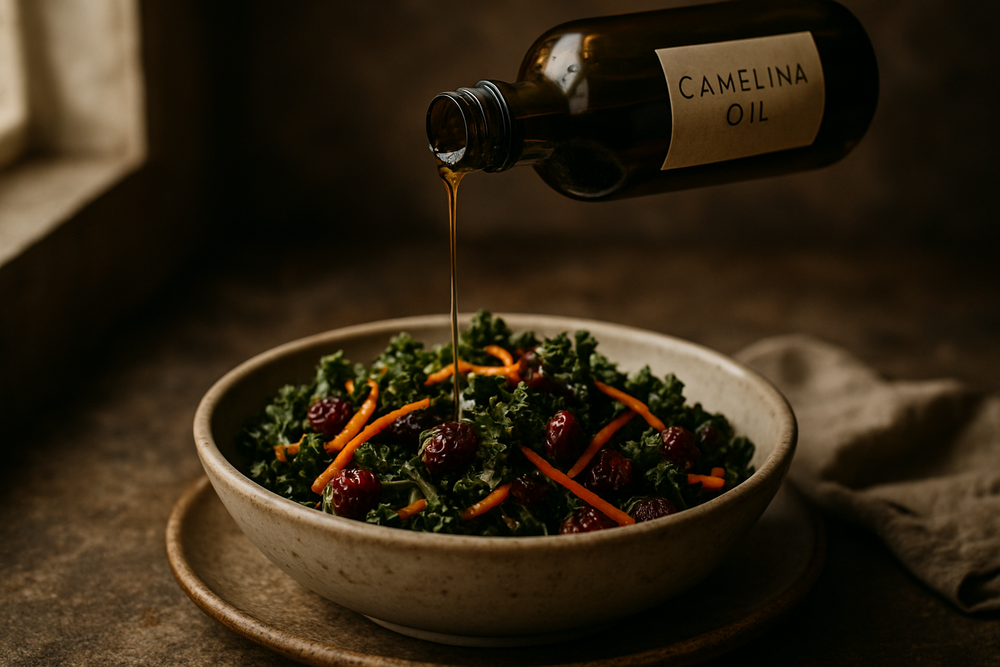
Camelina Oil · Photograph
Discover camelina oil health benefits and how to use it — from omega-3 support and heart health to cooking tips, dosage guidance, safety precautions, and what the current evidence actually says about this nutty, ALA-rich seed oil.
Key Nutrients
% Daily Value based on 2,000 cal diet
Key active compounds in camelina oil
- Alpha-linolenic acid (ALA, 18:3 n-3): The main plant-based omega-3 fatty acid, making up ~35–40% of camelina oil's fatty acids. ALA is essential, meaning your body cannot make it; you must get it from food. It can be partially converted in the body to the longer-chain omega-3s EPA and DHA, though conversion rates are modest.
- Linoleic acid (LA, 18:2 n-6): An essential omega-6 fatty acid at roughly 16–17% of total fatty acids. Supports cell membrane structure and normal skin barrier function.
- Oleic acid (18:1 n-9): A heart-healthy monounsaturated fat (the same type abundant in olive oil), present at about 16%, which helps improve blood lipid profiles when used in place of saturated fat.
- Gamma-tocopherol: A particularly potent antioxidant form of vitamin E. Helps protect cell membranes from oxidative damage and may reduce systemic inflammation.
- Plant sterols (phytosterols): Naturally occurring compounds that can partially block cholesterol absorption in the gut, potentially contributing to lower LDL (low-density lipoprotein, or "bad") cholesterol levels.
Prep and pairing ideas
Camelina oil's smoke point is moderate — approximately 200–230 °C (390–445 °F) for refined versions, somewhat lower for cold-pressed — which means it handles light sautéing but is not ideal for deep-frying or very high-heat roasting.
Three practical pairings:
- Camelina oil + dark leafy greens (kale, spinach, arugula): Fat helps your body absorb the fat-soluble vitamins and carotenoids in greens. Drizzle a tablespoon of camelina oil over a salad with lemon juice for an omega-3-boosted dressing with a nutty edge.
- Camelina oil + whole grain bread or crackers: Use as a dipping oil in place of butter. The nutty flavor complements earthy whole grain profiles, and you get a useful ALA hit with minimal preparation.
- Camelina oil + roasted root vegetables (carrots, beets, sweet potato): Toss vegetables lightly before roasting at moderate oven temperatures (around 180–190 °C / 355–375 °F). The oil tolerates this heat level and adds depth of flavor without overpowering the vegetables.
Storage tip: Once opened, refrigerate cold-pressed camelina oil and aim to use it within 3–4 months. Its high ALA content makes it more susceptible to oxidation (rancidity) than more saturated oils. If it smells sharp or paint-like, it has gone off — discard it.
Bottom line
Camelina oil is an underappreciated seed oil with a genuinely strong nutritional profile: high in ALA omega-3, rich in vitamin E, and low in saturated fat. The evidence that it can support better cholesterol and triglyceride levels when it replaces less favorable fats in the diet is reasonably consistent with what we know about ALA-rich, highly unsaturated oils generally, and growing human data specifically support camelina oil's cardioprotective potential. Anti-inflammatory effects are mechanistically plausible but need more camelina-specific clinical data.
It is versatile enough for everyday cooking at moderate temperatures, mild enough to not overpower dressings and dips, and shelf-stable enough to be practical — provided you store it properly. If you are looking for a plant-based oil that meaningfully boosts ALA intake while also delivering vitamin E, camelina oil is worth a place in your kitchen.
Explore how fats and oils fit into your broader food-as-medicine approach at Plantopedia's goals hub.
How Camelina Oil Compares
| Compared with | What's different |
|---|---|
| Camelina Oil vs. Flaxseed Oil | Camelina has a much higher smoke point (up to 445°F) and a significantly longer shelf life. |
| Camelina Oil vs. Olive Oil | Camelina contains significantly more ALA omega-3 and vitamin E than olive oil. |
Health Benefits
Things to Know
Blood thinners: Camelina oil is rich in omega-3 fatty acids. At supplemental doses, omega-3s may enhance the effects of anticoagulant drugs (e.g., warfarin) and antiplatelet medications (e.g., aspirin, clopidogrel), potentially increasing bleeding risk. If you take any of these, talk to your prescriber before adding large amounts of camelina oil.
NSAIDs: Combined use of high-dose omega-3 oils with non-steroidal anti-inflammatory drugs may modestly increase bleeding risk by analogy with other omega-3 supplements; camelina-specific data are limited.
Gallbladder and pancreatic disease: Camelina oil is a high-fat food. People with active cholecystitis (gallbladder inflammation) or pancreatitis should avoid adding extra dietary fat during acute flares, as it can worsen symptoms.
Allergies: Camelina is a member of the Brassicaceae (mustard/crucifer) family. People with known allergies to related plants or their oils should approach camelina oil with caution.
Bleeding disorders / pre-surgery: If you have a bleeding disorder or are scheduled for surgery, discuss high-dose omega-3 oil intake with your care team.
Calorie density: Like all oils, camelina oil is energy-dense (~900 kcal per 100 g). If calorie intake is a concern, account for added oil in your daily totals.
Pregnancy and breastfeeding: Regulatory assessments suggest camelina oil is safe at normal culinary amounts during pregnancy and breastfeeding. For supplemental doses, check with a healthcare provider.
Prep Ideas
- — **Camelina oil + dark leafy greens (kale, spinach, arugula):** Fat helps your body absorb the fat-soluble vitamins and carotenoids in greens. Drizzle a tablespoon of camelina oil over a salad with lemon juice for an omega-3-boosted dressing with a nutty edge.
- — **Camelina oil + whole grain bread or crackers:** Use as a dipping oil in place of butter. The nutty flavor complements earthy whole grain profiles, and you get a useful ALA hit with minimal preparation.
- — **Camelina oil + roasted root vegetables (carrots, beets, sweet potato):** Toss vegetables lightly before roasting at moderate oven temperatures (around 180–190 °C / 355–375 °F). The oil tolerates this heat level and adds depth of flavor without overpowering the vegetables.
Glossary
Shop This Ingredient
Stock your pantry with quality camelina oil.
Buy on AmazonAs an Amazon Associate, Plantopedia earns from qualifying purchases. This costs you nothing extra and helps us keep the encyclopedia free.
Frequently Asked Questions
This is where the evidence is most developed, though it is still growing. Heart and circulation Camelina oil's fatty acid profile — high in ALA and low in saturated fat — is the type that cardiovascular nutrition researchers consistently associate with better lipid outcomes. Studies comparing camelina and canola oil have highlighted camelina's substantially higher omega-3 content (around 33% n-3 vs. 9.5% in canola), and intervention research has used camelina oil specifically because of its cardioprotective fat composition. Some summaries cite meta-analyses suggesting that camelina oil at around 20 g per day over at least 8 weeks may improve cholesterol levels, though full details of those trials are not all publicly accessible, and much of the evidence extends from broader ALA and unsaturated fat research. The honest summary: replacing saturated fats or conventional vegetable oils with camelina oil may help lower LDL cholesterol and triglycerides (blood fats linked to cardiovascular risk) based on its fatty acid profile and available human data. Large, long-term trials specifically measuring heart attacks or strokes with camelina oil have not been published, so hard cardiovascular outcome claims are not yet supportable. Digestive health and microbiome Camelina oil has no fiber or fermentable carbohydrates, so it does not directly feed gut bacteria. Like other oils, it can support the absorption of fat-soluble vitamins (A, D, E, K) when consumed with vegetables or other plant foods. Most people tolerate it well in normal culinary amounts. Digestive side effects — nausea, loose stools — have been reported at high supplemental doses, similar to other omega-3-rich oils. Blood sugar and metabolism Camelina-specific clinical trials on blood sugar or insulin resistance are limited. The broader evidence suggests that swapping saturated fats for unsaturated oils may modestly improve insulin sensitivity as part of an overall healthful diet pattern, but this cannot be attributed to camelina oil specifically with the current evidence. Any blood sugar benefit should be considered secondary and indirect. Inflammation and recovery ALA omega-3 fatty acids can be converted by the body into longer-chain omega-3s that help regulate eicosanoids — signalling molecules that control the inflammatory response. Gamma-tocopherol adds antioxidant activity. Some reviews of ALA supplementation trials report reductions in inflammatory markers like C-reactive protein (CRP). However, camelina-specific anti-inflammatory trials in humans are sparse; most inflammation claims extrapolate from wider omega-3 and vitamin E biology. The mechanistic case is strong; direct clinical proof for camelina oil specifically is still emerging.
Buying guide Camelina oil comes in a few distinct forms, and the right choice depends on how you plan to use it. Cold-pressed, unrefined oil is the best choice for nutrition. It retains the highest levels of ALA, gamma-tocopherol, and plant sterols. The flavor is mild and nutty. Look for: dark glass bottles (light degrades omega-3s), a harvest or pressing date within the past year, and storage instructions that recommend refrigeration after opening. This is the form most studied for nutritional benefits. Refined camelina oil has a cleaner, more neutral taste and marginally better heat stability, but processing can reduce some minor beneficial compounds. Still a good choice if you want a less assertive flavor. Softgel supplements (typically 500–1,000 mg per capsule) are convenient if you dislike the taste or want a measured dose. Keep in mind: ALA from plant oils converts to EPA and DHA less efficiently than marine omega-3 supplements, so capsules are not a straight swap for fish oil if your primary goal is raising EPA/DHA. Label tip: "Cold-pressed" or "expeller-pressed" on the label indicates minimal processing. Avoid oils without a pressing date if you are buying for omega-3 content — fresh matters with highly unsaturated oils.
There is no single universal dosage. Here is how the numbers tend to break down in practice and research: Culinary / everyday use: 1–3 tablespoons (15–45 mL) per day as part of meals is a typical range reported in nutrition guidance. A single tablespoon provides roughly 5 g of ALA, already well above the adequate intake for ALA (1.1–1.6 g/day for adults, per most dietary reference values). Research settings: Some lipid-focused interventions have used approximately 20 g (about 1.5 tablespoons) per day for 8 weeks or more to assess effects on cholesterol and triglycerides. Supplement form: 1–3 g of camelina oil per day in capsule form is commonly described for baseline omega-3 support, though this is a much smaller ALA dose than culinary use. Start low: If you are not used to adding plant-based omega-3 oils to your diet, begin with 1 teaspoon and work up. High-dose introductions of any polyunsaturated-fat-rich oil can occasionally cause loose stools or digestive discomfort in sensitive people. Important context: ALA converts to EPA and DHA in the body, but the conversion rate is modest — typically less than 10–15% to EPA and even less to DHA. Camelina oil is a meaningful plant-based omega-3 source, but it does not replace marine omega-3s if your goal is to significantly raise EPA and DHA levels. This is not a flaw unique to camelina; it applies to all ALA-source oils.
Quick Answers
Common questions, answered in a line.
Camelina oil has a moderate smoke point of approximately 200–230 °C (390–445 °F) for refined versions. This makes it suitable for light sautéing and roasting vegetables at moderate oven temperatures, though cold-pressed versions may have a lower threshold.
Camelina oil is an excellent plant source of alpha-linolenic acid (ALA), an essential omega-3 fatty acid that makes up about 35–40% of its content. Because the body cannot produce ALA, it must be obtained through foods like camelina oil to support overall health.
Camelina oil should be stored in the refrigerator once opened and used within 3–4 months. Because of its high ALA content, the oil is susceptible to oxidation; if it develops a sharp or paint-like smell, it has gone rancid and should be discarded.
Camelina oil may increase bleeding risk if taken in large amounts alongside blood thinners like warfarin, aspirin, or clopidogrel. Individuals scheduled for surgery or those taking NSAIDs should consult a healthcare provider due to the oil's high omega-3 content.
Camelina oil contains gamma-tocopherol, a potent antioxidant form of vitamin E, as well as plant sterols. These compounds help protect cell membranes from oxidative damage and may block cholesterol absorption in the gut to help lower LDL levels.
People with allergies to the Brassicaceae (mustard or crucifer) family should approach camelina oil with caution. Additionally, those with active gallbladder or pancreatic disease should avoid adding extra dietary fats like camelina oil during acute flares to prevent worsening symptoms.
For Readers in the USA
Local context — sourcing, seasonality, and regional notes.
In the United States, camelina is primarily grown in the Northern Plains and Pacific Northwest, particularly in Montana, eastern Washington, and Idaho. Because it is a hardy, drought-tolerant crop, it is often used by U.S. farmers in rotation with wheat to improve soil health and provide a sustainable source of plant-based oil.
You can typically find camelina oil at major natural food chains like Whole Foods Market, through online retailers like Amazon, or directly from Pacific Northwest specialty producers. While not as ubiquitous as canola oil, it is increasingly available in the "specialty oil" or "health food" aisles of regional grocery stores across the U.S.
Yes, the FDA has designated camelina oil as Generally Recognized as Safe (GRAS) for use in human food, and many U.S. brands offer USDA Certified Organic options. When shopping, look for the USDA Organic seal to ensure the oil was produced without synthetic pesticides or GMOs, following federal quality standards.
In the U.S., camelina oil is often marketed under the name "Gold-of-Pleasure" or "Wild Flax," though most commercial culinary bottles will be clearly labeled as Camelina Oil. It has gained popularity in American "food as medicine" circles as a domestic, sustainable alternative to imported oils like avocado or olive oil.
AI Clinical Review
- Camelina oil is unusually rich in ALA (plant omega‑3), roughly one‑third to two‑fifths of its fatty acids, and low in saturated fat—features linked with favorable lipid changes when it replaces more saturated fats.
- ALA only partially converts to EPA/DHA, so camelina can boost overall omega‑3 intake but is not a one‑for‑one substitute for fish or algal oil when the goal is raising EPA/DHA.
- Practical use guidance is sound: best in dressings, dips, and light sautéing, with attention to storage because high‑PUFA oils oxidize more quickly.
- The overview of potential lipid benefits (LDL/triglycerides) aligns with the broader evidence on replacing saturated fats with unsaturated, ALA‑rich oils.
- Cardiovascular outcomes: human studies with camelina oil mainly track cholesterol/triglycerides over weeks to months; large, long‑term trials on heart attack or stroke risk are not yet available.
- Anti‑inflammatory effects are biologically plausible (ALA and tocopherols) but camelina‑specific human data remain limited; most claims extrapolate from general omega‑3 research.
- Vitamin E nuance: camelina is rich in gamma‑tocopherol. U.S. label “%DV” is based on alpha‑tocopherol, so a tablespoon may not equal 100% DV despite meaningful antioxidant content.
- Effects on glycemic control or the microbiome are not well established; any benefits are likely indirect via overall diet quality.
- Dose and goals: 1–2 tablespoons per day fits most culinary uses; start with smaller amounts if you’re sensitive. If your aim is to raise EPA/DHA levels, consider marine or algal omega‑3 alongside or instead of camelina.
- Safety and interactions: High intakes of omega‑3–rich oils can potentiate anticoagulants/antiplatelets (e.g., warfarin, aspirin, clopidogrel). People with bleeding disorders or upcoming surgery should discuss dosing with their clinician.
- Cooking and storage: Not ideal for high‑heat frying. Keep in a dark bottle, refrigerate after opening, and use within a few months; discard if the aroma turns sharp or paint‑like (rancid).
- Who should be cautious: Those with active gallbladder or pancreatic disease, and individuals with mustard/crucifer allergies. Culinary amounts in pregnancy/lactation appear acceptable; check with a clinician before supplement‑level dosing.
Rich in ALA; store cool. Generally safe.
References
- USDA FoodData Central — camelina oil nutritional data (fdc.nal.usda.gov)
- Health Canada novel food assessment of camelina oil — safety and regulatory approval (canada.ca)
- PMC — clinical comparison of camelina oil (ALA) and canola oil, fatty acid profiles and cardiometabolic context (pmc.ncbi.nlm.nih.gov)
- ClinicalTrials protocol — high-omega-3 camelina oil vs fish oil meal challenge, 8-week intervention design (cdn.clinicaltrials.gov)
- Typology — camelina oil safety overview, side effects, and medication interactions (us.typology.com)
- Biochron — evidence-based review of camelina oil benefits including lipid and inflammation data (biochron.net)
- Newgrange Gold — camelina oil heart health summary and nutritional overview (newgrangegold.ie)
- Edaplus — camelina oil chemical composition and safety review (journal.edaplus.info)
- DietarySupplementDB — science-based guide to camelina oil, dosage, and omega-3 context (dietarysupplementdb.com)
- Darwin Nutrition — camelina oil skin and topical health properties (darwin-nutrition.fr)
Know Your Numbers
Eating healthy is a start. Now get to know your biomarkers.
Food changes bloodwork — inflammation, lipids, blood sugar and nutrient status all respond to what you eat. 59 markers from $59.
- Results in 7–10 days at 2,000+ Quest sites
- Licensed provider reviews every result
- One flat price, no membership, HSA/FSA eligible
Educational information only, not medical advice. Panels are ordered and reviewed through our licensed partner; Plantopedia may earn a commission.