Chinese Five Spice — health benefits and uses
Built on the Chinese principle of balancing the five flavors for harmony.
The Short Answer
Chinese Five Spice is a blend of star anise, cloves, cinnamon, Sichuan pepper, and fennel seeds used to provide a balance of sweet, sour, bitter, pungent, and salty flavors.
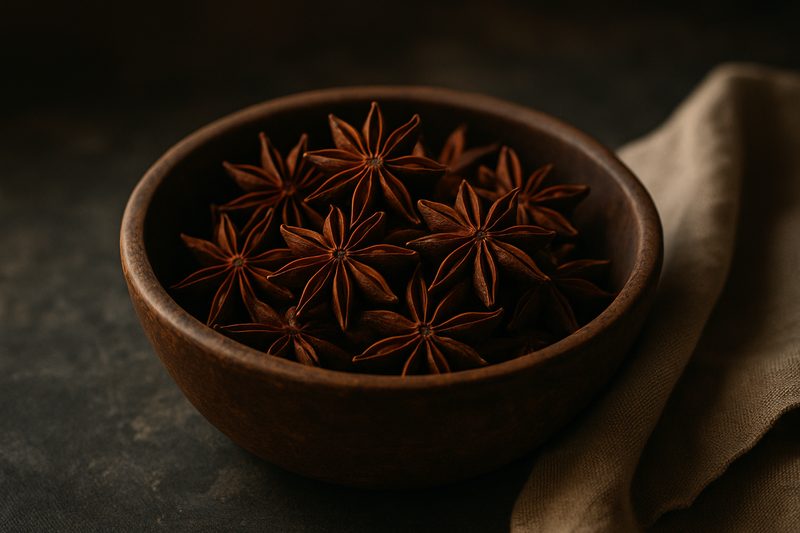
Chinese Five Spice · Photograph
Discover the Chinese five spice health benefits, nutrition facts, and smart ways to cook with this aromatic blend of star anise, cloves, cinnamon, Sichuan pepper, and fennel. Learn what the evidence actually says, who should use caution, and how to make it work in everyday whole-food cooking.
Key Nutrients
% Daily Value based on 2,000 cal diet
Key active compounds in Chinese five spice
Each of the five spices contributes distinct phytochemicals — biologically active plant compounds — to the blend.
- Cinnamaldehyde — the main active compound in Chinese cinnamon; studied for potential effects on blood sugar and inflammation
- Eugenol — found primarily in cloves; shows antioxidant and mild anti-inflammatory properties in cell studies
- Anethole — the key aromatic molecule in both fennel and star anise; associated with digestive comfort and potential phytoestrogenic (mildly estrogen-mimicking) activity
- Sanshools — unique to Sichuan pepper; responsible for the characteristic numbing-tingling sensation (málà) and studied for mild digestive and analgesic (pain-reducing) effects
- Polyphenols (phenolic acids and flavonoids) — a broad class of plant compounds found across all five spices; responsible for most of the blend's measured antioxidant capacity
- Essential oils (aromatic terpenes and phenylpropanoids) — volatile compounds that give the blend its signature aroma and may provide mild antimicrobial effects at the levels used in cooking
Prep and pairing ideas
Chinese five spice is forgiving and surprisingly versatile beyond Chinese cooking. Here are three practical uses:
1. Dry rub for roasted root vegetables Toss carrots, parsnips, or sweet potatoes with a teaspoon of five spice, a drizzle of oil, and a pinch of black pepper before roasting. The warmth of cinnamon and clove caramelizes beautifully against natural vegetable sugars.
2. Braised tofu or tempeh Add ½ teaspoon of five spice to a soy sauce, ginger, and garlic braise. The star anise adds depth while the fennel lifts the sauce with a hint of sweetness — a natural pairing that echoes classic Chinese red-braised dishes.
3. Poached pears or baked fruit A pinch of five spice in poaching liquid or baked apple recipes adds complexity without sugar. The blend complements stone fruits, pears, and plums particularly well — and it pairs naturally with warming spices like ginger already common in dessert recipes.
Buying guide: what to look for
Fresh vs. pre-ground vs. DIY
- Pre-ground blends are convenient and consistent; choose brands that list all five spices individually on the label and contain no added salt or fillers.
- DIY from whole spices gives you the most control over freshness and ratios; toast each spice briefly in a dry pan before grinding for maximum aroma.
- Specialty or artisan blends sometimes use Cassia buds, long pepper, or dried orange peel instead of one standard spice — these regional variations are legitimate, not inferior.
Label tips
- Ingredient list should read: star anise, cloves, cinnamon (or cassia), Sichuan pepper (or Chinese pepper), fennel seed — in some order, with nothing else.
- Avoid blends with "natural flavors," sugar, salt, or anti-caking agents unless you specifically want them.
- Look for a "best by" date; dried spice blends lose potency over time regardless of how they're stored.
Bottom line
Chinese five spice is an antioxidant-rich, sodium-free seasoning blend that earns its place in any kitchen focused on bold flavor and whole-food cooking. The strongest case for its health role is indirect: it replaces salt, adds polyphenol diversity to your plate, and makes nutritious whole foods taste extraordinary — all of which support a healthy dietary pattern. Direct human clinical trial evidence for the blend itself is still limited, so treat the digestive, anti-inflammatory, and metabolic benefits as plausible and promising rather than proven. For most people, the best strategy is simple: cook with it freely and enjoy it as part of a varied, plant-forward diet.
Looking to explore more ways to build flavor and support your health goals through food? Browse the Plantopedia goals guide for ingredient ideas matched to what matters most to you.
How Chinese Five Spice Compares
| Compared with | What's different |
|---|---|
| Chinese Five Spice vs. Pumpkin Pie Spice | Lacks the numbing Sichuan pepper and star anise, focusing instead on sweet-heat like nutmeg and ginger. |
| Chinese Five Spice vs. Garam Masala | A savory Indian blend using cumin, coriander, and cardamom without the distinct licorice-numbing profile. |
| Chinese Five Spice vs. Shichimi Togarashi | A simpler Japanese blend featuring chili flakes, citrus peel, and seaweed rather than aromatic baking spices. |
Health Benefits
Things to Know
Blood-thinning medications: (e.g., warfarin, aspirin, clopidogrel): Clove-derived eugenol and other spice phenolics may modestly affect platelet function at high intakes. Normal culinary use is unlikely to be a problem, but avoid large supplemental doses.
Blood sugar medications: (insulin, metformin, or similar): Cinnamon has been studied for modest glucose-lowering effects; while culinary amounts of five spice are unlikely to be significant, monitor glucose if you dramatically increase your spice intake.
Pregnancy and breastfeeding: All five component spices are considered safe in food amounts. Avoid concentrated star anise or fennel supplements during pregnancy, and note that star anise teas sold for infants have historically been contaminated with toxic non-edible star anise species — this is not a concern with standard five-spice powder but warrants awareness.
Liver conditions: Chinese cinnamon (Cinnamomum cassia) contains coumarin, a compound that in very high doses can stress the liver. Culinary use is safe; if you eat large quantities daily, consider Ceylon cinnamon (Cinnamomum verum) as a lower-coumarin alternative.
Allergy watch: If you have known sensitivities to anise, fennel, or plants in the carrot/celery family (Apiaceae), introduce five spice cautiously.
Sensitive digestion or reflux: Strongly spiced foods can aggravate reflux or irritable bowel symptoms in some people. Start with smaller amounts and assess your tolerance.
Glossary
Shop This Ingredient
Stock your pantry with quality chinese five spice.
Buy on AmazonAs an Amazon Associate, Plantopedia earns from qualifying purchases. This costs you nothing extra and helps us keep the encyclopedia free.
Frequently Asked Questions
Here is what the science currently supports — and where the gaps remain. Evidence levels below refer specifically to the five-spice blend, not individual component spices studied in isolation. Heart and circulation Chinese five spice is essentially sodium-free in most authentic formulations, which makes it one of the better tools for flavoring savory food without raising dietary salt intake — a factor broadly linked to blood pressure management. Some components, particularly cinnamon and cloves, have been individually studied for effects on blood lipids (fats in the blood) and antioxidant status, but no clinical trials have tested the combined five-spice blend for cardiovascular outcomes. The evidence here is emerging: the blend fits well within heart-health dietary patterns, but cannot be called a proven cardiovascular treatment. Digestive health and microbiome Fennel and star anise have a long history of use for gas, bloating, and sluggish digestion in traditional medicine systems, and some small studies on these individual spices support mild carminative (gas-relieving) effects. The aromatic essential oils in the blend may gently stimulate digestive enzyme activity. At culinary amounts, the fiber contribution is modest, and direct clinical trial data on Chinese five spice for gut health do not currently exist. Consider it a supportive digestive seasoning rather than a therapeutic agent. Blood sugar and metabolism Cinnamon is the most studied component for glycemic (blood sugar) effects, with some human trials showing modest reductions in fasting glucose with isolated cinnamon or standardized extracts. However, these results used far larger and more concentrated doses than a teaspoon of five-spice blend in a recipe. At normal culinary serving sizes, Chinese five spice adds negligible carbohydrates and no added sugar, so it is unlikely to adversely affect blood sugar. Any metabolic benefit is plausible but not proven for the blend itself. Inflammation and recovery Lab assays consistently report strong free-radical scavenging (neutralizing unstable molecules that can damage cells) activity for Chinese five spice as a combined blend — notably documented in a published laboratory evaluation (see Sources). This is attributed to the dense polyphenol content from all five spices working together. Cell and animal studies on individual components suggest anti-inflammatory potential, but controlled human trials on the blend are absent. The anti-inflammatory framing is emerging: promising chemistry, no direct human proof yet. Hormones and cycle health Fennel and star anise both contain anethole, a compound with mild phytoestrogenic (plant-derived estrogen-like) activity. At the amounts present in a culinary serving of five-spice, this is not considered clinically significant for most people. Individuals who are pregnant, breastfeeding, or managing hormone-sensitive conditions should stick to normal culinary amounts and avoid concentrated extracts of these spices.
Powdered five spice is the format you'll find in most grocery stores. It's convenient, blends easily into marinades and rubs, and releases its aromatic compounds quickly when heat is applied. The trade-off is that pre-ground spices lose volatile compounds faster, so freshness matters. Whole-spice blends (toasted and then simmered whole) are used in traditional braises and broths. They infuse flavor more slowly and can be fished out before serving. Many cooks argue that whole-spice versions produce a cleaner, more nuanced flavor because the essential oils are better preserved until heat is applied. From a health perspective, both forms deliver similar phytochemicals; the difference is mainly flavor intensity and shelf life. Whichever form you choose: Buy from a reputable source that can tell you the spice origin Check for single-ingredient transparency — the label should list only spices, with no added salt, sugar, or artificial flavors in authentic versions Store in an airtight container away from heat and light; ground blends are best used within 6 to 12 months, whole spices within 1 to 2 years
There is no established therapeutic dose for Chinese five spice as a blend, and the research does not support a specific daily target for health outcomes. Culinary guidance: Most recipes call for ¼ to 1 teaspoon per serving or 1 to 2 teaspoons for a family-sized dish This translates to roughly 0.7 to 2.8 g per person per meal Starting with less and adjusting upward is wise — the blend is potent, and over-spicing is difficult to correct Practical principle: Use as much as tastes good in your food. Chinese five spice is safe and appropriate at normal culinary amounts for most healthy adults. If you are considering supplements containing individual components (cinnamon extract, star anise oil, etc.), that is a different conversation requiring professional guidance.
Quick Answers
Common questions, answered in a line.
Chinese five spice typically consists of star anise, cloves, Chinese cinnamon, Sichuan pepper, and fennel seeds. These five ingredients provide a balance of phytochemicals like cinnamaldehyde, eugenol, and anethole, though some regional variations may include orange peel or long pepper.
You can use Chinese five spice as a dry rub for roasted root vegetables, a seasoning for braised tofu, or a flavor enhancer for poached fruits like pears and plums. Its warmth from cinnamon and cloves pairs exceptionally well with natural vegetable sugars and savory soy-based sauces.
Individuals taking blood-thinning medications, blood sugar medications, or those with liver conditions should exercise caution with large amounts of Chinese five spice. The blend contains eugenol and coumarin, which can affect platelet function or liver health if consumed in high supplemental doses.
The best Chinese five spice blends should list only the five core spices on the label with no added salt, sugar, fillers, or anti-caking agents. For the highest quality and potency, look for a "best by" date or consider toasting and grinding whole spices yourself at home.
Chinese five spice may aid digestion due to compounds like anethole in fennel and star anise, as well as sanshools found in Sichuan pepper. While these components are associated with digestive comfort and mild analgesic effects, direct human clinical trials on the full blend are still limited.
Chinese cinnamon (Cassia) found in five spice contains coumarin, which can stress the liver if consumed in very large daily quantities. While standard culinary use is considered safe, those concerned about high intake can opt for Ceylon cinnamon as a lower-coumarin alternative.
For Readers in the USA
Local context — sourcing, seasonality, and regional notes.
You can find Chinese five spice at major US grocery chains like Kroger, Whole Foods, and Safeway, typically located in the international aisle or the spice section. For the freshest options or bulk quantities, visit local H Mart locations or independent Asian markets in cities with established Chinatowns like San Francisco or New York.
In the United States, look for the USDA Organic seal to ensure the spices were grown without synthetic pesticides and have not been irradiated. Because the FDA does not strictly define "Chinese five spice," checking the label for the USDA Organic logo is the most reliable way to verify quality and sustainable farming practices.
While most ingredients in the blend are imported, some US-based spice companies source fennel and Sichuan pepper alternatives from growers in California and the Pacific Northwest. While the finished blend is available year-round, domestic fennel is at its peak in US farmers markets from autumn through early spring.
AI Clinical Review
- Clearly explains what’s in authentic Chinese five spice and why it’s so flavorful without adding sodium—helpful for readers aiming to cut salt while keeping food satisfying.
- Accurately frames the health evidence: most data come from the individual spices and from in vitro (lab) studies showing antioxidant activity, not from human trials on the blend itself.
- Provides realistic serving ranges (about ¼–1 tsp per portion) and notes that nutrient contributions are modest at culinary amounts—appropriate expectation setting.
- Sensibly contrasts whole vs. ground forms and emphasizes freshness, labeling transparency, and storage—practical guidance consumers can use.
- Cardiometabolic outcomes (blood pressure, lipids, glycemia) have not been tested for the five-spice blend in controlled human trials; benefits are inferred from cinnamon and clove studies using larger or concentrated doses.
- Digestive and microbiome effects are plausible based on fennel/star anise traditions and essential oil chemistry, but human data on the blend’s impact are limited.
- Anti-inflammatory claims rely on lab measures of antioxidant capacity; whether typical cooking doses change human inflammatory markers remains unknown.
- Medications: If you use blood thinners (e.g., warfarin, aspirin, clopidogrel) or diabetes medications, keep intake to normal culinary amounts and avoid high-dose supplements of individual components unless cleared with your clinician.
- Pregnancy/breastfeeding: Culinary use is generally safe; avoid concentrated fennel or star anise products, and do not give star-anise–based teas to infants due to historical contamination issues.
- Liver considerations: Cassia cinnamon contains coumarin; frequent high intakes can stress the liver. If you use cinnamon heavily day-to-day, consider Ceylon (C. verum)–based blends.
- Sensitivities: Those with anise/fennel/Apiaceae allergies, reflux, or very sensitive digestion may prefer smaller amounts; the numbing “tingle” from Sichuan pepper is normal but can bother some individuals.
Safe in culinary amounts; contains multiple potent spices.
References
- USDA FoodData Central — general nutrition reference for spices (fdc.nal.usda.gov)
- In vitro evaluation of antioxidant capacity of Chinese five-spice blend — PubMed (pubmed.ncbi.nlm.nih.gov)
- McCormick Culinary Chinese Five Spice — product and nutrition information including sodium content (mccormickforchefs.com)
- Chinese 5 spice nutrition profile — Nutriofia wholefood database (nutriofia.com)
- Chinese five spice nutrition facts — Mealplan.fit (mealplan.fit)
- Chinese five spice ingredient guide and culinary usage — Feasting at Home (feastingathome.com)
- Chinese five spice calorie and macro data — Eat This Much (eatthismuch.com)
- Nutritional facts for Chinese five spice powder — KetoDiet Data (ketodietapp.com)
- NIH National Center for Complementary and Integrative Health — herb and spice safety overview (nccih.nih.gov)
- How to make authentic Chinese 5 spice — The Living Look (thelivinglook.com)
Know Your Numbers
Eating healthy is a start. Now get to know your biomarkers.
Food changes bloodwork — inflammation, lipids, blood sugar and nutrient status all respond to what you eat. 59 markers from $59.
- Results in 7–10 days at 2,000+ Quest sites
- Licensed provider reviews every result
- One flat price, no membership, HSA/FSA eligible
Educational information only, not medical advice. Panels are ordered and reviewed through our licensed partner; Plantopedia may earn a commission.