Discover cloudberry health benefits and nutrition facts, including exceptional vitamin C content, powerful ellagitannins, and antioxidant su
A prized Nordic and Arctic foraged berry historically valued to prevent scurvy.
The Short Answer
Cloudberries are edible Arctic fruits prized for their tart, floral flavor and exceptional nutrient density. They provide 158 mg of Vitamin C and 6 grams of fiber per 100g serving, making them one of the most concentrated plant sources of antioxidants and
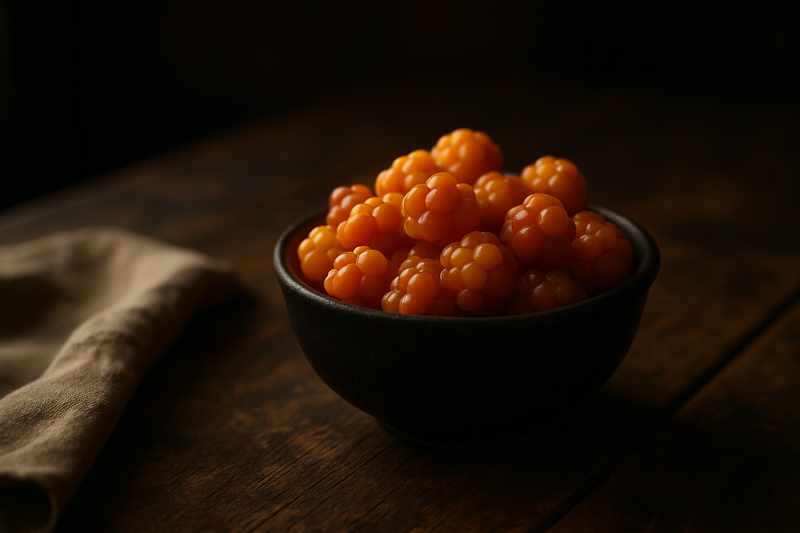
Cloudberry · Photograph
Discover cloudberry health benefits and nutrition facts, including exceptional vitamin C content, powerful ellagitannins, and antioxidant support. Learn how this rare amber Arctic berry is used in jams, dessert sauces, and beyond — plus who should take care.
Key Nutrients
% Daily Value based on 2,000 cal diet
Key active compounds in cloudberries
Cloudberries contain a layered set of phytochemicals that work through different biological pathways:
- Ellagitannins and ellagic acid derivatives — High-molecular-weight polyphenols (large plant molecules) that break down into ellagic acid during digestion. Cloudberries are one of the richest ellagitannin sources among commonly eaten fruits. Early research links ellagitannins to antioxidant, anti-inflammatory, and potentially anticarcinogenic (cancer-risk-reducing) effects, mainly from cell and animal studies.
- Phenolic acids — Includes ellagic, gallic, caffeic, ferulic, and p-coumaric acids. These are a group of plant acids found widely in fruits and linked to antioxidant and vascular (blood-vessel) health effects.
- Flavonols — Quercetin and quercetin 3-O-glucuronide appear in small amounts. Flavonols are a subclass of flavonoids (plant pigments) associated with anti-inflammatory activity and cardiovascular support in broader research.
- Flavanols — Catechin and epicatechin, the same compounds found in green tea and dark chocolate, are present in modest quantities and contribute to antioxidant capacity.
- Anthocyanins — Cyanidin 3-O-glucoside, the pigment responsible for red and purple colors in many berries, is present but at relatively low levels compared with blueberries or black currants. In cloudberries, ellagitannins do most of the heavy polyphenol lifting.
- Vitamin C — Not a phytochemical in the strict sense, but functions as a powerful water-soluble antioxidant and is the single most standout nutrient in cloudberries.
- Vitamin E — A fat-soluble antioxidant that helps protect cell membranes from oxidative damage; present in modest amounts.
Prep and pairing ideas
Cloudberries have a distinctive flavor — tart, floral, and faintly tropical, sometimes described as a cross between a raspberry and a passion fruit. That complexity makes them versatile in the kitchen.
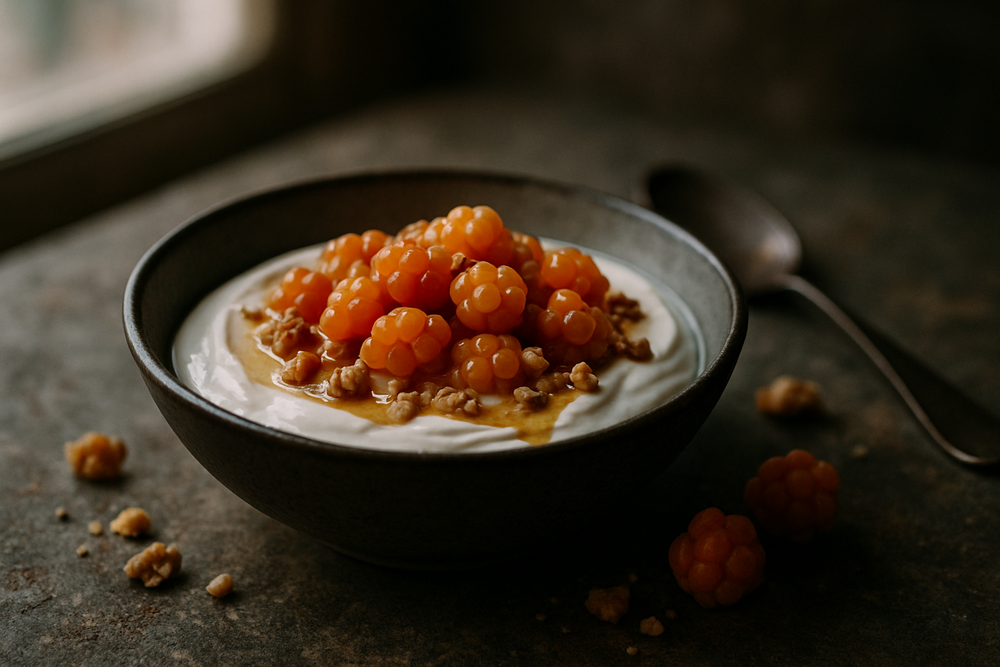
With oats and yogurt: Stir a tablespoon of cloudberry jam or a handful of thawed frozen cloudberries into plain Greek yogurt or overnight oats. You get fiber from the oats, protein from the yogurt, and vitamin C and polyphenols from the berry — a genuinely complementary trio.
As a Nordic-style dessert sauce: Warm cloudberries briefly with a tiny amount of honey and serve over a thin pancake, semolina porridge, or vanilla ice cream. Traditional Norwegian style. The gentle heat preserves most ellagitannins while breaking down the pectin slightly for a saucy texture.
Paired with fatty fish: In Scandinavian cuisine, cloudberry preserves are served alongside salmon, trout, and reindeer. The tartness cuts through fat, and interestingly, pairing vitamin C-rich foods with iron-containing foods (like fish) enhances non-heme iron absorption — a useful nutritional pairing if you are monitoring iron levels.
Bottom line
Cloudberry is genuinely impressive nutritionally, particularly for vitamin C and ellagitannins. It is not a cure, and the most exciting research findings — especially around colon cancer cell behavior — are early-stage lab and animal results that have not yet been confirmed in human clinical outcomes. What is well established is that cloudberries are a nutritionally dense, low-sugar, high-fiber whole fruit with a polyphenol profile that distinguishes them from more common berries.
The healthiest way to consume them is as whole fresh or frozen fruit, worked into the same varied, plant-rich eating pattern that decades of dietary research consistently support. Jams and sauces have a place as flavoring and condiments. Liqueur does not count as a health food. And if you find fresh cloudberries at a Nordic market or specialty grocer, buy them — they are one of the more remarkable seasonal foods on the planet.
Explore how cloudberries fit into your broader fruit and antioxidant goals at Plantopedia's goals hub.
How Cloudberry Compares
| Compared with | What's different |
|---|---|
| Cloudberry vs. Raspberry | Cloudberries have a tart, floral, tropical profile compared to the sweet-tart musk of raspberries. |
| Cloudberry vs. Salmonberry | Cloudberries contain significantly higher Vitamin C levels and a distinct amber color. |
| Cloudberry vs. Blueberry | Cloudberries are rich in ellagitannins, whereas blueberries are defined by high anthocyanin levels. |
Health Benefits
Things to Know
Vitamin K interaction: Cloudberries contain vitamin K1, which affects blood clotting. If you take warfarin or another vitamin K–sensitive anticoagulant, dramatic changes in cloudberry intake (especially large daily amounts of fresh berries or jam) could affect your INR (a clotting measure). Typical food portions are low risk, but consistency matters — check with your prescriber.
Blood sugar and sweetened products: Cloudberries themselves are low in net sugar, but cloudberry jams, syrups, and liqueurs can contain significant added sugar. If you manage diabetes or insulin resistance, read labels carefully and favor whole berries.
Berry allergy: If you have a known allergy to other Rubus species (raspberries, blackberries), there is a theoretical cross-reactivity risk with cloudberries. Start with a small amount if you are unsure.
GI sensitivity: A very large serving of high-fiber berries can cause bloating or loose stools in people with sensitive digestion. Start with a modest portion and build up.
Pregnancy and breastfeeding: Whole cloudberries in food amounts are generally considered safe. Concentrated extracts lack safety data. Cloudberry liqueur is not appropriate during pregnancy.
Children: Small portions of whole or frozen cloudberries are appropriate. Sweetened products and liqueurs are not.
Cancer medications: High-dose cloudberry extracts interact with cellular signaling pathways (Met/AKT/ERK) studied in oncology research. If you are receiving chemotherapy or targeted cancer therapy, discuss any concentrated berry supplement with your oncology team before use.
Glossary
Shop This Ingredient
Stock your pantry with quality cloudberry.
Buy on AmazonAs an Amazon Associate, Plantopedia earns from qualifying purchases. This costs you nothing extra and helps us keep the encyclopedia free.
Frequently Asked Questions
Heart and circulation No published clinical trials have tested cloudberries specifically for cardiovascular outcomes. However, cloudberries share the polyphenol and fiber profile of berries that have been studied more thoroughly. Reviews of edible berries consistently show that higher berry consumption is associated with improvements in blood pressure, LDL cholesterol, and markers of oxidative stress in humans. The fiber in cloudberries supports heart health through well-documented mechanisms — soluble fiber binds bile acids and can modestly lower LDL (the "bad" cholesterol) over time. Cloudberry's flavonols and phenolic acids may contribute to similar effects, but this is extrapolation from general berry science rather than cloudberry-specific evidence. Digestive health and gut microbiome At 6 g of fiber per 100 g, cloudberries are a meaningful fiber source. Adequate dietary fiber supports regular bowel motility, feeds beneficial gut bacteria (the microbiome — the community of microorganisms living in your gut), and is associated with reduced risk of colorectal cancer in long-term population studies. A human intervention study — where volunteers ate a diet rich in ellagitannin-containing berries including cloudberry — found that gut bacteria transform the ellagitannins from these berries into metabolites (breakdown products) called urolithins, detectable in fecal samples. This suggests that ellagitannins from cloudberries do reach the colon and interact with gut bacteria, though the study could not isolate cloudberry's individual contribution or measure specific clinical health outcomes. Blood sugar and metabolism Cloudberries eaten as whole fruit are relatively low in net sugar, and their fiber content slows glucose absorption — both favorable for blood sugar management. The phenolic acids and flavanols in cloudberries resemble those in better-studied berries shown to influence carbohydrate digestion and insulin signaling in human trials. However, no controlled trial has measured cloudberry intake against glycemic (blood sugar) endpoints directly. Benefits here should be understood as plausible based on the berry's composition, not yet proven. Inflammation and recovery Cloudberries are best characterized for their anti-inflammatory potential through ellagitannins. In laboratory studies, ellagitannin-rich cloudberry extracts reduced cancer cell migration and tumor growth in human colon carcinoma cells and in a mouse model (ApcMin mice, a genetic model used to study colorectal cancer) by suppressing a signaling pathway called Met/AKT/ERK — essentially the molecular switches that tell damaged cells to keep growing and spreading. Berry phenolic extracts have also been shown to increase expression of p21WAF1 and Bax, proteins that signal cells to stop dividing or self-destruct. These findings are scientifically interesting and suggest real biological activity. They are not, however, human outcome data. You cannot yet say that eating cloudberries prevents or treats cancer. What you can say is that this line of research is active and promising, with a registered human pilot trial (the NutriEV RCT) currently examining what happens to extracellular vesicle signaling — a form of cell-to-cell communication — when healthy adults eat 270 g of fresh cloudberries daily for seven days.
The vitamin-C-conscious eater You avoid or limit citrus due to reflux, allergies, or taste preference You are looking for whole-food ways to meet daily vitamin C needs without a supplement You want a berry that also delivers fiber and polyphenols alongside vitamin C The fiber-focused gut-health seeker You are working to increase dietary fiber from varied plant sources You are interested in feeding diverse gut bacteria with different polyphenol types You follow a Nordic or plant-forward eating pattern and want seasonal variety
The form matters quite a bit with cloudberries, because processing changes both the nutrient content and the sugar load. Fresh or frozen whole berries are the gold standard. They retain the highest levels of vitamin C (heat-sensitive) and intact polyphenols. Frozen cloudberries are far more accessible than fresh outside Scandinavia, and freezing preserves most of the nutritional value well. This is the form closest to what MyPlate guidelines mean when they recommend prioritizing whole fruit for fiber and nutrient density. Cloudberry jam, dessert sauce, and compote are traditional and delicious. Cooking reduces vitamin C somewhat, but ellagitannins and most phenolic acids survive heat well. The bigger issue is added sugar: commercial cloudberry jams can contain substantial amounts, which changes the glycemic profile entirely. Treat these as occasional condiments rather than daily health foods. A small spoonful on porridge or yogurt? Great. A large portion daily? Less ideal. Cloudberry liqueur delivers aroma and some polyphenols but comes with alcohol and added sugar — two things that cancel out any modest nutritional benefit when consumed regularly. Completely unsuitable as a health-motivated food, and off-limits for children, pregnant people, and those avoiding alcohol for medical or personal reasons. Cloudberry powder (freeze-dried) concentrates fiber and polyphenols and is used in research settings. No standardized human dose has been established, and commercial powders vary widely in quality. If you are curious about powder, look for cold-processed, additive-free options and start with small amounts. Concentrated extracts are used only in research settings. No extract product has a clinically established dose for general use.
There is no established clinical dose for cloudberries as a supplement or therapeutic food. For general nutrition purposes, the MyPlate framework recommends 1.5–2 cups of fruit per day for most adults, and cloudberries count toward that target like any other whole fruit. A practical starting point for most people: 50–100 g (roughly ½ to ¾ cup) of whole or frozen cloudberries a few times per week is a reasonable, achievable intake 150–200 g in a single sitting is realistic if you are using them as a dessert or in a smoothie, and this is well within the range used in berry research The registered NutriEV trial is testing 270 g per day for 7 days in healthy adults — this is a research dose designed to create measurable physiological signals, not a general dietary recommendation If you are using cloudberry jam as your primary source, account for the sugar content and adjust portions accordingly Start low if you have a sensitive gut — the high fiber content can cause bloating until your microbiome adapts. There is no known upper limit for whole cloudberries from a safety standpoint, but very large quantities of any high-fiber food can cause diarrhea in some people.
Quick Answers
Common questions, answered in a line.
Cloudberries are an exceptional source of vitamin C, which functions as a powerful water-soluble antioxidant. They also contain modest amounts of vitamin E, which helps protect cell membranes from oxidative damage.
Cloudberries are among the richest sources of ellagitannins, which are large plant molecules that break down into ellagic acid during digestion. They also contain phenolic acids, flavonols like quercetin, and flavanols such as catechin and epicatechin.
People taking warfarin or other vitamin K-sensitive anticoagulants should be cautious, as cloudberries contain vitamin K1 which affects blood clotting. Those with allergies to raspberries or blackberries should also be careful due to potential cross-reactivity.
Cloudberries have a complex flavor profile described as tart, floral, and faintly tropical, often compared to a cross between a raspberry and a passion fruit. Their distinctive taste is often paired with both sweet desserts and savory fatty fish.
You can stir fresh or frozen cloudberries into Greek yogurt and oats, or warm them slightly with honey to create a traditional Nordic-style dessert sauce. They are also commonly served as preserves alongside salmon or trout to cut through the fat of the fish.
Pairing vitamin C-rich cloudberries with iron-containing foods, such as salmon or reindeer, can help enhance non-heme iron absorption. This makes them a useful nutritional addition for individuals who are monitoring their iron levels.
If you are undergoing chemotherapy or targeted cancer therapy, you should consult your oncology team before using concentrated cloudberry extracts. These extracts may interact with specific cellular signaling pathways (Met/AKT/ERK) involved in cancer research.
For Readers in the USA
Local context — sourcing, seasonality, and regional notes.
In the United States, cloudberries grow naturally in the wild across Alaska and in high-altitude or boggy regions of Minnesota, Maine, and New York. Because they are difficult to cultivate commercially, most U.S. consumers rely on wild-foraged fruit or imports from Canada and Scandinavia.
Fresh cloudberries are rarely found in standard US supermarkets like Kroger or Safeway, but you can often find cloudberry jams and preserves at IKEA, specialty Nordic grocers, or high-end retailers like Whole Foods. Frozen cloudberries are occasionally available through online specialty fruit distributors.
The US cloudberry season is extremely short, typically occurring from late July through August in Alaska and the northernmost states. Due to their fragile nature, they are almost never shipped fresh across state lines and are best enjoyed locally immediately after picking.
Cloudberry jam is the most common way Americans consume this fruit, often served as a topping for "waffles" or "Swedish pancakes" in Nordic-American communities in the Upper Midwest and Pacific Northwest. It is also a popular pairing for baked Brie or goat cheese at American gatherings.
AI Clinical Review
- Highlights cloudberry’s standout vitamin C and meaningful fiber per 100 g, which aligns with known food‑composition data for Nordic berries.
- Clearly distinguishes cloudberries’ polyphenol profile (ellagitannins) from anthocyanin‑dominant berries and explains plausible antioxidant/anti‑inflammatory roles without overclaiming.
- Gives practical guidance on forms: whole/frozen berries retain more vitamin C and fiber; jams and liqueurs shift the nutrition profile due to added sugar/alcohol.
- Sensibly frames cloudberries as part of overall fruit goals rather than a treatment, echoing mainstream dietary guidance.
- Most promising findings (anti‑inflammatory/anticarcinogenic signals) come from cell and animal models; cloudberry‑specific human trials are limited and not yet linked to clinical outcomes.
- Microbiome conversion of ellagitannins to urolithins varies by person, and the clinical significance and dose–response for cloudberries remain uncertain.
- Short‑term research doses (e.g., large daily intakes over a week) are experimental; long‑term benefits and safety at high intakes are not established.
- Nutrient and polyphenol levels can vary with ripeness, origin, and processing, so results may not generalize across all products.
- Portion and form: Cloudberries can fit within a typical 1.5–2 cups/day fruit pattern; practical servings are about 50–100 g when available. Prioritize whole or frozen fruit; jams and liqueurs are treats, not health foods.
- Anticoagulants: Because cloudberries contain vitamin K1, keep intake consistent if you use warfarin or other vitamin K–sensitive blood thinners; discuss big changes with your clinician.
- Blood sugar: Whole berries are relatively low in net sugar, but jams/syrups can be high in added sugars—important for those with diabetes or insulin resistance.
- Sensitivities and special populations: People with Rubus (raspberry/blackberry) allergies or sensitive digestion should start small; pregnant/breastfeeding individuals and those on cancer therapies should avoid liqueur and be cautious with concentrated powders/extracts due to limited safety data.
Rare and usually eaten cooked or preserved; generally very safe.
References
- USDA FoodData Central — fruit nutrition reference (fdc.nal.usda.gov)
- MyPlate Fruit Group — daily fruit intake guidelines (myplate.gov)
- Finnish Food Composition Database (Fineli) — cloudberry nutrient values (fineli.fi)
- University of Alaska Fairbanks Extension — cloudberry traditional use and nutrition (uaf.edu)
- PMC — comprehensive characterization of secondary metabolites in cloudberry (pmc.ncbi.nlm.nih.gov)
- PMC — cloudberry powder nutrient content and supplementation research (pmc.ncbi.nlm.nih.gov)
- KCL Pure — ellagitannin-rich cloudberry inhibits cancer cell migration (cell study) (kclpure.kcl.ac.uk)
- PubMed — berry phenolics modulate p21WAF1 and Bax in colon cancer cells (cell study) (pubmed.ncbi.nlm.nih.gov)
- PubMed — edible berries: update on nutritional composition and health benefits (review) (pubmed.ncbi.nlm.nih.gov)
- VTT CRIS — human berry intervention study: microbial metabolites of berry phenolics (human study) (cris.vtt.fi)
- ClinicalTrials.gov — NutriEV RCT: cloudberry and extracellular vesicle signalling (registered trial) (clinicaltrials.gov)
Know Your Numbers
Eating healthy is a start. Now get to know your biomarkers.
Food changes bloodwork — inflammation, lipids, blood sugar and nutrient status all respond to what you eat. 59 markers from $59.
- Results in 7–10 days at 2,000+ Quest sites
- Licensed provider reviews every result
- One flat price, no membership, HSA/FSA eligible
Educational information only, not medical advice. Panels are ordered and reviewed through our licensed partner; Plantopedia may earn a commission.