Coconut Butter — health benefits and uses
Fat, texture, and satiety angle; clarify strict WFPB vs flexible plant-based use
The Short Answer
Coconut butter is a creamy spread made from the whole meat of the coconut, providing 5 grams of fiber and 186 calories per two-tablespoon serving. Unlike coconut oil, it retains the protein and minerals found in the fruit's flesh.

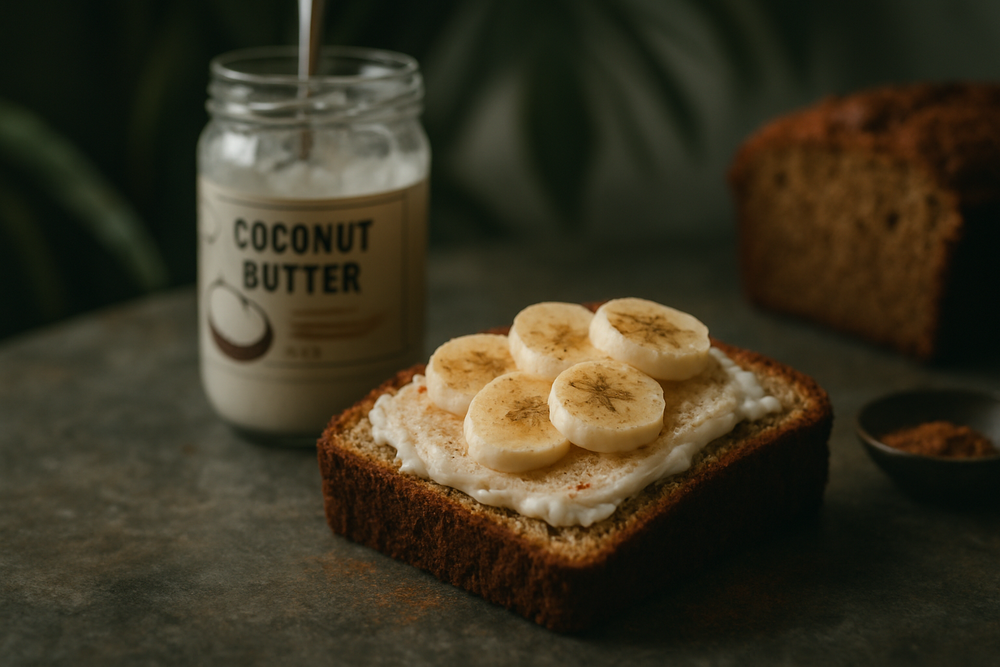
Coconut Butter · Photograph
Coconut butter is made by grinding whole dried coconut meat (Cocos nucifera) into a dense, creamy paste. Unlike coconut oil — which strips out almost everything except fat — coconut butter keeps the fiber, protein, and minerals from the flesh, making it a more nutritionally complete product. That said, both are very high in saturated fat, and that distinction matters a lot if you care about heart health.
Key Nutrients
% Daily Value based on 2,000 cal diet
Key active compounds
- Lauric acid — A 12-carbon saturated fatty acid that makes up roughly 40–50% of coconut fat. Sometimes loosely grouped with medium-chain triglycerides (MCTs), though it behaves more like a long-chain fat metabolically. Has documented antimicrobial properties in lab studies, but also raises LDL cholesterol in humans.
- Caprylic acid and capric acid — Shorter saturated fatty acids present in smaller amounts. More efficiently converted to energy by the liver than longer-chain fats, but found in much lower concentrations in coconut butter than in purified MCT oil.
- Coconut polyphenols — Antioxidant plant compounds found in coconut flesh. Likely carried over into coconut butter in small amounts. Clinical significance at normal serving sizes is unclear.
- Dietary fiber — Retained from the whole coconut meat, unlike refined coconut oil. Includes both soluble and insoluble fractions that can support gut health and satiety.
Myths vs facts
Myth 1: "Coconut butter lowers LDL cholesterol." Fact: No human clinical trials support this. Studies on coconut products consistently show that high intake raises LDL compared to unsaturated plant oils. This is the opposite of what some commercial sources claim.
Myth 2: "Coconut butter is basically an MCT oil, so it boosts metabolism." Fact: Coconut butter contains some medium-chain fatty acids, but they are a small fraction of the total fat. Most of the fat is lauric acid, which behaves more like a long-chain fat in the body. Purified MCT oil is a completely different product.
Myth 3: "Because it's plant-based and dairy-free, coconut butter is automatically heart-healthy." Fact: Plant-based does not automatically mean heart-healthy. Coconut butter is plant-based, but its very high saturated fat content puts it in the same cautionary category as palm oil — another plant-based fat that major health organizations recommend limiting.
Prep and pairing ideas
Coconut butter is solid at room temperature below about 24°C (75°F) and softens to a spreadable consistency when warmed. To use it, simply place the jar in warm water for a few minutes or stir well from the bottom of the jar (the oil can separate to the top).
Three practical pairings:
- Coconut butter + banana + oats: A small swirl of coconut butter over a bowl of oatmeal with sliced banana adds creaminess and coconut flavor while the oat beta-glucan (a type of soluble fiber linked to LDL reduction) provides a counterbalancing heart benefit. Keep the coconut butter to 1 teaspoon.
- Coconut butter + sweet potato + ginger: Blended into a sweet potato soup with ginger and vegetable broth, 1 teaspoon of coconut butter adds richness and a subtle tropical note without overwhelming the fat budget for a meal.
- Coconut butter + dark chocolate + dates: In small-batch energy balls or raw dessert bites, coconut butter binds well with dates and cacao powder. Used in modest amounts per serving, it contributes creaminess alongside the antioxidants in dark cacao.
Avoid: Using coconut butter as a high-heat frying fat. While it is heat-stable, you will lose the fiber benefits and consume large amounts of saturated fat in ways that are hard to measure.
How Coconut Butter Compares
| Compared with | What's different |
|---|---|
| Coconut Butter vs. Coconut Oil | Coconut butter contains the whole meat, providing 5g of fiber per serving, while the oil is pure fat. |
| Coconut Butter vs. Almond Butter | Coconut butter is higher in saturated fat (16g) but lower in sugar and protein than almond butter. |
Health Benefits
Things to Know
High saturated fat: One tablespoon provides roughly 40% of the daily saturated fat limit for someone eating 2,000 calories and aiming for under 10% of calories from saturated fat. Easy to overconsume.
Cardiovascular disease or elevated LDL: Major guidelines specifically recommend limiting coconut fats. If you are on a statin or other lipid-lowering medication, high saturated fat intake can work against treatment goals.
Gallbladder disease or fat malabsorption: High-fat foods can trigger pain or digestive symptoms. Consult a healthcare provider before using coconut butter regularly.
Calorie density: At ~95 kcal per tablespoon, coconut butter is very energy-dense. People managing weight or caloric intake should account for it carefully.
Coconut allergy: Rare but possible. Coconut is classified as a tree nut for labeling purposes in some countries. If you have a tree nut allergy, check with an allergist before trying coconut butter.
Strict WFPB or oil-free therapeutic diets: Programs designed to reverse heart disease (such as Ornish or Esselstyn protocols) typically restrict concentrated fats, including coconut butter. Follow your clinician's guidance.
Pregnancy and breastfeeding: No specific safety concern identified at small culinary amounts, but the high saturated fat content means the same general moderation applies.
Medication interactions: No unique direct drug-nutrient interaction is documented for coconut butter. The main concern is indirect: consistently high saturated fat intake from coconut butter can work against the goals of lipid-lowering, antihypertensive, and cardioprotective medications.
Prep Ideas
- — Coconut butter + banana + oats: A small swirl of coconut butter over a bowl of oatmeal with sliced banana adds creaminess and coconut flavor while the oat beta-glucan (a type of soluble fiber linked to LDL reduction) provides a counterbalancing heart benefit. Keep the coconut butter to 1 teaspoon.
- — Coconut butter + sweet potato + ginger: Blended into a sweet potato soup with ginger and vegetable broth, 1 teaspoon of coconut butter adds richness and a subtle tropical note without overwhelming the fat budget for a meal.
- — Coconut butter + dark chocolate + dates: In small-batch energy balls or raw dessert bites, coconut butter binds well with dates and cacao powder. Used in modest amounts per serving, it contributes creaminess alongside the antioxidants in dark cacao.
Shop This Ingredient
Stock your pantry with quality coconut butter.
Buy on AmazonAs an Amazon Associate, Plantopedia earns from qualifying purchases. This costs you nothing extra and helps us keep the encyclopedia free.
Frequently Asked Questions
Human trials on coconut butter specifically are essentially absent. Most of what we know is inferred from studies on coconut oil (similar fat profile, no fiber) and general coconut product research. Here is what the evidence shows, by health area. Heart and circulation This is where the strongest caution applies. Systematic reviews of coconut oil consumption in humans consistently show that it raises LDL cholesterol (low-density lipoprotein — the type linked to plaque buildup in arteries) compared with unsaturated plant oils like olive, canola, or sunflower oil. It may also raise HDL (high-density lipoprotein — sometimes called "good" cholesterol), but raising HDL does not cancel out the cardiovascular risk associated with raising LDL. The American Heart Association, Harvard T.H. Chan School of Public Health, and the U.S. Dietary Guidelines all recommend limiting saturated fat — including coconut fat — for cardiovascular risk reduction. Coconut butter has a similar saturated fat profile to coconut oil, so the same caution applies. The fiber content means it is marginally preferable to refined coconut oil from a whole-food perspective, but it is not a heart-healthy fat in the way that extra-virgin olive oil or walnuts are. Bottom line on heart health: Use coconut butter as an occasional flavoring fat, not as a primary cooking or spreading fat if cardiovascular health is a priority. Digestive health and microbiome Unlike pure coconut oil, coconut butter provides approximately 2 grams of fiber per tablespoon. This comes from the cell wall material in coconut flesh and may support: Slower gastric emptying (food leaving the stomach more gradually), which can reduce post-meal blood sugar spikes Bowel regularity in people who eat a relatively low-fiber diet That said, there are no controlled human trials specifically on coconut butter and gut health or microbiome composition. The benefits are inferred from general fiber physiology. Also worth noting: large servings can cause loose stools, nausea, or abdominal discomfort — particularly in people sensitive to high-fat foods or those with gallbladder issues. Blood sugar and metabolism Adding fat and fiber to a carbohydrate-rich meal can slow how quickly glucose enters the bloodstream — a mechanistically plausible benefit. But this general principle needs to be weighed against the broader picture: diets high in saturated fat are associated with insulin resistance over time in epidemiologic and metabolic research. There are no direct human trials on coconut butter and glucose control. For people with prediabetes or type 2 diabetes, small amounts of coconut butter used occasionally are unlikely to cause immediate harm, but it should not be positioned as a metabolic health food. Unsaturated fats from nuts, seeds, and olive oil have a much stronger evidence base for cardiometabolic benefit. Inflammation and recovery Lauric acid in coconut products has shown antimicrobial and anti-inflammatory activity in laboratory and animal studies. Wellness sources often extrapolate this to claim that coconut butter reduces systemic inflammation in humans. That extrapolation is not supported by well-controlled clinical trials. For managing chronic inflammation, a dietary pattern rich in vegetables, fruits, whole grains, legumes, and unsaturated fats is far better supported by human evidence than adding coconut butter.
This is one of the most common questions, and the honest answer is: coconut butter is the more complete whole food, but neither is a health food for daily liberal use. | Feature | Coconut butter | Coconut oil | |---|---|---| | Ingredient | Ground whole coconut meat | Extracted coconut fat only | | Fat content | 9 g / tbsp | 14 g / tbsp | | Saturated fat | 8 g / tbsp | 12 g / tbsp | | Fiber | 2 g / tbsp | 0 g | | Protein | 1 g / tbsp | 0 g | | Minerals | Yes (manganese, copper, magnesium) | Trace or none | | Processing level | Minimally processed | More refined | | WFPB alignment | Better fit (small amounts) | Poorer fit | Verdict: For a whole-food, plant-based approach, coconut butter is the more sensible choice of the two when you want a coconut-flavored fat. But if heart health is your primary concern, unsaturated spreads like almond or tahini outperform both.
There is no established recommended dose. These are practical, evidence-informed guidelines rather than clinical prescriptions: General healthy adult: 1–2 teaspoons (5–10 g) per serving, a few times per week, keeping an eye on total daily saturated fat. This allows for coconut flavor and texture without consistently pushing saturated fat intake beyond recommended limits. If you have elevated LDL or cardiovascular risk: Keep servings to 1 teaspoon (5 g) or less, and treat it as an occasional flavoring rather than a regular spread. Prioritize unsaturated fat sources. If you are on an oil-free WFPB or therapeutic heart diet: Follow your clinician's guidance. Many such programs recommend avoiding or strictly limiting coconut butter. Start low: If you are new to coconut butter, begin with a
Quick Answers
Common questions, answered in a line.
Coconut butter contains lauric acid, caprylic acid, and capric acid, as well as fiber and minerals from the whole coconut meat. Unlike coconut oil, it retains the fiber and protein found in the coconut flesh, though it remains very high in saturated fats.
No, coconut butter does not lower LDL cholesterol; human clinical trials consistently show that high intake of coconut products raises LDL compared to unsaturated plant oils. Modern health organizations generally categorize it with other high-saturated-fat products that should be limited.
Coconut butter is not the same as MCT oil because it mainly consists of lauric acid, which behaves like a long-chain fat rather than a medium-chain triglyceride. While it contains small amounts of true MCTs like caprylic acid, it is not a concentrated source of them.
You can use coconut butter by warming the jar in water to soften it, then stirring it into oatmeal, blending it into sweet potato soup, or mixing it into energy bites. It is solid at room temperature below 75°F (24°C) and needs to be stirred because the oil can separate to the top.
You should avoid using coconut butter for high-heat frying because the frying process can cause you to lose fiber benefits and consume excessive, unmeasured amounts of saturated fat. It is better used as a spread or stirred into prepared dishes in small quantities.
Coconut butter contains fiber and polyphenols that are not found in refined coconut oil. However, it is extremely calorie-dense and high in saturated fat, providing about 40% of the daily recommended limit in just one tablespoon.
Consuming coconut butter may interfere with heart health goals if you are taking lipid-lowering, antihypertensive, or cardioprotective medications. Its high saturated fat content can work against the intended effects of these treatments, so consultation with a doctor is advised.
For Readers in the USA
Local context — sourcing, seasonality, and regional notes.
In the United States, you can find coconut butter at major health food chains like Whole Foods Market and Sprouts, as well as in the "Natural" or "Baking" aisles of larger retailers like Kroger or Target. It is often shelved alongside nut butters or specialty oils, frequently labeled as "coconut manna."
Since most coconuts used for butter are imported, look for the USDA Organic seal and Fair Trade Certified labels to ensure the product meets U.S. standards for pesticide use and ethical labor. The FDA classifies coconut as a tree nut for labeling purposes, so it must be clearly disclosed as an allergen on all packaged foods.
While coconut trees are grown in U.S. territories like Hawaii and Florida, the vast majority of coconut butter sold in the U.S. is processed from coconuts imported year-round from the Philippines, Indonesia, or India. Because the fruit is harvested throughout the year in tropical climates, there is no specific US seasonality for this product.
In the U.S., coconut butter is widely used as a vegan, Paleo, and Keto-friendly alternative to dairy butter in frosting, "fat bombs," and smoothies. It has become a staple in the American functional food movement, often stirred into "bulletproof" style coffee or used as a spread on grain-free toast.
AI Clinical Review
- Clearly distinguishes coconut butter (ground whole coconut with fiber and minerals) from coconut oil (pure fat), which meaningfully changes nutrition and satiety.
- Accurately notes that coconut fats are high in saturated fat and tend to raise LDL cholesterol (the "bad" cholesterol) compared with unsaturated plant oils; this aligns with major heart‑health guidance.
- Correctly cautions against “superfood” claims and explains that lauric acid behaves more like a long‑chain fat; coconut butter is not the same as purified MCT oil.
- Sensibly positions coconut butter as an occasional flavoring within a pattern that emphasizes unsaturated fats (e.g., olive oil, nuts, seeds).
- There are virtually no human trials on coconut butter itself; most conclusions are extrapolated from coconut oil. How the retained fiber and polyphenols might modify effects is uncertain.
- Microbiome and anti‑inflammatory benefits are suggested mainly by lab or animal work; human outcome data are limited.
- Effects on insulin sensitivity and long‑term metabolic risk remain unclear, especially with small, real‑world portions.
- The net cardiovascular impact of infrequent, modest use within an overall heart‑healthy diet hasn’t been directly tested.
- Portions: Practical use is about 1–2 teaspoons (5–10 g) per serving, a few times per week, while staying within daily saturated fat limits; people with high LDL or cardiovascular risk may need stricter limits under clinician guidance.
- Form matters: Coconut butter (with fiber) differs from coconut oil (no fiber) and from MCT oil (a refined fat with different metabolism). It’s also not the same as sweetened “cream of coconut.”
- Who should be cautious: Individuals with elevated LDL/CVD risk, gallbladder disease or fat‑malabsorption, and those managing weight or diabetes due to calorie density; anyone with possible coconut/tree‑nut allergy should confirm safety.
- Medications and life stage: No unique drug interactions are known, but a high‑saturated‑fat pattern can work against lipid‑lowering goals. Culinary amounts are generally compatible in pregnancy and breastfeeding—moderation still applies.
Flag strict WFPB limitations for extracted oils and highly processed fat products.
References
- PMC, National Library of Medicine — Coconut oil consumption and cardiovascular risk factors in humans (pmc.ncbi.nlm.nih.gov)
- PMC, National Library of Medicine — Coconuts and Health: Different Chain Lengths of Saturated Fats Require Different Consideration (pmc.ncbi.nlm.nih.gov)
- Harvard T.H. Chan School of Public Health — Coconut Oil • The Nutrition Source (nutritionsource.hsph.harvard.edu)
- PubMed — Coconut Oil and Cardiovascular Disease Risk (pubmed.ncbi.nlm.nih.gov)
- PMC, National Library of Medicine — Are We Nuts Over Coconuts? Studying the Effects of Coconut Oil on Low-Density Lipoprotein and Cardiovascular Diseases: A Systematic Review (pmc.ncbi.nlm.nih.gov)
- PubMed — Health effects of coconut oil: Summary of evidence from systematic reviews and meta-analysis of interventional studies (pubmed.ncbi.nlm.nih.gov)
- PubMed — Effect of coconut oil on cardio-metabolic risk: A systematic review and meta-analysis of interventional studies (pubmed.ncbi.nlm.nih.gov)
- USDA FoodData Central — USDA FoodData Central (fdc.nal.usda.gov)
Know Your Numbers
Eating healthy is a start. Now get to know your biomarkers.
Food changes bloodwork — inflammation, lipids, blood sugar and nutrient status all respond to what you eat. 59 markers from $59.
- Results in 7–10 days at 2,000+ Quest sites
- Licensed provider reviews every result
- One flat price, no membership, HSA/FSA eligible
Educational information only, not medical advice. Panels are ordered and reviewed through our licensed partner; Plantopedia may earn a commission.