Coconut Chips — health benefits and uses
A minimally processed form of a tropical staple fat and fiber source.
The Short Answer
Coconut chips are a nutrient-dense snack providing 5 grams of fiber and 1.1 mg of manganese per ounce, though they are high in saturated fat. Choose unsweetened varieties to avoid added sugars and use them as a crunchy topper for oats or salads.
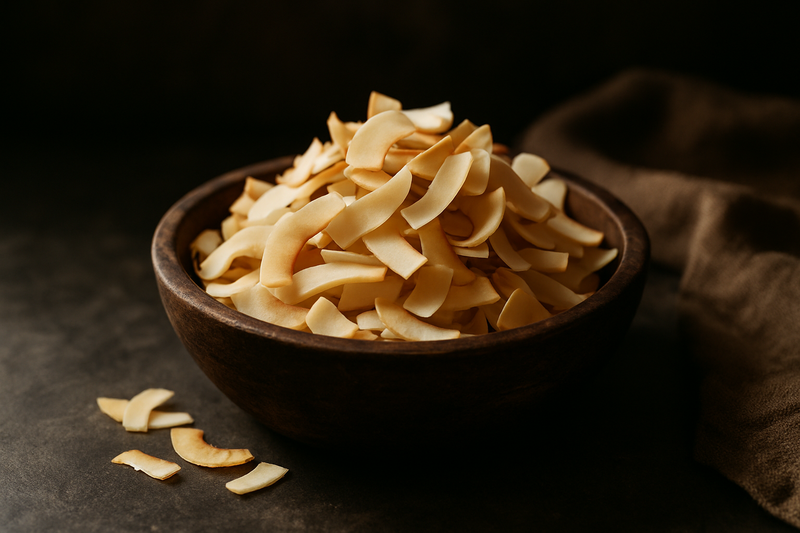
Coconut Chips · Photograph
Are coconut chips healthy? Get the full picture on coconut chips nutrition facts, saturated fat content, fiber benefits, heart health concerns, and how to choose between unsweetened and sweetened varieties — all in plain language, backed by evidence.
Key Nutrients
% Daily Value based on 2,000 cal diet
Key active compounds
Coconut chips' nutritional personality comes from a handful of key components:
- Saturated fatty acids (primarily lauric acid, C12) — Lauric acid makes up roughly 45–50% of coconut fat. It is technically a medium-chain fatty acid (a fatty acid with a 12-carbon chain), though it behaves more like a long-chain fat in terms of raising LDL cholesterol. It also raises HDL ("good") cholesterol.
- Medium-chain triglycerides (MCTs) — Triglycerides (fats made of three fatty acids on a glycerol backbone) with 8–12 carbon chains. Those with shorter chains (C8, C10) are absorbed and metabolised somewhat more rapidly than long-chain fats, but lauric acid (the dominant fat in coconut) is less "MCT-like" in metabolism than often claimed.
- Dietary fiber (insoluble and soluble) — Roughly 70% of the carbohydrate in unsweetened coconut flakes is fiber, which supports bowel regularity, satiety, and, in the broader fiber literature, cardiovascular and metabolic health.
- Phenolic compounds — Plant-derived antioxidants present in coconut meat that may help neutralise free radicals (unstable molecules that can damage cells). Human evidence specific to coconut chips remains limited.
- Manganese — A trace mineral that acts as a cofactor (a helper molecule) for antioxidant enzymes like manganese superoxide dismutase, and supports bone formation and energy metabolism.
- Copper — Essential for iron metabolism, connective tissue synthesis, and antioxidant enzyme activity.
Prep and pairing ideas
The trick with coconut chips is treating them as a flavour-and-texture accent rather than a main event:
- Oatmeal or porridge topper: 1–2 tablespoons of unsweetened chips over oats add crunch, fiber, and a tropical flavour without overwhelming the saturated fat budget. Pair with berries for antioxidants and natural sweetness.
- Trail mix in small measure: Mix 1 tablespoon of coconut chips with walnuts, pumpkin seeds, and dried mango (no added sugar). The walnuts contribute heart-healthy omega-3s that partly offset the saturated fat load.
- Grain bowl or salad garnish: Toast chips dry in a pan for 2–3 minutes and scatter over a quinoa or brown rice bowl with vegetables and a tahini dressing. The crunch mimics croutons with more nutritional value.
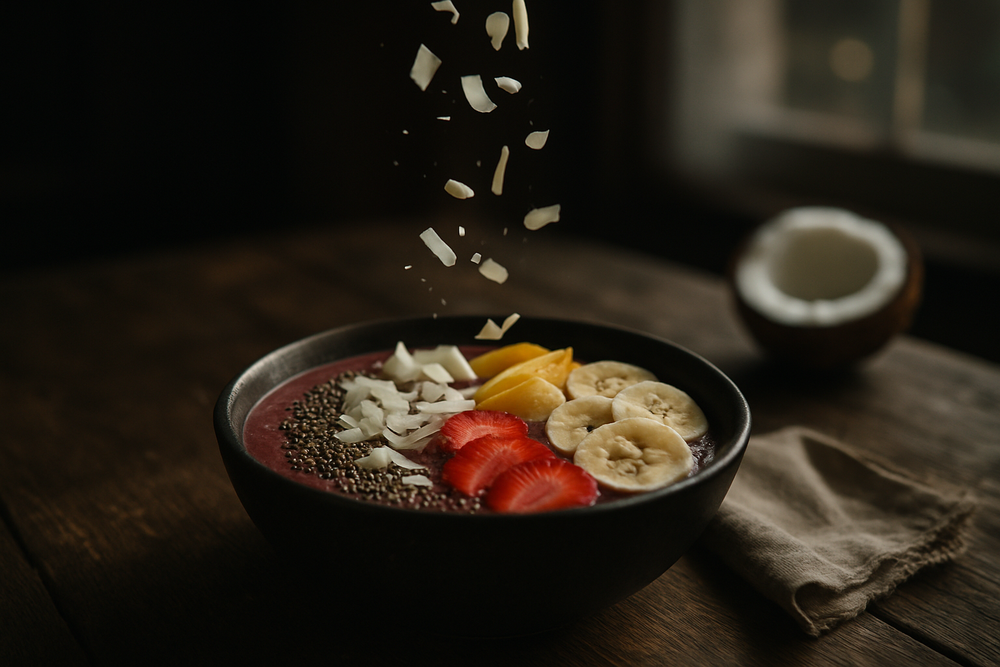
- Smoothie bowl finish: A sprinkle on a blended banana-spinach bowl adds texture and manganese without the chip becoming the main calorie source.
- Storage tip: Once opened, store in an airtight container away from heat and moisture. Coconut's high fat content makes it susceptible to rancidity; refrigerate for anything longer than 2–3 weeks after opening.
Myths vs. facts
Myth 1: "Coconut chips are a superfood that boosts metabolism." Fact: Some MCTs (especially C8 and C10) can slightly increase fat burning in short-term studies, but lauric acid — the dominant fat in coconut — does not behave like a classic MCT in metabolism. No human trial has shown meaningful or sustained metabolic rate increases from eating coconut chips.
Myth 2: "Because HDL goes up, coconut fat is heart-healthy." Fact: Coconut fat raises both LDL and HDL. LDL is causally linked to arterial plaque and heart disease; HDL's role is more complex. Current cardiovascular guidelines assess the net LDL increase as a meaningful risk concern, regardless of the accompanying HDL rise.
Myth 3: "Unsweetened coconut chips are basically the same as sweetened ones — it's just a little sugar." Fact: The difference is large. Sweetened coconut flakes can contain 36–43 g of sugar per 100 g — more sugar by weight than many desserts. They also tend to have lower fiber density per calorie. They are nutritionally a different food.
Bottom line
Coconut chips are a crunchy, flavourful whole plant food with genuine nutritional strengths — particularly fiber and the trace minerals manganese and copper. Used in small amounts (a tablespoon or two as a garnish), unsweetened chips can fit neatly into a balanced, plant-rich diet for most healthy adults.
The honest caveat is significant: one standard ounce of coconut chips carries as much saturated fat as many adults should eat in an entire day, and the research on coconut fat consistently shows it raises LDL cholesterol — a causal driver of cardiovascular disease. That does not make coconut chips "toxic," but it does mean they are not an everyday health food in typical snack quantities.
Choose unsweetened over sweetened, treat the chips as an accent rather than the meal, and keep the bigger picture in view: a diet rich in vegetables, legumes, whole grains, and unsaturated fats from nuts, seeds, and olive oil remains the evidence-backed foundation, with coconut chips as an occasional flavourful addition rather than a cornerstone.
Looking to match ingredients to specific health goals? Browse Plantopedia by goal to find personalised food-as-medicine combinations.
How Coconut Chips Compares
| Compared with | What's different |
|---|---|
| Coconut Chips vs. Coconut Water | Higher fat and fiber content compared to the water, which contains mostly electrolytes. |
| Coconut Chips vs. Dried Fruit | Much higher in fiber and lower in sugar than most dried fruits like mango or pineapple. |
| Coconut Chips vs. Sliced Almonds | Higher in saturated fat and manganese, but lower in protein than almonds or walnuts. |
Health Benefits
Things to Know
Saturated fat limits: One ounce of unsweetened chips can carry ~16 g of saturated fat — close to or exceeding many adults' daily target. Factor this into your total daily intake rather than treating chips as a "free" snack.
LDL cholesterol: If you already have elevated LDL, established heart disease, or are on a lipid-lowering diet, discuss coconut chip intake with your doctor or registered dietitian before making them a regular feature.
Diabetes and sweetened chips: Sweetened coconut chips can add significant free sugars and complicate blood glucose management. Unsweetened only if you are managing blood sugar.
Calorie density: At ~185 calories per ounce, coconut chips are easy to overeat. One open bag can deliver 300–400+ calories before you notice.
Medication interactions: Frequent high-saturated-fat snacking may counteract statins or other lipid-lowering medications. Sweetened chips can complicate glucose-lowering medication (insulin, metformin, SGLT2 inhibitors) dosing. No direct pharmacokinetic drug interactions are documented, but the dietary effect on the condition being treated is relevant.
Allergy: Coconut is classified as a tree nut by the FDA for labelling purposes. True coconut allergy is uncommon but real — check packaging if you have nut allergies.
Children: Lower calorie needs mean children can exceed saturated fat limits more quickly. Keep portions small.
Pregnancy: No specific contraindication, but calorie and saturated fat intake remain relevant to overall dietary quality.
Prep Ideas
- — Oatmeal or porridge topper: 1–2 tablespoons of unsweetened chips over oats add crunch, fiber, and a tropical flavour without overwhelming the saturated fat budget. Pair with berries for antioxidants and natural sweetness.
- — Trail mix in small measure: Mix 1 tablespoon of coconut chips with walnuts, pumpkin seeds, and dried mango (no added sugar). The walnuts contribute heart-healthy omega-3s that partly offset the saturated fat load.
- — Grain bowl or salad garnish: Toast chips dry in a pan for 2–3 minutes and scatter over a quinoa or brown rice bowl with vegetables and a tahini dressing. The crunch mimics croutons with more nutritional value.
- — Smoothie bowl finish: A sprinkle on a blended banana-spinach bowl adds texture and manganese without the chip becoming the main calorie source.
- — Storage tip: Once opened, store in an airtight container away from heat and moisture. Coconut's high fat content makes it susceptible to rancidity; refrigerate for anything longer than 2–3 weeks after opening.
Glossary
Shop This Ingredient
Stock your pantry with quality coconut chips.
Buy on AmazonAs an Amazon Associate, Plantopedia earns from qualifying purchases. This costs you nothing extra and helps us keep the encyclopedia free.
Frequently Asked Questions
Heart and circulation This is the most contested area. Research on coconut fat (primarily from coconut oil trials, since chip-specific data is sparse) consistently shows two simultaneous effects: LDL cholesterol rises and HDL cholesterol rises. A 2020 meta-analysis published in Circulation found that replacing non-tropical vegetable oils with coconut oil raised LDL by roughly 10 mg/dL and HDL by about 4 mg/dL, with minimal effect on triglycerides, body weight, or inflammation markers. LDL cholesterol is causally linked to cardiovascular disease in large bodies of evidence, so the LDL increase is considered clinically meaningful even when HDL also rises. The American Heart Association advises limiting coconut-derived saturated fat within overall saturated fat targets. One important nuance: observational studies of traditional Pacific Island and South Asian populations who consumed substantial amounts of whole coconut flesh found that coconut was not a major predictor of coronary heart disease — but those populations also ate very different overall diets (lower in refined carbohydrates, higher in activity) than modern snack contexts. That finding may not apply to someone eating coconut chips alongside a typical Western diet. Practical takeaway: For most people, small amounts of unsweetened coconut chips used as a topping (1–2 tablespoons) fit within a heart-healthy diet. Regular large snack portions are harder to justify for cardiovascular health. Digestive health and microbiome Unsweetened coconut chips are genuinely fiber-rich for their size — one ounce provides about 5 g of dietary fiber, roughly 18% of the daily value. Most of this is insoluble fiber, which adds bulk to stool and supports bowel regularity. The broader fiber literature (not coconut-specific) provides good human evidence that higher fiber intakes are associated with better digestive health, lower cholesterol, and improved gut microbiome diversity. Coconut chips used as a garnish on oatmeal, yogurt, or salads can meaningfully contribute to daily fiber targets. Note, however, that people new to higher-fiber diets may experience bloating or gas if portions are increased quickly. Blood sugar and metabolism Unsweetened coconut chips have very low sugar content — most of their carbohydrate is fiber, which slows glucose absorption and can help blunt the rise in blood sugar (the glycemic response) after a meal when eaten alongside carbohydrate-rich foods. A randomised trial found that virgin coconut oil reduced fasting blood sugar in adults with metabolic syndrome, though it simultaneously raised LDL cholesterol. A 2024 systematic review and meta-analysis of coconut oil trials found triglyceride reductions and HDL increases but inconsistent effects on fasting blood sugar overall. The sweetened chip caveat is critical here. Sweetened dried coconut can contain 36–43 g of added sugar per 100 g. For people managing diabetes or insulin resistance, sweetened chips eaten as a snack could significantly worsen glycemic control — essentially the opposite effect of unsweetened chips. Inflammation and recovery Meta-analyses of coconut oil interventions report that, compared with non-tropical vegetable oils, coconut oil does not meaningfully reduce circulating inflammatory markers. One randomised trial noted an increase in asymmetric dimethylarginine — a marker linked to blood vessel (endothelial) dysfunction — after 4 weeks of virgin coconut oil consumption, despite some favourable changes in triglycerides. There are no robust human trials specifically evaluating coconut chips and inflammation. Major cardiovascular organisations do not endorse coconut products as anti-inflammatory foods. Coconut chips can be part of an anti-inflammatory eating pattern (rich in vegetables, legumes, whole grains, and unsaturated fats), but the bulk of dietary fat should come from mono- and polyunsaturated sources such as olive oil, nuts, and seeds. Minerals and micronutrient support Unsweetened coconut chips are one of the better snack sources of manganese and copper. A 28 g serving provides nearly half the daily value for manganese — supporting antioxidant enzyme function and bone health — and about 28% for copper. Iron contributes modestly (9% DV). These are real, underappreciated benefits that set coconut chips apart from most other snack foods.
The most important split is unsweetened vs. sweetened, not toasted vs. raw. Unsweetened toasted coconut chips are the closest to a whole food and the best fit for a plant-based or health-conscious eating pattern. Toasting enhances flavour and crunch without adding sugar or significant calories. Sweetened or flavoured coconut chips (chocolate-drizzled, caramel, honey-glazed) can contain multiple teaspoons of added sugar per serving. Read labels: anything where "sugar" appears in the first three ingredients is a dessert, not a health snack. Raw desiccated flakes are functionally similar to chips in recipes and toppings, with slightly different texture. Nutrition is comparable. Fresh coconut meat provides the same fats and minerals with more water and slightly lower calorie density by volume. Traditional diet data suggest fresh whole coconut in a balanced context is not inherently harmful. Label tips to look for: Ingredients list: coconut only (or coconut + salt) for unsweetened Added sugar: aim for 0–2 g per serving Serving size: manufacturers sometimes list 15 g (about 1 tablespoon) to make the saturated fat look lower — check for 28 g comparisons Organic certification if pesticide residue is a concern for you
There is no universal "safe" number of coconut chips, because the right amount depends on everything else you eat that day — especially other saturated fat sources like dairy, meat, or cooking oils. A practical framework for most healthy adults: As a topping or garnish: 1–2 tablespoons (7–15 g) is a reasonable daily use that keeps saturated fat additions modest. As a snack: Up to about 1 oz (28 g) occasionally — not daily — if the rest of your diet is low in saturated fat. Daily habit at 1 oz: This is where cardiovascular guidelines become a concern for most Western diets. If coconut chips are a daily snack and you also eat cheese, meat, or other saturated fat sources, you are very likely exceeding recommended limits consistently. Start low: If you have not eaten coconut regularly, begin with a tablespoon to assess digestive tolerance (some people experience bloating with sudden fiber increases) before working up. If you have high LDL, a cardiometabolic condition, or are under active medical management for heart disease, lipids, or diabetes, get personalised guidance rather than relying on general amounts.
Quick Answers
Common questions, answered in a line.
Lauric acid is the primary saturated fatty acid in coconut chips, making up about 45–50% of the fat content. While it is technically a medium-chain fatty acid, it behaves more like a long-chain fat by raising LDL cholesterol levels, though it also increases HDL cholesterol.
Unsweetened coconut chips provide essential trace minerals, specifically manganese and copper. Manganese supports bone formation and energy metabolism as a cofactor for antioxidant enzymes, while copper is necessary for iron metabolism and connective tissue synthesis.
You should store coconut chips in an airtight container away from heat and moisture to prevent them from becoming rancid. Due to their high fat content, it is recommended to refrigerate them if they will not be consumed within 2–3 weeks after opening.
Sweetened coconut chips can contain 36–43 grams of sugar per 100 grams, which is more sugar by weight than many desserts. In contrast, unsweetened chips have significantly higher fiber density per calorie and do not complicate blood glucose management.
People with elevated LDL cholesterol or heart disease should consult a doctor before eating coconut chips regularly. A single ounce can contain 16 grams of saturated fat, which may raise LDL levels and potentially counteract lipid-lowering medications like statins.
Coconut chips are best used as a flavor and texture accent, such as a topper for oatmeal, smoothie bowls, or salads. To add crunch to meals without exceeding saturated fat limits, try toasting 1–2 tablespoons and using them as a garnish rather than a primary snack.
For Readers in the USA
Local context — sourcing, seasonality, and regional notes.
You can find coconut chips at major U.S. retailers like Trader Joe's, Whole Foods Market, and Costco, as well as in the bulk bins of local natural food cooperatives. In standard grocery stores like Kroger or Safeway, they are typically located in the baking aisle or the natural snacks section.
While the U.S. does not produce coconut chips at a commercial scale, the majority of the supply is imported from the Philippines, Indonesia, and Thailand to meet year-round demand. Because they are processed from mature coconuts, there is no specific "season" for them in American markets; they are consistently available in all 50 states throughout the year.
To ensure your coconut chips meet U.S. organic standards, look for the USDA Organic seal, which guarantees the fruit was grown without synthetic fertilizers or prohibited pesticides. Additionally, check the ingredient label for the "Added Sugars" line—required by the FDA—to distinguish between truly unsweetened chips and those treated with cane sugar or corn syrup.
AI Clinical Review
- Clearly distinguishes unsweetened from sweetened coconut chips and explains why added sugar changes the nutrition profile.
- Appropriately emphasizes that coconut chips are very high in saturated fat per 1 oz and relates this to heart‑health guidelines and portion control.
- Accurately summarizes clinical evidence that coconut fats raise LDL ("bad") cholesterol alongside HDL ("good"), and explains why LDL matters most for risk.
- Notes real strengths (fiber plus manganese and copper) and frames chips as a garnish rather than a daily standalone snack.
- Most human data are from coconut oil trials, not coconut chips; effects are likely directionally similar but not identical for whole dried coconut.
- Claims around medium‑chain triglycerides and lauric acid are nuanced; consistent benefits beyond lipid changes (weight, blood sugar, inflammation) are not firmly established.
- Antioxidant/phenolic content is documented in coconut meat, but clinical relevance at typical chip portions remains uncertain.
- Observations from traditional high‑coconut diets may not translate to Western eating patterns due to major dietary and lifestyle differences.
- Portions: 1–2 tablespoons (about 7–15 g) as a topping is a prudent day‑to‑day use; a full 1 oz (28 g) serving is best kept occasional if your day is otherwise low in saturated fat.
- Heart health: people with high LDL, familial hypercholesterolemia, or established cardiovascular disease—or those on lipid‑lowering therapy—should keep portions small and discuss regular intake with a clinician.
- Blood sugar: choose unsweetened only if you have diabetes or insulin resistance; sweetened versions add substantial sugars, and all varieties are calorie‑dense.
- Special considerations: coconut is labeled a tree‑nut allergen in the U.S.; children reach saturated‑fat limits more quickly; pregnancy/lactation have no specific contraindication, but overall saturated fat and calories still count.
Calorie- and saturated-fat-dense; commercial chips may be sweetened.
References
- USDA FoodData Central — Coconut, dried, desiccated, unsweetened (fdc.nal.usda.gov)
- American Heart Association — Saturated fats: Why all the hubbub over coconuts? (heart.org)
- Harvard Health — Is there a place for coconut oil in a healthy diet? (health.harvard.edu)
- Mayo Clinic News — Coconut oil has more saturated fat than lard (newsnetwork.mayoclinic.org)
- Meta-analysis — Effect of coconut oil on cardiovascular risk factors (Neelakantan et al., Circulation, 2020) (ahajournals.org)
- Systematic review and meta-analysis — Effect of virgin coconut oil (VCO) on cardiovascular disease risk factors (2024, PMC) (pmc.ncbi.nlm.nih.gov)
- Randomised controlled trial — VCO on metabolic syndrome and asymmetric dimethylarginine (Sabitha et al., 2021, PubMed) (pubmed.ncbi.nlm.nih.gov)
- Review — Coconut oil consumption and cardiovascular risk factors in humans (PMC) (pmc.ncbi.nlm.nih.gov)
- Observational study — Dietary intake and coronary heart disease risk in a coconut-consuming population (PubMed) (pubmed.ncbi.nlm.nih.gov)
- AHA Presidential Advisory — Dietary fats and cardiovascular disease (professional.heart.org)
Know Your Numbers
Eating healthy is a start. Now get to know your biomarkers.
Food changes bloodwork — inflammation, lipids, blood sugar and nutrient status all respond to what you eat. 59 markers from $59.
- Results in 7–10 days at 2,000+ Quest sites
- Licensed provider reviews every result
- One flat price, no membership, HSA/FSA eligible
Educational information only, not medical advice. Panels are ordered and reviewed through our licensed partner; Plantopedia may earn a commission.